Faded Flowers on Jade Plant: Causes, Checks & Fixes
Quick answer
Faded flowers on jade plant are usually normal bloom aging on mature winter clusters-star-shaped white or pink flowers open, then dull and dry over days to weeks. First step: confirm whether only older open clusters are fading while new buds still look bright; if so, gently remove spent clusters and enjoy the success rather than changing watering or temperature.
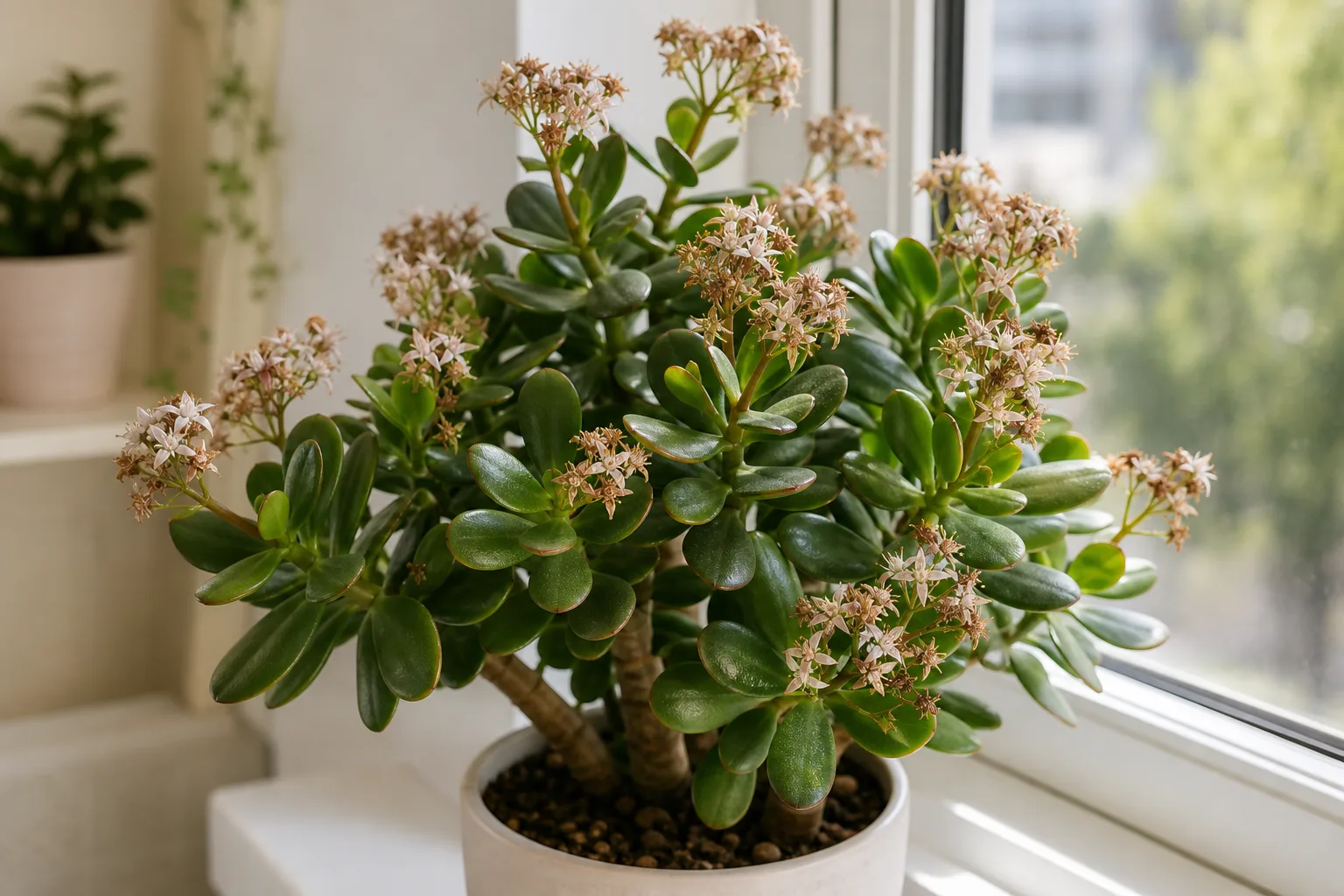
Faded Flowers on Jade Plant: Causes, Checks & Fixes
This guide covers faded flowers on Jade Plant. See also the general Faded Flowers guide, watering, and light pages for this plant.
Faded Flowers on Jade Plant: Causes, Checks & Fixes
Quick answer
Faded flowers on jade plant (Crassula ovata) are usually normal bloom aging, not a crisis. Mature specimens that meet cool-night and dry-fall triggers can produce tight clusters of small white or pink star-shaped flowers in late winter to spring. Each cluster opens, holds for a short display, then dulls, bleaches, or dries as the flower completes its natural cycle. On a firm plant with plump leaves, that turnover often means your jade succeeded at blooming-not that it is failing.
First step: decide whether you are seeing normal spent clusters or stress dulling on new buds. If only the oldest open clusters look faded while newer buds at branch tips still show pink or white color, gently remove spent blooms (optional) and leave care stable. Do not overwater, fertilize, or chase temperature tricks because winter flowers faded after opening-that is expected senescence.
If every newly opening bud looks washed-out from the start, or open flowers wilt and collapse while soil is bone dry or soggy, treat fading as a stress signal and work through the confirmation checks below before changing multiple variables at once.
What faded flowers look like on Jade Plant
Jade blooms are small, star-shaped, and clustered at woody branch tips-not large showy heads like zinnias. NC State describes developing buds as pink sepal-covered clusters that open into white flowers tinged pink, with a faint sweet scent attractive to pollinators outdoors.
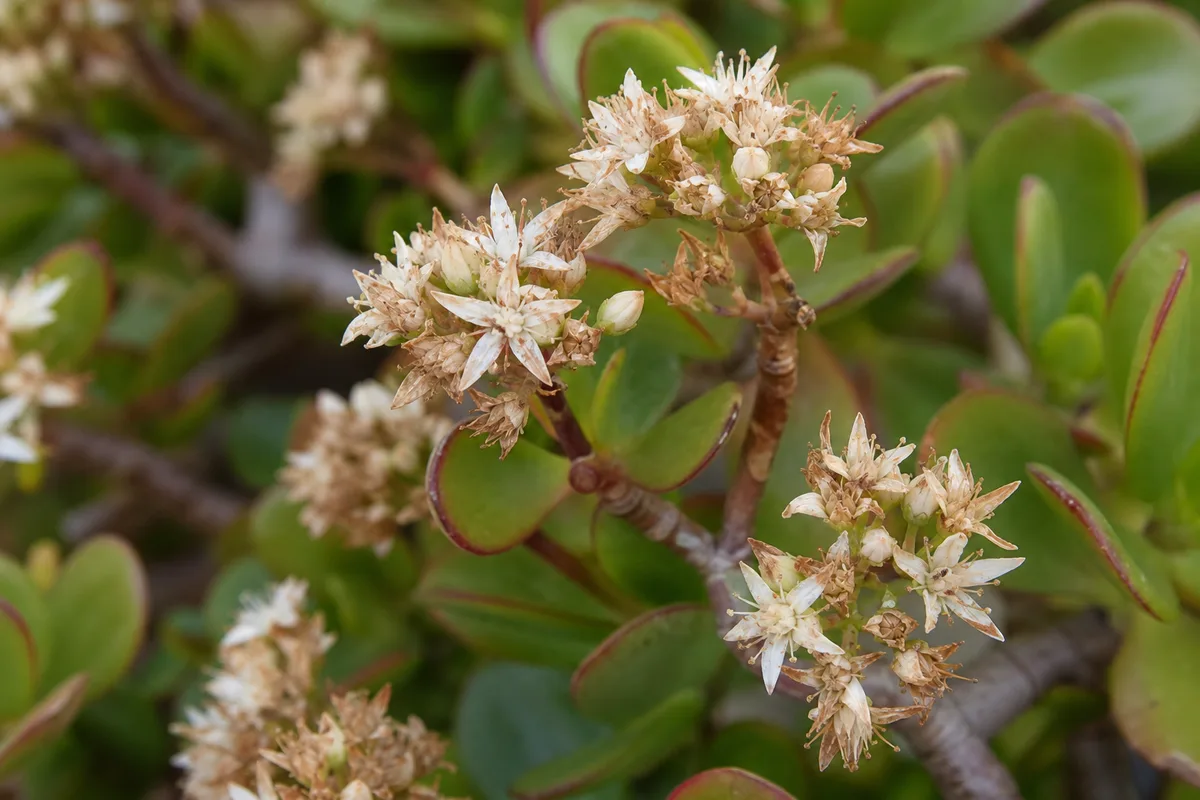
Faded Flowers symptoms on Jade Plant - compare with healthy tissue on the same plant.
Normal cluster aging (most common)
- Oldest open clusters at tips turn dull white, tan, or papery while newer clusters on the same branch still look fresh
- Petals dry at the edges gradually over several days to a couple of weeks-not an overnight brown collapse
- Stems stay firm; leaves remain plump; pot weight feels normal for your dry-down rhythm
- Fading follows a plant that already bloomed after cool fall nights and reduced watering-see the overview flowering section for trigger context
- Under bright conditions, clusters can become dense enough to hide foliage before individual clusters age out
Stress-related dulling or premature fade
- New buds open pale or small while older blooms also fade faster than expected
- Open flowers wilt or droop in warm dry air when soil has been dry too long-petals look dull but feel soft, not crisp
- Heat near vents or radiators accelerates cosmetic petal bleaching on otherwise healthy open blooms
- Heavy wet pot with yellowing lower leaves-fading may coincide with root stress dulling new growth, not simple senescence
Not the same as these lookalikes
| Pattern | What you see | Likely issue | Where to read |
|---|---|---|---|
| Tip clusters shrivel and fall before open | Dried bud debris at tips; no star-shaped flowers formed | Bud drop after move, repot, or temperature swing | Bud-drop guide |
| Whole yellow leaves drop along stems | No open flower clusters involved | Overwatering, drought, or low light | Yellow-leaves guide |
| No blooms ever on a young dim plant | Mature size not reached; no winter clusters | Normal for many indoor jades-NC State notes indoor bloom is rare | Overview + light |
| Small pale blooms on first flowering attempt | Clusters present but undersized | Small flowers from weak light or immaturity | Small-flowers guide |
Knowing which row matches your plant determines whether deadheading spent clusters is enough or you need to fix water, light, or root conditions.
Why Jade Plant flowers fade
Jade is a South African succulent that blooms when short days, cool nights, and seasonal dryness mimic its native winter rest. Wisconsin Horticulture Extension recommends withholding water in fall, keeping plants around 55°F (13°C) at night, avoiding supplemental light after dusk, then resuming regular watering to encourage flowers. Individual clusters are short-lived by design-the plant invests in reproduction, displays briefly, and moves on. Faded winter blooms on a firm plant are often the tail end of that success story.
Several factors change how fast fading looks on your jade:
Natural petal senescence. Once clusters open and pollination finishes, pigments break down and petals dry. Indoor heat and dry winter air can move a cluster from peak color to noticeably faded in roughly a week to a few weeks-faster than cool greenhouse conditions but still gradual.
Heat and dry air near windows. Warm drafts from radiators, heat vents, or sun-baked glass accelerate cosmetic bleaching on already open flowers. Stems and leaves stay firm; only petals age faster. This differs from drought wilt, where the whole cluster softens.
Drought during bloom display. Jade stores water in leaves and stems, but prolonged dry soil during an active bloom window can wilt open flowers and make new buds open smaller and paler. Missouri Botanical Garden notes drought can cause foliage spotting and leaf drop-flower quality suffers before leaves show dramatic damage.
Low light weakening new buds. Clemson HGIC recommends four or more hours of direct sun for best growth. Dim survival produces stretched stems and pale new blooms from the start-not the same as normal aging of otherwise bright clusters on a compact plant.
Overwatering and root stress. Wet soil during winter semi-dormancy stresses roots. New buds may open dull; lower leaves yellow. Fading flowers plus soft stem bases point past cosmetic senescence toward root rot risk.
Harmful chill vs bloom-trigger cool. Cool nights near 55°F (13°C) encourage bloom. Sustained exposure below about 50°F (10°C) with wet soil stresses roots and can abort or dull buds-do not confuse bloom triggers with damaging cold. Details on safe winter placement live on the watering guide.
Young or non-blooming plants. Many indoor jades never flower because they lack maturity, strong light, and seasonal cues. If you have never seen clusters, “faded flowers” may be a misread symptom-confirm you are looking at spent star-shaped clusters, not yellow leaves or dried bud debris.
How to confirm the cause
Work through these checks in order. One honest pass at cluster age, bud color, and pot weight beats guessing from the problem name alone.
- Cluster age pattern - Are only the oldest open clusters faded while newer tip clusters still show pink or white? That confirms normal senescence.
- New bud color at open - Do freshly opening flowers look full color or washed-out from the first day? Pale new opens signal stress, not routine aging.
- Stem and leaf firmness - Firm woody stems and plump leaves support a cosmetic fade diagnosis. Soft stem bases with sour wet soil redirect to overwatering or rot guides.
- Pot weight and moisture - Push a finger two inches into the mix. Bone-dry light pot at midday explains wilted dull blooms. Heavy wet soil explains dull buds plus yellow leaves.
- Recent changes - Move, repot, heater blast, or watering shift during bloom window can accelerate fade or cause bud drop on clusters not yet spent.
- Light exposure - Count direct sun hours. Four-plus hours of strong light including some direct sun supports healthy bloom turnover; chronic dim light produces pale new flowers.
- Temperature history - Cool nights near 55°F followed by stable days fits normal winter bloom. Sudden warm drafts after clusters opened can hasten petal fade without harming the plant long term.
Confirmation decision table
| Finding | Most likely cause | First action |
|---|---|---|
| Oldest clusters faded; new buds bright; firm plant | Normal senescence | Optional deadhead; keep stable care |
| New buds open dull; soil very dry; leaves slightly soft | Drought during bloom | One thorough soak; resume dry-down rhythm |
| New buds dull; wet heavy pot; yellow lower leaves | Root stress / overwatering | Stop watering; inspect per overwatering guide |
| All clusters wilted near heat vent; soil normal | Heat-accelerated cosmetic fade | Move off radiator; optional deadhead |
| Buds dropped before open after repot | Bud abortion | Stabilize location-see bud-drop guide |
| Never bloomed; young or dim plant | Bloom unlikely indoors | Improve light; do not treat as fade problem |
If checks one and two pass-old clusters fade, new opens stay bright-deadheading spent clusters is the right first move. If new blooms open dull from the start, fix the underlying stress before expecting color to return on spent tissue.
First fix for Jade Plant
If only spent winter clusters are fading (normal aging)
Gently snip or pinch off faded clusters just above the next pair of leaves on the stem.
Use clean scissors or pruners. Remove papery spent blooms when they bother you aesthetically; jade does not require deadheading for survival the way repeat-blooming annuals do. Wear gloves when handling cut tissue-jade is toxic to cats and dogs. Do not fertilize, repot, or overhaul watering because winter flowers completed their natural cycle.
Leave the plant in its stable winter window if it bloomed there successfully. Dramatic moves mid-display can abort remaining buds.
If new buds open dull or flowers wilt on dry soil
Water once thoroughly when the top two inches of mix are dry and the pot feels light-then return to your normal soak-and-dry schedule per the watering guide. One correction only; do not keep the soil wet.
If dull blooms coincide with wet heavy soil
Stop watering and check stem base firmness before any other treatment. Follow the overwatering path-root stress does not fix itself with more bloom-focused care.
If heat is bleaching open clusters
Move the pot a few inches off radiators or heat vents while keeping bright light. Cosmetic fade on open blooms may still complete; protect remaining buds from hot dry blasts.
Make one environmental change at a time. Stacking repot, prune, fertilizer, and pesticide the same day hides what helped and can stress a plant mid-bloom.
Step-by-step recovery
After the initial fix matched to your diagnosis:
- Remove additional spent clusters as they papery-dry over the next one to three weeks-optional tidying, not daily urgency.
- Hold winter watering on the dry side for semi-dormant jade unless soil is genuinely dry at depth-Wisconsin Extension restricts winter watering while plants are semi-dormant.
- Keep bright stable light-four-plus hours of direct sun when possible per Clemson HGIC-so remaining buds open with good color.
- Avoid Jade Plant repotting guide or heavy pruning until spring active growth unless root rot forces intervention.
- Resume moderate feeding only after new vegetative growth appears in spring-not to “save” faded petals.
- Plan next season’s bloom triggers on mature plants if you want repeat flowers: cool fall nights near 55°F, reduced fall watering, uninterrupted dark nights-full timing on the overview and watering guide.
Recovery timeline
| Situation | What improves first | Realistic window |
|---|---|---|
| Normal spent-cluster fade | Remaining bright clusters persist; plant stays firm | Individual clusters fade over days to ~2 weeks |
| Post-deadhead tidy-up | Cleaner silhouette; no color return on removed tissue | Immediate cosmetic improvement only |
| Drought-corrected wilt | Open flowers firm slightly; new buds open fuller color | 3–7 days after one proper soak |
| Overwatering stress fixed | Yellowing stops spreading; new tips stay green | 2–6 weeks after dry-down and light correction |
| Next bloom season | New bud clusters after full fall trigger cycle | Next cool season-often 12+ months on indoor plants |
Spent petals do not re-brighten. Recovery means firm leaves, stable roots, and future bud production-not reversing color on clusters that already aged out.
Lookalike symptoms to rule out
Bud drop before open means tight tip clusters shrivel and fall while still closed-often after a move or repot. Faded flowers, by definition, opened fully first. See bud drop on jade.
Yellow leaf drop removes whole paired leaves along stems with no star-shaped flower tissue involved. Wet heavy pots point to overwatering; wrinkled leaves on light pots point to underwatering.
Small pale first blooms on a young plant trace to immaturity and weak light-not the gradual dulling of robust winter clusters. Cross-read small flowers if cluster size-not fade speed-is the complaint.
Mealybugs at growing tips can deform buds and leave cottony residue. Inspect axils before assuming fade is purely environmental-see mealybugs on jade if pests are present.
Mistakes to avoid
Do not overwater or fertilize because spent winter blooms faded after opening-that is normal turnover, not a call for growth pushes in semi-dormancy.
Do not confuse bloom-trigger cool nights near 55°F (13°C) with harmful sustained chill below 50°F (10°C) on wet soil. One encourages flowers; the other stresses roots.
Do not repot or heavily prune during an active bloom window if you want buds next season-Wisconsin Extension advises repotting as new growth starts in spring.
Do not move a blooming jade for “better light” mid-winter unless sunburn or heat damage forces it-stability matters once clusters form.
Do not judge recovery by old petal color-spent clusters will not brighten again.
Do not yank petals and leave long bare stubs-cut cleanly just above the next leaf pair if you deadhead.
Wear gloves when handling cut tissue-jade is toxic to cats and dogs.
How to prevent premature fading next time
On mature plants you want to bloom again:
- Provide cool fall nights near 55°F (13°C) when possible, with bright days and no supplemental light after dusk during the shortening-day window
- Gradually reduce fall watering per the watering guide-dry fall rest triggers bloom; soggy winter soil dulls buds and risks rot
- Give four-plus hours of direct sun year-round so the plant stores energy for next winter’s clusters
- Keep the bloom-season location stable-avoid mid-winter repots and moves once buds form
- Shield from heat vents once clusters open so cosmetic fade does not accelerate unnecessarily
- Deadhead spent clusters if seed capsules or papery debris clutter the display-optional, not mandatory
- Accept that many indoor jades never bloom-prevention here means supporting healthy cluster turnover when flowers do appear, not guaranteeing annual bloom
When to worry
Routine fading on oldest open clusters while new buds stay bright and stems stay firm is not urgent. Optional deadheading and stable care are enough.
Escalate when:
- Mass bud abort happens before flowers open across many tips-see bud-drop protocol
- Stem bases soften while soil stays wet and smells sour-root rot urgency
- Multiple leaves yellow and drop with a heavy pot-systemic stress, not spent blooms
- Every new bud opens dull for two or more weeks despite corrected watering and strong light
- Pests coat growing tips-treat before environmental tweaks stack up
- Pets ingest jade tissue-contact your veterinarian; the plant is toxic to cats and dogs
Cosmetic petal fade on an otherwise firm winter-blooming jade is discouraging only if you expected months-long color-jade clusters were never bred for that.
Practical checks
Urgency check
Soft stem base + wet sour soil → rot protocol immediately. Firm plant, only oldest clusters papery, dry-to-normal soil → optional deadhead, not emergency repot.
Best inspection order
Cluster age (old vs new color) → new bud color at open → pot weight and moisture at two inches deep → stem base firmness → recent move/repot history → light hours → heat vent proximity → pests at tips.
Jade care cross-check
Also sold as money tree or lucky plant, jade should be judged by firm new leaves and stable roots, not by how long winter flowers stay bright. If your plant has never bloomed indoors, focus on light and watering fundamentals before searching for fade causes that do not apply yet.
Related jade plant problems
- Jade plant overview - flowering triggers and baseline care
- Watering - fall rest, dry-down rhythm, winter restrictions
- Light - bloom energy and compact growth
- Bud drop - clusters lost before open
- Small flowers - undersized pale first blooms
- Overwatering - wet soil dulling new growth
- Underwatering - drought wilt on open blooms
- Not enough light - pale new flowers from dim placement
- Yellow leaves - leaf-drop lookalike
- Root rot - soft stems when fade coincides with wet soil
When to use this page vs other Jade Plant guides
- Jade Plant watering guide - Use for routine moisture checks before assuming faded flowers is the main issue.
- Jade Plant problems hub - Browse all 49 common issues on this species.