Small Flowers on Jade Plant: Causes, Checks & Fixes
Quick answer
Jade plant flowers are supposed to be small-tight clusters of star-shaped white or pink blooms on mature winter plants. A problem exists only when a previously blooming mature jade produces fewer or tinier clusters than past seasons. First step: confirm the plant is mature enough to bloom, then compare cluster abundance to last winter before changing water, light, or temperature.
Small Flowers on Jade Plant: Causes, Checks & Fixes
This guide covers small flowers on Jade Plant. See also the general Small Flowers guide, watering, and light pages for this plant.
Small Flowers on Jade Plant: Causes, Checks & Fixes
Quick answer
Jade plant flowers fall into two very different situations. On a mature Crassula ovata, tight rounded clusters of small white or pink star-shaped flowers in late fall through winter are normal-each individual bloom stays under an inch across. Many searchers asking about “small flowers” are seeing healthy first-time winter bloom and wondering if the clusters should be dinner-plate sized. They should not.
A real small-flowers problem appears when a previously blooming mature plant produces fewer clusters, thinner coverage on branch tips, or noticeably smaller star-shaped blooms than prior winters-not when a young indoor jade opens its first modest winter clusters.
First step: decide whether you have normal small winter bloom on a mature plant or a decline in cluster abundance on a plant that used to flower fuller. If this is a young jade with no bloom history, see the jade plant overview bloom section-immaturity is the answer, not a fix for flower size. If a woody mature plant bloomed better last year, work through cool-night exposure, light, moisture during bud set, and root health next.
What small flowers look like on Jade Plant
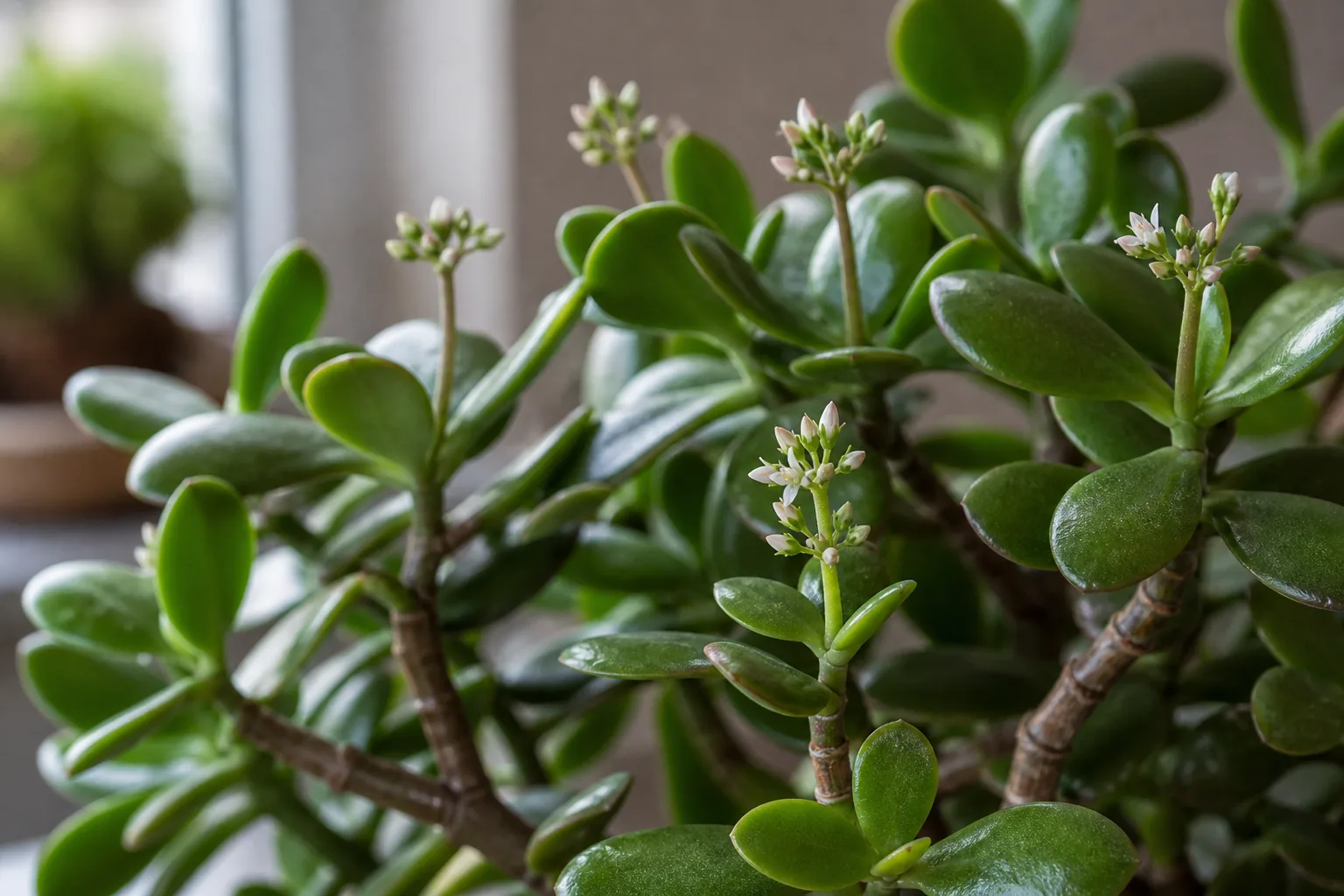
Healthy jade bloom on a mature plant shows terminal clusters at branch tips-compact cymes of small star-shaped white or pink flowers with four to five petals, often following pink sepal-covered buds. NC State describes flower size as under one inch with a faint sweet scent attractive to pollinators outdoors. Under strong light, Wisconsin Extension notes clusters can become dense enough to hide foliage-still composed of individually small stars, not large showy heads.
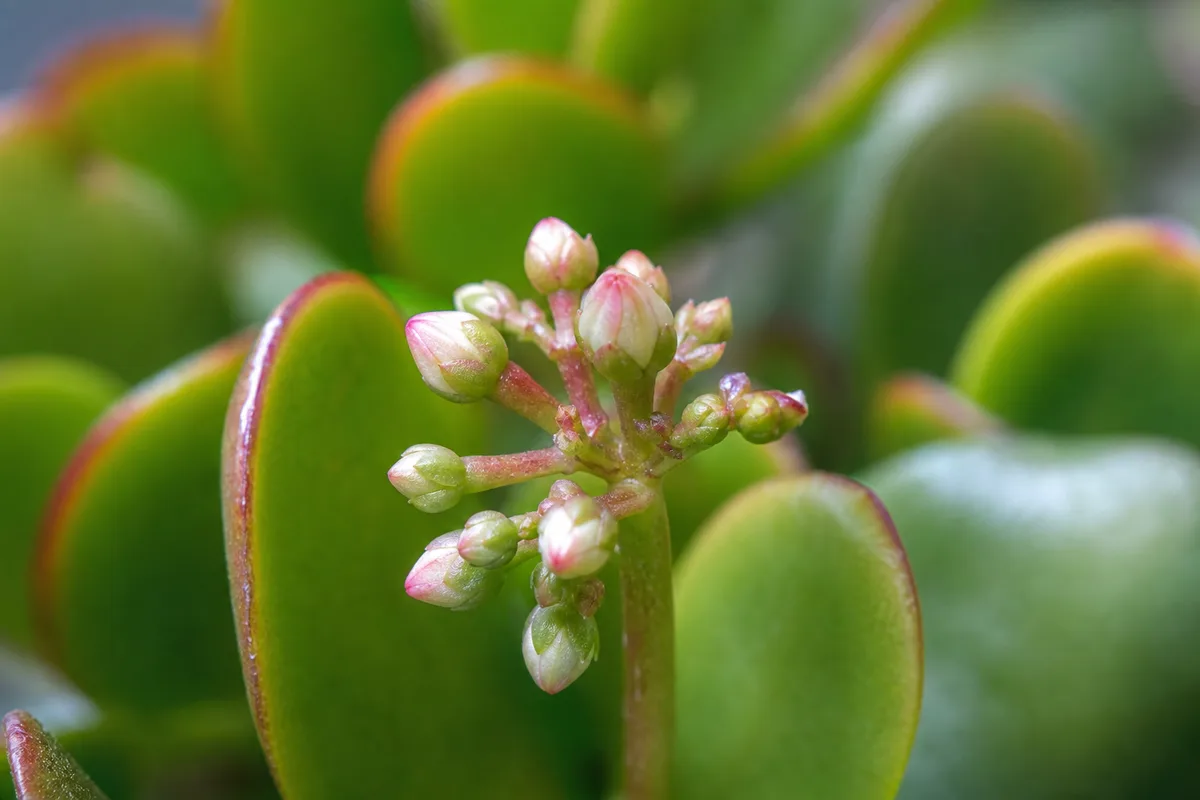
Small Flowers symptoms on Jade Plant - compare with healthy tissue on the same plant.
Normal small winter clusters (usually not a problem):
- First winter bloom on a woody multi-branched jade with thick stems
- Star-shaped white or pale pink flowers roughly fingernail-sized or smaller
- Several tight clusters at branch tips rather than one oversized inflorescence
- Bloom appearing in late fall through winter after cooler nights and drier soil
- Firm plump leaves and stable woody stems alongside modest cluster size
Stress-shrunk or sparse bloom on a mature bloomer:
- Far fewer terminal clusters than the same plant produced last winter
- Clusters with only a handful of open stars where branches were once frosted with bloom
- Buds that open but look pale, thin, or smaller than prior seasons on the same plant
- Bloom concentrated on only one side of the plant while the shaded side shows none
- Clusters appearing after Jade Plant repotting guide, a light move, or a warm winter with no cool-night rest
Companion symptoms that narrow the cause:
- Leggy pale stems reaching toward glass with sparse bloom at the brightest tips points to not enough light
- Pink buds forming then dropping before stars open overlaps bud drop-different from small open flowers
- Wrinkled firm leaves with dry soil during bud formation supports drought stress shrinking clusters
- Yellow lower leaves, heavy wet pot, and soft stem bases with few buds points to overwatering or root stress aborting bloom
- No bloom at all on a young plant under three to five years is normal indoors-not a small-flowers diagnosis
Already-open star clusters keep their size until they fade. Diagnose from next season’s bud formation after you correct culture, not from flowers that opened during stress.
Why Jade Plant produces small or sparse flowers
Jade is a slow-growing South African Crassulaceae succulent that channels energy into thick leaves and woody stems most of the year. Winter flowering is a bonus on mature plants under specific cool, dry, bright conditions-not a baseline indoor expectation. Several jade-specific factors explain sparse or undersized clusters when a mature plant used to bloom better.
Normal small morphology. The most common “problem” is expecting large hibiscus-style blooms from a species whose flowers are inherently diminutive. Wisconsin Horticulture Extension describes tight clusters of small star-shaped flowers produced in response to long nights-small is the design, not a care failure.
Immaturity. Young tabletop jades rarely bloom indoors. NC State notes the plant rarely blooms as a houseplant and typically flowers on outdoor specimens in spring. If your plant has thin green stems and no woody trunk, sparse or absent bloom is expected-wait for maturity rather than chasing flower fertilizer.
Missing cool-night bloom triggers. Jade flowering indoors depends on mimicking winter dryness and chill. Wisconsin Extension recommends withholding water in fall, keeping plants around 55°F especially at night, avoiding supplemental light so natural shortening days trigger initiation, and following several weeks of cold dry dark treatment before resuming regular watering. Constant 70°F nights in a bright living room prevent the phytochrome and temperature cues that build full clusters.
Insufficient direct sun. Jade needs four or more hours of direct sun for compact growth and best bloom potential. Bright indirect-only placements produce deep green drooping stems and fewer reproductive shoots. Bloom that appears only on the sunniest branch tips while the shaded side stays bare is a light signature-see jade plant light for correction.
Drought during bud formation. Jade tolerates dry soil, but Wisconsin Extension warns drought can cause dwarfing, foliage spotting, leaf drop, and death. Letting a budding plant crash to bone-dry for weeks while buds are sizing can yield fewer or thinner clusters than a plant that received sparse but adequate winter moisture after the dry rest period.
Overwatering and root stress. Overwatering causes leaf drop and stem rot on jade. Wet winter soil on a semi-dormant plant aborts buds before clusters fully develop. A mature bloomer that suddenly shows sparse clusters after months of heavy watering often needs root-zone correction-not more bloom booster.
Excess nitrogen late in the season. Heavy nitrogen feeding in late summer pushes soft leafy growth over flower initiation. Jade benefits from dilute fertilizer every two months during active growth-not weekly high-nitrogen doses into autumn when buds should be forming.
Recent repotting or environmental shock. Jade can remain root-bound for years, but a late-season repot, warm move, or light downgrade right when buds initiate often reduces cluster count the following winter even if individual stars still look normal-small.
How to confirm the cause
Work through these checks in order:
- Maturity check - Does the plant have a woody trunk and multiple branched stems? If stems are still mostly green and the plant is under a few years old, normal-small or absent bloom is expected. Stop here unless you are optimizing for future flowering.
- Expectation check - Are individual stars tiny but star-shaped on a first winter bloom? That matches species morphology. Compare to photos of Crassula ovata bloom, not tropical houseplant flowers.
- Year-over-year cluster count - On a plant that bloomed before, count terminal clusters per major branch versus last winter. A sharp drop supports culture stress; stable small clusters support normal morphology.
- Cool-night history - Did nights stay near 55°F (13°C) for several weeks in fall with reduced watering and uninterrupted darkness? Warm constant indoor heat without a rest period strongly supports missing bloom triggers from the overview bloom guidance.
- Light audit - Track direct sun on the plant from morning through afternoon. Fewer than four hours of direct sun on a mature plant supports light-limited sparse bloom.
- Moisture during bud set - Was soil bone dry for weeks while pink buds were visible, or soggy for weeks during winter rest? Dry crash supports drought-shrunk clusters; wet heavy pot supports overwatering overlap.
- Bud fate - Did buds open small, or drop before opening? Bud drop before stars unfurl is a different diagnosis-see bud drop.
- Pest inspection - Check leaf axils and developing clusters for white mealybug cotton. Infested buds often abort or open weakly.
If morphology matches species norms and cluster count is stable year to year, no fix is needed.
First fix for Jade Plant
Confirm the plant is mature and that individual blooms are normal star-shaped jade flowers-not a different problem-then compare this winter’s cluster count to last year before changing anything.
If cluster abundance dropped on a previously blooming woody plant, the single highest-yield correction is usually restoring the cool-night bloom cycle: move the plant to a cool bright room for fall initiation-nights near 55°F, no grow lights after dusk, sharply reduced watering for several weeks, then resume light watering once buds form. This one change addresses the most common indoor gap without stacking repotting, pruning, and fertilizer on the same day.
Do not dump phosphorus bloom fertilizer on a young non-blooming jade. Do not overwater because flowers look small-wet roots abort next year’s buds.
Step-by-step recovery
After confirming a mature plant with declining cluster abundance:
- Establish fall bloom protocol - Starting in early fall, reduce watering frequency, withhold fertilizer, and place the plant where nights cool to roughly 55°F without frost. Ensure no lamp or hallway light interrupts long nights. Resume modest watering when pink buds appear.
- Increase direct sun - Move to the sunniest safe window or add hours of direct sun gradually. Jade tolerates four or more hours of direct sun when acclimated. Rotate the pot weekly for even cluster distribution.
- Stabilize winter moisture - Follow the jade watering guide: dry down between drinks, especially during semi-dormancy, but avoid months of desiccation while buds are developing.
- Correct root stress if present - If soil stays wet for weeks, stop watering, inspect roots, and address rot or oversize pots before expecting next winter’s bloom-see overwatering.
- Stop late-season nitrogen - Skip high-nitrogen feeds after midsummer. Resume dilute balanced fertilizer only in spring active growth.
- Treat mealybugs on buds - Wipe pests with alcohol-dipped swabs; isolate until clean. Oil sprays need caution on succulent leaves in strong sun.
- Wait for the next cycle - Already-open small stars will not enlarge. Judge improvement by bud number next fall, not current petal diameter.
For a young plant with normal-small first clusters, enjoy the bloom and maintain bright dry-down culture-cluster count often improves as the plant matures.
Recovery timeline
Bud initiation for the next winter bloom cycle begins in fall-corrections made in September or October may not show fuller clusters until the following late fall or winter. Cool-night and light improvements sometimes increase cluster count within one bloom cycle; root recovery from overwatering may take a full year before bloom returns.
Individual star flowers last a few weeks; the overall winter flowering window can extend several weeks when cool dry conditions persist. Sparse clusters on a stressed plant may not fill in until the next season even after care improves.
Recovery means more terminal clusters and stable firm foliage, not larger petals on flowers already open.
Lookalike symptoms to rule out
No flowers at all - Young plants, warm winters, and dim rooms produce zero bloom. Small-flowers means stars are opening but clusters look modest or sparse-a lighter issue or normal morphology.
Bud drop before opening - Heat, overwatering, or pests abort pink buds before stars unfurl. See bud drop rather than small-open-flower fixes.
Faded flowers past peak - Spent winter clusters brown and shrink naturally. Check whether flowers are aging versus newly opening small stars-see faded flowers.
Underwatering wrinkle without bloom - Severely drought-stressed jade may show wrinkled leaves and no buds. That is underwatering overlap, not a flower-size complaint.
Leggy growth with no bloom - Very stretched pale stems with zero winter clusters point to severe not enough light before flower size becomes the question.
Mistakes to avoid
Do not treat normal tiny star-shaped winter clusters as a care failure on a first-time blooming mature jade.
Do not overwater or fertilize heavily because blooms look small-both sabotage next season’s bud set.
Do not expect larger individual petals; jade genetics cap flower size. Aim for cluster abundance, not hibiscus-scale blooms.
Do not blast heat all winter-bloom triggers need cool nights around 55°F, not sustained chill below freezing that damages roots.
Do not judge recovery on flowers that opened during drought, root stress, or a warm fall. Wait for next winter’s bud count.
Do not repot, prune hard, and fertilize the same week you notice sparse bloom-stacking stress hides what helped.
Wear gloves when handling cut tissue-jade plant is toxic to cats and dogs.
How to prevent sparse or undersized blooms next time
Grow for maturity. Allow the plant to develop woody structure in a stable pot before expecting winter bloom. Flowering is a bonus on mature specimens per the jade plant overview.
Run the fall bloom cycle annually. Withhold fall water, provide cool nights near 55°F, ensure uninterrupted darkness, then resume watering when buds show-matching Wisconsin Extension bloom guidance.
Keep strong light year-round. Four or more hours of direct sun supports compact growth and better bloom potential. See jade plant light for window placement.
Water on dry-down, not calendar. Use the top-inch dry test from the watering guide. Restrict winter drinks without letting budding plants desiccate for weeks.
Feed modestly in spring and summer only. Dilute fertilizer during active growth; stop before fall bud initiation.
Inspect weekly in late fall. Catch mealybugs before they coat developing clusters.
Choose fast-draining mix and breathable pots. Wet winter roots abort buds-prevention overlaps overwatering avoidance.
When to worry
Sparse small flowers alone rarely threaten plant survival-they are a quality and expectations issue on a long-lived succulent. Escalate when mass bud drop accompanies wet sour soil and soft stem bases, mealybug cotton covers most developing inflorescences, or leaves yellow and fall while the pot stays heavy. Those patterns signal root failure or pest pressure that needs faster action than tweaking cool-night routines.
Sustained temperatures below 50°F (10°C) at the root zone can damage jade-distinguish bloom-trigger cool nights from harmful chill.
Jade care cross-check
Also sold as money tree or lucky plant, jade should be judged by cluster count on mature wood, firm plump leaves, and stable roots-not by tropical houseplant bloom standards. If your plant never bloomed and stems are still green, patience and bright culture matter more than flower fertilizer.
Related guides:
- Jade plant overview - bloom biology and cool-night triggers
- Jade plant light - direct sun and bloom quality
- Jade plant watering - winter dry-down rhythm
- Bud drop - buds abort before opening
- Faded flowers - spent winter clusters
- Overwatering - wet roots aborting bloom
- Not enough light - sparse bloom at brightest tips only
Conclusion
Small jade flowers start with species honesty-Crassula ovata blooms are naturally tiny star-shaped clusters on mature winter plants. When a previously blooming woody jade produces fewer or thinner clusters than past seasons, cool nights near 55°F, strong direct sun, balanced winter moisture, and healthy roots restore abundance on the next bloom cycle-not larger petals on flowers already open. Confirm maturity, compare year over year, run the fall rest protocol, and judge next winter’s bud count-not petal diameter-before stacking unnecessary treatments.
When to use this page vs other Jade Plant guides
- Jade Plant watering guide - Use for routine moisture checks before assuming small flowers is the main issue.
- Jade Plant problems hub - Browse all 49 common issues on this species.