Bud Drop on Jade Plant: Causes, Checks & Fixes
Quick answer
Bud drop on jade usually means flower buds-not leaves-shrivel and fall after bloom triggers were interrupted by a move, repot, temperature swing, or watering change. First step: stop moving the plant and return it to a stable bright spot with cool nights until you confirm whether you are seeing flower buds or yellow leaves dropping.
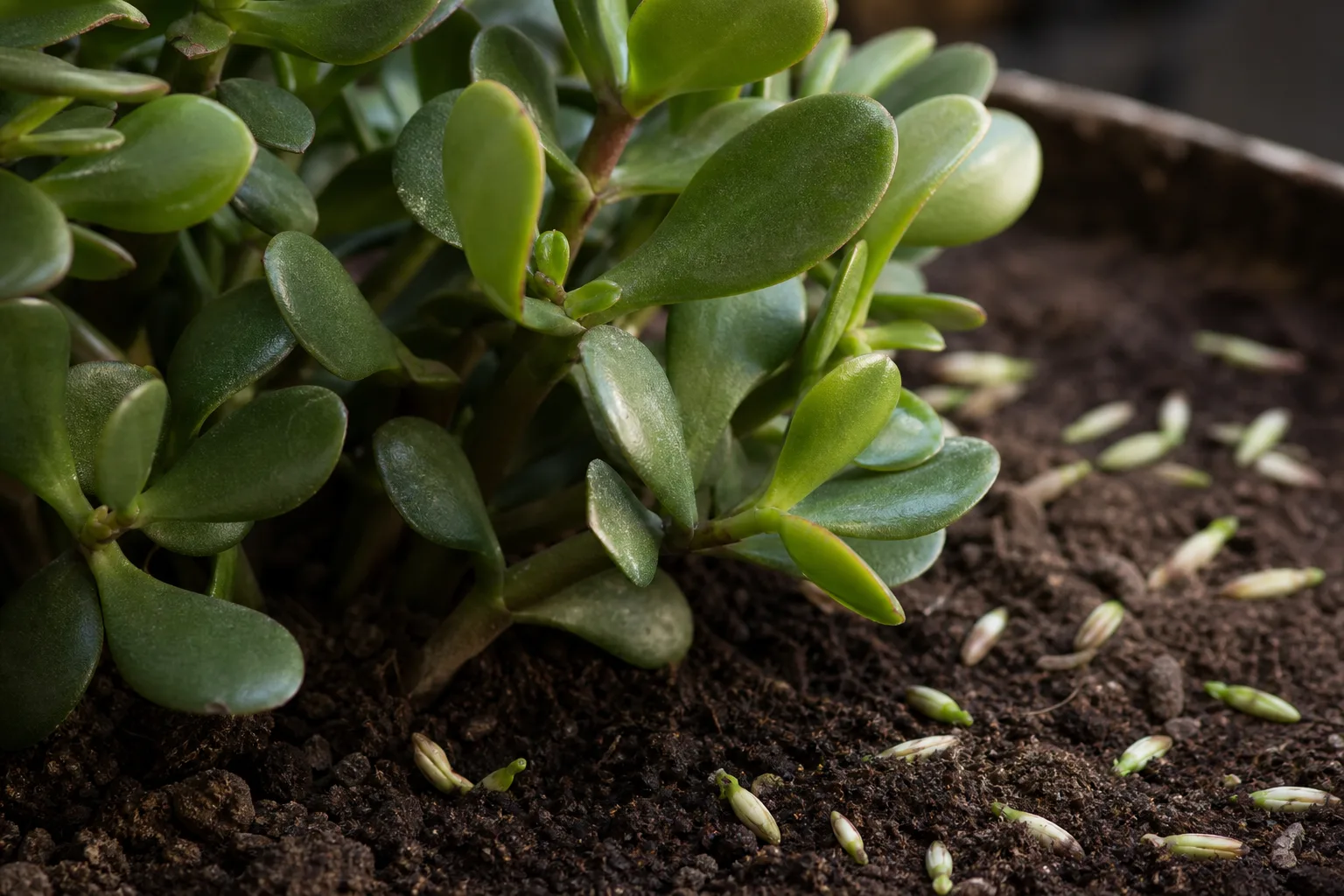
Bud Drop on Jade Plant: Causes, Checks & Fixes
This guide covers bud drop on Jade Plant. See also the general Bud Drop guide, watering, and light pages for this plant.
Bud Drop on Jade Plant: Causes, Checks & Fixes
Quick answer
Bud drop on jade plant (Crassula ovata) almost always means flower buds-not leaves-shrivel and fall before opening. That happens when a plant that was building bloom energy hits stress during the delicate bud stage: a move, repot, draft, temperature swing, or sudden watering change after cool nights and short days triggered bud formation.
Mature jades produce tight clusters of small white or pink star-shaped flowers in late winter to spring when fall brings cool nights around 55°F (13°C), reduced watering, long uninterrupted dark nights, and bright days. NC State Extension notes indoor jades rarely bloom, so many readers searching “bud drop” are actually seeing yellow leaves fall-a different problem covered on yellow leaves.
First step: decide what is dropping. Inspect branch tips under bright light. Tiny pink or white bud clusters that dry up and fall while stems stay firm point to flower-bud abortion-stop moving the plant and stabilize light, temperature, and watering. Whole yellow leaves on multiple nodes with a heavy wet pot point to root stress-follow the yellow-leaves and overwatering guides instead.
Full species context: jade plant overview.
Bud drop vs. leaf drop on Crassula ovata
Search results mix two problems under “bud drop.” On jade, the distinction matters because the fixes differ.
| What you see | Likely meaning | Stem and soil clues | Where to go next |
|---|---|---|---|
| Small tight clusters at branch tips shrivel and fall | Flower-bud abortion after bloom triggers were broken | Stems firm; soil dry-to-moderate; often follows move, repot, or draft | Stay on this page |
| Whole leaves yellow, then drop from several nodes | Leaf-drop stress-overwatering, rot, drought, or pests | Wet heavy pot + soft base = rot; dry light pot + wrinkled leaves = drought | Yellow leaves |
| One lower leaf fades and falls on an otherwise healthy plant | Normal aging | Firm stems; dry firm soil; no tip bud clusters involved | No fix needed if pattern stays slow |
| Leaves and stem tips both collapse | Advanced rot or severe drought | Sour wet soil or bone-dry shrunken mix | Root rot or watering guide |
Flower buds on jade look nothing like leaves. NC State describes developing buds as pink sepal-covered clusters at branch tips that open into star-shaped white flowers tinged pink. Aborted buds shrink, brown, and detach while the branch and nearby leaves remain plump. Leaf drop removes entire paired leaves along the stem.
What bud drop looks like on Jade Plant
Flower-bud clusters and abortion patterns
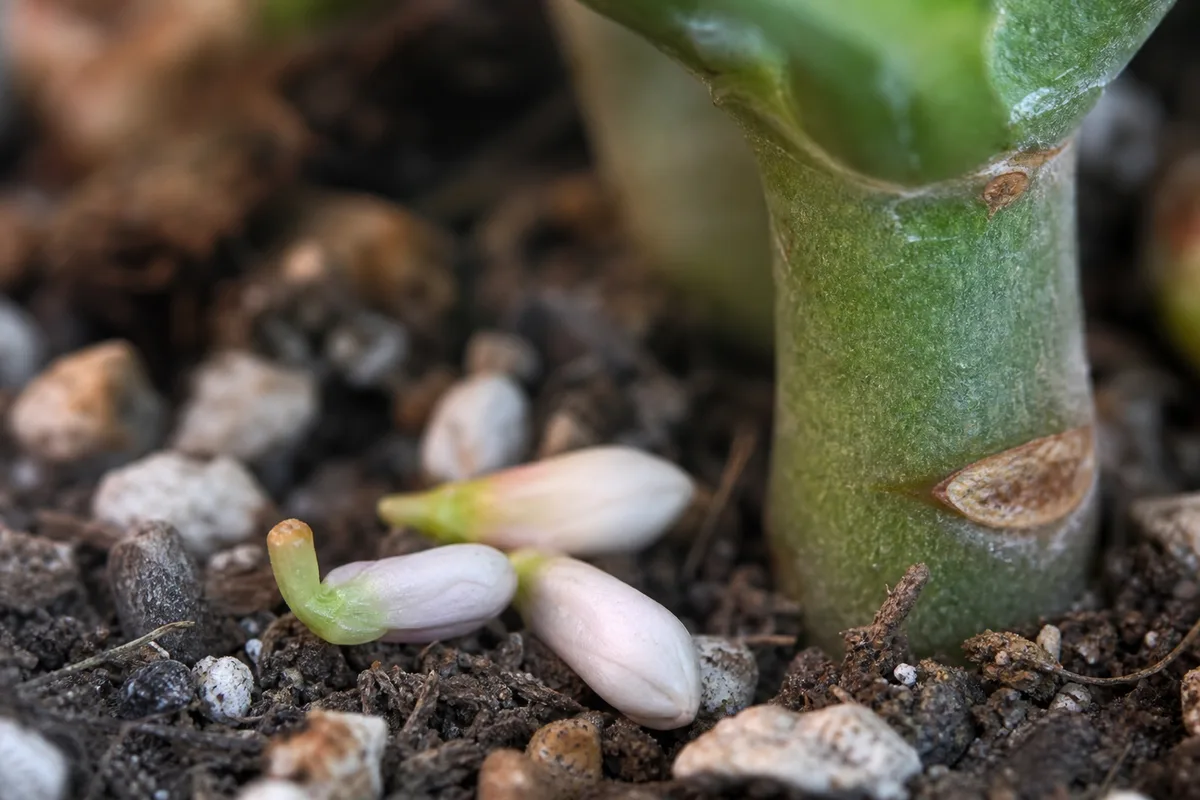
Bud Drop symptoms on Jade Plant - compare with healthy tissue on the same plant.
Healthy pre-bloom jade shows compact rounded clusters at the ends of woody branches-each cluster a few millimeters across, often with a pink flush before flowers open. Under good conditions, clusters can become dense enough to hide foliage on outdoor or greenhouse specimens.
Bud abortion shows a different timeline:
- Clusters appeared after weeks of cool nights and drier fall culture, then dried and fell within days to two weeks
- No open flowers developed; aborted tissue looks papery or brown at the tip
- Stems and mature leaves stay firm-unlike rot, where the stem base softens
- A recent move, repot, heater blast, or watering binge often precedes the drop
Young indoor jades on a windowsill may never form buds at all. Chicago Botanic Garden notes tiny flowers appear midwinter to spring but rarely on indoor plants without strong light and seasonal cues. If you have never seen tip clusters, assume leaf drop or normal senescence until you confirm bud tissue at the tips.
Why Jade Plant drops buds
Flowering biology and environmental triggers
Jade is a South African succulent that blooms when short days, cool nights, and seasonal dryness mimic its native winter rest. Wisconsin Horticulture Extension recommends withholding water in fall, keeping plants around 55°F (13°C) at night, and placing them where no supplemental light interrupts natural shortening days-then resuming regular watering after several weeks of that treatment to encourage flowers.
That combination is hard to reproduce indoors. Most house jades stay warm year-round, receive evening lamp light, and are watered on a steady calendar. Plants that do initiate buds have invested weeks of energy; interrupting that window is why abortion is common once buds are visible.
Maturity matters. Specimens need several years of growth in bright conditions before flowering is physiologically likely. A two-year cutting in a dim office is not failing to hold buds-it was never going to form them.
Stress during bud formation
The events that abort buds are usually abrupt compared with the slow triggers that formed them:
- Moving or rotating the pot after clusters appear-light direction and microclimate shift
- Jade Plant repotting guide or root disturbance during fall or winter bud stage-Wisconsin Extension advises repotting as new growth starts in spring, not during bloom prep
- Temperature swings from drafts, open doors, or heat vents-especially when nights were cool and a warm blast follows
- Sudden overwatering after a dry fall rest-roots re-saturate while the plant is in low-growth mode
- Heavy pruning that removes bud-bearing tips in late summer or fall
Less common but possible: mealybugs at growing tips deform new tissue and can disrupt bud clusters. Inspect axils if tips look sticky or cottony before blaming environment alone.
Bud drop vs. yellow leaf drop
Yellow leaf drop is the confusion behind many “bud drop” searches. The patterns diverge quickly if you inspect tips and soil together.
Flower-bud abortion:
- Loss is limited to tip clusters
- Timing follows cool-season bloom prep plus a recent disturbance
- Pot may feel moderate weight; stems firm
- Leaves may look normal except for occasional natural lower-leaf senescence
Yellow leaf drop from overwatering:
- Multiple leaves yellow at once, sometimes with droop
- Pot stays heavy; soil wet for days
- Stem base may feel soft if rot is advancing
- See yellow leaves and overwatering for the dry-down and root-inspection path
Drought-related leaf drop:
- Wrinkled firm leaves precede drop
- Pot is very light; soil dusty dry throughout
- No bud clusters involved
- Fix through a single thorough soak, then return to dry-down watering
Do not withhold water from a yellowing, wet-soil jade to “save buds.” That worsens rot. Do not soak a bone-dry plant because tip buds aborted-address the abortion trigger first.
How to confirm the cause
Work through these checks in order. One honest pass at the tips and pot weight beats guessing from the problem name alone.
- Identify what fell - Tip clusters only = bud abortion branch. Whole leaves = leaf-drop branch.
- Recall recent changes - Move, repot, prune, heater, or watering shift in the last two weeks strongly supports bud abortion if clusters were present.
- Temperature history - Cool nights near 55°F followed by warm drafts fits bloom-then-abort. Constant 70°F rooms explain why many jades never bloom indoors.
- Pot weight and moisture - Heavy wet soil redirects you to leaf/rot guides. Light dry soil with firm leaves fits stable post-abortion care or drought-not rot.
- Stem base firmness - Soft mushy base with sour soil = root rot urgency, not cosmetic bud loss.
- Light level - Four or more hours of direct sun supports compact growth and bloom potential; dim survival makes both buds and recovery unlikely.
- Pest check at tips - Mealybugs or aphids on newest growth can stall buds; treat pests before environmental tweaks stack up.
Confirmation decision table
| Finding | Most likely cause | First action |
|---|---|---|
| Tip clusters dried and fell after repot or move | Bud abortion | Stabilize location; no further repot this season |
| Yellow leaves + wet heavy pot | Overwatering / rot risk | Stop watering; inspect roots per yellow-leaves guide |
| One lower leaf yellow on firm plant, dry soil | Normal aging | Monitor; no change needed |
| No clusters ever formed; plant is young or dim | Bloom unlikely indoors | Improve light; do not chase buds on a cutting |
| Buds formed after cool dry fall, then night heat blast | Temperature abortion | Move off radiator; keep cool bright nights stable |
First fix for Jade Plant (by likely cause)
If flower buds aborted after a move or repot
Leave the plant exactly where it is for the rest of the bloom season. Choose the brightest stable window you can offer-south or west exposure with some afternoon protection if glass intensifies heat. Keep nights as cool as practical without freezing; avoid heaters and frequently opened doors on the same sill.
Resume a moderate dry-down rhythm: allow soil to dry between waterings, soaking only when the top inch is completely dry and the pot feels light. Do not fertilize to “replace” lost buds. Do not repot again until spring active growth.
If buds never formed and leaves are yellowing
You are not dealing with bud drop. Follow yellow leaves-usually stop watering wet soil, improve light, and inspect roots before any other treatment.
If you want buds next season on a mature plant
Starting in early fall: gradually lengthen dry intervals, ensure long dark nights without lamps after dusk, and provide cool nights near 55°F (13°C) if your home allows. Details and timing live on the watering guide and overview flowering section. Treat this as a mature-plant bonus, not a baseline care requirement.
Make one environmental change at a time when troubleshooting. Stacking repot, prune, fertilizer, and pesticide the same day hides what helped and can abort the next bud attempt.
Recovery timeline
| Situation | What improves first | Realistic window |
|---|---|---|
| Bud abortion after move | No further cluster loss; firm leaves persist | Clusters already lost-stability within 1–2 weeks |
| Stable culture after abortion | New vegetative tips resume; no rot spread | Several weeks in cool bright conditions |
| Next bloom attempt | New bud clusters after full fall trigger cycle | Next cool season on a mature plant-often 12+ months |
| Misidentified leaf drop fixed | Yellowing stops spreading; new green tips | 2–6 weeks after dry-down and light correction |
Aborted buds do not re-open. Recovery means the plant stays firm, does not lose multiple leaves, and remains stable through the rest of winter. Judge success by healthy stem tissue and future seasonal cues-not by forcing flowers this month.
What not to do
- Do not repot or heavily prune during visible bud formation if you want bloom
- Do not move a budding jade for “better light” mid-season-acclimate before fall triggers, not after clusters appear
- Do not increase watering because buds fell while soil is already wet
- Do not fertilize stressed jade to push flowers-salts stress roots in winter
- Do not assume every dropped piece is a bud; confirm tip cluster debris vs. whole leaves
- Wear gloves when handling cut tissue-jade is toxic to cats and dogs
How to prevent bud drop next time
- Pick the winter bloom window location in fall and keep it stable through spring
- Repot in spring as new growth starts-not during bud formation
- Reduce fall watering gradually on mature plants per watering guide; avoid both bone-dry wilt and soggy winter soil
- Give four-plus hours of direct sun year-round so the plant can store bloom energy
- Shield from heat vents and drafty doors once clusters form
- Avoid supplemental night light during fall if you are deliberately chasing bloom
- Accept that many indoor jades never bloom-prevention here means not aborting rare buds, not guaranteeing flowers
When to worry
Treat as urgent when:
- Stem bases soften while soil stays wet-bud loss may coincide with advancing root rot
- Multiple leaves yellow and drop with a heavy pot-that is systemic stress, not tip abortion
- Soil smells sour or stems blacken at the crown
- Pets ingest jade tissue-contact your veterinarian; the plant is toxic to cats and dogs
Cosmetic loss of tip clusters on an otherwise firm plant after a known move is discouraging but not an emergency.
Practical checks
Urgency check
Soft stem base + wet sour soil → rot protocol immediately. Firm plant, only lost tip clusters, dry-to-normal soil → stabilize environment, not emergency repot.
Best inspection order
Tip clusters present or recently lost → recent move/repot history → night temperature stability → pot weight → stem base firmness → leaf yellowing pattern → pests at growing tips → light exposure.
Jade care cross-check
Also sold as money tree or lucky plant, jade should be judged by firm leaves and stable roots, not by flowers alone. If your plant has never bloomed indoors, focus on light and watering fundamentals before treating yellow leaf drop as bud failure.
Related jade plant problems
- Jade plant overview - flowering triggers and baseline care
- Watering - fall rest and dry-down rhythm
- Light - bloom energy and compact growth
- Yellow leaves - leaf-drop cause hierarchy
- Overwatering - wet soil and leaf loss
- Root rot - soft stems and sour soil
When to use this page vs other Jade Plant guides
- Jade Plant watering guide - Use for routine moisture checks before assuming bud drop is the main issue.
- Jade Plant problems hub - Browse all 49 common issues on this species.