Slow Growth on Geranium: Causes, Checks & Fixes
Quick answer
Slow growth on Geranium usually means the plant is alive but not building new leaves or buds-often from winter rest on a dim windowsill, wet soil in low light, a recent indoor move, cool drafts below 55°F, or roots that need checking before you feed. First step: confirm direct sun hours and top-inch soil moisture, then correct light or watering before changing fertilizer or pot size.
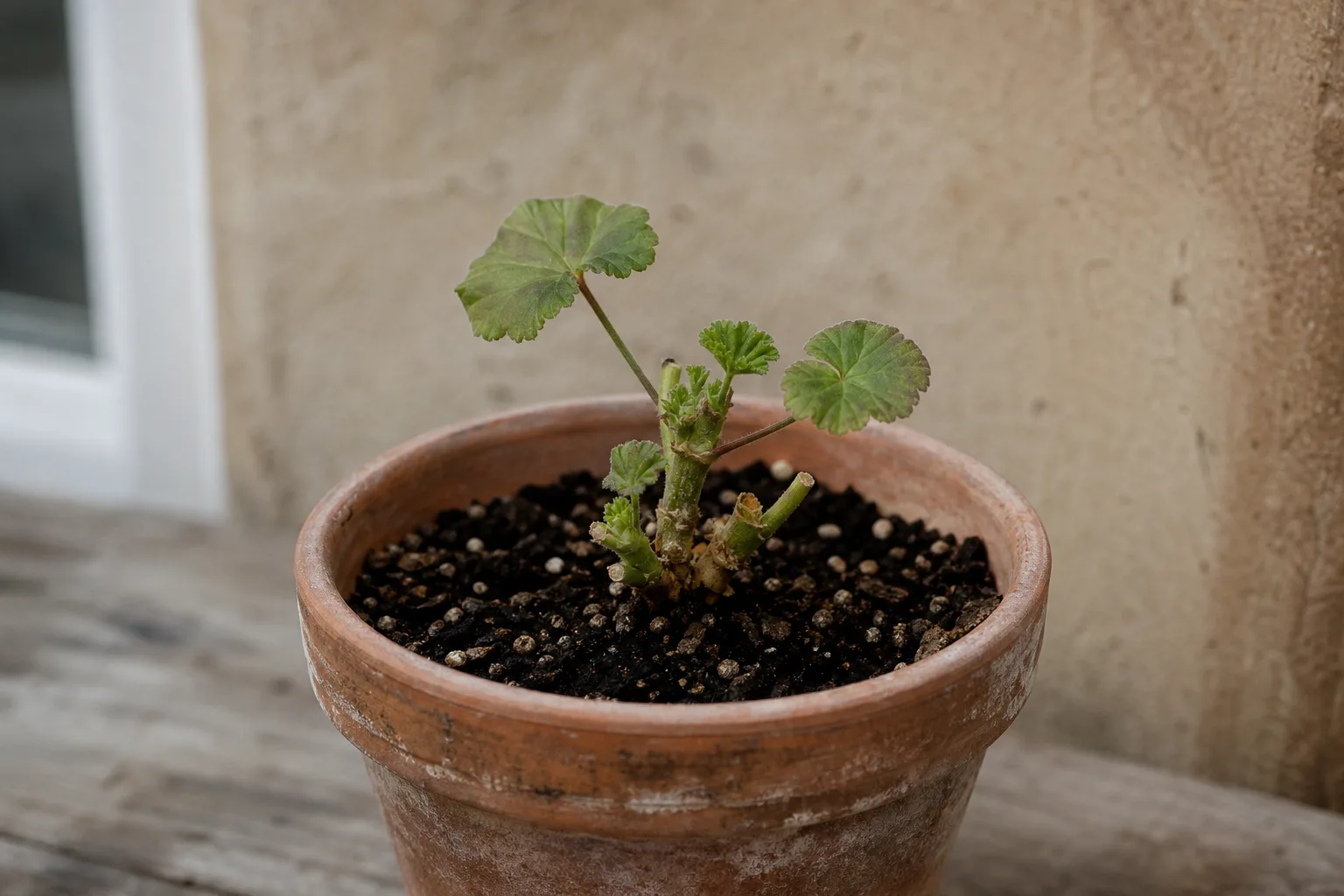
Slow Growth on Geranium: Causes, Checks & Fixes
This guide covers slow growth on Geranium. See also the general Slow Growth guide, watering, and light pages for this plant.
Slow Growth on Geranium: Causes, Checks & Fixes
Quick answer
Slow growth on Geranium (Pelargonium × hortorum, zonal geranium) means the plant stays green but stops producing new leaves, stem tips, or flower buds for weeks-different from leggy growth, where stems stretch toward light with long gaps between nodes. A healthy pelargonium in good summer sun grows at a moderate pace and builds bud clusters steadily; on a dim winter windowsill, that same plant may sit nearly static for months while it rests.
First step: count direct sun hours on the leaves and check whether the top inch of mix is dry or wet. Correct light placement or watering rhythm before you repot, fertilize, or hard-prune. This page covers overall growth stalls-winter rest, root problems, overwinter transition, cool drafts, and fertilizer timing. For stretch and pale leaves with few blooms, see not enough light.
Slow growth vs. leggy growth vs. not enough light on Geranium
These three geranium problem pages overlap because light, water, and season affect all of them-but the primary signal and first fix differ.
| Page | Primary signal | What the plant is doing | First action |
|---|---|---|---|
| Slow growth (this page) | Green plant, few or no new leaves/buds, static shape | Resting, wet-root stall, transition pause, or cool draft | Fix sun or soil moisture before fertilizer |
| Leggy growth | Long internodes, stems lean toward window | Active stretch toward weak light | Move to direct sun; pinch after growth tightens |
| Not enough light | Pale small leaves, weak blooms, slow dry-down | Chronic light deficit before or without stretch | Brightest window or grow light; full diagnostic path |
Many overwintered geraniums show both static bud formation and some stretch in dim rooms. Fix light and watering first; both symptoms often improve together.
What slow growth looks like on Geranium
Pelargoniums are woody-stemmed, semi-succulent plants adapted to bright Southern African conditions. When growth stalls, the canopy often looks frozen in time rather than actively declining.
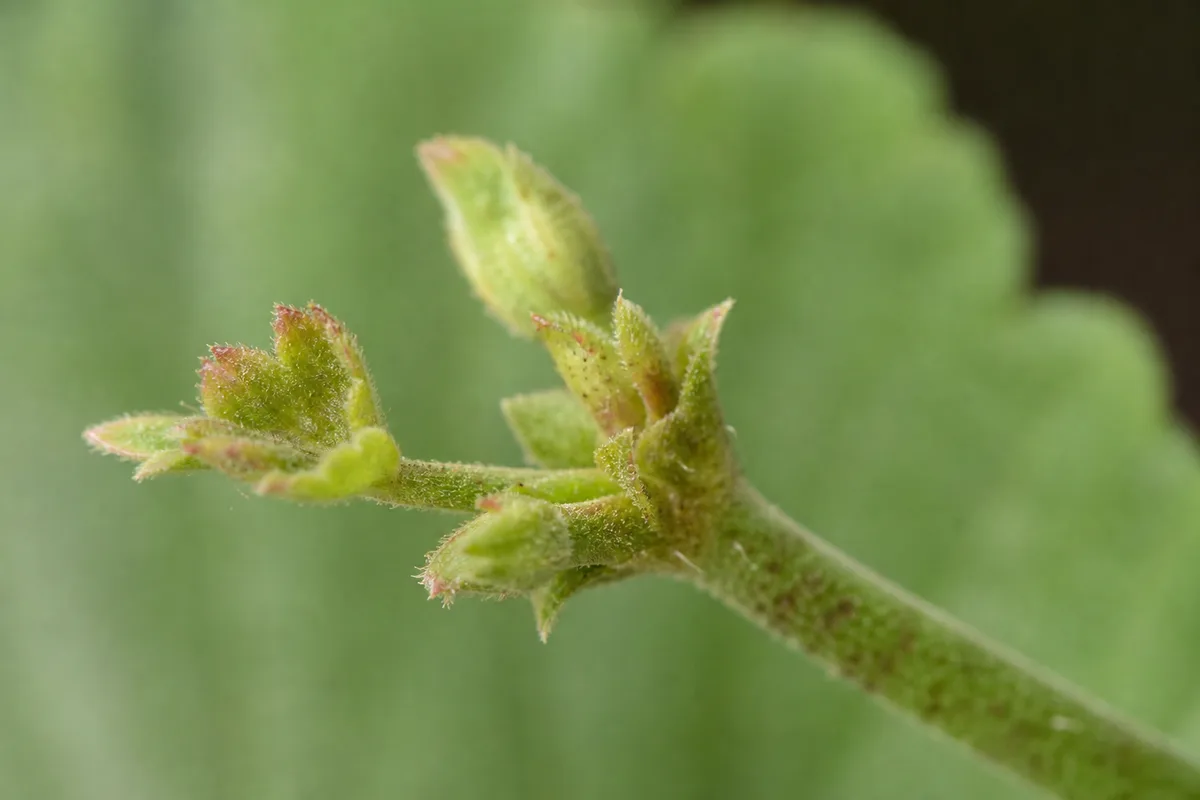
Slow Growth symptoms on Geranium - compare with healthy tissue on the same plant.
Watch for these patterns:
- No new bud clusters for weeks - existing foliage stays green, but flower heads never form or stay pin-sized despite warm room temperatures. Flowers are the honest report card; foliage alone can look acceptable while the plant is stalled.
- Small, pale new leaves - when tips do produce foliage, leaves open lighter green and smaller than older sun-grown leaves on the same branch, without the long internodes typical of leggy stretch.
- Static canopy height - stem tips neither elongate nor branch; the plant holds the same silhouette for a month or more indoors.
- Slow pot dry-down in dim corners - in environments with less light, plants grow more slowly and use less water, so soil stays wet seven to ten days after watering while the semi-succulent stems barely draw moisture. That pattern overlaps with overwatering and root rot risk.
- Post-move pause - a balcony zonal brought indoors in October may stall for weeks while it adjusts, especially if light and watering rhythm did not change with the environment.
These signs differ from normal bare-root winter storage, where plants are intentionally kept cool and dark at 45–55°F and produce no growth until spring. They also differ from active leggy stretch, where stems lean and internodes lengthen even though overall vigor looks weak.
Zonal vs. ivy vs. scented types: winter pace differs
Zonal geraniums (P. × hortorum) are the upright patio classics most readers mean. They tolerate cool indoor overwintering at 65–70°F days and 55–60°F nights and can sit nearly static on a dim sill without dying-slow bud formation is common December through February.
Ivy geraniums (P. peltatum) trail from baskets and often stall harder indoors because they want cooler nights and steady moisture without the deep shade of a distant window. Bare-root dormant storage that works for zonals usually fails on ivy types; plan potted culture on the brightest sill you have.
Scented-leaved types may keep producing fragrant foliage in weak light while flowers stay absent-growth looks “active” by leaf scent but still counts as slow bloom if that is your goal. Regal (P. × domesticum) types need specific cool short-day conditions to flower and are a poor comparison for zonal winter-rest questions.
Why Geranium grows slowly
Normal winter rest on a dim windowsill
Short winter days and weaker window light naturally slow pelargoniums. Geraniums prefer cool indoor temperatures while overwintered, and growth that was moderate outdoors in summer becomes minimal indoors from November through February on many windowsills-fewer leaves, no blooms, and longer intervals between waterings. That rest is expected if stems stay firm, older leaves hold color, and the mix eventually dries between drinks.
This is not the same as bare-root cool storage: plants hung upside down or bagged at 45–55°F in a dark cellar are intentionally dormant with few or no leaves. A green potted geranium on a windowsill that simply lacks winter bloom light is dim-windowsill rest-still alive, still watered occasionally, but photosynthesis-limited.
Insufficient direct sun during active growth
When you want active growth-not dormancy-geraniums need strong light. Most geraniums prefer full sun with at least six hours of direct light daily during the warm season; flowering drops when sun falls below that threshold. Indoors, the same south window that felt adequate in October may not deliver enough energy by January unless you add grow lights. Chronic light deficit causes slow leaf production and absent buds; see not enough light when stretch accompanies the stall.
Cool drafts below 55°F (13°C)
Pelargoniums prefer daytime temperatures around 65–70°F and nights around 55–60°F during active indoor growth. Sustained cold-window glass contact, entry-door drafts, or an unheated porch below 55°F (13°C)-shuts down tip growth quickly and can yellow lower leaves. A plant in a warm room with adequate light but a cold windowsill often stalls at the crown while older foliage looks fine.
Overwatering and root rot stall
Geraniums tolerate brief dryness better than chronic wetness-allow the soil to dry between waterings. In dim winter rooms, unchanged watering from the outdoor summer schedule keeps mix soggy while the plant uses little water. Roots suffocate, tip growth stops, and lower leaves may yellow while the pot stays heavy. Soft stems at the base or sour-smelling mix point toward root damage-see root rot on geranium and the watering guide.
Overwinter patio-to-indoor transition
Bringing a full summer pot indoors cuts light sharply even beside a window. Many geraniums pause bud formation for several weeks after the move while they adjust. If you also increased watering frequency because the plant looked tired-or placed it in a decorative dim corner-stall worsens. Transition stress is temporary when light is adequate and soil dries on a stretched winter rhythm.
Under-fertilization after light and roots are fixed
Geraniums in fast-draining compost with frequent watering in full summer sun use nutrients quickly. Geraniums respond well to fertilizer and are stunted without enough nitrogen, so a plant that finally receives bright light but still produces tiny pale leaves after four weeks may need weak fertilizer during active growth-but only after you confirm roots are firm and soil moisture is balanced per the fertilizer guide. Feeding a still-stressed, wet-rooted plant in dim light pushes soft foliage, not recovery.
Excess nitrogen pushing foliage over flowers
High-nitrogen feeds produce lush green leaves with delayed or absent blooms even in sunny windows. If growth looks vegetative-large dark leaves, no bud clusters-review feeding before assuming light alone is the limiter.
Pest stress draining new tips
Aphids, spider mites, and mealybugs on geranium cluster on soft new growth and flower stems, sapping vigor so tips stall. Check leaf axils and bud clusters with a hand lens before you change light or fertilizer. See aphids on geranium and spider mites on geranium when insects are present.
Recent repotting pause
Fresh repotting into heavy wet mix-or a pot much larger than the root ball-can pause growth for two to three weeks while roots colonize new soil. Expect a brief stall after repotting; prolonged stasis with damp mix suggests drainage or watering problems per the repotting guide and soil guide.
How to confirm the cause
Work through this checklist before stacking treatments:
- Season and light hours - Is it November–February on a north or distant window? Reduced growth may be normal rest. If you expect active growth, count direct sun hours; fewer than six during the warm season strongly limits bud formation.
- Top-inch moisture rhythm - Insert a finger to the first knuckle. Mix wet for seven or more days in shade suggests overwatering stall. Crumbly dry mix with limp leaves suggests underwatering overlap-see underwatering on geranium.
- Pot weight - Lift after watering. A container that stays heavy for days while tips stall points to low water use from dim light, compacted mix, or damaged roots.
- Newest tip condition - Firm green tips with no pests mean the plant is resting or light-limited. Soft brown tips, grey mould, or mushy crown need faster escalation.
- Temperature at the leaf surface - Cold glass or drafty sills below 55°F (13°C) explain winter stall on otherwise healthy-looking plants.
- Recent changes - Indoor move, repot, or fertilizer spike within the last month? Pause before adding more interventions.
- Pest scan - Sticky residue, cottony clusters, or stippled leaves on new growth mean pests-not fertilizer-are limiting vigor.
Winter rest vs. wet-root stall decision table
Use this table when the plant is green and you are unsure whether to wait or intervene.
| Pattern | Stem tissue | Soil moisture | Urgency | First fix |
|---|---|---|---|---|
| Normal winter rest | Firm green stems, no pests | Eventually dries between drinks on a stretched schedule | Low - patience OK | Add grow light or wait for longer days if you want blooms sooner |
| Dim-light stall (not rest) | Firm tips, no buds for weeks in a warm room | Dries normally but light is weak | Medium - act this week | Move to brightest direct sun or add supplemental light |
| Wet-root stall | Firm but stalled tips; may yellow lower leaves | Wet 7+ days after last drink | Medium - act this week | Skip watering, confirm drainage, empty saucer |
| Root rot risk | Soft base, sour smell, collapsing lower stems | Chronically damp despite dry-down attempts | High - unpot today | Inspect roots per root rot guide; do not fertilize |
| Cool-draft stall | Firm plant, stalled tips on cold sill | Normal dry-down | Medium - act this week | Move off cold glass or raise night temps above 55°F |
If the plant is green and firm, soil dries on a stretched winter schedule, and no buds appear for weeks on a dim sill, you likely have normal rest. If soil stays wet, lower leaves yellow, or the plant stalled immediately after a patio move, treat it as correctable stress.
First fix: light and roots before fertilizer
Move the pot to the brightest direct-sun location you can offer-or fix chronic wet soil-and change nothing else for one week.
Indoors, that usually means an unobstructed south window where leaves receive direct sun for much of the day, or a grow light hung 10–12 inches above the canopy if natural light falls short. Outdoors after frost risk passes, full sun with gradual acclimation restores active growth fastest.
If the top inch of mix has been wet for days in a dim corner, skip the next scheduled watering, confirm drainage holes are open, and empty the saucer after each drink per the watering guide. Do not fertilize, repot, or hard-prune on the same day you fix light or moisture.
Step-by-step recovery
Once placement and moisture look right, follow this order:
- Wait 7–10 days and watch the newest leaf pair. Tighter, slightly darker leaves mean the plant is responding.
- Adjust watering to seasonal light - bright summer pots may need checking every one to two days; dim winter windowsills often need five to seven days or longer between thorough drinks when the top inch is dry.
- Resume weak fertilizer only after four weeks of normal new growth in bright active conditions-not during winter rest on a dim sill when light intensity is low.
- Pinch or deadhead once bud clusters return, redirecting energy toward fresh blooms per the pruning guide.
- Treat pests if axils or buds show aphids, mites, or mealybugs before expecting growth to resume.
Do not stack repotting, hard pruning, and bloom booster on the same week you fix light or roots.
Recovery timeline
| Milestone | What to expect |
|---|---|
| 1–2 weeks | Wet-soil stall stabilizes once mix dries properly; lean toward window may slow if light improved. |
| 2–4 weeks | New leaf pairs open closer together and slightly darker in brighter placement; bud initials may appear as days lengthen. |
| 6–8 weeks | Steady tip growth and flower clusters return if light, watering, and pests align through active season. |
| One season | Overwintered plants often resume full bloom rhythm only after return to outdoor sun or strong supplemental light. |
Judge recovery by new bud clusters or tighter internodes at the tips, not by old leaves yellowed during stress. A geranium that holds firm stems and opens fresh green tips is recovering-even if lower foliage still looks tired.
Lookalike symptoms to rule out
Leggy stretch with long internodes means light deficit with active etiolation-see leggy growth and not enough light.
Yellow lower leaves with chronically damp mix overlap overwatering and root rot-inspect roots before assuming winter rest.
Crisp wilt between waterings points to underwatering, not slow rest-see underwatering on geranium.
Normal post-move leaf drop when geraniums come indoors can look alarming; many older leaves fall even when care is adequate. Wait for tip behavior on new stems before diagnosing stall.
High-nitrogen lush foliage without blooms in a sunny window suggests feeding adjustment, not more sun.
Grey mould on spent flowers in cool humid indoor air signals botrytis pressure-improve airflow and remove wet petals rather than waiting for spring light alone.
What not to do
Do not fertilize a stressed geranium before checking roots and light-especially in a dim room with wet soil.
Do not keep a summer watering schedule on an overwintered indoor pot; lower light means slower dry-down and higher rot risk.
Do not confuse normal winter rest with failure and repot repeatedly on a green, firm plant that simply lacks winter bloom light.
Do not stack repotting, hard pruning, and pesticide the same week you move a patio geranium indoors.
Do not assume slow growth always means more water-semi-succulent pelargonium stems store moisture, and soggy roots stall growth faster than brief drought.
If you have pets, remember Pelargonium is toxic to cats and dogs; wash hands after pruning or repotting stressed plants and keep cuttings out of reach.
How to prevent slow growth next time
Place geraniums where six or more hours of direct sun is realistic through the warm season-sunny patios, south windows, or bright balcony rails after frost passes per the light guide and overview.
Before autumn move-in, identify the brightest window and add grow lights if needed rather than waiting for stall in January.
Match watering to seasonal light-reduce frequency when short days slow evaporation, even if the calendar still says “watering day.”
Pause fertilizer during dim winter rest; resume weak feeds when new growth looks normal in bright active conditions.
Scout weekly for pests on overwintered tips-stressed geraniums in warm dim corners attract aphids and whiteflies more readily than compact sun-grown plants.
When to worry
Slow growth alone in winter on a dim sill is often normal. Treat as urgent when lower leaves yellow while mix stays wet, stems soften at the base, grey mould appears on spent flowers in cool humid air, or pests coat new growth. Those patterns need root inspection, airflow correction, or pest treatment-not patience.
Replace severely weakened plants if stems are hollow, roots are mushy, or the plant collapses despite improved light and corrected watering. Geraniums are easy to restart from cuttings once you have a bright window-see the propagation guide.
Conclusion
Choose your path by urgency, not by panic:
- Green, firm, dry soil on a dim sill in midwinter? Normal rest-wait or add light; do not repot or feed.
- Wet soil 7+ days with yellow lower leaves? Correct moisture this week; unpot same-day if the stem base is soft.
- Firm plant, weak light, no buds in a warm room? Move to direct sun or grow lights before any fertilizer change.
Slow growth is usually a light, moisture, or season message-not a call for more fertilizer. For stretch-specific diagnostics, use not enough light; for long bare stems, use leggy growth.
Related Geranium guides
- Geranium overview - Pelargonium types, overwintering, and culture
- Not enough light - window placement and grow-light setup
- Leggy growth - internode stretch and pinching
- Light - seasonal sun hours and outdoor culture
- Watering - dry-down rhythm that prevents rot in dim rooms
- Fertilizer - when to resume feeding after winter rest
- Root rot - wet-soil stall escalation
- Overwatering - heavy pot in shade overlap
- Aphids and spider mites - pest-driven vigor loss
FAQs
Is slow geranium growth normal in winter indoors?
Yes, on a dim overwintered windowsill. Pelargoniums naturally slow when short days and weaker light reduce photosynthesis-fewer new leaves and no bloom clusters for weeks is expected if the plant stays green and firm. That is rest, not failure. Worry when lower leaves yellow while soil stays wet, stems soften at the base, or the plant was actively growing outdoors and stalls after a move with damp mix for ten or more days.
How much sun does a geranium need to keep growing and blooming?
During active growth, zonal geraniums want at least six hours of direct sun daily for best flowering; less sun means fewer flowers and slower leaf production. Indoors after frost, a south-facing window or supplemental grow light is usually necessary-middle-of-room shelves rarely deliver enough energy for steady bud formation through winter.
What should I check first for slow growth on Geranium?
Count direct sun hours on the leaves, then stick a finger into the top inch of mix. Soil wet for days in a dim corner points to overwatering stall or root stress-not a nutrient shortage. Lift the pot: a heavy container that never lightens suggests the plant is not using water. Inspect leaf axils for aphids or mealybugs that drain vigor from new tips.
Will a stalled Geranium recover after I fix care?
Healthy roots and corrected light or watering usually produce tighter new leaves within two to four weeks; bud clusters may follow once days lengthen and temperatures stay in the 15–27°C comfort range. Old leaves that yellowed during stress will not green up again-judge success by fresh tip growth, not by repairing damaged foliage.
Is slow growth the same as leggy growth on geranium?
No. Slow growth means the canopy stays compact but produces few or no new leaves and buds for weeks-common during winter rest or wet-soil stall. Leggy growth means stems stretch with long gaps between nodes while the plant still pushes weak new tissue toward a window. A dim overwintered geranium can show both; fix light and watering first, then see whether stretch or static stall was dominant.