Geranium Light Requirements: Full Sun Outdoors and Bright
Geranium Light Requirements: Full Sun Outdoors and Bright Windows
Geranium Light Requirements: Full Sun Outdoors and Bright Windows
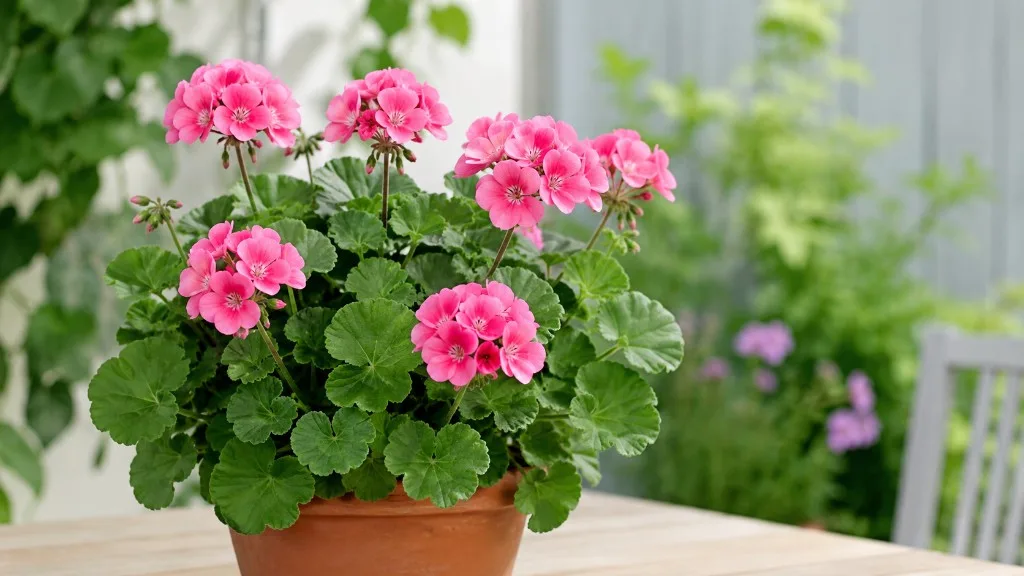
When gardeners say geranium, they almost always mean Pelargonium - the bushy, long-blooming potted plants sold by the millions each spring, not the hardy cranesbill Geranium species that live in perennial borders. That naming confusion matters for light because Pelargonium evolved under the high-altitude sun of southern Africa and behaves like a sun-loving seasonal performer, not a dim-corner survivor. The common zonal geranium (Pelargonium × hortorum) wants full sun outdoors and the brightest window you can give it indoors. Treat it like a low-light foliage plant and you get leggy stems, pale leaves, and the frustrating pattern of a plant that stays alive but rarely matches the flower show you saw at the nursery.
Geranium light requirements are straightforward once you know which Pelargonium type you are growing. Zonal, ivy-leaf, and most scented geraniums need six to eight or more hours of direct sun daily outdoors and as much real window light as possible inside. Martha Washington or regal types (Pelargonium × domesticum) are the exception: they prefer four to six hours of morning sun or filtered light and scorch in harsh midday heat. Clemson Cooperative Extension lists south- and west-facing windowsills as the best indoor locations for continuous flowering, with supplemental lighting when natural brightness falls short. University of Minnesota Extension recommends a minimum of eight hours of sun daily for garden and container geraniums outdoors, noting plainly that less sun means fewer flowers.
This guide covers the decisions that protect bloom quality and compact growth: how much light each geranium type needs, where to place pots outdoors and at windows, when to add grow lights, how to acclimate plants between environments, and how to read warning signs before stretch or scorch becomes habit.
How Much Light Geraniums Actually Need
Pelargoniums are day-neutral for flowering - bloom is driven more by light intensity, overall plant health, and temperature than by day length alone. That is good news indoors because you do not need short-day tricks to coax flowers. It is demanding news because the plant still needs a high daily photon total, and most home windows deliver far less than a open garden bed, especially in winter when sun angle drops and days shorten.
For zonal and ivy-leaf geraniums, think in outdoor terms first: full sun means unfiltered direct rays for most of the day, with at least six to eight hours as the practical minimum for strong bloom. Indoors, translate that to the sunniest exposure available - typically a south- or west-facing windowsill where leaves receive direct sun for a large part of the day, not a bright-looking spot across the room where your eyes adapt to dimness but the plant does not. Clemson Extension states that bright light is essential to keep geraniums in flower throughout the year and that artificial light works when natural light is insufficient. (Clemson HGIC)
For regal (Martha Washington) geraniums, the contract is different. These cool-season gift plants are not heat tolerant and do not perform like zonal types in baking outdoor beds. Clemson Cooperative Extension warns they are not heat tolerant and will not match common geraniums outdoors. Putting a regal geranium on the same full-sun patio as a zonal type is a common way to end up with scorched leaves by June.
Light also sets the pace for water use, feeding response, and disease pressure. A geranium in correct bright light dries its pot faster, metabolizes fertilizer predictably, and holds a compact habit. A dim plant grows slowly, stays wet longer, and invites root problems if you water on a schedule copied from a sunny windowsill. Treat light as the throttle for the whole care system.
The Short Answer for Busy Growers
If you only remember five rules, use these. Know your type: zonal, ivy, and scented geraniums want maximum light; regal/Martha Washington types want bright but softer exposure. Outdoors default: full sun, eight or more hours when possible, in well-drained soil or containers with drain holes. Indoors default: south or west window, pot within 12 inches (30 cm) of the glass, rotated regularly; add a grow light in winter if bloom drops off. Never jump exposure: acclimate 7 to 14 days when moving between dim indoors and harsh outdoor sun. Judge by new growth and fresh flowers, not old damaged leaves - firm stems, normal leaf size, and steady bloom clusters mean the current light is working; stretching, tiny new leaves, or months without buds mean brighten the site or add supplemental light.
Give any placement change 10 to 14 days before calling it a failure. Geraniums respond quickly, but leaves scorched last week will not un-scorch; only new tissue tells the truth.
Zonal, Ivy, and Regal Geraniums Have Different Light Needs
The biggest geranium light mistake is assuming one rule fits every pot with a geranium label. Clemson Extension separates common types clearly: zonal geraniums with banded leaves and pink, red, or white flowers; ivy-leaf geraniums with trailing stems and glossy lobed foliage for baskets and window boxes; and Martha Washington geraniums sold as winter flowering pot plants that will not perform as well outdoors as common geraniums because they lack heat tolerance. (Clemson HGIC) Light placement should follow that taxonomy, not the generic word “geranium” on a care tag.
Scented-leaf Pelargoniums - rose, lemon, peppermint, and dozens of other fragrances - generally align with zonal light appetite: they want strong sun to build essential oils and compact growth, though individual species vary slightly in leaf thickness and scorch sensitivity. When in doubt, start bright and acclimate down if bleaching appears, rather than starting dim and hoping the plant toughens up later.
Zonal and Scented Types - High Light Demands
Pelargonium × hortorum and most scented species are built for open, high-light environments. Outdoors, Minnesota Extension is explicit: geraniums grow well in full sun and need a minimum of eight hours of sun daily for best performance, with reduced flowering as sun drops below that band. (University of Minnesota Extension) On decks, patios, and window boxes, that usually means the sunniest edge of the space - not the strip under the awning that feels bright to you at noon but is in shadow by mid-afternoon.
Indoors, zonal and scented geraniums need as much direct light as you can honestly provide. Clemson Cooperative Extension states that bright light is essential to keep geraniums in flower throughout the year and that artificial light works when natural light is insufficient. A sliding door with good daylight may keep a plant alive through winter, as many home growers report, but the dramatic difference between “surviving indoors” and exploding into bloom on a June patio is almost always light volume, not a mysterious outdoor magic.
Practical implications for high-light types:
- Place pots where direct sun hits leaves, not just where the room looks bright.
- Expect more frequent watering as light increases - the same pot on a sunny sill dries faster than in a dim corner.
- Rotate the pot a quarter turn every few days so stems do not hard-lean toward the glass.
- In hot climates, full sun still applies, but afternoon heat management (see below) prevents scorch on leaves that never acclimated to combined light plus leaf temperature load.
Martha Washington (Regal) Geraniums - Softer Exposure
Pelargonium × domesticum regal geraniums are bred for cool-season indoor display - the large-faced flowers florists sell in winter - not for July full sun on a south-facing brick wall. Clemson Cooperative Extension warns they are not heat tolerant and will not match common geraniums outdoors. Outdoors, regal types do best in morning sun or filtered light rather than all-day blazing exposure.
Indoors, regal types do best in bright indirect light - a bright east window, a south window with sheer diffusion, or a few feet back from intense west glass - while zonal types on the same sill may thrive in direct contact with the pane. If you overwinter a Martha Washington with your zonal collection on the sunniest ledge, watch for bleached or crisp upper leaves and premature flower fade as signals to pull it back into gentler light.
Ivy-leaf geraniums (Pelargonium peltatum) sit between the two profiles in many gardens: they are sold for hanging baskets and window boxes in full sun, trailing over sunny railings all summer, but their succulent-leaning leaves can show stress if moved from shade-house nursery conditions to unfiltered west exposure without acclimation. Default them to zonal-level sun targets, then adjust if basket foliage bleaches in the first hot week.
Full Sun Outdoors: The Default for Most Garden Geraniums
For zonal and ivy geraniums, full sun outdoors is the baseline, not an optional upgrade. Garden beds, terrace pots, and window boxes should sit where shadows do not swallow them by early afternoon. Minnesota Extension recommends planting after frost when soil temperature reaches 60 °F (about 16 °C), in well-drained soil with containers that have drain holes - root health affects how boldly a plant handles light stress, and waterlogged roots fail in full sun faster than dry, airy roots. (University of Minnesota Extension)
Full sun does not mean “ignore heat.” It means the plant receives direct photosynthetically useful light for most of the day. On a cloudy northern summer, eight hours of bright overcast still outperforms four hours of direct sun plus deep shade - total daily light integrals matter for bloom density even when UV feels mild.
Minimum Hours and What Happens With Less Sun
University of Minnesota Extension sets a clear outdoor floor: minimum eight hours of sun daily, with fewer flowers as sun decreases. (University of Minnesota Extension) Six hours of direct sun on a open patio may still produce a respectable display for zonal types, especially in cooler climates with strong spring light, but partial shade is a compromise, not the ideal. Under trees, on north-facing porches, or tucked under deep eaves, geraniums often stretch toward the light gap, produce smaller leaves, and bloom in sparse clusters even when watering and feed are perfect.
Less sun also changes dry-down timing. Shaded pots stay moist longer; if you keep the sunny-spot Geranium watering guide, roots suffocate and lower leaves yellow. When you move a geranium from full sun to partial shade for design reasons, reduce water frequency and accept softer growth - or choose a different plant for that location rather than fighting Pelargonium genetics.
Bloom is the honest light report outdoors. Foliage can look acceptable in mediocre light for weeks while flower production quietly stalls. If your geranium has healthy green leaves but almost no buds in June on a partly shaded porch, brightness is the first variable to fix before reaching for bloom booster fertilizer.
Morning Sun vs Afternoon Heat in Hot Climates
In moderate climates, all-day full sun suits zonal geraniums when they are acclimated. In hot-summer regions - desert Southwest, lower South, urban heat islands with reflected pavement - afternoon sun carries extra leaf temperature load that can scorch tissue even on sun-loving genetics. The practical pattern mirrors many ornamental guidelines: morning sun plus bright afternoon brightness with some heat relief beats harsh west exposure on dark containers sitting on concrete.
Morning sun is bright but cooler than late-day rays. An east-facing bed or balcony often delivers excellent bloom with less scorch risk than a west wall that bakes from 2 p.m. onward. If only a west or south blazing location exists, use afternoon shade cloth, taller companion plants, or move pots back from radiating surfaces during heat waves. Ivy baskets are especially vulnerable because limited soil volume heats quickly and dries unevenly when light and air are both intense.
Regal geraniums outdoors should stay in the morning-sun or filtered-light band year-round in hot climates - not because they are delicate houseplants, but because they lack the heat tolerance zonal types use to power through summer beds. (Clemson HGIC)
Bright Indoor Windows That Keep Geraniums Blooming
Indoor geranium culture succeeds or fails at the window. Clemson Extension ranks south- and west-facing windowsills as the best locations, especially during winter when lower sun angle reduces total light on east and north exposures. (Clemson HGIC) The goal is not a spot that looks fine at breakfast; it is a sill where direct sun lands on the geranium leaves for a meaningful portion of the day.
Place the pot within 12 inches (30 cm) of the glass. Light falls off fast with distance. A geranium on a table six feet from a south window sees sky brightness but not the photon flux that drives compact growth and repeat bloom. Leaves should not press against hot summer glass - air gap prevents cook spots - but the canopy should sit in the primary light cone.
Temperature interacts with light indoors. Clemson recommends 65–70 °F (18–21 °C) days and around 55 °F (13 °C) nights as ideal for flowering, and warns against cold, hot, or drafty spots. (Clemson HGIC) A plant on a freezing window ledge in January may show light-related stress compounded by cold leaf tissue; fixing light without addressing the chill leaves half the problem unsolved.
South, West, East, and North Windows Compared
A south-facing window delivers the strongest winter sun in the northern hemisphere and is the first choice for zonal and scented geraniums you want to keep in flower indoors. From fall through spring, south glass often supplies enough direct rays to maintain bloom if the pot stays close and unobstructed. In summer, south panes can overheat leaves; pull the pot slightly back or use a sheer curtain during peak hours if bleaching appears on the glass-facing side.
A west-facing window provides strong afternoon sun - excellent in cool seasons, higher scorch risk in summer for regal types and newly moved plants. Zonal geraniums often perform well west if acclimated, but watch for one-sided fade on leaves facing the pane. Diffuse the hottest month if crisp margins appear on moist soil at midday.
An east-facing window offers gentle morning direct sun - ideal for regal geraniums and a workable home for zonal types that also receive supplemental LED light or a secondary bright exposure. East alone may not carry zonal geraniums through a dark northern winter without added hours from a grow lamp.
A north-facing window rarely meets Pelargonium bloom ambitions. North may sustain slow survival growth for a few months in summer at high latitudes, but expect stretching, smaller new leaves, and sparse flowers without a grow light. Treat north as supplemental-light territory for any geranium you want to look like a nursery specimen.
Why Indoor Geraniums Struggle More Than Outdoor Ones
The gap between a geranium that limps through winter indoors and the same plant covered in blooms on a June deck is almost always total daily light, not a hidden skill gap. Human eyes adapt to indoor dimness; Pelargonium does not. Window glass cuts intensity, frames block part of the sky, and indoor plants receive light from one direction instead of the open hemisphere outdoors.
Clemson Extension notes geraniums will flower continuously if provided with enough light - the qualifier is doing real work. (Clemson HGIC) Many indoor setups supply enough energy for leaf maintenance but not for the continuous bloom cycle zonal types achieve outdoors. You see green, maybe an occasional cluster, then a spring move outside triggers an explosion of color that feels like fertilizer magic when it is mostly photon debt repayment.
Warm nights indoors also matter. Pelargoniums flower best with cooler overnight temperatures near 55 °F (13 °C) when possible. (Clemson HGIC) A plant on a heated windowsill with bright days but 65 °F+ nights may grow but bloom less freely than one in a bright cool room. Light is primary; temperature modulates how efficiently that light converts to buds.
Reading Stretch, Sparse Bloom, and Leggy Growth
Etiolation - long internodes, thin stems, visible lean toward the window - means the plant is physically reaching for photons. On geraniums, stretch often appears before leaf color fails dramatically, so catch it early. Smaller new leaves compared to older ones confirm chronic deficit, not a bad week.
Sparse or absent bloom indoors while foliage looks semi-healthy is the classic under-light signature for zonal types. If you have not seen a new flower cluster in six to eight weeks on a mature plant with good soil moisture and regular feed during the active season, assume light is insufficient until proven otherwise.
Hard lean to one side shows directional starvation on a single-window setup without rotation or overhead supplemental light. Slow recovery after pinching - side shoots emerge weak or not at all - means the plant lacks reserves for branching because photosynthesis is limited.
Do not fix chronic indoor stretch by overwatering on Geranium or heavy nitrogen alone. Brighten the site first - closer to glass, unobstructed south or west, or a timed grow light - then adjust water to match faster dry-down. If the plant is already woody and bare on lower stems, fresh cuttings under brighter light often produce a better display than rehabbing a leggy parent in the same dim spot.
Grow Lights When Windows Fall Short
When windows cannot deliver enough brightness for compact growth and steady bloom, supplemental lighting is the most reliable upgrade. Clemson Extension reports satisfactory indoor growth and flowering when plants sit 12 inches beneath a 40-watt daylight cool fluorescent bulb for 16 hours daily. (Clemson HGIC) Minnesota Extension recommends a regular fluorescent shop light hanging 10 to 12 inches above plants, or a red-and-blue LED grow light to encourage buds and foliage, with a timer extending light into evening when natural daylight is weak. (University of Minnesota Extension)
Modern full-spectrum white LEDs are efficient replacements for old fluorescent tubes and run cooler on small shelves. The principle stays the same: geraniums need high total daily light integrals, not a decorative desk lamp measured in human lumens.
Fixture Setup, Hours, and Spectrum
A workable starting setup for indoor zonal or ivy geraniums:
- Position the fixture 10 to 12 inches (25 to 30 cm) above the top of the canopy - Clemson and Minnesota Extension both use roughly this distance for fluorescent setups. (Clemson HGIC; University of Minnesota Extension)
- Run lights 16 hours daily on a timer when natural window light is weak; combine window plus lamp when possible so plants receive multidirectional light and lean less.
- Choose daylight-spectrum tubes (5000–6500 K white) or a horticultural full-spectrum LED - avoid random warm bulbs optimized for ambiance.
- Keep day temperatures 65–70 °F and nights near 55 °F when feasible for best bloom response alongside light. (Clemson HGIC)
Adjust using new-growth signals after two weeks. If stems still stretch and new leaves stay small, lower the fixture 2 inches or add one hour to the timer - not both at once. If leaf edges bleach or cup only under the lamp, raise the fixture 2 to 3 inches or reduce hours slightly. Small enclosed shelves can still overheat even with LEDs; feel leaf temperature with your hand at midday lamp-on.
For overwintered geraniums you plan to return outdoors in spring, the winter goal is compact holding with some bloom, not forcing July growth in December. Transition back outside with the same 7–14 day acclimation you would use for any sun move.
Moving Geraniums Between Indoors and Outdoors Safely
Geraniums move between environments more than most houseplants - overwintered on a sill, kicked outside in spring, brought back before frost. Each transition is a light shock risk if you skip acclimation. Leaves formed in lower indoor light have ** thinner cuticles and less pigment protection** than sun-hardened outdoor foliage. Jumping from a bright shelf to unfiltered patio sun produces bleached patches, crisp margins, and sometimes sudden leaf drop that looks like disease but is exposure failure.
Enfield and multiple extension sources emphasize slow acclimation when bringing plants outside in spring - higher light levels must be introduced gradually as temperatures stabilize. Iowa State University Extension recommends hardening off for 7 to 10 days before outdoor planting. The same rule applies in reverse in fall: do not move from full outdoor sun to a dim back room in one step if you want leaves to stay attached.
Spring Hardening Off and Fall Transition
Spring hardening off for zonal and ivy geraniums:
- Wait until frost danger has passed and nights stay consistently above 50–55 °F (10–13 °C) for best results.
- Start with one to two hours of early morning direct sun on a mild day, then return to bright shade or the indoor window.
- Add one to two hours of direct sun every two to three days over 7 to 14 days, watching new leaves for bleaching before advancing.
- Increase watering slightly as outdoor brightness raises transpiration - check weight daily on small pots.
- If crisping appears, hold at the current level or step back to filtered light until new growth looks clean.
Fall transition before frost:
- Clemson Extension advises bringing geraniums inside before frost, cutting back, and placing in a sunny window for overwintering. (Clemson HGIC)
- Move plants to the brightest indoor spot first, even if outdoor nights are still mild - do not wait until the only option is a dark garage.
- Inspect for pests before indoor entry; stressed plants in new low-light conditions invite spider mites and whiteflies faster.
- Expect some leaf yellowing after the move as light drops; focus on preventing stretch with supplemental lamp hours rather than overfeeding.
Make one environmental change at a time. If you also repot, prune hard, and shift light in the same week, you cannot read which stress caused the wilt.
Warning Signs Your Geranium Has the Wrong Light
Pelargoniums report light problems on new tissue and fresh flowers first. Old bleached or stretched leaves will not revert; watch the youngest leaves, stem tips, and bud formation after any move. Wait 10 to 14 days after a single light adjustment before also changing water, fertilizer, or pot size - overlapping edits make diagnosis guesswork because wilt, fade, and edge crisping overlap across stress types.
Too much light shows as white or tan patches on sun-facing leaf zones, crisp dry margins appearing suddenly after a move outdoors or closer to hot glass, downward cupping during peak hours as a protective response, and premature flower fade on regal types in direct midday sun. Wilting on moist soil at midday in full sun on a dark container over pavement often signals root-zone heat, not underwatering on Geranium. Sudden leaf drop after relocation without acclimation is a classic hardening-off failure.
Fixes for excess light: pull back from glass, add sheer diffusion, shift to east or filtered shade, use afternoon shade cloth outdoors, acclimate gradually rather than jumping exposure, and avoid dark pots on hot reflective surfaces. For zonal types that still bleach in your climate, treat afternoon protection as part of the site plan, not as plant weakness.
Too Little Light - Lean, Small Leaves, Few Flowers
Long internodes and visible stretching toward the window or lamp mean the plant is escaping shade. Smaller, thinner new leaves confirm chronic deficit. Months without flower clusters on a mature zonal geranium in the growing season strongly suggest insufficient direct light hours, especially if the same cultivar bloomed heavily outdoors. Hard lean to one side shows directional starvation without rotation or overhead supplement. Pale green new foliage on a cultivar that should show strong zone markings or rich color can indicate low flux, though nutrient issues can mimic this - light history is the first question. Yellowing lower leaves on moist soil in a dim cool room often couples low light to overwatering; fix brightness and dry-down together.
Fixes for insufficient light: move closer to glass, remove obstructions, shift to south or west, add or lower a grow light, extend photoperiod on the timer, and pinch tops after light improves so new branches emerge compact. Accept that regal types may never bloom heavily in a north room without a lamp, regardless of fertilizer.
Conclusion
Geranium light requirements are not ambiguous once you separate Pelargonium types from generic houseplant advice. Zonal, ivy-leaf, and scented geraniums want full sun outdoors - aim for six to eight or more direct hours, with Minnesota Extension’s eight-hour minimum as the honest bloom target - and the brightest south or west window you can offer indoors, supplemented in winter when bloom fades. Martha Washington regal geraniums need a softer contract: morning sun or filtered light outdoors and bright indirect light inside, because they lack the heat tolerance that lets zonal types thrive on a July patio.
Indoor geraniums fail quietly - green leaves, long stems, sparse flowers - when total daily light falls below what the plant uses outdoors on a open deck. Read new growth and bud formation, not nostalgia for last summer’s display. Move exposure in steps, pair brighter light with adjusted watering, and use a 16-hour daylight fluorescent or full-spectrum LED when windows cannot carry the plant through winter. Acclimate every spring and fall transition over 7 to 14 days, and keep regal types out of harsh midday rays even when zonal neighbors soak them up. Get the light band right and Pelargonium becomes one of the most rewarding flowering plants you can grow; miss it and even perfect soil and feed produce a leggy survivor that barely resembles the basket you bought in May.
When to use this page vs other Geranium guides
- Geranium overview - Start here for whole-plant context before deep-diving this topic.
- Geranium problems hub - Jump to symptom-specific fix guides when this care topic does not resolve the issue.
- Not Enough Light on Geranium - Escalate here when light adjustments are not enough.
- Leggy Growth on Geranium - Escalate here when light adjustments are not enough.
Related Geranium guides
- Geranium overview
- Geranium watering
- Geranium soil
- Geranium propagation
- Geranium fertilizer
- Geranium repotting
- Not Enough Light on Geranium
- Leggy Growth on Geranium
- Geranium problems
Related tool
Try the Plant Problem Diagnosis Tool with geranium pre-selected to estimate needs for your setup.