Leggy Growth on Geranium: Causes, Checks & Fixes
Quick answer
Leggy growth on Geranium means stretched stems with long gaps between leaves-almost always from too little direct sun. First step: move the pot to at least six hours of direct sun during active growth before changing fertilizer or pot size.
Leggy Growth on Geranium: Causes, Checks & Fixes
This guide covers leggy growth on Geranium. See also the general Leggy Growth guide, watering, and light pages for this plant.
Leggy Growth on Geranium: Causes, Checks & Fixes
Quick answer
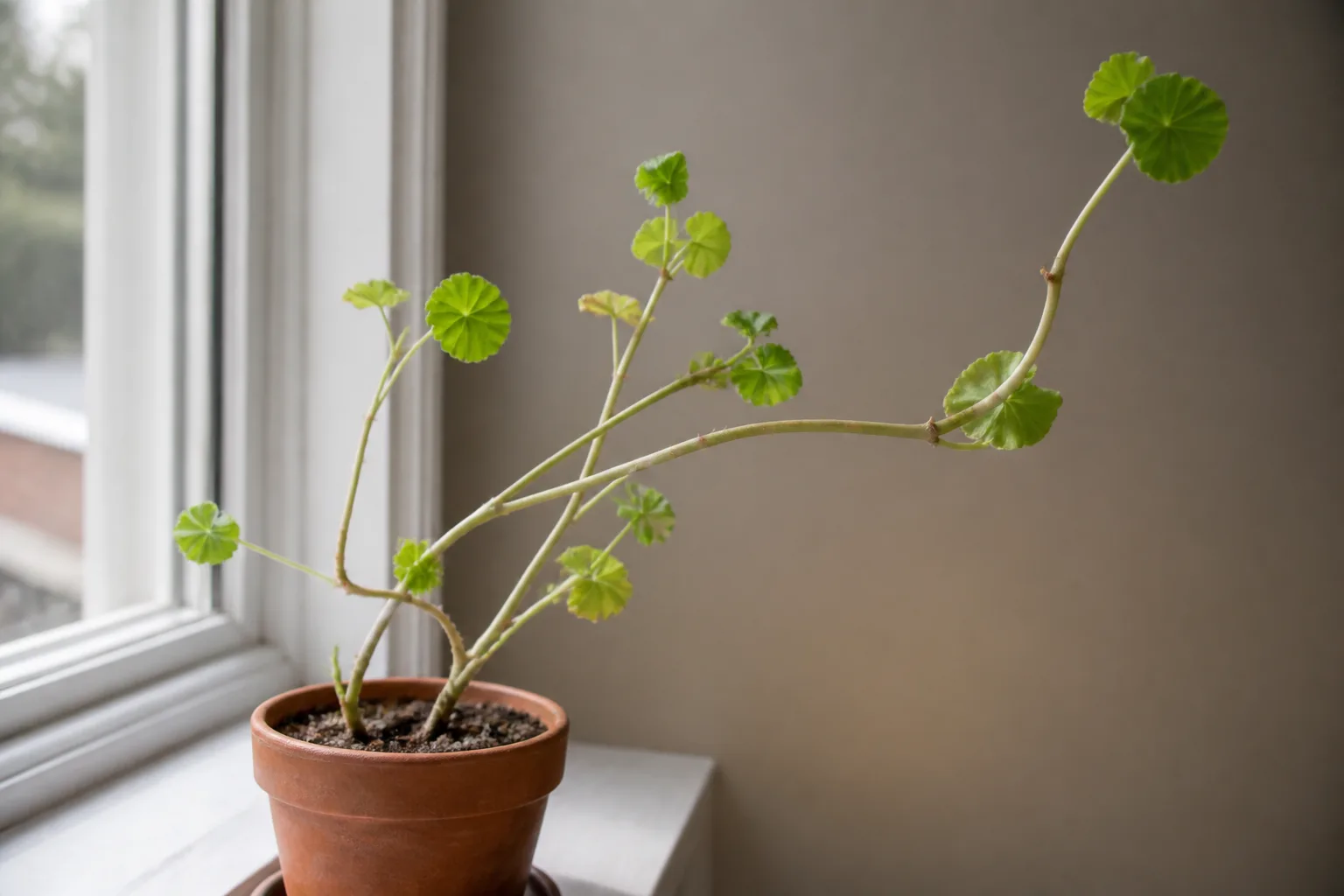
Leggy growth on Geranium - the patio and windowsill plant most people mean - is Pelargonium × hortorum (zonal geranium), a high-light annual that stretches when direct sun falls short. The structural symptom is etiolation: long internodes, stems leaning toward glass, pale small new leaves, and weak or missing flowers even when watering seems fine.
Most geraniums prefer full sun with at least six hours of direct light daily, and flowering drops when sun falls below that threshold.
First step: move the pot to the brightest location with direct sun on the leaves-typically a south window indoors or a full-sun patio outdoors after frost risk passes. Do not repot, fertilize, or hard-prune on the same day you change light. This page focuses on structural stretch; for general low-light signs and window placement, see not enough light on geranium.
Leggy growth vs. not enough light vs. wilting on Geranium
These three geranium problem pages overlap because light, water, and stretch often show up together-but the first fix differs.
| Page | Primary symptom | First action |
|---|---|---|
| Leggy growth (this page) | Long internodes, lean toward window, weak bloom on green plant | Move to direct sun; pinch after new growth tightens |
| Not enough light | Pale leaves, failed buds, slow dry-down-light deficit before structure worsens | Brightest window or grow light; full diagnostic path |
| Wilting | Whole stems collapse, limp leaves | Check soil moisture and crown firmness first-not light alone |
Legginess is the shape low light creates over weeks. Wilting on a heavy wet pot in shade is usually overwatering or root rot overlap-not etiolation alone.
What leggy growth looks like on Geranium
Zonal geraniums are built for open sun. When light is insufficient, the plant reaches instead of branching.
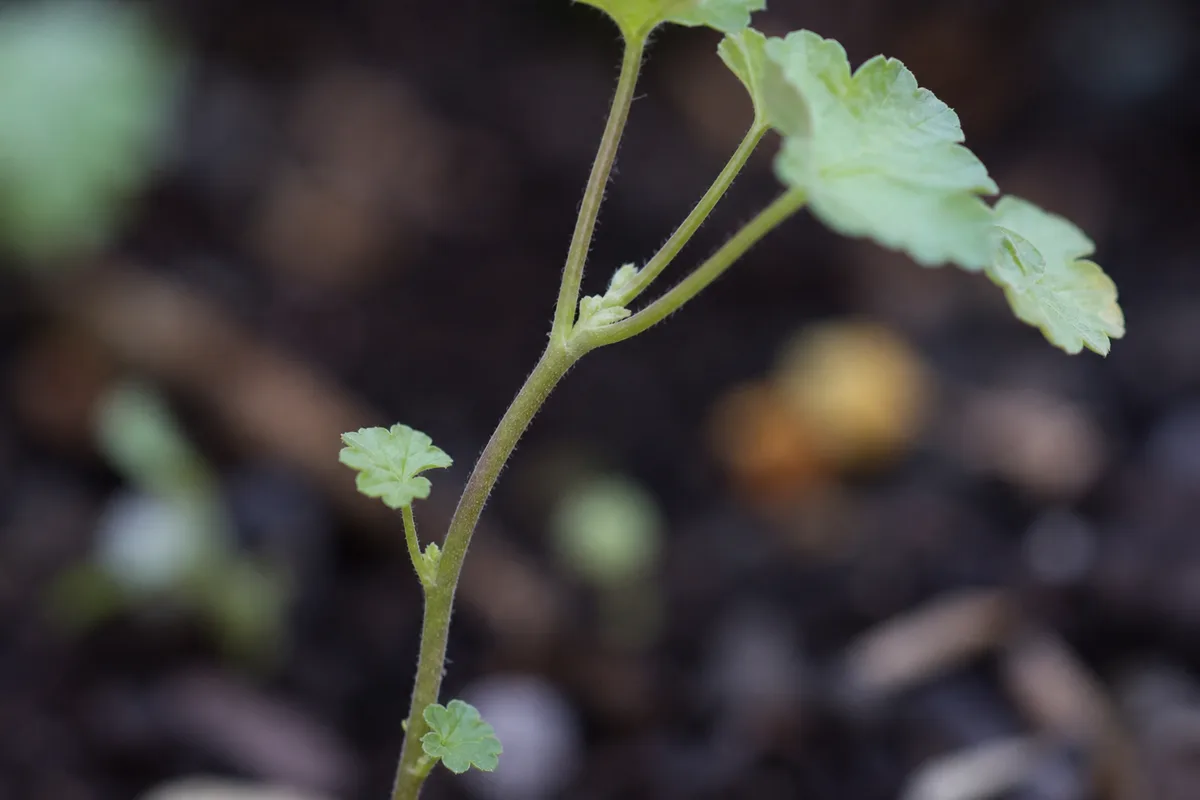
Leggy Growth symptoms on Geranium - compare with healthy tissue on the same plant.
Watch for these patterns during active growth:
- Long gaps between leaf nodes (internodes) on thin branches that lean toward the brightest window or doorway
- Pale, undersized new leaves compared with older, darker foliage on the same stem
- Few or no flower buds despite warm room temperatures-geraniums report light shortage through bloom failure before leaves yellow
- Slow pot dry-down in shade: soil stays wet longer because photosynthesis and water use drop
- Tall spindly growth in warm, poorly lit areas-classic when overwintered indoors without supplemental light
Stem check: compact vs. stretched internodes
Use the newest two leaves on the longest stem as your field measurement. Original comparison photos for this guide are in production; the table below is the same check a grower would photograph.
| What you measure | Compact (enough light) | Leggy (etiolation) |
|---|---|---|
| Gap between newest two leaf nodes | Short-roughly leaf-length or less | Long-often 2–3× the leaf width or more |
| New leaf color | Deep green, normal size | Pale, smaller than older leaves |
| Stem direction | Upright or evenly branched | Leans hard toward one window |
| Flowers on same branch | Buds forming in warm season | Green growth only, no buds for weeks |
Ivy geranium (Pelargonium peltatum) shows the same light-driven stretch but on trailing stems that dangle from baskets rather than upright zonal branches. Ivy-leaved types will not flower in shade and may look “empty” in the middle of a hanging basket while tips keep reaching. Pinch trailing tips after light improves, as with zonal types.
Leggy growth differs from sunburn (bleached or crispy patches after a sudden jump into harsh afternoon sun without acclimation) and from cool bare-root dormancy (few leaves, dry storage-not stretch toward a window).
Why Geranium gets leggy
Geraniums are sold as easy bloomers but are not low-light foliage plants. Less sun means fewer flowers, and outdoor culture calls for a minimum of eight hours of sun daily for best performance.
Common triggers on Pelargonium:
- Middle-of-room placement - usable light drops sharply even a few feet from glass
- North windows or shaded balconies - fine for cast-iron plants, not zonal geraniums in bloom
- Short winter days - the same south window delivers less energy December through February
- Overwintering indoors without grow lights - geraniums need bright light to flower indoors
- Warm room above 70°F with weak light - heat plus dim conditions accelerate spindly stretch faster than on true shade houseplants
Low light also slows evaporation. Dim placement plus unchanged summer watering is a common path to yellow lower leaves and rot in overwintered geraniums-the mix stays wet while the plant barely photosynthesizes.
How to confirm the cause
Work through these checks before repotting or fertilizing:
- Direct sun hours - count hours direct sun hits the leaves, not the pot rim. Fewer than six during active growth strongly points here.
- Newest internode length - compare the gap between the last two leaves; stretching on those nodes confirms recent etiolation.
- Bloom history - flowered on a sunny patio but stopped indoors? The window is delivering less energy.
- Pot weight - heavy, damp soil for days in shade means slow water use; pair light correction with a watering check.
- Temperature context - warm rooms with weak light accelerate stretch; cooler air slows growth but does not replace missing sun.
Etiolation vs. sunburn vs. wet-soil rot
| Pattern | Stem / leaf look | Soil | First fix |
|---|---|---|---|
| Etiolation (this page) | Long internodes, pale new leaves, lean to window | Often slow to dry in shade | More direct sun; wait before pinching |
| Sunburn | Bleached or crispy patches on leaves after sudden harsh sun | Normal dry-down | Shade temporarily; acclimate more slowly |
| Rot overlap | Yellow lower leaves, soft stem base | Wet for days in dim corner | Dry-down + light; see root rot if crown softens |
If stems lean, internodes stretch, flowers fail in warm weather, and the mix dries slowly in a dim spot, fix light before bloom booster or pest sprays.
First fix for Geranium
Move the pot to the brightest direct-sun placement and leave everything else alone for one week.
Indoors, that usually means an unobstructed south window where leaves receive direct sun for much of the day. Southern exposure is usually the best source of light for overwintered geraniums. Outdoors after frost risk passes, place the pot in full sun but acclimate over 7–14 days-start with morning sun, add hours gradually, and watch for bleaching on shade-formed leaves.
If natural light still falls short in winter, add supplemental lighting. A fluorescent shop light or LED grow light hung 10 to 12 inches above the plants with a timer from late afternoon into evening bridges short days. Aim for enough intensity that new leaves open darker within two to three weeks-not merely “a bulb in the room.”
Do not repot, fertilize, or cut back hard on the same day you move light. Stressed Pelargonium responds best to one change at a time.
Step-by-step recovery
After the light move, layer these steps in order:
- Hold other variables steady for 7–10 days - same pot, same watering rhythm. Let the plant register the new light before you pinch or feed.
- Acclimate outdoor moves gradually - days 1–3: 2–3 hours morning sun; days 4–7: add midday hours if leaves stay firm; days 8–14: full sun if no bleaching. Move back to shade for 48 hours if leaves show white crispy patches.
- Match watering to slower winter use - when light is low, let the top 1–2 inches dry before soaking per the watering guide. Wet soil in a dim corner invites rot while you fix stretch.
- Watch for tighter new growth - when the newest internode gap shortens and new leaves darken, the light fix is working. This often takes two to four weeks.
- Pinch stems above a leaf node - prune or pinch back stems just above a leaf node to produce stocky, well-branched plants. Pinching shoot tips encourages bushy growth on pelargoniums. Remove only the soft growing tip or up to one-third of green stem length per session-not bare wood.
- Rotate the pot weekly - prevents one-sided lean and evens light on all shoots.
- Resume fertilizer only on active new growth - after pinching, use half-strength balanced feed every three weeks during visible new leaves and buds, not on a dry or still-stretched plant.
- Deadhead spent blooms - redirects energy into branching rather than seed set.
Skip hard cutting to 2-inch stubs while light is still poor-new shoots etiolate again and recovery stalls.
Recovery timeline
Old elongated stems never shorten. Only new growth can look compact.
| Phase | What to expect |
|---|---|
| Week 1 | Plant may lean less; no visible shortening of old stems |
| Weeks 2–4 | New internodes shorten; leaves darken on fresh tips |
| Weeks 6–8 | Bushier shape with repeated pinching |
| Next warm season | Reliable bloom on outdoor full-sun plants; severely stretched overwintered specimens may flower mainly on new growth |
Signs you are on track: shorter gaps on newest nodes, firmer upright tips, faster pot dry-down, flower buds on outdoor plants.
Signs the problem is deepening: yellow lower leaves on constantly wet soil, grey fuzzy mould on spent blooms in cool humid rooms (botrytis favors cool moist conditions), or soft blackening at the stem base-shift to overwatering and root rot protocols.
Lookalike symptoms to rule out
Not enough light without obvious stretch yet. Pale leaves and failed buds before internodes lengthen dramatically-full window and grow-light workflow on not enough light.
Sunburn after sudden outdoor move. Bleached or brown crispy patches on leaves formed in shade-not uniform long internodes. Pull back to morning sun and acclimate more slowly.
Overwatering in a dim corner. Wilting or yellow lower leaves while soil stays wet; stems may soften at the base. Light helps, but dry-down is urgent-see overwatering on geranium.
Root rot and blackleg. Mushy crown, sour soil smell, black stem cankers climbing from wet mix. Stretch may be present, but rescue is rot surgery-not pinching alone. Follow root rot on geranium.
Cool dormant storage. Bare-root or bag-stored plants at 45–55°F naturally rest with few leaves. That is not etiolation. Leggy plants in a heated room still green and watered are light-stretched, not dormant.
Nitrogen-heavy feeding in dim light. Excess nitrogen can push soft vertical growth, but on Pelargonium the dominant cause remains insufficient direct sun. Fix light first; adjust feed only after new growth is compact.
What not to do
Do not use bloom booster in dim light-it cannot replace photons. Do not increase watering because stems look weak; wet soil in shade worsens rot. Do not expect old internodes to shrink without pinching. Do not move a winter-stretched plant into blazing afternoon sun in one step-acclimate over 7–14 days. Do not hard-prune to bare wood before light improves. Do not confuse warm-room stretch with healthy winter dormancy in cold storage.
How to prevent leggy growth next time
Provide six to eight hours of direct sun when possible per the light guide. On summer patios, geraniums tolerate heat better than deep shade-leave bloom pots in sun rather than moving them to dim “relief” unless leaves show burn.
Overwinter indoors: brightest south window, cool 60–65°F if possible, and supplemental LED or fluorescent light 10–12 inches above foliage on a timer when December–February sun is weak. Rotate weekly and pinch tips after light improves in late winter per the pruning guide.
Match watering to season per the watering guide-winter dry-down stretches to 10–14 days in cool bright rooms. Wet soil in a dim overwintering corner is how stretch pairs with rot.
When to worry
Pure etiolation is gradual and reversible with light plus pinching. Escalate faster when:
- Lower leaves yellow in clusters while mix stays damp in shade
- Stem base feels soft, black, or hollow
- Grey fuzzy mould spreads on wet petals in a cool humid room
- Plant wilts on a heavy pot you watered recently
Those patterns need rot and moisture protocols-not light alone. A green, firm, merely tall geranium is not an emergency.
Conclusion
Leggy geranium is a light architecture problem on a sun-loving Pelargonium: old stems stay long, but new growth can compact once direct sun returns. Confirm etiolation with internode stretch and bloom failure, move to six or more hours of direct light, acclimate outdoor shifts over 7–14 days, then pinch above nodes when fresh growth tightens. When wet soil, yellow leaves, or crown softness overlap, treat moisture and rot alongside light.
Related Geranium guides
- Geranium overview - Pelargonium types, overwintering, and culture
- Not enough light - window placement and grow-light setup
- Light - seasonal sun hours and outdoor culture
- Pruning - pinching, deadheading, and hard cutback timing
- Watering - dry-down rhythm that prevents rot in dim rooms
- Overwatering - wet soil in shade overlap
- Root rot - crown softening escalation
FAQs
How can I confirm leggy growth on Geranium?
Confirm etiolation when stems lean toward the brightest window, internodes stretch between leaf nodes, new leaves stay small and pale, and buds fail despite warm temperatures. A zonal geranium that keeps green foliage but refuses to bloom in a dim room is classic light-driven legginess-not a nutrient shortage.
What should I check first for leggy growth on Geranium?
Count direct sun hours on the leaves, not room brightness. Then lift the pot-soil staying wet for days in a shady corner means the plant is not using water fast enough. Note whether the plant was recently moved indoors for winter, since geraniums stretch quickly after a light drop.
Will stretched Geranium stems recover?
Old elongated stems will not shorten. New growth should look tighter and darker within two to four weeks once light improves. Pinch stems just above a leaf node after the plant responds to encourage a stockier, well-branched shape per the pruning guide.
When is leggy growth urgent on Geranium?
Pure stretch is gradual. Escalate if lower leaves yellow while mix stays damp in shade-root rot risk. Grey mould on soft stems in a dim humid room also needs faster action than light correction alone.
Is my geranium leggy or just dormant for winter?
Dormant bare-root or cool-stored geraniums rest with few leaves and no bloom-that is normal storage, not etiolation. Leggy overwintered plants in a warm room still carry green leaves on long thin stems leaning toward glass. If stems stretch while the plant is actively watered indoors, treat as low light-not dormancy.