Overwatering on Geranium: Causes, Checks & Fixes
Quick answer
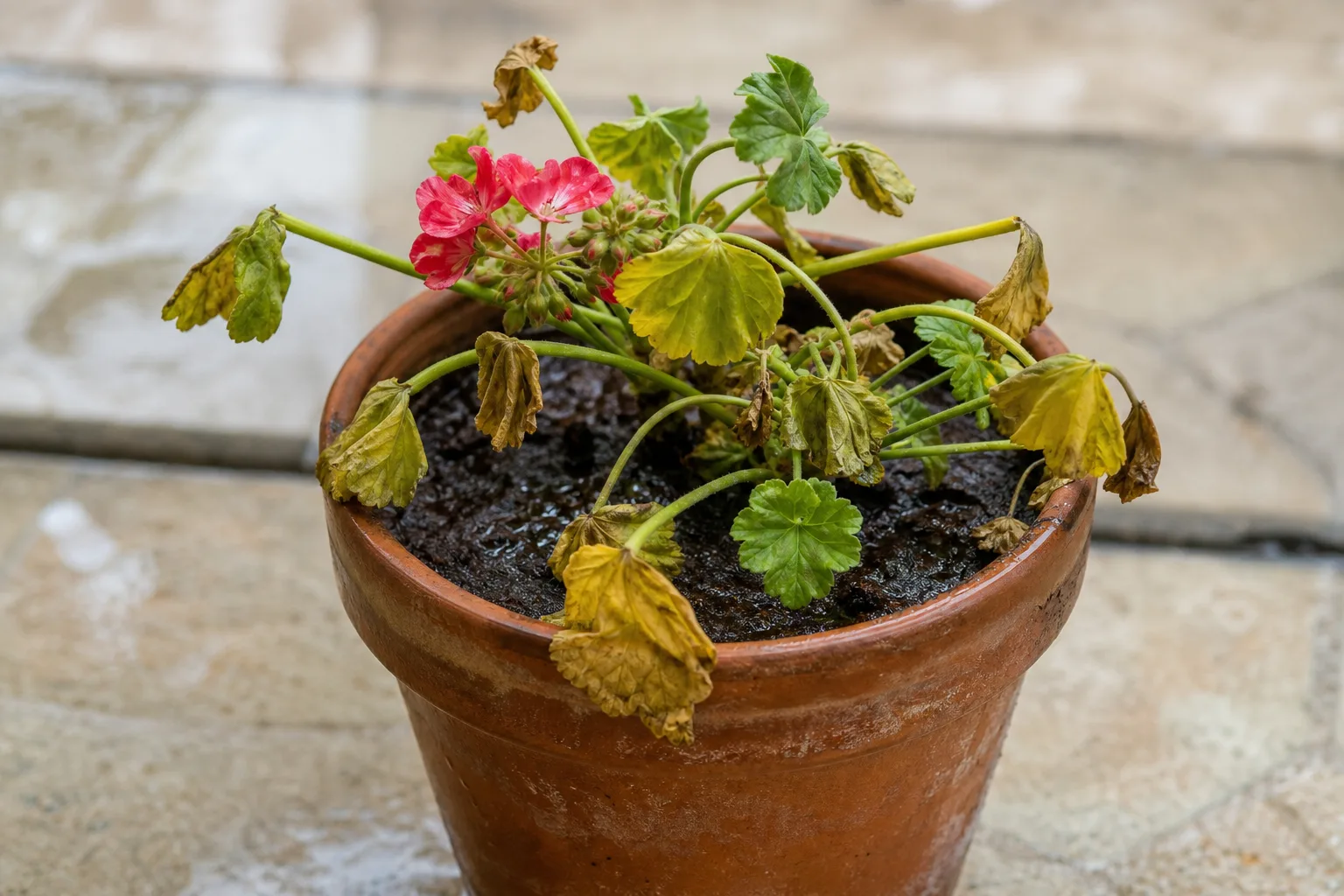
Overwatered geranium (Pelargonium) wilts while soil stays wet, yellows from the bottom up, and may blacken at the stem base. First step: stop watering until the top 1–2 inches of mix are dry and check that drainage holes are open.
Overwatering on Geranium: Causes, Checks & Fixes
This guide covers overwatering on Geranium. See also the general Overwatering guide, watering, and light pages for this plant.
Overwatering on Geranium: Causes, Checks & Fixes
Quick answer
Overwatered geranium - the bedding and container plant most people mean - is Pelargonium × hortorum and related species, not the hardy perennial Geranium genus. These drought-adapted South African plants want a full soak followed by a real dry-down, not mix that stays damp week after week. Clemson Cooperative Extension advises watering regularly but allowing the soil to dry out between waterings.
The signature trap is wilting while soil is still wet: damaged roots cannot move water upward, so leaves droop even though the mix holds plenty - not because the plant is thirsty. Yellow lower leaves, a heavy cool pot, sour smell from the mix, and soft dark tissue at the stem base all point the same direction.
First step: stop watering until the top 1–2 inches of mix are dry and the pot feels lighter. Confirm drainage holes are open and no saucer holds standing water. For the full dry-down rhythm and crown-rot prevention, see the geranium watering guide. For species context, see the geranium overview.
Overwatering vs. other geranium problems - why wilt on wet soil matters
Pelargoniums evolved in sunny, well-drained climates where soil dries quickly between rain. When roots sit in saturated mix, they lose oxygen and uptake fails - so the canopy looks thirsty while the pot stays heavy. Watering again because leaves look limp accelerates crown rot and blackleg (Pythium) at the woody stem base.
That mismatch separates overwatering from underwatering (light pot, dry mix throughout, crisp leaf edges) and from afternoon heat wilt (recovers by evening without added water). If wilting persists each morning on wet soil, treat it as root stress, not drought.
For fast whole-plant collapse without the wet-soil pattern, see wilting on geranium. For advanced mushy roots and black stems, see root rot on geranium.
What overwatering looks like on Pelargonium
Overwatering signs stack gradually on zonal, ivy, and scented types - which is why calendar watering is so dangerous.
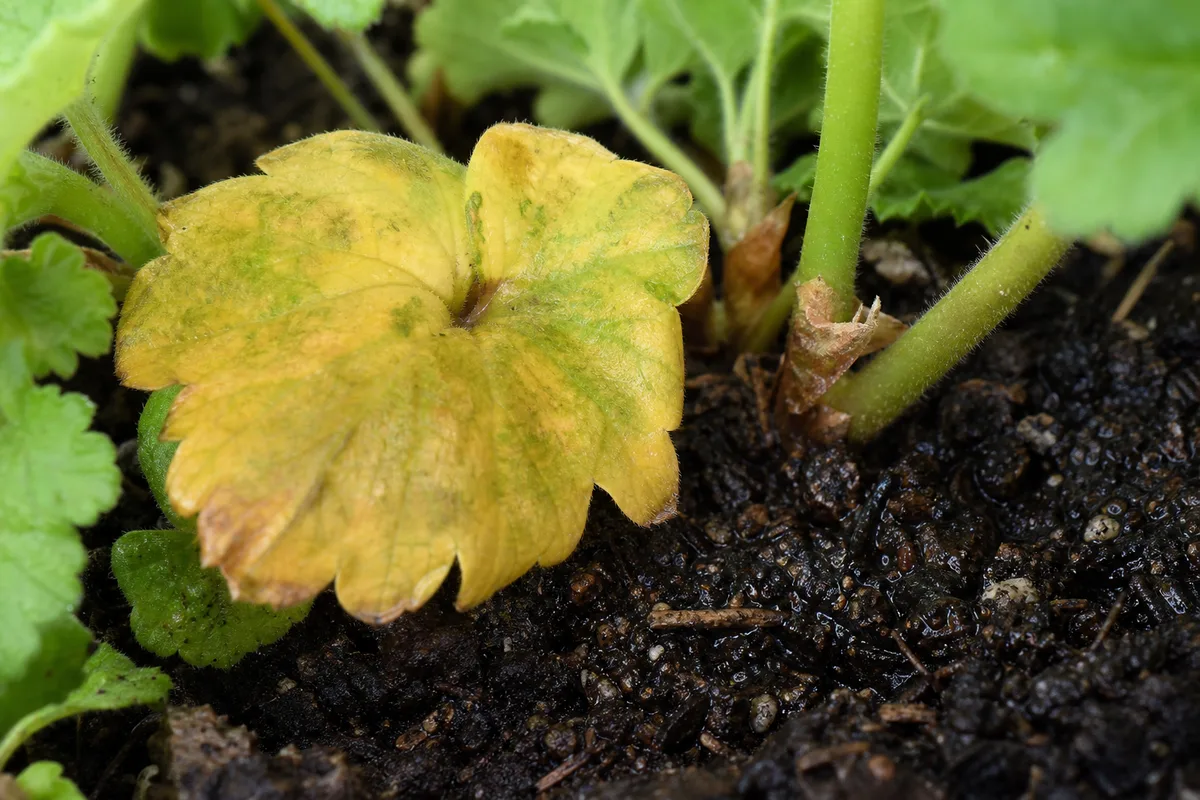
Overwatering symptoms on Geranium - compare with healthy tissue on the same plant.
Early signs
- Limp leaves on wet mix, often starting on lower or outer foliage while upper leaves still look green
- Yellow lower leaves that drop while the soil stays cool and heavy for days
- Heavy pot weight that does not drop noticeably between waterings
- Sour or musty smell when you lift the plant or disturb the surface
- Fungus gnats hovering near the pot - larvae thrive in constantly moist soil
- Edema - small water-soaked blisters on leaf undersides that turn corky brown, especially on ivy geraniums in cool, cloudy weather
Healthy Pelargonium leaves are firm and slightly waxy. Overwatered tissue turns soft yellow rather than the crisp brown edges of drought stress.
Advanced signs
- Black or brown water-soaked tissue at the stem base that darkens and climbs upward - blackleg when caused by Pythium
- Soft crown where multiple stems meet the soil; gentle pressure leaves a dent
- Branch collapse on one side while neighbors still look normal
- Mushy roots on inspection - brown, slimy, and slipping out of their outer layer when pulled
- Gray mold (Botrytis) on spent flowers after heavy watering in cool weather
The wilting paradox is the key diagnostic: damaged roots cannot transport water upward, so the plant droops even though the mix holds plenty. Adding water makes the problem worse.
Why Geranium gets overwatered
Pelargoniums tolerate dry soil better than overly wet soil - a biology point that makes generous watering habits backfire indoors.
Calendar watering is the most common trigger. The mix is still wet from three days ago, but Saturday is “watering day,” so another round goes in. Within two weeks lower leaves yellow and the stem base softens.
Oversized decorative pots surround a small root ball with a large wet zone. Mix stays damp at the center long after the surface looks acceptable - especially in glazed ceramic in a dim corner.
Heavy peat mixes without grit hold water like a sponge. Even conservative pours keep the root zone saturated for days.
Winter overwintering kindness kills more pelargoniums than neglect. Growth slows in cool, low-light rooms, evaporation drops, and weekly watering keeps soil wet around an inactive root system. Lower leaves yellow, stems soften at the base, and decline is slow but steady.
Saucers and cachepots that hold runoff wick water back into the root zone overnight. Do not allow pots to sit in water - standing water at the bottom is the fastest route to anaerobic soil and crown rot.
Fresh repotting plus immediate soak adds stress. A large zone of uncolonized mix holds moisture while the small root ball may dry unevenly - a confusing pattern that tempts overwatering.
Overhead watering wets foliage and the crown where stems meet soil. Keep water off the foliage because moist leaves favor botrytis and bacterial blight even when the mix would otherwise dry reasonably.
Zonal geraniums (Pelargonium × hortorum) show wilt-on-wet-soil most clearly on bushy patio pots. Ivy types (P. peltatum) in hanging baskets can mask dryness at the rim while the center stays wet - always probe the center, not just the edge.
How to confirm the cause
Work through these checks before repotting or trimming:
- Top-inch dryness - Push your finger 2–3 cm (1 inch) into the mix. Cool, clinging soil at that depth after many days confirms chronic saturation.
- Pot weight - Lift after your last watering and notice the heft. A heavy pot with limp foliage points to waterlogged mix; a light pot with limp leaves suggests underwatering.
- Stem-base firmness - Press tissue where stems meet soil. Firm is reassuring; soft, dark, or water-soaked means escalate toward root inspection.
- Leaf pattern - Soft yellow on multiple lower leaves plus wet soil fits overwatering. Crisp curled leaves with dry soil fits drought.
- Drainage check - Water should exit holes within minutes. Saucer water sitting for hours means roots may stand in liquid.
- Smell and gnats - Earthy-sour odor or fungus gnats on a constantly damp surface support the diagnosis.
- Light and season - Note room brightness and whether the plant is overwintering indoors. Dim, cool conditions extend drying time and make summer schedules excessive.
- Root spot-check (if unsure) - Slide the plant out gently. Healthy geranium roots are firm and white to tan. Brown, slimy roots confirm advanced damage - see the root-rot guide next.
Lookalike comparison
| Symptom pattern | Pot weight | Top 1–2 inches | Stem base | Likely cause |
|---|---|---|---|---|
| Limp leaves, yellow base | Heavy, cool | Wet | Firm for now | Early overwatering - stop water |
| Whole plant limp | Light | Dry throughout | Firm | Underwatering - soak once |
| Limp after cold night | Normal | Moist | Firm | Cold stress below ~13°C (55°F) |
| Corky leaf blisters | Normal to heavy | Fluctuating wet/dry | Firm | Edema - stabilize moisture |
| Black stem base, rapid wilt | Heavy | Wet | Soft, dark | Blackleg/root rot - escalate |
If the mix is dry throughout, the pot is light, and leaves are crispy, underwatering is more likely. Do not withhold water further without checking.
First fix for Geranium
Stop watering until the top 1–2 inches of mix are dry and the pot feels noticeably lighter.
That single pause lets oxygen return to the root zone and breaks the cycle of wet soil → failed uptake → “it looks thirsty” → more water. Move the pot to brighter light if it has been in deep shade - faster photosynthesis uses water and helps the mix dry evenly, without scorching leaves.
Empty any saucer water. If the plant sits inside a decorative outer pot, pull the nursery pot out so air reaches the bottom holes.
Do not fertilize, mist heavily, or repot on day one unless stems are already soft at the base or roots are clearly mushy on inspection. Most early overwatering cases stabilize with dry-down plus better light and drainage alone.
Step-by-step recovery
If symptoms are mild (yellowing lower leaves, wet mix, firm stems):
- Hold water until the top 1–2 inches are dry, then water thoroughly once at the soil line and pour off excess from the saucer within 30 minutes.
- Adjust placement - Bright light with at least four hours of direct sun outdoors, or the brightest indoor window for overwintered plants.
- Remove spent leaves - Yellow foliage will not re-green; snip at the base for a cleaner look once the plant is stable.
- Monitor new growth - Glossy new leaves at branch tips mean roots are working again.
If symptoms are moderate (persistent wet mix, multiple yellow leaves, fungus gnats):
- Scrape the top inch of gnat-infested or moldy surface soil and discard it.
- Let the pot dry until mix at 2–3 cm depth is dry - this may take one to two weeks in a cool overwintering room.
- Set yellow sticky traps near the pot to reduce adult gnats while soil dries.
- Resume watering only when the finger test passes; never on a fixed weekday.
If symptoms are severe (soft stems at crown, sour smell, mushy roots on unpotting):
- Unpot and rinse roots under lukewarm water.
- Trim all brown, mushy roots with clean scissors, keeping firm white or tan tissue.
- Repot into fresh, gritty mix in a pot only slightly larger than the root ball, with drainage holes - see geranium soil and repotting guides.
- Wait five to seven days before the first light watering so cut roots callus.
- Propagate backup cuttings from healthy stem tips if most roots were lost - see geranium propagation.
When to escalate to root-rot protocol
Escalate immediately if stems dent at the soil line, soil smells rotten, blackleg climbs more than a few centimeters up the stem, or more than a third of roots are mushy on inspection. Dry-down alone is unlikely to save a plant with a soft crown. Shift to the root rot guide rather than waiting for yellow leaves to spread.
Recovery timeline
Stabilization often takes one to two weeks after you stop watering and the mix dries - wilting should ease before new leaves appear.
New branch-tip leaves are the best success signal. Expect them in two to four weeks during spring or summer active growth; winter recovery in a cool overwintering room may take longer.
Old yellow leaves will not turn green again. They may drop on their own or stay until you trim them.
Full bushy form rebuilds over several months as nodes push new growth. Severe root loss slows the timeline even when the plant survives.
Worsening signs: stems soften further after dry-down, yellowing spreads up the plant, or new leaves emerge small and pale then collapse - those point toward active rot, not simple overwatering.
What not to do
Do not water because leaves look limp when soil is already wet - that feeds the failure loop. Avoid repotting into garden clay or a much larger pot; both hold excess moisture. Do not fertilize a waterlogged plant; salts on damaged roots add stress.
Skip misting as a fix; Pelargoniums prefer low to moderate humidity and wet foliage invites disease without helping roots. Do not assume toughness means frequent water - geraniums forgive drought more willingly than saturation.
When trimming yellow leaves or unpotting, wear gloves if sap irritates your skin. Pelargonium is toxic to cats and dogs if ingested - keep trimmed foliage and old soil away from pets and wash hands after handling wilted tissue.
How to prevent overwatering next time
Match water to soil dryness, not the calendar. Water when the soil surface becomes dry to the touch, then soak until excess drains freely and empty the saucer within thirty minutes. Full protocol lives in the watering guide.
Use fast-draining, gritty mix in pots with open drainage. Size up only when roots fill the current container - slightly snug is safer than dramatically oversized. See geranium soil.
Reduce frequency in winter when overwintering indoors - many pelargoniums need water only every 10–14 days in a cool bright room when growth slows.
Water at the soil line, not overhead, so leaves and the crown stay dry. Morning watering gives foliage time to dry before cool nights.
Lift before you pour - a noticeably lighter pot combined with a dry top inch is a stronger signal than wilting alone, because geraniums can look slightly limp in late afternoon heat even when moisture is adequate.
Related Geranium guides
- Geranium overview - Pelargonium types, light, and overwintering
- Watering - dry-down checks, crown-rot prevention, wilt-on-wet-soil FAQ
- Soil - gritty mix for fast drainage
- Repotting - right-sized pots after root trim
- Propagation - stem-cutting salvage workflow
- Root rot - advanced wet-soil failure and blackleg
- Yellow leaves - lower leaf drop on wet roots
- Wilting - fast collapse vs. rot
- Light - brightness needs for dry-down speed