Watering Geranium: Schedule, Soil Checks, and Mistakes
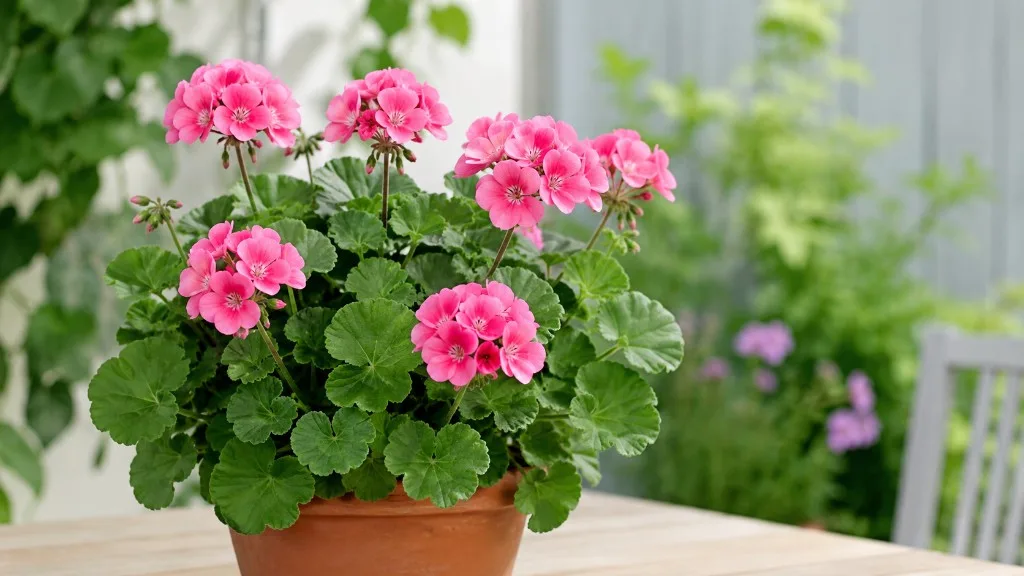
Watering Geranium: Schedule, Soil Checks, and Mistakes
Watering Geranium: Schedule, Soil Checks, and Mistakes
Most geranium problems that look like thirst are actually caused by too much water sitting too close to the crown. Geranium - the bedding and container plant most people mean when they say the word - is Pelargonium × hortorum, a drought-adapted South African annual that wants a full drink followed by a real dry-down, not soil that stays damp from one week to the next. Yellow lower leaves, a blackening stem base, flowers that wilt while the mix still feels cool, and a pot that never seems to lighten in weight all point in the same direction: the roots need air, and the crown needs to stay dry. The fix is not watering every Tuesday because the calendar says so. The fix is a short routine: check the top of the mix, confirm the root zone is ready, water at the base until excess drains freely, empty the saucer, and let the soil dry before the next round. This guide gives you the checks, the realistic schedules for pots and garden beds, and the mistakes that turn a bushy, bloom-heavy geranium into a collapsed mess at the soil line.
Why Geranium Watering Rewards Patience More Than Frequency
Pelargoniums evolved in sunny, well-drained parts of Southern Africa where rain arrives in bursts and the soil dries quickly between events. That history matters more than any tag that lists a generic “moderate water” rating. When gardeners treat geraniums like thirsty tropical foliage plants and keep the mix constantly moist, the roots lose oxygen and pathogens that thrive in wet substrate - especially Pythium, the organism behind blackleg and crown rot - find an open door at the stem base.
The confusion starts because geraniums do use water actively when they are in Geranium light guide and pushing flowers. A healthy plant in a small terracotta pot on a hot balcony can go from adequately moist to genuinely dry in a single afternoon. That fast dry-down is real, but it does not mean the plant wants water every day as a default habit. Clemson Cooperative Extension puts the core rule plainly: water regularly during the growing season, but allow the soil to dry out between waterings. Iowa State University Extension notes that container geraniums may need water two or three times a week in hot, dry weather, while in-ground plants often do well with about an inch of rain per week.
How Much Water Geranium Actually Needs
Geraniums need enough water to reach the full root ball, followed by enough drying time for the upper mix to lose excess moisture before the next session. “Moist, well-draining soil” does not mean permanently damp soil. It means the root zone receives a thorough soak, drains within minutes, and then approaches dryness again at the top before you repeat the cycle. University of Minnesota Extension recommends allowing soil to dry to some extent between waterings, then watering thoroughly - and notes that geraniums tolerate dry soil better than overly wet soil.
A useful mental model is a sponge, not a swamp. After a proper watering, the mix should feel evenly wetted through the container. Within a day or two in active summer growth, the surface lightens in color and the top 2–3 cm (1 inch) should feel dry to the touch. That dryness at the surface is your green light, not a crisis. Deeper down, a trace of moisture may still remain, which is normal in a well-drained loam-based or gritty mix. Problems begin when the surface never dries, the pot stays heavy for days, or water pools in a saucer and wicks back up into the root zone overnight.
How Often to Water Geranium in Containers
Container geraniums dry faster than in-ground plantings because their root zone is confined and exposed to sun on the pot walls. In typical summer conditions - bright light, warm air, moderate humidity - many patio pots need water every 2–3 days. In cooler spring or autumn weather, the same pot may stretch to 4–7 days between drinks. Indoor geraniums in bright windows often fall somewhere in the middle: roughly every 5–7 days in winter when growth slows, and every 2–4 days in summer if the radiator heat and direct sun pull moisture quickly. Treat those numbers as orientation, not commandments. A glazed ceramic pot in a dim corner can hold moisture twice as long as a terracotta pot on a south-facing rail.
The single best habit is to check before you pour. Calendar watering is how crown rot starts: the mix is still wet from three days ago, but Saturday is “watering day,” so another round goes in. Within two weeks the lower leaves yellow, the stem base turns soft, and the plant wilts in soil that feels cool and heavy - classic root damage, not drought. Iowa State University Extension recommends watering containers when the soil surface becomes dry to the touch; during peak summer heat in containers, every 2–3 days is common when the dry-down check confirms need.
Finger Test, Skewer Probe, and Pot Weight
Three checks, used together, beat any schedule printed on a care tag. The finger test is the fastest: push your index finger into the mix to the second knuckle, about 2–3 cm (1 inch) deep. If the soil feels cool and clings to your skin, wait. If it feels dry and crumbly at that depth, the plant is likely ready for water. Surface color alone is unreliable - peat-heavy mixes can look pale on top while staying wet underneath, and dark mixes can look moist when they are actually dry.
A wooden skewer probe helps when you are still learning a new pot. Insert it to the bottom, leave it thirty seconds, pull it out, and feel the shaft. A damp skewer means moisture remains lower in the column; a clean, dry skewer supports watering. Mark the skewer with a pencil line at soil level so you insert to the same depth every time.
Pot weight is the check experienced growers trust most. Lift the container after a thorough watering and notice the heft - that is your “wet” reference. Lift it daily until the weight drops noticeably and the plant feels light for its size. That lightness, combined with a dry top inch, is a stronger signal than wilting alone, because geraniums can look slightly limp in late afternoon heat even when the mix is adequately moist. Over time you will calibrate by feel and rarely need the skewer.
One more nuance: wilting is a symptom, not a schedule. If leaves droop but the pot is heavy and the finger test reads wet, do not add water. Inspect drainage, move the plant to brighter light if it has been shaded, and let the mix dry. If leaves droop and the pot is light with dry soil at depth, water thoroughly.
How Often to Water Geranium in Garden Beds
In-ground geraniums benefit from the larger soil reservoir around their roots. Established bedding plants in sunny borders often perform well with roughly 2.5 cm (1 inch) of water per week, whether from rain or supplemental irrigation, according to Iowa State University Extension. In practice that translates to a deep soak about once a week during dry spells, rather than a light sprinkle every other day. Light frequent sprinkles wet the surface, encourage shallow roots, and splash foliage - three habits that work against long-term health.
At planting time, water generously to settle soil around the root ball. For the first two weeks, check every few days and water when the top inch dries, similar to container logic, because new transplants have a smaller root footprint relative to the surrounding soil. Once stems toughen and new growth appears, shift to the weekly deep soak model unless heat waves or sandy soil accelerate drying.
In-Ground vs Window Box vs Hanging Basket
Not all “outdoor geraniums” dry at the same rate. In-ground plantings in loamy garden soil hold moisture longest and forgive missed checks more than pots do. Window boxes dry quickly because they are shallow, exposed on multiple sides, and often packed with annuals competing for the same volume of mix. Hanging baskets dry fastest of all - sometimes daily in midsummer - because air circulates beneath the pot and sun heats the exposed soil mass from every angle.
A geranium in a window box on a west-facing railing may need water every 1–2 days at peak summer heat, while a neighbor’s in-ground planting two metres away thrives on weekly rain. The plant species is the same; the container physics are not. Hanging baskets also punish overhead watering more severely because water runs down leaves and collects at the crown where stems meet soil. For baskets, base watering with a narrow-spout can or a gentle hose at soil level is non-negotiable if you want to avoid botrytis blossom blight and stem rot.
If you grow ivy geraniums (Pelargonium peltatum) in cascades, remember they share the same dryness preference but their trailing stems can mask a dry pot edge while the center remains wet. Probe the center of the basket, not just the rim.
Seasonal Watering Schedule for Geranium
Geranium water use tracks growth phase more than month on the calendar. Active spring growth, summer flowering, autumn wind-down, and winter rest each change how fast a given pot dries and how much moisture the plant can use before roots suffocate.
In spring, check containers every 2–4 days and water when the top inch dries. In summer, many patio pots need water every 2–3 days; hanging baskets may need daily checks during heat waves. In autumn, stretch to every 4–7 days as growth slows - the August habit is a common overwatering on Geranium trap. In winter, overwintered pelargoniums indoors often need water only every 10–14 days: barely moist at depth, dry at the surface, not the summer soak-and-dry cycle.
Summer Heat and Winter Slowdown
Summer heat changes the urgency of checks without changing the underlying rule. A geranium in full sun may wilt slightly at midday even with adequate soil moisture - a heat response that recovers by evening. If the plant recovers each evening and the morning finger test reads slightly dry at depth, your schedule is probably correct. If evening wilting persists and morning soil is still wet, you are looking at root stress from overwatering, not heat thirst.
Winter slowdown is where crown rot meets kindness. Gardeners who love their plants water overwintered geraniums weekly “to keep them alive,” and the cool, low-light combination means that water sits for days around an inactive root system. Lower leaves yellow, stems soften at the base, and the plant declines slowly. During winter rest, water only when the top 2–3 cm are dry and the pot feels light - often two weeks apart in a cool bright room. No fertilizer, no Geranium repotting guide, no saucer water.
Watering Geranium by Pot Size and Growth Stage
Pot volume sets the clock. A geranium freshly moved from a 10 cm nursery pot into a 20 cm decorative container has a large zone of mix that roots have not yet colonize. That unused soil holds water like a sponge while the small root ball may actually dry faster than before - a confusing pattern that tempts people to overwater. After repotting, expect slower overall drying for several weeks and extend your interval until roots fill the new space.
Small pots (10–12 cm) dry fast and suit geraniums well because they limit excess moisture. Large pots (25 cm+) for a single zonal geranium often stay wet too long unless the mix is very gritty and the plant receives strong sun. Match pot size to root mass: slightly snug is safer than dramatically oversized.
Seedlings and cuttings need barely moist mix with the surface allowed to dry slightly between waterings - humidity domes and saturated media invite blackleg on Pelargonium cuttings. Mature, bloom-heavy plants in peak summer are the highest water users and may need the 2–3 day summer rhythm in a 15 cm pot while a recently pruned plant in the same container needs less.
The Right Way to Water Geranium Without Crown Rot
Technique matters as much as timing for Pelargonium. Clemson Cooperative Extension and Iowa State University Extension both emphasize keeping water off the foliage because wet leaves favor botrytis, bacterial blight, and other diseases that enter through damaged or wet tissue. Water at the soil line with a narrow-spout watering can, delivering water slowly so it sinks in rather than splashing upward onto stems.
Water until excess drains freely from the bottom holes. That flush carries accumulated salts from fertilizer and ensures the entire root column receives moisture. If water pools on the surface and runs down the inside wall without wetting the center, break the surface tension with a fork, then water again in two short passes.
Never let the pot sit in a saucer of runoff. Empty cachepots and saucers within thirty minutes. In decorative outer pots with no drainage, either drill drainage holes or treat the inner nursery pot as removable and dump excess after every watering. Standing water at the bottom is the fastest route to anaerobic soil and crown rot - the stem base stays wet while upper leaves still look fine for a few days.
Avoid overhead sprinklers for geraniums in beds if you can. Drip irrigation or a soaker hose at soil level delivers moisture without soaking flowers and leaves. If you must use a hose, do it in the morning so foliage dries by afternoon. Evening watering with wet leaves overnight is an open invitation to gray mold when nights turn cool.
When watering, aim the stream around the inner edge of the pot and move inward, not directly onto the crown where multiple stems emerge from soil. The crown - that junction of stems and surface - should stay as dry as practical year-round.
Signs You Are Overwatering Geranium
Overwatering is the default failure mode for container geraniums. The signs stack up gradually, which is why people often water more when they should stop.
Yellow lower leaves that drop while upper leaves still look green often indicate roots struggling in wet mix. The plant sacrifices older foliage because damaged roots cannot support the full canopy. If yellowing starts at the bottom and the soil smells earthy-sour or stays cool and heavy for days, suspect excess moisture before nitrogen deficiency.
Wilting in wet soil is the paradox that confuses most growers. The leaves droop because root tissue is damaged and cannot transport water, even though the mix holds plenty. If you respond by watering again, you accelerate crown rot. Check the stem base: soft, darkened tissue at soil level confirms trouble.
Stem rot at the base - sometimes called blackleg when caused by Pythium - shows as brown, water-soaked tissue that darkens to black and climbs upward. Penn State Extension describes brown water-soaked bases on young plants that enlarge rapidly, with affected plants wilting and dying. At home, the first visible sign is often a single stem turning mushy where it meets the soil while neighbors still look normal.
Mushy roots discovered during repotting are past the early stage. Healthy geranium roots are firm and white to tan. Rotting roots are brown, slimy, and may slip out of their outer layer when pulled. If more than a third of the root mass is mushy, recovery is uncertain; improve drainage, trim rot, and treat it as a propagation rescue rather than a quick fix.
Edema - corky spots on leaves - and gray mold (Botrytis) on spent flowers both follow heavy watering in cool, cloudy weather. Reduce frequency, dry foliage, and improve air movement before reaching for fungicide.
Signs Geranium Is Thirsty or underwatering on Geranium
Underwatering happens, especially with small pots in full sun and with gardeners who overcorrect after a crown-rot scare. The signs differ from overwatering in important ways.
Wilting that recovers after watering within a few hours points to genuine dryness. The whole plant droops, the pot feels light, and the finger test reads dry at depth. A thorough soak restores turgor by evening.
Dry, crispy leaf edges and pale, small flowers suggest repeated mild drought stress. Geraniums bounce back from a single dry episode, but chronic underwatering reduces bloom size and can damage fine root hairs that take time to regrow.
Light pot weight combined with mix pulling away from the pot walls means the soil has gone quite dry. Water in two passes so the mix rehydrates instead of shedding water down the gap.
Slowed new growth in summer with dusty-looking leaves can mean insufficient water during an active growth phase - but always confirm with the finger test before watering, because the same appearance can occur when roots are damaged from previous overwatering.
Do not confuse afternoon heat wilt with drought. If the plant perks up each evening without additional water, wait until morning to check soil moisture. Watering every afternoon “just in case” in summer is a common path to soggy soil and root decline by August.
Soil Mix and Drainage as Hidden Watering Factors
Watering technique cannot rescue a mix that holds moisture too long. Geraniums want fast-draining, loam-based or gritty compost with good aeration. Heavy peat blends, straight garden clay, and moisture-retentive “water crystal” mixes keep the root zone wet for days after a single watering, which makes crown rot likely even when you think you are being conservative.
A sound container mix for zonal geraniums combines quality potting soil with 20–30% perlite, grit, or coarse sand to increase pore space. The mix should feel crumbly in your hand, not like wet cookie dough after watering. If your current plants stay wet more than three days after a soak in summer sun, the mix - not your calendar - needs adjustment at the next repot.
Drainage holes are mandatory. One clear hole is minimum; three to four are better in wide window boxes. If you fell in love with a pot without holes, use it as a cachepot only and remove the inner container to drain after every watering.
Pot material changes dry speed. Unglazed terracotta breathes and dries fastest - excellent for geraniums if you can water slightly more often. Glazed ceramic and plastic retain moisture longer, which is helpful in hot, windy sites but risky in dim, cool rooms. Choose material to match your habits: if you tend to overwater, terracotta forgives; if you travel and underwater, a slightly larger plastic pot with gritty mix may suit better.
Soil pH sits around 6.0–6.6 for most zonal geraniums; ivy types often prefer closer to 5.5, according to Pacific Northwest Pest Management Handbooks. pH is not a daily watering variable, but chronically waterlogged mix acidifies and weakens roots over time, another reason drainage comes first.
Water Quality, Temperature, and Timing
Geraniums are not finicky about modest tap-water mineral content, but they dislike cold shocks and stale, oxygen-poor water sitting in saucers. Room-temperature water applied in the morning gives the plant the full day to take up moisture and lets any incidental splash on leaves dry before cool night air arrives. Morning watering also matches the plant’s peak transpiration cycle in summer.
If your tap water is very cold, let it sit for an hour in the watering can. Cold water on warm roots can slow uptake and stress a plant already struggling with rot.
Rainwater is fine and sometimes preferable in hard-water areas where chalky deposits accumulate on leaves and soil surface. Regardless of source, the principles stay the same: soak the root zone, drain fully, dry down, keep the crown dry.
Avoid misting geranium leaves - Pelargoniums prefer low to moderate humidity (30–50%), and wet foliage invites disease without helping roots.
Geranium Watering in Hot and Dry Climates
Hot, dry, windy balconies - common in Mediterranean climates, desert Southwest exposures, and high-rise summer sun - pull water from leaves and pots faster than mild temperate weather. In those conditions, daily checks become necessary even when daily watering is not. A 12 cm terracotta pot in 35°C afternoon sun may cross from ready-to-water to severely dry in twenty-four hours.
During heat waves, water deeply at dawn. A second drink at dusk is justified only when the pot is genuinely light - never when it is still heavy from morning. In humid hot climates, soil stays wet longer; reduce frequency and prioritize air circulation over online dry-climate schedules.
Common Geranium Watering Mistakes and Quick Fixes
Mistake: watering on a fixed weekly schedule without checking soil. Fix: adopt a check-first rule - finger, skewer, or pot weight - before every pour. The calendar reminds you to look, not to water.
Mistake: giving small sips daily instead of a full soak. Fix: water thoroughly until drainage, then let the mix dry. Daily sips keep the upper layer moist while lower roots starve or rot, and they never flush salts.
Mistake: leaving runoff in the saucer. Fix: empty saucers and cachepots within thirty minutes, every time. If you forget, set a phone timer until the habit sticks.
Mistake: overhead watering with a spray nozzle. Fix: switch to a narrow spout at soil level; water before noon so leaves dry.
Mistake: oversized decorative pot with heavy peat mix. Fix: size pot to plant, amend with grit, or repot into terracotta. Match container physics to geranium dryness preference.
Mistake: continuing summer frequency into autumn. Fix: when night temperatures drop and growth slows, stretch intervals and verify with weight checks.
Mistake: overwatering overwintered plants out of sympathy. Fix: treat winter geraniums as resting, not growing - minimal water, cool bright room, no saucer contact.
Mistake: assuming wilting always means thirst. Fix: check soil moisture and stem base before adding water. Wilting plus wet soil means stop watering and improve drainage and light.
Wet Foliage, Botrytis, and Stem Rot at the Crown
The crown - where stems meet soil - is where Pythium blackleg and bacterial blight start when splash or standing moisture keeps tissue wet. Brown water-soaked tissue that turns black and climbs the stem is rarely reversible once it passes a third of the crown. Prevention means base watering, dry saucers, fast-draining mix, and morning timing. If rot is localized to one stem, remove it and let the mix dry; if the whole crown is black and soft, discard the plant, sanitize the pot, and restart from healthy cuttings in barely moist mix without a humidity dome.
Building a Simple Weekly Watering Routine
You do not need expensive gadgets to water geraniums well. You need a repeatable loop that respects dry-down and keeps the crown dry.
Daily (30 seconds in summer, optional in winter): Walk past container plants. Lift any pot that flowered heavily or wilted yesterday. Note weight. If a pot feels light and the top inch is dry, flag it for watering.
Watering days (as needed, not fixed): Water flagged pots at the soil line until drainage. Empty saucers. Skip every pot that is still heavy or cool at depth.
Weekly (five minutes): Review each geranium for yellow lower leaves, spent flowers holding moisture, and stem color at the soil line. Remove debris that keeps the crown damp. Adjust position if a plant in shade is staying wet too long.
Seasonal (monthly): Reassess whether your interval matches current growth. Lengthen spacing in autumn and winter; shorten checks in summer. Note whether repotting, pruning, or a heat wave changed the drying speed.
Write nothing down if you prefer - the pot weight in your hands is the record. The goal is a habit: check, soak, drain, dry, repeat - not more water, but the right water at the right time.
Conclusion
Geranium watering is less about memorizing how many days pass between drinks and more about reading whether the root zone has dried enough to welcome the next soak. Pelargonium × hortorum rewards growers who let the top 2–3 cm of mix dry, water thoroughly at the base, drain every saucer, and keep moisture away from the crown where stems meet soil. Container plants in summer sun often need water every 2–3 days once checks confirm dryness; in-ground plantings in dry weather often do well with a weekly deep soak; overwintered specimens may go two weeks between light drinks. Yellow lower leaves, wilting in wet soil, and a blackening stem base are overwatering and crown-rot warnings, not calls for more water. Wilting with a light, dry pot is thirst. Master the finger test, the skewer, and pot weight together, pair them with fast-draining mix and morning base watering, and your geraniums get the South African rhythm they were built for - full hydration, real dry-down, and a crown that stays dry enough to bloom without rotting at the soil line.
When to use this page vs other Geranium guides
- Geranium overview - Start here for whole-plant context before deep-diving this topic.
- Geranium problems hub - Jump to symptom-specific fix guides when this care topic does not resolve the issue.
- Overwatering on Geranium - Escalate here when watering adjustments are not enough.
- Underwatering on Geranium - Escalate here when watering adjustments are not enough.
- Root Rot on Geranium - Escalate here when watering adjustments are not enough.
Related Geranium guides
- Geranium overview
- Geranium light
- Geranium soil
- Geranium propagation
- Geranium fertilizer
- Geranium repotting
- Overwatering on Geranium
- Underwatering on Geranium
- Root Rot on Geranium
- Wilting on Geranium
- Drooping Leaves on Geranium
- Mold on Soil on Geranium
Related tool
Try the Plant Watering Calculator with geranium pre-selected to estimate needs for your setup.