Mold on Soil on Geranium: Causes, Checks & Fixes
Quick answer
Fluffy white or gray mold on geranium soil is usually harmless saprophytic fungus feeding on damp organic matter-not a disease attacking the plant. First step: stop watering until the top 2–3 cm of mix feels dry, then scrape off the moldy surface layer and remove spent petals or leaf debris.
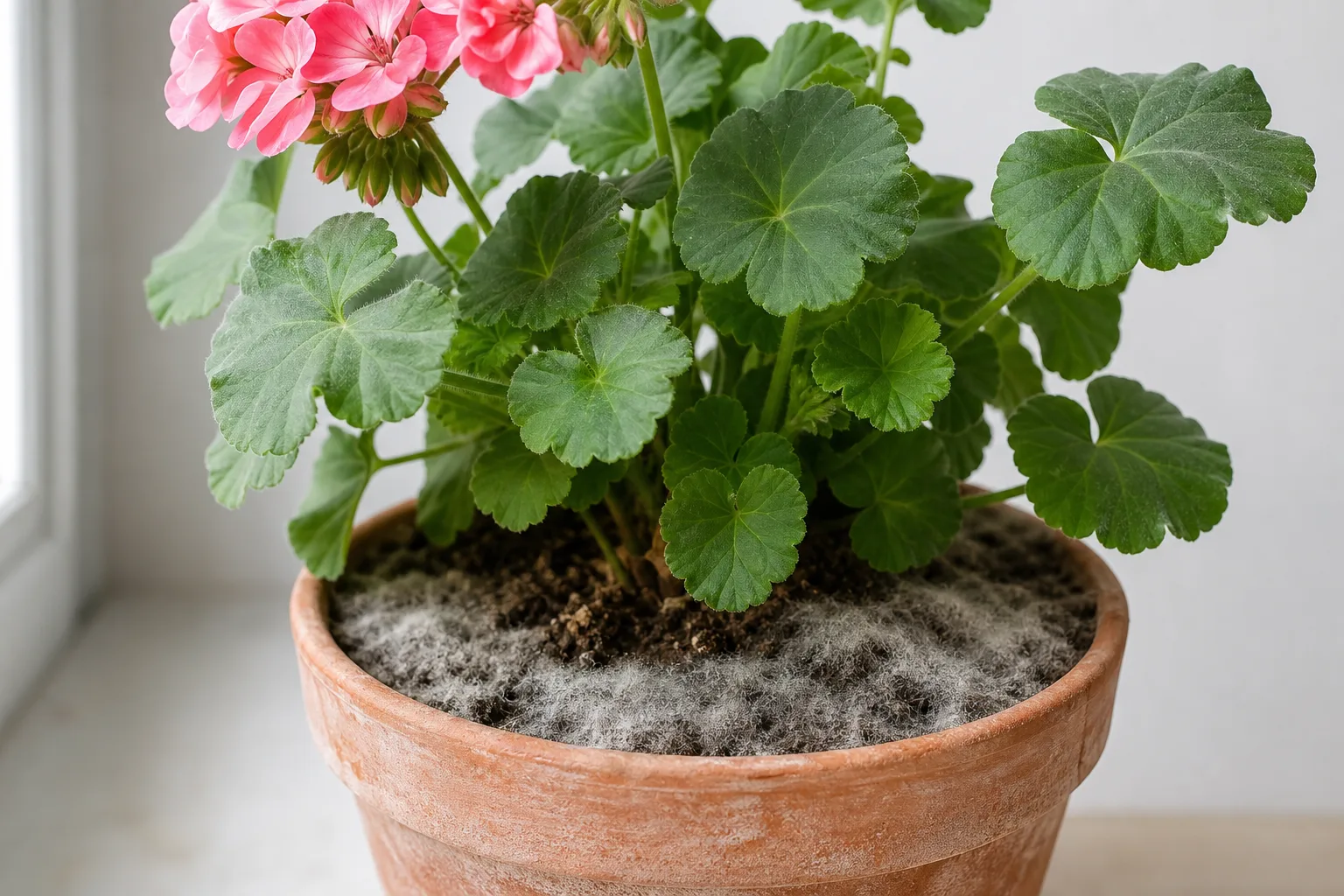
Mold on Soil on Geranium: Causes, Checks & Fixes
This guide covers mold on soil on Geranium. See also the general Mold on Soil guide, watering, and light pages for this plant.
Mold on Soil on Geranium: Causes, Checks & Fixes
Quick answer
White or gray fuzz on geranium potting soil looks alarming, but it is usually saprophytic fungus breaking down dead organic matter in a persistently damp surface layer-not a pathogen eating living roots. Your geranium can look perfectly fine above the soil line while this happens.
First step: stop watering until the top 2–3 cm of mix feels dry to the touch. Once the surface dries, scrape off the moldy top layer, discard it, and pick up any spent petals or fallen leaves sitting on the soil. That single moisture correction fixes most cases without fungicide.
Why Geranium soil grows mold
Zonal geraniums (Pelargonium × hortorum) are built for fast-draining compost and a wet-dry Geranium watering guide. They want regular moisture during active growth, but the mix should not stay soggy at the surface. When the top layer never dries, saprophytic fungi colonize decaying bark fines, peat, and plant debris-the same damp potting-soil conditions that also invite fungus gnats.
Several geranium-specific habits make surface mold common:
Winter overwatering on Geranium indoors. Geraniums are among the most overwatered plants during cool indoor months. Lower light and cooler rooms slow water use, yet many growers keep a summer watering schedule. The pot stays heavy while the surface grows mold.
Spent blooms and leaf litter on the soil. Geraniums need regular deadheading. Petals that drop into the pot or sit on the soil surface decompose quickly and feed surface fungi-especially in window boxes and crowded balcony displays.
Overhead watering on fuzzy leaves. Wet foliage in cool, still air favors disease, and water that runs off leaves can keep the soil surface constantly damp. Geraniums perform best when you keep water off the foliage and let the top layer dry between drinks.
Oversized or poorly drained pots. A pot much larger than the root ball holds excess wet mix around the geranium. Saucers left full of runoff recreate the same saturated surface mold loves.
Low light with damp mix. Geraniums need strong light to bloom and to use water efficiently. A plant pushed into a dim overwintering window dries slowly, so mold persists even when you water less often than in summer.
Surface mold and deeper trouble often share one root cause-too much moisture-but the mold itself is usually a warning sign, not the killer.
What mold on soil looks like on Geranium
Typical harmless surface mold:
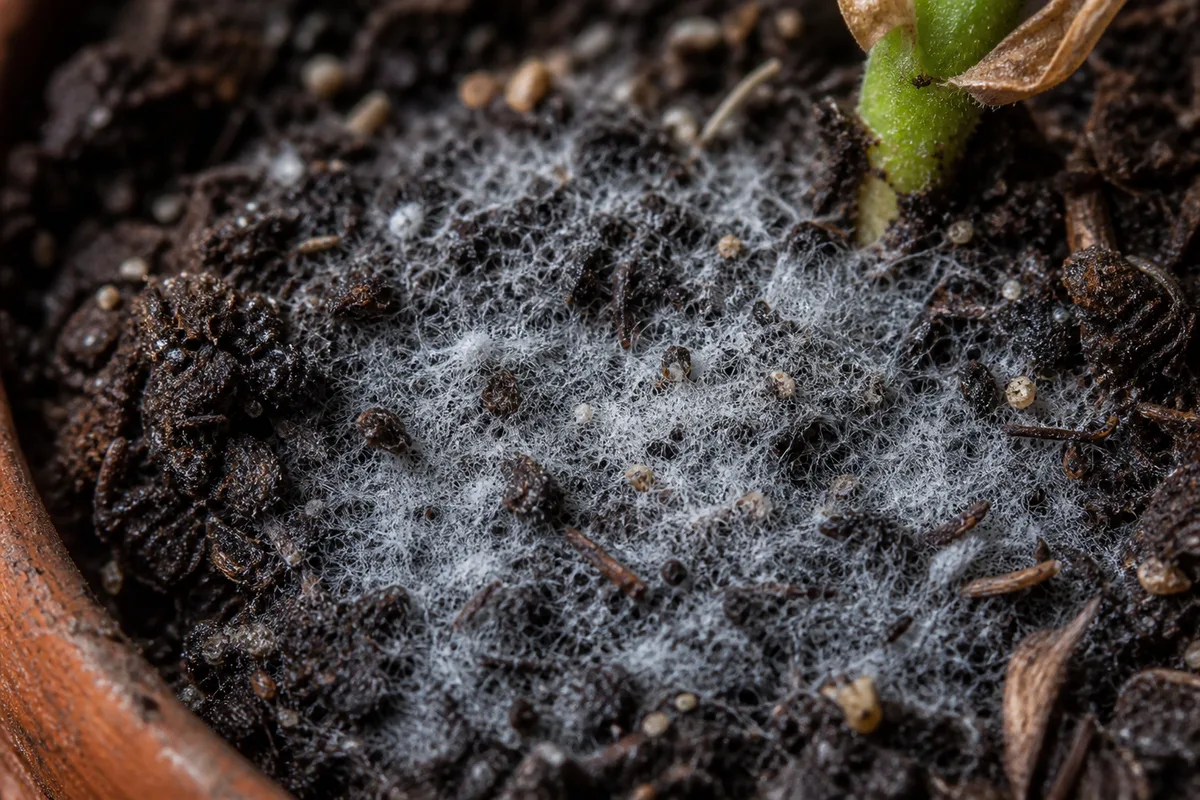
Mold on Soil symptoms on Geranium - compare with healthy tissue on the same plant.
- White, gray, or occasionally tan fuzzy patches on the top of the potting mix
- Thread-like mycelium visible when you scrape the surface
- Soil that feels cool and damp several days after watering
- Plant stems still firm; leaves green except for normal older yellowing at the very base
- Blooms may continue on an otherwise healthy plant
Patterns that suggest you also have a deeper moisture problem:
- Musty or sour smell when you dig into the top layer
- Soil surface stays wet even when lower leaves yellow and drop
- Small black flies rise when you disturb the pot-fungus gnats sharing the same damp habitat
- Green algae film alongside white fuzz, usually in a dim spot
Not the same as Botrytis gray mold on the plant. Botrytis appears as gray, fuzzy growth on spent flowers, petals, and damp leaf tissue-not as a uniform mat on bare soil. It thrives in cool, moist weather with poor air circulation. Soil surface fuzz with firm green stems and clean flowers is a different diagnosis path.
How to confirm the cause
Work through these checks before you repot or spray:
- Finger test - Push your finger into the top 2–3 cm. If it feels wet or cool and clings to your skin, the surface has not dried enough. Geraniums should be watered when the soil dries between waterings, not on a fixed calendar.
- Pot weight - Lift the container. A heavy pot days after watering confirms slow drying; a light pot with surface mold may mean you recently watered a mix that drains poorly at the top.
- Stem firmness - Pinch the lowest inch of main stems. Firm, green tissue supports a surface-mold diagnosis. Soft, dark, or hollow stems mean investigate rot, not just scrape mold.
- Debris scan - Look for matted petals, fallen zonal leaves, or old mulch fragments on the soil. Remove them and recheck in a week-if mold appeared only where debris sat, the cause is localized organic matter plus moisture.
- Root spot-check (only if stems feel soft or the plant wilts) - Slide the geranium partly out of the pot. Healthy roots are white or tan and firm. Brown, mushy roots with sour-smelling mix mean root rot from waterlogged soil-the mold was a clue, not the whole story.
- Gnat test - Tap the pot rim. A cloud of tiny flies confirms the same wet-soil environment that grows surface fungi.
If stems are firm, roots smell neutral, and only the surface is fuzzy, you can treat this as cosmetic mold and fix watering first.
First fix for Geranium
Stop watering until the top 2–3 cm of potting mix is dry to the touch.
Do not add fungicide, cinnamon, or a heavy top-dressing on day one. The mold is a moisture signal. Letting the surface dry breaks the fungus’s habitat faster than any spray.
After the surface dries:
- Scrape off roughly the top 1 cm of moldy mix with a spoon and discard it in the trash-not the compost pile.
- Remove all spent petals, fallen leaves, and visible debris from the pot surface.
- Empty any water sitting in the saucer-do not let the pot sit in standing water.
Hold off on the next full watering until your finger test says the top layer is dry again. For an average indoor geranium in a 15–20 cm pot, that pause may take several days in winter or one to two days on a hot balcony-follow the pot, not the clock.
Step-by-step recovery
Once the first dry-down and scrape are done, work through these steps in order if mold persists:
- Switch to bottom watering or careful rim watering - Add water until it drains freely, then discard saucer runoff within 30 minutes. Avoid flooding the soil surface repeatedly while leaves stay dry.
- Improve airflow - Space pots on crowded shelves, open a window briefly, or run a small fan nearby. Stagnant humid air slows surface drying on geraniums overwintering indoors.
- Brighten light if the plant is stretching or blooming poorly - More usable light helps the geranium transpire and dry the mix on a predictable schedule.
- Refresh the top layer - Replace scraped soil with a thin layer of dry, fast-draining mix matching your usual perlite-heavy blend. Do not pack it down.
- Set yellow sticky traps - If gnats appeared with the mold, traps catch adults while drying soil breaks the larval cycle in the top inch of mix.
- Repot only when mold returns weekly despite dry surface habits - Move to a slightly smaller or better-draining pot with fresh mix if the old media is compacted, smells sour, or the container is oversized for the root ball. Trim only mushy roots; leave firm roots intact.
Skip Geranium repotting guide on day one unless roots are already rotting. A stable geranium with surface mold rarely needs that disruption.
Recovery timeline
Surface mold should stop reappearing within one to two weeks once the top layer consistently dries between waterings and debris stays cleared. You may see a faint stain on old mix-that is cosmetic.
Signs you are on track:
- No new fuzz after two dry-down cycles
- Firm stems and new leaves opening normally
- Fewer or no fungus gnats when you disturb the pot
- Pot weight drops predictably before you water again
Signs the problem is deeper:
- Mold returns within two days of every watering
- Lower leaves yellow in clusters while the mix stays wet
- Wilting that does not recover overnight even after you watered yesterday
- Blackening at the crown or stem base
Geraniums do not “heal” old moldy soil-they outgrow the problem when conditions change. Judge recovery by new growth and stable stems, not by whether a faint scar remains on the surface.
Lookalike symptoms to rule out
Botrytis (gray mold) on flowers and leaves. Tan or brown wet spots on petals and leaves with gray fuzzy spore masses-especially in cool, humid weather or on spent blooms left wet. Fix by removing infected tissue, improving air flow, and keeping foliage dry-not by scraping soil alone.
Green algae on the soil surface. Slimy green film in very low light with constant surface moisture. Treat like mold: dry the surface and brighten the spot slightly.
Yellow houseplant mushrooms. Small yellow parasol-shaped mushrooms indicate saprotrophic fungi in very organic, wet mix. They break down debris like white surface mold; removal is for appearance or pet safety, not because the geranium is infected.
Root rot from chronic overwatering. Wilting, yellowing, and mushy roots despite wet soil. Surface scraping will not save the plant until you cut away rot, repot into fresh mix, and dry the root zone on a corrected schedule.
Powdery mildew on leaves. Dry white powder on leaf surfaces, not fuzzy soil. Different fungus, different fix.
Mistakes to avoid
Do not drench the soil with fungicide for harmless surface mold-geranium leaves are easily marked by sprays and runoff, and fungicides do not fix overwatering.
Do not keep watering on a summer schedule all winter because the plant “looks dry.” Test the top 2–3 cm instead.
Do not leave spent geranium flowers to molder on the soil in window boxes. Deadhead into a bin, not the pot.
Do not let the pot sit in a full saucer “so it can drink later.” Standing water saturates the bottom and keeps the surface humid.
Do not confuse soil fuzz with Botrytis on petals and assume both need the same scrape-and-wait approach. Inspect flowers and leaf axils separately.
Do not repot a healthy geranium into a much larger container hoping to “give it room.” Excess wet mix around small root systems is a common mold trigger.
Geranium care cross-check
If mold keeps returning, verify the basics that govern how fast your pot dries:
- Light - At least four hours of direct sun daily for strong outdoor geraniums; the brightest window you have for overwintered plants.
- Mix - Fast-draining compost with perlite or coarse sand; never heavy garden soil in containers.
- Drainage - Open drainage holes and no standing saucer water.
- Seasonal rhythm - Every 2–3 days in summer heat on a sunny balcony may shrink to every 5–7 days indoors in winter for the same plant.
- Deadheading - Remove faded blooms before petals fall into the pot.
When those align, surface mold usually disappears without heroic intervention.
How to prevent mold on Geranium soil next time
Deadhead regularly and brush debris off the soil after windy days on the balcony. Water when the top 2–3 cm dries, then drain completely. In winter, prioritize dry surface intervals over keeping the mix constantly moist.
Use pots sized to the root ball-slight root restriction even encourages better flowering on zonal geraniums. Empty saucers after every watering. If you bottom-water, lift the pot out of the tray once the mix has absorbed enough; do not leave it soaking.
Keep geraniums where air moves-especially when overwintering on indoor windowsills. Pair that with strong light so the plant uses water at a steady rate.
Watch for fungus gnats early. They share the same damp-soil habitat as surface mold; letting the surface soil dry between waterings prevents both.
When to worry
Escalate beyond scrape-and-dry when:
- The stem base feels soft, black, or hollow
- The plant wilts while the mix is still wet
- Lower leaves yellow rapidly and fall in groups
- Mold returns within 48 hours despite a visibly dry surface and clean debris-compact or sour-smelling mix may need repotting
- Gray fuzzy growth spreads onto living flowers and leaves in a cool, humid room-treat as possible Botrytis, not soil mold alone
A firm, blooming geranium with isolated soil fuzz is not an emergency. A collapsing crown with sour soil is.
Conclusion
Mold on geranium soil is usually a moisture and hygiene problem, not a mysterious plant disease. Dry the surface, scrape away the fuzz, clear spent blooms, and adjust your seasonal watering rhythm. Reserve repotting and rot surgery for soft stems, sour mix, or mold that returns despite corrected care. Most geraniums bounce back quickly once the top layer stays dry between drinks.
When to use this page vs other Geranium guides
- Geranium watering guide - Use for routine moisture checks before assuming mold on soil is the main issue.
- Geranium problems hub - Browse all 16 common issues on this species.
- Fungus Gnats on Geranium - Different entry point when symptoms overlap with mold on soil.
- Overwatering on Geranium - Different entry point when symptoms overlap with mold on soil.
- Root Rot on Geranium - Different entry point when symptoms overlap with mold on soil.