Drooping Leaves on Geranium: Causes, Checks & Fixes
Quick answer
Drooping leaves on geranium (Pelargonium) usually mean drought limp on a light dry pot, wilt on wet soil from root stress, cold drafts below about 55°F (13°C), or low light weakening stems-not one universal cause. First step: lift the pot and feel the top inch of mix before you water.
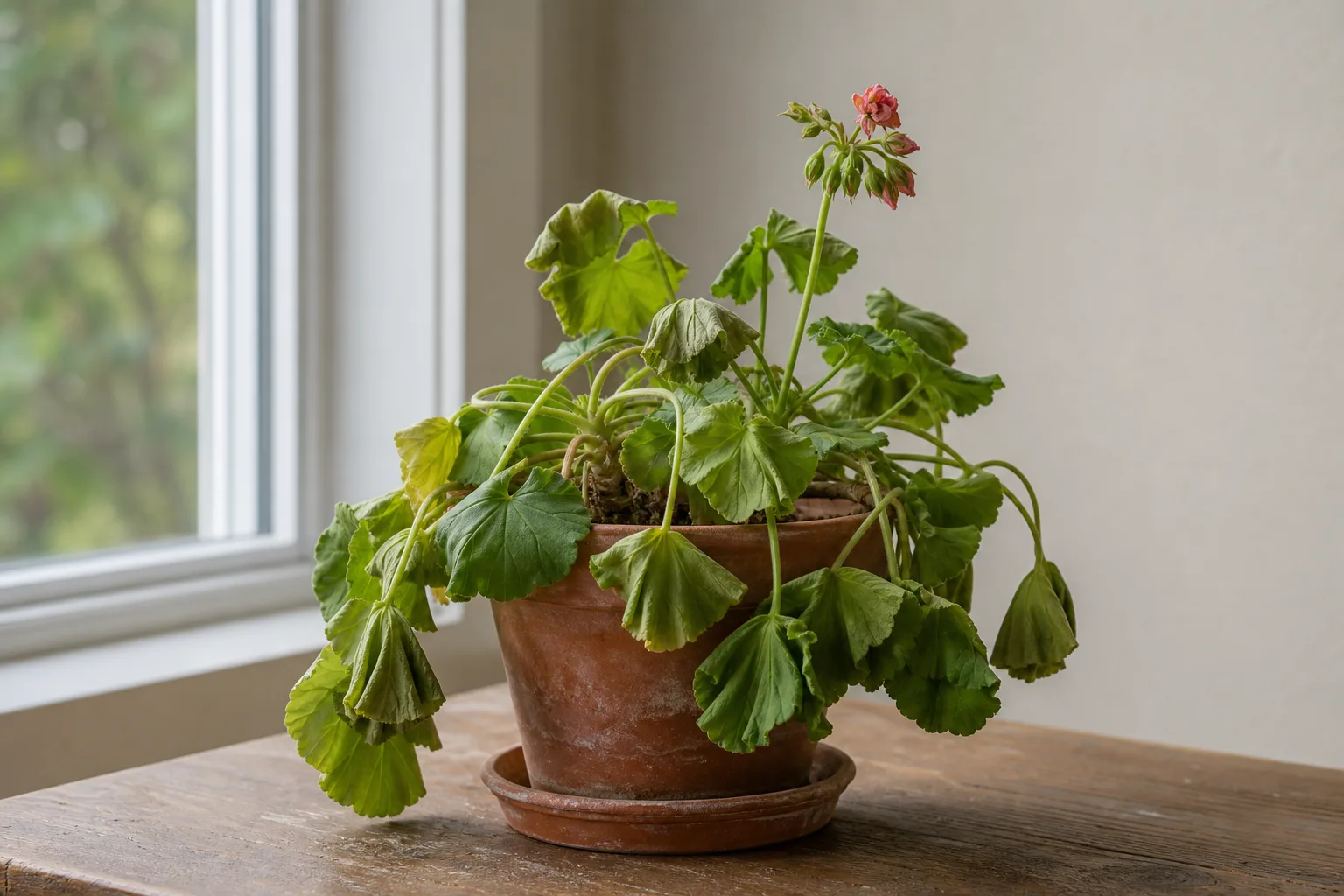
Drooping Leaves on Geranium: Causes, Checks & Fixes
This guide covers drooping leaves on Geranium. See also the general Drooping Leaves guide, watering, and light pages for this plant.
Drooping Leaves on Geranium: Causes, Checks & Fixes
Quick answer
Drooping leaves on geranium-botanically Pelargonium-mean petioles and blades are hanging because turgor pressure dropped somewhere between roots and foliage. On this genus that almost always traces to how the pot is drying, how cold the microclimate is, or how much light the stems are getting-not to a single mystery disease.
The three patterns owners confuse most:
- Drought limp - light dry pot, top inch crumbly, leaves flexible but stems still firm
- Wet-soil wilt - heavy damp mix, limp leaves despite moisture, sometimes yellow lower leaves
- Cold-draft stress - sudden sag after a night near a window, AC vent, or unheated porch below about 55°F (13°C)
First step: lift the pot and push your finger into the top inch of mix. Dry and light means measured watering-not a panic soak on already-wet roots. Wet and heavy means stop watering and check crown firmness before you pour again.
For species context and type differences, see the geranium overview. For fast whole-plant collapse, see wilting on geranium.
What drooping leaves look like on Geranium
Pelargoniums carry thick, semi-succulent woody stems and relatively firm leaves compared with true geraniums (Geranium spp.). When they droop, the pattern across stems, soil, and room position matters more than how sad one leaf looks.
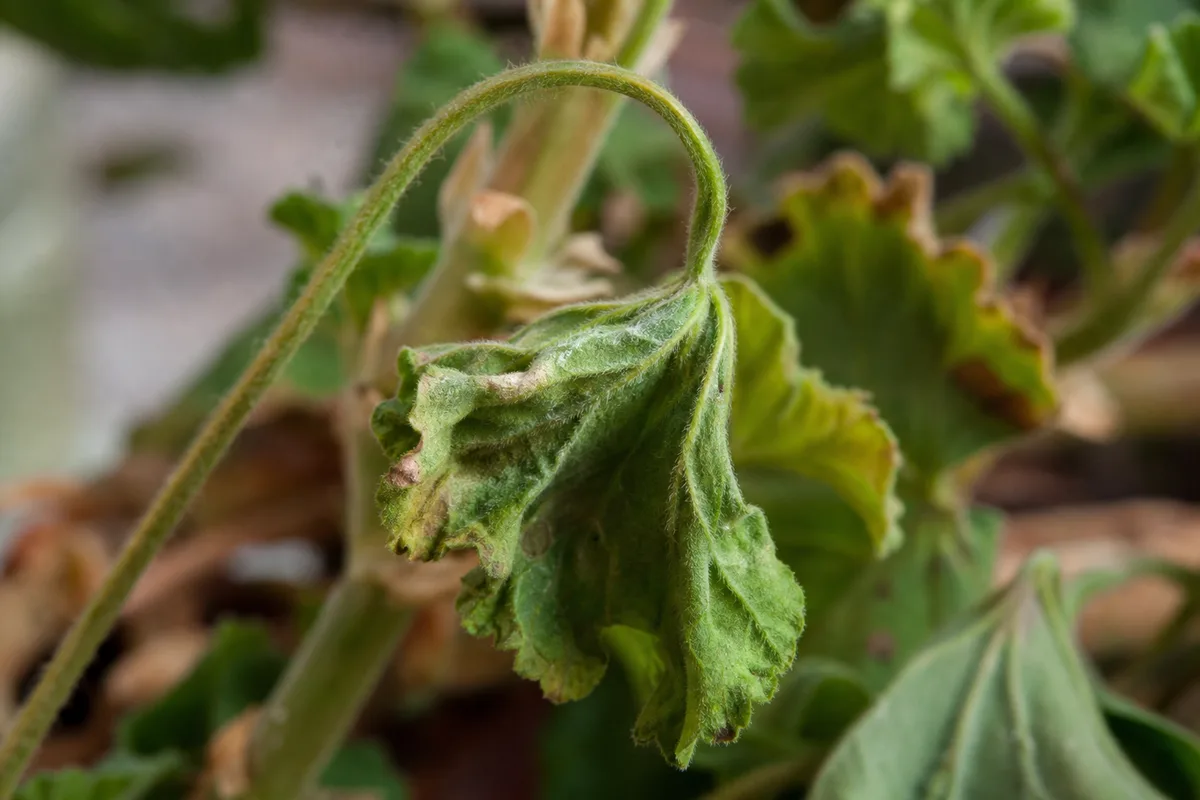
Drooping Leaves symptoms on Geranium - compare with healthy tissue on the same plant.
Drought limp on a dry pot
Leaves hang downward along the petiole but feel thin and flexible-not mushy. Margins may curl slightly before tips brown. The pot feels light, the top inch of mix is pale and dry, and stems stay woody and firm at the base. Outdoor containers in midsummer sun can go from fine to limp in one hot afternoon even though the plant is not root-bound dry throughout.
Wet-soil wilt
Lower leaves sag while the mix stays dark, cool, and heavy. Yellowing often starts on bottom leaves first. You may smell a faint sour note from drain holes or see fungus gnats near the surface. The crown where stems meet soil may feel soft if rot is advancing. This is the pattern owners misread as thirst.
Cold-draft and overwintering droop
After a cold night, a move indoors, or placement beside a leaky winter window, the whole plant can droop within hours even when soil moisture looks normal. Leaves may look slightly dull without the yellowing that wet roots produce. Clemson HGIC recommends daytime temperatures around 65–70°F and nights around 55°F for indoor geraniums and warns against cold, hot, or drafty areas.
Low-light gradual sag
On a dim winter windowsill, stems stretch and upper leaves hang as the plant weakens over weeks. Bud formation slows or stops. Soil may stay moist longer than in summer because transpiration dropped-not because you are overwatering on purpose. See not enough light on geranium when leggy stretch accompanies droop.
Ivy geranium edema vs drought droop
Ivy types (Pelargonium peltatum) in cool, humid rooms with wet soil develop watery blisters on leaf undersides that can precede yellowing and drop-different from drought limp on a light pot. Clemson HGIC notes overwatering and high humidity may cause oedema on geranium leaves. Flip lower leaves before you soak a drooping basket.
Drooping vs. wilting vs. yellowing
These words overlap in conversation but point to different branches on Pelargonium.
Drooping describes a slower sag-often lower or outer leaves first-while stems may still feel firm. Wilting is a faster loss of turgor that can collapse the whole plant in a day, especially after heat shock or severe drought. See the dedicated wilting guide when the entire canopy flops quickly.
Yellowing often rides along with wet roots or cold stress but can also mean natural aging of older lower leaves on an otherwise firm plant. If only the oldest leaves yellow and droop while the crown stays solid and soil moisture is normal, you may be seeing senescence-not a crisis. For spreading yellow on wet soil, see yellow leaves on geranium.
Why Geranium leaves droop
Underwatering and drought limp
Pelargoniums evolved with succulent stems that store water and tolerate brief dry intervals better than constant sogginess. Iowa State University Extension notes geraniums tolerate dry soil better than overly wet soil-but if too dry, they wilt, drop leaves, and grow poorly. Small hanging baskets in full summer sun dry fastest. Droop can lag behind drought because stems release stored water first.
Overwatering and root decline
Clemson HGIC recommends allowing soil to dry somewhat between waterings while warning never to let plants wilt severely or leaves yellow and drop. The opposite failure-roots sitting in wet mix-drives out oxygen. Decaying roots cannot absorb water even when the pot is full, producing wilt on wet soil. Calendar watering in cool indoor rooms, oversized pots, and blocked drain holes keep pelargonium roots saturated too long.
Cold drafts and temperature shock
Pelargoniums are frost-tender and shut down in sustained cold. Clemson HGIC lists ideal indoor nights around 55°F. Placement on cold window glass, forced-air vents, or an unheated porch can droop foliage within hours without any root disease. Overwintering plants moved indoors in autumn often sag until light and temperature stabilize.
Insufficient light
Geraniums need strong light to hold compact growth. Clemson HGIC notes at least four hours of direct sun daily outdoors, while Iowa State recommends at least six hours for best flowering. Indoors that means the brightest south- or west-facing window you have. Dim rooms produce leggy, weak stems that droop under their own weight even when watering is correct.
Ivy edema from wet soil plus cool nights
On ivy geraniums, overwatering combined with cool, humid nights triggers oedema-corky or watery spots that weaken leaves and cause drop. This is physiological stress, not thirst. Reduce watering and increase light rather than misting leaves.
Root rot progression
Advanced rot shows mushy stems at the crown, sour soil, and rapid upward yellowing on wet mix. Pelargonium does not recover from a soft crown the way a mild drought limp recovers after one good soak. See root rot on geranium when crown tissue gives under gentle pressure.
How to confirm the cause
Work through this checklist in order. One pot lift beats guessing from a single limp leaf.
- Pot weight - Light and easy to tilt? Drought branch. Heavy and hard to lift? Wet-root branch.
- Top-inch finger test - Dry and crumbly? Water after you confirm stems are firm. Damp for many days? Stop watering.
- Stem and crown feel - Woody firm base supports drought or cold-draft recovery. Soft crown on wet soil suggests rot-urgent.
- Draft and glass check - Is the pot touching a cold windowpane or sitting under an AC vent? Move before you repot.
- Light level - Leggy stretch, pale leaves, and no buds on a moist pot point to low light-not underwatering.
- Leaf undersides (ivy types) - Corky or watery blisters confirm edema on wet cool nights-not drought.
- Recent care changes - Brought indoors for winter, repotted, or moved to a new window in the last week? Transition stress is likely if crown stays firm.
- New growth - Firm emerging leaves at stem tips mean the plant is stabilizing even if older leaves still hang.
| Symptom pattern | Soil state | Stem feel | Likely cause | First action |
|---|---|---|---|---|
| Flexible limp leaves | Dry, light pot | Firm woody | Drought | Deep soak; empty saucer |
| Limp lower leaves, yellow base | Wet, heavy | Firm for now | Overwatering | Stop watering; see overwatering |
| Whole-plant sag after cold night | Normal moisture | Firm | Cold draft | Warm bright spot away from glass |
| Leggy stretch, weak hang | Moist, slow dry | Thin, pale | Low light | Brightest window; see light guide |
| Blisters on ivy undersides | Wet, cool nights | Firm | Edema | Reduce water; improve airflow |
| Soft crown, sour smell | Wet, heavy | Mushy | Root rot | Stop water; inspect roots |
First fix for Geranium
Do one thing based on what you confirmed-not everything at once.
If the pot is dry and light (drought limp)
Water until a little runs from drainage holes, then empty the saucer within 30 minutes. Pelargoniums prefer thorough soaking over light daily sprinkles. Wait 24 hours before judging-stems release stored water and leaves may firm gradually. Do not move to a darker corner “to reduce stress”; give stable bright light per the watering guide.
If the pot is wet and heavy (wet-soil wilt)
Stop watering until the top inch dries. Move to brighter light if the plant sat in shade-slow evaporation worsens wet soil indoors. If leaves keep declining after the surface dries, slide the plant out and inspect roots for mushy brown tissue. Trim only clearly rotten roots; do not repot into a larger pot on day one.
If cold draft is the trigger
Move the pot away from window glass, AC vents, and exterior doors. A stable south- or west-facing sill with space between foliage and cold glass often firms leaves within a few days without extra water. Avoid fertilizing until new growth looks normal.
If low light is weakening stems
Shift to the brightest location you can provide-outdoor pelargoniums want full sun to partial shade with several hours of direct sun. Indoors, add a grow light 12 inches above the canopy if natural light is weak from November through February. Do not compensate with extra water.
If ivy edema is confirmed
Reduce watering frequency, keep water off leaves, and improve airflow. Clemson HGIC advises reducing watering and increasing light levels to control oedema. Trim badly damaged leaves only after conditions stabilize.
Recovery timeline
Mild drought limp often shows firmer leaves within one to two days after a proper soak. Cold-draft droop may take three to seven days to stabilize once warmth and light improve. Overwatered plants need one to three weeks of corrected drying before new growth looks normal-old limp leaves may never fully re-firm. Root rot recovery takes several weeks at best and fails if the crown has softened.
Judge success by firm new leaves at stem tips and stable soil drying rhythm, not by forcing old foliage upright. Clemson HGIC notes never allowing severe wilt or leaves will yellow and drop-catch drought early on the next cycle.
Worsening signs: Crown softening, sour soil smell, rapid upward yellowing on wet mix, or blackened stems after frost-escalate to root rot checks. Do not fertilize a declining plant hoping to perk it up.
What not to do
Do not water a drooping geranium automatically-wet-soil wilt is the most common misread on Pelargonium. Do not fertilize stressed plants; Clemson HGIC warns geraniums are stunted and yellowed without enough nitrogen but feeding a waterlogged or cold-shocked plant worsens decline. Do not repot into fresh wet mix on day one without checking roots-unnecessary Geranium repotting guide adds shock. Do not mist leaves hoping to fix droop; wet foliage in cool rooms favors botrytis and bacterial issues. Do not stack pruning, repotting, and pesticide on the same day.
How to prevent drooping leaves next time
- Water when the top inch of mix dries, then soak and empty saucers-see the geranium watering guide
- Give strong light-zonals want the brightest window; ivy types may need afternoon shade outdoors in extreme heat
- Avoid cold microclimates-keep pots off winter glass and away from HVAC vents
- Use fast-draining mix and drainage holes-pelargoniums fail in soggy peat that never dries indoors
- Check ivy baskets twice in hot weather-they dry fast outdoors but stay wet too long in cool rooms
- Inspect weekly during overwintering-transition droop is easier to fix in week one than after rot sets in
When to worry
Treat as urgent if the crown feels soft, soil smells sour, stems turn mushy at the base, or droop spreads upward quickly on wet soil-these point to advancing root failure, not thirst.
Pet safety: Pelargonium is toxic to cats and dogs. Stressed plants that drop leaves indoors can leave toxic foliage on floors where pets investigate. Pick up fallen leaves and keep pots out of reach of chewers. Contact your veterinarian or the ASPCA Animal Poison Control Center at (888) 426-4435 if ingestion is suspected-this is not veterinary advice.
Related geranium problems
- Geranium overview - types, light, watering rhythm, overwintering
- Underwatering - dry-pot limp and summer basket checks
- Overwatering - wet-soil wilt and edema overlap
- Wilting - fast whole-plant collapse
- Yellow leaves - wet roots, cold, and natural aging
- Root rot - soft crown on saturated mix
- Not enough light - leggy sag on dim windowsills
When to use this page vs other Geranium guides
- Geranium watering guide - Use for routine moisture checks before assuming drooping leaves is the main issue.
- Geranium problems hub - Browse all 16 common issues on this species.
- Underwatering on Geranium - Different entry point when symptoms overlap with drooping leaves.
- Overwatering on Geranium - Different entry point when symptoms overlap with drooping leaves.
- Root Rot on Geranium - Different entry point when symptoms overlap with drooping leaves.