Yellow Leaves on Geranium: Causes, Checks & Fixes
Quick answer
Yellow leaves on geranium (Pelargonium) usually trace to overwatering, underwatering, cold drafts, low light, or normal aging of older lower leaves. First step: stick a finger into the top 1–2 inches of mix and lift the pot - wet and heavy points to pause watering; light and dry points to a thorough soak.
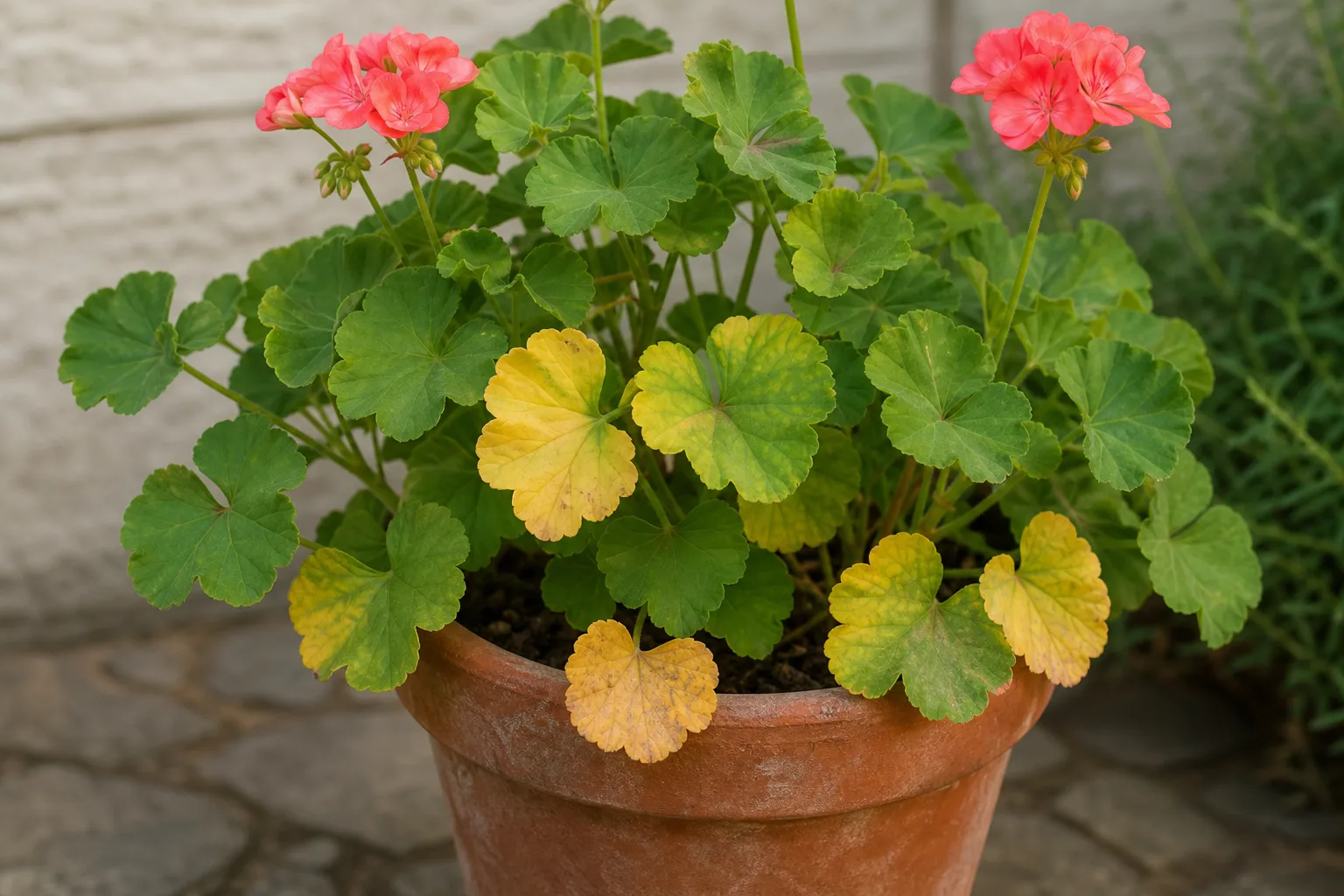
Yellow Leaves on Geranium: Causes, Checks & Fixes
This guide covers yellow leaves on Geranium. See also the general Yellow Leaves guide, watering, and light pages for this plant.
Yellow Leaves on Geranium: Causes, Checks & Fixes
Quick answer
Yellow leaves on geranium - the bedding and container plant most people mean - are almost always Pelargonium × hortorum and related species, not the hardy perennial Geranium genus. These woody-stemmed, semi-succulent plants branch from the crown and push new leaves at stem tips and nodes, not from a central rosette.
The fastest diagnostic is a two-part moisture check: stick a finger into the top 1–2 inches of mix and lift the pot. Clemson Cooperative Extension advises allowing soil to dry between waterings on geraniums while warning that never allowing plants to wilt severely causes lower leaves to yellow and drop. A heavy, cool pot with wet surface points to overwatering and possible root stress. A light pot with dry mix throughout points to drought crisping.
First step: run that wet-vs-dry check before fertilizing, repotting, or adding water. If mix is wet and lower leaves are soft yellow, stop watering until the top inch dries. If mix is bone-dry and leaves are crisp, soak until excess drains and empty the saucer. For the full dry-down rhythm, see the geranium watering guide. For species context, see the geranium overview.
Yellow leaves vs. other geranium problems - why wilt on wet soil matters
Pelargoniums tolerate dry soil better than overly wet soil in sunny, well-drained culture. When roots sit in saturated mix, they lose oxygen and uptake fails - so the canopy looks thirsty while the pot stays heavy. Watering again because leaves look limp accelerates crown rot and lower-leaf yellowing.
That mismatch separates overwatering from underwatering (light pot, dry mix, crisp leaf edges) and from afternoon heat wilt (recovers by evening without added water). If yellow lower leaves persist each morning on wet soil, treat it as root stress, not drought. For advanced mushy roots, see root rot on geranium. For fast whole-plant collapse, see wilting on geranium.
What yellow leaves look like on Pelargonium
Yellowing patterns differ by cause on zonal, ivy, and scented types. Match texture and pot weight before you treat.
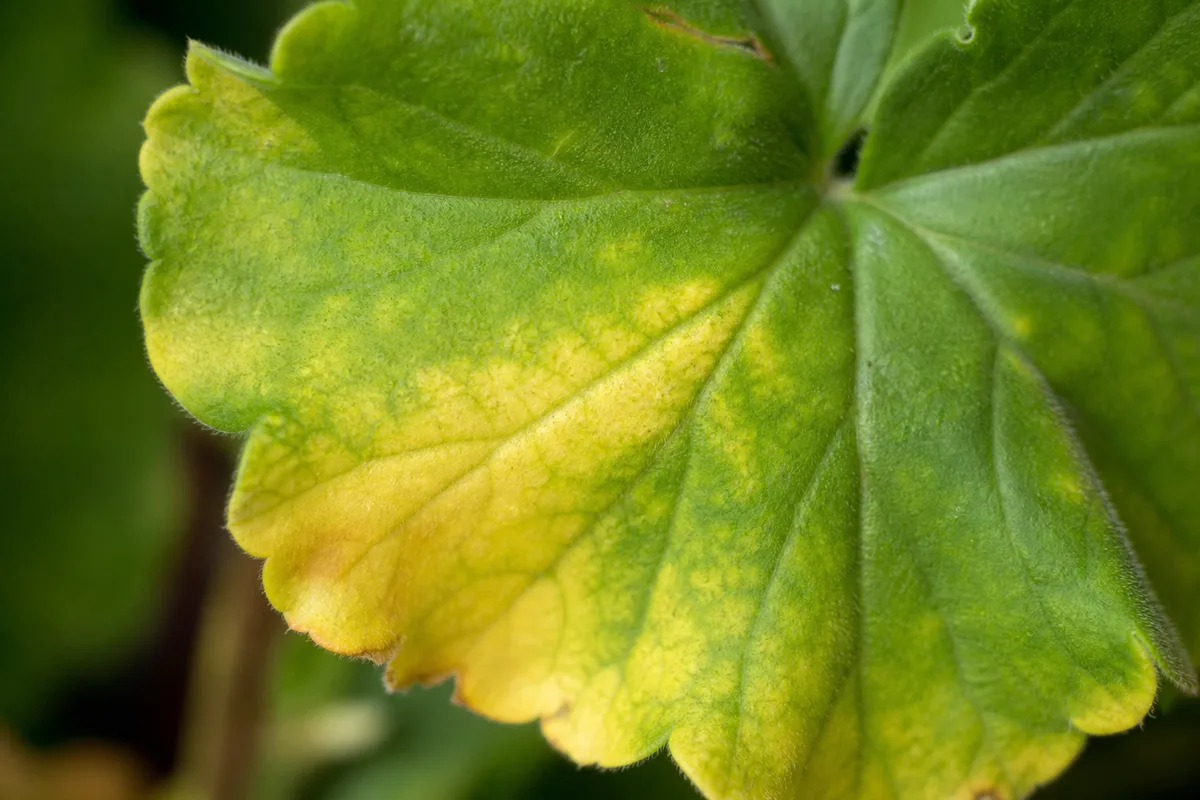
Yellow Leaves symptoms on Geranium - compare with healthy tissue on the same plant.
Normal lower-leaf aging on blooming zonals
A single yellow lower leaf on an otherwise firm, blooming zonal geranium is often normal senescence. Older rounded leaves at the soil line fade while branch tips stay green and flower clusters keep opening. Snip off fully yellow leaves to reduce pest hiding spots. Worry when multiple lower leaves yellow within a week or stems feel soft.
Overwatering (limp yellow lower leaves, wet heavy pot)
Lower leaves turn yellow and fall when plants wilt from water stress - but on Pelargonium the classic trap is wilting while soil stays wet. Soft yellow tissue starts on lower or outer leaves while the pot feels heavy and cool for days. Sour smell, fungus gnats, and soft dark tissue at the stem base often follow. For the full overwatering workflow, see overwatering on geranium.
Underwatering (crisp yellow leaves, light dry pot)
Pelargoniums tolerate dry soil better than overly wet soil, but repeated severe dry-down in small patio pots crisps leaf margins and tips before stems soften. The pot feels light, mix pulls away from the sides, and foliage may limp in late afternoon. Crisp yellow-brown edges differ from the soft yellow of wet roots. See underwatering on geranium.
Cold stress (rapid yellow-and-drop below ~55°F)
Pelargonium is not winter-hardy and must come inside before frost. Ideal indoor temperatures are 65–70°F by day and around 55°F at night, and Clemson warns against cold, hot, or drafty placement. A night beside a leaky winter window or AC vent can yellow and drop leaves within days even when soil moisture looks normal - without the soft mushy stems that wet roots produce.
Low light (pale leggy upper leaves, stretched stems)
Geraniums need bright light - at least four hours of direct sun daily outdoors and strong window light indoors. In too much shade, upper leaves pale, stems stretch, and lower leaves yellow as the plant sheds weak growth it cannot support. Overwintered specimens in dim north rooms often yellow from the bottom up while the top looks thin - especially if watering rhythm never slowed for winter. See not enough light on geranium.
Edema on ivy types (watery blisters with cool wet nights)
Ivy-leafed geraniums in cool, humid rooms with wet soil develop **small corky bumps or water-soaked blisters on leaf undersides](https://hgic.clemson.edu/factsheet/geranium/) that may precede yellowing and drop. Overwatering and high humidity cause oedema on geranium leaves. Flip lower leaves on trailing baskets before you assume drought.
Why Geranium gets yellow leaves
Pelargoniums signal stress through lower leaves first because the woody stem system prioritizes new growth at branch tips. When roots, light, or temperature fail, the plant sheds older foliage it can no longer support.
Calendar watering is the most common indoor trigger. Mix stays wet from last week, but watering day arrives anyway. Within two weeks lower leaves yellow while branch tips still look acceptable - masking early root damage behind semi-succulent stems.
Winter overwintering kindness compounds the problem. Growth slows in cool, low-light rooms, evaporation drops, and weekly watering keeps soil wet around an inactive root system. Lower leaves yellow steadily without the dramatic collapse of summer heat stress.
Cold placement yellows leaves faster than many owners expect because Pelargonium has no frost tolerance. A drafty sill can damage tissue before you notice soil problems.
Low light plus unchanged watering creates a slow path to yellow lower leaves: the plant cannot photosynthesize enough to sustain dense lower foliage, yet wet mix persists because transpiration dropped.
Nitrogen deficiency can stunt and yellow Pelargonium during heavy outdoor bloom season - Clemson notes geraniums are stunted and yellowed without enough nitrogen - but do not feed a waterlogged or cold-shocked plant. Fix moisture, light, and temperature first.
How to confirm the cause
Work through this checklist in order. One clear match is enough to start the right first fix.
- Top-inch dry test - Stick a finger 1–2 inches into mix. Wet and cool with soft yellow lower leaves fits overwatering. Dry throughout with crisp edges fits drought.
- Pot weight - Lift the container. Heavy for days after watering on a declining plant points to poor dry-down. Light and airy points to underwatering.
- Drainage and saucer - Confirm holes are open and no standing water sits in the saucer more than thirty minutes after watering.
- Leaf texture - Soft yellow on wet mix vs. crisp yellow-brown margins on dry mix.
- Wilting paradox - Limp leaves on wet soil means root stress, not thirst. Do not add water.
- Cold draft check - Feel air beside the pot at night. Below ~55°F (13°C) near glass or vents fits cold yellow-and-drop.
- Light assessment - Stretched stems, pale upper leaves, and a dim winter windowsill fit low light. South- or west-facing glass is ideal indoors.
- Edema inspection - On ivy types, flip lower leaves for corky bumps or blisters on undersides in cool humid rooms.
- Aging rule-out - One or two fully yellow bottom leaves on a firm blooming plant over months is often normal senescence.
Lookalike table
| What you see | Pot weight | Mix moisture | Stem base | Likely cause |
|---|---|---|---|---|
| Soft yellow lower leaves, limp canopy | Heavy, cool | Wet | Firm for now | Overwatering - pause water |
| Crisp yellow-brown edges, afternoon limp | Light | Dry | Firm | Underwatering - thorough soak |
| Rapid yellow-and-drop, dull leaves | Normal | Normal | Firm | Cold draft - relocate |
| Pale upper leaves, long stems | Normal | Variable | Firm | Low light - brighter spot |
| Corky bumps on ivy leaf undersides | Heavy | Wet | Firm | Edema - reduce water, add light |
| One yellow bottom leaf, still blooming | Normal | Normal | Firm | Normal aging - remove leaf |
First fix for Geranium
Run the top-inch dry check and pot-weight test, then apply one branch - not every fix at once.
If mix is wet and lower leaves are soft yellow
- Stop watering until the top 1–2 inches feel dry and the pot feels noticeably lighter - often one to two weeks in a cool room.
- Empty saucers and confirm drainage holes are open.
- Remove fully yellow spent leaves at the base (wear gloves - see safety note below).
- Do not fertilize until new firm leaves appear at branch tips.
If stems soften at the soil line or soil smells sour, escalate to overwatering or root rot protocols.
If mix is dry and leaves are crisp
- Soak thoroughly until excess drains from the bottom, then empty the saucer within thirty minutes.
- Wait for the next dry-down cycle before watering again - water when the soil surface becomes dry to the touch.
- Do not mist leaves hoping to perk them; wet foliage in cool rooms favors disease.
If cold draft is the suspect
- Move the pot away from leaky winter glass, AC vents, and entry doors.
- Hold watering steady until you see whether leaves stabilize - cold damage does not need extra water.
- Target 65–70°F days and ~55°F nights in the brightest spot available.
If low light is the suspect
- Relocate to south- or west-facing glass or add supplemental light 12 inches beneath a cool fluorescent bulb for 16 hours daily indoors.
- Reduce watering frequency to match slower winter dry-down.
- Pinch leggy stems after light improves to encourage bushier branch-tip growth.
Recovery timeline
Old yellow leaves will not turn green again. They may drop on their own or stay until you trim them.
Judge success by firm woody stems, stable soil drying rhythm, and new glossy leaves at branch tips and nodes - not by old leaflet color. In active summer growth on a patio, expect visible new foliage within two to four weeks after care stabilizes. Overwintered indoor specimens in dim rooms may take longer.
Worsening signs: stems soften at the crown, yellowing climbs rapidly up branches, sour soil smell, or wilt persists each morning on wet mix - escalate to root rot rather than waiting.
What not to do
Do not fertilize yellowing geraniums before fixing moisture, light, or temperature - salt buildup from overfeeding can also injure roots. Do not increase watering on a wet heavy pot because leaves look limp. Do not repot on day one without checking roots - unnecessary repotting adds shock. Do not assume every yellow leaf needs nitrogen; Pelargonium yellows from water and environment far more often than from feed gaps. Do not leave spent yellow leaves piled at the soil line where pests hide.
When trimming yellow leaves, wear gloves if sap irritates your skin. Pelargonium is toxic to cats and dogs if ingested - keep trimmed foliage away from pets and wash hands after handling.
How to prevent yellow leaves next time
Match water to soil dryness, not the calendar. Full protocol lives in the watering guide. Keep plants cleaned of dead, damaged, or yellowed leaves promptly.
Reduce frequency in winter when overwintering indoors - many pelargoniums need water only every 10–14 days in a cool bright room when growth slows.
Provide at least four hours of direct sun outdoors or strong south/west window light indoors so transpiration and dry-down stay predictable.
Avoid cold, hot, or drafty placement - especially leaky winter sills.
Water at the soil line, not overhead, so foliage and the crown stay dry. Keep water off leaves to reduce disease risk.
Lift before you pour - a noticeably lighter pot combined with a dry top inch is a stronger signal than color alone.
Related Geranium guides
- Geranium overview - Pelargonium types, light, and overwintering
- Watering - dry-down checks and wilt-on-wet-soil FAQ
- Light - brightness needs for dry-down speed
- Overwatering - wet-soil root stress and blackleg
- Underwatering - drought crisping on patio pots
- Not enough light - leggy pale growth indoors
- Root rot - advanced wet-soil failure
- Wilting - fast collapse vs. rot
- Drooping leaves - wet-soil wilt vs. drought limp