Underwatering on Geranium: Causes, Checks & Fixes
Quick answer
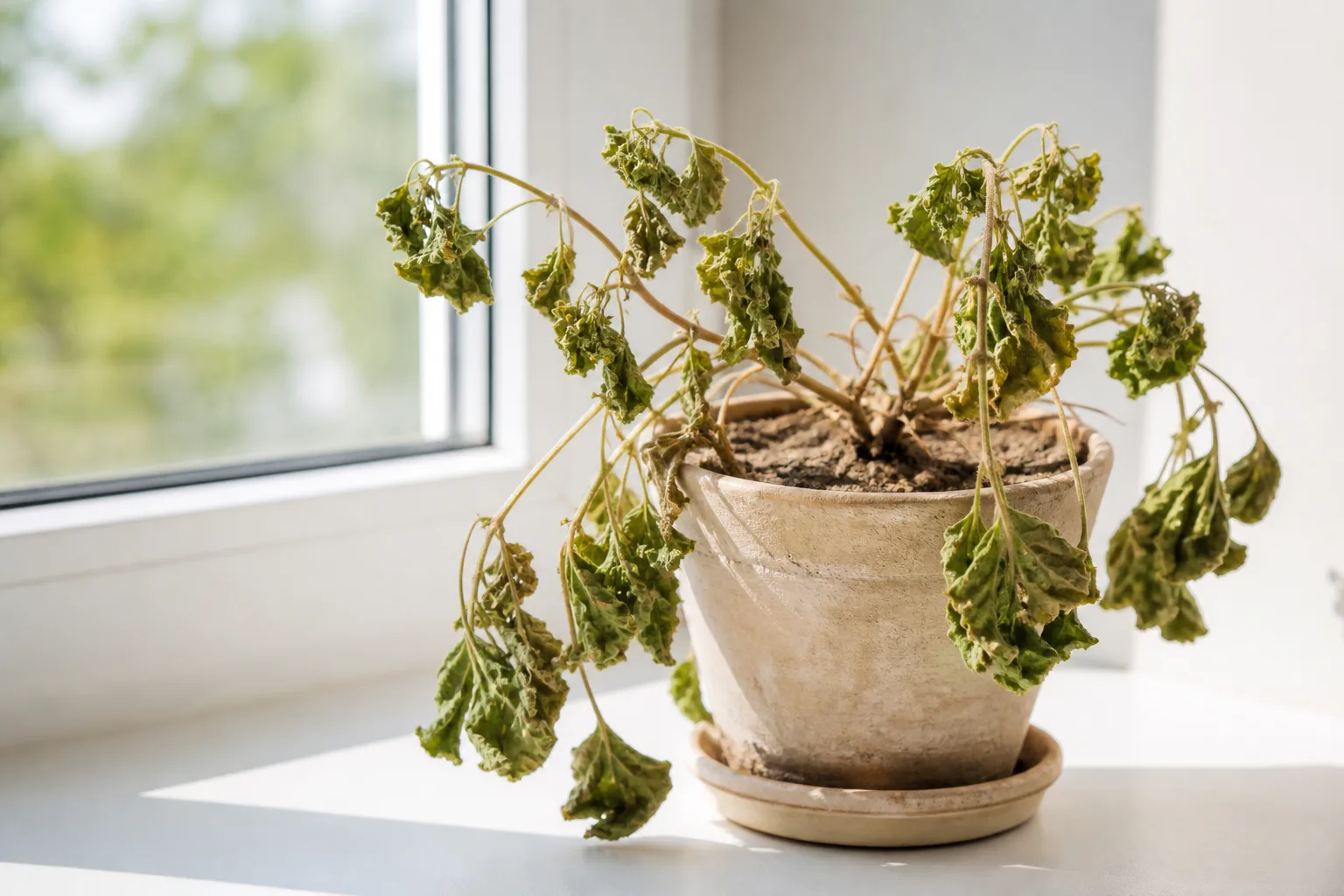
Underwatered geraniums wilt with a light, dry pot and crispy leaf edges while soil pulls away from the rim. First step: water thoroughly at the soil line until drainage runs, then let the top inch dry before the next drink.
Underwatering on Geranium: Causes, Checks & Fixes
This guide covers underwatering on Geranium. See also the general Underwatering guide, watering, and light pages for this plant.
Underwatering on Geranium: Causes, Checks & Fixes
Quick answer
A thirsty geranium wilts with dry soil, a light pot, and sometimes crispy leaf margins-not the heavy, cool mix you would feel with overwatering on Geranium. Pelargonium × hortorum and its relatives evolved in sunny, well-drained South African conditions; they tolerate dry soil better than overly wet soil, but they still need regular deep drinks when actively growing in Geranium light guide containers.
First step: water thoroughly at the soil line until excess drains from the bottom, then empty the saucer. Do not mist leaves or give tiny daily sips. One full soak re-wets the root ball; repeated shallow watering often fails when peat-heavy mix has gone hydrophobic and sheds water down the pot wall.
Why Geranium gets underwatered
Geraniums are not desert plants, but they are drought-tolerant Pelargoniums that prefer a real dry-down between drinks. That tolerance makes underwatering easy to miss-you assume a tough plant can wait-and easy to cause when summer heat, small pots, and full sun pull moisture faster than a weekly calendar allows.
Several patterns repeat on geraniums:
Calendar watering after a scare about crown rot. Many growers overcorrect after reading that wet crowns cause blackleg. They stretch intervals too far, especially on patio pots that can cross from ready-to-water to severely dry in a single hot afternoon.
Container physics. Hanging baskets, window boxes, and small terracotta pots dry out quickly. Windy balcony rails accelerate evaporation. A zonal geranium in a 12 cm terracotta pot on south-facing rail may need water every 1–2 days at midsummer while an in-ground neighbor survives on weekly rain.
Hydrophobic, aged mix. When peat-heavy soil dries completely, water runs down the inside wall while the center root ball stays dry. The surface may look briefly damp after a quick pour, but the plant keeps wilting.
Winter under-watering indoors. Overwintered pelargoniums use little water in cool rooms, but warm, dry forced-air heat can desiccate foliage while gardeners assume “winter means rarely water.” Soil can go too dry between monthly checks.
Root-bound pots. A crowded root ball in a small container dries in hours during bloom season. Frequent wilting between waterings is a clue the pot is too small, not that the plant needs less water.
What underwatering looks like on Geranium
Underwatering on geranium shows a distinct pattern once you know what healthy turgor looks like. Zonal types hold their rounded, zoned leaves stiffly when well hydrated; thirsty plants lose that snap.
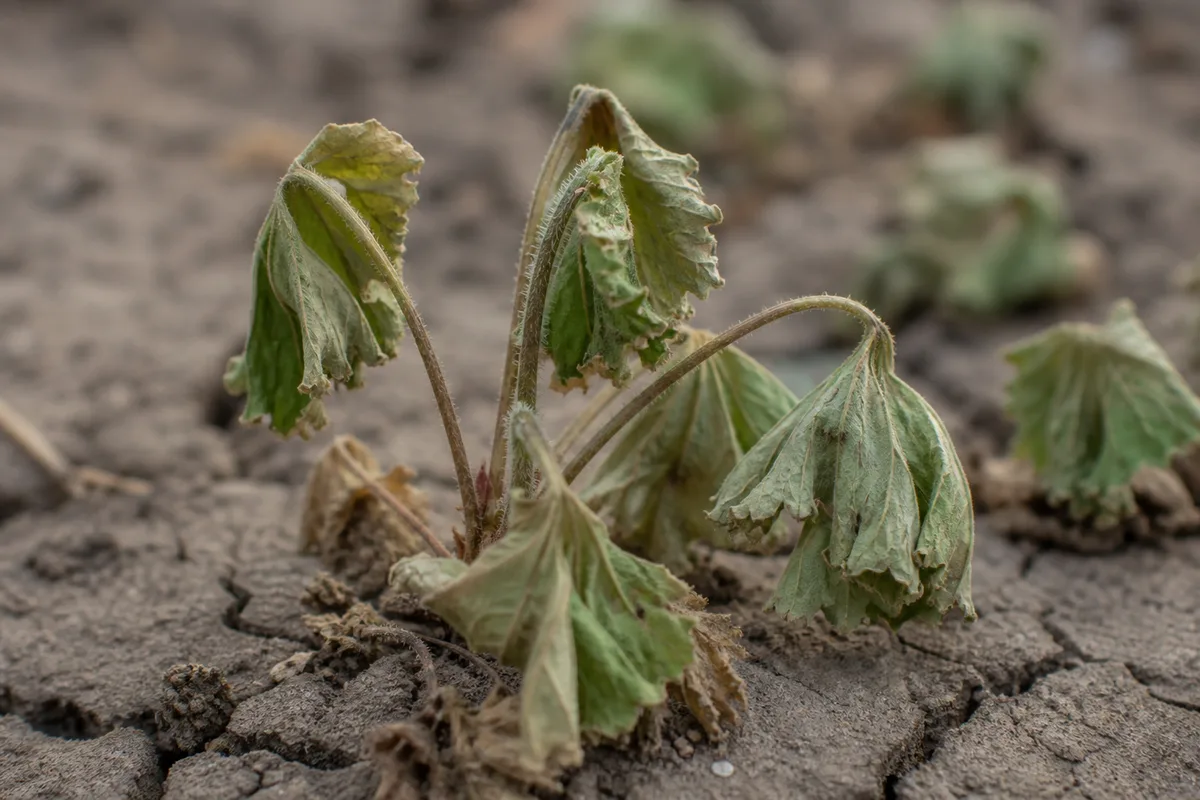
Underwatering symptoms on Geranium - compare with healthy tissue on the same plant.
Typical underwatering signs:
- [Wilting or drooping on Geranium](/plants/geranium/wilting/) across the whole plant, not just one stem
- Dry, lightweight pot you can lift easily with one hand
- Soil pulled away from the pot rim; dusty, pale surface mix
- Crispy brown edges on older leaves; lower leaves may yellow and drop after repeated dry cycles
- Pale or small flowers that fade faster than usual
- Slowed new growth during summer when the plant should be pushing blooms
What underwatering usually does not include:
- Wet, cool soil that clings to your finger
- Soft, black tissue at the stem base
- Yellow lower leaves while the mix stays saturated for days
- Corky edema spots from overwatering
Stems should feel firm where they meet the soil. Mushy crowns point to rot or bacterial issues, not simple thirst.
How to confirm the cause
Work through these checks before you pour:
- Pot weight - Lift the container. A dry geranium pot feels distinctly lighter than after a thorough watering; if the pot is light, it needs water. Weight is the check experienced growers trust most.
- Finger or skewer probe - Push your finger 2–3 cm (1 inch) deep, or insert a wooden skewer to the bottom. Water when the top 1 to 2 inches of soil is dry; dry, crumbly mix at depth supports underwatering. Damp skewer means wait.
- Wilting pattern - Whole-plant limpness with dry soil suggests thirst. A single wilted stem with firm neighbors may be mechanical damage or localized root issue.
- Soil versus stem base - If leaves droop but soil is wet and cool, stop watering and inspect for root damage or crown rot. Wilted leaves may indicate soil that is too dry or too wet; wilting plus dry soil is the underwatering signature.
- Afternoon heat check - Geraniums in full sun may look slightly limp at midday heat even when adequately moist. If the plant recovers by evening without extra water, wait until morning to probe again.
- Drainage run-through test - Water slowly. If water pools on the surface and exits the drain hole in seconds without wetting the center, the mix may be hydrophobic-not absorbing.
Confirmed underwatering: dry at depth, light pot, firm stems, wilt that matches soil dryness. Suspected overwatering or root damage: heavy pot, wet mix, soft stem base-different fix path.
First fix for Geranium
Water thoroughly at the soil line until excess runs freely from the drainage holes, then empty the saucer within thirty minutes.
Use a narrow-spout can and deliver water slowly around the inner pot edge, moving inward-not overhead, so leaves and the crown stay dry. Keep water off the foliage because moist leaves favor disease. Continue until water drains; for hydrophobic mix, pause ten minutes and water once more so the center rewets.
Do not fertilize a wilted, dry plant. Never fertilize a dry, wilted plant-rehydrate with plain water first; resume diluted feeding only after new growth shows.
Do not repot on day one unless the mix is completely collapsed and water will not penetrate after two slow soaks.
Step-by-step recovery
After the initial deep soak:
- Move out of harsh midday sun if the plant was fully collapsed in extreme heat. Bright indirect light for the rest of the day reduces transpiration while roots catch up.
- Bottom-water if top watering failed - Set the pot in a tray of room-temperature water for 30–45 minutes until the surface moistens, then drain fully.
- Repeat only when the top inch dries - Resist daily drowning after one dry spell; that swings to overwatering and crown problems.
- Trim fully crisp leaves if they shade new growth, but do not strip the plant bare; leaves still photosynthesize once turgor returns.
- Repot if root-bound - If the plant wilts every 24 hours despite correct soaking, slide it out. A solid root mat with little visible mix means upsize into fast-draining, gritty compost at the next appropriate window-not an emergency soak substitute.
- Refresh hydrophobic mix when water consistently runs through unused soil. Break the surface lightly with a fork before soaking, or plan Geranium repotting guide into new loam-perlite blend.
Monitor daily for the first week. Adjust interval to how fast your pot dries in your light-not a generic schedule.
Recovery timeline
Mild dehydration often shows improvement within a few hours to one day after a proper soak-leaves regain stiffness overnight. Moderate stress with some crispy edges may take three to seven days before new tips look normal.
Judge recovery by turgid new leaves and fresh buds, not old damaged margins. Crispy tissue does not revert to green.
If the plant stays limp 48 hours after two thorough soaks with dry soil between them, unpot and inspect roots. Firm white-to-tan roots support continued care; extensive brown, slimy roots mean rot from a prior overwatering cycle, not current thirst alone.
Lookalike symptoms to rule out
Overwatering and root rot on Geranium - Wilting with wet, heavy soil; yellow lower leaves; soft stem base; sour smell. Stop watering and improve drainage instead of soaking again.
Bacterial leaf spot or blight - Spotting, leaf drop, and black stem cankers-not fixed by watering. Spots follow a disease pattern, not uniform drought crisping.
Botrytis on cool, wet flowers - Brown mushy blooms after overhead watering or high humidity, not generalized leaf wilt from dry mix.
Heat wilt without drought - Midday limpness that recovers by evening when soil moisture is adequate. Extra water in this case worsens soggy soil.
Spider mites - Fine stippling and webbing on undersides in hot dry air; leaves may look dull but soil is often dry from both transpiration and skipped watering. Confirm pests before assuming pure underwatering.
Mistakes to avoid
Do not assume every wilting geranium needs water-check soil first. Overwatering after misreading heat wilt is a common path to crown rot.
Do not mist leaves instead of soaking roots. Pelargoniums prefer low to moderate humidity; wet foliage invites botrytis without solving root-zone dryness.
Do not give small daily sips. Shallow watering keeps upper roots moist while the center starves, and never flushes accumulated salts.
Do not fertilize a dry, collapsed plant hoping to push growth-that burns stressed roots.
Do not leave the pot in a full saucer after rehydrating. Standing water suffocates roots geraniums depend on for recovery.
Do not ignore a too-small pot. Repeated wilting despite correct technique usually means the container, not your calendar, is wrong.
How to prevent underwatering next time
Build a check-first habit tied to pot weight and the top 2–3 cm of mix, not the day of the week.
During active summer growth in full sun, many container geraniums need water every two or three days in hot, dry weather once the dry-down check confirms need. Hanging baskets may need daily checks in heat. In-ground bedding often tolerates weekly deep soaks if rain is lacking.
Match container to habit: terracotta dries fastest; glazed pots hold moisture longer. Windy sites need more frequent checks than sheltered corners.
Keep fast-draining, gritty mix so geraniums get full soaks followed by real dry-down-the rhythm they prefer over constant dampness.
When overwintering indoors, water when the top inch dries and the pot lightens-often every 10–14 days in a cool bright room-not on the summer schedule.
Remove spent flowers and debris that mask soil dryness at the crown, and scout new growth weekly during peak bloom when water demand peaks.
When to worry
Treat as urgent when the plant is fully collapsed with bone-dry soil in hot sun, or when wilting persists 48 hours after proper rehydration. Fine roots killed by severe drought may not recover; stems that stay soft and brown at the base suggest rot, not thirst.
Chronic underwatering through a full bloom season stunts flowering and can weaken plants enough that pests exploit stressed tissue. Replace severely declined annuals if recovery stalls after root inspection-starting fresh is sometimes cheaper than fighting a rootless stem.
A single afternoon wilt with evening recovery and moist soil at depth is not urgent. Confirm dryness before soaking.
Conclusion
Underwatering on geranium is a solvable moisture deficit, not a mystery disease-dry soil at depth, a light pot, and wilt that matches thirst tell the story. Soak thoroughly at the soil line, drain the saucer, and resume a rhythm keyed to how fast your pot dries in sun. Crispy old leaves may stay marked, but firm new growth and normal blooms confirm you corrected the problem. Master weight and finger checks, and your Pelargoniums get the full-drink, dry-down cycle they were built for without swinging into the overwatering problems that kill more container geraniums than drought ever does.
When to use this page vs other Geranium guides
- Geranium watering guide - Use for routine moisture checks before assuming underwatering is the main issue.
- Geranium problems hub - Browse all 16 common issues on this species.
- Wilting on Geranium - Different entry point when symptoms overlap with underwatering.
- Brown Tips on Geranium - Different entry point when symptoms overlap with underwatering.
- Yellow Leaves on Geranium - Different entry point when symptoms overlap with underwatering.