Brown Tips on Geranium: Causes, Checks & Fixes
Quick answer
Brown tips on geranium (Pelargonium) usually mean edema on ivy types, fertilizer salt burn, drought stress, or low-pH iron toxicity on zonals-not a single disease. First step: check soil moisture, flip ivy leaves for corky blisters, and review recent feeding before trimming.
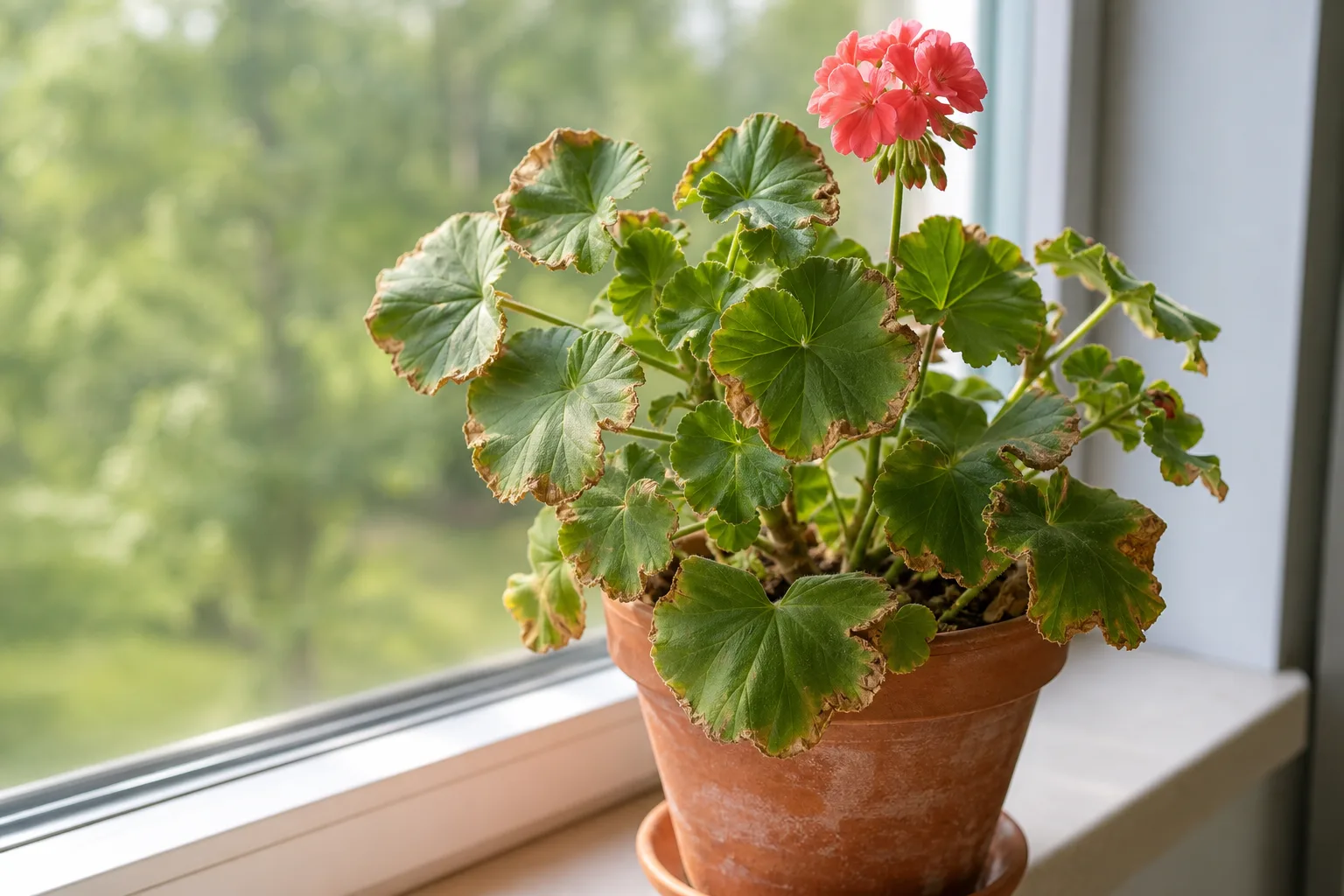
Brown Tips on Geranium: Causes, Checks & Fixes
This guide covers brown tips on Geranium. See also the general Brown Tips guide, watering, and light pages for this plant.
Brown Tips on Geranium: Causes, Checks & Fixes
Quick answer
Brown tips on geranium-botanically Pelargonium-are a pattern diagnosis, not one disease. The same brown edge can mean opposite care mistakes depending on your plant type and pot history.
Top Pelargonium-specific causes:
- Edema on ivy geraniums (Pelargonium peltatum)-corky brown spots from overwatering plus cool, humid nights
- Salt and fertilizer burn on zonal types-marginal necrosis when soluble salts build in the mix
- Drought stress-crispy tan margins after the pot dried too long in summer sun
- Low-pH iron/manganese toxicity on zonals-bronze speckling and edge burn when substrate pH drops below about 5.8
First step: push your finger into the top inch of mix and flip lower ivy leaves to check for corky blisters before you trim or fertilize. One care correction at a time-fix the cause, then remove dead tissue.
For watering rhythm, see the geranium watering guide. For feed and salt management, see fertilizer.
What brown tips look like on Geranium
Pelargonium shows stress at leaf margins and tips first because water and minerals travel farthest to those cells. The shape and location of brown tissue separates causes faster than the color alone.
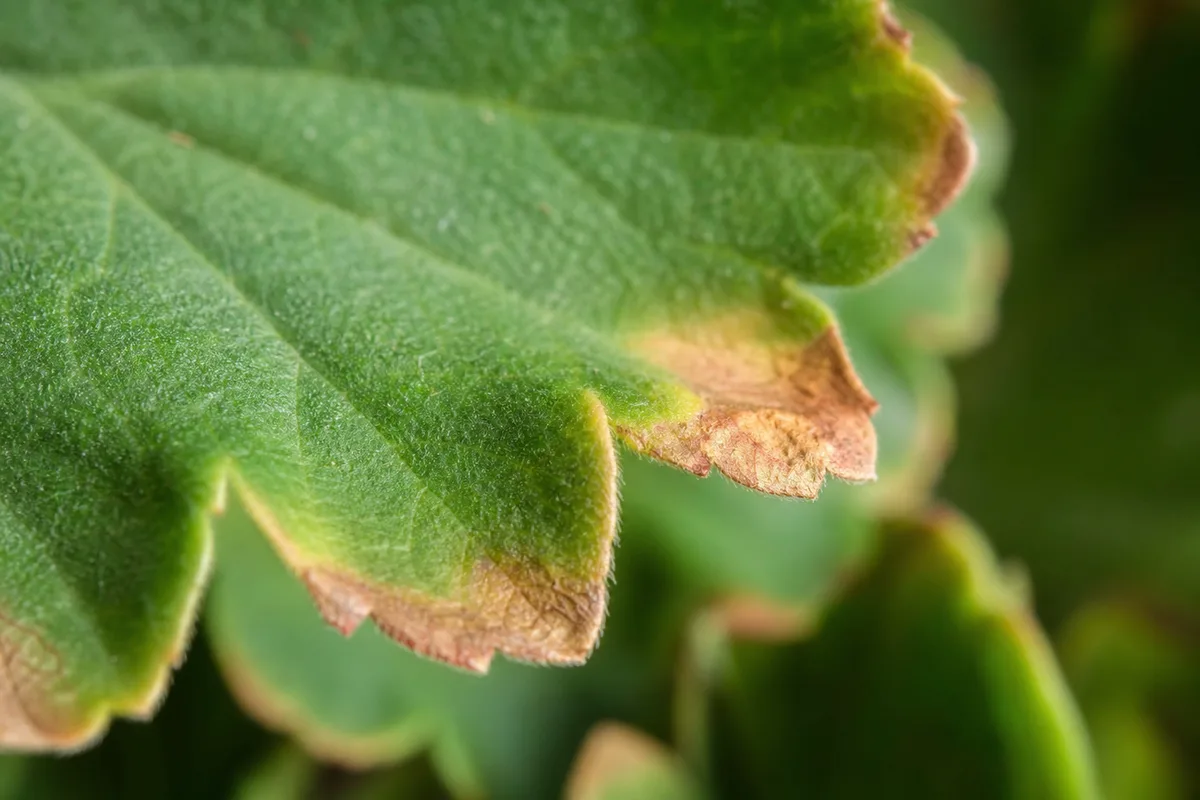
Brown Tips symptoms on Geranium - compare with healthy tissue on the same plant.
Edema corky spots (ivy types)
On ivy geraniums, small bumps or blisters appear on undersides of lower or older leaves. They may turn corky, tan, or brown and feel slightly raised-not crispy. Severely affected leaves yellow and drop. This pattern worsens when soil fluctuates between wet and dry, nights are cool, and air is humid indoors. It is physiological, not fungal.
Crispy drought margins
When a container dries too long in bright heat, margins and tips turn dry, papery, and tan-drought stress is a listed cause of marginal leaf necrosis on geraniums. The pot feels light, the top inch of mix is pale and crumbly, and leaves may feel thin but still firm-not mushy. Pelargoniums tolerate brief dryness but show edge burn before they wilt dramatically.
Salt and fertilizer edge burn (zonals)
Zonal geraniums (Pelargonium × hortorum) with heavy or frequent feeding-especially in glazed pots with poor leaching-develop tan to dark brown necrosis along leaf edges. Lower leaves often show damage first. You may have fed every watering without flushing salts from the drain holes.
Low-pH iron/manganese edge burn
Zonals at substrate pH below about 5.8 absorb excess iron and manganese, producing bronze speckling, dark spotting along margins, and edge necrosis-sometimes cupped leaves. This often follows acid-forming fertilizers or peat-heavy mix that drifts acidic over months. Pink and white flower cultivars sometimes show symptoms before red ones.
What environmental burn is not
Bacterial leaf spot/blight causes angular or V-shaped tan lesions with yellow halos, often after water sits on foliage overnight-not uniform margin crisping from care stress. Botrytis blight targets spent flowers in cool damp air. Spider mite stippling starts as fine yellow dots on undersides, not solid margin necrosis-see spider mites on geranium.
Why Geranium gets brown tips
Overwatering and edema
Clemson HGIC notes edema causes corky spots on geranium leaves when plants are over-watered. Ivy types are especially prone when cool nights slow transpiration while roots keep absorbing water. Cells burst on the underside, then cork brown. This is the opposite of underwatering-wet soil is the trigger.
Salt buildup and over-fertilizing
All geranium types are intolerant of high soluble salts. Constant feeding without adequate leaching lets EC rise in the root zone. Margins burn first because salts accumulate at the transpiration front. Saucers that hold runoff and wick salts back up worsen the pattern.
Underwatering and drought stress
Pelargoniums are semi-succulent and survive dry spells, but repeated severe dry-down in small pots on hot patios crisps margins before stems soften. Clemson recommends allowing soil to dry between waterings but not letting plants wilt-chronic wilt yellows whole leaves; marginal burn often precedes that stage.
pH and micronutrient toxicity
At pH below 5.8, zonals and floribunda types are susceptible to iron and manganese toxicity, with brown spots beginning along leaf edges. Home growers using peat mixes and acidifying fertilizers without leaching can drift into this range over a season-especially in undersized pots.
How to confirm the cause
Work through this checklist in order:
- Soil moisture - Top inch dry and pot light? Drought branch. Top inch damp for days with ivy blisters? Edema branch. See underwatering and overwatering for overlap signs.
- Leaf undersides (ivy types) - Corky raised spots confirm edema. Fine stippling confirms mites, not humidity alone.
- Fertilizer history - Fed every watering for weeks without flushing? Salt burn likely on zonals.
- Saucer and cachepot - Standing water or salt crust at the pot rim supports high-EC marginal necrosis.
- Temperature at night - Ivy on a cold windowsill with wet soil favors edema over drought.
- pH context (zonals) - Peat-heavy mix, acid fertilizers, and edge bronzing without dry soil suggest low-pH toxicity. MSU Extension lists marginal chlorosis or necrosis among symptoms when EC exceeds about 2.5 or pH is out of range.
- Lesion shape - Uniform margin burn = environmental. Angular spots with yellow halos = possible bacterial issue-keep leaves dry when watering.
- New growth - Damage confined to older lower leaves while tips stay clean often means past salt or drought episode already corrected.
Confirmed edema: wet mix, cool nights, corky undersides on ivy. Confirmed salt burn: heavy feed history, edge necrosis on zonals, possible salt crust. Confirmed drought: light pot, crispy margins, dry surface. Suspected pH toxicity: bronzing edges on zonals in acidic peat without wet-soil edema signs.
First fix for Geranium
Check top-inch soil moisture and inspect ivy leaf undersides before trimming or feeding. That single pass routes you to the right branch.
Fix edema (ivy types)
- Reduce watering frequency-let the top inch dry before the next soak per the watering guide
- Improve airflow around the basket; avoid crowding with other plants
- Move off cold glass at night or shift to a warmer room above about 60 °F when growth is active
- Keep water off foliage when irrigating at the soil line
- Wait one to two weeks before trimming corky tissue so new leaves show whether the rhythm is stable
Fix salt burn (zonals)
- Pause all fertilizer for three to four weeks
- Flush the pot with plain water until runoff drains freely; repeat once after the mix partially dries
- Empty saucers within 30 minutes so salts do not wick back
- Resume feeding at half strength only when new growth looks unstained-see fertilizer
Fix drought
- Soak thoroughly until a small amount drains, then empty the saucer
- Adjust schedule to dry-down checks, not calendar days-summer sun may need water every two to three days in small terracotta
- Do not flood repeatedly in one hour; one good drink, then reassess in 24 hours
Fix pH toxicity (zonals)
- Stop acid-forming fertilizers until symptoms stabilize
- For advanced home diagnosis, test runoff pH if you have a meter; target about 5.8–6.5 for zonals
- Switch to a balanced feed and leach salts; severely acidic peat mixes may need Geranium repotting guide into fresher, lime-buffered mix-see soil guide
Make one correction, wait seven to ten days, then trim dead margins with clean scissors. Pelargonium is toxic to cats and dogs-wash hands after handling cut foliage.
Recovery timeline
Week 1: Stop spread-new damage should not appear on the youngest leaves after the care fix.
Week 2–4: Fresh leaves at stem tips emerge without brown margins when watering, salts, or pH are corrected.
Old tissue: Brown and corky patches do not re-green. Cosmetic recovery means replacement growth, not healing existing necrosis.
Worsening signs: Angular spots spreading with yellow halos, soft stems at the crown, or whole-leaf yellowing on wet soil-escalate to disease and root checks on yellow leaves and root rot.
Lookalike symptoms
| Pattern | Likely cause | First action |
|---|---|---|
| Corky raised spots on ivy undersides | Edema | Reduce water; warm nights; airflow |
| Crispy margins, light dry pot | Drought | Soak; match watering rhythm |
| Edge burn after heavy feeding | Salt/EC buildup | Flush; pause fertilizer |
| Bronze speckling + edge burn, peat mix | Low-pH Fe/Mn toxicity | Stop acid feed; test pH; leach |
| Angular tan spots, yellow halos | Bacterial leaf spot | Dry foliage; remove affected leaves |
| Fine stippling on undersides | Spider mites | Rinse; treat pests |
| Crisp edges near heater only | Dry air stress | Move off vent-low humidity |
What not to do
Do not trim brown tips first without fixing watering, salts, or pH-the edges will brown again on new leaves. Do not fertilize a stressed Pelargonium to “green up” margins; salts worsen burn. Do not mist leaves to fix brown tips-wet foliage favors botrytis and does not cure edema. Do not keep ivy geraniums wet on cold windowsills hoping humidity helps. Do not confuse bacterial V-lesions with drought crisping and delay airflow and dry-leaf watering habits.
How to prevent brown tips next time
- Water when the top inch of mix dries, then soak and empty saucers-watering guide
- Leach salts monthly if you feed frequently during active growth
- Feed zonals with balanced fertilizer at modest strength-fertilizer guide
- Give ivy types stable moisture without wild wet-dry swings; avoid cool, soggy nights
- Keep strong light-leggy weak growth browns faster at margins in dim rooms; see light guide
- Inspect weekly during heating season for mite stippling near crisp edges
- For type-specific biology and overwintering, see geranium overview
Conclusion
Brown tips on Pelargonium reward pattern matching, not generic houseplant advice. Ivy edema, zonal salt burn, drought crisping, and low-pH edge toxicity produce different margins-and different first fixes. Check soil moisture and ivy undersides, correct one stressor, then judge recovery by clean new growth at the stem tips. Trim dead tissue only after the cause is stable, and handle cut foliage carefully around pets.
When to use this page vs other Geranium guides
- Geranium watering guide - Use for routine moisture checks before assuming brown tips is the main issue.
- Geranium problems hub - Browse all 16 common issues on this species.
- Low Humidity on Geranium - Different entry point when symptoms overlap with brown tips.
- Underwatering on Geranium - Different entry point when symptoms overlap with brown tips.
- Overwatering on Geranium - Different entry point when symptoms overlap with brown tips.