Low Humidity on Geranium: Causes, Checks & Fixes
Quick answer
Most geraniums (Pelargonium) tolerate 30–50% RH and rarely need humidifiers. Dry winter heated air mainly crisp leaf edges near vents and favors spider mites-not chronic humidity failure. First step: check a hygrometer, move the pot off heat registers, and inspect leaf undersides for stippling before misting.
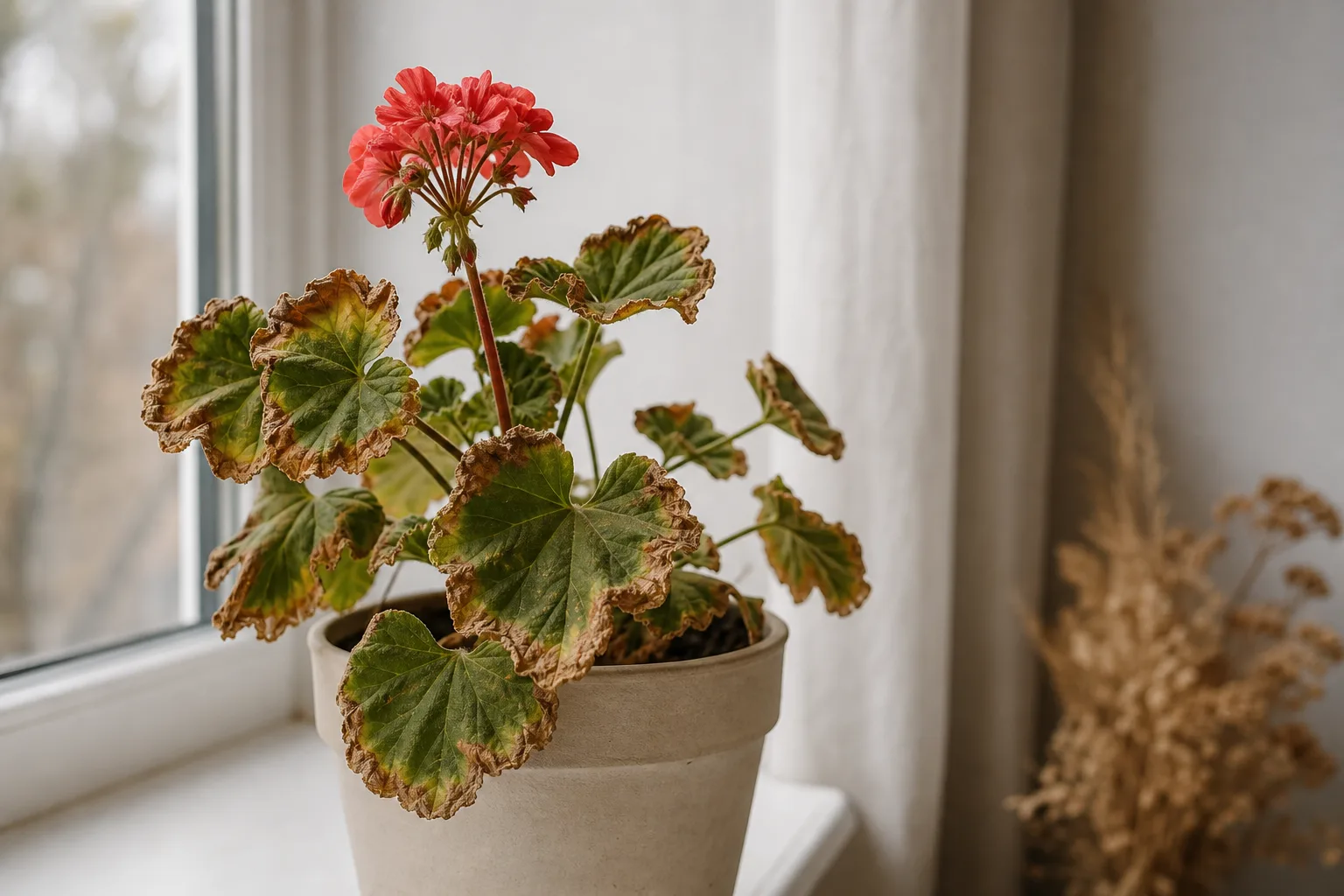
Low Humidity on Geranium: Causes, Checks & Fixes
This guide covers low humidity on Geranium. See also the general Low Humidity guide, watering, and light pages for this plant.
Low Humidity on Geranium: Causes, Checks & Fixes
Quick answer
Low humidity on geranium (botanically Pelargonium) is often misdiagnosed. These plants evolved in Southern African climates with dry intervals and handle low to moderate indoor humidity (about 30–50% RH) better than ferns or calatheas. Ivy geraniums develop edema when nights are cool, soil stays wet, and air is humid-not when air is too dry.
What dry winter air actually does on Pelargonium:
- Crisp brown leaf edges on leaves touching hot glass or sitting above radiators
- Spider mite outbreaks-mites thrive in warm, dry, dusty conditions on stressed foliage
- Faster soil dry-down near sunny windows, which can look like “the plant wants humidity” when it really wants even watering
First step: place a hygrometer near the pot, move it off heat vents, and inspect leaf undersides for stippling before buying a humidifier or misting leaves. Misting Pelargonium foliage spreads fungal spores and does little for ambient RH.
For full humidity biology and type differences (zonal vs. ivy), see the geranium overview § Temperature and Humidity. For mite treatment, see spider mites on geranium.
What low humidity looks like on Geranium
Pelargonium does not wilt dramatically from dry air the way a peace lily does. Symptoms are subtler and easy to confuse with watering mistakes.
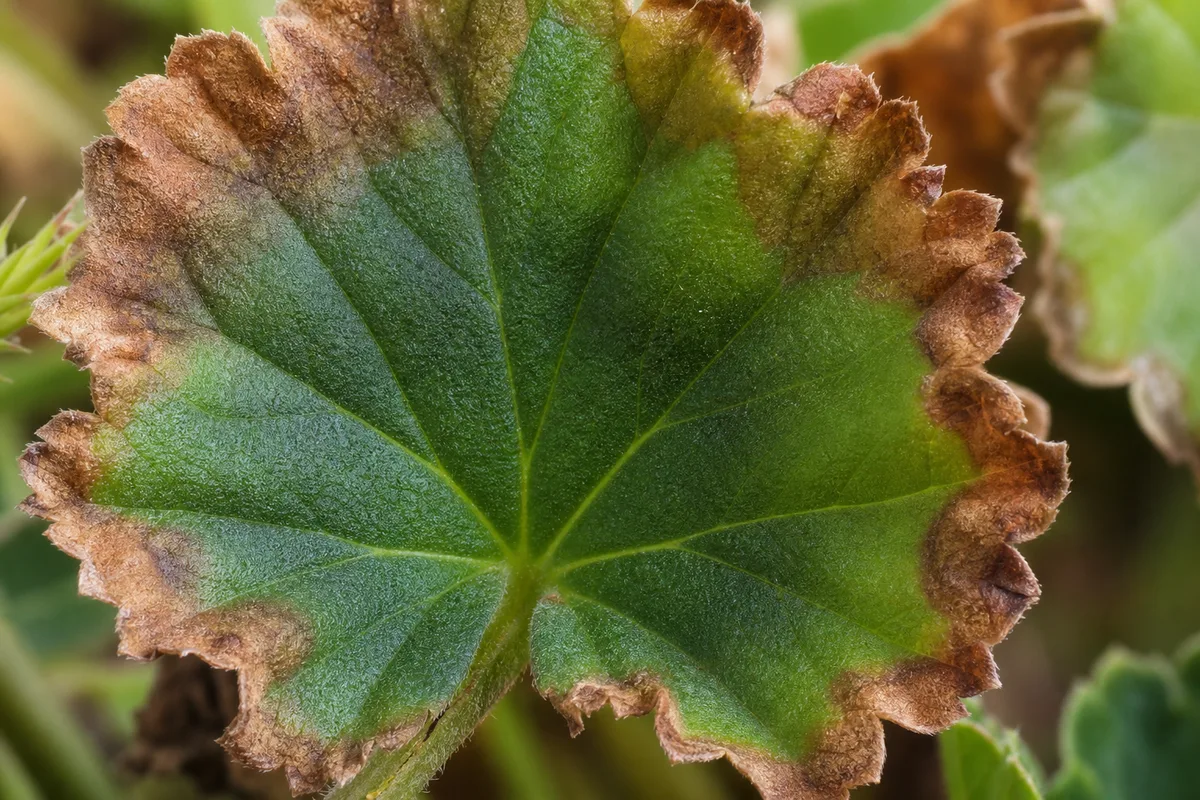
Low Humidity symptoms on Geranium - compare with healthy tissue on the same plant.
Typical dry-air pattern on zonals and scented types:
- Tan or brown crisp margins on older leaves, often on the side facing a heater or sunny window
- Leaf tips dry while the rest of the blade stays green and firm
- Fine yellow stippling on undersides progressing to bronzing when mites colonize dry foliage
- Delicate webbing at leaf bases during active mite infestations
- No soft yellowing of the whole leaf unless underwatering on Geranium or overwatering overlaps
Ivy geranium (Pelargonium peltatum) exception: In cool, wet, shaded conditions, ivy types develop edema-small watery blisters on leaf undersides-from too much moisture in the leaf, not too little humidity. If your ivy shows blisters on cool nights with wet soil, do not humidify-improve airflow, reduce watering, and add afternoon shade in hot climates per Iowa State Extension.
What low humidity is not:
- Soft yellow leaves on wet soil-overwatering or root rot on Geranium
- Uniform wilting that recovers after watering-underwatering
- Grey mold on spent flowers in a damp cool room-botrytis from high humidity, not low
- Leggy stretch toward windows-insufficient light, not humidity
Why Geranium rarely struggles with low humidity
Pelargoniums are semi-succulent, woody-stemmed plants adapted to bright sun and partial dry-down between rains. RHS Pelargonium guidance describes them as plants that want good drainage and tolerate typical heated-home air. Unlike tropical foliage houseplants, they do not need 60%+ RH to survive indoors.
Dry heated winter air becomes a problem mainly when it combines with:
- Heat-vent placement - Forced air dries leaf edges in hours
- Sunny south or west glass - Radiant heat plus low RH crisp margins on leaves pressed against glass
- Dusty foliage - Weakens leaves and favors spider mites on houseplants stressed by low humidity
- Neglected watering - Dry air increases transpiration; a chronically dry pot shows edge burn that mimics humidity stress
Raising humidity is often the wrong first fix for Pelargonium. Clemson HGIC geranium factsheets emphasize drainage, light, and watering rhythm-not misting. Wet foliage invites botrytis grey mold on spent flower clusters in cool damp conditions.
How to confirm the cause
Work through these checks before humidifying:
- Hygrometer reading - Place near the plant at leaf height. RH 30–50% is normal for most homes and adequate for zonals. Below 30% with heat blasting nearby supports dry-air edge crisping or mite risk.
- Placement audit - Is the pot on a radiator cover, above a floor vent, or touching winter glass? Move it 30–60 cm away and recheck edges in two weeks.
- Mite tap test - Hold white paper under a suspect leaf and tap. Moving specks confirm mites, not humidity alone. See spider mites on geranium.
- Soil moisture - Light dry pot with crisp edges = underwatering overlap. Heavy wet pot with yellow soft leaves = overwatering-see overwatering on geranium.
- Type check - Ivy blisters on cool wet nights = edema; treat with airflow and drier rhythm, not humidifiers.
- Season - Edge crisping often appears in first month of heating season when RH drops; if edges stay clean in summer in the same spot, winter dry air was the trigger.
Confirmed dry-air stress: crisp firm margins, adequate soil moisture, no mite stippling, improved edges on new growth after moving off vents. Confirmed mites: stippling plus webs-treat pests even if you also modestly raise RH.
First fix for Geranium
Move the pot away from heat vents and sunny glass contact-today. That single placement change fixes most “low humidity” complaints on Pelargonium without changing ambient RH.
Practical steps:
- Shift the container 30–60 cm from radiators, baseboard heaters, and forced-air vents
- Rotate so no leaf presses against cold or hot window glass
- Rinse leaf undersides with lukewarm water to knock down early mites and dust-avoid leaving crowns wet overnight
- If RH stays below 30% and mites recur, run a small room humidifier set to modest output-not leaf misting
Do not mist foliage. Missouri Botanical Garden indoor plant guidance notes misting provides only brief surface moisture and can spread disease on dense canopies.
If stippling appears, treat mites per spider mites on geranium before investing in humidification hardware.
Recovery timeline
Week 1–2: Edge crisping stops spreading on new leaves after placement change. Old brown margins remain.
Week 2–4: With mite treatment if needed, stippling halts and new growth emerges unstippled.
Full cosmetic recovery: Months-Pelargonium replaces leaves slowly indoors. Judge success by clean new tips, not re-greening old margins.
Worsening signs: Webbing spread, bronzing leaves dropping, or grey mold on flowers in a cool damp room-different problems requiring pest or airflow fixes, not more humidity.
Lookalike symptoms
| Pattern | Likely cause | First action |
|---|---|---|
| Crisp edges, light dry pot | Underwatering | Soak when top inch dries-geranium watering guide |
| Soft yellow leaves, wet soil | Overwatering / rot | Pause water; inspect roots |
| Stippling + webbing | Spider mites | Rinse undersides; miticide if needed |
| Watery blisters on ivy undersides | Edema (too wet + cool) | Reduce water; improve airflow |
| Grey mold on spent blooms | Botrytis (too damp) | Remove flowers; do not humidify |
| Long bare stems, few blooms | Low light | Brighten exposure-not enough light |
What not to do
Do not mist Pelargonium leaves as a humidity fix-minimal RH benefit and fungal risk on dense zonal canopies. Do not run a humidifier to 60%+ for zonals; cool wet air encourages botrytis. Do not assume every brown edge means humidity without checking soil weight and mites. Do not fertilize to cure edge burn-feed only when the plant is actively growing in bright light per the fertilizer guide.
How to prevent low humidity problems next time
- Keep pots off heat registers year-round; winter matters most
- Inspect undersides weekly during heating season-catch mites before webbing
- Group containers slightly to share modest humidity, but do not crowd crowns-airflow prevents botrytis
- Match watering rhythm to faster winter dry-down near sunny windows
- For ivy types in cool rooms, prioritize dry-down and airflow over humidifiers
Conclusion
On geranium, low humidity is usually a secondary stressor, not a primary care failure. Pelargonium tolerates typical indoor RH; dry winter air mainly crisps edges near heat and favors spider mites. Confirm with a hygrometer and placement audit before humidifying. Move off vents, rinse dusty foliage, treat mites if stippling appears, and reserve humidifiers for chronically sub-30% rooms-not routine zonal care. For ivy edema or botrytis in damp cool air, less humidity and better drainage are the fix, not more moisture in the air.
When to use this page vs other Geranium guides
- Geranium watering guide - Use for routine moisture checks before assuming low humidity is the main issue.
- Geranium problems hub - Browse all 16 common issues on this species.
- Brown Tips on Geranium - Different entry point when symptoms overlap with low humidity.