Not Enough Light on Geranium: Causes, Checks & Fixes
Quick answer
Not enough light on Geranium shows as stretched stems, small pale leaves, and weak or missing flowers even when watering seems fine. Move the pot to the brightest spot you have-at least six hours of direct sun during active growth-or add a grow light before you change fertilizer or pot size.
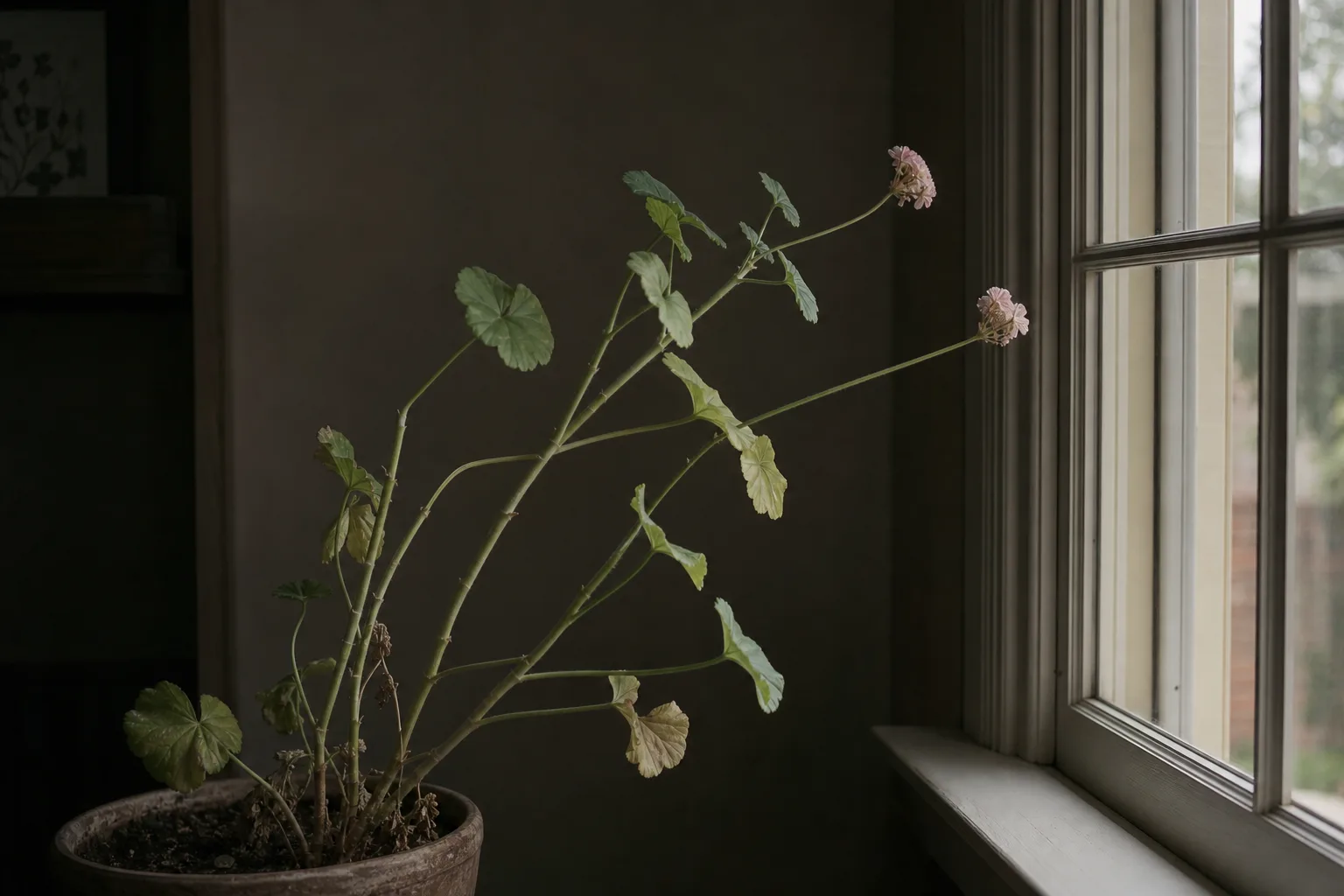
Not Enough Light on Geranium: Causes, Checks & Fixes
This guide covers not enough light on Geranium. See also the general Not Enough Light guide, watering, and light pages for this plant.
Not Enough Light on Geranium: Causes, Checks & Fixes
Quick answer
Not enough light on Geranium (Pelargonium × hortorum, zonal geranium) shows up as stretched stems, pale small leaves, and weak or missing flowers even when watering seems fine. Most geraniums prefer full sun with at least six hours of direct light daily, and flowering is reduced when sun falls below that threshold.
First step: move the pot to the brightest location you can offer-typically an unobstructed south window indoors, or a full-sun patio outdoors after gradual acclimation. Do not repot, fertilize, or hard-prune on the same day you change light.
What not enough light looks like on Geranium
Zonal geraniums are built for open, sunny conditions. When light falls short, the plant stretches toward the brightest source instead of building compact, flower-ready branches.
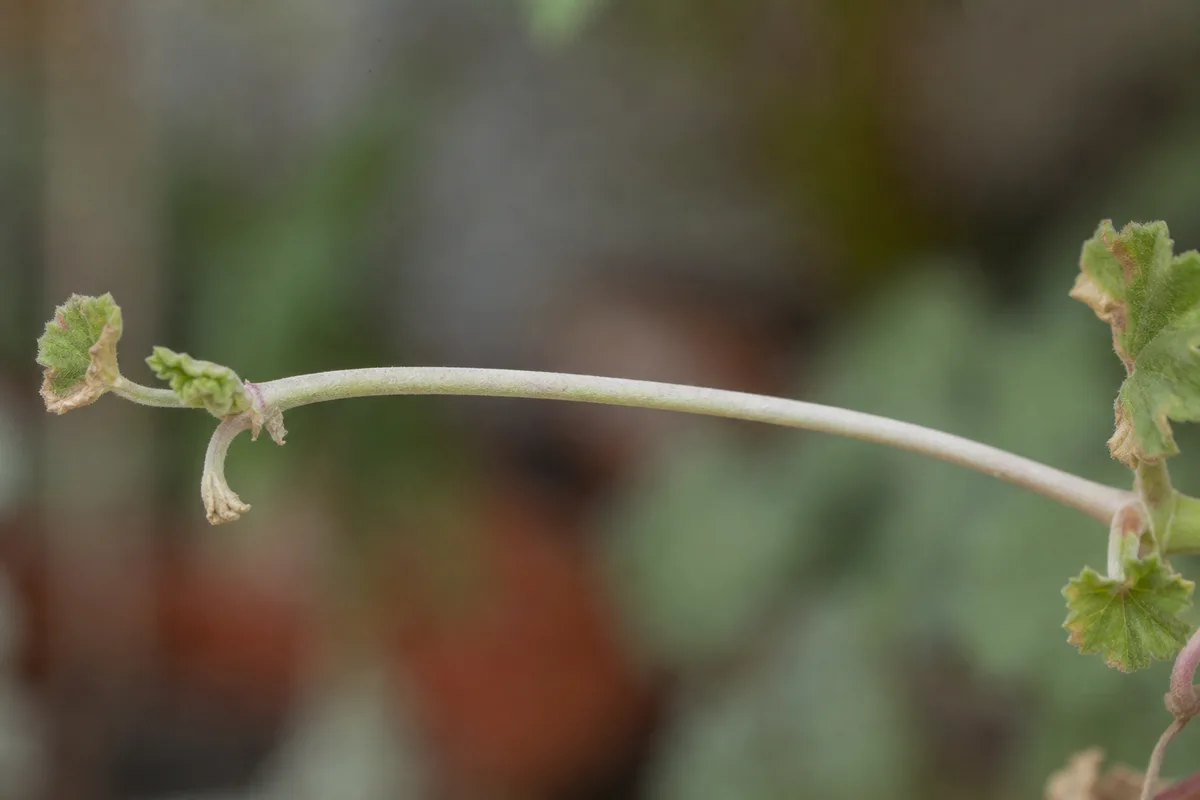
Not Enough Light symptoms on Geranium - compare with healthy tissue on the same plant.
Watch for these patterns during active growth:
- Leggy, leaning stems - long gaps between leaf nodes (internodes), thin branches, and the whole plant tilts toward one window or doorway. Indoor geraniums become leggy when light is reduced, creating elongated spaces along the stem.
- Pale or undersized new leaves - fresh foliage opens lighter green and stays smaller than older sun-grown leaves on the same branch.
- Few or no flowers - buds may never form, or existing clusters stay small and sparse despite warm temperatures. Flowers are the honest report card on geraniums-foliage may look acceptable while bloom fails entirely.
- Slow pot dry-down - soil stays wet longer than expected because the plant is photosynthesizing less and using less water. This matters because geraniums tolerate dry soil better than chronic wetness.
- Warm-room stretch - geraniums become tall and spindly when grown in warm, poorly lit areas, a common winter pattern when a heated room compensates for a dim window.
These signs differ from sunburn, which shows bleached or crispy patches on leaves after a sudden jump into harsh afternoon sun without acclimation. They also differ from normal winter dormancy in cold storage-bare-root or cool-stored plants naturally rest and will not bloom until returned to bright light in spring.
Why Geranium gets not enough light
The most common cause is treating zonal geraniums like generic low-light foliage houseplants. Geraniums may survive in mediocre light, but they will not thrive or flower there. Less sun means fewer flowers, and outdoor culture calls for a minimum of eight hours of sun daily for best performance.
Typical triggers include:
- Middle-of-room placement - usable light drops sharply even a few feet from glass, which is why a plant that bloomed on a sunny patio declines after you move it to a decorative shelf.
- North windows or deeply shaded balconies - fine for cast-iron plants, but far below what high-light geraniums need for dense growth and continuous bloom.
- Dirty glass, sheers, or outdoor shade - eaves, pergolas, tinted windows, and tall neighbors cut energy more than owners expect.
- Short winter days - the same south window delivers less December through February; stretch and pale leaves often worsen unless you supplement.
- Keeping overwintered plants indoors without grow lights - geraniums need bright light to encourage flowering indoors, and southern exposure is usually the best natural source.
Low light also slows evaporation from the pot. That combination-dim placement plus unchanged watering-is one of the most common paths to yellow lower leaves and stem rot on overwintered geraniums, because the mix stays wet while the plant is barely using water.
How to confirm the cause
Work through these checks before you change anything else:
- Direct sun hours - during warm months, count how many hours direct sun actually hits the leaves, not just the pot rim. Fewer than six hours of direct light during active growth strongly points to this diagnosis.
- Newest growth - compare the last two leaves that opened. Long gaps between them and pale color confirm stretch; firm, dark older leaves on the same branch mean light dropped recently.
- Pot weight and soil moisture - lift the container after watering. In low light, the mix may stay heavy for days. Yellow lower leaves with chronically damp soil in shade suggest you need more light and a watering check-not fertilizer.
- Bloom history - if the plant flowered outdoors in summer but stopped indoors, the window is almost certainly delivering less energy than the patio did.
- Temperature context - warm rooms above 70°F with weak light accelerate stretch. Cooler placement (60–65°F) slows growth but does not replace missing light.
If stems lean, internodes stretch, flowers fail in warm weather, and the mix dries slowly in a dim spot, you have enough evidence to fix light before reaching for bloom booster or pest sprays.
The first fix to try
Move the pot to the brightest location available and leave everything else alone for one week.
Indoors, that usually means an unobstructed south window where leaves receive direct sun for much of the day. Southern exposure is usually the best source of light for overwintered geraniums. Outdoors after frost risk passes, place the pot in full sun but acclimate over 7–14 days-start with morning sun, add hours gradually, and watch for bleaching on leaves formed in shade.
If your best window still falls short-common in winter-add supplemental lighting. A fluorescent shop light or LED grow light hung 10 to 12 inches above the plants with a timer for evening hours can bridge the gap when natural light is insufficient.
Rotate the pot a quarter turn every few days so branches do not lean permanently to one side.
Step-by-step recovery after light improves
Once the plant is in stronger light, follow this order:
- Wait 7–10 days before pruning, Geranium repotting guide, or feeding. Let new tip growth tell you the placement works.
- Adjust watering - brighter light dries the mix faster; check the top 2–3 cm before each drink. In lower light you watered less often; sunny placement may need more frequent checks, not automatic extra water every day.
- Pinch or prune leggy stems after several weeks of good light if internodes stayed long. Prune or pinch back stems just above a leaf node to produce stocky, well-branched new growth.
- Deadhead spent blooms once flowering resumes-removing old flowers redirects energy toward new buds.
- Resume weak fertilizer only after new leaves look normal in warm active growth. Geraniums do not bloom well when over-fertilized, and feeding a still-stretching plant in dim light pushes soft foliage, not flowers.
Do not stack a repot, hard prune, and fertilizer dose on the same week you fix light.
Recovery timeline
| Milestone | What to expect |
|---|---|
| 1–2 weeks | Lean may slow; newest leaf pairs should open closer together and slightly darker. |
| 3–6 weeks | Active branches thicken at the tips; bud clusters may appear if temperatures stay in the 15–27°C comfort range. |
| One season | Flower count improves if light, watering, and deadheading align. Old stretched sections remain long unless pruned. |
Judge recovery by new growth, not old stretched stems. A geranium that opens tighter leaves at the tips and holds buds is responding-even if lower branches still look thin.
Lookalike symptoms to rule out
overwatering on Geranium yellows lower leaves while soil stays damp, especially in dim winter rooms. Check for soft stems at the base or sour-smelling mix. Fix drainage and watering before assuming light alone is the problem-though low light often causes the slow dry-down that triggers overwatering damage.
High nitrogen fertilizer produces lush green foliage with few flowers. If leaves are dark and full but buds never form in a sunny window, review feeding-not light.
underwatering on Geranium wilts leaves between waterings and produces dry crispy edges, not long internodes. Lift a light pot and check whether the plant perks up after a thorough drink.
Normal post-move leaf drop happens when geraniums come indoors for winter. Many leaves fall after the environment change even when light is adequate. Wait for new tip growth before diagnosing low light-stretch on fresh stems is the clearer signal.
Mistakes to avoid
Do not assume a north or east window alone will restore bloom on a zonal geranium-it rarely delivers enough direct sun for Geranium overview.
Do not jump a shade-grown plant straight into harsh afternoon sun without acclimation. Sunburn looks different from low light but can set recovery back weeks.
Do not increase fertilizer to force flowers in a dim room. That produces soft, pest-prone growth without fixing the root cause.
Do not keep watering on the same schedule after a light increase. Sunny placement dries the pot faster; stale winter watering habits cause more damage than brief drought on geraniums.
Do not confuse cosmetic old-leaf blemishes with active stretch. Focus on the newest two leaf pairs and current bud behavior.
Geranium care cross-check
Light connects directly to geranium Geranium watering guide. In full sun, geraniums use water quickly and tolerate drying between drinks. In low light, the same pot stays wet longer-raising rot risk in fast-draining compost that normally protects the plant outdoors.
Temperature matters alongside light. Cool indoor temperatures around 60–65°F suit overwintered geraniums, but a warm dim room accelerates leggy stretch even when the plant is technically alive.
If you overwinter dormant bare-root plants, low light during storage is expected. The light diagnosis applies once plants return to active growth in a sunny window or under supplemental lights in spring-not during cool dark storage months.
How to prevent not enough light next time
Place new geraniums where six or more hours of direct sun is realistic through the warm season-sunny patios, south-facing window sills, or bright balcony rails after frost risk passes.
Before bringing plants indoors for winter, identify the brightest window and add grow lights if needed rather than waiting for stretch to appear in January.
Rotate pots weekly during indoor overwintering so growth stays even.
Clean windows seasonally and trim outdoor obstructions that shade containers.
Match watering to seasonal light-reduce frequency when short days slow dry-down, even if the calendar says it is still “watering day.”
Scout for pests on stretched, weak growth. Stressed geraniums in warm dim corners attract aphids and whiteflies more readily than compact sun-grown plants.
When to worry
Low light alone is slow and correctable. Treat as urgent when weak light combines with wet soil-yellow lower leaves, grey mould on stems, or a soft base while the pot sits heavy in shade. That pattern points toward rot stress, not stretch alone.
Replace severely weakened overwintered plants if stems are hollow, roots are mushy, or the plant collapses despite improved light and corrected watering. Geraniums are easy to restart from cuttings once you have a bright window or grow light in place.
Conclusion
Leggy geraniums with few blooms are usually asking for more sun, not more fertilizer. Move the pot to the brightest safe spot, confirm with tighter new growth within two weeks, then pinch and deadhead once the plant responds. Flowers return when light matches what this sun-loving Pelargonium expects-not when the room simply looks bright to you.
When to use this page vs other Geranium guides
- Geranium watering guide - Use for routine moisture checks before assuming not enough light is the main issue.
- Geranium problems hub - Browse all 16 common issues on this species.
- Leggy Growth on Geranium - Different entry point when symptoms overlap with not enough light.
- Slow Growth on Geranium - Different entry point when symptoms overlap with not enough light.
- Yellow Leaves on Geranium - Different entry point when symptoms overlap with not enough light.