Wilting on Geranium: Causes, Checks & Fixes
Quick answer
Wilting on geranium means leaves lost turgor because water is not reaching them. Lift the pot and feel the top inch of mix first-a light, dry pot needs a deep soak; a heavy, wet pot with limp leaves means stop watering and check stem firmness.
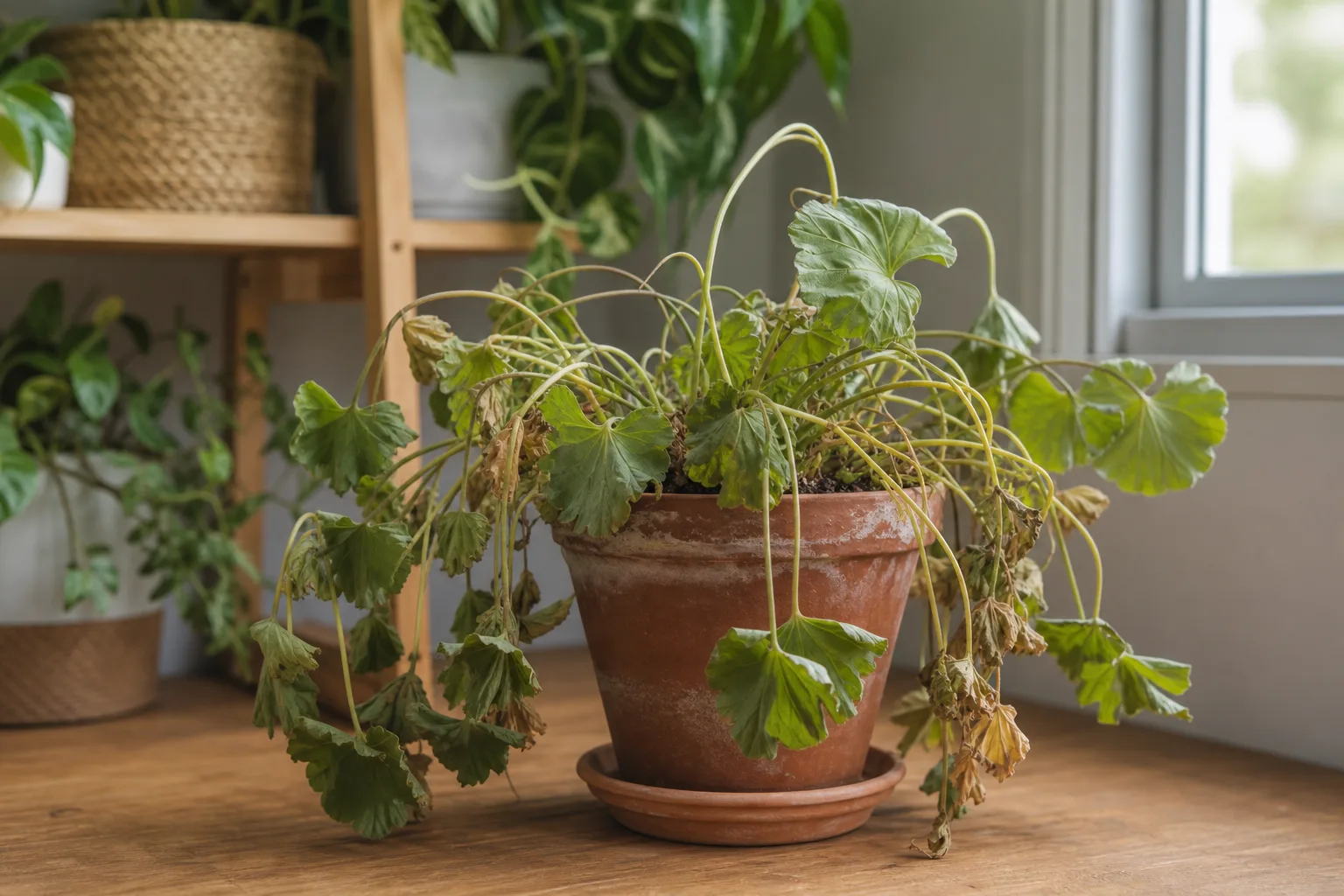
Wilting on Geranium: Causes, Checks & Fixes
This guide covers wilting on Geranium. See also the general Wilting guide, watering, and light pages for this plant.
Wilting on Geranium: Causes, Checks & Fixes
Quick answer
Wilting on geranium (Pelargonium) means the leaves have lost turgor because water is not moving from roots to foliage. That failure almost always starts with how the root zone is managed-not because every limp leaf automatically “needs a drink.” A wilted plant with moist soil often has damaged roots that cannot absorb water First step: lift the pot and push your finger into the top inch of mix. A light, dry pot with limp leaves calls for a measured deep soak. A heavy, wet pot with wilt means root stress or rot-stop watering and press the lower stems for firmness before you add more water.
What wilting looks like on a geranium
On a healthy pelargonium, leaves sit upright on thick, somewhat succulent stems and feel springy when brushed. Wilting changes that profile quickly-and the pattern tells you which branch to follow.
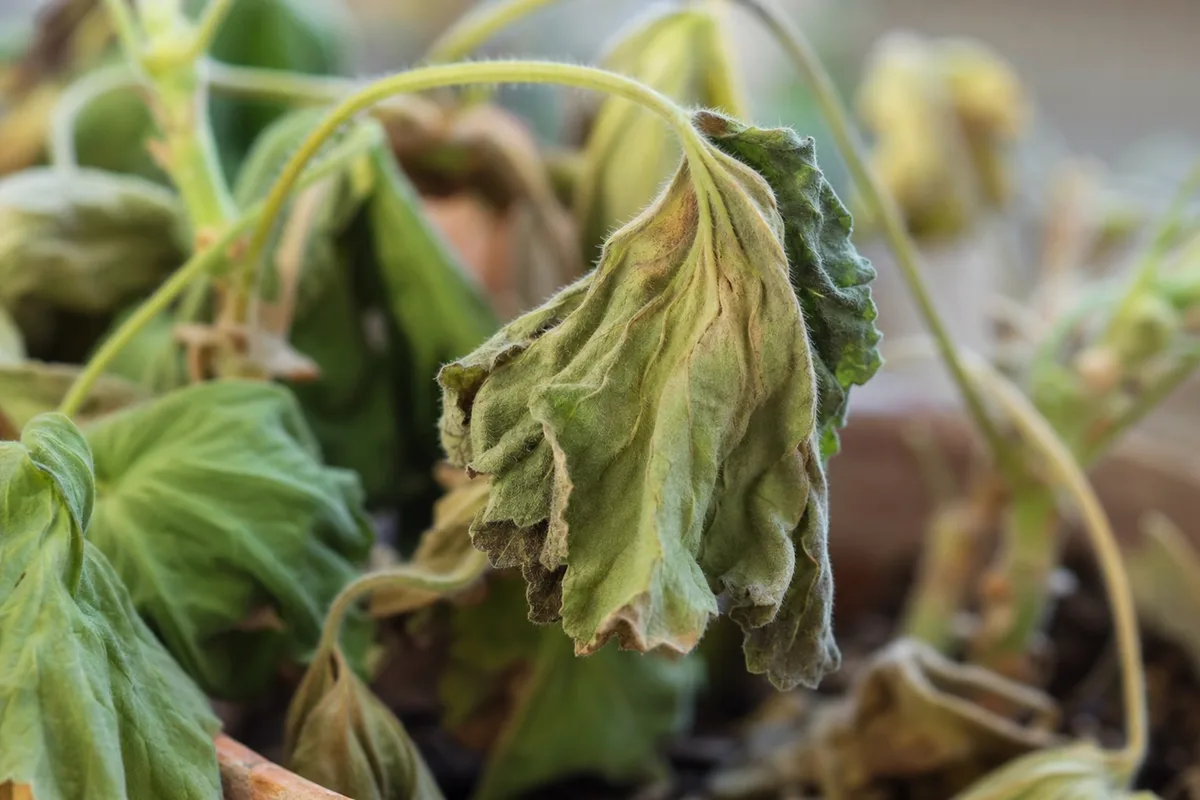
Wilting symptoms on Geranium - compare with healthy tissue on the same plant.
Dry-soil wilt shows limp or slightly curled leaves on a lightweight pot. The surface mix is pale and crumbly. Stems still feel firm and woody-not mushy. Zonal types may show crisp edges on lower leaves before the whole canopy droops. Outdoor pots in full summer sun can go from fine to collapsed in one hot afternoon even though the plant is not root-bound dry.
Wet-soil wilt is the most common misread. Lower leaves hang limp while the mix stays dark, cool, and heavy. Yellowing often starts on bottom leaves first. You may see fungus gnats near the soil surface or a faint sour smell from drain holes. The stem base may feel soft if rot is advancing.
Heat-stress wilt appears on outdoor containers during midday: leaves and flower stems droop in blazing sun even when soil moisture is adequate. Many plants perk overnight once temperatures drop and the root zone rebalances-this is environmental collapse, not necessarily root failure.
Cold-draft wilt hits overwintered indoor specimens quickly. A plant on a cold windowsill, above a heat register, or in the path of an AC vent may wilt within a night while soil moisture looks normal. Leaves may yellow at the same time if temperatures drop below about 55°F (13°C).
Low-light wilt develops gradually over weeks: stems stretch, the canopy thins, and leaves soften in a dim room even when you water on schedule. Leggy growth with few buds often precedes the flop-see the lookalike section before you increase water.
Ivy geranium edema can look like wilt on trailing types: small corky blisters on leaf undersides when nights are cool and soil stays wet and air is humid. The stems may still feel firm; reducing water and increasing light usually helps more than another soak.
Why geraniums wilt
Pelargoniums are woody-stemmed, semi-succulent plants adapted to bright light, warm days, cool nights, and dry intervals between rains. When that balance breaks, wilt follows.
Underwatering and drought stress dry fine root hairs first. Without them, even a later deep watering cannot restore turgor instantly. Container geraniums in full outdoor sun may need checking two or three times a week in hot, dry weather; a missed drink on a small hanging basket shows wilt fast despite drought-tolerant stems.
Overwatering and root rot are equally common-and more dangerous when misread. Saturated soil drives out oxygen; decaying roots cannot absorb water even when the pot is full. Owners see limp leaves and pour more water, which accelerates crown failure. Calendar watering in cool indoor rooms, oversized pots, and saucers left full all keep roots wet too long.
Heat stress in outdoor pots outpaces water uptake on hot afternoons. Zonal geraniums demand strong light, but small containers in all-day sun can lose moisture faster than roots replace it midday. Evening recovery after a thorough morning watering often confirms heat wilt rather than rot.
Cold drafts and overwintering shock damage tropical foliage quickly. Moving plants indoors before stabilizing light and temperature-or parking them against cold glass-can wilt an otherwise healthy specimen overnight.
Insufficient light weakens stems indoors. Without at least four hours of direct sun daily outdoors or the brightest window you can provide inside, pelargoniums stretch, stop blooming, and eventually soften even when soil moisture looks adequate.
Transplant shock interrupts water uptake when roots are torn or left in dry pockets after Geranium repotting guide. Open leaves may collapse for days even when you water correctly.
Disease-related wilt is less common in home gardens but worth noting: bacterial leaf spot and botrytis favor cool, wet foliage and crowded conditions. Prompt removal of affected tissue and drier air circulation help; see the overview if spots spread with wilt.
Wilting vs. drooping vs. yellowing
These symptoms overlap on pelargoniums but point to different urgency levels.
Wilting is sudden or same-day loss of turgor-leaves feel limp and flexible, often across much of the canopy. It usually demands an immediate moisture and environment check.
Drooping can be milder: a few lower leaves hang while stem tips stay firm and new buds look normal. That pattern may be natural aging, mild thirst, or early light stress. See the drooping-leaves guide if only older foliage is affected slowly.
Yellowing often pairs with wilt but signals a longer problem-especially yellow lower leaves on wet mix pointing to root decline. The yellow-leaves page covers that branch in depth.
When wilt and yellowing appear together on wet soil, treat it as root stress until proven otherwise-not simple underwatering.
How to confirm the cause
Work through these checks in order so you do not water a rotting plant or soak one that only needs shade recovery.
- Top-inch moisture - Insert a finger to the first knuckle. Dry confirms underwatering; damp or wet with limp leaves suggests root failure.
- Pot weight - Lift the pot. Light weight plus wilt equals dry. Heavy, cool pot plus wilt equals oversaturated mix or dead roots.
- Stem firmness - Pelargonium stems should feel woody and firm. Mushy lower stems or a soft crown on wet soil strongly suggests rot-see root rot.
- Leaf pattern - Yellowing from the bottom up on wet mix suggests overwatering. Even wilt across all leaves on dry mix points to drought. Heat-stress wilt often affects outer leaves mid-afternoon only.
- Smell and drainage - Sour odor, water sitting in a saucer for days, or mix that stays wet a week after watering confirms chronic overwatering habitat.
- Light and placement - Dim indoor shelf with leggy stems may need more light, not more water. Outdoor pot against a south wall may need afternoon shade for ivy types.
- Temperature history - Recent move indoors, cold window contact, or nights near 55°F (13°C) narrows cold-draft wilt quickly.
- Recent history - Repotting within two weeks, a vacation dry spell, or a switch to a much larger pot explains many sudden flops.
- Root inspection - If wet wilt persists after stopping water for several days, slide the plant from the pot. Healthy pelargonium roots are firm and pale; rotted roots are brown, translucent, or slimy.
Confirmed dry wilt: dry surface, light pot, firm woody stems. Confirmed wet wilt: moist mix, yellow lower leaves, mushy roots, or sour smell. Suspected heat wilt: midday flop outdoors with firm stems and recovery by morning after soil was watered within 24 hours. Suspected cold shock: wilt started after a move or draft with mostly intact roots.
First fix for geranium
Lift the pot and check top-inch soil moisture before any other action. That single test separates opposite fixes.
If the mix is dry and the pot is light, water thoroughly until a small amount drains from the holes, then empty the saucer within 30 minutes. Do not flood a severely dry plant repeatedly in one hour; one good drink, then wait 24 hours and reassess turgor.
If the mix is wet and the plant is wilted, stop watering immediately. Set the pot on folded paper towels to wick excess moisture from the drain holes. Move to brighter light if the plant sits in deep shade-slow evaporation worsens wet soil. Inspect roots and stem bases if leaves keep declining after the mix dries. Full wet-soil protocol is on the overwatering page.
If the plant wilts outdoors only in midday heat but stems stay firm and soil was watered recently, move the container to afternoon shade or increase watering frequency slightly-checking daily in heat-rather than drowning the pot once. Ivy geraniums benefit from some afternoon shade in hot climates.
If wilt followed bringing plants indoors, prioritize the brightest cool window you have, keep night temperatures around 55°F, and water less often until growth stabilizes-overwatering in dim winter rooms is a common follow-up mistake.
Make one correction, then wait several days before stacking repotting, fertilizing, and heavy pruning together.
Step-by-step recovery by cause
Dry wilt path
- Water until a small amount drains; discard all runoff from saucers.
- If the plant was severely dry, repeat a moderate drink after 24 hours only if the top inch is dry again-not sopping wet throughout.
- Keep outdoor pots in morning sun; avoid moving a drought-stressed plant into harsh midday rays the same day.
- Resume normal rhythm only when the top inch of mix feels dry.
Wet wilt / root stress path
- Stop all watering. Wick excess moisture with paper towels under the pot.
- If roots are mushy when you inspect, trim decayed tissue, repot into fresh well-drained mix in a pot sized to the remaining roots, and keep the mix barely moist-not wet-while the plant stabilizes.
- Remove soft lower leaves that will not recover; they drain energy and harbor rot.
- Wait for firm new growth at stem tips before fertilizing.
Heat-stress wilt
Move containers to a spot with afternoon shade-especially for ivy types-or shift watering to early morning so the root zone is charged before peak heat. Do not assume wilt in hot sun always means rot; confirm with evening stem firmness and pot weight.
Cold-draft and overwintering wilt
Move plants away from cold glass, AC vents, and outside doors. Aim for cool bright conditions indoors rather than a warm dim corner. Hold watering until you see how fast the smaller indoor root zone dries.
Low-light wilt
Move to the brightest window available-or supplement with a grow light 12–18 inches above the canopy for 10–12 hours daily. Hold watering steady; do not compensate for dim rooms by watering more often. Details are on not enough light.
Recovery timeline
Mild dry wilt often shows firmer leaves within one to two days after proper watering. Severe drought in a small outdoor basket may take several measured watering cycles before all leaves recover.
Root rot or chronic overwatering recovery spans one to three weeks when stems stay firm and enough healthy root remains. Yellow lower leaves rarely green up; new upright growth at tips is the benchmark.
Heat-stress wilt often resolves overnight once temperatures drop and soil moisture is adequate. Chronic midday collapse means the pot is too small or exposed for your climate-adjust placement or pot size.
Cold shock often resolves within a few days if stems stayed firm and you corrected placement. Soft crown on wet soil after cold exposure still warrants a root check.
Low-light recovery may take two to four weeks after brighter placement as stems strengthen and bud formation resumes.
What not to do
Do not pour more water onto a wilted geranium when the mix is already wet-that is the most common way owners turn reversible stress into stem rot. Do not move a wilted outdoor plant into blazing midday sun to “perk it up” without acclimation. Do not fertilize a stressed plant before you know whether roots are healthy. Do not repot on day one unless root rot, failed mix, or severe compaction is confirmed. Do not stack repotting, pruning, and pesticide on the same day. Do not overhead-water leaves and spent flowers; wet foliage favors disease development such as botrytis in cool damp weather.
How to prevent wilting on geranium
Water regularly and allow the soil to dry between waterings-use your finger or pot weight, not a calendar. Outdoor containers in summer heat may need daily checks; overwintered indoor plants need far less. Give pelargoniums strong light: brightest window indoors or at least four hours of direct sun outdoors. Use fast-draining mix in pots with drain holes sized to the root mass-not oversized tubs that stay wet for days. Empty saucers within 30 minutes of every drink. Avoid cold microclimates below about 55°F (13°C) and hot drafts from radiators. For ivy types in humid cool weather, reduce watering to limit edema. Weekly inspection while problems are still small catches drought and rot before the whole canopy collapses.
When to worry
Act immediately if lower stems or the crown feel soft on wet soil, the mix stays wet while the whole plant collapses, or roots are brown and mushy on inspection-those signs mean rot is advancing and simple drying may not be enough. Sudden whole-plant collapse on wet soil within a few days is urgent even if upper leaves still look green.
You can wait and observe if only outer leaves are limp, stems stay woody and firm, and you have already corrected a clear dry-wilt, heat, or draft mistake. Improvement shows as new leaves opening upright within one to two weeks.
Pet note: Pelargonium is toxic to cats and dogs if chewed. Stressed plants that drop leaves indoors can leave litter within pet reach-keep pots out of reach of animals that nibble foliage and consult your veterinarian if ingestion is suspected.
Geranium care cross-check
| Check | Healthy baseline | Wilting red flag |
|---|---|---|
| Top inch of mix | Dry before next drink | Wet for 7+ days while leaves limp |
| Pot weight | Light when dry, moderate after watering | Stays heavy and cool between waterings |
| Stem base | Woody and firm | Soft, dark, or collapsing on wet soil |
| Lower leaves | Occasional natural aging | Yellow on wet mix, spreading upward |
| Light | Bright window or 4–6 hr outdoor sun | Leggy stretch with soft thinning canopy |
| Temperature | Warm days, cool nights above ~55°F | Cold glass, AC blast, or frost exposure |
Related geranium problems
- Overwatering - primary overlap when soil is wet and leaves are limp
- Underwatering - dry mix, light pot, firm woody stems
- Root rot - soft stems, sour smell, mushy roots
- Drooping leaves - milder or partial limp foliage
- Yellow leaves - often pairs with chronic wet-soil wilt
- Not enough light - gradual softening and leggy stretch indoors
- Geranium overview - full care hub including watering rhythm and type differences
- Geranium watering - seasonal intervals and pot-weight method
When to use this page vs other Geranium guides
- Geranium watering guide - Use for routine moisture checks before assuming wilting is the main issue.
- Geranium problems hub - Browse all 16 common issues on this species.
- Underwatering on Geranium - Different entry point when symptoms overlap with wilting.
- Overwatering on Geranium - Different entry point when symptoms overlap with wilting.
- Root Rot on Geranium - Different entry point when symptoms overlap with wilting.