Wilting on Duckweed: Causes, Checks & Fixes
Quick answer
Wilting on duckweed is frond turgor loss-limp, thin, pale mats that look deflated even when floating. Stranded mats above a dropped waterline, nutrient starvation, chlorine shock, and excessive surface flow are the usual causes. First step: confirm every frond touches calm, dechlorinated water and the tank level matches your reference mark.
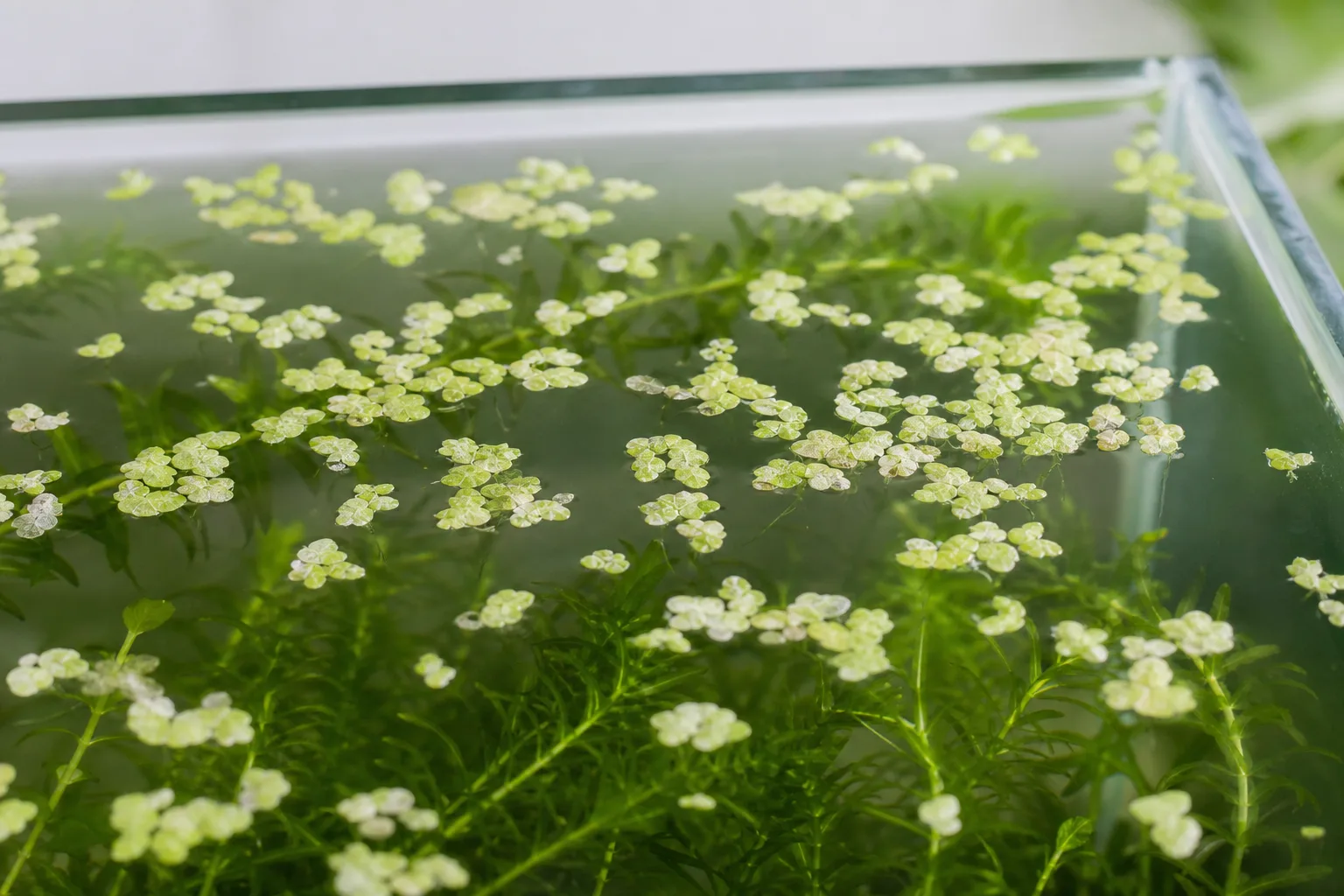
Wilting on Duckweed: Causes, Checks & Fixes
This guide covers wilting on Duckweed. See also the general Wilting guide, watering, and light pages for this plant.
Wilting on Duckweed: Causes, Checks & Fixes
Quick answer
Wilting on duckweed describes loss of frond turgor-the tiny floating leaves look thin, flat, and deflated instead of plump green beads on calm water. This is not houseplant wilt from dry soil. Lemna, Spirodela, and related genera are free-floating aquatics that absorb water and dissolved nutrients through fronds and short roots dangling millimeters into the column. When turgor drops, mats look limp, pale, or sparse even though the tank still holds water.
The most common triggers are stranded fronds above a dropped waterline, nutrient starvation in bright low-stock tanks, chlorine or chloramine shock after a water change, filter outflow that shreds and submerges fronds, and dense self-shading mats that starve lower layers of light and gas exchange.
First step: confirm every frond sits on calm, dechlorinated surface water and the tank level matches your reference mark. Float stranded tissue back onto the water before dosing fertilizer or changing light. Crispy dead fronds will not rehydrate; judge recovery by new plump daughter growth.
For baseline floating-plant culture, see the duckweed overview guide.
What wilting looks like on duckweed
Healthy duckweed forms a thin green film of firm, pillowy fronds-typically 1 to 8 mm across per plant body-drifting on still water with roots barely visible below. Wilting changes that profile:
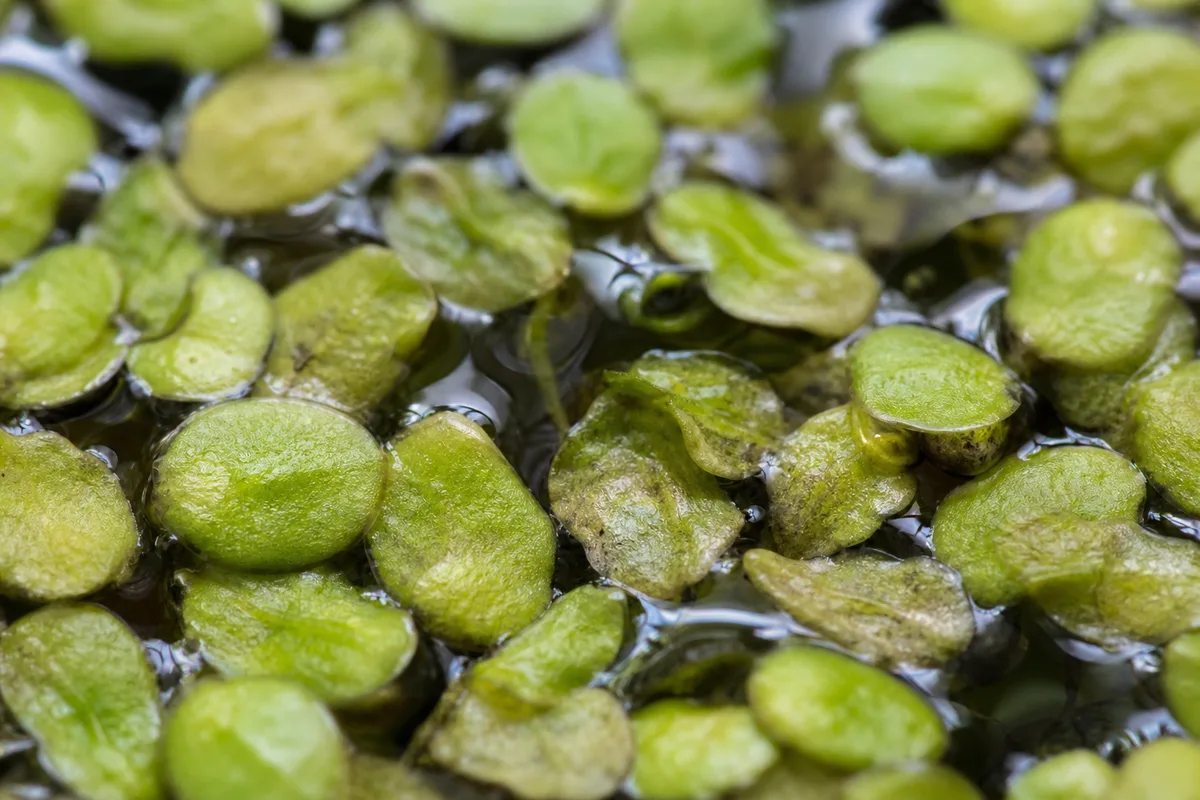
Wilting symptoms on Duckweed - compare with healthy tissue on the same plant.
- Thin, flattened fronds that lose the plump oval shape and look like pale green confetti pressed flat on the surface
- Lime-green to yellow-green mats that spread thinly despite adequate light-classic nutrient limitation with full water contact
- Patchy limp zones at the tank rim where fronds cling to dry glass, filter brackets, or heater caps above the waterline
- Mats that look deflated but still float-different from fronds pushed fully underwater at the filter outflow (see drooping leaves on duckweed)
- Sudden collapse to white or translucent tissue within hours after adding untreated tap water-chlorine shock
- Crispy brown edges on fronds that were stranded during a missed top-off-overlaps with underwatering on duckweed but wilting is the broader turgor-loss label keepers use first
Duckweed has no stems that hang downward. When searchers say “wilting,” they usually mean limp, pale, or deflated fronds-a culture that lost vigor without necessarily sinking to the bottom.
Wilting vs drooping vs yellowing on duckweed
| What you see | Best label | First check |
|---|---|---|
| Limp, thin, pale fronds still floating on full water | Wilting / turgor loss | Water level, nutrients, chlorine history |
| Fronds pushed under at filter outflow or sinking to bottom | Drooping / sinking | Surface flow, floating ring |
| Crispy edges, mats on dry glass, low water mark | Underwatering / dehydration | Top-off, float stranded fronds |
| Uniform yellow across submerged mat, stable level | Nutrient or water quality | Nitrate, partial water change |
| Green top, yellow slime underneath thick cover | Self-shading / overcrowding | Skim to 30–50% coverage |
This page focuses on general frond turgor collapse-the limp, deflated mat that may still float. For mechanical sinking and outflow patterns, see drooping leaves. For color-only decline, see yellow leaves and not enough light.
Why duckweed loses frond turgor
Stranded mats and dropped water level
Duckweed dehydrates within hours when fronds lose surface contact. Evaporation in open-top aquariums, turtle basking lamps, and outdoor summer heat drops the waterline while minerals concentrate below. Fronds pile on dry hardware look wilted long before the tank reads “empty.” This is the aquatic equivalent of severe drought-turgor collapses because cells lose water to the air, not because the keeper forgot to water soil.
Nutrient starvation in clean, bright tanks
Duckweed assimilates ammonium, nitrate, and phosphate directly from the water. In a lightly stocked display tank with strong light, dissolved nitrogen and phosphorus can lag behind photosynthetic demand. Fronds turn pale lime-green, spread thinly, and look limp despite full water contact-wilting from the inside out rather than from drought at the rim.
Chlorine and chloramine shock
Untreated tap water exposes the entire frond surface to disinfectants. Residual chlorine inhibits growth of aquatic vascular plants including duckweed; fronds can bleach and collapse within hours. Wilting that appears the day after a large water change often traces here, not to light or fertilizer shortage.
Excessive surface flow and turbulence
Duckweed evolved in still or slow-moving freshwater. Constant filter outflow shreds mats, submerges fronds, and prevents the calm surface film needed to maintain buoyancy and turgor. Stressed fronds look limp and fragmented even when water chemistry is otherwise fine.
Dense mat self-shading
When coverage exceeds roughly 50 to 70% of the surface, lower fronds lose light and oxygen at the air-water interface. They yellow, decay, and contribute to a limp, uneven mat from above. Dense cover also reduces oxygen exchange-a problem in heavily stocked or turtle tanks under a solid green lid.
Heat, TDS buildup, and water-quality drift
Growth reviews on Lemna minor note stress above about 90°F (32°C) and oxidative damage at temperature extremes. Months of evaporation top-offs without partial water changes concentrate minerals; fronds may pale and lose vigor even with stable level. Ammonia or nitrite spikes from overfeeding can damage delicate tissue and mimic wilt.
How to confirm the cause
Work through this numbered checklist before stacking fertilizer, light changes, and major rescues:
- Water level vs reference mark - Tape or note the normal surface height. More than about half an inch below mark on an open-top tank supports dehydration stress; see underwatering if fronds sit on dry surfaces.
- Surface contact scan - Trace the tank perimeter. Any frond on dry glass or hardware confirms contact loss regardless of overall tank volume.
- Frond turgor check - Lift a corner gently. Plump fronds slide as a cohesive sheet; wilted nutrient-starved tissue feels thin and breaks apart easily. Crispy edges indicate past dehydration.
- Water-change timeline - Untreated tap in the last 48 hours strongly suggests chlorine or chloramine. Confirm dechlorinator dose matched the volume added, not just the tank total.
- Flow audit - Watch where mats accumulate. Constant churn at the outflow explains limp submerged fronds-mechanical stress, not nutrient disease.
- Coverage estimate - Peel back a thick corner. Yellow slime underneath confirms self-shading from overgrowth.
- Water tests - Nitrate below 5 ppm in a bright tank supports starvation; ammonia or nitrite above zero means fix water quality before fertilizing.
- Rule out lookalikes - Stable level, calm surface, good dechlorination, and still-pale fronds point to nutrients or light per the duckweed fertilizer guide and light guide.
Do not inspect soil moisture, crown firmness, or pot drainage-duckweed has no substrate culture. Match parameters to the duckweed watering guide instead.
Dehydration wilt vs nutrient wilt vs chlorine shock
| Pattern | Water level | Frond color | Fix direction |
|---|---|---|---|
| Stranded dehydration | Low or fronds on dry rim | Brown crispy edges, thin mat | Top-off, float fronds, dechlorinate |
| Nutrient starvation | Full, calm surface | Uniform pale lime-green | Light fertilizer or bioload; partial change |
| Chlorine shock | Full; recent tap change | White/translucent within hours | Dechlorinate, partial change, skim dead tissue |
| Flow stress | Full; outflow visible | Limp, submerged at filter | Baffle flow, floating ring |
| Mat self-shade | Full; thick cover | Green top, yellow underneath | Skim to 30–50% coverage |
First fix for duckweed
If fronds look limp and the water level is below your reference mark-or mats cling to dry tank hardware-top off with dechlorinated, temperature-matched water and float every stranded frond back onto calm surface water.
That single step restores the environment duckweed needs for turgor recovery. Pour slowly along the glass to avoid blasting mats under the outflow. Skim obviously brown, paper-thin debris so rotting tissue does not foul the column.
If water level is full and fronds float but look uniformly pale in a bright, low-stock tank, hold off on more top-offs and test nitrate first. A dilute aquatic fertilizer dose or partial water change with dechlorinated water may be the correct first move-not additional volume.
If wilting appeared within 48 hours of a water change, dechlorinate and perform a partial water change with properly treated water before adjusting light or nutrients. Chlorine damage and nutrient deficiency require opposite first responses; confirm the timeline before acting.
Make one correction at a time and read the culture for five to seven days before stacking treatments.
Recovery timeline
| Cause | What improves first | Typical window |
|---|---|---|
| Stranded dehydration | Turgor returns on re-floated green fronds | Hours to 2 days |
| Chlorine shock | New green daughters after dechlorinated change | 3–7 days |
| Nutrient starvation | Deeper green on new fronds | 1–2 weeks |
| Flow stress | Plump fronds stay on calm surface | 24–48 hours |
| Mat overgrowth | Lower layer stops yellowing after skim | 3–5 days |
Mild limpness often stabilizes within hours once fronds sit fully on water again. New bud growth from surviving tissue commonly appears within two to five days under moderate light and stable temperature. Mats that were mostly dried to brown may need one to two weeks to re-cover from scattered survivors-if any green fronds remain.
Old crispy or bleached tissue does not revert to plump green. Judge success by fresh oval daughter fronds multiplying at healthy clusters. A recovered culture under warm, dechlorinated water can double every two to three days once conditions align.
Signs the problem is worsening: increasing brown area despite full water level, foul smell from decaying mats, or complete mat disintegration within 24 hours of re-wetting. At that point, discard the dead batch and reseed from a clean backup source.
What not to do
- Do not apply houseplant wilt logic - no soil moisture checks, Duckweed repotting guide, humidity trays, misting the room, or “water when the top inch dries”
- Do not fertilize a dehydrated or chlorine-shocked culture on day one - restore water contact and dechlorination first
- Do not push duckweed fully underwater thinking it needs “more water” - submerged fronds struggle; the plant floats by design
- Do not stack repotting, algicide, and a large untempered water change in the same session
- Do not leave netted duckweed on a dry counter during tank maintenance - keep harvested fronds floating in a bowl of tank water
- Do not confuse normal harvest thinning with pathological wilt - removing excess weekly is healthy; limp pale mats across the whole culture are not
How to prevent wilting next time
Build prevention around the variables duckweed actually uses: stable water level, dechlorinated water, calm surface, balanced nutrients, and managed coverage.
- Mark a target waterline on open-top tanks and check every few days-daily near basking lamps or in summer heat
- Dechlorinate every addition - top-offs and partial changes alike; see the water management guide
- Keep surface flow gentle - baffle outflows, redirect spray bars downward, and use a floating ring for starter cultures
- Skim weekly to 30–50% coverage in mixed planted or fish tanks; thick mats self-shade into limp lower layers
- Match light to nutrients - six to twelve hours of moderate-to-bright light per the duckweed light guide; add dilute fertilizer in clean display tanks when fronds stay pale and thin
- Pair top-offs with partial water changes so TDS and minerals do not creep upward while level looks fine
- Maintain a backup propagation jar so one bad top-off or chlorine accident does not eliminate your only culture
When thinning duckweed, move excess directly into a container of tank water-never onto a dry surface.
When to worry
Treat as urgent when most of the mat is brown and brittle, the backup jar has nearly dried out, or fronds have sat on a dry counter for more than an hour. Duckweed does not recover from total desiccation the way some terrestrial plants bounce back after a soak.
Also act promptly if low water exposed heater coils or filter intakes above the surface, or if the entire culture whitened within 24 hours of a water change-test dechlorinator dose and ammonia before assuming nutrient shortage.
If water level is correct, fronds are fully floating on calm dechlorinated water, and limp pale spread continues for more than a week, stop topping off blindly and test water quality for nutrients, pH drift, and ammonia. Continuing to add water will not fix a chemistry problem.
Related duckweed problems
- Duckweed overview - full culture hub and why houseplant logic fails
- Underwatering on duckweed - stranded mats, crispy edges, and water-level drought
- Drooping leaves on duckweed - sinking fronds, filter outflow, and chlorine shock patterns
- Yellow leaves on duckweed - color loss without general turgor collapse
- Not enough light - sparse pale mats from low photon input
- Overwatering on duckweed - foul tank water and mineral buildup, not wet soil
- Duckweed watering - dechlorination, top-offs, TDS, and partial changes
Reviewed by LeafyPixels Review Board. Methodology: aquatic extension sources and LeafyPixels duckweed care guides cross-checked before publication.
When to use this page vs other Duckweed guides
- Duckweed watering guide - Use for routine moisture checks before assuming wilting is the main issue.
- Duckweed problems hub - Browse all 16 common issues on this species.
- Underwatering on Duckweed - Different entry point when symptoms overlap with wilting.
- Overwatering on Duckweed - Different entry point when symptoms overlap with wilting.
- Root Rot on Duckweed - Different entry point when symptoms overlap with wilting.