Duckweed Fertilizer Guide: Aquarium and Pond Dosing
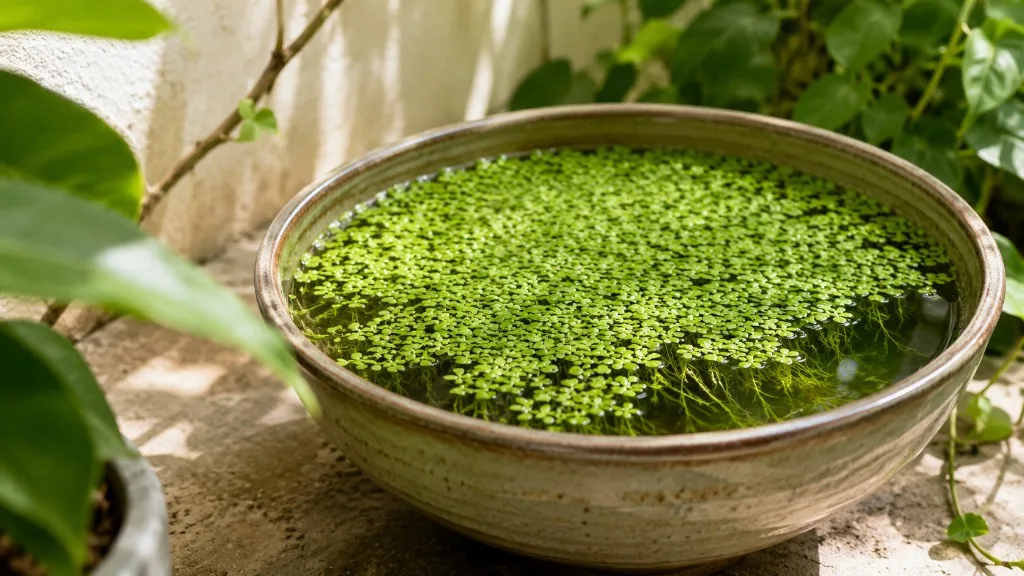
Duckweed Fertilizer Guide: Aquarium and Pond Dosing
Duckweed Fertilizer Guide: Aquarium and Pond Dosing
Duckweed looks like the simplest plant in your tank - tiny green dots that spread without asking permission. That simplicity is misleading. Duckweed is one of the fastest nutrient processors in freshwater aquatics, pulling nitrogen, phosphorus, and potassium directly from the water column through its fronds and hair-thin roots. Feed it correctly and you get a living biofilter that scrubs ammonia, shades fry, and outcompetes algae. Feed it wrong - or fail to harvest what it absorbs - and you get green water, gasping fish, or a mat so thick it blocks light to everything below.
This guide covers exactly how to fertilize duckweed in aquariums and ponds: when liquid ferts help, when fish waste is enough, how N/P uptake actually works, and how to avoid the overdosing mistakes that turn a helpful floater into a water-quality problem.
If symptoms persist, see the Yellow Leaves on Duckweed guide.
Why Duckweed Nutrition Works Completely Differently Than Houseplants
Houseplants eat through roots buried in soil. Duckweed has no soil. It lives entirely in water, and every surface of its frond - the tiny leaf-like body, typically 1 to 8 millimeters across depending on species - can absorb dissolved nutrients. The World Bank’s Duckweed Aquaculture handbook notes that duckweed fronds take up nutrients through all exposed surfaces, not through a dedicated root system the way terrestrial plants do.
That architecture changes every fertilizer decision you make. Granular garden fertilizer, slow-release pellets, and root tabs are essentially irrelevant to duckweed. What matters is what is dissolved in the water around the plant: nitrate, ammonium, phosphate, potassium, iron, and trace minerals. A liquid aquarium fertilizer added to the water column reaches duckweed within minutes. A buried root tab might as well be on another planet.
Duckweed also grows at a speed most aquarists underestimate. Under strong light and adequate nutrients, common species like Lemna minor can double their biomass every two to three days. That growth rate is not cosmetic - it is a direct measure of how fast the plant is pulling nutrients out of your water. A dense duckweed mat in a stocked tank is not just decoration. It is an active nutrient sink, and that sink only works if you manage what goes in and what comes out.
How Duckweed Absorbs Nitrogen, Phosphorus, and Potassium
Understanding duckweed’s uptake mechanics helps you dose smarter and diagnose problems faster. Unlike rooted stem plants that split their feeding between substrate and water, duckweed is almost entirely a water-column feeder. Nutrients diffuse into the frond tissue and are assimilated into new biomass - more fronds, longer roots, higher protein content.
Research published in Plants (MDPI) on six duckweed species found nearly identical nitrogen consumption patterns across genera including Spirodela, Landoltia, Lemna, and Wolffia. All preferred ammonium as their primary nitrogen source and only shifted toward nitrate when ammonium was depleted. Phosphorus uptake tracked closely with growth rate, and a 2024 meta-analysis in Journal of Environmental Management confirmed that duckweed biomass growth peaks when nitrogen exceeds 5 mg N per liter and phosphorus exceeds 1 mg P per liter, with a recommended N:P ratio of approximately 15:1.
Ammonium vs Nitrate: What Duckweed Prefers
If you keep a stocked aquarium, duckweed’s ammonium preference is good news. Fish waste, uneaten food, and detritus break down into ammonia, which beneficial bacteria convert partly to nitrite and then nitrate. But before that full conversion happens, ammonium is available in the water column - and duckweed grabs it first.
Studies on Lemna minor in phytoremediation systems report high removal efficiencies for ammonia and phosphate under controlled conditions. In a typical community tank, that means duckweed is actively pulling the nitrogen forms that matter most for fish health, not passively floating while nutrients pass by.
The practical implication: in a well-stocked tank with moderate duckweed coverage, you may never need a nitrogen supplement. Adding Seachem Flourish Nitrogen or a comprehensive fert with significant ammonium content on top of an already-loaded system can push dissolved nitrogen past what the plant community - including algae - can consume. Excess nitrogen does not vanish. It feeds algae.
When ammonium is scarce - common in lightly stocked tanks, quarantine setups, or shrimp-only systems with minimal feeding - duckweed switches to nitrate. Yellowing or stunted growth in an otherwise healthy tank often signals that both forms are running low, not that the plant is diseased.
Surface Absorption Through Fronds and Roots
Each duckweed frond is a nutrient intake surface. The single root (sometimes two in Lemna) dangles below the frond and absorbs dissolved minerals, but the frond itself does the heavy lifting. This is why surface coverage matters so much for fertilization outcomes.
At low density, duckweed has maximum contact with nutrient-rich water and often shows the fastest per-frond growth. At very high density, fronds stack on each other, shading lower layers and creating stagnant pockets where oxygen drops and decay accelerates. The plant may look lush while the water underneath turns foul - a classic sign that fertilization and harvest are out of balance.
Iron, manganese, and potassium follow the same water-column pathway. Iron deficiency shows as pale or yellow-green fronds with slower doubling times. Potassium deficiency is less common in fish tanks but can appear in very clean, low-nutrient systems where stem plants compete aggressively for the same dissolved minerals.
Does Duckweed Need Fertilizer in an Aquarium?
The honest answer: usually not in a stocked fish tank, often yes in a lightly stocked or plant-focused setup, and almost always yes in a nutrient-poor pond filled with rainwater.
Duckweed is a biofilter first and a decoration second. In a community aquarium with regular feeding, fish waste supplies enough nitrogen and phosphorus to sustain a moderate duckweed population without any added fertilizer. Many keepers introduce duckweed specifically to reduce nitrate - and then wonder why it exploded after they also started dosing a comprehensive liquid fert on a high-tech schedule.
The decision tree is straightforward. If your tank has three or more small-to-medium fish per 10 gallons, regular feeding, and nitrate readings above 10 ppm between water changes, duckweed does not need supplemental fertilizer. It needs harvesting. Scoop out a third to half of the mat weekly and the remaining plants will continue pulling nutrients from fish waste at a sustainable rate.
If your tank is lightly stocked - a betta solo, a shrimp colony with minimal feeding, a breeding box, or a quarantine tank - duckweed may yellow, shrink, or fail to spread. That is a nutrient deficiency signal, and a diluted liquid aquarium fertilizer dosed at half the label rate once or twice weekly is appropriate.
If you run a high-light, CO2-injected planted tank where duckweed is competing with hungry stem plants and carpeting species, treat duckweed like any other plant: dose a comprehensive liquid fert on your normal schedule, but watch phosphate and nitrate test results closely. Duckweed will consume what it can; the rest is available to algae.
When Your Tank Already Feeds Duckweed
Fish food is the primary fertilizer in most aquariums. Every flake, pellet, or frozen cube that enters the tank eventually breaks down into nitrogen and phosphorus compounds whether a fish eats it or not. A moderately stocked 20-gallon community tank can produce enough dissolved nutrients to support a thick duckweed mat without any bottled product.
Turtle tanks are an extreme version of this equation. Turtles are messy eaters with high-protein diets, and their waste loads tanks with nitrogen fast. Duckweed in a turtle enclosure often needs no added fertilizer at all - it needs aggressive harvesting and possibly a feeding ring to keep the mat from covering the entire surface and blocking basking lamps or filter intakes. Adding aquarium fertilizer to a turtle tank is one of the fastest ways to trigger an algae bloom or push ammonia readings upward.
Goldfish and koi ponds follow the same logic at larger scale. Duckweed in an outdoor pond with fish typically self-fertilizes from waste. Your job is coverage management and periodic scooping, not dosing. The exception is a new pond filled with clean rainwater or well water with near-zero nutrient content - there, duckweed may stall until the system matures or you add a controlled nutrient source.
Shrimp tanks occupy a middle ground. Neocaridina and Caridina colonies produce less waste per capita than fish, but biofilm and detritus still supply some nutrients. If duckweed spreads slowly and stays pale despite good light, a micronutrient-focused liquid fert like Seachem Flourish (trace elements only, no macronutrients) at half dose weekly often restores color without risking an ammonia spike.
Liquid Aquarium Fertilizers for Duckweed
When your tank genuinely needs supplemental feeding, liquid fertilizers are the only category that makes sense for duckweed. Choose based on what your water tests show, not on what works for your rooted plants alone.
Comprehensive Liquid Ferts: Seachem, Tropica, and Thrive
Comprehensive fertilizers contain macronutrients (N, P, K) plus micronutrients (iron, manganese, boron, etc.) in one bottle. They are the right choice when duckweed shows overall stunting or yellowing and your nitrate reads below 5 ppm.
Tropica Premium Nutrition is designed for tanks with fish - it contains macronutrients at levels meant to supplement, not replace, fish waste. For duckweed in a stocked tank, Premium is usually the safer pick because it adds trace elements and moderate nitrogen without pushing a system that is already nutrient-rich into overload.
Tropica Specialised Nutrition targets low-to-no-fish tanks and shrimp setups. It carries a higher macronutrient load, with roughly 50% of its nitrogen in ammonium form and 50% as nitrate according to manufacturer data confirmed by hobby testing communities. Specialised works well when duckweed is pale in a clean tank, but overdosing in a stocked system can elevate ammonia readings on test kits and fuel algae.
Seachem Flourish is a trace-element supplement without macronutrients. It will not fix a nitrogen or phosphorus deficiency on its own, but it corrects iron and micronutrient gaps that cause pale fronds in otherwise fed tanks. Pair it with Seachem Flourish Nitrogen, Flourish Phosphorus, and Flourish Potassium only when water tests confirm those specific deficiencies.
NilocG Thrive and Aquarium Co-Op Easy Green are all-in-one macros-plus-traces products popular in the planted tank community. Both work for duckweed at the labeled low-tech dose. Thrive+ is formulated for soft water and shrimp; ThriveS is the standard all-in-one. Easy Green is straightforward for beginners - dose per gallon, watch growth response, adjust.
Start at half the labeled dose regardless of brand. Duckweed responds to small, consistent inputs better than large single doses. Double the dose only if fronds stay pale after two weeks and nitrate remains below 5 ppm.
Iron, Potassium, and Micronutrient Supplements
Not every yellow duckweed mat needs more nitrogen. If new fronds emerge pale yellow-green but older fronds retain some color, suspect iron deficiency first. A half-dose of Seachem Flourish or API Leaf Zone (iron-heavy) twice weekly usually corrects this within one to two doubling cycles.
Potassium deficiency is rarer in fish tanks but shows as pinhole damage or brittle fronds in very clean systems running aggressive stem-plant fertilization schedules. Seachem Flourish Potassium at half dose addresses it without touching nitrogen levels.
Avoid foliar sprays - they are irrelevant to submerged duckweed. Avoid root tabs entirely for duckweed management. If you use root tabs for other plants, keep them buried deep; tabs that leak ammonium into the water column can spike ammonia readings and accelerate duckweed growth past the point where you can harvest fast enough.
Pond Nutrient Management for Duckweed
Outdoor duckweed culture operates on different math than indoor aquariums. Ponds have larger water volumes, natural inflows, sunlight that dwarfs aquarium LEDs, and wildlife inputs from insects, bird droppings, and runoff. Nutrient management is about maintaining a steady supply without triggering eutrophication - the nutrient overload that causes algal blooms, oxygen crashes, and fish kills.
The World Bank duckweed cultivation guidelines recommend maintaining Total Kjeldahl Nitrogen above 20 to 30 mg/L for high growth rates and crude protein content in production systems. Recreational garden ponds do not need those production-level concentrations, but the principle holds: duckweed in rainwater-filled ponds with no fish and no runoff will starve without added nutrients.
Organic vs Mineral Fertilizers in Outdoor Ponds
Organic sources - compost tea, diluted livestock manure, pond sediment from a mature system - release nutrients slowly and support duckweed growth in food-production and permaculture setups. Research on Lemna minor fertilized with goat manure at 2 g/L reported the fastest growth rates compared to chicken manure and commercial organic blends, with nitrate around 2 ppm, ammonia up to 2.7 ppm, and phosphate around 7.7 ppm in the water column.
The risk with organics is unpredictability. Manure that is too fresh dumps ammonia faster than duckweed and bacteria can process it, especially in small ponds without aeration. Always pre-dilute organic inputs, introduce them gradually, and maintain aeration. Never dump raw manure into a pond with fish.
Mineral fertilizers - agricultural urea, triple superphosphate, muriate of potash - give precise control in commercial duckweed farming. The World Bank handbook describes broadcasting or dissolving fertilizers directly into the pond channel, with pH maintained between 6.5 and 8.0 for optimal uptake. Home pond keepers should use aquarium-grade liquid fertilizers at scaled-up doses rather than agricultural chemicals unless they have test equipment and experience managing large-scale nutrient loads.
For most backyard ponds with fish, neither organic nor mineral supplementation is necessary. Manage duckweed by harvesting excess weekly and letting fish waste drive growth. Supplement only if the mat thins despite warm temperatures and Duckweed light guide - a sign the pond is nutrient-limited rather than overfed.
Signs Duckweed Is Underfed or Overfed
Duckweed telegraphs nutrient status through color, size, and spread rate. Learning to read the mat saves you from guessing whether to dose or scoop.
Underfed duckweed shows small, pale yellow-green fronds, slow spreading, and thin roots. Individual plants may shrink below their species’ normal size. In extreme deficiency, fronds become translucent and sink. Check nitrate first - if it reads 0 to 5 ppm in a lightly stocked tank, add a half-dose comprehensive liquid fert. If nitrate is adequate but color stays pale, test iron or add a trace supplement.
Overfed duckweed - or more accurately, a system overfed with nutrients that duckweed cannot remove fast enough - shows a different pattern. The mat becomes impossibly dense within days. Fronds are deep green and large, but lower layers turn brown and slimy. Green water algae may appear alongside or beneath the mat. Fish gasp at the surface, especially at night when the duckweed layer reduces gas exchange. Nitrate and phosphate test high despite heavy duckweed coverage.
The fix for overfed systems is not less duckweed - it is more harvesting plus less fertilizer input. Scoop aggressively, reduce or stop liquid fert dosing, increase surface agitation or aeration, and perform partial water changes if ammonia or nitrite spike. Duckweed cannot save a tank from unlimited nutrient input any more than a sponge can bail a flooding boat if you keep pouring water in.
How to Avoid Overdosing Fertilizer in Fish Tanks
Overdosing is the most common fertilizer mistake in duckweed tanks, and it is rarely the duckweed that suffers first. Fish and shrimp feel it before the plants show distress.
The core rule: match fertilizer input to what your plants and bacteria can consume within 24 to 48 hours. Duckweed consumes nutrients fast, but not infinitely fast. In a tank already producing nitrate from fish waste, adding a full-strength comprehensive fert every day creates surplus phosphate and nitrogen that algae exploit.
Dose on a weekly schedule for low-tech tanks and every-other-day to daily for high-tech setups - but only at rates calibrated to your test results. If nitrate stays above 20 ppm without fertilizer, you do not need nitrogen supplementation. If phosphate reads above 1 ppm consistently, skip phosphorus products entirely.
Increase surface agitation when running heavy fertilization with dense duckweed. A thick mat reduces oxygen diffusion into water. Pair this with a reliable filter and avoid letting the duckweed cover more than 60 to 70 percent of the surface for extended periods.
Never combine a nutrient spike with reduced water changes. Duckweed stores nutrients in its tissue, but the water column still holds dissolved fractions that algae and bacteria compete for. Regular partial water changes reset the system.
Reading Test Kits After Fertilizer Doses
Test kit interpretation trips up many keepers, especially with ammonium-containing fertilizers. Standard ammonia test kits detect both toxic NH3 and less-toxic NH4+ (ammonium). Fertilizers like Tropica Specialised and products containing urea or ammonium nitrate can produce a brief 0.25 to 0.5 ppm “ammonia” reading that reflects ammonium, not a true ammonia emergency - particularly in acidic to neutral pH water where ammonium dominates.
Context matters. If you dose a comprehensive fert and see a slight ammonia reading within an hour, but nitrite stays at zero and fish behave normally, reduce your next dose rather than panic. If ammonia persists above 0.5 ppm for more than 12 hours, nitrite climbs, or fish gasp, perform an immediate 30 to 50 percent water change and stop dosing until parameters stabilize.
Track nitrate and phosphate weekly in fertilized duckweed tanks. Nitrate between 10 and 25 ppm is healthy in stocked systems. Phosphate below 1 ppm is ideal for algae control; above 2 ppm with strong lighting is an algae invitation regardless of how much duckweed you grow.
Harvesting as the Missing Step in Duckweed Nutrition
Here is the concept most fertilizer guides skip: duckweed only removes nutrients from your system when you physically remove harvested biomass.
While fronds live and grow, they hold nitrogen and phosphorus in plant tissue. At high density, dead fronds sink and decompose, releasing those nutrients back into the water. A mat that looks like it is cleaning your tank can become a nutrient recycling loop if you never scoop.
Harvest weekly at minimum in fast-growing setups. Use a fine mesh net, skimmer, or simply drag a cup across the surface. Compost harvested duckweed - it makes excellent garden fertilizer with 25 to 45 percent protein content by dry weight. Feed excess to goldfish, tilapia, chickens, or turtles if you keep them.
In phytoremediation and aquaculture research, nutrient removal rates are calculated per square meter of surface coverage per day - and those rates assume regular biomass removal. Your aquarium follows the same physics at smaller scale. Fertilizing duckweed without harvesting is like filling a bucket with a hose while the drain is closed.
Target keeping roughly 30 to 50 percent surface coverage for aquarium biofiltration benefits. Let it grow to 70 percent, harvest back to 30, and repeat. That cycle maximizes nutrient uptake without choking gas exchange or tank lighting.
Seasonal and Tank-Type Adjustments
Duckweed growth rate tracks temperature and light more closely than most aquarium plants. In the 15 to 30°C (59 to 86°F) range, growth is robust. Below 15°C, doubling slows dramatically - reduce or stop fertilizer in unheated tanks during winter unless you maintain tropical temperatures.
Light drives nutrient demand. Under strong aquarium LEDs or direct pond sun, duckweed consumes nutrients faster and needs either more fish waste or more fertilizer input. Under dim light, nutrient demand drops - continuing a high-tech fert schedule in a low-light tank builds excess nutrients that algae consume instead.
Quarantine and hospital tanks often run bare with minimal stocking. Duckweed added for nitrate control or fry cover may need Specialised-grade comprehensive ferts at quarter to half dose because there is no fish waste baseline.
Breeding boxes and fry grow-out tanks benefit from duckweed’s ammonia uptake, but fry produce little waste early on. Start without fertilizer; add half-dose trace supplement only if fronds pale after two weeks.
High-tech planted tanks with CO2 injection increase duckweed growth rate and nutrient demand simultaneously. Match your fert schedule to the general planted tank routine, but prioritize harvest management - CO2-driven duckweed can cover a surface in 48 hours.
Common Duckweed Fertilizer Mistakes
Dosing comprehensive ferts in a heavily stocked tank without testing. If nitrate is already high, you are feeding algae, not helping duckweed. Test before you dose.
Assuming duckweed prevents ammonia spikes from overfeeding. Duckweed absorbs ammonium, but a massive overfeed overwhelms any plant mat. Fertilizer overdosing on top of overfeeding compounds the problem.
Using agricultural or garden fertilizers. These contain urea, ammonium sulfate, and phosphate salts at concentrations designed for soil, not water. A single capful can crash a tank.
Ignoring harvest because the mat looks healthy. Dense green duckweed with rotting undersides is a nutrient time bomb. Scoop before it scoops itself - by sinking and decomposing.
Chasing yellow duckweed with more nitrogen when the real problem is insufficient light. Duckweed needs moderate to strong light to utilize nutrients. Pale, leggy fronds stretching toward a dim bulb will not green up with fertilizer alone.
Confining duckweed with no nutrient access. A feeding ring that packs plants too tightly into one corner reduces their contact with the water column and creates dead zones. Give the mat room to spread within its zone.
Building a Practical Duckweed Fertilizer Routine
Pull the threads together into a routine you can actually run week to week.
Step 1: Test your baseline. Before adding any fertilizer, measure ammonia, nitrite, nitrate, and optionally phosphate. Note stocking level, feeding frequency, and how much surface the duckweed currently covers.
Step 2: Decide if you need to dose at all. Stocked tank with nitrate above 10 ppm: no macronutrient fertilizer needed; harvest weekly. Lightly stocked or shrimp tank with nitrate below 5 ppm: dose a comprehensive liquid fert at half strength once or twice weekly. Pond with fish: harvest only unless the mat thins in summer.
Step 3: Choose the right product category. Stocked aquarium: Tropica Premium or trace-only Seachem Flourish. Clean low-fish tank: Tropica Specialised, Easy Green, or Thrive at half dose. Confirmed iron deficiency: add iron supplement without extra nitrogen.
Step 4: Dose small and observe. Start at half label strength. Wait one week. Watch frond color, spread rate, and test kit readings. Increase only if plants stay pale and nitrate remains low.
Step 5: Harvest on schedule. Every week, remove enough duckweed to restore 30 to 50 percent surface coverage. Compost or feed the harvest. This step completes the nutrient removal cycle.
Step 6: Re-test monthly. Adjust dose up or down based on nitrate and phosphate trends, seasonal temperature shifts, and changes in stocking or feeding.
That six-step loop - test, decide, choose, dose, harvest, re-test - keeps duckweed working as a biofilter instead of a floating algae farm.
Conclusion
Duckweed fertilizer logic inverts almost everything you know from terrestrial gardening. There is no soil to feed, no root zone to target, and no slow-release pellet that makes sense. Every nutrient decision happens in the water column, and the plant’s extraordinary appetite for ammonium and phosphate makes it one of the most efficient biofilters you can add to an aquarium or pond - provided you respect the other half of the equation: harvest.
In a stocked fish tank, duckweed rarely needs bottled fertilizer. Fish food already supplies the nitrogen and phosphorus that fuel growth, and your main job is scooping excess before the mat chokes the surface. In lightly stocked, shrimp, or quarantine setups, a half-dose liquid aquarium fertilizer fills the gap without the ammonia risks that come from heavy-handed dosing. In outdoor ponds, organic or mineral nutrients matter only when the water itself is nutrient-poor - most fish ponds self-fertilize through waste.
The mistakes that hurt tanks are almost always overdosing, not underdosing. Comprehensive ferts in already-rich systems, agricultural products in aquariums, and dense mats that never get harvested create algae blooms, gas exchange problems, and false confidence that duckweed makes water quality bulletproof. It does not. It makes water quality manageable if you match input to uptake and remove biomass on a schedule.
Test your water, dose conservatively, harvest weekly, and read the fronds. Deep green with steady spread means the system is balanced. Pale and slow means add carefully. Impossibly dense with slime underneath means scoop first and fertilize later.
When to use this page vs other Duckweed guides
- Duckweed overview - Start here for whole-plant context before deep-diving this topic.
- Duckweed problems hub - Jump to symptom-specific fix guides when this care topic does not resolve the issue.
Related Duckweed guides
- Duckweed overview
- Duckweed watering
- Duckweed light
- Duckweed soil
- Duckweed propagation
- Duckweed repotting
- Duckweed problems
Related tool
Try the Fertilizer Dilution Calculator with duckweed pre-selected to estimate needs for your setup.