Duckweed Propagation: Budding, Division, and Mat Thinning
Duckweed Propagation: Budding, Division, and Mat Thinning
Duckweed Propagation: Budding, Division, and Mat Thinning
Duckweed is the plant hobbyists either love for its speed or dread for the same reason. Drop a teaspoon of green specks on a still water surface, give them light and nutrients, and within weeks you can have a continuous mat that shades the tank, feeds turtles, and absorbs nitrate faster than almost anything else floating. There is no rooting hormone, no substrate prep, and no weeks-long wait for a cutting to callus. Propagation is built into the plant’s body.
That speed is also where confusion starts. Some keepers assume duckweed needs a special technique - stem cuttings, fertilizer baths, CO2 injection - and stall when none of that applies. Others add a handful, watch nothing happen for ten days, and conclude the culture died when the fronds were simply adjusting or the surface was too crowded. Still others let a mat grow unchecked until it blocks light, crashes dissolved oxygen at night, and then blame propagation failure when the real problem was harvest timing.
This guide covers how duckweed actually propagates through vegetative budding, how to start a culture from a handful, when and how to divide mats and thin dense growth, and the practical checks that keep propagation productive instead of chaotic in aquariums, ponds, and turtle setups.
If symptoms persist, see the Yellow Leaves on Duckweed guide.
Why Duckweed Spreads Faster Than Almost Any Aquarium Plant
Most aquarium plants propagate by fragmentation, runners, or side shoots that take days to weeks to establish. Duckweed skips that waiting period because each frond is a complete plant. A single Lemna or Spirodela frond carries its own photosynthetic tissue, root (in most genera), and the meristematic tissue needed to produce daughter fronds without ever detaching from the water surface. Under favorable conditions, biomass can double every 16 to 48 hours in warm, nutrient-rich water - a range supported by aquarium hobby references and extension-style aquatic weed profiles. In cooler or dimmer conditions, doubling slows to several days, but the plant remains among the fastest clonal spreaders in freshwater.
That biology explains why duckweed feels effortless once it starts and impossible to stop once it succeeds. You are not coaxing roots from a cutting; you are managing exponential clonal growth. The propagation skill is not “getting it to grow” but starting clean, giving fronds room to bud, and harvesting before overcrowding reverses the growth curve. Treat duckweed like a micro-livestock culture, not like a slow ornamental stem plant, and the whole process becomes predictable.
How Duckweed Reproduces Through Vegetative Budding
Duckweed belongs to the family Lemnaceae (often grouped within Araceae in modern taxonomy) and reproduces almost exclusively by vegetative budding in home aquariums and ponds. Daughter fronds form in a budding pouch on the parent frond - along the lateral margins in Lemna, Spirodela, and Landoltia, or at the basal end in Wolffia and Wolffiella. The daughter remains attached while it matures, develops its own tiny rootlet where applicable, and then separates to become an independent frond that immediately begins producing its own daughters.
Research summarized in a PMC review of duckweed cultivation notes that Lemnoideae genera have two meristematic regions in the mother frond, while Wolffioideae has a single meristematic pouch - a detail that matters mainly for identification, not for hobby propagation technique. What matters practically is the clonal cycle: parent frond → attached daughter fronds → separation → new parents. Aquarium references commonly describe two daughter fronds per parent as the typical pattern, with scientific observations recording far higher counts under ideal lab conditions - a parent frond can produce many sequential daughters over its lifetime of roughly one to two months.
Sexual reproduction through tiny flowers and seeds does occur in duckweeds, but it is rare in captivity and irrelevant to the propagation methods used in tanks and ponds. You will almost never need to think about duckweed seeds to multiply the plant at home. Budding does the work.
The Three Propagation Methods Every Hobbyist Should Know
Despite the exotic-sounding biology, duckweed propagation in practice collapses into three methods. Most keepers use all three over time without labeling them.
Passive budding in an existing tank or pond
This is the default. Add healthy fronds to suitable water with adequate light, and budding proceeds automatically. No cutting, no planting, no hormone. Your job is to maintain water quality, prevent surface agitation from splashing filters, and remove excess before the mat self-shades. Passive budding is how duckweed colonizes a tank after a single introduction hidden on another plant or carried in on wet gear.
Manual division and mat separation
When a mat becomes a solid green carpet, manual division helps restart vigorous budding at the edges. Gently break the mat into smaller clumps with a net or by scooping and rinsing in a separate container, then redistribute fronds across a wider surface area. Each separated clump resumes exponential growth from its margins. Division is not strictly required for propagation - the plant buds whether you touch it or not - but it is the fastest way to reset overcrowded cultures and populate a second tank from the first.
Starting a brand-new culture from a handful
Starting fresh means introducing a small sample - often described as a teaspoon to tablespoon of fronds, or roughly a loose handful rinsed from a source culture - into a clean container of matched water. This is the method used when setting up a new aquarium, quarantining before pond introduction, or building a dedicated turtle food grow-out tub. The handful is not a magic quantity; it is a practical minimum that contains enough genetically diverse clonal lines (if sourced well) and enough fronds to survive routine handling losses while still budding quickly.
Starting a Duckweed Culture from a Handful: A Step-by-Step Walkthrough
Starting duckweed is simpler than starting most aquarium plants, but sloppy sourcing and parameter shock kill more cultures than biology does.
First, source clean fronds. Buy from a reputable aquarium shop, trade with a hobbyist whose tank you trust, or collect from your own established culture - not from stagnant drainage ditches or ponds treated with algaecide or copper. Rinse the handful gently in a bowl of dechlorinated water, discarding debris, dead brown fronds, and hitchhikers you do not want (snail eggs, other algae). If the duckweed arrived on another plant, isolate it before it touches your main tank.
Second, match the destination water. Temperature shock stalls budding. Float the rinsed fronds in a cup of your tank or tub water for twenty to thirty minutes if there is a major temperature difference between source and destination. pH does not need to be exact - most duckweed tolerates roughly pH 6.5 to 7.8 in community and turtle setups - but avoid introducing fronds from hard alkaline pond water directly into soft acidic tank water in one step if you can acclimate gradually.
Third, choose a still surface. Duckweed requires calm water. Strong surface agitation from HOB filter outflows, airstones directly under the mat, or fountain spray will push fronds underwater and drown them. Baffle outflows, redirect spray bars downward, or confine duckweed to a calm side of the tank or a separate tub linked by gentle circulation.
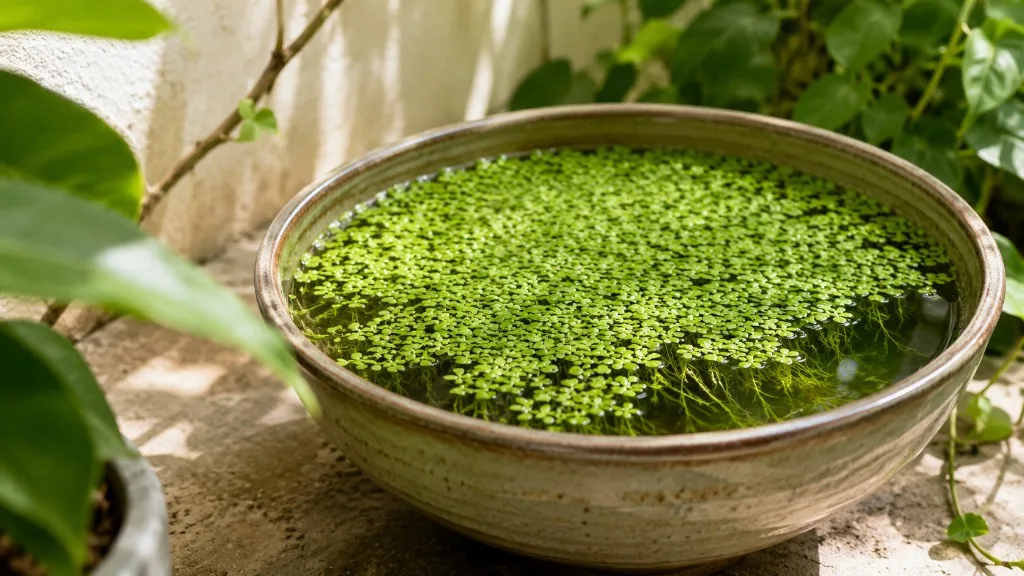
Fourth, spread the handful thinly. A common mistake is dumping the entire sample in one corner. Spread fronds across as much surface as practical so each clump receives light. Density should look like scattered green confetti, not a solid pancake, on day one.
Fifth, provide light and nutrients. Duckweed does not use substrate; it feeds from the water column. Medium to strong light - roughly the same range you would use for other floating plants - drives photosynthesis and budding. In a stocked aquarium, fish waste and detritus often supply enough nitrogen and phosphorus. In a bare tub, a dilute liquid fertilizer or a few snails and gentle organic input prevents the pale, slow-growing “starvation” phase where fronds stay tiny and roots elongate searching for nutrients.
Sixth, wait without panic. New cultures sometimes sit visually unchanged for several days while fronds acclimate. Look for bright green color, new daughter fronds attached at margins, and gradual surface coverage as success signals. Brown, waterlogged, or sinking fronds should be skimmed out promptly so they do not rot and foul the water.
Thinning Dense Mats and Harvesting Without Collapsing the Culture
Thinning is propagation management, not failure. A dense duckweed mat blocks light to itself, to plants below, and to fish that need a day-night light rhythm. The underside of a thick mat can hold decaying fronds, and very heavy coverage reduces gas exchange at the surface - a real concern in small tanks and turtle enclosures.
Harvest by skimming one-third to one-half of the surface with a fine net or by hand, not by removing every frond. Leave enough scattered coverage that the remaining plants continue budding from open edges. Harvest on a schedule - weekly in fast-growing warm setups, less often in cool ponds - rather than waiting for an emergency clear-cut.
After skimming, break up remaining clumps lightly by swirling water in a bucket or shaking the netful before returning a portion. This mimics manual division and prevents the mat from immediately re-knitting into a single thick layer. If you harvest for turtle food or compost, take the thickest sections first; those are the oldest and most likely to shade younger fronds underneath.
If you need to reset a crashed or contaminated culture, harvest all visible duckweed, perform a partial water change, clean the surface area, and reintroduce a small rinsed sample from quarantine or a backup tub. Duckweed rebounds quickly from a clean restart if the underlying water issue - ammonia spike, pesticide exposure, extreme temperature - has been corrected.
Setting Up a Dedicated Grow-Out Tub or Propagation Container
Many experienced keepers run a separate grow-out tub for duckweed, especially when turtles graze faster than a display tank can replace coverage. A shallow plastic tub, spare aquarium, or pond section with six to twelve inches of water depth, a simple light fixture, and dechlorinated water is enough. No substrate required.
Link the tub to your main system or keep it standalone. Standalone tubs are easier to harvest from and isolate if snails, algae, or contaminants appear. Linked systems share water parameters but require a way to prevent duckweed from traveling back through overflow lines into filters - fine mesh intake covers help.
Use the grow-out tub as your propagation bank: harvest heavily from the tub, feed animals or fertilize garden beds (where legally appropriate), and periodically seed the display tank with a thin scoop from the tub when coverage thins. Rotating between display and grow-out prevents total loss if one container crashes.
Light, Temperature, and Water Quality for Rapid Clonal Growth
Duckweed is often labeled “easy,” but easy does not mean indifferent. Budding rate tracks light, temperature, and dissolved nutrients closely.
Light: Medium to high intensity produces compact, fast-budding fronds. Low light stretches fronds, reduces budding frequency, and encourages longer roots - a stress response visible when plants search for nutrition or light. Outdoor ponds in Duckweed light guide grow aggressively; indoor tanks need deliberate fixture placement. The Royal Horticultural Society notes that duckweed spreads fastest in full sun, which is why pond keepers use shade from marginals and lilies partly as propagation control.
Temperature: Most common aquarium duckweed thrives roughly 15 to 32 °C (60 to 90 °F), with fastest clonal doubling in the upper warm range. Cold water slows budding dramatically; some species form dormant turions when stressed by cooling (more on that below). Sudden heater failures or cold drafts onto an open tub can stall a culture overnight.
Water quality: Duckweed absorbs ammonium, nitrates, and phosphates effectively - one reason it appears in nutrient-rich ponds. Extremely clean, ultra-low-nutrient water can support duckweed but growth may lag until a minimal nutrient source appears. Conversely, toxic contaminants - copper-based medications, algicides, pesticide runoff - kill fronds quickly. Never introduce duckweed from unknown outdoor water into a medicated tank without quarantine.
Surface calm: Still water is non-negotiable for floating propagation. Adjust filters before blaming “bad genetics.”
Low-tech versus high-tech aquarium setups
In low-tech community tanks, duckweed often propagates passively with no CO2 injection and minimal fertilizer. Nitrate from stock levels the culture. The main tasks are thinning and keeping filter flow off the surface.
In high-tech planted tanks, duckweed still propagates vegetatively the same way, but CO2 injection and strong light can accelerate doubling until harvest becomes a weekly chore. Some aquascapers exclude duckweed entirely because passive budding outruns design control. If you want duckweed in a high-tech tank, confine it to a breeding box or tub on the surface rather than free-floating across the aquascape.
Species Differences: Lemna, Spirodela, Wolffia, and Landoltia
“Duckweed” in shops is usually Lemna minor (common duckweed) or Landoltia punctata (formerly Spirodela punctata), but Spirodela polyrhiza (greater duckweed), Lemna gibba (inflated duckweed), and Wolffia (watermeal - rootless, grain-sized) appear in trade and wild collections. Propagation method is the same - budding - but growth rate, frond size, and mat texture differ enough to notice.
Lemna fronds are small, flat, typically one to a few millimeters wide, with a single root hair. Mats feel fine and velvety. Spirodela and Landoltia produce larger fronds with multiple roots and red anthocyanin pigments on undersides; mats thicken faster and are easier to net in bulk. Wolffia and Wolffiella are microscopic compared to Lemna; cultures look like green dust and propagate as quickly or faster but are harder to harvest cleanly without clouding water.
Identify what you have if propagation behaves unexpectedly. Watermeal mistaken for common duckweed leads to “I added a handful and it vanished” reports - Wolffia is easily pushed under by surface flow and looks insignificant until density builds. A hand lens helps.
Turions, Rare Flowering, and What You Can Safely Ignore at Home
Some duckweed species, including Lemna turionifera, produce turions - small, starch-filled, often rootless daughter structures that sink to the bottom when conditions deteriorate and later refloat when warmth and light return. Turions are a dormancy strategy, not a propagation method hobbyists rely on, but they explain duckweed “disappearing” over winter in outdoor ponds and returning in spring.
Sexual flowering in duckweeds produces tiny flowers in specialized pouches, followed by seeds in rare circumstances. Indoor cultures essentially never depend on this cycle. If your goal is aquarium or turtle-tank propagation, ignore seeds and turions unless you are doing deliberate outdoor pond ecology or research. Focus on frond budding and mat management.
Quarantine and Clean Sourcing Before You Add Duckweed
Duckweed hitchhikes. The Royal Horticultural Society recommends quarantining new pond plants in a bucket of water for several weeks, skimming off duckweed repeatedly until none reappears, before introducing plants to a pond. The same logic applies to aquariums: a “free plant” duckweed sample can carry snail eggs, planaria, hydra, algae spores, or pesticide residues from supplier tanks.
Quarantine steps that work:
- Hold new duckweed in a separate container with matched temperature and light for two to three weeks minimum.
- Rinse and replace water every few days, discarding bottom debris.
- Skim and inspect under light for unwanted organisms.
- Never add pond-collected duckweed directly to a display tank if the pond receives runoff, herbicide drift, or copper treatments.
For turtle and fish safety, source duckweed grown without pesticides and not recently exposed to copper-based fish medications. Rinse thoroughly. Duckweed is a supplemental food, not a complete diet, for most turtles - but clean propagation prevents introducing toxins along with protein.
Propagation in Aquariums, Outdoor Ponds, and Turtle Tanks
Aquariums: Passive budding dominates. Introduce a thin handful, baffle surface flow, harvest weekly once established. Duckweed competes with algae for nutrients and can improve water quality when thinned regularly.
Outdoor ponds: Propagation accelerates in summer warmth and full sun. The RHS describes daughter plants budding every two to three days in warm summer conditions, leading to full surface cover if unchecked. Use floating booms, netting, and competitive floating plants like waterlilies to manage spread. Harvest for compost or disposal - not into natural waterways.
Turtle tanks: Propagation must outpace grazing. A dedicated grow-out tub is the reliable approach; the display tank alone often cannot keep up with hungry sliders and cooters. Harvest from the tub, rinse, and feed. If turtles eat faster than budding replaces cover, increase light and nutrients in the tub rather than overstocking the display tank with excess duckweed that decays when uneaten.
Growth Rate Expectations: How Fast Is “Fast” for Duckweed?
Growth rate language is often exaggerated online, but the underlying truth is real: duckweed is among the fastest biomass doublers in the plant kingdom under optimal conditions.
Reported doubling times vary by source and environment - roughly 16 to 48 hours in warm, nutrient-rich indoor cultures; about two to three days per doubling in favorable pond summer conditions per RHS-style summaries; and two to three days in broader scientific reviews citing Culley and Epps-era duckweed productivity research. Cool water, low light, or thick self-shading mats push doubling toward a week or longer.
Practical expectations for home setups:
- First week after introduction: acclimation, modest spread, visible daughter fronds on parent margins.
- Weeks two to four in a warm, lit tank: noticeable surface coverage from a teaspoon start if thinned occasionally.
- Mature culture: weekly harvest required in high-light, nutrient-available systems.
Do not chase doubling statistics. Track whether coverage increases between scheduled thinnings. If it does, propagation is succeeding.
Common Mistakes That Stall or Crash Duckweed Cultures
Most propagation failures are environmental, not biological.
- Surface agitation drowning fronds. Fix filter outflow before buying more duckweed.
- Starting with dead or contaminated stock. Brown, fragmented, pesticide-exposed fronds do not recover. Restart from clean source.
- Dumping the entire handful in one thick clump. Self-shading stalls budding; spread fronds thinly.
- Never harvesting. Overcrowding reverses growth; thin before crisis.
- Medicating the tank with copper or algicides. Many treatments kill duckweed outright.
- Expecting instant coverage from Wolffia or tiny samples in huge tanks. Scale introduction to container size or start in a smaller tub and transfer.
- Ignoring quarantine. Hitchhiker pests and contaminants outweigh the convenience of unscreened free plants.
If budding stops but fronds look green, check light and temperature first, then nutrients, then surface calm. If fronds brown and sink, water quality or chemical exposure is the likely cause.
Containment, Invasive Risk, and Responsible Disposal
Duckweed’s propagation superpower is ecologically serious outside controlled containers. Fronds spread on waterfowl feet, boats, nets, and boots, and through connected water systems. Aquatic weed references document rapid colonization of nutrient-rich ponds from introductions of just a few fronds. Many regions treat duckweed introductions into natural waterways as undesirable or regulated.
Indoor hobby propagation is manageable. Outdoor keepers must bag harvested duckweed for landfill, compost only in closed systems that never drain to streams, and never release excess into wild ponds, lakes, or storm drains. Rinse gear between water bodies. Check local guidance before transporting duckweed between properties.
Invasive status does not mean you should avoid the plant indoors - it means propagation success carries disposal responsibility. Harvest is not waste; it is the control valve on exponential growth.
Conclusion
Duckweed propagation is not a mystery of hidden techniques. The plant multiplies by vegetative budding: each healthy frond produces daughter fronds that mature, detach, and repeat the cycle. You start a culture with a clean, rinsed handful on a calm, lit water surface matched to your tank or tub parameters. You keep propagation productive by thinning and dividing mats before overcrowding stalls growth, and by running a grow-out tub when turtles or heavy harvest demand outpace a display tank.
Passive budding does the biological work. Your work is sourcing clean stock, quarantining introductions, managing light and surface calm, and harvesting on schedule. Sexual seeds and turions rarely matter indoors. Species differences mainly affect frond size and harvest ease, not the core method.
Done thoughtfully, duckweed becomes a renewable floating crop - nitrate sink, shade tool, turtle supplement, and one of the few plants that genuinely delivers on the promise of endless free propagation from a single scoop. Done carelessly, it becomes a invasive hitchhiker or a rotting mat smothering a tank. The budding biology is the same in both outcomes; harvesting, thinning, and disposal decide which one you get.
When to use this page vs other Duckweed guides
- Duckweed overview - Start here for whole-plant context before deep-diving this topic.
- Duckweed problems hub - Jump to symptom-specific fix guides when this care topic does not resolve the issue.
Related Duckweed guides
- Duckweed overview
- Duckweed watering
- Duckweed light
- Duckweed soil
- Duckweed fertilizer
- Duckweed repotting
- Duckweed problems
Related tool
Try the Propagation Success Calculator with duckweed pre-selected to estimate needs for your setup.