Duckweed Light Needs: Full Sun, Grow Lights, and Shading
Duckweed Light Needs: Full Sun, Grow Lights, and Shading
Duckweed Light Needs: Full Sun, Grow Lights, and Shading
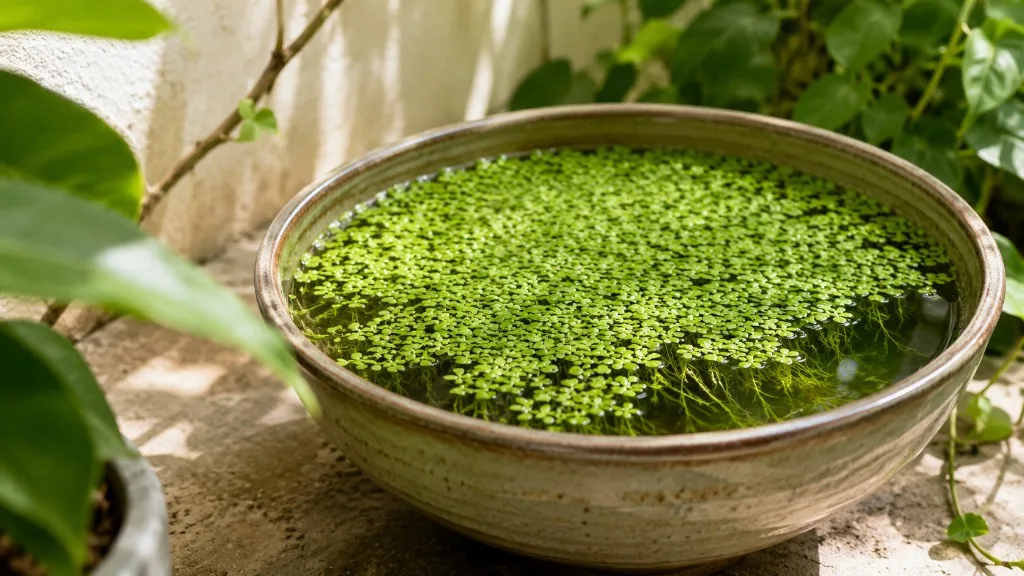
Duckweed looks deceptively simple - a scatter of green specks on still water - but light is the throttle on everything that follows. Give Lemna, Spirodela, Landoltia, or Wolffia enough photons and calm surface conditions, and a handful of fronds can become a solid green carpet in weeks. Starve the same plants of light and they linger as a thin, pale film that never delivers the dense mat turtle keepers, pond managers, and aquarium hobbyists are usually aiming for. The confusion online comes from duckweed’s reputation for surviving “anywhere.” Survival is not the goal. Density, growth rate, and the shading power of the mat all depend on how much usable light reaches those floating fronds - and on whether you are growing outdoors in full sun, indoors on a windowsill, or under dedicated grow lights in a controlled tank.
This guide focuses on the decisions that matter in real setups: how much light duckweed actually needs, why bright light builds dense mats, how outdoor full sun compares with indoor grow lights, what happens when duckweed shades everything below the surface, and how to read warning signs before slow growth or runaway coverage becomes a bigger problem than the original planting.
How Much Light Duckweed Actually Needs
Duckweed is among the smallest flowering plants on Earth, yet it behaves like a miniature solar panel factory. Each frond is essentially a flattened photosynthetic disc with a short root dangling into the water. Because the plant floats at the air-water interface, it receives light without the attenuation that submerged plants face. That position is a competitive advantage in bright conditions and a liability when the mat becomes thick enough to self-shade lower layers.
For practical home and pond cultivation, the baseline is moderate to bright light for at least six hours daily, with full sun producing the fastest, densest mats when water is calm and nutrients are available. The Royal Horticultural Society notes that duckweed grows and spreads fastest in full sun, while still tolerating a wide range when other conditions are acceptable. In aquariums, that translates to a well-lit tank - natural window light within about a foot of a bright window, or a full-spectrum LED running long enough each day to support visible plant growth elsewhere in the system. Duckweed does not need a substrate or special bulbs, but it does need consistent photon input; six hours is a floor, not a ceiling, for anyone trying to produce feed-grade density.
Research on industrial duckweed cultivation pushes the nuance further. Biomass and starch production in Lemna aequinoctialis increased with light intensity and longer photoperiods up to a point, with 110 μmol m⁻² s⁻¹ identified as the most cost-effective intensity for dense production - beyond that, gains diminished and very high intensities risked stress. (ScienceDirect - light intensity and photoperiod study) You do not need a PAR meter to grow duckweed on a windowsill, but the takeaway is clear: more usable light generally means faster doubling, until heat, self-shading, or photoinhibition enter the picture.
The Short Answer for Busy Growers
If you only remember four rules, use these. Outdoors: place duckweed in full sun on calm water for the thickest mats; expect rapid spread and plan thinning. Indoors / aquariums: provide bright light for 10–16 hours daily - tank LEDs, or a sunny window with stable temperature. Purpose matters: grow 30–50% coverage if you want algae shading without suffocating submerged plants; push higher only when you actively harvest or skim. Watch the frond color: deep yellow-green to emerald on healthy Lemna minor means adequate light; pale lime-green, thin scatter, and stalled spread mean increase brightness or duration. Judge changes over 7 to 10 days because duckweed doubles every two to three days in warm, bright conditions and responds quickly once light improves.
Why Duckweed Thrives in Bright Light
Duckweed’s native habitats - quiet ponds, ditches, wetland edges, and slow-moving backwaters across temperate and tropical regions - are not dark forests. Plants colonize sun-exposed pockets where nutrients accumulate and water stays relatively still. Bright light fuels the vegetative doubling cycle that makes duckweed famous: daughter fronds bud off the parent, mature in days, and repeat. Warm water accelerates the cycle; light supplies the energy. When both are high, coverage can jump from a few square inches to a solid mat in a single growing season outdoors.
Unlike rooted aquatics that must invest in stems and leaves below the surface, duckweed keeps its entire photosynthetic apparatus at the top. There is almost no structural overhead. That efficiency is why light intensity maps so directly to growth rate in research settings and why pond managers see explosive blooms after sunny weeks with high nutrient loads. The Royal Horticultural Society notes that duckweed grows and spreads fastest in full sun, which is excellent news if you are cultivating it as turtle forage or nutrient scrubber, and a warning if you are trying to keep an ornamental pond open and biodiverse. (RHS - duckweed advice)
Photosynthesis in a Tiny Floating Frond
Each duckweed frond is a few millimeters across, yet it carries chloroplasts across nearly its whole upper surface. Light hits the frond directly; there is no canopy architecture to distribute shade internally until the mat stacks two or three layers deep. At that point, upper fronds receive full intensity while lower fronds live in dimmer, self-filtered light - one reason very thick mats sometimes look vibrant on top and sparse underneath.
Growth rate rises with PAR until a species-specific saturation point. Reviews of indoor vertical-farm research summarize saturation near 342 μmol m⁻² s⁻¹ for L. minor and higher for Landoltia punctata at warm temperatures, with photoinhibition possible beyond those levels. (MDPI - light intensity and spectrum on duckweed growth) Home growers rarely approach those intensities unless using powerful horticultural LEDs inches above the water. The more relevant indoor lesson is that standard aquarium and grow lights easily support healthy duckweed when photoperiod is long enough; the limiting factor is more often dim placement, short light hours, or constant surface turbulence than insufficient wattage.
Outdoor Full Sun vs Shaded Pond Conditions
Outdoor duckweed is a different management problem than a controlled aquarium culture. You are not tuning a timer; you are negotiating seasonal sun angle, bank vegetation, wind, bird introduction, and runoff nutrients. Full sun on a south-exposed garden pond in USDA zones 4–10 - the hardiness range commonly cited for Lemna minor - produces the classic summer blanket unless something checks growth. Shaded ponds grow duckweed too, but mats tend to stay thinner and spread more slowly, which is sometimes exactly what you want.
When Full Sun Builds the Fastest, Densest Mats
Place a starter cup of duckweed on a calm, nutrient-rich pond in full sun and you are giving the plant its ideal outdoor combination: long photoperiod, high PAR, warm surface water, and minimal wave action. Under those conditions, duckweed can double every two to three days, cloning vegetatively without needing pollinators or seeds. Within weeks, a invisible stowaway on a purchased water lily can become a continuous sheet.
Full sun does not mean you must encourage 100% coverage. For turtle ponds, duck forage plots, or intentional nutrient uptake, dense mats are the product. For mixed ornamental ponds with submerged lilies, hornwort, or fish that need surface gas exchange, dense full-sun mats become a shading and oxygen risk - covered in the next major section. The light advice does not change; the harvesting and shade strategy does.
Using Shade to Slow Runaway Spread
If your problem is too much duckweed rather than too little, light management is a legitimate control lever. The RHS recommends creating shade over the pond because duckweed spreads fastest in full sun, including planting tall marginal plants on the south bank to filter afternoon exposure. (RHS - duckweed advice) Partial tree canopy, floating shade structures, or simply accepting thinner winter mats are softer alternatives to chemical control.
Shade does not sterilize a pond of duckweed. Fronds persist at lower light intensities and re-expand when bright season returns. Think of shade as rate limiting, not elimination. Pair it with nutrient reduction - fewer leaves decaying in the water, less lawn fertilizer runoff, regular skimming - because high nitrogen and phosphorus often drive blooms as much as sun does. Aquatic ecology references consistently frame dense duckweed as a symptom of nutrient enrichment as much as a lighting outcome. (AquaticWeed.org - duckweed control)
Indoor Aquarium Light vs Natural Window Light
Indoor duckweed culture splits into two common paths: a dedicated aquarium or tub near natural light, or a tank under artificial lighting with other plants and livestock. Both work. The failure mode is placing a floating culture three meters from a north window and wondering why the mat stays wisps.
Window light can produce excellent duckweed when the vessel sits within roughly 30 cm (12 inches) of a bright, sun-facing window - the same proximity The Spruce suggests for indoor duckweed near sunny glass. (The Spruce) South and west exposures deliver the strongest mats in the Northern Hemisphere; east windows give a gentler morning burst that still supports growth. Watch water temperature: small containers on hot sills can exceed duckweed’s comfort zone (roughly 60–90°F / 15–32°C in most hobby sources) and cook the culture even when light is “perfect.”
Aquarium overhead lights integrate duckweed into a system. If your tank already grows moderate-light stem plants or swords, duckweed at the surface usually receives more light than anything below it because it sits closest to the fixture. That is an advantage for mat density and a problem for submerged plant shading, especially in tall tanks where bottom dwellers already fight attenuation. Floating rings made from airline tubing, dedicated open feeding zones, or regular skimming keep part of the surface clear so light reaches the aquascape you actually want to look at.
Duckweed prefers calm surface water. Filters with strong surface chop, powerheads aimed upward, or cascade overflow designs can push fronds underwater where they photosynthesize poorly and eventually sink. If your tank needs surface agitation for gas exchange, contain duckweed to a quiet corner or accept lower mat density - light cannot compensate for fronds spending half their time submerged.
Grow Lights for Reliable Indoor Duckweed Production
When natural light is weak, seasonal, or inconsistent - basement turtle setups, propagation tubs, vertical shelves - full-spectrum LEDs are the reliable path to dense mats. Duckweed is not picky about brand; it cares about intensity, duration, and spectrum in that order.
Hobby-scale starting points that align with research and aquarium practice:
- Photoperiod: 12–16 hours daily for production; 16:8 light:dark cycles performed well in biomass studies. Continuous 24-hour light can work short term but offers diminishing returns and may stress some clones.
- Intensity: aim for bright, even coverage at the water surface. Research optimum near 110 μmol m⁻² s⁻¹ is a useful reference for cost-efficient dense growth; home LEDs that grow healthy low-light aquarium plants at the surface usually exceed duckweed’s minimum. (ScienceDirect - light intensity study)
- Fixture height: mount lights 20–40 cm (8–16 inches) above the water for even spread; closer increases PAR but also heat on shallow tubs.
- Spectrum: white or full-spectrum LEDs support duckweed well. Research on protein and chlorophyll content shows species-level responses to blue vs red emphasis, but general cultivation does not require tunable spectrum unless you are optimizing protein for feed analysis. (MDPI - light spectrum on duckweed)
Use a timer. Duckweed’s doubling rhythm syncs with consistent day length more reliably than with someone remembering to flip a switch. For turtle forage trays or nutrient-scrubbing tubs, treat grow lights like a crop input: fixed hours, weekly harvest, and periodic nutrient testing if mats explode or crash.
PAR Intensity, Photoperiod, and Spectrum Choices
If you own a PAR meter, duckweed is a forgiving plant to calibrate on. Start around 80–150 μmol m⁻² s⁻¹ at the water surface and adjust based on frond color and spread over ten days. Below roughly 40–50 μmol m⁻² s⁻¹, growth often looks sparse unless nutrients are very high or the culture is recovering from a skim. Above 200 μmol m⁻² s⁻¹, watch for bleached or stressed fronds on shallow water that heats up; photoinhibition becomes plausible as you approach the 300–400+ μmol saturation zone reported for L. minor in controlled studies. (MDPI - duckweed light saturation)
Photoperiod interacts with intensity the way it does for most plants: lower intensity needs longer hours to achieve similar daily light integral; higher intensity can shorten hours but increases heat management work. A practical indoor compromise for dense mats is 14 hours at moderate-high PAR - enough cumulative photons without turning a small tub into a sauna.
Spectrum tweaking is optional. Blue-weighted light can raise chlorophyll and protein metrics in some Wolffia and Lemna trials; red-weighted light can influence morphology. For home aquarists and pond keepers, full-spectrum white LEDs remain the correct default. Spend effort on photoperiod consistency and surface calm before chasing spectrum presets.
How Duckweed Shading Affects Everything Below the Surface
Duckweed’s light story does not end at the frond. The most consequential effect of bright-light-driven growth is what the mat does to everything underneath once coverage climbs past hobby-scale accents into solid blankets.
A single layer of duckweed filters some light, but 70–100% surface coverage can reduce underwater PAR by 70–90% or more, starving submerged plants and phytoplankton that depend on photosynthesis deeper in the water column. (AquaticWeed.org - duckweed oxygen depletion) In aquariums, that means your carpet of Monte Carlo, your Java fern, or your prize stem plants may etiolate, stall, or melt while the duckweed above looks neon green. In ponds, submerged oxygenators and ornamental lilies lose the light race even when nutrients are adequate.
Shading is not purely negative. Many keepers want duckweed precisely because it blocks light and suppresses nuisance algae at the glass and substrate. Fish and shrimp that prefer dim surface cover benefit from dappled shade. Turtle setups use mats as hide and snack structure. The management question is how much shade is intentional versus accidental suffocation of the rest of the system.
Light Blocking, Gas Exchange, and Oxygen Dynamics
Dense duckweed mats interfere with more than photons. They physically separate water from air, reducing atmospheric oxygen exchange at the surface. When combined with crushed underwater photosynthesis, dissolved oxygen beneath the mat can fall - especially overnight when plants respire and no photosynthetic oxygen is produced. Ecology references flag serious risk when mats cover roughly 70–100% of the surface for extended periods in warm, nutrient-rich water. (AquaticWeed.org - oxygen depletion mechanism)
Mitigations that preserve some duckweed benefits without full-system shade include: skimming to 30–50% coverage in mixed planted tanks; using floating corrals to confine duckweed to one zone; increasing subsurface aeration in ponds; and maintaining surface ripples in fish-heavy aquariums where complete calm is unnecessary. Light grew the mat; coverage management keeps the rest of the habitat viable.
Balancing Dense Mats with Controlled Coverage
Because bright light pushes duckweed toward maximum surface occupation, the grower’s job is to decide target coverage before the mat decides for you. There is no universal perfect percentage - purpose drives the number.
For turtle forage or intentional nutrient scrubbing, dense mats under full sun or strong grow lights are the product. Harvest weekly with a fine net or sieve, compost the biomass, and leave enough to reseed. Light stays high; harvest frequency becomes the stabilizing feedback.
For display aquariums with rooted plants, aim for under 30% surface coverage unless you treat duckweed as a temporary algae battle tool. Skim proactively when you see the first bridge across open water. Remember duckweed receives more light than submerged plants by position alone; even “modest” cover can shade the bottom severely in deep tanks.
For ornamental ponds, the RHS framing is balanced: duckweed supports wildlife and food webs, but large mats shade competitors and reduce biodiversity. (RHS - duckweed advice) Control toward an acceptable level rather than pursuing eradication unless local regulations require it. Shade, nutrient management, and manual removal are the sustainable trio; trying to solve a light-driven bloom by hiding the pond in darkness usually fails and harms desired plants.
If duckweed clogs filter intakes, address mechanical design - sponge pre-filters, lowered intakes, surface corrals - rather than cutting light so low the culture never meets your goals. Light and hardware solve different problems.
Light Tolerance Across Common Duckweed Species
“Duckweed” in commerce and ponds is not one species. Lemna minor is the common small frond; Spirodela polyrhiza (greater duckweed) forms larger disks; Landoltia punctata carries more robust growth in bright warm conditions; Wolffia (watermeal) is nearly grain-sized and extremely efficient per unit area. All are light-hungry for maximum speed, but saturation and stress thresholds differ.
Research summaries place L. minor light saturation around 300–400 μmol m⁻² s⁻¹, while Landoltia punctata can utilize higher intensities before saturating, especially around 30°C. (MDPI - species light response) Practically, if you are growing mixed pond scrapings, assume the most aggressive species present will set your spread rate under bright sun. In indoor culture, cloning a single identified species makes light tuning easier to repeat.
Low-light tolerance is real but overstated online. Duckweed persists in dim, brackish, or shaded ditches because a few fronds survive - not because it thrives. Pale, stretched, slow cultures in dark corners are exhibiting survival mode, not the dense mat outcome bright light enables.
Warning Signs Your Duckweed Has the Wrong Light
Duckweed does not send push notifications. It shows stress through frond color, mat thickness, and spread velocity. Read those three metrics before changing fertilizers or water chemistry.
Too Little Light - Pale, Sparse, Slow Growth
Under-lighted duckweed typically presents as small, pale yellow-green fronds scattered thinly rather than a cohesive mat. Doubling slows from every few days to a glacial creep. In aquariums, fronds may accumulate under the outflow where reflected light is strongest while the rest of the surface looks bare. On a dim windowsill, the culture may persist for months without ever becoming harvestable turtle food.
Fixes: move the vessel closer to the window, remove obstructions, extend photoperiod to 12–14 hours under LEDs, or upgrade to a fixture that already supports other aquarium plants. Avoid jumping from dim to blistering sun in one afternoon outdoors - see acclimation below.
Excess Light, Heat, and Photoinhibition
Too much light rarely kills duckweed outright, but shallow water in blazing sun or LEDs mounted too close can cause bleached fronds, browning edges, and stalled growth despite high PAR - classic photoinhibition plus heat stress. Very high intensities without corresponding nutrient and temperature balance can reduce growth rather than accelerate it, matching research where the highest PAR levels did not always yield the best biomass. (ScienceDirect - light intensity study)
Fixes: deepen the vessel slightly to buffer temperature, raise the fixture, introduce afternoon shade outdoors, or skim to reduce self-shading layers that trap heat at the surface. If fronds look healthy but the rest of the tank suffers, the problem is not excess light on duckweed - it is excess coverage. Skim before you dim the whole system and starve submerged plants twice.
Acclimating Duckweed to Brighter or Dimmer Light
Duckweed adapts quickly, but sudden exposure changes stress cultures. Moving a dim indoor tray to a full-sun patio pond in June can bleach or cook fronds in hours. Moving a dense outdoor mat indoors under weak light can trigger a die-off before the population stabilizes.
For increasing light, use a stepped path over 5 to 7 days. Outdoors, start with morning sun and afternoon shade, then expand to full sun. Indoors, increase photoperiod by two hours every couple of days or raise PAR incrementally if your dimmer allows. Skim lightly before moves so you are not transporting a thick, heat-trapping mat.
For decreasing light - intentional shade for pond control - expect thinner mats, not instant disappearance. Continue nutrient management and skimming; shade alone rarely solves enrichment-driven blooms. In aquariums, if you must reduce light for algae elsewhere, remove duckweed coverage first so you are not stacking shading penalties on submerged plants.
After any move, judge success by new frond color and doubling time over the next week, not by fronds that formed under old conditions. Duckweed tells you quickly when light is right. Trust the mat density more than forum blanket statements that duckweed needs “almost no light” - that advice confuses persistence with performance.
Conclusion
Duckweed light needs are straightforward in principle and nuanced in practice: bright light - outdoor full sun or strong indoor illumination - drives the dense floating mats most growers actually want, while low light keeps the plant alive without delivering speed, thickness, or meaningful shading power. Outdoors, full sun on calm, nutrient-rich water produces the fastest spread; shade on the south bank slows runaway pond coverage when enrichment is also managed. Indoors, full-spectrum LEDs or a bright window with 10–16 hour photoperiods and a calm surface replicate what duckweed finds in sunlit wetlands. Research points to roughly 110 μmol m⁻² s⁻¹ as a cost-efficient production sweet spot, with species-specific saturation well above typical home fixtures.
The second half of the lighting decision is what your mat shades once it succeeds. Dense cover blocks light and gas exchange below, controls algae above, and can stress fish and submerged plants when coverage exceeds intentional targets. Skim, corral, and set coverage goals the same way you set light levels - on purpose, not by accident. Match brightness to your goal, read frond color and spread rate, acclimate between environments, and thin before the mat becomes the only living layer your water sees.
When to use this page vs other Duckweed guides
- Duckweed overview - Start here for whole-plant context before deep-diving this topic.
- Duckweed problems hub - Jump to symptom-specific fix guides when this care topic does not resolve the issue.
- Not Enough Light on Duckweed - Escalate here when light adjustments are not enough.
- Leggy Growth on Duckweed - Escalate here when light adjustments are not enough.
Related Duckweed guides
- Duckweed overview
- Duckweed watering
- Duckweed soil
- Duckweed propagation
- Duckweed fertilizer
- Duckweed repotting
- Not Enough Light on Duckweed
- Leggy Growth on Duckweed
- Duckweed problems
Related tool
Try the Plant Problem Diagnosis Tool with duckweed pre-selected to estimate needs for your setup.