Drooping or Sinking Fronds on Duckweed: Causes, Checks &
Quick answer
Drooping leaves on duckweed usually mean fronds are sinking, turning pale, or collapsing on the water surface-not houseplant turgor loss. Chlorine shock after a water change, filter outflow pushing fronds under, nutrient starvation, or a too-thick mat are the common causes. First step: confirm whether fronds sank right after a tap-water change-if yes, dechlorinate and do a partial water change before changing light or fertilizer.
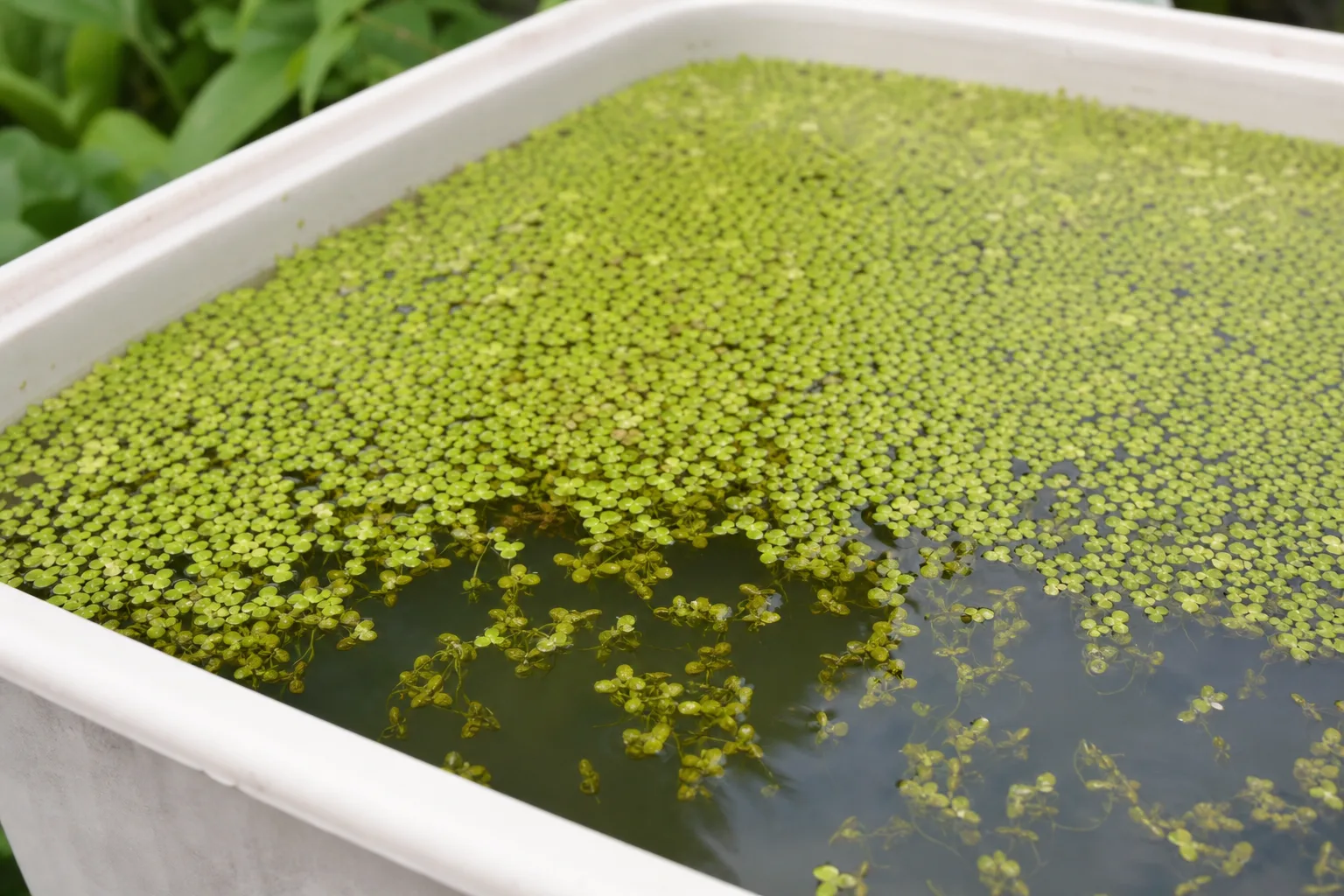
Drooping or Sinking Fronds on Duckweed: Causes, Checks & Fixes
This guide covers drooping leaves on Duckweed. See also the general Drooping Leaves guide, watering, and light pages for this plant.
Drooping or Sinking Fronds on Duckweed: Causes, Checks & Fixes
Quick answer
Drooping leaves on duckweed almost always describe sinking, pale, or collapsing fronds on the water surface-not the turgor loss houseplant guides mean when leaves hang on a stem. Duckweed (Lemna, Spirodela, and related genera) consists of tiny floating bodies, typically 1 to 8 mm across, that absorb nutrients directly from the water column with no soil and no conventional roots to inspect.
The most common triggers are chlorine or chloramine shock after a water change, filter outflow pushing fronds underwater, nutrient starvation in clean low-stock tanks, cold water below about 60°F (15°C), and dense mats that self-shade lower layers into yellow decay. Copper-based fish medications can kill a culture outright.
First step: confirm whether fronds sank or bleached within 48 hours of adding tap water. If yes, dechlorinate immediately and perform a partial water change with treated water matched to tank temperature. If the problem started at the filter outflow, install a floating ring or redirect flow before dosing fertilizer.
For baseline culture parameters, see the duckweed overview guide.
What drooping leaves look like on duckweed
Healthy duckweed sits flat on the surface like green confetti-firm, deep green, and drifting gently in calm water. Stressed duckweed reads differently depending on cause:
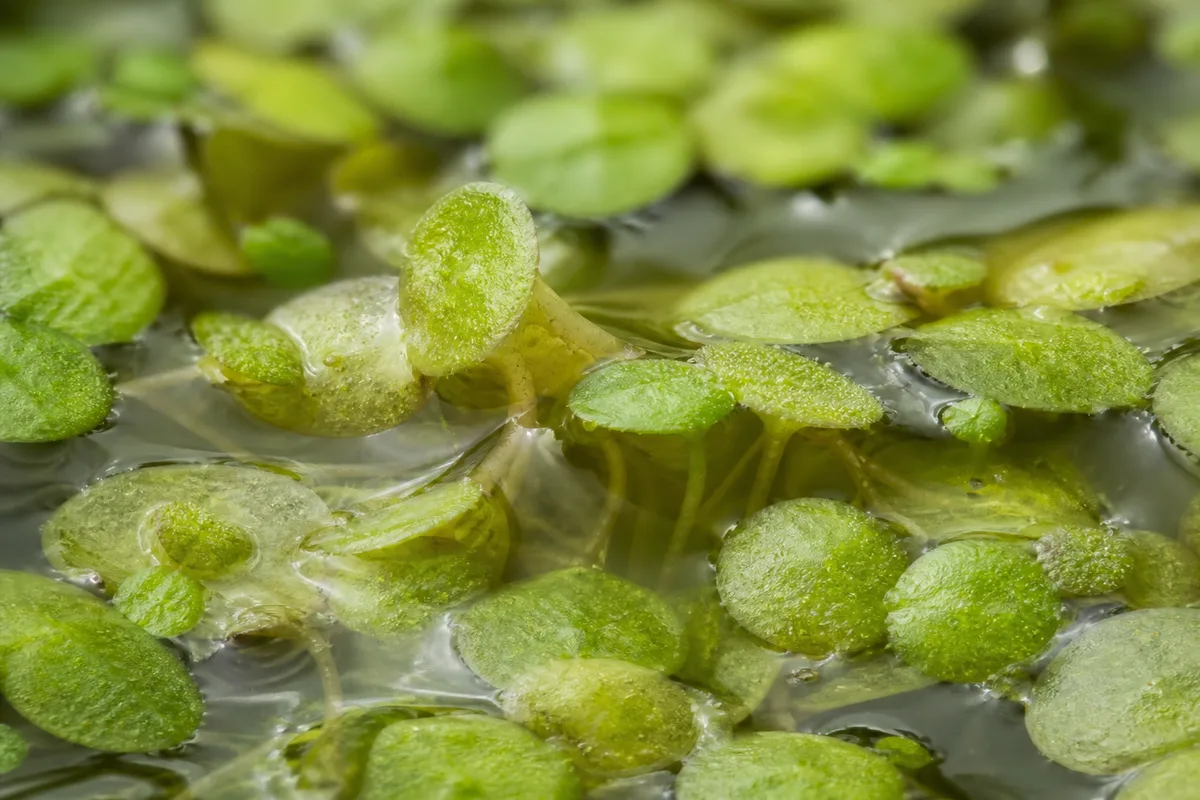
Drooping Leaves symptoms on Duckweed - compare with healthy tissue on the same plant.
- Sunk fronds clustered at the filter outflow - pushed under the surface, sometimes circling the tank; upper tissue may still look green while submerged portions go transparent
- Pale, lime-green, or yellowing mats that look thin and limp despite bright light - classic nutrient limitation in a clean aquarium
- Two-layer mats - vibrant green on top, slime-yellow fronds underneath from self-shading in a stack more than a few millimeters thick
- Sudden whitening or dissolution within hours to one day after a large water change - chlorine or chloramine exposure
- Culture disappearing to the bottom in late fall or after cold snaps - may be turion formation, starch-dense resting fronds that sink by design
- Fronds trapped on the glass meniscus or lid - dried or damaged tissue that will not re-float
Duckweed does not have petioles that bend downward. When keepers search “drooping leaves,” they usually mean loss of buoyancy, color fade, or mat collapse-symptoms that overlap with wilting on duckweed but this page focuses on sinking and surface-collapse patterns rather than general culture crash.
Why duckweed fronds sink, pale, or collapse
Chlorine and chloramine shock after water changes
Duckweed contacts tank water with its entire frond surface. Residual chlorine inhibits growth of aquatic vascular plants including duckweed; untreated tap water can bleach or kill fronds within hours. This is the fastest cause of a mat that looked perfect yesterday and looks white or absent today.
Chloramine-bound municipal water needs a conditioner that neutralizes both chlorine and chloramine-not aging alone in a bucket for a few hours.
Filter outflow and strong surface flow
Duckweed evolved in still or slow-moving freshwater. Hang-on-back filters, spray bars, and powerheads aimed at the surface push fronds underwater where they photosynthesize poorly, fragment, and sink. Fronds may survive submerged briefly, but constant churn prevents the calm surface film duckweed needs to multiply.
Nutrient starvation in bright, low-stock tanks
Duckweed pulls ammonium, nitrate, and phosphate from the water. In a lightly fed display tank with strong light, fronds can turn pale and spread thinly-the aquatic equivalent of limp, washed-out foliage. High light without matching dissolved nutrients accelerates the fade.
Excessive surface coverage and self-shading
When a mat covers more than roughly 50 to 70% of the surface, lower fronds lose light and oxygen contact. They yellow, decay, and sink while the top still looks green-creating a “drooping” appearance from above. Dense cover also reduces oxygen exchange at the air-water interface.
Cold water and seasonal turion sinking
Growth slows below about 60°F (15°C); fronds persist but look sparse and lose vigor. Some species form turions-starch-heavy resting fronds that sink to the sediment for overwintering and re-float when water warms. Not every sinking event is an emergency; outdoor pond keepers often see this cycle in autumn.
Copper medications and algicides
Copper-based fish treatments and some algicides kill duckweed cultures. If fronds collapsed after medicating the tank, assume chemical damage until you restart from an untreated backup jar.
Drooping leaves vs wilting vs pale fronds
| What you see | Likely label | First check |
|---|---|---|
| Fronds pushed under at outflow, still green | Flow stress / sinking | Surface calm, floating ring |
| Entire mat pale in bright light, nitrate low | Nutrient limitation | Nitrate, light hours, fertilizer |
| White or dissolved after water change | Chlorine shock | Dechlorinator, partial change |
| Green top, yellow slime underneath | Mat overgrowth / self-shade | Skim to 30–50% coverage |
| Culture on bottom after cold week | Turions or cold slowdown | Temperature, seasonal pattern |
| Rapid collapse after fish medication | Chemical exposure | Hospital tank; restart culture |
For broader culture-decline patterns, see wilting on duckweed. For color-only issues without sinking, see yellow leaves on duckweed and not enough light.
How to confirm the cause
Work through this numbered checklist before changing multiple variables:
- Water-change timeline - Untreated tap in the last 48 hours strongly suggests chlorine or chloramine. Confirm you dosed dechlorinator for the volume added, not just the tank total.
- Surface flow audit - Watch where fronds accumulate. Clusters at the outflow or filter intake mean mechanical sinking, not nutrient disease.
- Temperature - Read with a thermometer. Below 60°F (15°C) explains slow, thin mats; above 90°F (32°C) paired with full cover can stress cultures in shallow tubs.
- Coverage estimate - Skim a corner and look underneath. Yellow slime layers confirm self-shading from overgrowth.
- Water tests - Nitrate below 5 ppm in a bright tank supports starvation; ammonia or nitrite above zero means fix water quality before fertilizing.
- Medication history - Copper, formalin, or algicide in the last two weeks explains sudden total loss.
- Season and location - Outdoor pond sinking in late fall may be turions; indoor tank sinking in summer points to flow or chemistry.
Do not inspect soil moisture, pot weight, or drainage holes-duckweed has none of those. Match diagnosis to the duckweed watering guide for parameter targets instead.
First fix for duckweed
If fronds sank or bleached after a water change: dechlorinate and perform a partial water change with properly treated water.
Dose dechlorinator for the volume you are adding, match replacement water within about 2°F of tank temperature, and remove dead white fronds with a fine net so they do not decay in the column. Do not add fertilizer until new green daughter fronds appear on the surface-stressed duckweed responds poorly to nutrient spikes on top of chemical shock.
If chlorine is ruled out and fronds cluster at the filter, redirect outflow four to five inches below the surface or confine duckweed in a floating ring away from the current. That single mechanical fix often restores a floating mat within 24 hours.
Make one correction at a time and read the culture for five to seven days before stacking fertilizer, major light changes, or full tank rescues.
Recovery timeline
| Cause | What improves first | Typical window |
|---|---|---|
| Chlorine shock | New green daughters after dechlorinated change | 3–7 days |
| Filter flow | Fronds stay floating at surface | 24–48 hours |
| Nutrient starvation | Deeper green color on new fronds | 1–2 weeks |
| Mat overgrowth | Lower layer stops yellowing after skim | 3–5 days |
| Cold slowdown | Spread resumes as water warms | Days to weeks |
| Medication kill | Requires clean restart from backup | New culture only |
Damaged fronds rarely re-green. Judge success by new floating daughter plants, not the color of tissue that already sank or bleached. A healthy culture under warm, dechlorinated water can double every two to three days once conditions align.
What not to do
- Do not apply houseplant logic - no soil checks, Duckweed repotting guide, humidity trays, or “water when the top inch dries”
- Do not fertilize a chlorine-shocked or medicated culture on day one - fix water chemistry first
- Do not stack a full rescape, algicide, and large untempered water change in the same session
- Do not let a solid mat stay at 100% cover while fish show surface-gasping behavior
- Do not release removed duckweed into natural waterways - many species are invasive outside their native range
- Do not assume all sinking is death - turions on pond bottoms may return in spring; confirm temperature and season before discarding the pond
How to prevent drooping fronds next time
Build prevention around the four variables duckweed actually uses: dechlorinated water, calm surface, balanced nutrients, and managed coverage.
- Dechlorinate every addition - top-offs and partial changes alike; see the water management guide
- Keep surface flow gentle - baffle outflows, use pre-filter sponges, and float starter cultures in a ring for the first two weeks
- Skim weekly to 30–50% coverage in mixed planted or fish tanks; harvest more aggressively in warm, bright setups
- Match light to nutrients - six to twelve hours of moderate-to-bright light per the duckweed light guide; add dilute aquatic fertilizer in clean display tanks when fronds stay pale
- Maintain 60–90°F (15–32°C) for active growth; overwinter a jar indoors if outdoor cultures sink as turions
- Treat sick fish in a hospital tank when copper or algicide is required; keep a backup propagation jar of clean duckweed outside the medicated system
When to worry
Escalate beyond basic fixes if:
- The entire culture whitened within 24 hours and fish also show distress - test ammonia, nitrite, and verify dechlorinator dose
- Fronds vanish completely with no recovery after two weeks of corrected flow and dechlorinated water - restart from vendor-clean stock
- A solid surface mat pairs with fish gasping at dawn - skim immediately to restore gas exchange
- You suspect pesticide contamination from wild-collected duckweed in a turtle forage tank - discard and source from an aquarium nursery
Slow pale spread in a low-nutrient tank is routine, not an emergency-adjust fertilizer gradually.
Related duckweed problems
- Duckweed overview - full culture and troubleshooting hub
- Wilting on duckweed - general culture decline and crash patterns
- Yellow leaves on duckweed - color loss without mechanical sinking
- Not enough light - sparse pale mats from low photon input
- Overwatering on duckweed - why “too much water” means foul tank water, not wet soil
Reviewed by LeafyPixels Review Board. Claims validated against extension and botanical references.
When to use this page vs other Duckweed guides
- Duckweed watering guide - Use for routine moisture checks before assuming drooping leaves is the main issue.
- Duckweed problems hub - Browse all 16 common issues on this species.
- Underwatering on Duckweed - Different entry point when symptoms overlap with drooping leaves.
- Overwatering on Duckweed - Different entry point when symptoms overlap with drooping leaves.
- Root Rot on Duckweed - Different entry point when symptoms overlap with drooping leaves.