Overwatering on Duckweed: Causes, Checks & Fixes
Quick answer
Overwatering on duckweed means the water column is out of balance: mineral/TDS creep from top-offs without changes, stagnant volume, thick mats blocking gas exchange, or nutrient overload from overfeeding-not saturated soil. First step: test nitrate and TDS, then perform a 20–30% dechlorinated partial water change and skim excess mat back to roughly 30–50% surface coverage.
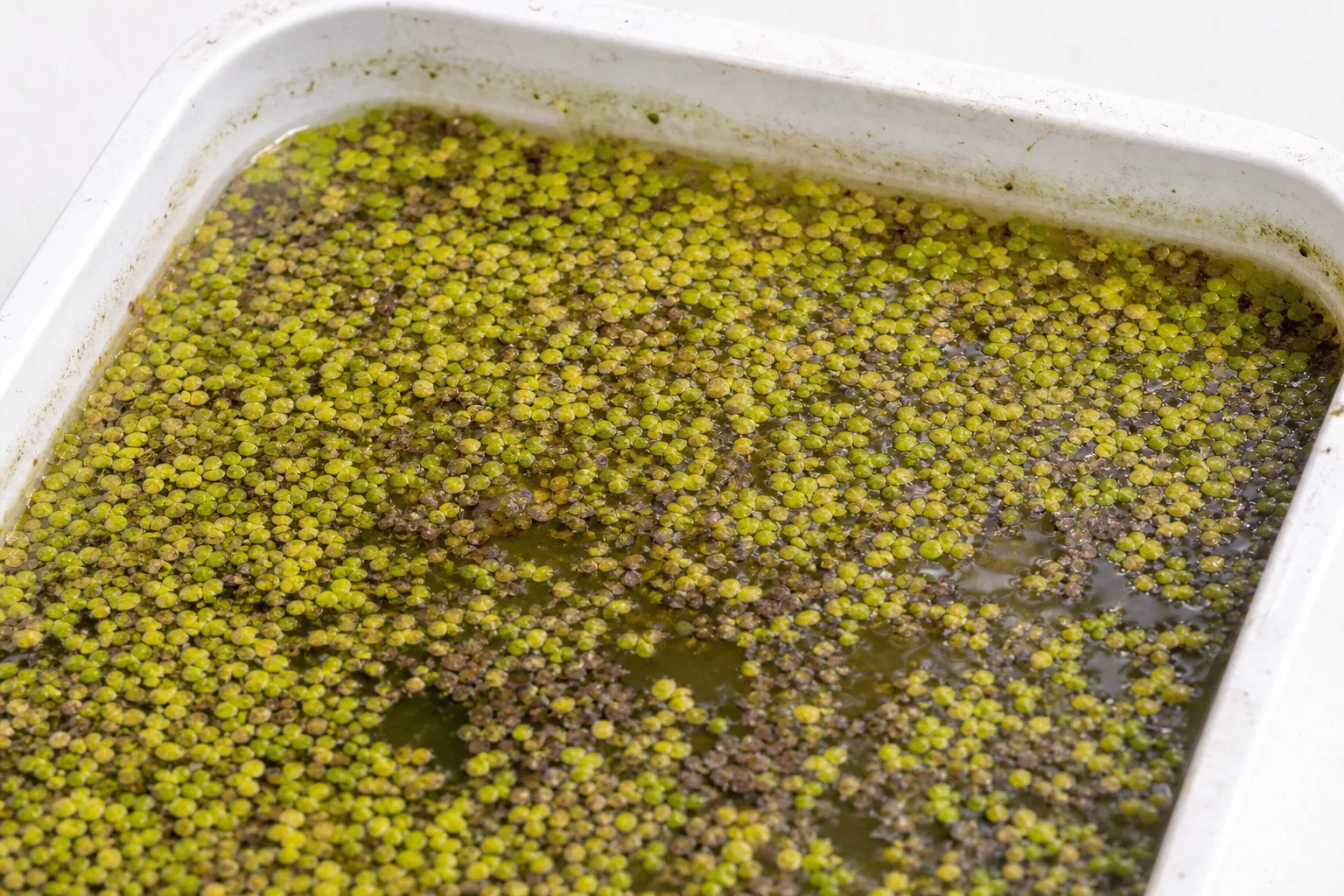
Overwatering on Duckweed: Causes, Checks & Fixes
This guide covers overwatering on Duckweed. See also the general Overwatering guide, watering, and light pages for this plant.
Overwatering on Duckweed: Causes, Checks & Fixes
Quick answer
Duckweed is always in water - there is no soil to saturate and no pot to drain. When keepers search “overwatered duckweed,” they usually mean the water itself is mismanaged: minerals and TDS climbing from evaporation top-offs without partial changes, stagnant volume with rising waste, a surface mat so thick it blocks gas exchange, or nutrient overload from heavy feeding and fertilizer dumps. Lemna minor, Spirodela polyrhiza, and related floaters absorb everything directly from the column, so chemistry shifts show up on fronds within days, not weeks.
First step: test nitrate and TDS, then perform a 20–30% dechlorinated partial water change and skim the mat back to roughly 30–50% surface coverage. Do not let fronds dry on a counter or withhold water changes hoping the problem resolves itself. For baseline water parameters and top-off discipline, see the duckweed watering guide.
Why “overwatering” is the wrong word - and what people actually mean
Houseplant overwatering describes roots sitting in saturated, low-oxygen soil. Duckweed has no root zone in mix - each frond floats on the surface with millimeter-scale roots dangling into open water. The plant cannot be “too wet” in the soil sense because it evolved as a free-floating aquatic in still or slow-moving freshwater.
The useful translation for duckweed keepers maps “overwatering” to poor water-quality management:
- Mineral and TDS creep - Pure water evaporates; calcium, carbonate, nitrate, and chloride stay behind. Months of tap-water top-offs without partial changes concentrate dissolved solids until fronds yellow and growth stalls even though the tank looks full.
- Stagnant standing volume - Adding water to a dirty tub without ever removing waste lets organics, ammonia, and nitrate accumulate. Duckweed filters some nitrogen, but it cannot replace regular export of polluted volume.
- Thick surface mats - Unchecked growth can cover the entire surface. TAMU Aquaplant notes that colonies covering the pond surface can cause oxygen depletion and harm fish, especially when combined with decaying fronds underneath.
- Nutrient overload - Overfeeding turtles or goldfish, or dumping aquarium fertilizer into an already rich tank, can push nitrogen and phosphorus past what duckweed can process cleanly, leading to pale stressed fronds, algae competition, or sudden die-off when parameters swing.
Duckweed grows explosively under good conditions - it can double biomass in roughly two days - which makes both nutrient uptake and water-quality failure visible quickly. Because there is no soil buffer, the water column is the growing medium.
What overwatering looks like on Duckweed
Aquatic “overwatering” presents through frond color, mat behavior, and water smell - not soggy potting mix:
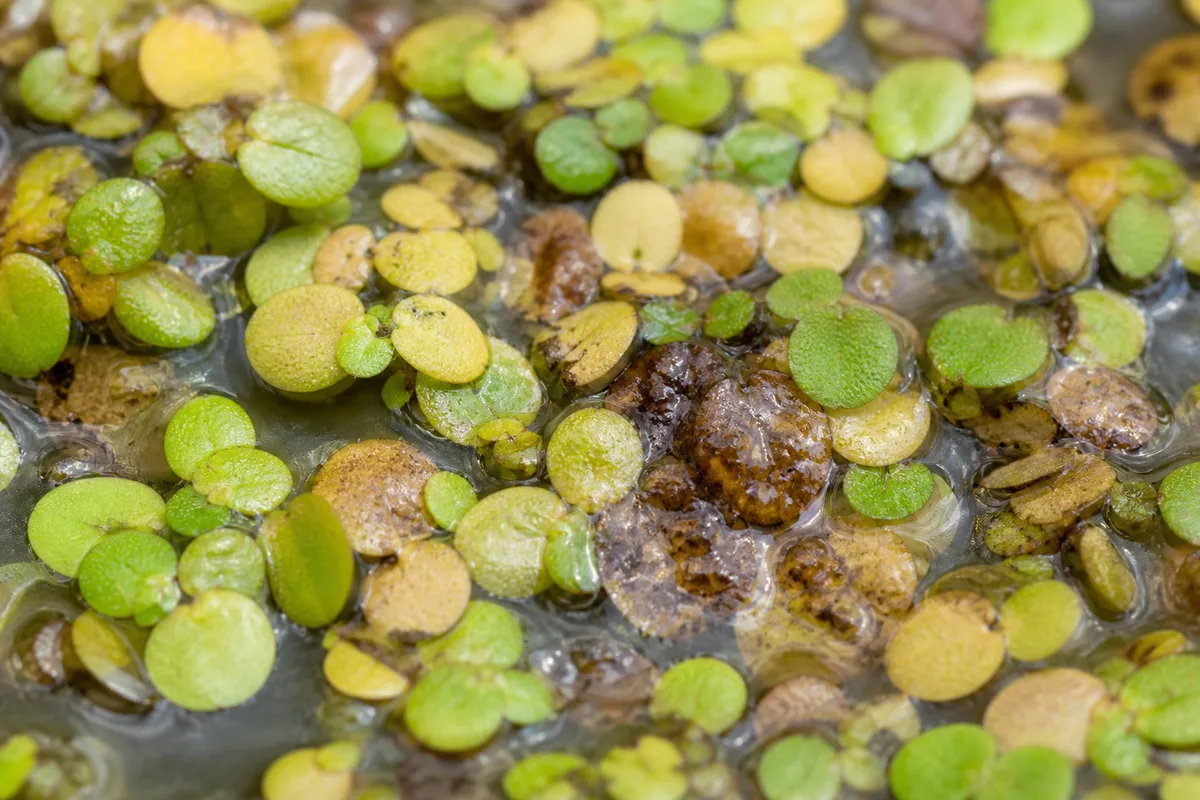
Overwatering symptoms on Duckweed - compare with healthy tissue on the same plant.
Typical signs of poor water management:
- Uniform yellowing or lime-green pallor across fronds that remain fully floating, with stable water level - often mineral buildup or nitrogen/phosphorus imbalance rather than drought.
- Translucent, waterlogged, or slimy fronds that break apart when netted, sometimes with a faint rotten smell under the mat.
- Thinning mat despite “full” water - coverage looks sparse or patchy even though you top off regularly, because TDS or pH drift has stressed growth.
- Sinking or fragmenting fronds in tanks with heavy surface flow - less common for this diagnosis, but wet damaged tissue from churn differs from crispy dry underwatering edges.
- Algae coating frond surfaces in bright, nutrient-heavy water where duckweed growth has stalled.
- Livestock stress alongside green mats - fish gasping, turtles restless, or shrimp deaths while duckweed still floats, signaling oxygen or ammonia problems under dense cover.
Patterns that support water-quality stress over other causes:
- Problems developed gradually over weeks of top-offs only, with no partial water changes.
- TDS reads noticeably higher than your last baseline (for example, climbing from 150 ppm toward 280+ ppm).
- Nitrate above roughly 40 ppm in a community tank, or ammonia/nitrite above zero in any stocked setup.
- Mat coverage exceeds about 70–80% for days, especially in warm turtle tubs or summer ponds.
- Recent large untreated tap-water addition caused a chlorine spike - chlorine and chloramine are toxic to aquatic life and stress duckweed biofilms.
If the waterline dropped and fronds are crispy on dry glass, read the underwatering on duckweed guide instead - that is contact loss, not column overload.
How to confirm the cause
Work through these checks in order before adding fertilizer or replacing all the water:
- Verify stable water level - Confirm the surface sits at your reference mark. Low level with dry fronds rules out this page’s diagnosis.
- Test nitrate, ammonia, and nitrite - Zero ammonia and nitrite is mandatory in stocked tanks. Nitrate below 5 ppm in a bright tank may mean depletion; above 40 ppm suggests export is overdue.
- Check TDS trend - Compare to your log from the last partial change. Steady weekly climbs with tap top-offs alone strongly indicate mineral concentration.
- Measure pH and temperature - Duckweed tolerates a wide band, but growth reviews on Lemna minor cite stress below about 10°C or above 40°C, with fastest multiplication near 26°C (79°F). Sudden swings matter as much as absolute numbers.
- Inspect mat density - Estimate surface coverage. Above roughly 70–80% with foul smell or gasping livestock confirms gas-exchange risk from overgrown mats.
- Review maintenance history - Months of top-offs without partial changes, recent overfeeding, or a large undechlorinated water dump each point to specific fixes.
- Smell test at the surface - A sulfurous or rotten-egg odor under the mat suggests anaerobic conditions from stagnant organics and blocked exchange, not healthy floating culture.
- Rule out lookalikes - Copper medication, wild-harvest contamination, and cold shock produce overlapping yellowing; see the section below before treating as water-volume overload.
Confirmed poor water management requires measurable chemistry drift, mat-density problems, or documented stagnant maintenance - not yellow fronds alone.
First fix for Duckweed
Perform a 20–30% partial water change with dechlorinated, temperature-matched freshwater, then skim excess duckweed until surface coverage is roughly 30–50%.
That single intervention exports concentrated minerals and waste, restores gas exchange, and removes stressed rotting tissue from the system. Dechlorinate every gallon added - municipal tap water carries chlorine or chloramine that damages biofilter bacteria and aquatic plants. Match new water within about 2°F of the tank volume and pour slowly along the glass to avoid blasting remaining mats into the filter intake.
While the water change runs, net out translucent, brown, or slime-coated fronds. Spread the remaining healthy green layer thinly so it floats freely rather than stacking three layers deep. Do not respond to yellowing by withholding water changes, letting the tank evaporate, or dumping full-strength fertilizer on day one.
If ammonia or nitrite is above zero, prioritize the water change and reduce feeding before any other intervention.
Step-by-step recovery
After the initial partial change and skim:
- Retest after 24 hours - Confirm ammonia and nitrite remain at zero. Note whether nitrate and TDS dropped proportionally to the change volume.
- Redirect surface flow - Angle filter outlets below the surface or add a baffle so recovered fronds stay on calm water. Duckweed clusters in quiet water; turbulence shreds mats and sends fragments into intakes.
- Establish a change rhythm - Weekly 20–30% partial changes in open-top aquariums, or 25–40% biweekly in lightly stocked tanks, paired with top-offs between changes. This mirrors the maintenance model in the duckweed watering guide.
- Hold fertilizer for three to five days - Let fronds stabilize. If new growth stays pale after a week of stable chemistry and adequate light, test nitrate again and consider a half-dose of complete aquatic fertilizer only when deficiency is confirmed.
- Reduce feeding in turtle and goldfish setups - High waste loading plus thick duckweed mats accelerates stagnation. Feed modestly until nitrate trend flattens.
- Restart from backup if needed - Float a teaspoon of healthy green fronds from a separate jar culture if the main mat was mostly rotted. Quarantine new stock three to five days in dechlorinated water before adding to a display tank.
- Log parameters for two weeks - Record TDS, nitrate, and pH weekly until values stabilize between changes.
In outdoor ponds, skim aggressively before heat waves so full mats do not trap warmth and suppress oxygen at night.
Recovery timeline
Mild yellowing from mineral creep often stops spreading within 24–48 hours after the first proper partial change. New pale-green daughter fronds commonly appear within three to seven days under moderate light and stable temperature in the 68–86°F (20–30°C) active growth window.
Old yellow or translucent fronds do not re-green. Success means fresh multiplication at mat edges and firm green tissue, not revived damaged leaves.
Mats that were mostly slime-coated or black may need one to two weeks to re-cover the surface from scattered survivors - or complete reseeding if no healthy fronds remain.
Signs the problem is worsening: rising ammonia despite changes, increasing foul smell under the mat, livestock deaths, or fronds dissolving en masse within 48 hours of re-wetting. Discard the batch and reseed from clean nursery stock rather than repeatedly topping off a failing culture.
Lookalike symptoms to rule out
Underwatering / contact loss - Crispy dry edges, fronds stuck on tank glass above the waterline, visibly low water level. Fix with top-off and re-floating, not export changes alone. See underwatering on duckweed.
Nitrogen or phosphorus depletion - Uniform yellowing in very clean, lightly stocked, bright tanks with nitrate near zero and stable TDS. Partial changes alone may worsen pallor by removing remaining nutrients; confirm tests before exporting more volume.
Heat stress above roughly 90°F (32°C) - Outdoor pond mats yellow and shrink in extreme summer heat even with adequate depth. Shade, skim coverage, or temporarily relocate excess duckweed to a cooler holding container.
Chlorine or chloramine shock - Sudden pale, melting fronds within hours of a large untreated tap-water dump. Dechlorinate immediately and change out a portion of the volume if livestock show stress.
Copper medication or pesticide exposure - Duckweed dies quickly in treated fish systems. Do not expect recovery while copper remains active; restart from untreated source water.
Strong surface agitation - Wet, fragmented fronds cycling in the outflow corner without chemistry drift. Calming flow fixes this without the partial-change protocol above.
Mistakes to avoid
Do not apply houseplant overwatering logic - checking soil moisture, waiting for mix to dry, emptying saucers, or Duckweed repotting guide into “better-draining” substrate. Duckweed has no pot and no soil.
Do not withhold partial water changes because the tank “already has enough water.” Top-offs maintain level; changes export pollution and concentrated minerals. Conflating the two is the most common cause of slow TDS creep failure.
Do not let duckweed cover 100% of the surface indefinitely. Dense cover blocks sunlight to submerged plants and can reduce oxygen exchange enough to stress fish - harvest weekly.
Do not dump full-strength fertilizer on yellow fronds before testing. Nutrient overload and nutrient deficiency both yellow duckweed; guessing wrong makes recovery harder.
Do not add untreated tap water during top-offs or changes. Chlorine exposure damages the culture and livestock together.
Do not confuse duckweed’s nutrient-filter role with unlimited capacity. The plant lowers nitrate in stocked tanks but cannot outpace unchecked overfeeding plus zero export.
Do not release duckweed into natural waterways when discarding failed mats - it spreads aggressively in quiet nutrient-rich ponds.
How to prevent overwatering next time
Treat the tank volume as hydroponic nutrient solution: maintain level with top-offs, maintain chemistry with partial changes.
Mark a target waterline on open-top aquariums and check it every few days. When you top off, note the date - if a week passes with only top-offs and no export, schedule a 20–30% change.
Skim duckweed weekly to 25–50% surface coverage so gas exchange continues and mats do not seal the surface. Compost or discard harvested biomass; returning dead fronds to the tank adds organics.
Track TDS monthly in open-top setups. A steady climb of 15–20 ppm per week between changes signals tap top-offs are concentrating minerals faster than duckweed remediates.
Dechlorinate every addition. Match temperature within 2°F before pouring.
In turtle tanks, align water-change frequency with waste loading - often 25–50% weekly - rather than relying on duckweed alone. Rinse new duckweed from aquarium sources before introduction.
For parameter targets, pH bands, and the full top-off versus change workflow, use the duckweed overview and watering guide as your baseline references.
When to worry
Treat as urgent when ammonia or nitrite reads above zero, livestock gasp at the surface, or the water under a full mat smells sulfurous. Skim to below 50% coverage immediately and change 25–40% of the volume with dechlorinated water.
Also act promptly when TDS has doubled from your established baseline and fronds are uniformly pale - continued top-offs alone will accelerate decline.
If water level is stable, chemistry is in range, coverage is moderate, and yellowing persists more than ten days, stop repeating the same partial-change dose and investigate light intensity, copper exposure, or nitrogen depletion as separate diagnoses.
Conclusion
Overwatering on duckweed is a label for water-column and surface-management failure, not saturated soil. Mineral creep from evaporation top-offs, stagnant volume, overgrown mats, and nutrient overload yellow and thin fronds even when the tank looks full. Test nitrate and TDS, perform a 20–30% dechlorinated partial water change, and skim back to roughly 30–50% coverage as the first fix. Prevent recurrence by pairing every top-off routine with regular partial changes and weekly harvest. New green daughter fronds tell you the fix worked - old damaged tissue will not recover, and that is normal for this fast-cycling floating plant.
When to use this page vs other Duckweed guides
- Duckweed watering guide - Use for routine moisture checks before assuming overwatering is the main issue.
- Duckweed problems hub - Browse all 16 common issues on this species.
- Root Rot on Duckweed - Different entry point when symptoms overlap with overwatering.
- Yellow Leaves on Duckweed - Different entry point when symptoms overlap with overwatering.
- Wilting on Duckweed - Different entry point when symptoms overlap with overwatering.