Slow Growth on Croton: Causes, Checks & Fixes
Quick answer
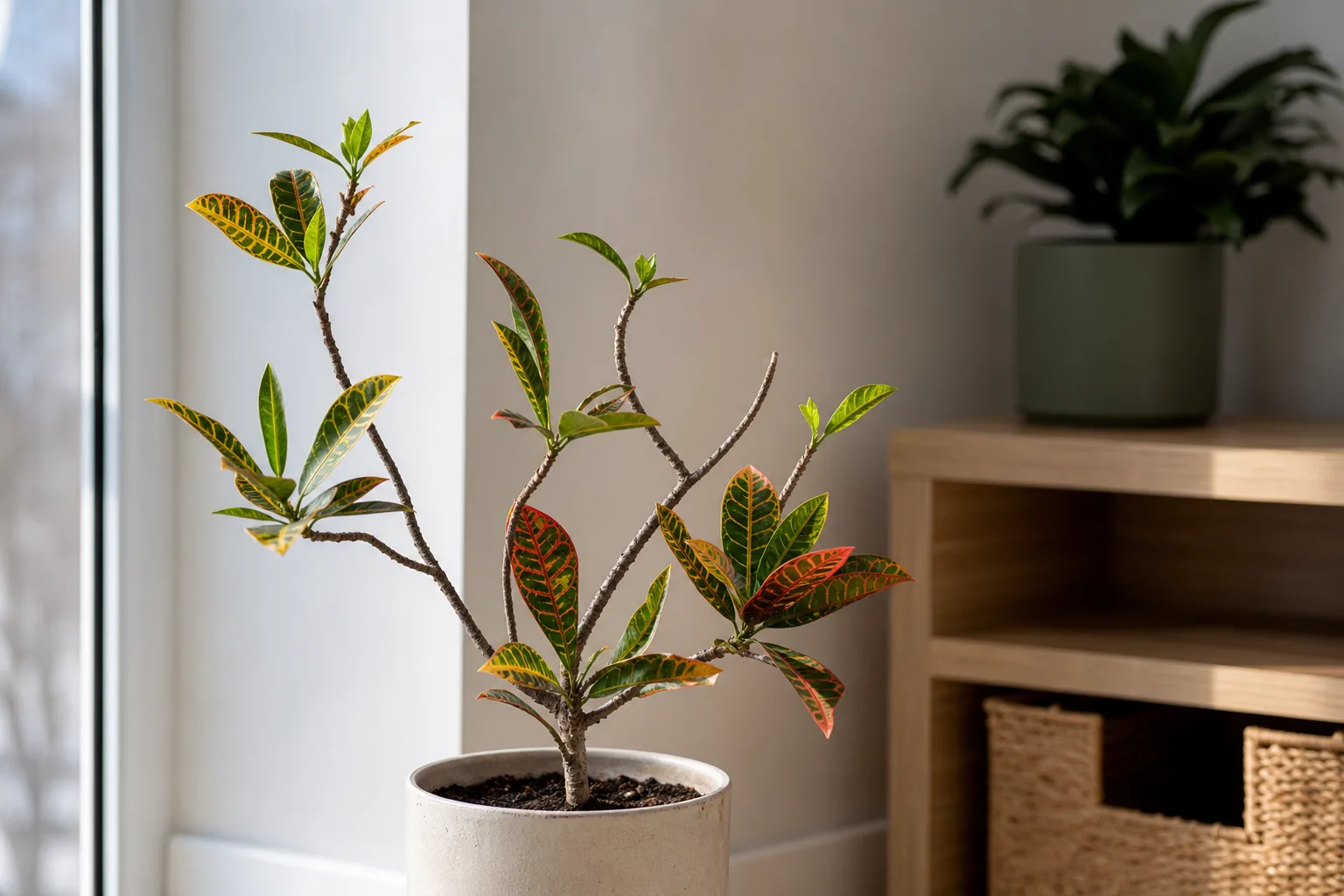
Croton grows moderately in a typical home and often pauses in winter or for two to four weeks after a move-that is normal. Abnormal stall means no new leaves for six or more weeks in warm bright conditions. First step: check whether the newest growth flush shows color and short internodes; if not, audit light and temperature before fertilizing or repotting.
Slow Growth on Croton: Causes, Checks & Fixes
This guide covers slow growth on Croton. See also the general Slow Growth guide, watering, and light pages for this plant.
Slow Growth on Croton: Causes, Checks & Fixes
Quick answer
Slow growth on croton (Codiaeum variegatum) is often normal seasonal pause or post-move adjustment, not a crisis. In a typical home, croton grows at a moderate pace-faster in bright, warm, humid conditions and slower when light or temperature drops. Winter short days commonly reduce new leaf expansion through December and February in northern latitudes. A newly purchased croton may sit visually unchanged for two to four weeks while it acclimates, sometimes dropping older leaves along the way.
Abnormal stall means the plant pushes no new leaves for six or more weeks during warm active-season months while sitting in what should be adequate light-roughly six to eight hours of bright exposure near a window. That pattern points to chronic low light, cold drafts, wet roots, root-bound confinement, spider mites, or stacked care mistakes-not a harmless winter rest.
First step: inspect the newest growth point and run a light-and-temperature audit before fertilizing or repotting. Firm stems with a living tip but no expansion often mean wait and stabilize. Green revert, long gaps between leaves, or soil that stays wet for days while nothing grows mean you have a fixable stressor to address-usually light or moisture first.
What normal vs. abnormal slow growth looks like on Croton
Croton tells its growth story through new leaves, not old ones. Judge stall severity on what the next flush is doing-or not doing.
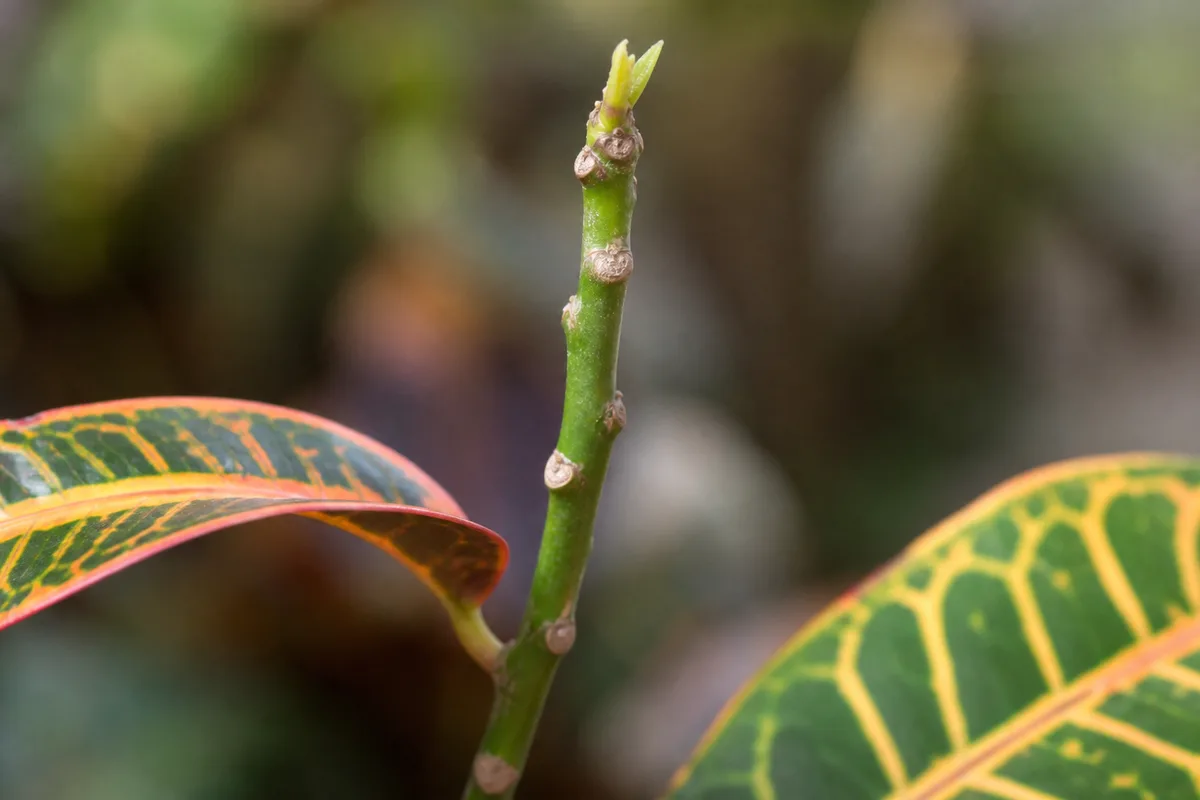
Slow Growth symptoms on Croton - compare with healthy tissue on the same plant.
Normal slow growth (usually no fix needed)
Winter pause: From late fall through early spring, shorter photoperiod and cooler indoor temperatures slow metabolism. Existing colorful leaves may stay firm while no new leaves expand for several weeks. The RHS notes crotons grow less in winter when light levels are lower-reduce watering accordingly and avoid feeding until spring growth resumes.
Post-purchase or post-move pause: After leaving a greenhouse or changing windows, croton commonly holds steady two to four weeks before the first new leaf. Some lower leaf drop during adjustment is typical relocation stress, not immediate death-provided stems stay firm and you avoid overwatering the shock.
Moderate baseline pace: Even in good conditions, croton is not a fast vine. Expect measured branching rather than weekly leaps. A healthy specimen might push a new leaf every one to three weeks in bright summer light and slow to near-zero in dim winter-both can be normal for the season.
Abnormal slow growth (needs diagnosis)
Warm-season silence: No new leaves from May through August while room temperatures sit in the 60–85°F active range and the plant occupies a bright window suggests a limiting stressor-not dormancy.
Color fade before stall: New tips emerge green and stay green, or existing variegation dulls toward uniform green before growth stops entirely. That sequence often precedes a full stall and points to insufficient light-see not enough light on croton for the color-and-stretch diagnostic.
Wet-soil stagnation: Soil stays damp a week or more without the plant using water, lower leaves yellow, and no new tips appear. Croton in dim, wet conditions stops transpiring fast enough to dry the pot-a common overlap between slow growth and overwatering.
Cold-triggered halt: Exposure below about 50°F (10°C) causes leaf drop and growth arrest-even brief cold drafts near winter windows can stall a plant that looked active the week before.
Pest-throttled tips: Fine stippling on leaf undersides, dusty foliage, or webbing from spider mites can stop new expansion before obvious canopy damage spreads. Spider mite susceptibility sometimes limits long-term indoor croton performance per NC State.
| Pattern | Likely category | First check |
|---|---|---|
| No new leaves Nov–Feb, firm colorful foliage, slower dry-down | Normal winter pause | Reduce water; optional grow light |
| No new leaves 2–4 weeks after purchase, firm stems, some old leaf drop | Relocation shock | Stabilize light and moisture; wait |
| No new leaves 6+ weeks in warm bright season | Abnormal stall | Light audit, roots, temperature, pests |
| Green revert + long internodes + stall | Low light | Not-enough-light guide |
| Wet soil weeks + yellow lower leaves + stall | Root stress / overwatering | Overwatering guide |
| Stippling, webbing, dusty leaves + stall | Spider mites | Spider mites guide |
Why Croton gets slow growth
Croton is a tropical evergreen shrub from Southeast Asia and the Pacific that expects bright light, stable warmth, and consistent-but not soggy-moisture. When any pillar slips, growth is the first budget item cut-not always visible leaf drop.
Insufficient light is the leading cause of abnormal warm-season stall. Croton needs bright light for best leaf color, with higher light producing more vibrant foliage and a tighter habit. Below that threshold, the plant economizes: pigments fade, internodes stretch, then new leaves stop entirely. Distance from glass matters-a croton on a distant shelf in a “bright” room often receives far less energy than one within a few feet of an east or south window.
Relocation and environmental shock interrupt growth even when the new spot is technically adequate. Changing light intensity, humidity, airflow, or watering rhythm triggers a recalibration period. Wisconsin Extension warns that changing environments too quickly can shock plants and cause leaf drop-growth pause frequently follows.
Cold drafts and low temperatures suppress croton hard. Sustained exposure below about 50°F stops expansion and drops leaves. The RHS recommends keeping codiaeums above 15°C (59°F) and notes fluctuating temperatures and cold draughts cause leaf drop-growth resumes only after warmth stabilizes.
Overwatering and root decline starve the top even when the mix feels “cared for.” Saturated soil drives out oxygen; damaged roots cannot support new leaves. Croton in low light plus wet soil is especially prone to stagnation because the plant neither photosynthesizes strongly nor dries the pot quickly.
Root-bound pots limit spring flush when circling roots fill the container. A croton that grew well for years then stalls in March despite good light may simply need repotting into a container one to two inches larger-see repotting guidance after you confirm roots are the limiter.
Seasonal daylight loss reduces growth without any care mistake. A placement that barely worked in June often fails by January unless you supplement with grow lights-matching the light guide winter recommendations.
Lookalike symptoms to rule out
Leggy stretch vs. simple stall: Leggy growth shows long internodes and lean toward windows while some growth still occurs. Pure slow growth means no new leaf expansion at all-though the two problems often overlap when light is chronically low.
Not-enough-light color fade vs. winter pause: Winter stall in an otherwise bright spot keeps existing variegation stable while metabolism slows. Low light fades color and stretches stems before or during the stall. If green revert is present, prioritize light correction.
Overwatering vs. underwatering on Croton stall: Wet, heavy pots with yellow lower leaves suggest excess moisture. A light pot with slightly curled but firm leaves and dusty dry surface suggests drought stress-both can slow growth, but fixes differ sharply. Always pair stall diagnosis with a top-inch moisture check per the watering guide.
Relocation shock vs. chronic decline: Shock follows a recent move and often includes leaf drop with firm stems. Chronic decline over months without an obvious trigger suggests root problems, persistent low light, or repeated environmental swings.
How to confirm the cause
Work through these six checks in order so you do not fertilize a dark plant or repot one that only needs brighter light.
-
Season and recent history - Is it late fall through early winter in a temperate climate? Did you buy or move the plant within the past month? Seasonal pause and relocation shock are the leading benign explanations. Warm-season silence needs deeper investigation.
-
New-growth health check - Examine the uppermost tip. A firm, living bud with surrounding colorful mature leaves suggests the plant is resting, not dying. A soft stem base, blackening tips, or complete absence of any bud after six weeks in good conditions is concerning.
-
Light and color audit - Note window direction and distance from glass. Compare the last two growth flushes: are new leaves greener, smaller, and farther apart? Run a midday hand-shadow test at the canopy-sharp shadow means adequate intensity for a trial; faint shadow means move closer or add light before other fixes. Full workflow: not enough light on croton.
-
Temperature scan - Feel for cold drafts from windows, doors, or AC vents. If the plant sat below about 50°F overnight, cold stress may explain both stall and recent leaf drop. Ideal active range is roughly 60–85°F per Wisconsin Extension.
-
Soil moisture and root sniff - Press a finger into the top half-inch to inch. Soil wet for seven or more days with no growth suggests overwatering or poor drainage-inspect drain holes and saucer water. If wet stall persists, slide the plant from the pot: firm white or tan roots mean pause; mushy brown roots mean root rot.
-
Pest and root-bound screen - Check leaf undersides and stem joints for stippling, webbing, or scale. Look through drain holes for circling white root tips filling the pot bottom. Pests and confinement both throttle new leaves without always causing obvious wilt first.
Confirmed normal pause: winter timing, firm stems, stable color, appropriate dry-down slowing, recent move under three weeks with no rot smell.
Confirmed abnormal stall: six or more weeks without new leaves in warm bright months, plus at least one stress signal from steps 3–6.
First fix for Croton
Stabilize the environment before stacking treatments-one correction at a time.
If you recently moved the plant or bought it within the past month, the first fix is hold placement steady in the brightest acclimated spot you can offer, maintain the top-inch dry-down watering rhythm, keep temperatures above about 60°F away from drafts, and wait two to four weeks before repotting or feeding. Croton often pushes its first new leaf once light and moisture stop swinging.
If the plant has been in the same spot six or more weeks without growth during active season, the first fix is a light-and-temperature audit: move the pot within one to two feet of an east window or filtered south or west glass, acclimate over seven to fourteen days, and confirm the room stays above about 50°F at night. Do not fertilize, hard-prune, or repot on the same day you change light.
Make one care correction at a time so you can read the plant’s response over the next two to three weeks. Changing light, soil, fertilizer, and pot in one weekend makes diagnosis impossible and compounds shock.
Step-by-step recovery by confirmed cause
Low light (green revert, faint shadow test, warm-season stall)
Move toward brighter acclimated exposure per the not-enough-light guide. East windowsills or filtered south and west positions within a few feet of glass are typical targets. Add a full-spectrum grow light six to twelve inches above the canopy for twelve to fourteen hours daily if natural light is weak. Judge success on the next growth flush-shorter internodes and developing pigment-not old leaves regaining color.
Relocation or post-purchase shock
Keep the pot in one bright stable location. Water when the top inch dries-do not flood a shedding plant unless the mix is genuinely dry at depth. Expect some leaf drop for two to four weeks. New colorful leaves within three to five weeks after stabilization mean recovery is on track. Avoid repotting during this window unless roots are clearly bound or rotted.
Cold exposure (recent draft, leaf drop, stall)
Move away from windows, doors, and AC vents. Hold warmth in the 60–85°F band. Remove badly damaged cold-burned leaves only after the plant stabilizes. Growth typically resumes one to three weeks after temperatures stay consistently above about 50°F.
Overwatering or root stress (wet soil, yellow lower leaves)
Stop watering until the top inch dries. Empty saucers and confirm drainage holes are open. If leaves stay limp on moist mix after four to five days of drying, inspect roots. Trim mushy tissue, repot into fresh well-drained mix only if rot is confirmed-see root rot on croton. Do not fertilize until new firm growth appears.
Root-bound pot (circling roots, years in same container, spring stall)
Repot in spring or early summer into a container only one to two inches larger, using rich well-drained mix. Water thoroughly once, then hold fertilizer until new tips emerge. Expect a one-to-two-week post-repot pause before flush resumes.
Spider mites (stippling, webbing, dusty leaves)
Isolate the plant, shower leaf undersides, improve humidity without leaving foliage wet overnight in dim corners, and treat per the spider mites guide. Growth resumes after pest pressure drops-usually two to four weeks with consistent control.
Normal winter pause
Reduce watering frequency to match slower dry-down-often every ten to fourteen days for many indoor containers. Hold fertilizer until new spring growth. Optionally add supplemental light to prevent color fade. Resume normal active-season rhythm when days lengthen and new tips appear.
Recovery timeline
Recovery speed depends on cause severity and how long the stall lasted.
- Relocation shock: First new leaf often three to five weeks after stable bright light and consistent watering; some leaf drop may continue through week two.
- Light correction: Direction of improvement within two to three weeks; measurable new colorful flush by weeks four to six in a clearly brighter spot.
- Cold recovery: New growth one to three weeks after sustained warmth above about 50°F.
- Root rot (mild): Four to eight weeks after trim and repot if the crown stayed firm; severe crown rot may not recover.
- Repotting (root-bound): One to two week pause, then spring flush over three to six weeks.
- Winter pause: Growth resumes naturally with lengthening days-often March through April in northern homes.
Judge progress by firm new leaves with developing color, not by old foliage returning to nursery intensity. Damaged or green-shifted mature leaves rarely rebuild lost pigment.
What not to do
- Do not fertilize a stalled croton before confirming bright light, stable warmth, and healthy roots in appropriately moist soil-extra salts on stressed roots burn margins and push weak tissue.
- Do not repot during relocation recovery unless roots are clearly rotted or bound; unnecessary root disturbance adds shock on top of pause.
- Do not stack repotting, pruning, pesticide, and light moves on the same day-croton drops leaves when conditions swing; one change at a time.
- Do not interpret winter stillness as thirst and increase watering while growth is dormant-wet cold mix invites rot.
- Do not hard-prune to “stimulate” a stalled plant before light and roots are confirmed healthy; wear gloves if you do prune-croton sap irritates skin.
- Do not assume a bright room equals bright leaves-distance from glass determines energy at the canopy.
How to prevent abnormal slow growth next time
- Default placement: Bright light most of the day, including acclimated direct morning sun-within a few feet of east or filtered south and west windows. See the light guide for seasonal adjustments.
- Stable environment: Minimize repeated moves; croton recalibrates slowly. Find a working bright spot and hold it through adjustment periods.
- Temperature discipline: Keep plants above about 50°F and away from winter window panes and AC vents that drop below that on cold nights.
- Water to the pot, not the calendar: Water when the top half-inch to inch dries during active growth; stretch intervals in winter when dry-down slows.
- Feed only in active growth: Light feeding every four to six weeks spring through early fall once new leaves are expanding-details in the fertilizer guide.
- Seasonal light check: Re-evaluate the same window in January; add grow lights before color fade and stall begin.
- Inspect weekly during active season: Catch mites and moisture drift while problems are small.
When to worry
Act quickly when:
- Stems soften at the base while soil stays wet and smells sour-inspect for root rot immediately
- All leaves drop after sustained cold below about 50°F-warm the plant and assess whether buds remain alive
- Stippling and webbing spread while growth is stalled-mites can defoliate weakened crotons in dry heated air
You can wait and observe when:
- A recently purchased croton shows no new leaves for two to three weeks but stems are firm and you improved light gradually
- Winter pause occurs in an otherwise bright spot with stable colorful foliage-reduce water and wait for spring
Croton care cross-check
| Factor | Target for active growth | Stall signal when wrong |
|---|---|---|
| Light | Six to eight hours bright exposure near window; see light guide | Green revert, long internodes, no new leaves |
| Temperature | 60–85°F active; above 50°F minimum | Leaf drop + halt after cold night |
| Water | Top ½–1 inch dry before soak; see watering guide | Wet soil weeks + yellow leaves + stall |
| Humidity | 40–60% acceptable; higher reduces mite risk | Dusty leaves, mite stippling + stalled tips |
| Feed | Spring–fall only when actively growing; see fertilizer guide | Salt crust, brown tips if fed while stalled |
| Roots | Firm, white or tan, in well-drained mix | Mushy roots, circling mat, sour smell |
Conclusion
Slow growth on croton is often a pause, not a death sentence-winter rest and post-move adjustment are built into how this tropical shrub behaves indoors. The diagnostic split is simple: Is the plant in a normal resting season or environment transition, or has it gone silent six or more weeks in warm bright conditions? For abnormal stall, new-growth color and internode length tell you whether light, moisture, temperature, roots, or pests is the limiter. Fix one variable at a time, judge recovery on the next colorful flush, and use the linked overview, light, not-enough-light, and watering guides when you need cause-specific depth beyond this growth-stall hub.
When to use this page vs other Croton guides
- Croton watering guide - Use for routine moisture checks before assuming slow growth is the main issue.
- Croton problems hub - Browse all 16 common issues on this species.
- Not Enough Light on Croton - Different entry point when symptoms overlap with slow growth.
- Leggy Growth on Croton - Different entry point when symptoms overlap with slow growth.
- Yellow Leaves on Croton - Different entry point when symptoms overlap with slow growth.