Watering Croton: Schedule, Soil Checks & Mistakes
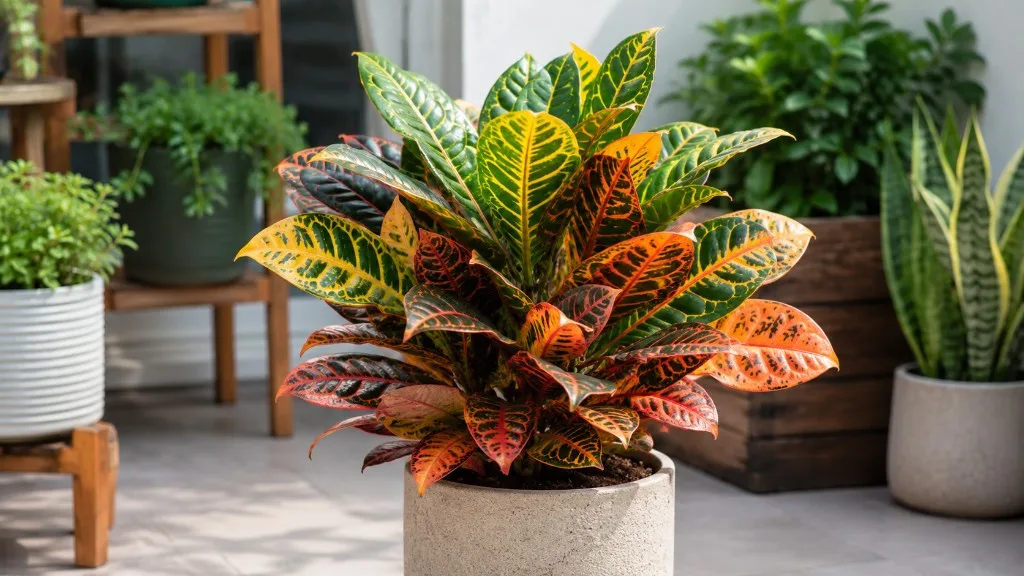
Watering Croton: Schedule, Soil Checks & Mistakes
Watering Croton: Schedule, Soil Checks & Mistakes
Croton watering is one of those topics where the internet gives you two opposite answers - “keep it evenly moist” and “let it dry between waterings” - and both are half right. Codiaeum variegatum is a tropical foliage plant from Southeast Asia and the Western Pacific that wants consistent moisture in the root zone, but it cannot tolerate soggy soil or extended drought either. Get the rhythm wrong in either direction and the plant responds the same way: leaves yellow, curl, and drop, sometimes dozens at once, and you are left wondering whether you watered too much or not enough.
The fix is not a magic day-of-the-week schedule. It is a repeatable soil check - usually the top ½ to 1 inch of mix in active growth, sometimes 1 to 2 inches in winter - followed by a thorough soak and complete drainage. A calendar range like every 5–7 days in summer and every 10–14 days in winter is a useful starting reminder, but the actual decision always comes from what the pot is doing in your specific light, temperature, and humidity. This guide walks through the checks, the seasonal rhythm, the soak-and-drain method, and the mistakes that cause more croton casualties than any pest.
Why Croton Watering Is Trickier Than It Looks
Croton belongs to Euphorbiaceae, the spurge family - the same group that gives you poinsettias and other latex-sapping tropicals. Indoors it typically reaches 2–4 feet with leaves 4–12 inches long, growing at a moderate pace when light and warmth are adequate. That moderate metabolism means croton is not a succulent that stores water in thick tissue, but it is also not a thin-leaved fern that wilts the moment the surface dries. Its thick, waxy leaf coating slows visible wilting, so by the time mature leaves droop noticeably, the root zone may have been dry for longer than you think.
University of Wisconsin-Madison Extension notes that croton has moderate water needs and should be watered only when the top half-inch to an inch of soil dries out, with reduced watering in winter (University of Wisconsin Extension - Croton). Plants drop leaves if kept too wet or too dry for extended periods - which is the central frustration for growers. The symptoms overlap: yellowing, leaf fall, limp stems. Without checking the actual root-zone moisture, you cannot tell which direction you missed.
Croton is also famously reactive to environmental change. A plant that was watered perfectly at the nursery may drop leaves for two to four weeks after you bring it home, even if your technique is sound. Relocation shock, cold drafts, and sudden light shifts all trigger leaf loss that looks like a watering problem but is not solved by more or less water alone. That is why this article treats watering as one variable in a system that includes light, temperature, pot drainage, and seasonal growth - not an isolated chore.
The Core Rule: Moist, Not Soggy, Never Bone-Dry
The practical target for most indoor crotons is evenly moist, well-aerated root zone - not a swamp and not dust. Think of it as a sponge that holds water but still has air pockets. After a proper soak, the mix should feel damp through the upper profile, then gradually dry toward the surface over several days. You water again when the top layer reaches the dry threshold, not when the entire pot is parched.
During active growth - roughly spring through early fall when light is strong and new leaves are pushing - check dryness at about ½ to 1 inch down. In late fall and winter, when growth slows and evaporation drops, let the top 1 to 2 inches dry before the next drink. Cool rooms and dim windows can stretch dry-down to two weeks or more; a bright, warm south window in July can shrink it to four or five days. The depth changes with the season; the principle does not.
Croton should never sit in standing water. Roots need oxygen as much as moisture, and a cachepot or saucer holding runoff for days is the fastest route to root rot on Croton, fungus gnats, and the kind of chronic yellowing that does not respond to “watering less” because the mix structure has already collapsed. Equally, croton should not fully dry out for long stretches. Unlike a snake plant, it does not bounce back gracefully from repeated drought - fine roots die, and when water finally returns the plant may shed leaves rather than rehydrate them.
How to Check Soil Moisture Before You Water
Every reliable croton watering routine starts the same way: verify the root zone before you touch the watering can. Calendar habits - “I always water on Sunday” - ignore the variables that actually control dry-down speed: pot volume, soil composition, air temperature, light intensity, and whether the plant is actively growing. Three seconds of checking beats guessing and rescuing a stressed plant for three weeks.
Build a consistent check method and use it every time. Switching between random rules - sometimes watering when the surface looks pale, sometimes when a leaf droops - trains you to react late. Croton rewards predictability in the check, not rigidity in the calendar.
The Finger and Knuckle Test
The finger test is the default tool because it is free, immediate, and accurate once you learn your pot’s rhythm. Insert your index finger into the mix to the first knuckle (roughly ½ to 1 inch) during active growth. If the soil feels cool, clingy, or damp, wait. If it feels dry and crumbly with no coolness at depth, it is time to water.
In winter, go to the second knuckle (about 1 to 2 inches) before deciding. The surface can look dry while the center of the root ball still holds moisture - especially in a large pot or one recently repotted into fresh, water-retentive mix. A dry surface alone is not a reliable trigger from November through February.
Pay attention to texture, not just color. Peat-based mixes lighten when dry, but bark-heavy or coir-heavy mixes may stay dark while the upper layer has lost available water. Coolness at depth is a better signal than appearance.
Pot Weight, Chopsticks, and Moisture Meters
Pot weight is the advanced version of the finger test and becomes intuitive after a few weeks with the same container. Lift the pot right after watering and notice the heft. Lift it again when you think it is dry. A noticeably light pot with dry soil at the knuckle depth means water. A pot that still feels heavy with cool soil at depth means wait - even if the top looks dry.
A wooden chopstick or bamboo skewer pushed to the bottom of the pot and left for a few minutes tells you what is happening deeper in the root ball. Pull it out: clinging, dark particles mean moisture remains; clean and dry means the plant is ready. This is especially useful in deep pots where your finger does not reach the zone roots actually use.
Moisture meters can help beginners but are not mandatory. If you use one, calibrate it to your specific mix - peat reads differently than a chunky aroid blend - and treat the dial as one data point alongside finger and weight checks. Meters fail when salts accumulate or when the probe does not reach the root zone. They supplement judgment; they do not replace it.
How Often to Water Croton Indoors
There is no honest single answer to how often to water croton that applies to every home. What you can use is a frequency range as a reminder to check, then let the soil decide. Most indoor crotons in typical room conditions fall into these brackets when potted in well-draining mix with drainage holes:
- Spring and summer (active growth): check every 3–5 days; water roughly every 5–7 days on average
- Autumn (slowing growth): check weekly; water roughly every 7–10 days
- Winter (low growth): check every 7–10 days; water roughly every 10–14 days, sometimes longer in cool, dim rooms
These ranges assume a 6- to 10-inch pot in bright indirect to some direct sun, room temperatures 65–80°F, and moderate humidity. A croton in a 4-inch nursery pot under a grow light may need water twice as often in July. A 12-inch floor specimen in a north-facing room in January may go three weeks between drinks. The range is a prompt to open the schedule, not a rule to follow blindly.
Spring and Summer Active Growth
From mid-spring through summer, croton pushes new leaves at stem tips when light and warmth are adequate. That growth consumes water steadily. The pot dries on a predictable rhythm, and the plant gives early signals if you are paying attention: the smallest, newest leaves at branch ends wilt slightly before mature foliage does. Using young growth as the early trigger catches dryness sooner than waiting for whole branches to droop.
During this window, expect the shortest intervals of the year. Heat waves, air conditioning that lowers humidity, and outdoor patio placement in dappled shade can all accelerate dry-down. A croton on a sunny terrace may need checking every two to three days in August even if your living-room plant goes a full week. If you move a plant outdoors for summer, treat it as a new watering profile entirely - do not assume the indoor rhythm still applies.
Water thoroughly when the top ½ to 1 inch is dry. Partial top-ups that never reach the lower root zone encourage shallow rooting and make the plant more drought-sensitive over time. One full soak that drains freely beats three small splashes across the week.
Fall and Winter Slowdown
Growth slows in fall as day length drops and indoor heating changes air humidity. The same volume of soil holds moisture longer because the plant is transpiring less and evaporation from the pot surface is lower. Continuing a summer watering frequency through December is one of the most common ways crotons develop persistent wet feet and yellow lower leaves in winter.
Stretch the dry-down depth to 1 to 2 inches before watering from late fall through winter. Check the pot on your usual schedule, but expect the answer to be “not yet” more often. A croton in a cool room (below 65°F) or a dim spot may need water only every two to three weeks - Wisconsin Extension explicitly recommends reducing winter watering for this reason.
Do not interpret winter slowdown as permission to let the plant bone-dry. Croton still drops foliage if the root ball desiccates, and recovery in low light is slow. The goal is less frequent but still complete soaks when the deeper check says go - not neglect until the stems shrivel.
Seasonal Watering Calendar for Croton
A month-by-month calendar cannot replace soil checks, but it helps you anticipate how fast the pot should be drying in a typical temperate-climate home. Adjust every row for your actual light, pot size, and heating setup.
| Season | Typical light | Check frequency | Water when | Approximate interval |
|---|---|---|---|---|
| Spring (Mar–May) | Increasing; south or west window | Every 3–5 days | Top ½–1” dry | Every 5–7 days |
| Summer (Jun–Aug) | Brightest; patio possible | Every 3–4 days | Top ½–1” dry | Every 4–7 days |
| Autumn (Sep–Nov) | Shorter days; plant coming indoors | Every 5–7 days | Top 1–1½” dry | Every 7–10 days |
| Winter (Dec–Feb) | Lowest light; heating air | Every 7–10 days | Top 1–2” dry | Every 10–14+ days |
If your croton’s rhythm diverges sharply from this table - drying in two days in winter or staying wet for three weeks in summer - the problem is usually light mismatch, oversized pot, poor drainage, or compact soil, not a need to force a calendar. Fix the environment before chasing a different watering day.
How to Water Croton the Right Way
Checking correctly matters, but how you apply water determines whether roots get an even drink or the plant sits in a perched water table at the bottom of the pot. Croton responds best to a simple soak-and-drain rhythm repeated consistently.
Thorough Soaks, Drainage, and Saucer Discipline
Follow this sequence every time the soil check says water:
- Use room-temperature water. Cold tap water straight from the pipe can shock tropical roots and contribute to leaf drop, especially in winter. Let the can sit for a few hours or add a splash of warm water until it feels neutral to your wrist.
- Water evenly across the soil surface - not only one side of the pot - until you see free drainage from the bottom holes. For a typical 8-inch pot, that often means ½ to 1 quart of water, but volume matters less than seeing runoff.
- Let the pot drain for 15–30 minutes. Do not return a dripping pot to a cachepot or saucer immediately.
- Empty the saucer or cachepot completely. Never let the pot sit in standing water. If you use a decorative outer pot, lift the inner grow pot to pour out excess after every watering.
- Note the date and how the pot felt if you are still learning the rhythm. Two weeks of logging beats guessing for a month.
Avoid wetting the crown or splashing leaves repeatedly if your water is hard or your home has poor air movement - mineral spots on colorful foliage are cosmetic but persistent. The soil is the target, not the leaves.
If water races straight through the pot in seconds and barely moistens the center, the mix may be hydrophobic from repeated dry cycles or excess peat shrinkage. Bottom-watering for twenty to thirty minutes in a basin can rehydrate the root ball once, but fix the underlying mix or repot if the problem repeats every cycle.
Signs You Are overwatering on Croton Croton
Overwatering croton is more common than underwatering on Croton in modern homes with heavy peat mixes, dim corners, and decorative pots without drainage. The plant cannot scream “wet roots” in plain language; it shows a pattern you learn to read.
Watch for these overwatering signals, especially when several appear together:
- Yellow leaves, often starting on lower, older foliage while the soil stays damp
- Wilting despite wet soil on Croton - a classic sign of root damage, not thirst
- Soft, mushy stems at the soil line or a sour smell from the mix
- Brown or black roots when you gently slip the plant from the pot (healthy roots are firm and pale)
- Fungus gnats hovering at the surface - larvae thrive in constantly moist upper soil
- Edema - small corky blisters on leaf undersides from cells bursting when roots take up water faster than leaves transpire in low light
Overwatering is not only “watering too often.” It is any condition that keeps roots oxygen-starved: no drainage holes, a sealed cachepot, compacted soil, an oversized pot that stays wet for weeks, or watering on a summer schedule through a dark winter. If you suspect overwatering, stop watering until the top 2 inches dry, verify drainage, and inspect roots. Trim black, mushy tissue and repot into fresh, chunky mix only if damage is significant - otherwise let the current mix dry on a corrected schedule first.
Signs Your Croton Needs Water Now
Underwatering is less common indoors but brutal when it happens - especially during heat spells, after a vacation, or when a bright window accelerates dry-down faster than your habit adjusts. Croton leaves do not recover from severe crisping the way some plants do; they drop and are replaced slowly.
Underwatering signals include:
- Newest leaves wilting first - the best early warning before mature foliage follows
- Dry, crispy leaf edges or brown tips on otherwise colored leaves
- Dull or faded foliage color as the plant conserves moisture
- Sudden leaf drop after the soil has been dry for days - often many leaves at once when water finally returns
- Light pot weight with dry soil to the second knuckle
- Gap between soil and pot rim - shrinkage from repeated full dry cycles
A single dry episode is usually recoverable: soak thoroughly, drain, and resume checks. Repeated drought damages fine root hairs and makes the plant hypersensitive - it may drop leaves when you water correctly because damaged roots cannot take up moisture fast enough. If that happens, stabilize the environment, water on the dry-down rule only, and give four to six weeks without further stress. Do not compensate with daily sips; that swings the pendulum toward rot.
Water Quality, Temperature, and Humidity Links
Water chemistry rarely kills croton on its own, but it shapes long-term leaf quality. Hard tap water high in calcium and magnesium leaves white mineral crust on soil and speckles on leaves. Over months, salts accumulate and mimic drought stress - brown tips, marginal burn - even when you water “correctly.” Flushing the pot quarterly by running several volumes of water through the mix and discarding all runoff helps leach salts. Rainwater, filtered water, or overnight-set tap water are reasonable upgrades if your local supply is very hard.
Temperature matters at the moment of watering. Room-temperature water (65–75°F) is the safe default. Croton prefers air temperatures 60–85°F and drops leaves when exposed to below 50°F - including cold water on warm roots or a pot standing on a frigid windowsill after watering (University of Wisconsin Extension - Croton).
Humidity does not replace watering, but it changes how fast leaves lose moisture. Croton tolerates 40–60% relative humidity in most homes but looks best higher. Very dry heated air (below 30%) increases transpiration, so the pot dries faster and leaves may crisp at edges even when soil moisture is technically adequate. Spider mites - croton’s most common pest - thrive in dry air. A humidifier, pebble tray, or plant grouping raises local humidity and reduces the mismatch between wet roots and dry leaf tips. Do not mist as a primary strategy; the effect is brief and wet foliage can invite fungal spotting.
Pot Size, Soil Mix, and Light - What Changes the Schedule
Three structural factors override any generic croton watering schedule: pot size, soil composition, and light intensity.
A larger pot holds more mix and dries slower - especially right after Croton repotting guide when roots have not yet explored the new volume. Growers often overwater freshly repotted crotons because they keep the old frequency in a container that now stays wet twice as long. Scale back checks toward the dry side for four to six weeks after upsizing.
Soil mix determines how water moves and how much air roots get. Croton wants rich, well-draining potting mix with perlite or similar aeration - not garden soil, not pure peat, not cactus mix unless you plan to water daily. Heavy, degraded peat that has compacted over two years behaves like a sponge with no air pockets; water lingers and roots suffocate even when you wait for the top inch to dry. If dry-down suddenly stretches from five days to twenty without a season or light change, poke the mix: if it is dense and waterlogged at center, repot before adjusting water alone.
Light is the throttle on water use. NC State Extension notes that crotons need bright light with some direct sun and should be watered liberally from spring to autumn during active growth - a combination that dries pots faster than dim corners. Croton in bright indirect to some direct sun - south or west windows, or supplemental grow lights - dries faster and tolerates more frequent watering than the same plant in a dim corner. Low light plus frequent water is the classic overwatering trap: the plant is not using moisture, but the grower keeps adding it because the calendar says so. Match water frequency to where the plant actually sits, not where you wish it looked good.
Watering After Repotting, Moving, or Going Outdoors
After repotting, water once thoroughly to settle the mix, then let the top 1–2 inches dry before the next soak - even if that takes longer than usual. Fresh mix without a full root network holds moisture differently. Resume normal dry-down depth once you see new growth and the pot weight rhythm stabilizes, usually within three to six weeks.
After moving - new room, new window, brought home from the store - expect leaf drop regardless of perfect watering for two to four weeks. Choose the final bright spot before you panic-adjust water. Consistent soak-and-drain on the soil-check rule, stable temperature away from vents, and no repeated relocations matter more than finding the “perfect” day count.
Outdoor summer placement in USDA zones 9–11 or seasonal patio culture in cooler zones increases water demand sharply. Acclimate over 7–10 days in bright shade before Croton light guide exposure, and check daily during heat. Outdoor crotons in ground may need deep watering once or twice weekly in drought; potted patio plants often need every 2–4 days in July. Bring containers indoors before nights fall below 50°F and reduce frequency as light drops - do not continue the outdoor rhythm in a dim living room.
Common Croton Watering Mistakes
Most croton losses trace back to a short list of repeatable errors. Avoiding them is simpler than nursing a defoliated plant back.
Watering on a calendar without checking soil is the number one mistake. “Every Sunday” ignores seasonal metabolism, heating cycles, and pot dry-down speed. The knuckle test takes three seconds and is always more accurate than the date.
Letting pots sit in runoff turns one good soak into chronic root rot. Empty saucers and cachepots every single time - no exceptions for “just this once.”
Using cold tap water in winter shocks roots already stressed by dry heated air and short days. Room-temperature water is a zero-cost fix.
Chasing leaf drop with more water when soil is already wet deepens rot. When leaves fall and soil feels cool and heavy at depth, the fix is less water and better drainage, not another drink.
Chasing leaf drop with less water when soil is dust-dry to the second knuckle worsens drought and can trigger mass defoliation when you finally soak. Read the soil, not the symptom alone.
Decorative pots without drainage or pots sealed with gravel “drainage layers” that actually perch water above saturated substrate. Croton needs a functional hole and air at the bottom of the root zone.
Ignoring light when adjusting water leaves you overwatering a plant that cannot use moisture because it sits in a dim corner. Sometimes the watering fix is a light fix - move the plant or add a grow light before changing the schedule again.
Pet safety note: Croton is toxic to cats and dogs if ingested, and the milky sap can irritate skin (ASPCA - Croton). Keep plants and drainage water out of reach.
Troubleshooting When Leaves Drop Despite “Correct” Watering
When a croton keeps dropping leaves and your soil checks say you are in the right range, work through causes in this order before changing water again.
First, confirm you are reading moisture correctly. Push the chopstick to the pot bottom. Surface dry with a saturated core means you are underwatering the roots while overwatering the top - or the mix is channeling. Second, check temperature and drafts. Wisconsin Extension notes that croton suffers leaf drop below 50°F and when environments change too quickly. An AC vent, frequently opened exterior door, or single-pane winter glass within six feet can trigger drop independent of soil moisture. Third, assess light. Insufficient light slows water use and dulls color; the plant looks “sick” and growers often misread that as thirst. Fourth, inspect for pests - spider mites cause stippling and drop in dry air. Fifth, consider recent repotting or fertilizer - root disturbance and winter feeding both stress plants that manifest as leaf loss.
If soil is wet at depth and leaves are yellowing, hold water until the top 2 inches dry, improve airflow, and inspect roots. If soil is dry throughout and young tips wilt, soak thoroughly once and reset your check interval. Stable care - same spot, same soak-and-drain rule, no stacked changes - lets most crotons stabilize within four to six weeks.
Conclusion
Watering croton well comes down to a short, repeatable system: check the top ½ to 1 inch of soil in active growth (1 to 2 inches in winter), water thoroughly until drainage runs free, empty the saucer, and use room-temperature water. Treat every 5–7 days in summer and every 10–14 days in winter as reminders to check, not commands to pour. Watch newest leaves for early wilt, lift the pot to learn its weight, and remember that croton punishes both soggy roots and extended drought with the same yellow, falling foliage.
Light, pot size, and mix texture change the interval more than any single tip on the internet. Fix drainage before you fix frequency. Stabilize temperature and placement before you chase a magic schedule. Get those pieces aligned and croton stops being the drama plant - it becomes a predictable, vividly colored resident that dries on a rhythm you can read in seconds with one finger and an honest lift of the pot.
When to use this page vs other Croton guides
- Croton overview - Start here for whole-plant context before deep-diving this topic.
- Croton problems hub - Jump to symptom-specific fix guides when this care topic does not resolve the issue.
- Overwatering on Croton - Escalate here when watering adjustments are not enough.
- Underwatering on Croton - Escalate here when watering adjustments are not enough.
- Root Rot on Croton - Escalate here when watering adjustments are not enough.
Related Croton guides
- Croton overview
- Croton light
- Croton soil
- Croton propagation
- Croton fertilizer
- Croton repotting
- Overwatering on Croton
- Underwatering on Croton
- Root Rot on Croton
- Wilting on Croton
- Drooping Leaves on Croton
- Mold on Soil on Croton
Related tool
Try the Plant Watering Calculator with croton pre-selected to estimate needs for your setup.