Wilting on Croton: Causes, Checks & Fixes
Quick answer
Wilting on Croton means leaves lost turgor fast-often from dry roots, wet damaged roots, relocation shock, or cold below about 50°F. First step: lift the pot and feel the top inch of mix; dry and light needs a soak, wet and heavy means stop watering and check roots.
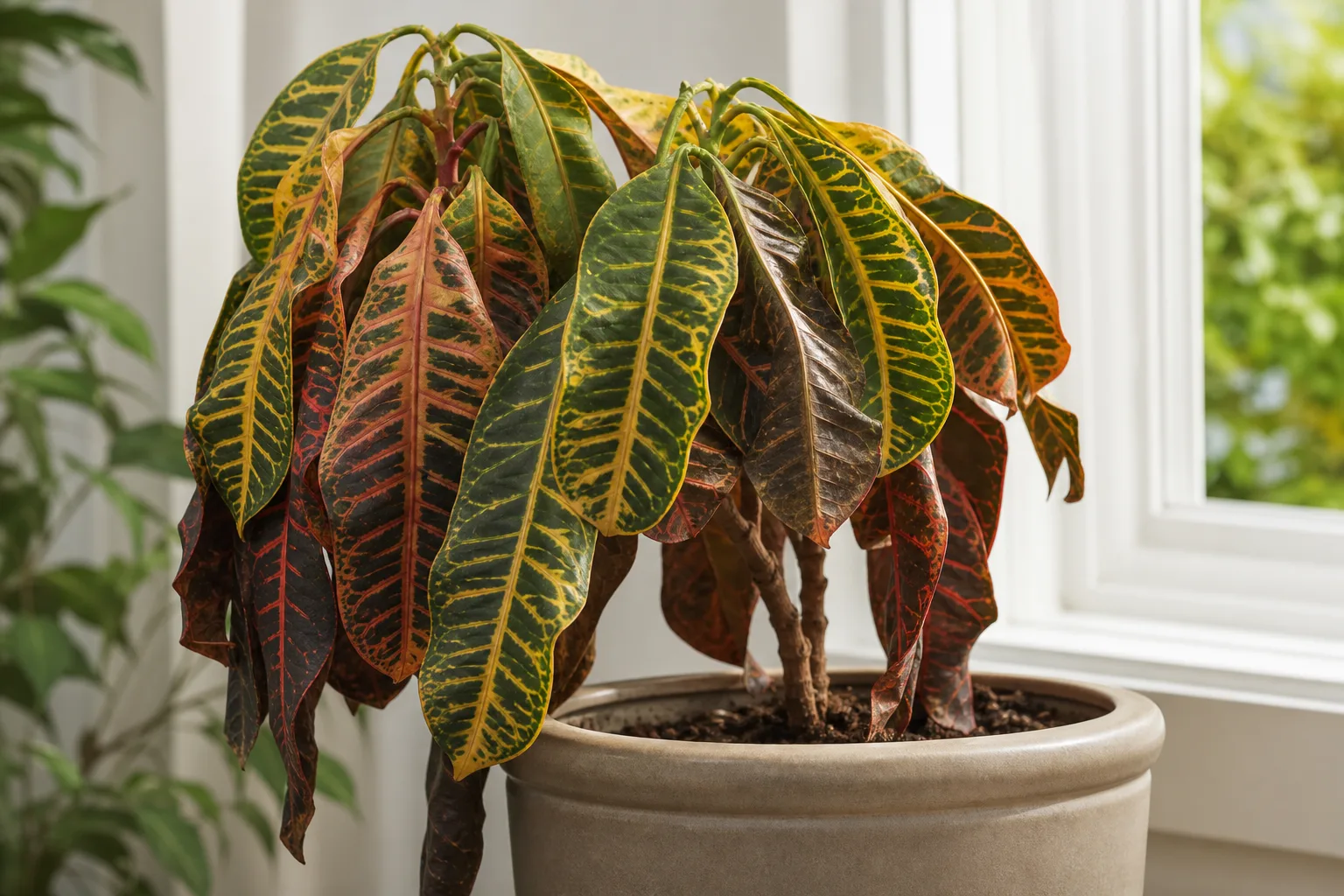
Wilting on Croton: Causes, Checks & Fixes
This guide covers wilting on Croton. See also the general Wilting guide, watering, and light pages for this plant.
Wilting on Croton: Causes, Checks & Fixes
Quick answer
Wilting on Croton (Codiaeum variegatum) means the leaves have lost turgor-the stiff, leathery foliage hangs limp or floppy instead of holding its normal upright posture. On this tropical shrub, wilt often arrives fast, which is why owners search “wilting” rather than the slower posture change covered on drooping leaves. The same limp canopy can come from drought, soggy roots, a recent move, cold drafts, spider mites, or too-sudden light change-but the first fix depends on which branch you confirm.
First step: lift the pot and push your finger into the top inch of mix. A light, dry pot with thirsty new shoots wilting first means underwatering-soak and drain. A heavy, cool, damp pot that stays wet for many days means root stress or rot-stop watering and inspect. If moisture is even and you bought or moved the plant within the past two weeks, suspect relocation shock before you change the watering rhythm.
This page is a wilting diagnostic hub. For drought recovery steps, see underwatering on croton. For wet-soil decline, see overwatering and root rot.
What wilting looks like on Croton
Healthy croton leaves feel thick and leathery, with bold color held at a stiff angle along woody stems. Wilting changes that profile quickly-and the pattern plus soil moisture tells you which cause to pursue.
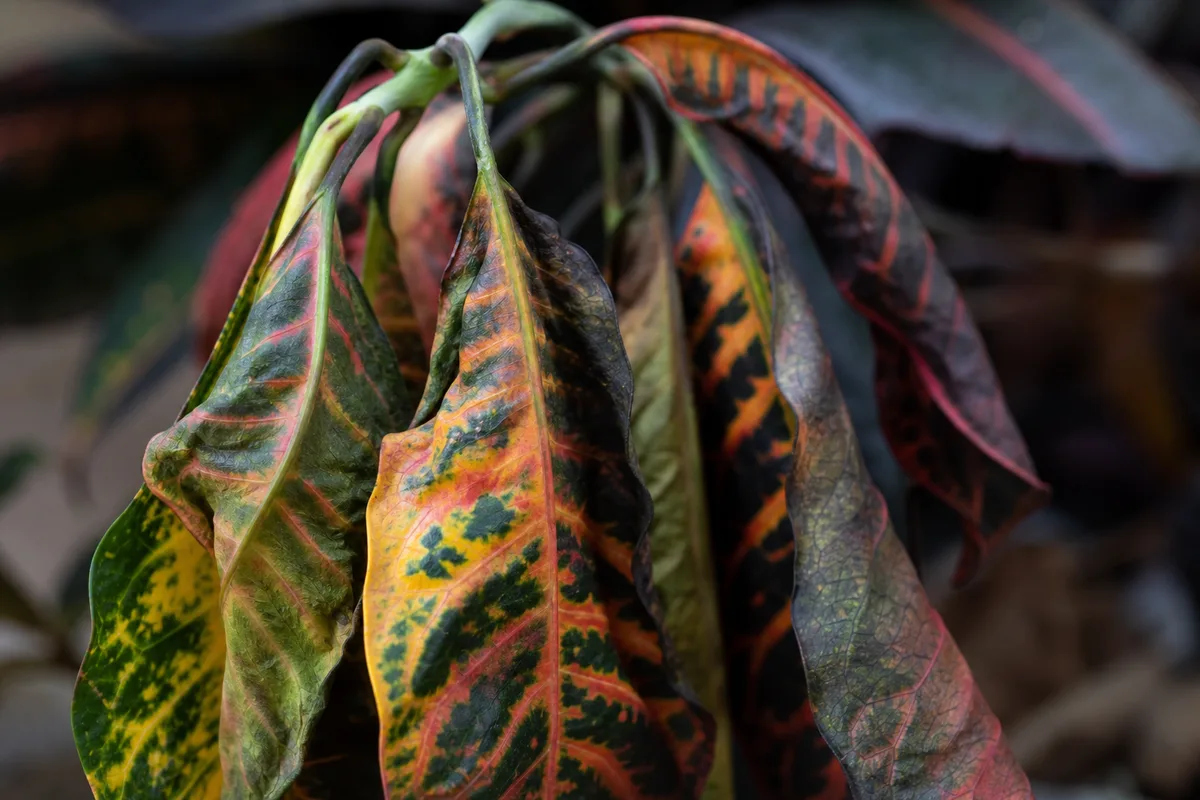
Wilting symptoms on Croton - compare with healthy tissue on the same plant.
Dry-soil wilt (underwatering) shows limp leaves on a noticeably light pot. The surface mix is pale and dusty an inch down. UF/IFAS notes that new croton foliage wilts when the plant is thirsty-new shoots often droop before older leaves follow. Leaves may feel thinner but stay firm, not mushy. Water may run straight through hydrophobic peat without darkening the center.
Wet-soil wilt (overwatering / root rot) shows limp leaves while the mix stays dark, cool, and heavy. Lower leaves may yellow. A faint sour smell from drain holes or fungus gnats near the surface point to chronic saturation. Damaged roots cannot move water upward even when the pot is full-so the plant looks thirsty while soil is wet.
Relocation or repot shock causes dramatic wilt and leaf drop even when you water correctly. The classic scene: moist soil, limp foliage, and a plant you brought home from the nursery-or moved from one room to another-within the past two to four weeks. Wisconsin Extension warns that changing environments too quickly can shock croton and cause leaf drop.
Cold-draft wilt hits overnight near winter windows, exterior doors, or AC vents. Soil moisture may be fine, but leaves hang limp and then drop. RHS guidance lists cold draughts and temperatures below 15°C (59°F) as leaf-drop triggers. Croton often suffers leaf drop when temperatures remain below 50°F.
Spider-mite wilt adds fine stippling, dull gray-bronze patches, and webbing on leaf undersides-often in dry indoor air. NC State notes spider mite susceptibility sometimes limits long-term indoor croton performance. Mite pressure weakens foliage before obvious canopy collapse.
Bright-light acclimation wilt can appear when a croton moves from dim shop light to a strong south or west window too fast. Outer leaves may wilt or scorch while inner growth stays firm. Croton needs bright light for color, but sudden full summer sun through glass can overheat leaves.
Why Croton wilts faster than many houseplants
Croton is a tropical Euphorbiaceae shrub with large, colorful leaves that transpire heavily in bright conditions. It is also famously intolerant of environmental change-a trait that makes wilt feel sudden even when the underlying stress built over days.
Common Croton-specific wilt triggers:
Calendar watering without reading the pot. Croton in a sunny window may need water every five to seven days in summer but only every ten to fourteen days in winter. A fixed schedule misses both drought wilt and the wet-soil rot that follows panic-soaking.
Relocation and light shock. Moving from nursery bench to car to living room-or shifting from one window to another-changes light, humidity, and airflow at once. Croton often drops leaves to reduce water demand while roots catch up. This is not fixed by drowning the plant.
Cold plus moist soil. Cool air slows root function on tropical species. Wet mix near a sub-50°F window creates a dangerous combo: roots work poorly, mix stays saturated, and wilt looks like thirst when the real problem is temperature and drainage.
Overwatering after past leaf drop. Owners who saw croton drop leaves from a move sometimes compensate with extra water. Saturated peat drives out oxygen; rotting roots cannot supply leaves. RHS lists root rot from waterlogged compost as a croton killer.
Underwatering in bright, root-bound pots. More light means more water use. A crowded root ball in a small pot can go from moist to bone dry in a few days during summer heat-new shoots wilt first as a watering guide.
Dry air and spider mites. Low humidity browns tips and invites mites that stipple and weaken leaves. Wilt from pests often follows weeks of dusty, dry conditions near heat vents.
Lookalike symptoms to rule out
| What you see | Likely cause | Where to go next |
|---|---|---|
| Limp leaves + light dry pot + new shoots wilt first | Underwatering | Underwatering guide |
| Limp leaves + heavy wet pot + yellow lower leaves | Overwatering / root rot | Overwatering or root rot |
| Wilt + moist even soil + recent move/repot | Relocation shock | Stabilize placement (this page, shock branch) |
| Overnight wilt + cold window/vent + moist soil | Cold injury | Warm stable spot; see light placement |
| Stippling + webbing + dull foliage | Spider mites | Spider mites guide |
| Gradual posture loss over weeks, not sudden flop | Drooping (slower signal) | Drooping leaves guide |
| Green revert + weak stems in dim room | Low light stress | Not enough light |
Wilting vs. drooping on croton: Owners usually search “wilting” when collapse feels sudden or floppy and “drooping” when leaves gradually lose posture over days. The wet-vs-dry fork is the same, but wilting pages prioritize acute triage and shock branches.
How to confirm the cause
Work through these checks in order so you do not soak a rotting plant or repot one that only needs stability.
- Top-inch moisture - Push your finger knuckle-deep. Croton is normally watered when the top half-inch to inch of soil dries. Dusty dry confirms drought; damp or wet with limp leaves suggests root failure.
- Pot weight - Lift a corner. Light plus wilt equals dry. Heavy, cool pot plus wilt equals oversaturated mix or dead roots.
- New shoot pattern - Thirsty new tips wilting first strongly supports underwatering. Even wilt across all leaves on wet mix points to root rot.
- Smell and drainage - Sour odor, water sitting in a cachepot, or mix wet a week after watering confirms chronic overwatering habitat.
- Temperature and placement - Note distance from winter glass, AC vents, and doors. Below-50°F nights with moist soil fit cold injury, not thirst.
- Recent history - Bought, repotted, or moved within two to four weeks? Shock is likely even with correct moisture. Do not repot again to “fix” wilt.
- Pest scan - Check leaf undersides for stippling and fine webbing. Mites thrive in the dry air that also browns croton tips.
- Root inspection (wet wilt only) - If leaves stay limp after the top inch has dried for four to five days, slide the plant out. Firm white or tan roots mean pause; mushy brown roots mean root rot.
Confirmed dry wilt: dry surface, light pot, firm roots at the ball edge, new shoots wilted first. Confirmed wet wilt: moist mix, yellow lower leaves, mushy roots, or sour smell. Confirmed shock: wilt started right after move with mostly intact roots and even moisture.
First fix for Croton
Your first action depends on what you confirmed-not on how limp the leaves look.
If the mix is dry and the pot is light
Bottom-water or soak until the root zone rewets, then drain completely. Place the pot in a sink of room-temperature water until the surface darkens, lift it out, and empty the saucer. One deep soak beats repeated splashes that never reach the center on a bushy croton. Full soak-and-drain workflow: underwatering on croton.
If the mix is wet, heavy, or sour-smelling
Stop watering immediately. Let the top inch dry. Confirm drainage holes are open and the pot is not sitting in runoff. If leaves stay limp after the mix has been evenly moist-not saturated-for three to four days, unpot and inspect roots. Mushy tissue means root rot-trim, dry, and repot; do not soak.
If you moved or bought the plant recently (moist even soil)
Stabilize placement-do not repot, fertilize, or flood. Put the croton in its final bright spot, keep temperatures above about 60°F away from drafts, and maintain the top-inch dry-down rhythm without swinging to drought or daily drenching. Expect some leaf drop over two to four weeks while roots adjust.
If cold exposure is the trigger (moist soil, drafty spot)
Move to stable warmth first. Pull the plant back from the window pane or AC line. Croton does best between 60 and 85°F. Do not compensate with extra water while roots are chilled.
If spider mites are confirmed
Isolate and rinse leaf undersides before any soil change. Showering removes mites and webbing; follow with treatment per the spider mites guide. Fix moisture and humidity after pest pressure drops.
Step-by-step recovery by cause
Once the first fix is in place, follow one branch-not all at once.
After drought soak:
- Wait 24–48 hours for leaves to firm.
- Resume watering when the top inch dries-see the watering guide for seasonal rhythm.
- Hold fertilizer until new colorful growth appears for two weeks.
After wet-soil correction:
- Dry the top inch before the next drink.
- Inspect roots if wilt persists on evenly moist-not wet-mix.
- Repot into fresh well-drained mix only when rot is confirmed and warmth is stable.
After relocation shock:
- Keep light bright but acclimated-east windows or filtered south/west within a few feet of glass per the light guide.
- Maintain even moisture without saturation.
- Wait four to six weeks before Croton repotting guide or feeding.
- Judge recovery by the first stiff new leaf, not by leaves already on the floor.
After cold injury:
- Warm placement above 60°F consistently.
- Remove only leaves that are fully brown or mushy-wear gloves when handling croton; sap can irritate skin.
- Do not fertilize until stable new growth returns in spring warmth.
Recovery timeline
Mild drought wilt on Croton often reverses within one to two days after a proper soak-you will see leaves lift and feel thicker. Moderate wet-root wilt or shock wilt may take two to six weeks before new foliage looks normal. Cold-damaged or severely rotted tissue rarely regains full turgor.
Judge success by firm, colorful new leaves from stem tips, not by saving every dropped leaf. Croton may shed several older leaves when stressed-that is alarming but not always fatal if the woody stems stay firm and roots are pale and solid.
Chronic wilt over months with no clear wet/dry event suggests root decline, repeated shock from moving, or chronic low light-inspect roots and review light placement if watering corrections fail.
What not to do
Do not soak a croton whose soil is already wet-the most common panic response when leaves hang limp. Do not fertilize a stressed croton before you confirm moisture, roots, and stable warmth. Do not repot on day one for simple dry wilt or shock-extra disturbance compounds leaf drop. Do not move the plant repeatedly while it recovers; croton treats every relocation as a new crisis. Do not mist leaves instead of fixing root-zone moisture-roots need water in the mix, not a brief humidity bump on foliage. Do not stack repotting, pruning, pesticide, and fertilizer on the same day. When removing wilted leaves, wear gloves-croton sap irritates skin and stains fabric.
How to prevent wilting on Croton
Build prevention around how your croton actually grows in your home:
- Run the wet-vs-dry fork before every corrective soak-lift the pot, check the top inch.
- Water when the top half-inch to inch dries, not on a calendar-more often in bright light and small root-bound pots; less in cool winter dim conditions.
- Keep bright acclimated light most of the day; see the light guide for direct-sun acclimation.
- Hold stable warmth above 60°F and away from winter glass and AC vents-cold wilt mimics thirst.
- Choose a final spot after buying or moving and leave the plant there four to six weeks minimum.
- Watch new shoots: when they wilt, drink before the whole canopy follows.
- Boost humidity in dry rooms to deter spider mites-pebble trays or grouping, not mist-only fixes.
- Use rich, well-drained mix with perlite in pots with open drainage-croton wants moisture, not saturation.
When to worry
Escalate beyond a simple soak or stability wait if:
- Leaves stay limp after the mix has been evenly moist for three to four days (wet wilt) or after a proper soak and drain (dry wilt)
- The stem base feels soft or smells sour on wet soil
- Most roots are brown and mushy when you unpot
- New growth stops entirely for more than a month after you corrected the likely cause
- Night temperatures dropped below 50°F and leaves keep dropping despite warmth correction
- Stippling and webbing spread despite rinsing-see the spider mites guide
A healthy croton stem can lose many lower leaves and still push colorful new growth if wood stays firm. If stems blacken from the base upward or the root ball collapses, propagation from firm upper cuttings may be the backup-see the overview for general culture context.
Croton wilt cause comparison
| Cause | Soil moisture | Pot weight | Key leaf clue | First fix |
|---|---|---|---|---|
| Underwatering | Dry inch down | Light | New shoots wilt first | Soak and drain |
| Overwatering / rot | Wet days on end | Heavy | Yellow lower leaves | Stop water; inspect roots |
| Relocation shock | Often even/moist | Normal | Recent move; leaf drop | Stabilize placement |
| Cold draft | Often moist | Normal | Near window/vent overnight | Warm stable spot |
| Spider mites | Variable | Normal | Stippling, webbing | Isolate; rinse; treat |
| Low light (chronic) | Normal | Normal | Green revert, weak stems | Brighter acclimated light |
Conclusion
Wilting on croton is a symptom router, not a single diagnosis. The wet-vs-dry soil fork separates thirst from root failure in minutes; relocation history and temperature placement separate shock and cold from both. Fix one confirmed cause at a time, judge recovery by stiff new colorful growth, and use the linked underwatering, overwatering, root rot, drooping leaves, not enough light, and overview guides when you need cause-specific depth beyond this hub.
When to use this page vs other Croton guides
- Croton watering guide - Use for routine moisture checks before assuming wilting is the main issue.
- Croton problems hub - Browse all 16 common issues on this species.
- Underwatering on Croton - Different entry point when symptoms overlap with wilting.
- Overwatering on Croton - Different entry point when symptoms overlap with wilting.
- Root Rot on Croton - Different entry point when symptoms overlap with wilting.