Root Rot on Croton: Causes, Checks & Fixes
Quick answer
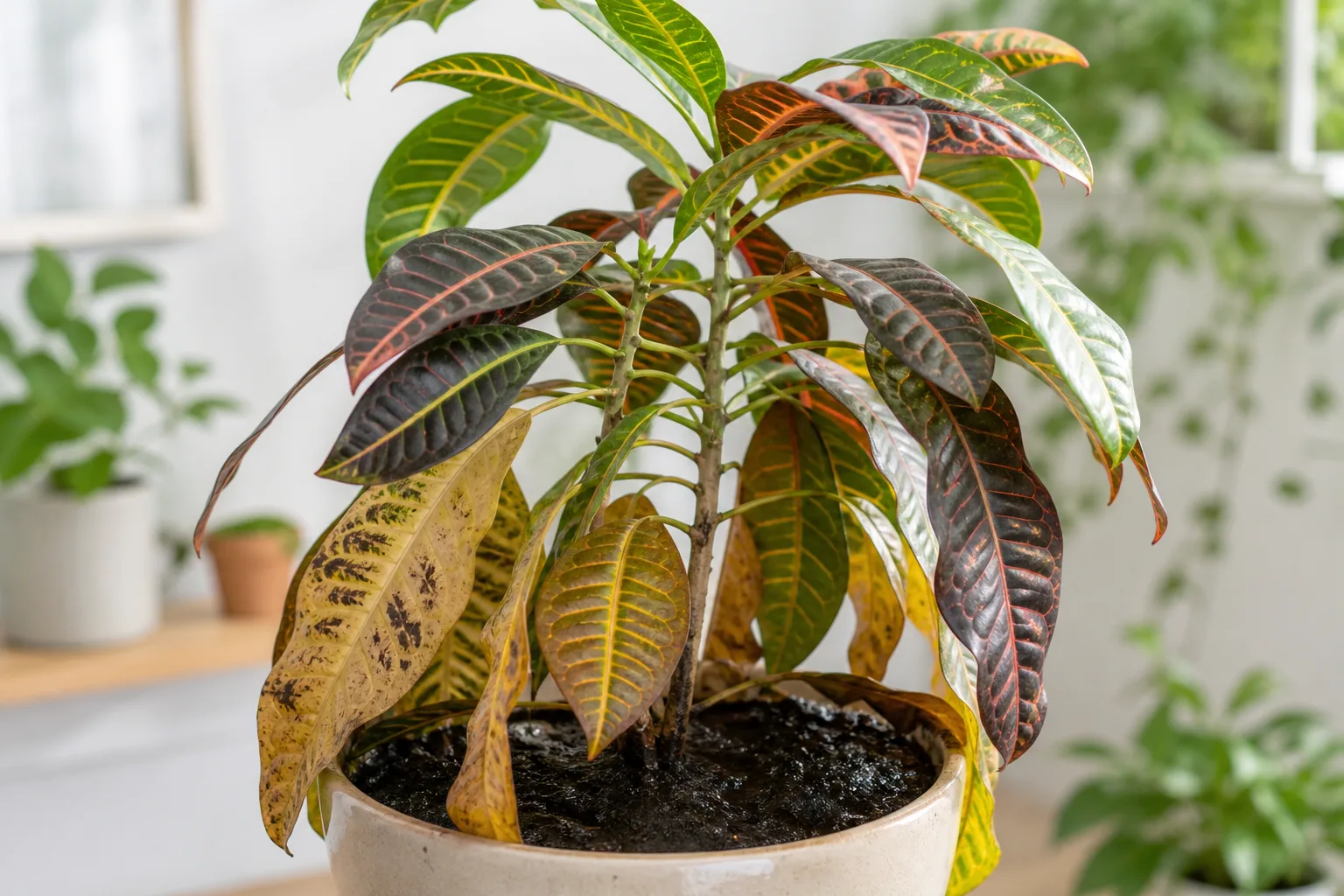
Root rot on Croton follows chronically wet mix in an upright tropical shrub that drops leaves from both over- and underwatering-limp colorful leaves on damp soil are the classic trap. First step: stop watering, lift the pot, and check whether stems at the soil line are firm before you unpot.
Root Rot on Croton: Causes, Checks & Fixes
This guide covers root rot on Croton. See also the general Root Rot guide, watering, and light pages for this plant.
Root Rot on Croton: Causes, Checks & Fixes
Quick answer
Root rot on Croton (Codiaeum variegatum) is almost always a watering and drainage failure, not a mysterious disease. This upright multi-stem tropical shrub from Southeast Asia carries bold, waxy leaves along woody lateral stems-not a compact rosette-so limp colorful foliage on damp soil is the signature trap. Croton is famous for dropping leaves when kept too wet or too dry, which makes the wilt-on-wet-soil paradox especially dangerous: growers water again, and rotting roots lose even more function.
First step: stop watering immediately. Lift the pot. If the mix is wet and heavy, press your finger half an inch to an inch deep near the pot edge. Wet clinging soil plus yellow lower leaves or a sour smell means treat root rot as likely. Check whether stems feel firm at the soil line before you unpot, trim, or repot.
Root rot vs. other Croton problems
The wilt-on-wet-soil paradox separates root rot from thirst on croton better than any single leaf symptom. Underwatered Croton wilts on a light, dry pot and often perks within a day or two after a thorough soak. Root rot produces the opposite: collapse on heavy wet mix with no rebound after watering-wilting with moist soil often means roots cannot absorb water because they are decaying.
| Pattern | Pot weight | Soil at knuckle depth | Stem at soil line | What it usually means |
|---|---|---|---|---|
| Root rot | Heavy | Wet, cool, clings to finger | Soft or blackening | Failed roots on saturated mix |
| Underwatering | Light | Dry and crumbly | Firm and woody | Turgor loss from drought |
| Early overwatering | Medium-heavy | Damp for weeks | Firm but drooping | Wet-soil stress before roots fail-see overwatering |
| Cold draft or move shock | Normal | Moist on schedule | Firm | Mass leaf drop without sour smell-see wilting |
| Natural aging | Normal | Dry on schedule | Firm | Older lower leaves yellow while new stem-tip growth looks healthy |
Fungus gnats hovering over the pot surface often appear alongside chronically wet mix-they are a nuisance and a clue that the top layer is not drying fast enough for healthy roots. For the full dry-pot versus wet-pot wilt workflow, see the underwatering guide and watering guide.
What root rot looks like on Croton
On this upright shrub, rot rarely announces itself at stem tips first. Thick, leathery leaves slow how fast visible wilt appears, so roots can decline while upper colorful foliage still looks acceptable for a while.
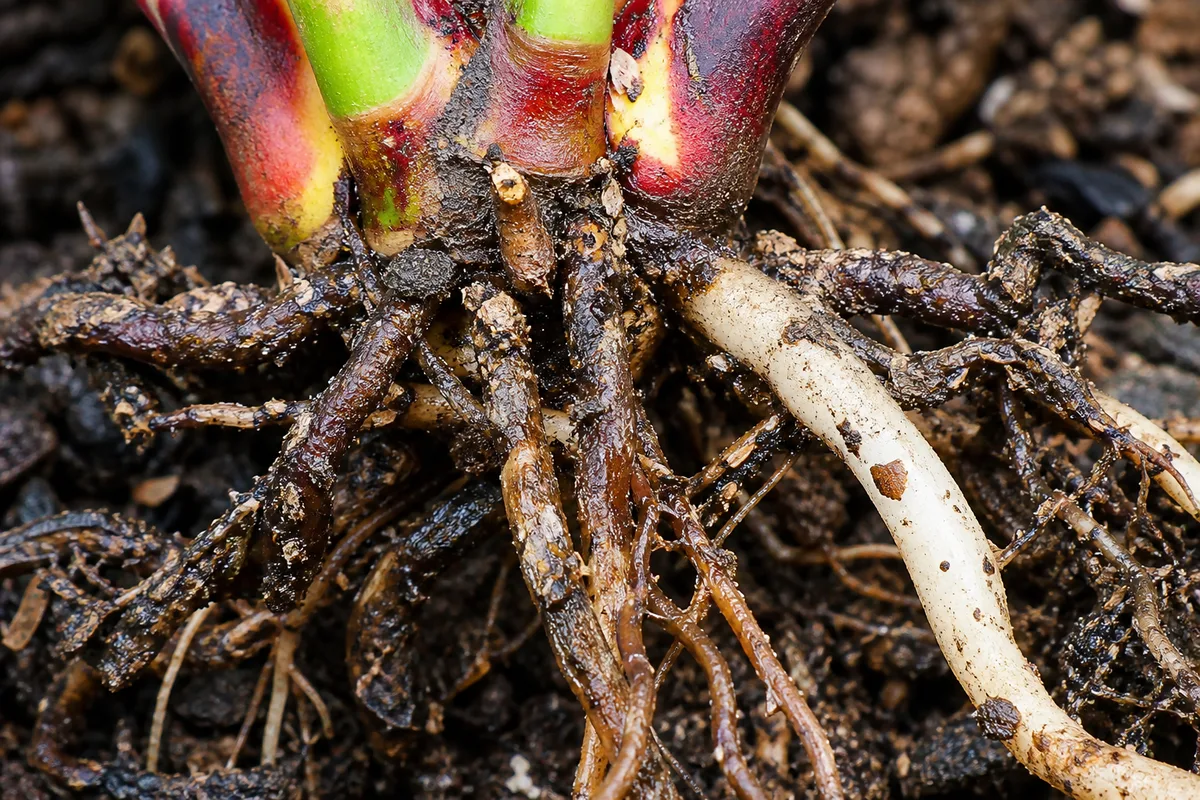
Root Rot symptoms on Croton - compare with healthy tissue on the same plant.
Early signs
- Yellow lower leaves while the mix stays damp-not the gradual fade of a single old leaf aging out
- Limp, drooping colorful leaves on wet soil that do not firm up after you water
- Sudden mass leaf drop with sour-smelling mix-croton drops leaves from both too-wet and too-dry soil, but wet soil plus wilt points to rot
- Slowed new growth at stem tips when light and warmth should support colorful pushes
- Fungus gnats near the soil line in a pot that never dries down
Advanced signs
- Soft, mushy stems at or just above the soil line-rot climbing the woody base is a bad sign
- Brown or black tissue on stems where they meet wet mix
- Widespread collapse with leaves turning brown and papery despite moisture
- Roots that slip off when touched-healthy croton roots stay firm and pale tan or white
Compare with underwatering: a dry lightweight pot, dusty mix an inch down, and leaves that recover after a full soak point away from rot. Compare with yellow leaves: gradual lower-leaf fade on an otherwise firm plant with soil drying on schedule usually means aging or light stress, not active rot.
Why Croton gets root rot
Croton belongs to Euphorbiaceae, the spurge family, and indoors forms an upright woody shrub with leaves along lateral stems. It wants evenly moist, well-drained soil during active growth-but constant saturation in a cool dim room is a common failure mode.
Overwatering on wet mix. Root rot fungi grow and reproduce best in wet soils. Watering while the top half-inch to inch are still damp in summer-or before the top one to two inches dry in winter-keeps the root zone anaerobic. Croton’s waxy leaf coating delays visible wilt, so firm-looking leaves are not proof that roots are healthy when soil stays wet.
Poor drainage and standing water. Blocked drainage holes, dense peat-heavy mix without perlite, oversized pots with excess wet soil around a small root ball, and saucers left full after watering all keep the bottom of the root ball saturated. Never allow plants to sit in drainage water.
Cool rooms and slow evaporation. A croton in a cool winter window or dim corner uses less water per week. The same weekly watering that worked in summer leaves mix wet for weeks-overwatering, especially when growth slows, is a primary rot trigger.
Calendar watering without soil checks. Croton in a bright window may need water every five to seven days in summer but only every ten to fourteen days in winter. A fixed schedule ignores how your pot actually dries.
Fear-driven overcorrection. After past leaf drop from drought, some growers water too often. Croton rots in soggy mix-but swinging from drought to daily drenching creates the saturated conditions rot fungi need.
How to confirm the cause
Work through these seven checks in order before you repot. Each step narrows the diagnosis without stacking unnecessary treatments.
- Pot weight - Lift the pot after a known good watering to learn what “heavy” feels like. A wilted croton on a still-heavy pot strongly suggests root failure, not thirst.
- Knuckle test at half-inch to one inch - Push your finger to the first knuckle in summer or second knuckle in winter. Wet, cool, clinging soil after days without watering confirms chronic saturation.
- Smell - Neutral dry soil smells neutral. A sour, swampy, or rotten odor from the drainage hole or surface means treat rot as confirmed.
- Stem firmness at soil line - Press woody stems where they enter the mix. They should feel firm like a firm vegetable stem, not squishy. Soft tissue at the base means rot has moved above the roots.
- Drainage hole check - Confirm holes are open-not sealed by roots, pebbles, or a glued-in liner. Pour a small amount of water and watch it exit within seconds.
- Leaf pattern - Lower yellow leaves on wet soil fits rot. All leaves limp with dusty dry soil fits drought. Colorful new shoots wilting on wet mix strongly supports rot over underwatering.
- Temperature and recent changes - Cold drafts and temperatures below 15°C (59°F) can drop leaves without rot. If soil is wet, stems soften, and smell is sour, rot takes priority over shock.
If most checks point to rot, gently unpot and rinse roots under lukewarm water. Healthy roots are firm, pale tan or white, and hold their shape when pressed. Rotted roots are brown to black, soft, slimy, or hollow-and they smell sour.
First fix for Croton
Make one clear first move: stop watering and move the plant to bright indirect light with good airflow-not a dark corner. Do not fertilize. Do not repot on day one unless stems are already mushy and you need to trim immediately.
Once you have confirmed wet mix with failing roots, follow this numbered salvage workflow:
- Unpot and rinse roots so you can see color and texture clearly. Wear gloves-croton sap can irritate skin and is toxic if chewed by pets.
- Trim all mushy, brown, or hollow roots with clean scissors or pruners until only firm tissue remains. Sterilize blades between cuts if rot was advanced.
- Cut away soft stems at the soil line. If rot climbed the woody base, cut back to firm green tissue above the damage.
- Let cut root surfaces air-dry for one to two hours on a paper towel in shade-not direct sun.
- Repot into fresh rich, well-drained mix with perlite in a pot sized to the remaining root mass, not the former foliage volume. Use a pasteurized commercial potting mix, not garden soil.
- Wait about one week before the first light watering so cut surfaces callus and new root tips can start without fresh saturation.
- If most roots are gone but firm stems remain, take 4–6 inch cuttings from healthy stem tips, let cuts callus briefly, and root them in water or fresh airy mix. Stem-tip salvage is often more reliable than saving a bare root stump with no firm wood above the rot.
Keep the plant in bright indirect light during recovery. Avoid drafty cold windows and hot AC blasts. Croton needs stable warmth above 60°F to push new colorful leaves.
Recovery timeline
Recovery is judged by new colorful leaves from stem tips, not by old yellow leaves re-greening. Damaged leaves rarely recover their color; they may drop while the plant stabilizes.
- Mild rot with mostly firm roots - Stabilization within one to two weeks after repot and corrected watering; first firm new leaves at stem tips in two to four weeks
- Moderate rot with heavy root trim - Four to six weeks before consistent stem-tip growth; expect some leaf loss
- Salvage via stem cuttings - Root tips in water in two to three weeks; transferable to soil in four to six weeks when roots are several inches long
- Advanced stem mush at the base - Often fatal on the mother plant; prioritize propagation from the highest firm sections
Signs of improvement: firm woody stems at the soil line, new colorful leaves unfurling at branch tips, roots holding firm pale tips when you gently check after a month, and soil that dries down between waterings on schedule.
Signs the problem is worsening: spreading black mush on stems, wilt on wet soil after repot, sour smell returning within days, or no new stem-tip growth after six weeks in good light and warmth.
What not to do
- Do not water because leaves look wilted when soil is already wet-that deepens root failure.
- Do not fertilize until new growth resumes; stressed roots cannot use nutrients safely.
- Do not repot into garden soil, a much larger pot, or a container without drainage hoping it will dry faster.
- Do not leave the plant in the same sour mix without trimming damaged roots-the anaerobic conditions and pathogens remain.
- Do not handle rotted tissue or trim stems bare-handed if you have pets or sensitive skin-croton contains irritant sap that can cause mouth and skin irritation on contact.
- Do not confuse post-repot leaf drop with ongoing rot-if stems stay firm, mix drains well, and smell is neutral after a careful repot, give stable warmth and corrected watering time before assuming failure.
How to prevent root rot next time
Prevention on Croton is mostly rhythm tied to light and season, not luck:
- Water when the top half-inch to one inch of mix dries in summer, or one to two inches in winter-not on a fixed calendar. Bright summer windows may need water every five to seven days; cool dim winter rooms may go ten to fourteen days or longer.
- Use rich, well-drained potting mix with perlite and a pot matched to the root ball-not an oversized container holding excess wet soil.
- Empty saucers within 30 minutes of every watering. Never leave the plant standing in runoff.
- Match watering to light and temperature-low-light and cool placements need longer dry-down intervals.
- Do not reuse sour potting mix from a rotted plant or water that drained from infected roots.
- Disinfest tools with alcohol or dilute bleach after working on rotted tissue before using them on healthy plants.
The watering guide is the best long-term companion to this page-it covers knuckle tests, pot weight, seasonal shifts, and the overwatered-croton symptom set in depth.
When to worry
Escalate beyond a simple dry-down and repot if:
- Stems soften at multiple points near the soil line despite your salvage attempt
- Wilt returns on wet soil within days after repot with no new stem-tip growth
- Most roots were mushy and remaining firm wood is only a few inches above the rot line
- Sour smell returns within a week of repotting into fresh mix-check drainage and trim any tissue that turned soft again
- No new colorful leaves after six weeks in bright indirect light and stable warmth above 60°F
- Fungus gnats persist and soil never dries between waterings-your mix or pot may still hold too much water
A healthy croton stem can lose many lower leaves and still push colorful new growth from tips if the wood stays firm and enough sound roots remain. If stems blacken from the base upward, stem-tip cuttings from the highest firm sections are the backup-not another round of soaking.
Related Croton guides
- Watering - dry-down protocol, knuckle test, and seasonal rhythm
- Overwatering - early saturation before roots fail
- Underwatering - dry-pot vs wet-pot disambiguation
- Wilting - limp foliage overlap
- Yellow leaves - lower-leaf yellowing patterns
- Croton overview - care hub and species background
Conclusion
Root rot on Croton is fixable when you catch it while woody stems and enough firm roots remain. Confirm wet heavy soil with sour smell and mushy roots, stop watering, trim decay, repot into fresh well-drained mix, and judge recovery by new colorful leaves at stem tips-not by saving every leaf already yellow on the floor. Separate rot from drought, cold shock, and post-repot stress before you water again, and rebuild prevention around the knuckle test and complete drainage your pot actually needs.