Croton Light Needs: Bright Direct Sun and Color Intensity
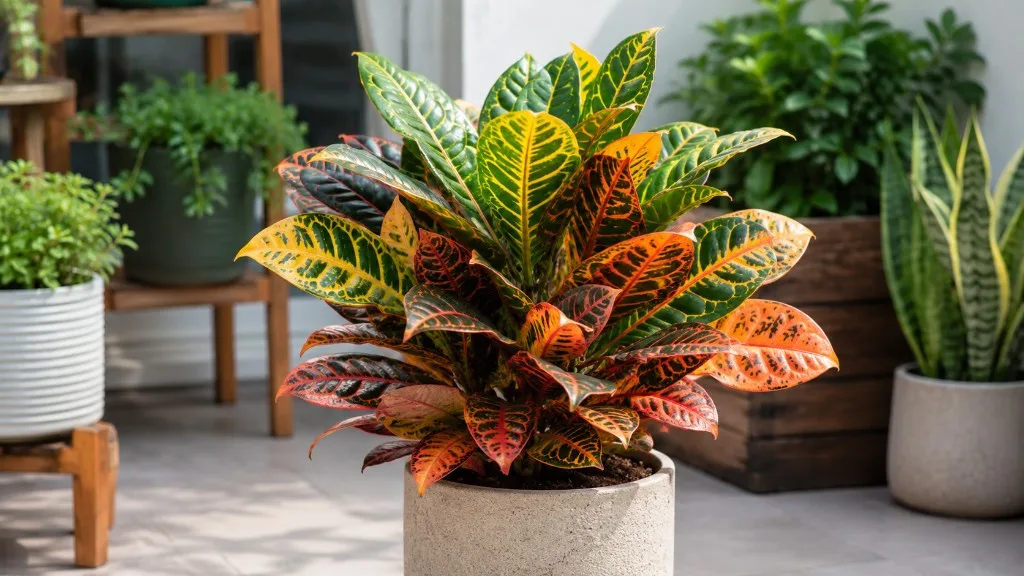
Croton Light Needs: Bright Direct Sun and Color Intensity
Croton Light Needs: Bright Direct Sun and Color Intensity
A croton bought for its painted-leaf drama can look like a different plant six weeks later - greener, leggier, thinner in the canopy, and dropping leaves you assumed were healthy. That collapse is rarely mysterious. Codiaeum variegatum is a tropical foliage shrub that evolved under high light in Southeast Asia and the western Pacific, and it keeps score in real time. Give it the bright exposure it expects, including some direct sun once acclimated, and new leaves reward you with the orange, red, yellow, and pink variegation you paid for. Park it where the room feels bright to human eyes but the leaves receive weak, reflected light all day, and the same plant reverts toward green, stretches toward windows, and sheds foliage to reduce its energy demand.
The practical goal is not to memorize a lighting label. It is to place croton where new growth stays compact, thick, and strongly colored - then acclimate any increase in sun so you do not trade one problem for another. Wisconsin Extension puts the baseline clearly: croton has the best color in bright, indirect light indoors, with higher light levels producing more vibrant foliage and a tighter habit. What many summaries leave out is the other half of that sentence - insufficient light pushes leaves back toward green, while too much unfiltered direct sun can turn them gray and dull. Your job is to land in the bright band, lean toward direct morning sun when color fades, and move gradually whenever you change exposure.
How Much Light Croton Actually Needs
Croton is not a low-light foliage plant, and treating it like one is the fastest route to a pale, leaf-shedding specimen. Indoors, think bright light as the default, with one to several hours of direct sun on the leaf surface when the plant is acclimated and the window exposure is manageable. The Royal Horticultural Society notes that crotons need bright but indirect light in summer to grow well, and that in insufficient light the leaves may lose vibrant colour or drop - while full summer sun through glass can overheat and scorch foliage. That framing is useful: croton wants intensity, but intensity delivered without cooking the leaves or shocking a plant that formed in a dim greenhouse.
Outdoors in cool climates, Wisconsin Extension reports that acclimated crotons can tolerate full sun if kept moist; indoors, most growers get the best color from an east window, a close position at a bright south or west window with filtering, or a combination of strong ambient light plus a few hours of direct rays. If you are guessing between “bright indirect” and “actually sunny,” choose sunnier for croton and acclimate downward if you see washout or scorch - not the reverse. Color intensity follows light intensity more honestly than most houseplants admit.
The Short Answer for Busy Growers
Place acclimated croton where leaves receive bright light most of the day, including direct morning sun or filtered direct sun at a south or west window. Sit the pot close enough that you could not comfortably read a book by leaf-level light alone in the afternoon - not across a dim living room because the corner “looks fine.” Watch the newest leaves: firm texture, short internodes, and developing variegation mean the exposure is working. Uniform greening, long gaps between leaves, or steady leaf drop mean light is now the limiting factor, regardless of how bright the room feels to you.
Why Bright Light and Direct Sun Drive Croton Color
Croton color is chemistry, not decoration. Leaves contain chlorophyll (green), carotenoids (yellow and orange), and anthocyanins (red, purple, and bronze tones). The bold patterns on cultivars like Petra, Mammy, or Mrs. Iceton come from anthocyanin and carotenoid pigments expressing strongly enough to dominate or contrast with background green. Both pigment classes cost energy to build and maintain. When light drops below what the plant needs to sustain that investment, croton shifts the balance toward chlorophyll - the most efficient photosynthetic machinery - and the showy colors retreat.
This is why “surviving” in low light is a misleading standard. A croton may persist for months with green-dominant foliage while slowly weakening. The plant is not being dramatic; it is economizing. Under stronger light, especially direct sun delivered safely, anthocyanin production ramps up again in developing tissue. Wisconsin Extension states directly that higher light levels produce more vibrant color and a more compact habit. That single relationship should guide every placement decision more than generic houseplant charts that lump croton with moderate-light tropicals.
Pigments Behind the Foliage Show
New croton leaves often emerge green or yellow-green and develop red, orange, or pink as they mature - a pattern UF/IFAS Gardening Solutions describes for codiaeum foliage development. If you panic at green new tips while old leaves still show color, you may be misreading normal growth. The diagnostic question is whether each successive flush gains pigment as leaves harden off. Under adequate light, yes. Under chronic low light, new leaves stay greener, smaller, and farther apart on the stem.
Anthocyanins also function as photoprotection in bright conditions. In manageable direct sun, that role supports color expression rather than fighting it. In extreme, unfiltered afternoon sun through hot glass, a different carotenoid - zeaxanthin - can accumulate to dissipate excess light energy. At high concentrations, zeaxanthin suppresses chlorophyll production and leaves look washed-out gray or dull, a presentation Wisconsin Extension distinguishes from the uniform green fade of shade. Knowing which fade you see tells you whether to add light or filter it.
When Direct Sun Intensifies Color
Direct sun intensifies croton color when three conditions align: the plant is acclimated to the exposure, moisture and humidity stay stable enough that leaves do not desiccate, and the sun angle is not delivering punishing afternoon heat through glass. Morning sun is the easiest win indoors - lower temperatures, softer angles, and enough intensity to drive pigment without the oven effect of west-facing panes in July. A croton that has been sitting two feet back from an east window can often move to the sill after a week of gradual adjustment and show noticeably richer color on the next growth flush.
Direct sun fails when it arrives suddenly. Leaves formed in 200 foot-candles cannot metabolize a jump to full midday beam in one afternoon. Cell damage, bleached patches, and emergency leaf drop follow - not because croton “hates sun,” but because unacclimated tissue was asked to handle a step change. The fix is slower acclimation, not permanent shade exile. Croton’s native range is tropical open forest and coastal margins with strong light; the species is built for brightness. What it lacks is tolerance for reckless moves.
Best Window and Placement for Croton Indoors
Window direction matters because it bundles intensity, duration, and heat. A north window in a shaded courtyard may never deliver enough light for vivid croton color, even if the plant looks “healthy” for a while. An east window is often ideal: direct sun for several morning hours, then bright indirect the rest of the day. South and west windows supply the highest energy but require distance or sheer filtering to prevent gray washout or scorch, especially in summer.
Distance is the control most growers skip. Three feet from a south window can mean the difference between glowing Petra foliage and a green, leggy shrub. Wisconsin Extension’s practical framing - bright, indirect light indoors with more vibrant color at higher light - implies proximity. If you would not put a tomato seedling where you put your croton, the croton is probably too far from the glass.
East, South, West, and North Compared
An east-facing window is the first choice for many indoor crotons. Direct morning sun acclimates easily, heat load stays moderate, and afternoon brightness usually remains strong enough to support pigment without baking leaves. A south-facing window can produce the boldest color if you manage distance: start with a sheer curtain or place the pot one to two feet inside the sill line, then move closer over two weeks while watching for gray dulling or crisp edges. A west-facing window delivers intense afternoon sun and is the highest scorch risk; filter heavily or use west light only if east and south options are unavailable. A north-facing window works only when the view is open sky, the room is unobstructed, and you supplement with grow lights - otherwise expect green revert and leaf drop over time.
Rotate the pot a quarter turn weekly once growth leans, but do not treat rotation as a substitute for insufficient light. Leaning is the plant voting with its stems.
Direct Sun Tolerance and Safe Acclimation
Croton can handle direct sun indoors and out when the plant is hardened to it and cultural conditions stay stable. Wisconsin Extension notes outdoor full-sun tolerance in cool climates after acclimation from indoor conditions. The indoor parallel is moving a plant from a dim shop or a back shelf to a sunny sill - possible, but only on a schedule. Acclimation is not optional polish; it is how you prevent the leaf-drop shock that gives croton its reputation for temperamental behavior.
Sudden light increases are one of the top triggers for abscission - the plant shedding leaves to rebalance after stress. Drafts, Croton repotting guide, and watering swings do the same, which is why you should change one variable at a time. If you are increasing light, hold repotting and fertilizer until new growth confirms the plant accepted the move.
Morning Sun vs Harsh Afternoon Rays
Morning direct sun builds color with lower risk. Leaves heat gradually, transpiration stays manageable, and zeaxanthin-related dulling is less common than under blazing afternoon panes. Afternoon direct sun through clear glass combines maximum solar angle with residual daytime heat in the room. Even acclimated crotons can gray out or scorch at the leaf center under that load. A sheer curtain that cuts intensity by thirty to fifty percent often preserves color better than pulling the plant deep into the room, where green revert starts within weeks.
If your only bright exposure is west-facing, use filtering year-round and accept slightly softer color rather than risk repeated scorch cycles. Scorched leaves do not recover; only new foliage replaces them.
Step-by-Step Acclimation Protocol
Days 1–3: Move the plant to the new bright location but set it two to three feet back from the previous distance to the glass, or use a sheer curtain full-time. Keep watering and temperature stable. Expect minor leaf drop if the plant was stressed already; do not compound stress with repotting.
Days 4–7: Move six to twelve inches closer to the window, or remove one layer of filtering for part of the morning. Check leaf temperature with your hand at midday; if leaves feel hot to touch, add distance.
Days 8–14: Place at the target sill or final distance if no gray dulling, bleaching, or curling during peak hours appears. If symptoms show, step back and extend the timeline - acclimation is not a race.
After day 14: Judge success on new growth only. Older leaves may keep old damage; the win is the next flush showing firmer texture, shorter internodes, and stronger variegation. UF/IFAS guidance that new croton foliage develops color as it matures means improvement may take one full growth cycle to read clearly.
Store-bought crotons often arrive from high-light production greenhouses. Bringing them straight into a dim apartment causes leaf drop within days - not because the plant is dying, but because it is shedding leaves it can no longer support. Acclimation works both directions: from bright to dim (expect drop, then stabilize) and from dim to bright (go slow to avoid scorch).
Low Light Limits, Color Fade, and Leaf Drop
Low light is a poor long-term strategy for croton, full stop. The plant may linger, but vivid color is the first feature it abandons. RHS guidance is explicit: in insufficient light, leaves may lose vibrant colour or drop. Those are not separate mysteries - both are energy-management responses. Chlorophyll-heavy green leaves photosynthesize more efficiently per unit of light than heavily pigmented ones. When light is inadequate, croton produces greener tissue and sheds older leaves it cannot afford to maintain.
This is the core misunderstanding behind “my croton was fine for three months.” Fine meant alive, not well-lit. Slow greening, smaller new leaves, wider internodes, and a sparse canopy are the preview; leaf drop is the main event if nothing changes.
Why Dim Rooms Strip Color and Vigor
In dim conditions, croton etiolates - stems stretch toward the brightest vector, internodes lengthen, and leaves shrink. The plant looks leggy and adolescent even when the pot is mature. Variegation on new leaves stays muted because anthocyanin and carotenoid pathways throttle down. You may also see older colorful leaves drop while the remaining canopy turns uniformly green. That pattern is a smoking gun for light deficiency, not nutrient deficiency, though growers often fertilize harder and make things worse.
Reducing water slightly in low light is sometimes necessary because the root zone stays wet longer, but watering adjustments do not replace light. A dim croton with soggy soil drops leaves from both stresses at once, which confuses diagnosis. Check placement first: if the plant is more than three feet from the brightest window or sits in a north room with obstructions, light is the primary fix.
Post-Purchase Leaf Drop in Weak Light
The classic croton crisis happens within the first two weeks at home. You bought a plant with flame-colored leaves, placed it where it matched the sofa, and watched a third of the foliage fall. Retail crotons are grown under strong light and stable greenhouse humidity. Your living room corner is a different biome. The plant responds by dropping leaves it cannot support while it waits for stable conditions.
If the new spot is also low light, the plant cannot grow replacement foliage with comparable color. The canopy thins, green tips appear, and you assume you killed it. Move the croton to the brightest acclimated location you can offer - east sill or filtered south - stabilize watering so the top inch of soil dries between drinks, and wait for new growth. Leaf drop after a move is common; continued drop without new firm leaves after four weeks is a placement problem.
Do not interpret post-purchase drop as proof croton needs shade. It needs consistency and enough light to regrow. Stability of temperature between 65–85°F and protection from cold drafts matters equally; Wisconsin Extension ties leaf drop to temperatures below 50°F and rapid environmental swings.
Too Much Sun: Gray, Dull, or Scorched Leaves
Too much direct sun produces a different symptom set than low light, and conflating them sends you in the wrong direction. Low light gives uniform greening, stretch, and thin leaves. Excess unfiltered sun often gives gray, washed-out, or dull foliage as zeaxanthin-related photoprotection dominates, per the physiological pattern Extension literature describes alongside Wisconsin’s observation that too much direct sun makes leaves gray and dull looking. True scorch shows bleached white or tan patches, crisp margins, and collapse on the sun-facing side only.
If leaves look faded but not crunchy, filter light or add distance before you banish the plant to a dim room. If leaves show crisp damage, remove the worst offenders only for aesthetics - the plant does not need a full haircut - and reduce afternoon intensity immediately. Scorched tissue does not heal; only new leaves matter.
Hot glass matters. A south window in winter may be perfect; the same sill in August can cook leaves in hours. Seasonal adjustment is normal, not failure.
Grow Lights When Natural Light Falls Short
When windows cannot deliver enough intensity - basement apartments, north-only exposures, winter latitude dips - a full-spectrum LED grow light is a better fix than accepting green revert. Position the fixture so leaves receive roughly 200 or more foot-candles at the canopy for color maintenance; brighter is acceptable if heat at the leaf surface stays moderate. Run lights 12–14 hours daily on a timer to mimic long tropical days. Start higher above the canopy and lower gradually across a week, the same acclimation logic as window moves.
Grow lights fail when they are too dim, too far, or treated as ambient room lighting. The leaves need photons, not a glow in the corner. Watch new growth: if internodes stay short and color develops on maturing leaves, the setup works. If growth stays green and stretched despite a lamp in the room, move the light closer or upgrade intensity.
Distance, Hours, and What New Growth Tells You
A practical starting point for household LED panels is 12–18 inches above the top leaves, adjusted per manufacturer guidance and leaf temperature. Leaves should look vibrant, not glossy with heat stress. Combine artificial light with whatever natural light exists rather than relying on either alone in borderline rooms. The new-growth test applies unchanged: firm leaves, developing variegation, and compact spacing mean success.
Seasonal Light Changes and Watering Adjustments
Light is not static. Winter lowers intensity and shifts sun angle; summer magnifies heat through glass. Croton grows more slowly in low winter light even indoors, and the RHS notes reduced growth when light levels fall seasonally. Bright summer windows may require filtering that winter sills do not. Each shift changes how fast soil dries, so watering must follow light, not a calendar. Brighter exposure increases transpiration; dimmer winter light slows dry-down. A croton moved to a brighter window without watering adjustments may drop leaves from root stress even when light is finally correct.
Track the plant, not the month. If the top inch of soil stays wet for ten days in the new spot, the location may still be too dim, the pot may be too large, or both - but do not increase water frequency to compensate for slow drying in shade.
Warning Signs Your Croton Needs More or Less Light
Needs more light: new leaves predominantly green with slow pigment development; long internodes and leaning stems; smaller leaf size flush after flush; gradual canopy thinning and leaf drop in an otherwise stable environment; soil staying wet too long because the plant is not transpiring actively.
Needs less light or filtering: gray, dull, or washed-out foliage especially on sun-facing leaves; bleached or crisp patches after a move to a sill; leaf cupping or wilting at midday despite moist soil; color loss that looks faded rather than uniformly green.
Acclimation or stability issue, not pure light math: sudden mass leaf drop right after purchase or relocation; drop paired with cold drafts or temperatures below 55°F; simultaneous repot and light change with no recovery window.
Use new growth as the verdict. Old leaves bear old conditions. Croton color intensity is written on the next flush, not the last one.
Conclusion
Croton light needs are blunt: this is a high-light foliage plant that shows its true colors only when brightness - including some acclimated direct sun - matches what its pigments demand. Place it at your best east or filtered south/west window, close enough that the leaves actually receive the light, and increase exposure gradually so you do not trigger shock drop or scorch. When color fades to green, stems stretch, or leaves fall in a stable room, assume insufficient light before you chase fertilizer, repotting, or pest sprays. When foliage turns gray or crisp, filter afternoon sun instead of retreating to a dim corner. Judge every change by the next new leaves. Give croton the light it is built for, move patiently, and the plant stops being a shedding mystery and becomes what you bought - loud, variegated, and worth the window space.
When to use this page vs other Croton guides
- Croton overview - Start here for whole-plant context before deep-diving this topic.
- Croton problems hub - Jump to symptom-specific fix guides when this care topic does not resolve the issue.
- Not Enough Light on Croton - Escalate here when light adjustments are not enough.
- Leggy Growth on Croton - Escalate here when light adjustments are not enough.
Related Croton guides
- Croton overview
- Croton watering
- Croton soil
- Croton propagation
- Croton fertilizer
- Croton repotting
- Not Enough Light on Croton
- Leggy Growth on Croton
- Croton problems
Related tool
Try the Plant Problem Diagnosis Tool with croton pre-selected to estimate needs for your setup.