Leggy Growth on Croton: Causes, Checks & Fixes
Quick answer
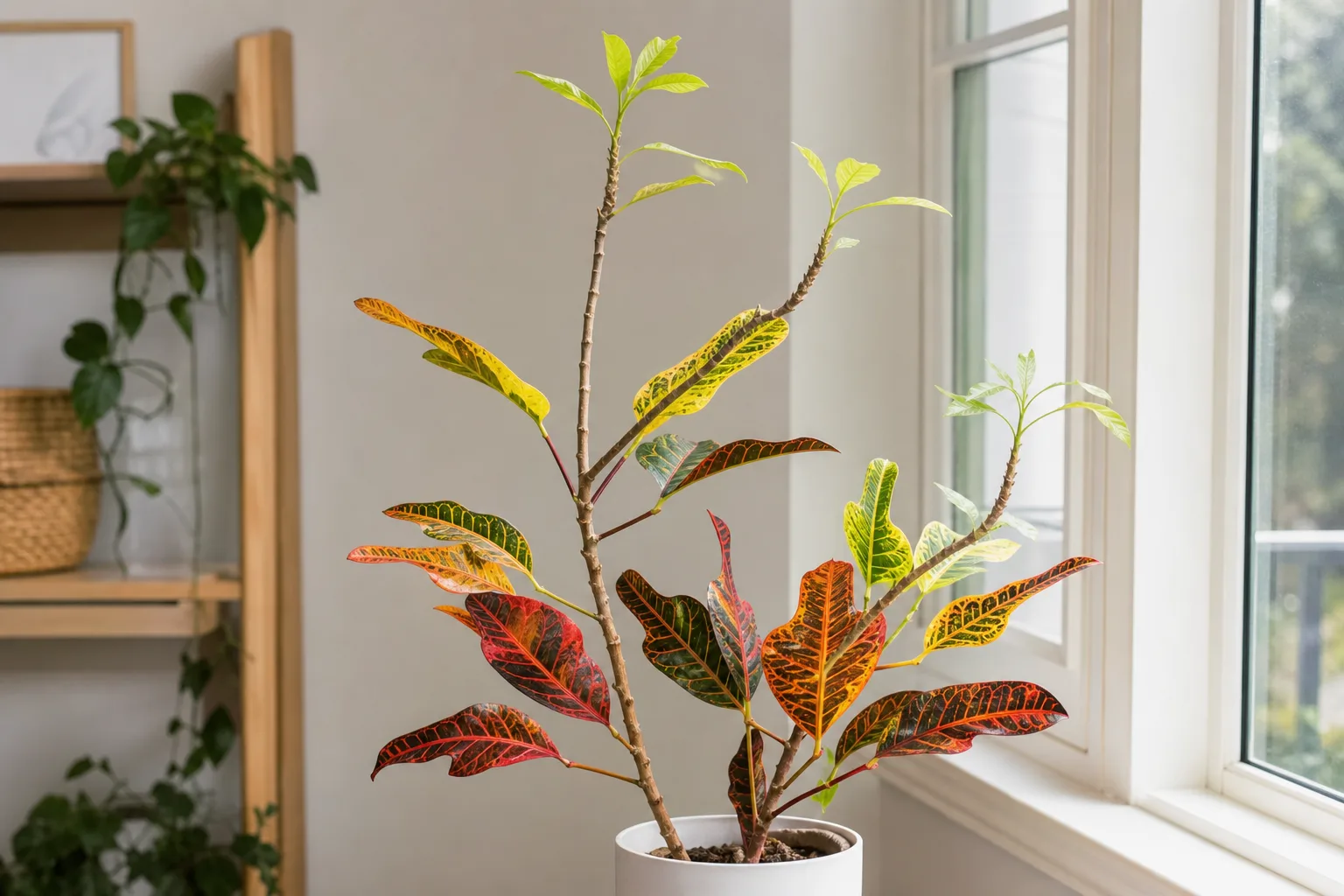
Leggy croton means long gaps between leaves, smaller pale new foliage, bare woody lower stems, and often a lean toward the window. Low light is the usual cause on Codiaeum variegatum. First step: confirm placement with the internode and shadow tests, then move to brighter acclimated light before any hard pruning.
Leggy Growth on Croton: Causes, Checks & Fixes
This guide covers leggy growth on Croton. See also the general Leggy Growth guide, watering, and light pages for this plant.
Leggy Growth on Croton: Causes, Checks & Fixes
Quick answer
Leggy growth on croton is etiolation-the plant stretches its woody stems toward usable light, leaving long bare internodes, smaller green-dominant new leaves, and often a one-sided lean toward the window. Codiaeum variegatum is a tropical foliage shrub sold for bold pigment; in dim rooms it economizes by building less anthocyanin, branching less, and spacing leaves farther apart on each new flush.
First step: compare internode length on the newest stems and run the hand-shadow test at the canopy. Gaps longer than about one finger width between new leaves, plus a faint or absent midday shadow, confirm light-not fertilizer-is the primary limiter. Move toward brighter, acclimated placement before hard pruning; stretched lower stems will not shorten on their own. Full window workflow: not enough light on croton.
What leggy growth looks like on Croton
Leggy croton is a gradual thinning, not sudden collapse. Learn the stem-and-color pattern before you treat yellow leaves as overwatering or reach for shears.
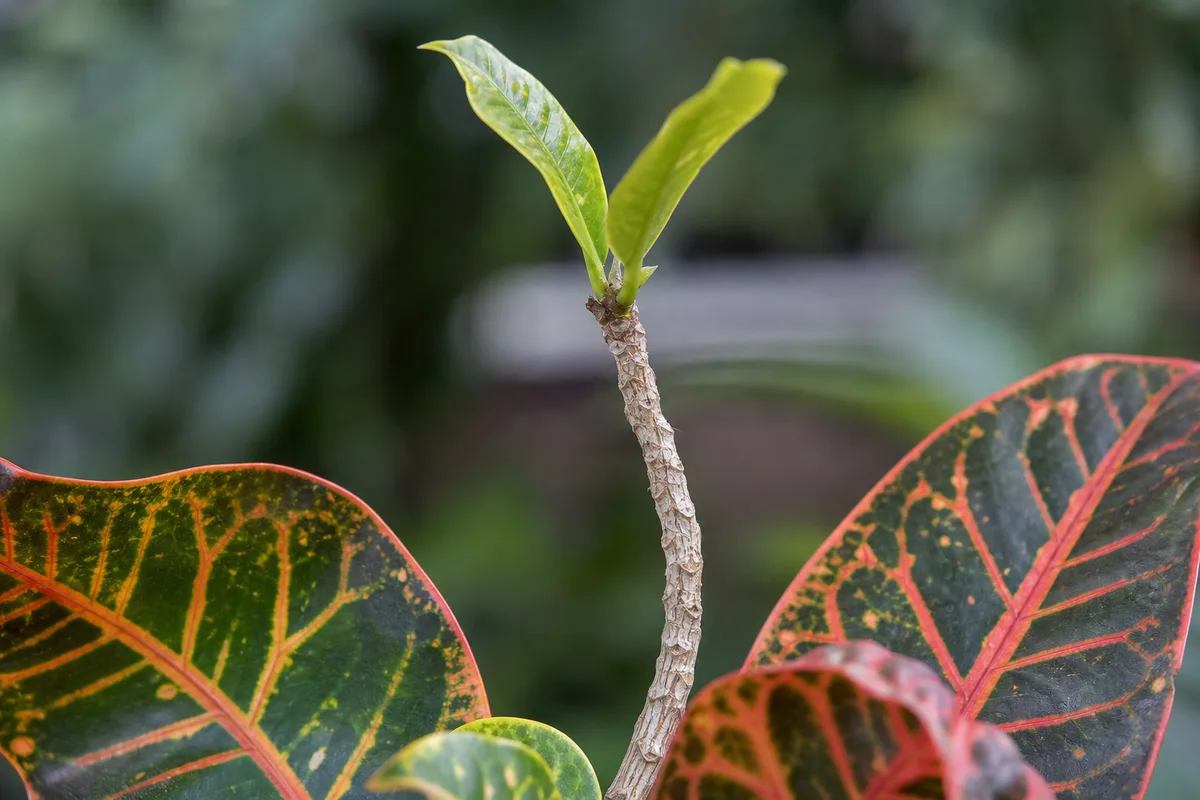
Leggy Growth symptoms on Croton - compare with healthy tissue on the same plant.
Stem and structure:
- Long internodes-visible gaps between leaves longer than earlier growth on the same stem, often wider than one finger
- Bare lower legs-woody stems with foliage clustered only at the tips while lower leaves yellowed and fell
- One-sided lean toward the brightest window or lamp
- Open canopy instead of the bushy shrub shape nurseries display
- Smaller, thinner new leaves on the latest flush compared to older segments
Color clues:
- New leaves stay mostly green instead of developing red, orange, yellow, or pink as they mature on cultivars like Petra or Mammy
- Existing variegated leaves lose contrast on the side farthest from light
- Uniform greening with long spacing points to shade; gray dulling on window-facing leaves after a sudden move suggests too much sun-a different problem covered in the light guide
Care clues:
- Soil stays damp longer than expected because the plant transpires slowly in low light
- Growth that looks “tall” but not fuller-height without branching density
- Post-purchase stretch after the plant leaves bright greenhouse light for a dim home
If most of these match, you are dealing with stretch toward light. See croton light requirements for baseline placement and acclimation.
Why Croton stems stretch
Croton evolved under strong tropical light in Southeast Asia and the western Pacific. Indoors, three situations push it into leggy etiolation:
Insufficient light intensity. Light drops sharply with distance from the window. A croton on a bookshelf across a “bright” living room stretches toward glass because leaf-level intensity is too weak to sustain compact branching and pigment production. Wisconsin Extension notes that higher light produces more vibrant color and a more compact habit-the inverse is long green stems in shade.
Seasonal daylight loss. The same summer placement may fail by January when day length and window angle both drop. Winter stretch without any move is common.
Pruning without brighter light. Croton branches from nodes on woody stems (NC State Extension - Garden Croton). Cutting leggy tips in a dim corner wakes buds below, but new shoots stretch again unless usable light increases-Ask Extension ties legginess primarily to insufficient sunlight, with maintenance pruning as a secondary factor.
Secondary contributors-overcrowding from neighboring plants, a recent dim-shop transition, or heavy fertilizing in shade-can worsen weak elongation but rarely cause legginess on their own when light is truly adequate.
Leggy vs lookalike symptoms
| What you see | Likely cause | First move |
|---|---|---|
| Long internodes, green revert, window lean | Leggy stretch / low light | Brighter acclimated light; not enough light |
| Wet soil weeks, yellow leaves, soft stems | Overwatering in dim conditions | Dry-down check; overwatering |
| Uniform green, short internodes, no new leaves | Slow growth / other limits | Slow growth checklist |
| Gray dull or bleached window-facing leaves | Too much unfiltered sun | Filter and acclimate; light guide |
| Stippling, webbing, dusty undersides | Spider mites on weak plant | Inspect pests; spider mites |
Leggy stems and insufficient light overlap heavily on croton-the stretch is the light signal. This page adds fix sequencing (light before hard prune), internode confirmation, and bare-stem rejuvenation; the not-enough-light guide goes deeper on pigment revert and window audits.
How to confirm low light is the cause
Work through these checks before repotting, fertilizing, or hard-pruning:
- Internode test - Measure spacing on the last two flushes. Gaps widening to more than one finger width on new growth confirm etiolation.
- Shadow test - At midday, hold your hand between the plant and the window. A sharp dark shadow means direct sun (manage acclimation). A soft shadow is bright indirect. Almost no shadow means too little light for compact croton growth.
- Lean direction - Stems grow toward the brightest source. Strong one-sided lean with sparse shaded-side foliage points to uneven or insufficient placement.
- Color on new flush - Green-dominant new leaves that never develop cultivar pigment as they mature fit low light, not nutrient deficiency alone.
- Soil dry-down - Soil staying wet seven to ten days in a warm room suggests slow metabolism-often paired with dim light. Cross-check the watering guide.
- Pest screen - Inspect undersides for spider mites. Stressed leggy crotons in poor light recover more slowly from infestations.
- Two-week placement trial - Move six to twelve inches closer to the brightest window or add a grow light; hold watering steady. Shorter internodes on the next flush confirm light was the limiter.
If four or more checks point to dim placement-and mushy stems, sour soil, and heavy pest coating are absent-leggy stretch from insufficient usable light is the primary diagnosis.
First fix: brighter, acclimated placement
Move the pot to the brightest stable location you can manage, increasing exposure gradually over 7–14 days-before any hard pruning.
Practical targets for most homes:
- East windowsill or within one to two feet of east glass-direct morning sun plus bright indirect the rest of the day
- South or west window with the pot one to two feet inside the sill or behind a sheer at first, then closer as leaves tolerate it
- Grow-light supplement if the only spot is more than four feet from bright glass or faces north-full-spectrum LED 6–12 inches above the canopy for 12–14 hours daily
Acclimate in small steps: hold behind a sheer or two to three feet back for three days, then move six inches closer every few days while watching for gray dulling, bleaching, or midday wilting. Do not fertilize, repot, or hard-prune on the same day you change light. Full acclimation protocol: croton light guide.
Old stretched internodes will not shorten after this move. Success shows up only on the next growth flush-tighter spacing and developing variegation on maturing leaves.
When and how to prune stretched stems
Pruning reshapes bare legs; it does not replace photons. Use this decision tree after light improves and you see firm new growth.
Pinch soft tips (light shaping)
During spring and summer active growth, pinch or snip the soft growing tips above a node every few weeks to encourage side branching. Limit removal to one-third of living foliage per session. This helps mildly leggy plants in adequate light stay bushy-details in the croton pruning guide.
Hard rejuvenation (bare lower stems)
When lower woody stems are leafless sticks with foliage only at the top, schedule hard cutback in early spring before the main growth push. Wisconsin Extension recommends hard pruning leggy croton in early spring to stimulate branching. The RHS advises cutting above a leaf joint when plants become misshapen or leggy.
- Locate a healthy node-swollen joint where a leaf attached
- Cut 5–10 mm above the node at a slight angle with sharp bypass shears
- On severely bare stems, individual branches can go back to 4–12 inches above soil line when roots are healthy and light is adequate
- Wear gloves-croton bleeds irritating milky latex (RHS Growing Guide)
Avoid major cuts from late fall through winter when short days slow regrowth. Stage extreme rejuvenation across two spring sessions if the plant is already stressed from recent leaf drop.
Never prune heavily while the plant still sits in the same dim corner-new shoots will etiolate again within months.
Recovery timeline
Expect the direction of change within two to three weeks of corrected light, not an instant bushier silhouette.
- Weeks 1–2: Leaf drop may slow or briefly continue as the plant adjusts; hold steady on placement and watering.
- Weeks 3–6: The next flush should show shorter internodes and developing pigment on maturing foliage.
- Months 2–3: Canopy density improves as branching resumes; old bare stem sections remain unless you pruned them.
Visible bud swell after a spring hard cut usually appears within one to two weeks; new leaves follow in two to four weeks under good light (Ask Extension - Leggy Croton). Winter recovery without supplemental light can take six weeks or longer.
If new growth stays elongated and green after six weeks in a clearly brighter spot, reassess window intensity, chronic overwatering, cold drafts below about 15°C (59°F), or active pests.
What not to do
Do not hard-prune before light improves-removing green tissue in a dim room strips photosynthetic capacity without fixing the cause.
Do not move a dim-adapted croton straight onto an unfiltered hot west windowsill. Gradual brightening prevents mass leaf drop; see not enough light for sun-shock signs.
Do not fertilize a stretched plant to “wake it up.” Extra nitrogen in shade pushes weak elongation and invites pests.
Do not stack repotting, hard pruning, and a major light jump in the same week-croton drops leaves when conditions shift too fast.
Do not judge recovery by old bare stems. Wait for compact new flushes before declaring the fix failed.
Do not ignore latex safety when cutting-wear gloves and keep trimmings away from pets; croton is toxic to cats and dogs.
How to prevent leggy growth next time
Place croton where it receives bright light most of the day, including acclimated direct morning sun or filtered south or west exposure-not north corners or interior shelves unless supplemented.
Rotate the pot a quarter turn weekly once growth resumes evenly. Clean windows seasonally; dust on leaves cuts usable light.
In winter, move closer to glass or extend grow-light hours before internodes lengthen. The same summer spot often fails from October through February.
Pinch soft tips during active growth to maintain bushiness. Remove individual rogue stems when you notice them rather than waiting for bare legs.
Budget for a quality grow light if your home lacks a high-light window-croton is a poor long-term fit for low-light rooms regardless of watering skill.
When leggy growth means a different problem page
Escalate beyond light and pruning when:
- Yellow leaves accelerate while soil stays wet and smells sour-overwatering and root stress in dim corners
- Stems soften at the base-inspect roots before repeated top cuts
- Growth is sparse but internodes stay short and light is clearly strong-see slow growth
- Bleaching or gray dulling after a sudden sill move-sun shock; filter the window per the light guide
Related Croton guides
- Not enough light - pigment revert, window audit, and sun shock
- Light - acclimation, windows, and grow lights
- Pruning - node cuts, hard rejuvenation, and pinching
- Slow growth - when sparse habit is not etiolation
- Overview - full care context for Codiaeum variegatum