Not Enough Light on Croton: Causes, Checks & Fixes
Quick answer
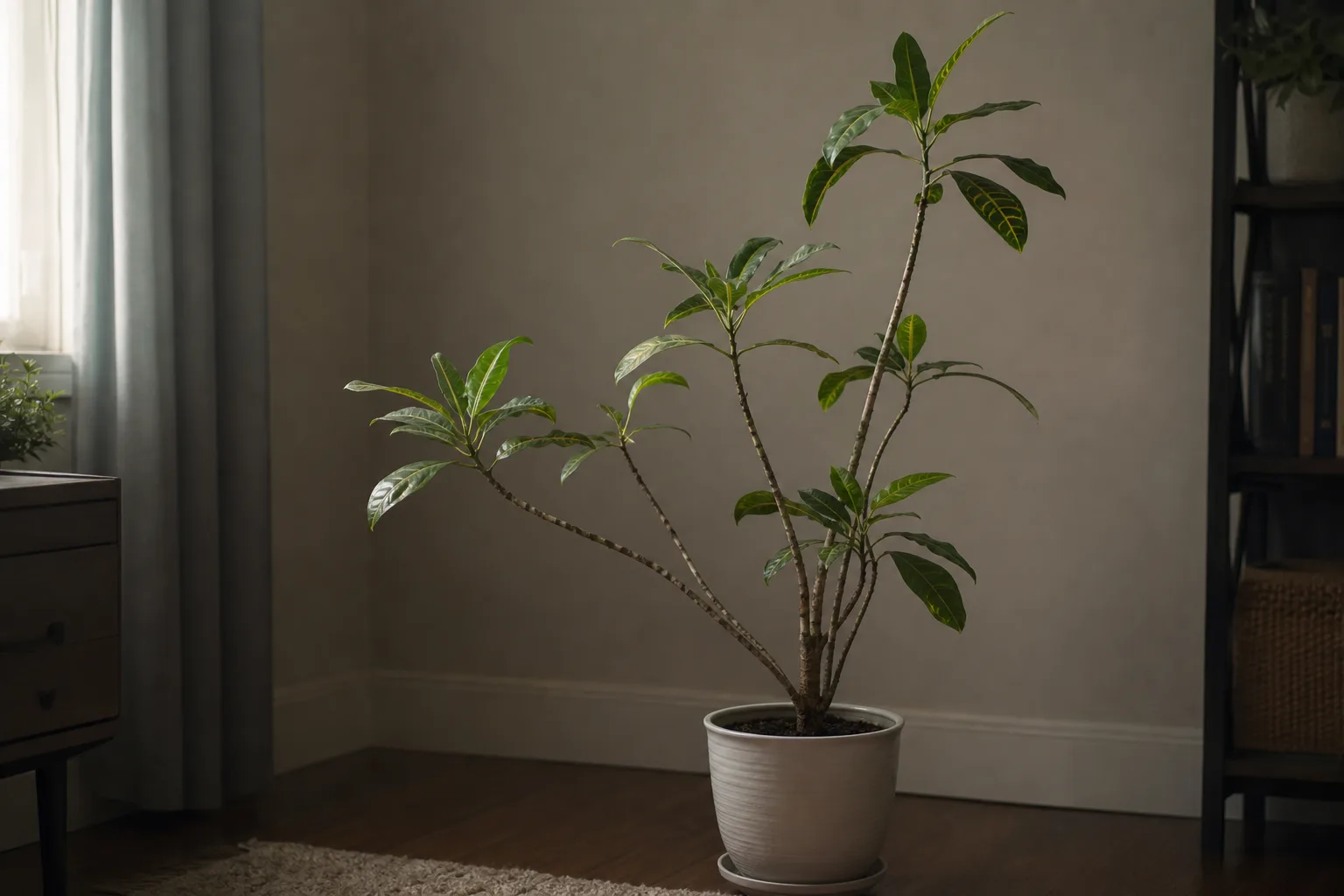
Croton in dim rooms reverts toward green, stretches between leaves, and drops foliage to cut energy demand. First step: move the pot to the brightest stable spot you can offer-within a few feet of an east window or filtered south or west light-and acclimate over one to two weeks.
Not Enough Light on Croton: Causes, Checks & Fixes
This guide covers not enough light on Croton. See also the general Not Enough Light guide, watering, and light pages for this plant.
Not Enough Light on Croton: Causes, Checks & Fixes
Quick answer
Croton (Codiaeum variegatum) is sold for painted-leaf color, but it only keeps that show when light intensity matches what a tropical foliage shrub expects. In a dim corner, hallway, or north-facing room far from glass, the same plant reverts toward green, stretches between leaves, and drops foliage to reduce its energy bill-not because you forgot to fertilize, but because photosynthesis cannot sustain the pigments and growth habit you bought.
First step: move the pot to the brightest stable spot you can offer within a few feet of an east window or filtered south or west glass. Do not jump straight to harsh afternoon sun through hot panes; increase exposure gradually over one to two weeks while you watch new growth, not old leaves, for improvement.
What not enough light looks like on Croton
Low light on croton announces itself through new growth first, then older leaves. The pattern is distinct from pest damage or simple underwatering on Croton.
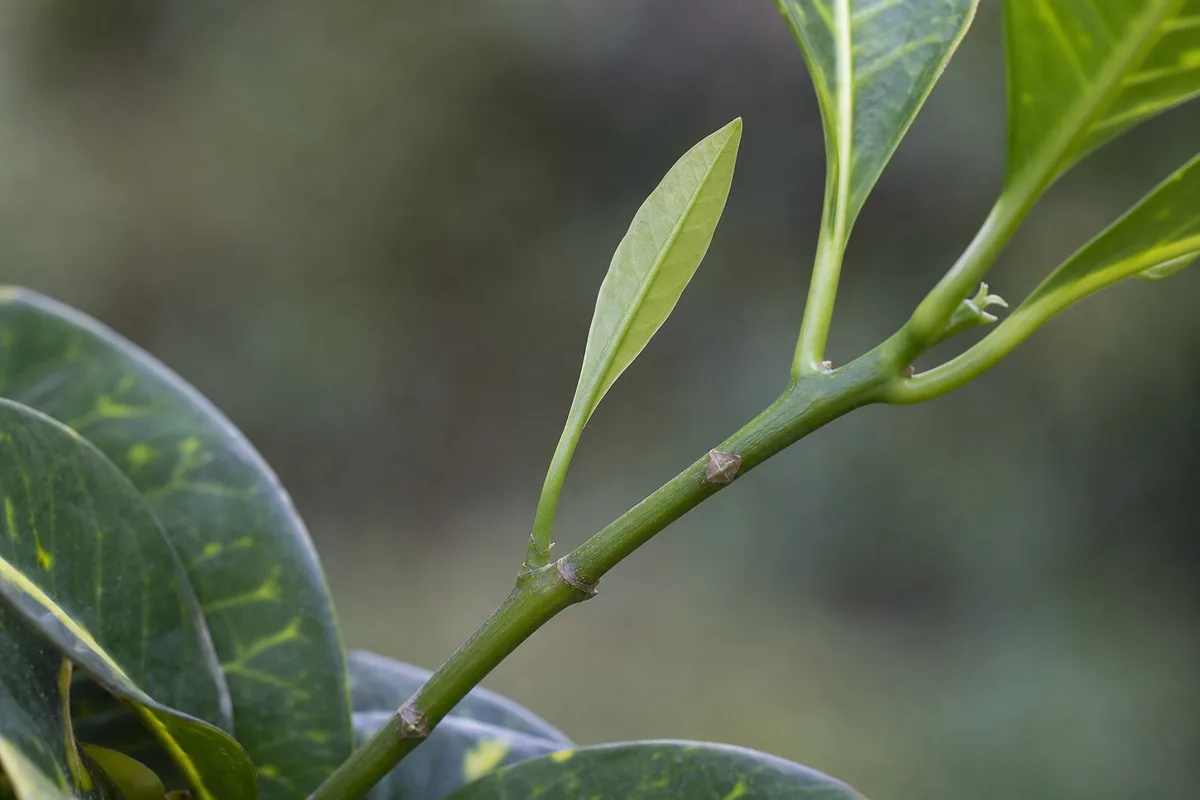
Stretched internodes and pale green new leaves on a croton stem - compare with shorter, more colorful growth from a brighter window.
Color fade and green revert:
- New leaves emerge green or yellow-green and stay that way instead of developing red, orange, pink, or yellow as they mature
- Existing variegated leaves lose contrast and shift toward uniform green, especially on the side farthest from the window
- Bold cultivars like Petra or Mammy look like a different, duller plant within weeks
Stretch and weak structure:
- Internodes-the gaps between leaves-lengthen so stems look sparse and “leggy”
- Leaves on new shoots are smaller and thinner than earlier growth
- The whole plant leans or grows one-sided toward the brightest direction
- Branching slows; the canopy opens up instead of staying bushy
Leaf drop and stalled growth:
- Lower leaves yellow and fall while the plant looks otherwise unstressed
- Growth nearly stops in what should be active spring or summer
- Soil in the pot stays wet longer than expected because the plant is not using water at the rate bright-light crotons do
Croton rarely flowers indoors, so do not use bloom failure as your main clue. Foliage color and stem spacing tell the story.
Why Croton runs out of light indoors
Croton evolved under strong tropical light in Southeast Asia and the western Pacific. Indoors, three common situations push it below its threshold:
Distance from the window. Light intensity drops sharply with every foot you move away from glass. A croton on a bookshelf across a “bright” living room may receive far less energy than one on an east windowsill, even when the room feels well lit to human eyes.
Wrong window exposure without supplementation. North windows and deeply shaded rooms usually cannot sustain vivid croton color. East windows work well; south and west windows work when the pot sits close enough and acclimated direct sun is managed.
Seasonal daylight loss. Winter short days reduce duration and intensity. A spot that barely worked in June often fails by January, triggering the same green revert and stretch even though you never moved the pot.
Post-purchase light crash. Crotons often leave nurseries or garden centers with greenhouse-level light, then land in a dim home. Leaf drop in the first month is frequently environmental shock layered on insufficient light-not a sign the plant is dying on day three, but a warning that placement must improve quickly.
How to confirm the cause
Work through these checks before Croton repotting guide, fertilizing, or spraying:
- Window audit - Note direction, distance from glass, and obstructions (sheers, tinted film, overhangs, neighboring buildings). Croton belongs in the high-light houseplant group-roughly 500–1000 foot-candles at the leaf surface near a south or west window, or strong east exposure.
- New-growth focus - Compare the last two flushes of leaves. If each new set is greener, smaller, and farther apart on the stem, light is the leading suspect.
- Shadow test - At midday, hold your hand between the window and the plant. A sharp, dark shadow suggests enough intensity for testing a move closer. A faint, fuzzy shadow means the spot is too dim for long-term color.
- Soil moisture cross-check - Stick a finger into the top inch. Soil that stays damp for a week in a cool dim corner suggests the plant is not transpiring fast enough-often because light is low, not because you watered too much on one day.
- Pest screen - Inspect leaf undersides and stem joints for spider mites, mealybugs, or fine webbing. Mites prefer dry air but stressed, weak crotons in poor light are harder to recover than well-lit ones.
- Two-week placement trial - Move the pot six to twelve inches closer to the brightest window (or add a grow light) and hold watering steady. Compact new leaves with emerging variegation confirm low light. Continued stretch with wet soil points you toward drainage or overwatering on Croton instead.
If the plant recently moved from a bright location, allow two to three weeks of stable brighter light before deciding the diagnosis failed-croton reacts slowly to corrections.
First fix for Croton
Move the pot to the brightest stable location you can manage, increasing exposure gradually over 7–14 days.
Practical targets for most homes:
- East windowsill or within one to two feet of east glass-often the easiest win, with direct morning sun plus bright indirect the rest of the day
- South or west window with the pot one to two feet inside the sill line or behind a sheer curtain at first, then closer as leaves tolerate it
- Grow-light supplement if the only available spot is more than four feet from a bright window or faces north-full-spectrum LED 6–12 inches above the canopy for 12–14 hours daily
Acclimate in small steps: hold the plant behind a sheer or two to three feet back for three days, then move six inches closer every few days while watching for gray dulling, bleaching, or midday wilting that signals too much unfiltered sun too fast.
Do not fertilize, repot, or hard-prune on the same day you change light. Croton already drops leaves when conditions shift; stacking stressors makes the read harder.
Step-by-step recovery
After the initial move:
- Hold watering to the pot, not the calendar. Water when the top inch of soil dries-the same rhythm as a healthy croton, but expect the interval to shorten slightly as brighter light increases water use.
- Rotate a quarter turn weekly once growth resumes evenly, so one side does not dominate.
- Wipe dust from leaves with a damp cloth so available light actually reaches the surface.
- Prune only after new growth looks firm. Once short internodes return, cut leggy stems back to a leaf node in early spring if you want a bushier shape. Wear gloves-croton sap irritates skin.
- Add supplemental light in winter if natural exposure dips. Keep total daily light-including artificial-at or below about 16 hours so the plant still gets a dark period.
- Watch for spider mites on recovering plants; shower the foliage if you see stippling or webbing, and improve humidity without leaving leaves wet overnight in dim corners.
Recovery timeline
Expect the direction of change within two to three weeks of corrected light, not an instant repaint of old leaves.
- Weeks 1–2: Leaf drop may slow or briefly continue as the plant adjusts; hold steady on placement and watering.
- Weeks 3–6: The next flush of leaves should show shorter internodes and developing pigment on maturing foliage.
- Months 2–3: Canopy density improves as branching resumes; older green leaves remain green unless you prune them for appearance.
If new growth is still elongated and uniformly green after six weeks in a clearly brighter spot, reassess whether the window is truly high light or whether another stressor-chronic overwatering, cold drafts below about 15°C (59°F), or active pests-is limiting response.
Lookalike symptoms
Overwatering in low light. Dim rooms keep soil wet longer. Yellow leaves plus sour-smelling mix and soft lower stems suggest rot risk, not light alone. Confirm moisture before moving a wet croton only to a brighter window without adjusting water.
Relocation shock. A croton dropped into a new home from a greenhouse may shed leaves even after you improve light. Shock and insufficient light overlap. Bright stable placement plus consistent watering usually stabilizes the plant within a few weeks if roots are healthy.
Too much direct sun (opposite problem). Unacclimated afternoon sun through hot glass can bleach or gray leaves and cause drop-different from the slow green revert of shade. If leaves look washed-out or scorched after a sudden move to a west sill, filter light and acclimate downward, not further into shade.
Spider mites. Fine stippling, webbing, and dusty leaf undersides indicate pests, not light deficiency alone. Mites are common on croton but require inspection, not just a window change.
Mistakes to avoid
- Assuming a bright room equals bright leaves. Ambient ceiling light does not replace window proximity for a high-light species.
- Chasing color with fertilizer. Extra nitrogen pushes weak, tender growth in dim conditions and invites pests.
- Moving straight to harsh west-afternoon sun. Croton wants intensity, but unacclimated tissue burns. Increase light in steps.
- Judging recovery on old leaves. Faded leaves rarely regain full variegation; watch the next growth flush instead.
- Repotting a stressed plant before light is fixed. Root work during ongoing leaf drop adds shock without solving the energy shortage.
- Misting heavily in a dark corner. Wet foliage in low air movement raises fungal risk; raise humidity with a pebble tray instead.
How to prevent low light next time
- Default placement: Bright light most of the day, including acclimated direct morning sun or filtered south or west exposure-not north corners or interior shelves unless supplemented.
- Seasonal check: Re-evaluate the same spot in January; add a grow light before green revert starts.
- Window hygiene: Clean glass inside and out once or twice a year; dust and film cut usable light more than owners expect.
- Buy with placement in mind. If your home lacks a high-light window, choose a different species or budget for a quality grow light-croton is a poor long-term fit for low-light rooms.
- Stable environment after placement. Once you find a working bright spot, avoid frequent moves; croton drops leaves when light and temperature swing.
When to worry
Low light alone is rarely fatal over a few months, but combined stress is dangerous.
Act quickly when:
- Leaf drop accelerates while soil stays wet and smells sour-move to brighter light and let the top inch dry before the next watering
- Stems soften at the base or blacken upward from soil line-inspect roots; rot in dim, wet conditions can kill croton fast
- Every new leaf stays tiny and pale after six weeks in what should be adequate light-verify pests, cold drafts, and root health
You can wait and observe when:
- A recently purchased croton drops older leaves but the stem stays firm and new tips look alive after you improve light
- Winter slow growth occurs in an otherwise bright spot-reduce watering and supplement light rather than panic
Croton is toxic to cats and dogs; keep adjusted pots off floor levels pets can reach when you move them toward windows.
Conclusion
Not enough light on croton is a placement problem, not a mystery disease. The plant tells you honestly: green revert, long stems, lean toward glass, and leaf drop when it cannot afford its variegation habit. Move it to real brightness-east or filtered south and west exposure, or a timed grow light-acclimate gradually, and judge recovery on compact new leaves with returning color. Old green foliage may never match the nursery tag again; the next flush is the scoreboard.
When to use this page vs other Croton guides
- Croton watering guide - Use for routine moisture checks before assuming not enough light is the main issue.
- Croton problems hub - Browse all 16 common issues on this species.
- Leggy Growth on Croton - Different entry point when symptoms overlap with not enough light.
- Slow Growth on Croton - Different entry point when symptoms overlap with not enough light.
- Yellow Leaves on Croton - Different entry point when symptoms overlap with not enough light.