Mealybugs on Croton: Causes, Checks & Fixes
Quick answer
Mealybugs on Croton hide in leaf axils and the bushy crown, leaving white cottony clusters and sticky honeydew. First step: isolate the plant and dab every visible colony with 70% isopropyl alcohol on a cotton swab-do not shower, repot, or prune heavily on day one, because stacked stress triggers sudden leaf drop on this species.
Mealybugs on Croton: Causes, Checks & Fixes
This guide covers mealybugs on Croton. See also the general Mealybugs guide, watering, and light pages for this plant.
Mealybugs on Croton: Causes, Checks & Fixes
Quick answer
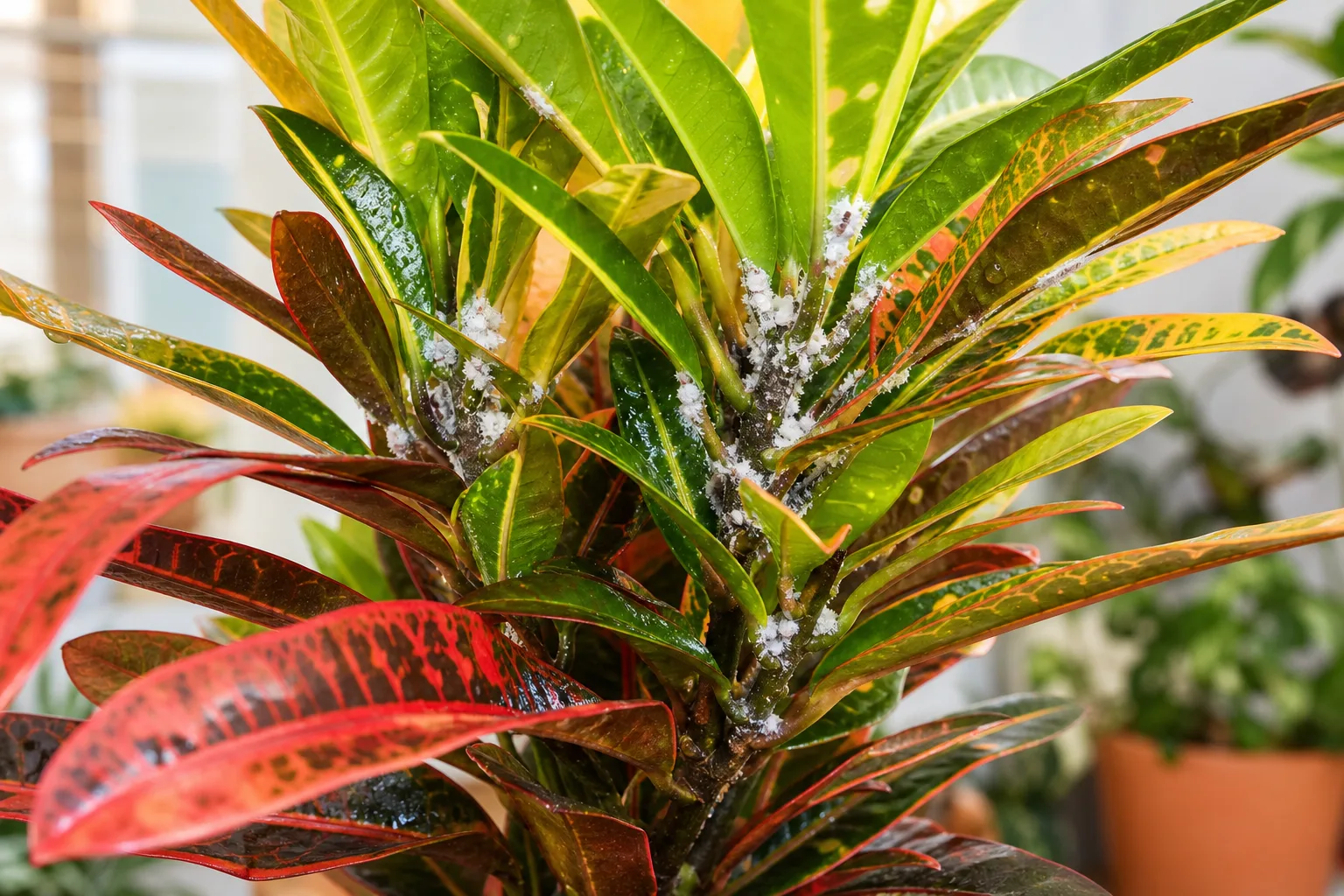
Mealybugs on croton (Codiaeum variegatum) show up as white, cottony clusters tucked into leaf axils, stem joints, and the bushy crown where leaves overlap. They suck sap and excrete sticky honeydew, which can blacken colorful foliage with sooty mold if ignored.
First step: isolate the plant and dab every visible colony with 70% isopropyl alcohol on a cotton swab. Work slowly through the crown and along each petiole base before you reach for a spray bottle.
Do not shower, repot, or prune heavily on day one. Croton reacts to stacked stress with sudden leaf drop-a separate problem from the pests themselves. Your opening session is about killing what you can see, not restructuring the plant. For stable watering and light after treatment, see the croton care hub at /plants/croton/.
Why Croton gets mealybugs in crown pockets and leaf axils
Croton is a warm-climate foliage shrub that grows actively indoors whenever light and temperature stay steady. Mealybugs thrive in those same mild, protected conditions and are among the most common sap feeders on houseplants. The citrus mealybug in particular targets indoor ornamentals with soft stems and sheltered feeding sites.
Croton’s bushy habit makes it an easy host. Wide leaves cluster at stem tips, creating pockets where cottony egg masses sit undisturbed through casual watering. Multi-stem specimens with several branches from one pot have more crown intersections to inspect than a single-trunk form-check every fork where a lateral meets the main stem. New growth in spring and summer is especially vulnerable because tender shoots are where females prefer to lay eggs when nitrogen fertilizer pushes fresh foliage.
Most infestations start on a newly purchased plant from a nursery bench, a grouped indoor display, or a pot moved beside an already infested neighbor on a shared windowsill. Mealybugs crawl slowly and hitchhike on leaves, pots, and tools. Skipping quarantine is the fastest way they enter a collection.
Stressed crotons attract pests faster than stable ones. Chronic overwatering on Croton, dim light, or a recent move that triggered leaf drop all weaken the plant without killing it outright. Spider mites on croton are more common in dry winter air beside bright glass, but mealybugs still appear regularly on nursery stock and stagnant indoor clusters where airflow is limited.
What mealybugs look like on Croton
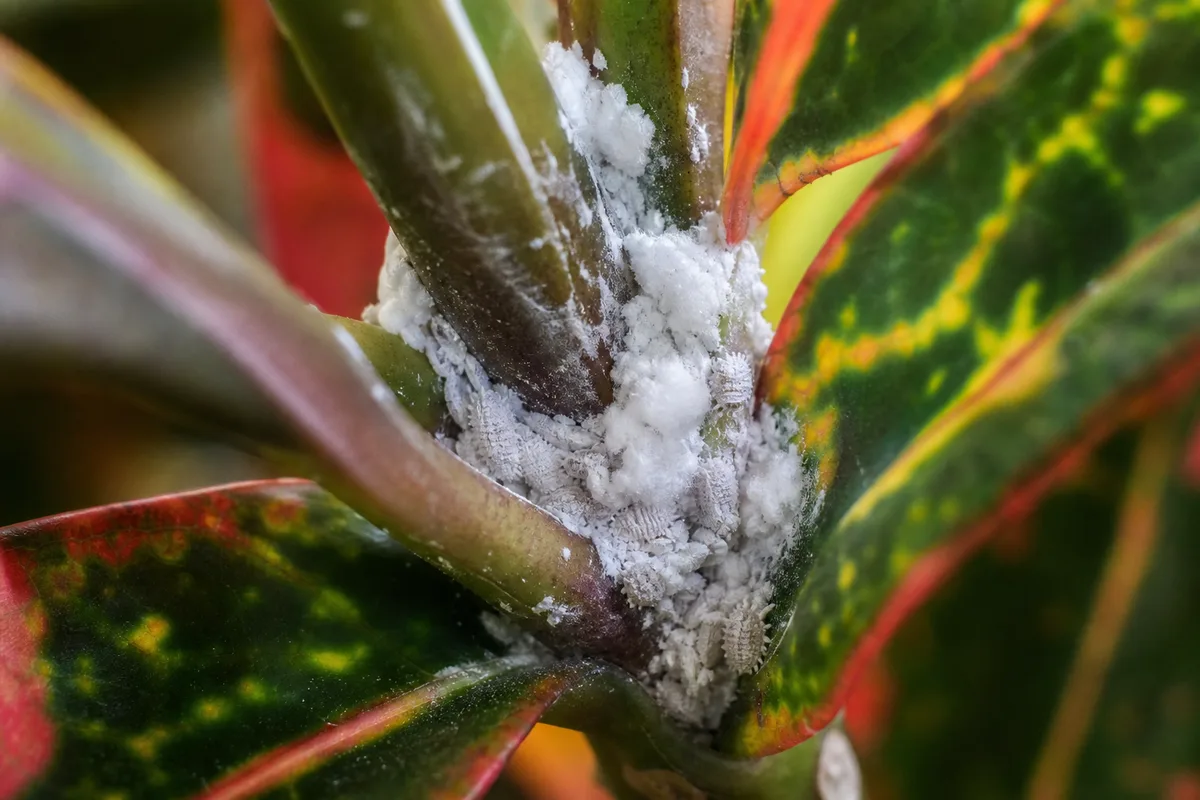
White cottony mealybug cluster tucked in a croton leaf axil - compare with clean stem joints on unaffected growth.
Typical mealybug signs:
- White, wax-covered insects or cottony egg sacs in leaf axils, at the crown, and along woody stems
- Sticky, shiny honeydew on upper leaf surfaces or the pot rim below feeding sites
- Black sooty mold growing on honeydew, dulling Croton’s red, orange, and yellow variegation-on this plant, color loss from mold looks like a gray film across pigment zones, not the uniform yellowing you see after relocation
- Yellowing or slight curling on leaves near heavy colonies
- Ant trails on stems or nearby surfaces harvesting honeydew
Early vs. heavy infestation:
- Early: one or two small cottony patches at a single stem tip or leaf base; foliage color still bright
- Heavy: colonies at most leaf joints, widespread stickiness, sooty mold across multiple leaves, stalled new growth, and increasing leaf drop
Mealybug crawlers are tiny, yellowish, and nearly waxless when newly hatched. They settle quickly into the same axils as adults, which is why a plant can look almost clean one week and cottony the next after eggs hatch.
Mealybugs vs. spider mites on Croton - quick comparison
Both pests love bright indoor crotons, but the signs and first fix differ:
| Clue | Mealybugs | Spider mites |
|---|---|---|
| Primary location | Leaf axils, crown center, stem joints | Leaf undersides, fine webbing at joints |
| Visible pest | White cottony wax clusters | Barely visible dots; stippling on colorful leaves |
| Leaf damage pattern | Sticky honeydew, sooty mold on upper surfaces | Thousands of pale dots dulling variegation; bronzing |
| Typical trigger | Sheltered crown pockets, new nursery introductions | Hot, dry winter air beside south or west glass |
| First fix | Isolate + alcohol dab on wax | Isolate + rinse leaf undersides with water |
If you see stippling and silk without cotton, read the spider mites guide instead of alcohol-dabbing clean joints.
How to confirm the cause
Work through these checks in order:
- Location pattern - Mealybugs cluster in protected joints and crevices. Random white dust on leaf faces alone is less typical than cottony masses where petioles meet stems.
- Crush test - Touch a cottony cluster with a damp cotton swab and crush it. Mealybugs leave a pink or reddish smear; mineral deposits and dried sap do not.
- Movement check - Use a hand lens. Slow-moving oval bodies under the wax confirm live insects rather than fuzz or pesticide residue.
- Honeydew and mold - Rub a sticky upper leaf. Honeydew feels tacky and may grow wipe-able black sooty mold. Normal Croton sap weeping is rare on healthy indoor plants.
- Root zone check - If stems and leaves look clean but the plant wilts, yellows, or stalls, inspect the soil surface and upper roots for white wax near the base. Some mealybug species feed belowground on houseplants.
- Neighbor scan - Examine plants within a few feet. Shared mealybug colonies often mean the infestation predates the first obvious cottony spot on your croton.
If you find cottony clusters that crush pink, you have mealybugs-not powdery mildew, which spreads as flat white film on leaf surfaces, and not hard brown scale, which does not produce loose cotton.
First fix for Croton
Isolate the plant and dab every visible mealybug and egg mass with a cotton swab dipped in 70% isopropyl alcohol.
Move the croton away from other houseplants before you touch colonies. Alcohol kills on contact and dissolves the waxy coating that protects adults. Focus on leaf axils, the crown center, stem crotches, and any cotton along the main trunk. Squeeze the swab gently into each crevice rather than wiping over leaf faces.
Test alcohol on one leaf in an inconspicuous spot and wait 24 hours before full treatment, especially if the plant sits in strong direct sun. Croton leaves in hot window light can scorch where alcohol lingers.
Do not shower, repot, or prune heavily on day one unless a stem is clearly beyond saving. Croton reacts to stacked stress with sudden leaf drop. Your first session is about killing what you can see, not restructuring the plant.
Neem oil vs. insecticidal soap on Croton
After the initial alcohol pass, moderate infestations often need spray follow-up because wax-protected adults hide inside the crown where drift never reaches.
Insecticidal soap is usually the safer escalation on croton. It kills on contact when spray coats the insect directly, rinses cleaner from glossy leaves, and is less likely to leave a visible film across red and yellow variegation. Use a product labeled for houseplants-not homemade dish soap, which can burn foliage. Repeat every five to seven days for two to three cycles after a spot test on one leaf.
Neem oil can suppress younger nymphs and disrupt feeding when soap has not reduced populations after two labeled cycles. On croton, neem carries more phytotoxicity risk than soap: oils left on variegated leaves in hot afternoon sun through glass can bleach or crisp pigment zones. Coat one lower test leaf, wait 48 hours, and apply in evening or shade when leaves are dry and temperatures are moderate. Never spray blooms.
Horticultural oil follows the same sun and spot-test rules as neem. Whichever spray you choose, incomplete coverage fails-croton’s dense crown needs deliberate aiming at axils, not a quick mist over the top.
Step-by-step recovery
After the initial alcohol pass, follow this sequence based on severity:
Light infestation (a few colonies):
- Repeat alcohol dabs weekly for at least three to four weeks to catch newly hatched crawlers before they lay eggs
- Inspect the crown and axils with a hand lens each session
- Keep the plant isolated until you see no new cotton for two consecutive weeks
Moderate infestation (multiple stems affected):
- Continue weekly alcohol dabs on all visible insects
- After a spot test on one leaf, spray insecticidal soap on leaf undersides and stem joints, covering insects directly
- Add neem only if soap fails after two cycles and a successful leaf test
- Repeat spray every five to seven days for two to three cycles; contact products miss hidden adults under thick wax
Heavy infestation or root involvement:
- Prune out stems that are more cotton than leaf, wearing gloves because Croton sap irritates skin and can bother eyes if sap splashes during heavy cuts-rinse skin with water; seek medical advice if sap contacts eyes
- If root mealybugs are suspected, consider Croton repotting guide into fresh mix after rinsing roots, discarding old soil in a sealed bag
- Systemic products containing imidacloprid are a last resort for valuable plants when contact methods fail; they act slowly and are toxic to bees-do not use on crotons moved outdoors in summer when pollinators visit nearby flowers
Throughout treatment, keep watering on your normal schedule-water when the top inch dries-and hold fertilizer until new clean growth appears. Feeding a pest-stressed croton pushes tender shoots that attract another generation.
Recovery timeline and variegation expectations
Visible cottony colonies should shrink within the first week of consistent alcohol dabs. Plan on three to four weekly treatments minimum because eggs and wax-protected adults survive single passes.
Honeydew stickiness stops once feeding ends. Sooty mold can be wiped off with a damp cloth after insects are gone; it does not infect Croton tissue directly. Heavily yellowed or distorted leaves may not regain full color and can drop as the plant replaces them-variegation on new leaves should return to normal brightness once honeydew and mold are gone.
Judge success by new growth. A recovering croton pushes fresh leaves without cotton at the tips and without fresh honeydew on surrounding foliage. If new shoots still emerge with white wax after four weekly rounds, escalate to soap or oil sprays or consider discarding a severely compromised plant to protect the rest of your collection.
Lookalike symptoms
Powdery mildew forms flat white patches on leaf surfaces in humid, stagnant air. It does not produce cottony clumps in stem joints or sticky honeydew.
Hard scale looks like fixed brown or tan bumps glued to stems. Scrape test: scale stays attached; mealybugs smear when crushed.
Mineral or hard-water deposits wipe off with water alone and do not cluster in axils or move between inspections.
Croton leaf drop from relocation causes bare lower stems without white wax, sticky residue, or sooty mold. If the plant shed leaves after a move but joints stay clean, pests are unlikely the primary issue-give it stable light and watering before spraying.
What not to do
Do not apply alcohol to open cuts or to leaves baking in hot direct window sun in the same session as treatment. Do not compost infested prunings indoors where crawlers can spread. Do not assume one spray cleared the plant-mealybugs hide inside Croton’s crown where spray drift never reaches.
Avoid broad-spectrum insecticides that kill predatory insects without reliably penetrating wax. Do not repot on day one unless root mealybugs are confirmed; repotting plus pest stress often triggers the leaf drop crotons are known for.
Wear gloves when pruning heavily infested material. Croton belongs to Euphorbiaceae and exudes irritant latex sap when stems are cut.
How to prevent mealybugs on Croton
Quarantine every new croton for at least two weeks and inspect leaf axils, the crown, and pot seams before placing it near other plants. During regular watering, lift stems slightly and check the joints where mealybugs establish first.
Keep the plant in bright, stable light so it grows steadily without the weak, leggy shoots that pests prefer. Fertilize at half strength only during active growth and avoid nitrogen pushes on an already stressed plant.
Maintain airflow around grouped plants without blasting cold drafts-Croton hates relocation but stagnant clusters help pests spread. Wipe dust from broad leaves occasionally so you can see early cottony spots against the glossy surface.
If mealybugs have appeared before, extend weekly axil checks through winter when indoor heating keeps populations active on foliage plants.
When to worry - discard vs. treat
Treat urgently when cotton spreads to multiple plants, ants patrol stems, or sooty mold covers most foliage and blocks light to lower leaves. Root mealybugs warrant fast action when the plant wilts with moist soil and no obvious stem colonies.
Consider discarding a severely infested croton rather than months of failed sprays if the plant has already lost most leaves and new growth keeps emerging coated in wax. Keeping it risks infecting neighboring tropical foliage plants that share the same windowsill.
Contact your local cooperative extension office if mealybugs return repeatedly after four weekly alcohol-and-spray cycles on an otherwise healthy plant-chronic reinfestation may point to a hidden reservoir in another pot, compost, or display shelf.
Related Croton problems
- Spider mites on croton - stippling and webbing in dry winter windows, not cottony wax
- Aphids on croton - soft green clusters on new shoots with honeydew
- Wilting on croton - limp leaves when pests are not the primary cause
- Croton overview - species care hub: light, water, leaf drop, toxicity
- Croton watering guide - moisture rhythm without overwatering a stressed plant
- Croton light needs - bright placement for healthy growth and color
FAQs
How can I tell mealybugs from relocation leaf drop on my croton?
Relocation drop strips lower leaves over days while stem joints stay clean-no white wax, no sticky honeydew, no sooty mold. Mealybugs leave cottony masses in leaf axils and the crown center, often with tacky upper leaves or black mold on variegation. If the plant shed after a move but joints are wax-free, wait before spraying; if you find cotton that crushes pink, treat pests.
Can I use neem oil on Croton without burning the colorful leaves?
Neem can work after alcohol dabs when soap has not cleared hidden crown colonies, but croton’s glossy variegated leaves burn easily if neem sits on foliage in hot direct window sun. Coat one inconspicuous leaf, wait 48 hours, and treat in evening or shade when leaves are dry. Insecticidal soap is usually the safer spray escalation on croton because it rinses cleaner and leaves less visible film on red and yellow zones.
Will damaged Croton leaves recover after mealybugs and sooty mold?
Heavily fed or mold-coated leaves may stay dull or yellow until they drop naturally-croton does not repaint old pigment. Wipe sooty mold off with a damp cloth once insects are gone; the mold grows on honeydew, not leaf tissue. Judge recovery by clean new shoots at stem tips for two to three weeks, not by every older blade regaining full color.
When is mealybugs urgent on Croton?
Act immediately when cotton spreads to multiple plants, ants farm honeydew on stems, sooty mold blocks light to lower leaves, or the plant wilts on moist soil with few stem colonies-root mealybugs may be involved. Contact your local extension office if infestations return after four weekly alcohol-and-spray cycles on an otherwise healthy setup.
How do I prevent mealybugs on Croton next time?
Quarantine new crotons two weeks and scout leaf axils during weekly watering. Keep stable bright light per the croton light guide, let the top inch of mix dry between drinks, and avoid nitrogen pushes on stressed plants. Grouped indoor displays and nursery benches are common entry points-inspect crown pockets before placing pots beside other tropical foliage.
When to use this page vs other Croton guides
- Croton watering guide - Use for routine moisture checks before assuming mealybugs is the main issue.
- Croton problems hub - Browse all 16 common issues on this species.
- Yellow Leaves on Croton - Different entry point when symptoms overlap with mealybugs.
- Slow Growth on Croton - Different entry point when symptoms overlap with mealybugs.
- Spider Mites on Croton - Different entry point when symptoms overlap with mealybugs.