Aphids on Croton: Causes, Checks & Fixes
Quick answer
Aphids on croton cluster on tender colorful new shoots and leave sticky honeydew that dulls variegation. Spider mites are more common on croton in dry winter heat-confirm pear-shaped insects, not stippling. First step: isolate and rinse new growth and leaf undersides with lukewarm water before any spray.
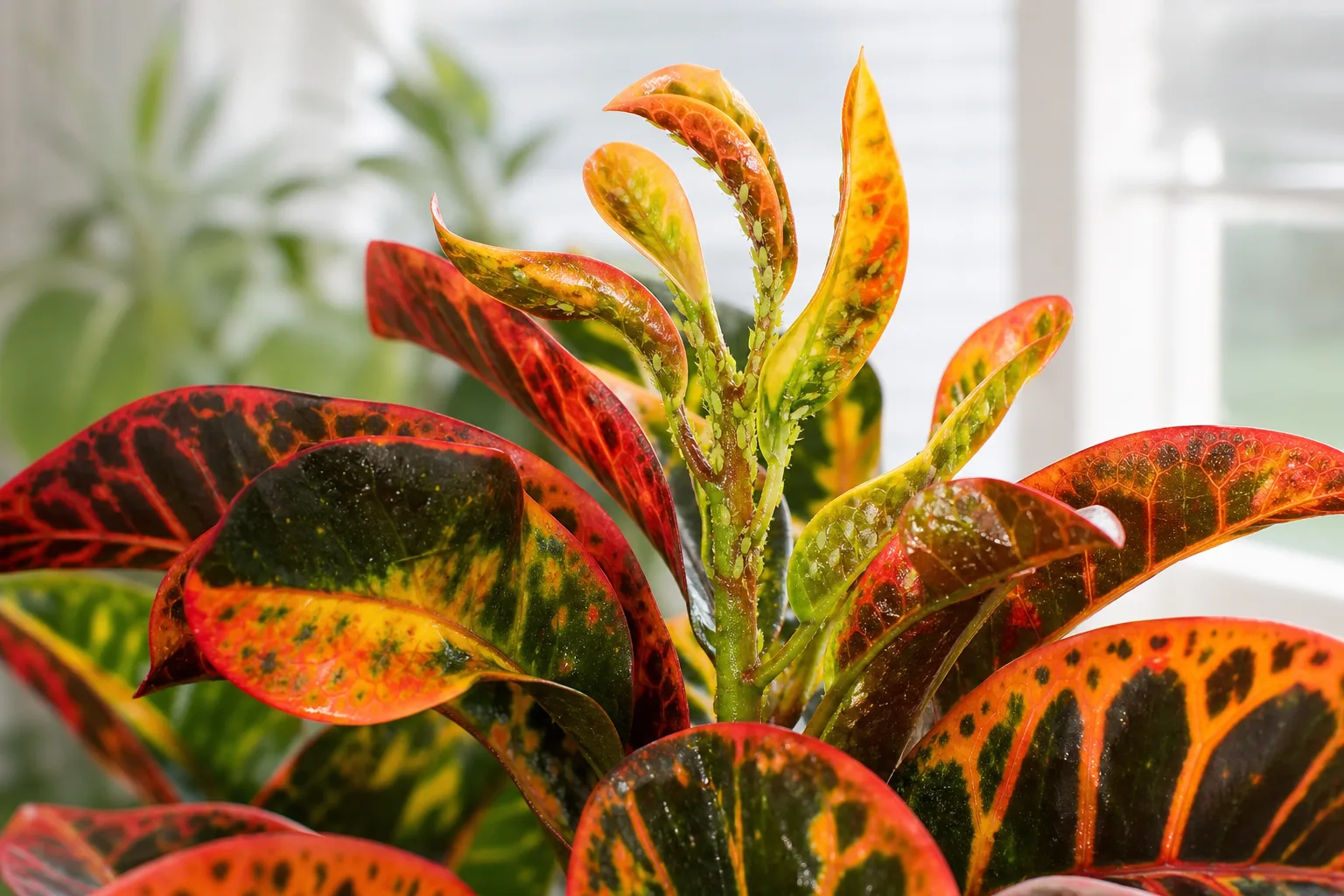
Aphids on Croton: Causes, Checks & Fixes
This guide covers aphids on Croton. See also the general Aphids guide, watering, and light pages for this plant.
Aphids on Croton: Causes, Checks & Fixes
Quick answer
Aphids on croton (Codiaeum variegatum) are small sap-sucking insects that settle on the softest new growth-the colorful shoots your plant pushes when light is strong. They pierce tender tissue, excrete sticky honeydew, and can curl or stunt young leaves before damage shows on older foliage.
Before you treat anything, rule out spider mites-croton’s most common indoor pest in dry winter heat beside bright glass. Mites cause fine stippling and webbing, not pear-shaped clusters or heavy honeydew on new shoots. Sticky colorful tips with slow-moving soft insects point to aphids; pale dots and silk at stem joints point to spider mites.
First step: isolate the plant and rinse new shoots and leaf undersides with a strong stream of lukewarm water. That knocks off live aphids and fresh honeydew before you reach for soap or oil. Confirm insects are present before spraying-sticky residue alone can also come from scale or mealybugs, which need different handling.
Wear gloves when handling infested stems. Milky sap from cut or crushed tissue irritates skin on this Euphorbiaceae shrub. Keep pets away from wet sprayed foliage; croton is toxic to cats and dogs if chewed.
Why croton gets aphids - and why spider mites are more common
Croton is not the most aphid-prone houseplant-NC State Extension notes spider mite susceptibility sometimes limits long-term interior use of croton-but aphids still show up when conditions favor soft new tissue. In bright light, crotons produce frequent flushes of tender leaves at stem tips. Aphids feed on soft, new plant growth and on the undersides of expanding leaves, where piercing mouthparts reach phloem sap easily.
Several factors push crotons toward aphid problems indoors:
- New plant introduction. Aphids hitchhike on nursery stock and unquarantined purchases. Skipping isolation is the most common way they enter a collection.
- Fast spring and summer growth. Crotons active in warm, well-lit rooms push nitrogen-rich shoots-exactly what aphids prefer. Heavy fertilizer during active growth produces more tender tissue than the plant can defend.
- Outdoor summer placement. Crotons moved to patios or balconies in warm weather can pick up winged aphids from garden plants. Winged forms appear when colonies need to disperse.
- Open windows. Winged aphids drift through screens from outdoor ornamentals onto indoor crotons beside the window.
- Ant protection. Ants harvest honeydew and defend aphid colonies from lady beetles and other natural enemies, letting populations rebuild after a single rinse.
Croton’s thick, waxy leaves do not make it immune. Honeydew sits on the glossy surface and dulls the red, orange, and yellow variegation that makes the plant worth keeping in strong light-the aesthetic damage often bothers owners more than mild leaf curl.
What aphids look like on Croton
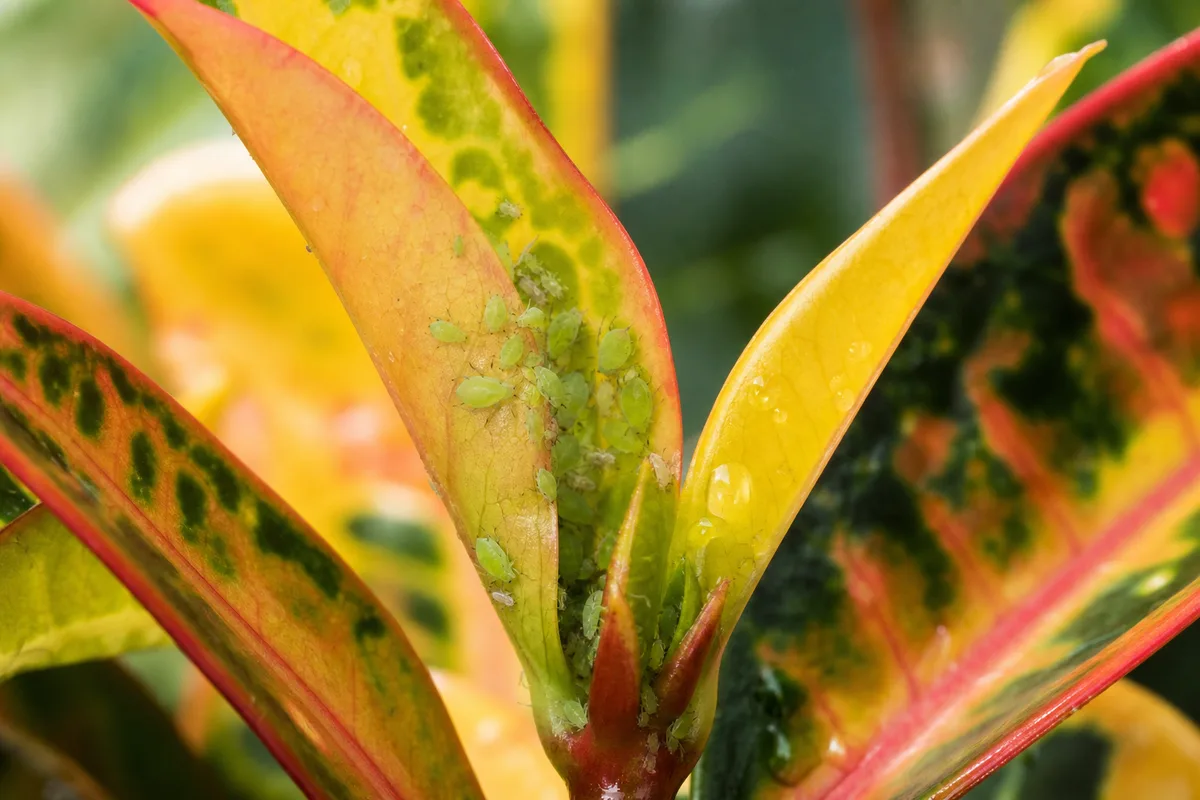
Soft pear-shaped aphids on a croton new shoot with honeydew on glossy variegated leaves - compare with clean older foliage below.
Typical aphid signs on colorful top growth:
- Soft pear-shaped insects 1/16 to 1/8 inch long, usually green but sometimes black, brown, or yellow
- Dense clusters on newest leaves, stem tips, and leaf undersides near the growing point
- Shiny, sticky honeydew on upper leaf surfaces or nearby furniture
- Black sooty mold growing on honeydew patches
- Curling, puckering, or stunting of young leaves while older leaves look normal
- Whitish shed skins left on leaves after nymphs molt
- Ant trails on pot rims or stems
On croton, damage often concentrates at the top of the plant where color is brightest. A few aphids on one new shoot can coat the leaf below with honeydew within days because colonies reproduce quickly in warm room temperatures.
Heavy feeding yellows or distorts only the tissue aphids reach. Established lower leaves may look fine while the growing tip is coated with insects-that mismatch confuses owners who assume the whole plant is healthy.
Confirm aphids vs. spider mites, mealybugs, scale, thrips, and leaf drop
Work through these checks in order before spraying anything:
- Location on the plant - Aphids cluster on soft new shoots and undersides. Scale insects form immobile bumps on stems and veins. Mealybugs look like white cottony masses in leaf axils and crowns.
- Movement test - Touch a cluster with a cotton swab. Aphids are soft-bodied and slow. Whiteflies burst into flight when stems are shaken.
- Honeydew pattern - Aphid honeydew is clear and tacky, often directly under feeding sites on new growth. Distinguish from croton’s normal clear sap at a fresh cut, which appears only where tissue was recently broken.
- Cast skins - Fine white aphid exoskeletons on leaves confirm an active colony even if live insects are hard to spot.
- Ant activity - Ants on the pot or climbing stems strongly suggest aphids or other honeydew producers are present above.
- Care cross-check - Confirm the pot is not chronically waterlogged and light is adequate. Poor light alone does not create aphids, but weak crotons recover more slowly after infestation.
If you find pear-shaped insects on new growth with honeydew, aphids are confirmed. Proceed to treatment without waiting for leaf drop.
Symptom lookalike comparison
| What you see | Likely cause | Key differentiator |
|---|---|---|
| Pear-shaped clusters + sticky tips | Aphids | Slow movement; honeydew on new colorful shoots |
| Fine stippling + webbing on undersides | Spider mites | White-paper tap test shows moving specks |
| White cottony tufts in leaf axils | Mealybugs | Woolly wax, not pear-shaped bodies |
| Flat brown bumps that do not move | Scale | Immobile; scrape test |
| Silvery streaks + black specks spread on leaves | Thrips | No dense clusters at growing tip |
| Widespread yellow drop after draft or move | Cultural stress | No insects or sticky residue on new shoots |
First fix: isolate, rinse, and treat safely
Isolate the plant from other houseplants, then rinse new shoots and leaf undersides with a strong stream of lukewarm water.
Rinse angle for waxy leaves and colorful top shoots
Hold the pot at an angle over a sink or shower and spray from below so water hits the backs of upper leaves and stem tips directly-croton’s glossy waxy surface sheds runoff from above but traps aphids in leaf axils and curled new tips. Repeat until no live aphids remain visible on inspection. Let foliage dry in bright indirect light the same day; croton leaves should not stay wet overnight in cool, stagnant air.
UF IFAS recommends taking dusty indoor crotons outside to a shady spot for rinsing when temperatures allow-the same habit exposes early aphid colonies on new growth before they spread.
This single step dislodges most soft-bodied aphids and washes fresh honeydew before ants or sooty mold take hold. Do not apply insecticidal soap or horticultural oil on day one if you have not confirmed insects. Do not fertilize a pest-hit croton hoping to push replacement growth-that produces more tender shoots aphids prefer.
Keep the plant isolated until you see no new colonies for at least two weeks after treatment ends.
Insecticidal soap and horticultural oil on croton
If colonies persist after several rinses, apply insecticidal soap or horticultural oil labeled for houseplants. Cover stems, leaf tops, and undersides thoroughly-these products work on contact, and aphids hidden inside tightly curled young leaves may survive unless you prune those shoots.
- Repeat labeled sprays every four to seven days through at least two to three cycles to catch nymphs that hatch after the first application.
- Treat in morning indirect light on a hydrated plant-not on a wilted croton in hot direct sun, which raises phytotoxicity risk on heat-stressed variegated foliage.
- Test one leaf first if you are unsure how your cultivar reacts to oil in your room’s light and temperature.
Systemic drenches - usually unnecessary for foliar aphids
Foliar aphids on croton rarely require soil drenches. UC IPM recommends water rinses, sanitation, and contact soap or oil first, with systemic soil-applied products only as a last resort when sprays fail after repeated cycles. Mississippi State Extension notes imidacloprid drenches can control aphids but take time to move through the plant-contact rinses and soaps are faster first choices for colonies confined to new shoots.
Reserve systemics for chronic reinfestation on dense plants where spray coverage cannot reach curled tips, and never use them on edible plants or before moving crotons outdoors where bees may visit neighboring flowers. Croton does not need soil treatment for foliar aphids unless you also have root-zone pests.
What not to do the same day
Do not return an isolated plant to the group after a single rinse. Do not increase fertilizer during an active infestation. Do not ignore ants protecting colonies from predators.
Step-by-step recovery
After the initial rinse:
- Repeat water sprays every two to three days until live aphids are gone on twice-weekly inspection. Focus on new growth; that is where reinfestation starts on croton.
- Apply soap or oil if colonies persist after several rinses, following the croton-safe notes above.
- Prune heavily infested tips if curled leaves shelter aphids soap cannot reach. Wear gloves; sap irritates skin. Sterilize pruners between cuts.
- Wash sooty mold off leaves with plain water once honeydew production stops. Thick black coating on older leaves can be wiped gently; severely coated leaves may not regain full gloss and can be removed after the plant stabilizes.
- Manage ants if they protect colonies. Sticky barriers on pot feet or ant bait away from the plant help natural enemies reach aphids.
- Inspect neighbors - Check every plant that shared a windowsill or shelf. Aphids spread when winged adults appear or when you move infested cuttings.
Avoid whole-plant drenches that soak the crown unnecessarily unless you have confirmed root-zone pests alongside foliar aphids.
Recovery timeline and variegation expectations
Water knockdown shows results within two to three days when colonies are moderate. A full soap or oil course often takes one to two weeks with label-interval repeats because aphids reproduce quickly in warm rooms.
Judge recovery by clean new growth at the stem tip, not by old leaves that already yellowed or curled. Croton may drop a few stressed leaves during recovery-that is common after sap loss and treatment stress. New leaves opening without insects or fresh honeydew mean control is working.
Variegation recovery: glossy new red, orange, and yellow pigment usually returns on clean shoots if light stays strong. Leaves that held dried honeydew or sooty mold for weeks often stay slightly dull-the waxy surface traps residue in the color patches even after washing.
Sooty mold stops spreading once honeydew dries up. Expect visibly cleaner new foliage within two to four weeks if light and watering stay stable.
How to prevent aphids next time
Scout colorful top shoots weekly during croton’s active growing season-spring through early autumn in most homes. The newest leaves at the stem tip deserve the first look.
Quarantine new crotons for at least two weeks before placing them beside other plants. Inspect leaf undersides and stem tips at purchase and again before integration.
Keep croton in appropriate bright indirect to some direct sun so growth stays steady without excessive soft shoots from overfeeding. Apply balanced fertilizer at reduced strength only during active growth per the fertilizer guide, not when the plant is stressed or pest-hit.
Wash dusty leaves occasionally in warm weather using the shady outdoor rinse habit UF IFAS recommends for crotons.
Preserve beneficial insects when possible. Lady beetles, lacewings, and parasitic wasps control aphids if broad-spectrum sprays have not eliminated them. Avoid unnecessary pesticide use on plants you later move outdoors where bees visit flowers on neighboring pots.
Improve airflow between grouped plants on crowded shelves. Stagnant warm pockets favor pest buildup even when light is adequate.
Full species context and year-round care rhythm: croton overview.
When to escalate - extension help, systemics, and pet safety
Treat as urgent when:
- Aphids cover most new shoots within days
- Ants swarm the pot
- Sooty mold spreads across much of the colorful canopy
- Multiple houseplants show honeydew at once
- A pet shows drooling, vomiting, or diarrhea after chewing croton leaves during or after treatment
Lower urgency when a few aphids sit on one new tip in an otherwise stable plant-isolate, rinse, and monitor before escalating to sprays.
Contact your local extension office if colonies return through three full rinse-and-spray cycles despite isolation and neighbor inspection. Chronic reinfestation on dense cultivars may warrant a labeled systemic drench only after contact methods fail-follow label pet-safety and bee warnings.
Pet safety during treatment: Croton ingestion causes oral and gastrointestinal irritation in pets-drooling, vomiting, and diarrhea are common signs. Keep treated plants out of reach until foliage is dry, wear gloves when pruning infested stems, and call your veterinarian or the ASPCA Animal Poison Control Center at (888) 426-4435 if you suspect chewing. Do not assume soap or oil residues are safe for pets to lick off wet leaves.
Replace or heavily cut back a croton that has lost most of its top growth to curled, blackened new shoots you cannot rinse or spray clean. Starting from a healthy lower stem after hard pruning works only if roots and lower branches remain firm and the infestation has not spread to every shoot.
Weekly scouting reminder: the colorful shoots at your croton’s stem tip are the early-warning zone-one minute with a hand lens there each week during active growth catches aphids before honeydew dulls the foliage you bought the plant for.
When to use this page vs other Croton guides
- Croton watering guide - Use for routine moisture checks before assuming aphids is the main issue.
- Croton problems hub - Browse all 16 common issues on this species.
- Mealybugs on Croton - Different entry point when symptoms overlap with aphids.
- Spider Mites on Croton - Different entry point when symptoms overlap with aphids.
- Yellow Leaves on Croton - Different entry point when symptoms overlap with aphids.