Small Flowers on Christmas Cactus: Causes, Checks & Fixes
Quick answer
Small flowers on Christmas cactus usually mean buds formed under weak autumn conditions-not that the plant skipped blooming entirely. First step: review your September–November routine for cool nights (55–65°F), 14+ hours of uninterrupted darkness, and whether fertilizer continued past late August.
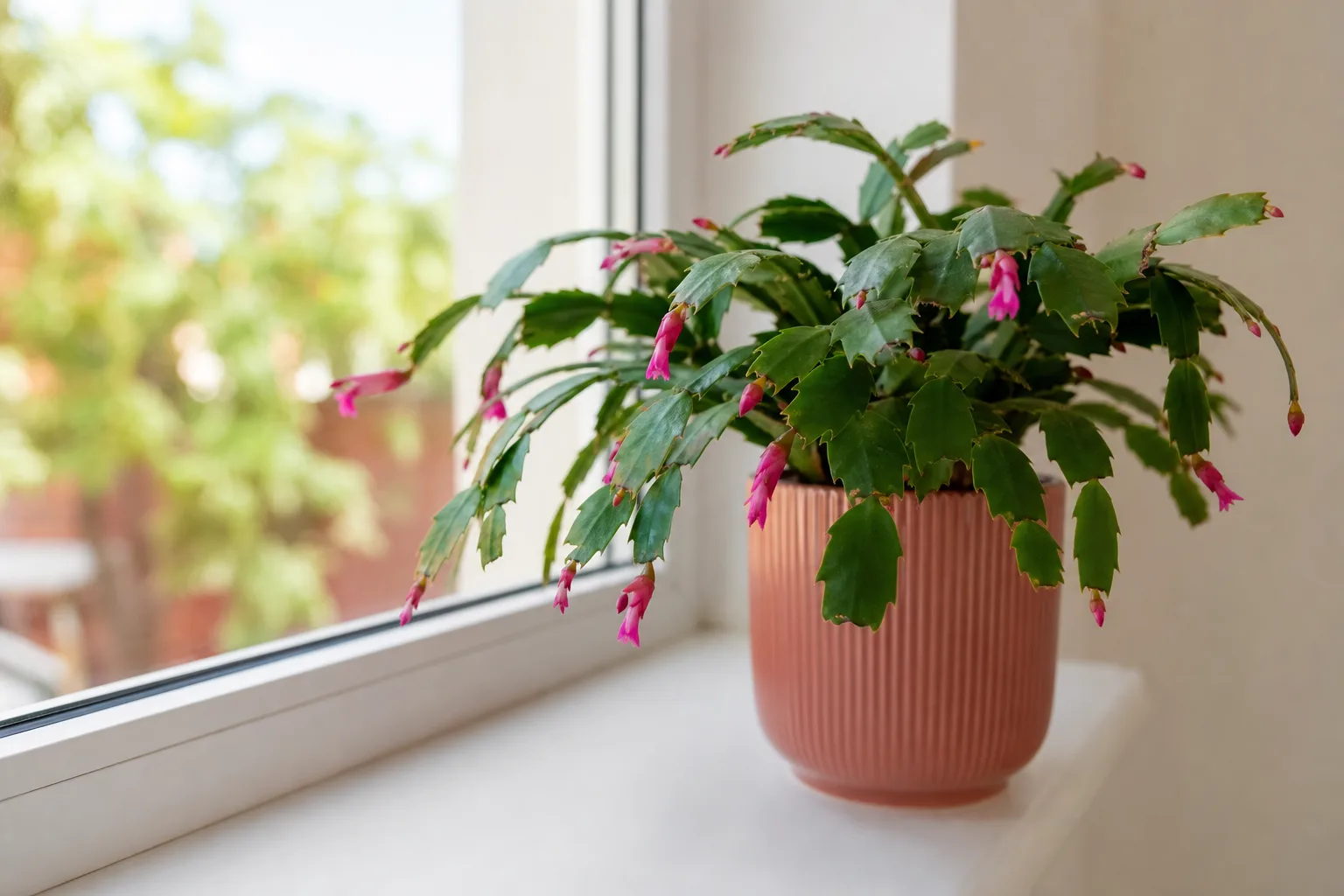
Small Flowers on Christmas Cactus: Causes, Checks & Fixes
This guide covers small flowers on Christmas Cactus. See also the general Small Flowers guide, watering, and light pages for this plant.
Small Flowers on Christmas Cactus: Causes, Checks & Fixes
Quick answer
Small flowers on Christmas cactus mean buds formed but did not develop full size-a different problem from no flowers (no buds at all) or bud drop (buds abort before opening). On Schlumbergera holiday cacti, bloom quality depends almost entirely on what happened during autumn bud initiation: cool nights, uninterrupted darkness, stable watering, and stopping fertilizer before buds set.
First step: audit your mid-September through November routine. Confirm nights stayed near 55 to 65°F, the plant received 14 or more hours of continuous darkness each night for at least six weeks, and you stopped fertilization during late summer. Interrupted light-even a lamp for two hours-can produce buds that open small or sparse. Fix the autumn environment before repotting, pruning, or adding bloom fertilizer to open flowers.
What small flowers look like on Christmas Cactus
On a healthy holiday cactus, open blooms should match cultivar expectations. NC State Extension describes true Christmas cactus (Schlumbergera × buckleyi) flowers as delicate, tubular, magenta-red to pink, and about 3 inches long, drooping from mature segment tips. Iowa State Extension notes that classic Christmas cactus hybrids produce 3-inch rosy-red arching blooms from late November into winter-substantially larger than a thumbnail.
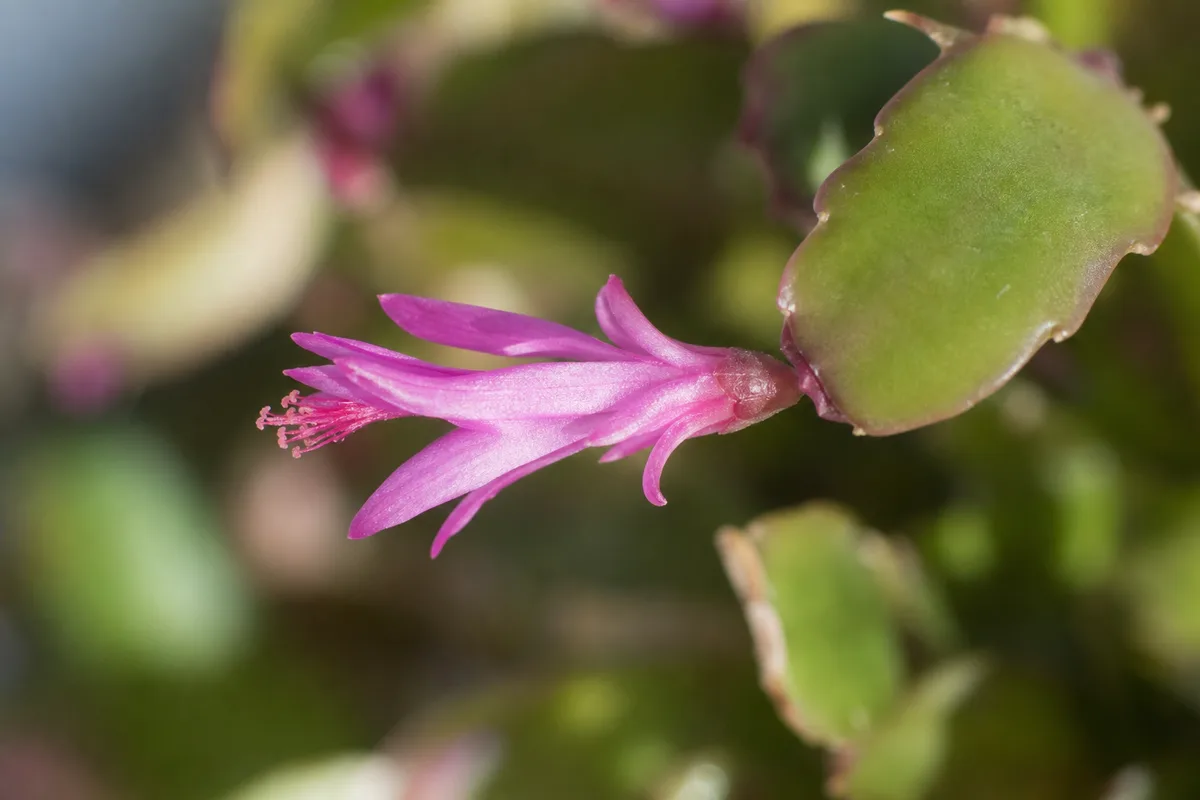
Thin, pale tubular bloom noticeably smaller than a full-size holiday cactus flower - buds formed but did not develop to cultivar norms.
Small-flower symptoms look like this:
- Buds appear at segment tips but open shorter and narrower than prior years or than reference photos for your cultivar
- Fewer flowers per segment-one small bloom where the plant once carried two or three
- Tubes look thin and pale rather than full and saturated; petals may not reflex fully
- Blooms finish quickly and can overlap with faded flowers if stress continues after opening
- Segments themselves look healthy green-unlike yellow leaves or wilt from root problems
Not small flowers: Thanksgiving cactus (S. truncata) naturally carries slightly different flower architecture-more horizontal blooms with pointed segment teeth-so compare against your own plant’s best year, not a different species. First-year blooms on young cuttings are often modest; that is immaturity, not a care failure.
Editorial note: Labeled side-by-side photos of full-size versus stress-stunted blooms on the same cultivar help readers calibrate size; add comparison images when available.
Why Christmas Cactus produces small blooms
Incomplete autumn bud initiation
Holiday cacti are short-day plants. Clemson HGIC states that flower bud set requires bright daytime light plus 14 or more hours of continuous darkness each night, starting around mid-September for at least six continuous weeks. MSU Extension adds that 55 to 65°F night temperatures together with long nights produce the best bud quality.
When nights stay too warm, darkness is broken by ceiling fixtures, or the routine starts late, buds may still form-but they often develop undersized. Missouri Botanical Garden notes that if indoor night temperatures can be kept at 45 to 55°F, buds frequently form without the strict darkness regimen; above that range, the dark period becomes non-negotiable for quality bloom.
Late-summer nitrogen or feeding into bud set
Christmas cactus builds bloom sites during spring and summer, then needs a nutrient rest before autumn induction. Clemson HGIC recommends monthly half-strength fertilizer from late winter through summer but to stop fertilization during late summer for greater flower bud production in the fall. MSU Extension similarly advises reducing fertilizer in fall as you prepare to rebloom.
Continued feeding-especially high-nitrogen formulas-pushes soft segment growth when the plant should be shifting toward reproductive tissue. The result is often lush pads with small or delayed buds. See the Christmas cactus fertilizer guide for month-by-month timing.
Repotting or root disturbance during budding
Holiday cacti flower best when somewhat pot-bound. Clemson HGIC states they flower best when kept somewhat pot bound, repotting only about once every three years in spring. Iowa State Extension confirms plants grow best slightly pot-bound and should only be repotted when they have completely outgrown the container.
Repotting in autumn-or moving the root ball while buds are forming-redirects energy to root repair. Buds may survive but open smaller. An oversized pot with empty wet mix produces the same effect: roots expand into fresh soil instead of finishing buds.
Immature segments and young plants
Clemson HGIC recommends pinching at the end of September to remove terminal phylloclades less than 1 cm (0.4 inch) long, because short immature segments will not initiate flower buds until mature. A bud that forms on a weak young tip often opens small.
Recently propagated cuttings and first-year divisions commonly carry naturally smaller first blooms. That is not fixable mid-season; maturity and a proper autumn cycle improve size next year.
Light interruption or temperature swings during bud formation
Once bud initiation begins, stability matters. Clemson HGIC warns that as little as two hours of interrupted lighting can inhibit bud set, and temperatures above 90°F after buds form can cause bud drop. Even when buds hang on, heat spikes, drafty moves, or dry air during development often yield small, short-lived flowers rather than full tubes.
The Christmas cactus light guide covers eliminating night light leaks and seasonal placement.
Cultivar-normal size versus stress-stunted blooms
Most store-bought “Christmas cactus” are Thanksgiving cactus or hybrids (S. truncata crosses) with different bloom timing and shape-not the classic 3-inch S. × buckleyi tube. Iowa State Extension explains that most plants sold as Christmas cactus are actually Thanksgiving cactus or hybrids, with flowers ranging white to red, lavender, and salmon.
Before diagnosing stress, compare blooms to your plant’s previous best display. If size dropped sharply after a warm, brightly lit fall room, stress is likely. If the plant has always carried compact blooms on short segments, you may be seeing genetics and species identity, not a fixable culture error.
How to confirm the cause
Work through this checklist in order:
- Bloom history - Did buds form this year? If no, use the no-flowers workflow instead. If buds dropped, see bud drop.
- Autumn darkness log - From mid-September, did the plant get 14+ hours of total darkness nightly for six weeks? Any night lights, TV glow, or streetlight through a window?
- Night temperature - Were nights mostly 55–65°F (13–18°C)? Warm rooms above 70°F at night often produce weak buds unless darkness was perfect.
- Last fertilizer date - Did any feeding occur after late August? Was the product high in nitrogen?
- Repot or move timing - Any repot, heavy root disturbance, or room change between September and bud swell?
- Pot size - Is the plant slightly snug in its pot, or recently upsized into a much larger container?
- Segment maturity - Are blooming tips on short, new segments under 1 cm, or on mature two-year-old sections?
- Post-bud stability - Did heat, drafts, or drought hit while buds were swelling?
Symptom comparison
| Symptom | Timing | First check |
|---|---|---|
| Small flowers | Buds open, but blooms undersized | Autumn cool/dark routine and August feed stop |
| No flowers | No buds by late fall | 14-hour darkness and night temperature |
| Bud drop | Buds form then fall off | Drafts, heat above 90°F, dry soil swings |
| Faded flowers | Color washes out after open | Heat, direct sun, age of bloom |
First fix for Christmas Cactus
Restore a strict long-night and cool-night routine immediately if buds are still forming-or document and plan the fix for next September if blooms are already open.
Move the plant to a spot where it receives bright indirect light by day and no artificial light at night. If your home stays warmer than 65°F at night, place the pot in the coolest room available-an unused bedroom or insulated porch that does not freeze-while keeping nights above 50°F. Run the routine for the full six weeks Clemson HGIC recommends, even if buds are already visible; stability helps remaining buds finish.
Stop all fertilizer until flowering finishes and new spring growth appears. Do not apply “bloom booster” to open or forming buds-it will not enlarge current flowers and can worsen bud drop.
Do not repot, pinch, or relocate the plant repeatedly while buds are active. One correction to light and temperature beats stacking interventions.
Recovery timeline
You cannot enlarge flowers already open this season. Recovery shows up on the next bud cycle.
- Buds still swelling: Cooler, darker nights within two to three weeks may improve size on buds not yet open
- Current bloom cycle: Enjoy what opened; note care gaps for next autumn
- Next season: With correct September initiation, expect normal-sized buds visible in three to four weeks after starting long nights-typical for Clemson HGIC bud-set timing
- Young plants: First full-sized display may take two to three bloom cycles as segments mature
Judge success by next year’s bud diameter before color shows, not by petals already reflexing this week.
Lookalike symptoms and causes to rule out
Small flowers overlap with several holiday-cactus problems:
- No flowers - Zero buds by late fall; darkness or temperature failed entirely. Small flowers mean induction partially worked.
- Bud drop - Buds abort before opening. Small flowers mean buds survived but did not develop fully.
- Faded flowers - Color loss after open, often from heat or age. Can occur on small blooms but is a separate post-open issue.
- Leggy growth from low light - Thin pale segments year-round; blooms may be sparse and small. Fix daily light placement, not just autumn darkness.
- Overwatering / root stress - Soft segments, sour soil, and no buds-or bud drop-not isolated small tubes on firm green tissue.
- Species mismatch - Thanksgiving-type hybrids naturally differ from 3-inch S. × buckleyi tubes. Compare year-over-year on the same plant.
Mistakes to avoid
Do not apply high-phosphorus bloom fertilizer to buds or open flowers-it does not reverse small blooms and can cause salt stress. Do not repot in autumn hoping to “give the plant more energy.” Do not move the pot nightly between rooms once buds appear; NC State Extension lists sudden temperature changes and drafts among causes of bud drop and poor flowering.
Avoid leaving the plant on a warm windowsill above a radiator during bud swell-night heat shrinks bloom quality even when days look bright. Do not pinch immature tips mid-bud unless following the September leveling technique from extension guides.
Do not assume small blooms mean the plant needs more water; NC State Extension advises reducing watering in mid-September as buds develop and keeping soil evenly moist but not wet once buds set-swings cause abort, not larger flowers.
Christmas cactus care cross-check
Small blooms are a seasonal timing problem more often than a daily watering mistake. Cross-check these hub guides:
- Fertilizer - Half-strength monthly through August; hard stop before bud induction
- Light - Bright indirect spring–summer; 14-hour dark fall nights
- Watering - Slightly drier pre-bud rest; even moisture after bud set
- Repotting - Spring only, every three years, slightly snug pot
A plant with good summer segment growth, correct August feed stop, and a disciplined September darkness routine rarely produces chronically small flowers unless it is young or a compact cultivar.
How to prevent small flowers next time
Mark your calendar for mid-September: begin long nights, cool room placement, and zero fertilizer. Missouri Botanical Garden recommends covering the plant or using a totally dark room from about 6 p.m. to 7 a.m. daily for six to eight weeks if you cannot cool the room below 55°F at night.
Keep the plant slightly pot-bound; repot in spring after bloom, not in fall. Remove immature terminal segments under 1 cm in late September so buds form on mature wood. Maintain even moisture once buds appear-see the watering guide for fall rhythm.
Track bloom size year to year in a phone note: date darkness started, average night temperature, last feed date, and photo of bud size at three weeks. That log beats guessing why one season underperformed.
When to worry
Escalate if buds shrink and drop together, segments wrinkle or soften while soil stays wet, or the plant produced no buds at all after a previously strong bloom year. Those patterns suggest root failure, extreme heat, or complete photoperiod failure-not cosmetic small petals alone.
Low urgency: firm green segments, stable roots, buds opened small after a known warm fall or late fertilizer-fix the calendar for next year.
Conclusion
Small flowers on Christmas cactus mean bud initiation partially succeeded but autumn conditions were not strong enough for full-size tubes. Compare blooms to your cultivar’s normal display, then audit cool nights, uninterrupted darkness, late-summer feed stop, pot size, and segment maturity. First fix: restore strict long-night and cool-night conditions while stopping fertilizer-do not repot or chase bloom boosters on open flowers. Next year’s bud size tells you whether the correction worked.
When to use this page vs other Christmas Cactus guides
- Christmas Cactus watering guide - Use for routine moisture checks before assuming small flowers is the main issue.
- Christmas Cactus problems hub - Browse all 21 common issues on this species.