Faded Flowers on Christmas Cactus: Causes, Checks & Fixes
Quick answer
Faded flowers on Christmas cactus are usually normal per-bloom aging, not a crisis. Individual tubular flowers last several days while the overall display can run for weeks in cool, stable conditions. First step: check whether one bloom at a time is pale on an otherwise healthy plant-or all open flowers collapsed within 48 hours near heat, drafts, or ripening fruit.
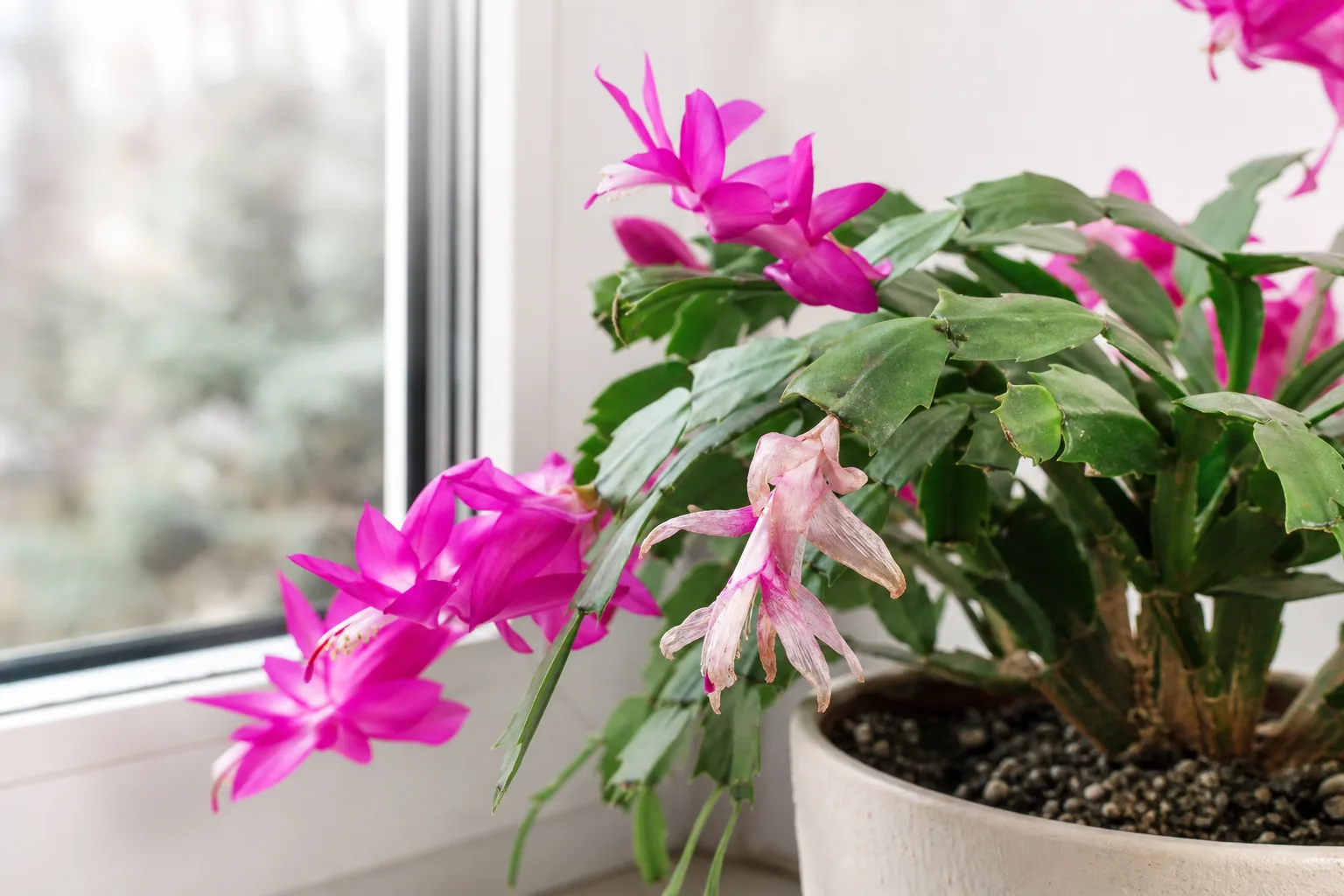
Faded Flowers on Christmas Cactus: Causes, Checks & Fixes
This guide covers faded flowers on Christmas Cactus. See also the general Faded Flowers guide, watering, and light pages for this plant.
Faded Flowers on Christmas Cactus: Causes, Checks & Fixes
Quick answer
Faded flowers on Christmas cactus (Schlumbergera × buckleyi and related holiday-cactus hybrids) are usually normal per-bloom aging, not proof that your plant is failing. Tubular flowers open at phylloclade segment tips, stay showy for several days each, then pale and wilt while other buds on the same chain may still be opening. A display that lasts several weeks in a cool, stable room is typical when nights stay relatively cool and the plant is not disturbed.
First step: decide whether you are seeing sequential aging or premature collapse. If one tubular bloom at a time loses color while segments stay plump and green-and the pot was not recently moved-that is expected senescence. If all open flowers wilt within 24 to 48 hours, color drains right after a move to a warm living room, or buds drop before opening, treat it as in-bloom stress from heat, ethylene, drafts, or drought-not a reason to repot or fertilize on day one.
Stabilize temperature and placement away from heat vents, fireplaces, cold window drafts, and ripening fruit bowls before you change watering. See the Christmas cactus overview bloom section for the full seasonal rhythm that sets up next year’s flowers.
Where Christmas cactus flowers form
Holiday cacti do not bloom from true leaves. Flower buds appear at the tips of mature phylloclades-the flattened, jointed stem segments that look like leaves. NC State Extension describes Christmas cactus flowers as delicate, tubular, and drooping from those segment tips in shades of magenta-red, pink, white, or purple depending on cultivar.
Because each segment chain can carry multiple buds at different stages, one fading tube beside a fresh bud on the same stem is normal. That pattern is different from bud drop, where buds abort before opening, or no flowers, where initiation never happened in autumn.
Normal aging vs. a real problem
Expected per-flower lifespan
Individual Schlumbergera flowers are short-lived by design. Each tube opens, reaches peak color, then senesces over roughly four to seven days in typical indoor conditions-faster in warm, dry rooms, longer when nights stay cool. The overall display can continue for four to six weeks as sequential buds open along the plant, especially when evening temperatures stay near 55 to 65°F (13 to 18°C) and light is bright but indirect.
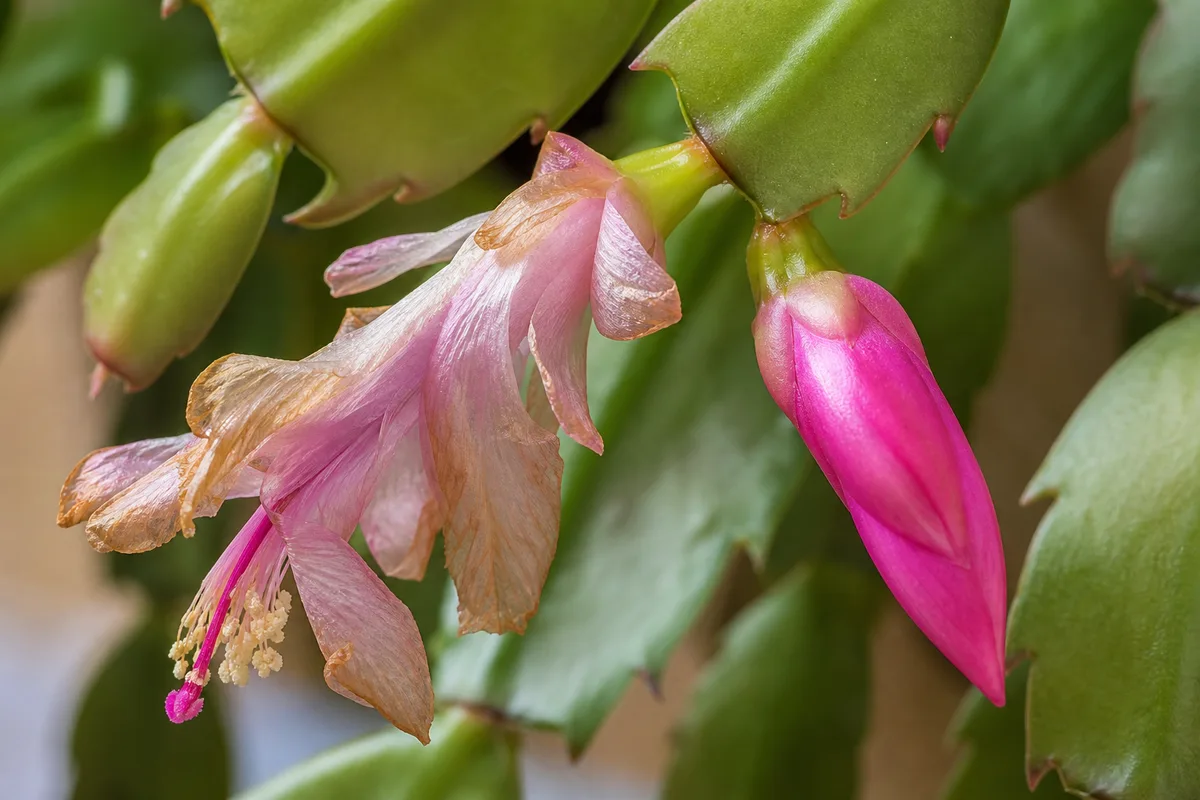
One pale wilting tubular flower beside a fresh vivid bloom on the same segment chain - sequential per-bloom aging is normal when segments stay firm and green.
Sequential fade looks like this:
- One tubular bloom pales or wilts while neighboring buds on the same segment are still tight or freshly open
- Spent petals dry lightly at the tip; the phylloclade beneath stays firm and green
- The plant was not moved, repotted, or blasted by heat in the last week
- No mass bud loss-only finished flowers at the oldest positions on each chain
That is housekeeping, not triage. Gently remove dry spent blooms if you want a tidier look, or leave them until they drop.
When one fading bloom at a time is fine
If you bought or brought a plant into bloom and the oldest flowers fade first while new tubes keep opening toward the segment tips, your plant is doing what rainforest epiphytes do in cultivation: cycling through a wave of blooms. Ohio State University Extension notes that holiday cacti keep blossoms longer in cooler temperatures-so a cool windowsill with stable nights often outlasts a warm centerpiece table.
No fertilizer, Christmas Cactus repotting guide, or heavy pruning is needed for this pattern.
What premature fade looks like on Christmas Cactus
All blooms collapsing quickly (heat or ethylene)
Premature collapse means most or all open flowers wilt within one to two days, often with limp petals rather than a slow dry-down. Colorado State University Extension lists temperatures above about 80°F, ethylene from ripening fruit, and gas fireplaces among causes of bud or blossom drop. Clemson HGIC adds that hot dry air and drafts during display shorten bloom life.
Common indoor triggers:
- Moving the plant from a cool back room to a warm living area for the holidays
- Placing the pot above a radiator, beside a fireplace, or in the path of a heat vent
- Siting it next to a fruit bowl with ripening apples or bananas
- Hot direct sun through south glass-University of Arizona Cooperative Extension notes that too much light can fade flower color or heat-stress open blooms
Wilted flowers after moving the plant
Schlumbergera is notorious for bud and bloom loss after relocation once buds have formed. University of Minnesota Extension advises that holiday cacti do not like to be disturbed once flower buds develop-drafts, sudden temperature shifts, and humidity swings all accelerate drop and fade.
If flowers collapsed within 48 hours of a move, the first fix is returning to a cool, bright, stable spot-not extra water or bloom fertilizer.
Pale, short-lived blooms in a warm room
Warm nights above about 65 to 70°F (18 to 21°C) during display compress bloom life even when the plant looks otherwise healthy. Blooms may open paler than usual and finish in only two or three days. That overlaps with small flowers when autumn initiation was weak, but post-open fade in a hot room is an environmental display problem-you cannot re-saturate color on a tube that has already senesced.
How to confirm the cause
Work through these checks in order:
- Bloom age and pattern - One fading tube at a time on green segments = normal aging. All open blooms limp the same day = stress fade.
- Room temperature - Measure near the pot at night. Cool 55 to 65°F nights extend display; sustained warmth above 70°F at night shortens it.
- Draft and heat sources - Flag radiators, vents, fireplaces, and cold window glass touching segments.
- Ethylene proximity - Ripening fruit, enclosed kitchens with gas stoves, or idling cars in an attached garage can expose blooms to ethylene.
- Recent move or repot - Any relocation within two weeks of collapse strongly implicates disturbance, not disease.
- Soil moisture during bloom - Ohio State Extension notes holiday cacti drop buds if soil gets too dry while flowering; limp blooms with dry, light pots suggest drought stress. Soggy mix with yellow soft segments suggests overwatering on Christmas Cactus-a different guide.
- Bud status - Buds falling before open = bud drop. Never formed buds = no flowers.
| Pattern | Timeline | Segments | Buds | Likely verdict | First action |
|---|---|---|---|---|---|
| Normal aging | Each tube 4–7 days; display weeks | Firm, green | New buds still opening | Expected senescence | Remove dry spent blooms if desired |
| Heat stress fade | All open blooms 1–2 days | Green | May drop together | Warm room or hot sun | Move to cooler stable spot |
| Ethylene / draft collapse | Sudden after fruit bowl or vent exposure | Green | Often drop with open blooms | Environmental gas or draft | Remove ethylene source; stabilize placement |
| Drought during bloom | Wilt with dry, light pot | May wrinkle slightly | Can drop | underwatering on Christmas Cactus while flowering | Water thoroughly once; review watering |
| Bud blast (not fade) | Before full open | Variable | Brown and abort | Initiation or move stress | See bud-drop guide |
First fix for faded Christmas cactus blooms
Move the plant-or leave it put-in a cool, bright, stable location away from heat vents, fireplaces, cold drafts, and ripening fruit. Do not relocate it again during the current display.
That single environmental correction addresses the most common premature fade on Schlumbergera: warm, unstable display conditions after buds opened. Choose a spot with bright indirect light, night temperatures roughly 55 to 65°F when possible, and no ethylene sources within several feet. The RHS recommends keeping the plant in stable conditions through the bloom period with regular watering once buds appear-environment first, watering second.
If the plant is already in an ideal cool window and only one bloom at a time is fading, your first fix is simply accepting normal aging and optionally twisting off dry spent tubes.
Maintain in-bloom watering without soggy mix
After placement is stable, check soil moisture. During flowering, keep the mix evenly moist-water when the top inch feels dry, soak until a little runs from the drainage hole, then empty the saucer. Iowa State University Extension emphasizes consistent moisture while in bud and bloom because drought triggers bud drop. Do not interpret fading petals as automatic underwatering; confirm dry weight before adding water. Do not keep the pot soggy-that promotes rot and further bud loss.
Remove ethylene sources and spent blooms
Move ripening fruit bowls away from the display table. If a gas fireplace shares the room, relocate the plant farther from the heat plume. Once tubes are dry and limp, gently twist off spent flowers at the base of the tube to tidy the plant-optional for plant health, helpful for appearance.
Recovery timeline
Normal sequential fade continues for the length of the cultivar’s bloom wave-often several weeks if nights stay cool and the plant is undisturbed. Individual tubes do not re-open once faded; judge success by fresh buds still opening toward segment tips.
Premature collapse from heat or ethylene usually stops worsening within a few days after stabilization. Open flowers already wilted will not recover color; remaining buds may still open if conditions improve. If all buds drop, the current display is finished-focus on stable light and rest-period care for next autumn’s initiation.
Do not expect instant rebloom on the same cycle. Schlumbergera sets its next flower buds during the cool, long-night period starting mid-September. Fixing display conditions preserves remaining open blooms and protects the plant’s energy for next year-it does not force a second winter wave on the same stem tips.
What not to do
Do not overwater because faded petals look “sick”-confirm soil moisture first. Soggy mix during bloom invites rot and more bud loss.
Do not fertilize open flowers or stressed plants hoping to restore color. Nutrients do not reverse senesced petals; feeding during bloom rest can salt-stress roots.
Do not repot, prune heavily, or rotate the pot daily while buds and flowers are present unless root rot on Christmas Cactus forces emergency action.
Do not move the plant repeatedly between rooms for display-each shift risks dropping remaining buds.
Do not confuse normal one-at-a-time fade with small flowers (undersized blooms from weak autumn initiation) or bud drop (buds abort before opening).
How to prevent short bloom displays next cycle
Longer, more colorful displays start in autumn bud initiation, not during open bloom. From mid-September, run six weeks of 14+ hours of uninterrupted darkness, cool nights near 55 to 65°F, and reduced watering until pinpoint buds appear-details in the overview bloom section and MSU Extension reflowering guidance.
Once buds color up:
- Keep stable placement through the entire display
- Maintain bright indirect light without hot afternoon sun on the flowers
- Target 65 to 75°F days and cooler nights when possible
- Water evenly during bloom; avoid drought and waterlogging
- Keep ethylene sources away from the plant table
- Stop fertilizing through rest periods; resume dilute feed only after post-bloom recovery
Thanksgiving cactus (S. truncata) follows the same fade rules but often blooms slightly earlier with more horizontal flowers-compare against your plant’s prior best year, not a different species label on the pot.
Related guides
- Christmas cactus overview - Full bloom initiation, rest periods, and seasonal rhythm
- Bud drop - Buds abort before opening
- No flowers - Plant never set buds
- Small flowers - Blooms open undersized from weak initiation
- Watering - In-bloom moisture without rot
- Light - Bright indirect light and fall darkness routine
Conclusion
Faded flowers on Christmas cactus are usually one tubular bloom finishing its natural lifespan while others on the same segment chain keep opening. Sequential pale tubes on firm green phylloclades in a cool, stable room need no rescue-optionally remove dry spent flowers and enjoy the rest of the display.
When every open bloom collapses quickly after a warm move, heat vent, draft, dry spell, or fruit-bowl ethylene exposure, stabilize cool placement and even moisture before repotting or feeding. Spent petals do not regain color; remaining buds may still open if you stop disturbing the plant. Save aggressive care changes for after the display ends and use next autumn’s cool, dark routine to set up a longer bloom wave for the following winter.
When to use this page vs other Christmas Cactus guides
- Christmas Cactus watering guide - Use for routine moisture checks before assuming faded flowers is the main issue.
- Christmas Cactus problems hub - Browse all 21 common issues on this species.