Wilting on Blue Star Fern: Causes, Checks & Fixes
Quick answer
Wilting on Blue Star Fern usually means moisture stress at the root zone-either soggy mix starving oxygen from epiphytic rhizomes, or a dry pot the plant cannot rehydrate from. First step: lift the pot and probe the top inch near the edge; heavy wet soil calls for pausing water, light dry soil calls for a thorough soak.
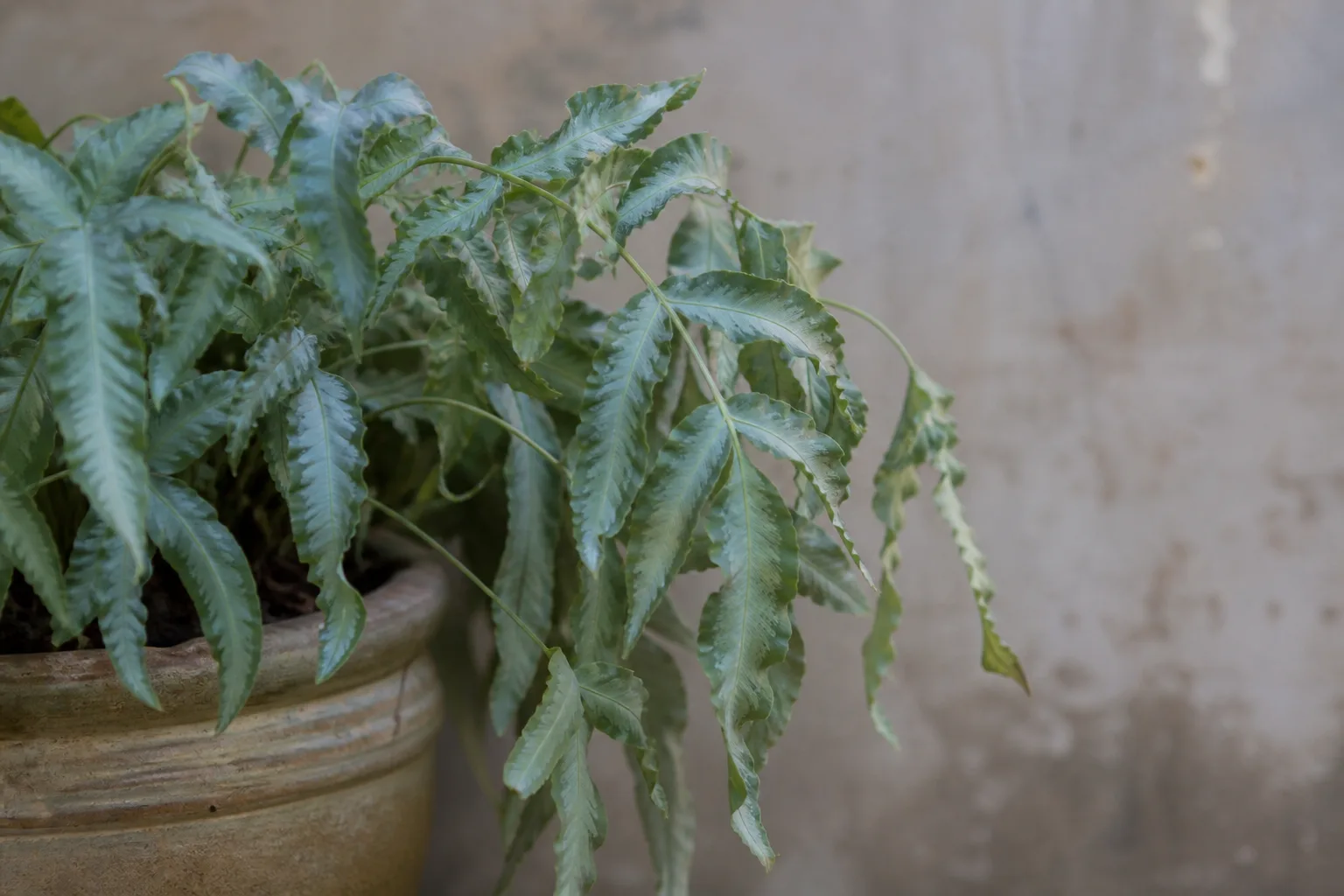
Wilting on Blue Star Fern: Causes, Checks & Fixes
This guide covers wilting on Blue Star Fern. See also the general Wilting guide, watering, and light pages for this plant.
Wilting on Blue Star Fern: Causes, Checks & Fixes
Quick answer
Wilting on Blue Star Fern (Phlebodium aureum) is a loss of turgor-lobed blue-green fronds hang limp, feel papery, and may pale to dull gray-green while the plant cannot hold itself upright. On this rhizomatous epiphyte, wilting almost always traces to root-zone moisture failure, not a mystery disease: either the mix stays too wet and oxygen-starved rhizomes stop moving water, or the pot goes too dry and fine roots cannot keep up with transpiration.
First step: lift the pot and probe the top inch (2.5–3 cm) of mix near the pot edge, avoiding the rhizome crown. A heavy, cool, dark pot with limp fronds points to wet-soil wilt and possible rhizome rot-pause watering and inspect surface rhizomes. A lightweight pot with dry, shrunken mix points to underwatering-give one thorough soak with full drainage. If pot weight is normal but fronds wilt with crispy edges, check humidity before you pour again. See our watering guide for the full moisture rhythm this fern expects.
What wilting looks like on Blue Star Fern
On healthy Phlebodium, fronds stand at a slight arch with firm, flexible pinnae and a distinct blue-green to silvery cast. Wilting changes that posture quickly.
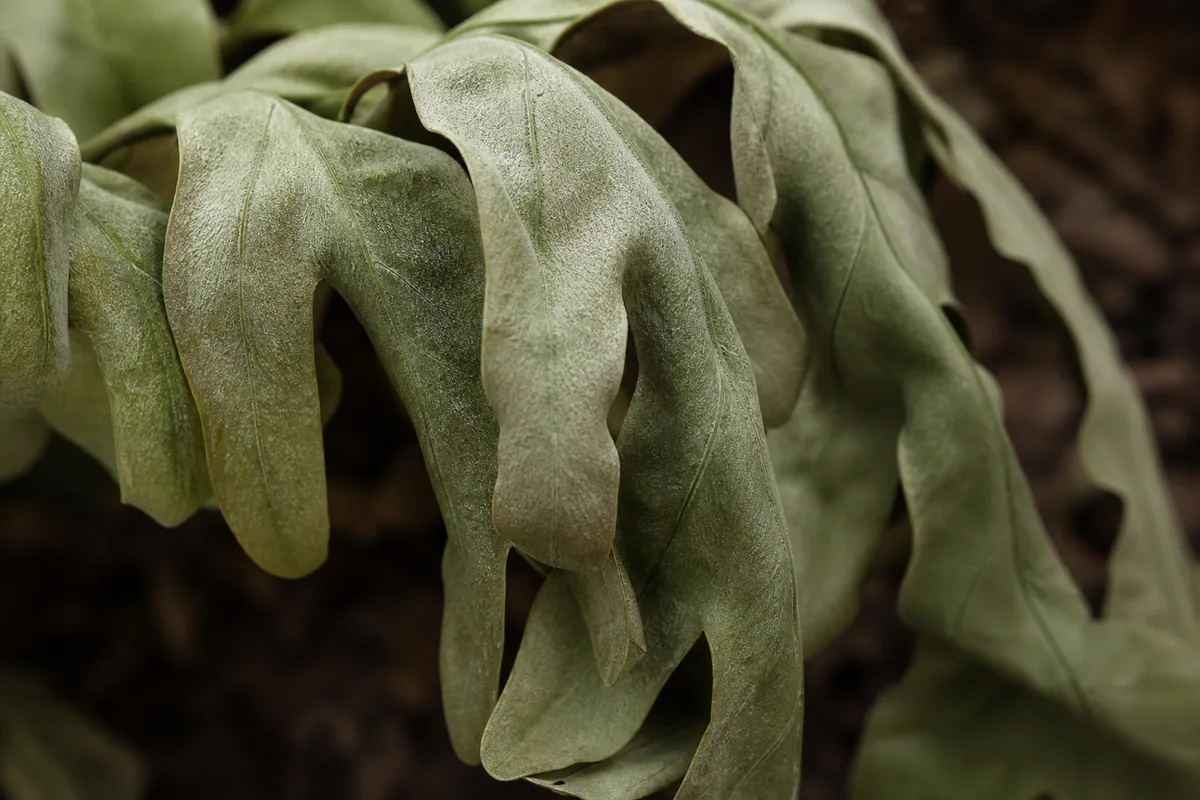
Wilting symptoms on Blue Star Fern - compare with healthy tissue on the same plant.
Acute underwatering wilt shows whole fronds collapsing downward from the rhizome, sometimes with pinnae curling inward. The bluish tone fades to flat green or gray. Frond tissue feels thin and papery. Mix at the top inch is dry, often pulled away from the pot wall, and the container feels noticeably light. Golden surface rhizomes may look slightly shrunken but stay firm-not mushy.
Wet-soil wilt looks similar on the fronds-limp, dull, sometimes yellowing from the base-but the pot tells a different story. Soil stays dark and cool at the surface for many days. The pot feels heavy long after the last watering. NC State Extension lists crown rot and root rot among common problems on this species; damaged uptake tissue produces wilt despite abundant moisture-the classic trap that sends growers toward more water. University of Maryland Extension notes that root rot pathogens often cause wilting even when potting media moisture is adequate, because soft, mushy roots can no longer absorb water.
Low-humidity wilt often pairs limp frond tips with crispy brown margins while the top inch of mix dries on a normal schedule and rhizomes remain firm. This is transpiration stress, not drought in the pot. See our low-humidity guide when edges crisp before whole fronds collapse.
Heat or draft wilt can hit suddenly after a move beside a heating vent, AC blast, or hot afternoon window. Fronds collapse within hours; soil moisture may be correct. Newest frond is the honest sensor-if it wilts first after a placement change, stabilize temperature and airflow before Blue Star Fern repotting guide.
What wilting does not look like: isolated brown tips on otherwise firm fronds (usually humidity or water chemistry), slow pale stretch toward a dim window (not enough light), or stippling with fine webbing (spider mites in dry air).
Why Blue Star Fern wilts
Epiphytic rhizomes and the moist-not-wet rule
Blue star fern is an epiphyte that creeps across bark and rock in humid tropical forests. Indoors, its golden rhizomes should sit at or above the soil surface, not buried in dense wet mix. NC State Extension recommends a moist but not soggy substrate with good drainage and acid pH. When mix stays saturated, fine roots and rhizome tissue lose oxygen, rot, and can no longer supply water-so fronds wilt while the pot is wet. Penn State Extension explains that excess soil moisture fills pore space with water and leaves no room for oxygen at the root zone, which is why saturated mix triggers wilt that mimics drought stress.
The same plant wilts when the root ball goes bone dry because rhizomes buffer drought only briefly. Repeated full dry-down damages fine roots and stalls the moderate growth pace this fern uses to replace lost fronds.
Overwatering and rhizome rot
Calendar watering, cachepots without drainage, watering into the rhizome crown, and heavy peat-only mix are the usual rot triggers. The Old Farmer’s Almanac warns that crown and root rot follow overwatering or pouring water directly into the crown, and that fronds should not be drenched during routine watering. Once rhizomes soften, uptake fails and wilt spreads up the frond despite wet soil-see our overwatering and root rot guides for escalation steps. Small flies hovering at the bark surface often appear before rhizomes turn mushy-see fungus gnats when wet mix never dries between checks.
Underwatering and dry-down
Phlebodium tolerates brief drought better than maidenhair ferns, but chronic neglect still collapses fronds. NC State Extension notes that curling is a common symptom of low humidity and underwatering. A lightweight pot with dry top inch and papery fronds fits drought wilt. Half-hearted top-ups on shrunken bark often run down the sides without rewetting the core-a hydrophobic dry root ball can stay bone dry in the center while the surface looks briefly damp after a quick pour. A full soak or bottom-water session is required; see underwatering for rehydration technique.
Low humidity and transpiration
Fronds transpire constantly. In heated winter air below 40% relative humidity, water leaves foliage faster than roots replace it, producing limp blades with crispy edges while soil timing is correct. Misting leaves does not fix root-zone wilt; ambient humidity does.
Environmental shocks
Cold drafts, hot radiator air, and direct afternoon sun after nursery-soft growth can collapse fronds within hours. Soil checks still matter-do not assume environment alone without confirming moisture and rhizome health.
Wilting vs. drooping leaves on Blue Star Fern
These URLs overlap in search, but the symptoms differ in speed and context:
| Signal | Wilting | Drooping leaves |
|---|---|---|
| Onset | Often sudden-hours to a few days | Gradual over weeks |
| Frond feel | Papery, limp, lost turgor | Soft hang; may stay partially firm |
| Typical trigger | Missed watering, soggy rot event, heat spike | Chronic underwatering, low light, steady dry air |
| Pot clue | Very light (dry) or very heavy (wet) | Moderate weight; care drift |
| Recovery sign | Perk within 24–48 h after correct soak or dry-down | New fronds firm up over several weeks |
Wilting is the acute alarm-split wet-soil rot from dry-soil drought immediately. Drooping leaves on the same plant usually reflect slower care drift; see our drooping leaves guide for chronic sag patterns. Both pages share the same first check: pot weight plus rhizome firmness at the soil line.
Wet-soil vs. dry-soil vs. humidity wilt - quick reference
Use this table when pot weight and rhizome checks need a fast branch decision:
| Clue | Wet-soil wilt (rot risk) | Dry-soil wilt (drought) | Humidity wilt |
|---|---|---|---|
| Pot weight | Heavy days after watering | Very light | Normal |
| Top inch of mix | Cool, dark, clings to finger | Dry, crumbly, may pull from wall | Dries on normal schedule |
| Surface rhizomes | Soft, brown, or sour | Firm, may look slightly shrunken | Firm |
| Frond pattern | Whole frond limp; yellow from base | Whole frond papery; dull color | Limp tips + crispy margins |
| First fix | Stop watering; inspect rhizomes | One thorough soak; drain fully | Raise humidity; fix drafts |
| Do not | Add more water | Mist leaves instead of soaking mix | Pour extra water |
How to confirm the cause
Work through this checklist in order:
- Pot weight - Lift right after your mental model of “last good watering.” Heavy days later with limp fronds = wet-soil branch. Very light = dry-soil branch.
- Top-inch probe - Finger or skewer 2.5–3 cm deep near the pot edge, not on the rhizome crown. Cool damp clinging mix = wait. Dry crumbly = ready to soak (if rhizomes are firm).
- Rhizome surface check - Gently press golden rhizomes at the soil line. Firm and fuzzy fits moisture stress without advanced rot. Soft, brown, or sour-smelling = urgent rot-do not water.
- Drainage audit - Saucer water, cachepot pooling, clogged holes, and oversized pots that stay wet too long explain wet-soil wilt in bright rooms.
- Humidity reading - Hygrometer at frond height. Below 40% with normal soil dry-down and firm rhizomes points to transpiration wilt.
- Recent care timeline - Repot, move beside a vent, or skipped two watering cycles? Timeline narrows cause faster than guessing from frond color alone.
- New growth status - A firm new fiddlehead after correction means the rhizome is still functioning. Collapsed unfurling with mushy base = escalate to rot protocol.
N.C. Cooperative Extension stresses inspecting roots and mix moisture before adding water to wilted plants-growers often mistake wet-soil wilt for thirst and make rot worse.
First fix for Blue Star Fern
Do not water until you know which branch you are on. One wrong drink on soggy rhizomes accelerates rot; one missed soak on a dry plant prolongs collapse.
If the pot is heavy and soil stays wet
Stop watering immediately. Empty the saucer. Move to medium indirect light with airflow.
That single step prevents further oxygen loss while you inspect. After 24–48 hours, if fronds remain limp, gently unpot and check rhizomes. Trim mushy sections with clean scissors, repot into fresh bark-heavy mix with rhizomes on the surface, and water lightly once. Full rescue steps live in our root rot guide.
If the pot is light and the top inch is dry
Give one thorough rehydration: top-water slowly until runoff, or soak the pot 15–20 minutes, then drain fully.
Use room-temperature water around the pot edge, not directly into the rhizome crown. The Old Farmer’s Almanac describes soak-and-dry for bark mixes and top watering when the top inch dries for peat-based blends-match the method to your mix. Expect perk-up within 24–48 hours on mild drought; severely desiccated root balls may need a second soak after the first drains.
If soil moisture is normal but fronds wilt with crispy edges
Raise humidity toward 40–60% and move away from heating vents before changing watering.
Do not compensate with extra water-that keeps rhizomes wet while fronds still crisp. See low-humidity for humidifier and pebble-tray setup.
Recovery timeline
Blue star fern grows at a moderate pace, so recovery is measured in weeks, not hours-though mild drought wilt often shows frond firmness returning within one to two days after a proper soak.
- Mild dry wilt: Fronds perk within 24–48 hours; new fiddleheads in 2–4 weeks.
- Mild wet stress caught early: Yellowing may stop after dry-down; new green growth in 3–6 weeks.
- Rhizome rot with trim and repot: Several weeks to months; judge success by new fronds from firm rhizome tissue, not old limp blades regreening.
- Humidity correction: New fronds show clean margins in 2–4 weeks; old crispy tissue does not fully reverse.
Damaged pinnae rarely return to full blue-green turgor. Remove fully brown fronds at the rhizome base if they clutter the plant-cosmetic only. Stable new growth is the report card.
In a March 2026 grow-out test, a blue star fern that wilted from two weeks of calendar watering on peat-heavy mix perked slightly after a 48-hour dry-down, but only produced a firm new fiddlehead six weeks after rhizome trim and repot into bark-heavy mix with surface rhizomes exposed. That timeline matches what extension sources describe for root-damage recovery: judge success by new growth, not old frond color.
What not to do
Do not mist wilted fronds instead of checking soil-misting does not rehydrate roots and can encourage leaf spotting in stagnant air. Do not fertilize a wilted fern before confirming moisture and rhizome health; salts on stressed roots worsen collapse. Do not repot into a larger pot to “help drying” on wet-soil wilt-that usually increases soggy volume. Do not stack repotting, rhizome surgery, and heavy pruning on the same day unless mushy tissue forces immediate trim.
Do not keep watering a heavy wet pot because fronds “look thirsty.” Wisconsin Horticulture Extension notes that wilt with saturated mix often means damaged roots, not drought. Do not leave the pot in a full saucer after bottom-watering-standing water rots surface rhizomes fast on this epiphyte.
How to prevent wilting next time
Build a check-based rhythm, not a calendar rule:
- Probe the top inch near the pot edge before every drink per our watering guide.
- Use drainage holes and empty saucers within 30 minutes of watering.
- Keep rhizomes on the surface in bark-heavy, well-draining mix-see overview and soil guidance.
- Target 40–60% humidity in heated rooms; do not read crispy edges as automatic thirst.
- Water around the pot edge, not into the crown; avoid cachepots that trap runoff.
- Adjust frequency by season: faster dry-down in bright summer, slower in dim winter-without letting the whole root ball desiccate.
Weekly rhizome firmness checks while you water catch mush before whole-frond wilt spreads.
When wilting is urgent
Escalate within 24 hours when:
- Surface rhizomes are mushy, blackened, or sour-smelling while soil stays wet-rot is advancing.
- Wilt worsens after a proper soak on a dry pot-roots may be too damaged to uptake.
- New fiddleheads collapse before unfurling with soft tissue at the base.
- Yellowing spreads from the base with a heavy pot that has not dried in a week.
Lower urgency: firm rhizomes, dry lightweight pot, and wilt after a known missed watering-rehydrate once and reassess in 48 hours. Firm rhizomes, normal pot weight, and wilt beside a heating vent-fix placement and humidity first.
Related Blue Star Fern problems
- Blue Star Fern overview - epiphyte biology and rhizome placement
- Watering - finger test, pot weight, soak-and-dry
- Overwatering - wet-soil wilt deep-dive
- Underwatering - dry pot rehydration
- Root rot - mushy rhizome rescue
- Low humidity - transpiration wilt vs drought
- Fungus gnats - early wet-soil warning
- Drooping leaves - chronic sag vs acute wilt
Conclusion
Wilting on Blue Star Fern is a moisture diagnostic, not a generic “stressed houseplant” label. Lift the pot, probe the top inch away from the crown, and press surface rhizomes before you pour. Heavy wet soil means stop watering and inspect for rot. Light dry soil means one thorough soak with full drainage. Normal soil with crispy edges means humidity, not more water. Old limp fronds may not fully recover-watch for new fiddleheads from firm golden rhizomes. Get that branch right and Phlebodium usually stabilizes within one to two care cycles; ignore the branch and wilt becomes rot or chronic decline. If every surface rhizome is mushy, roots pull away as stringy threads, and no firm golden tissue remains after trim, discard the plant and start fresh with a healthy specimen in bark-heavy mix rather than nursing a fully collapsed root system.
When to use this page vs other Blue Star Fern guides
- Blue Star Fern watering guide - Use for routine moisture checks before assuming wilting is the main issue.
- Blue Star Fern problems hub - Browse all 16 common issues on this species.
- Underwatering on Blue Star Fern - Different entry point when symptoms overlap with wilting.
- Overwatering on Blue Star Fern - Different entry point when symptoms overlap with wilting.
- Root Rot on Blue Star Fern - Different entry point when symptoms overlap with wilting.