Drooping Leaves on Blue Star Fern: Causes, Checks & Fixes
Quick answer
Drooping fronds on Blue Star Fern usually mean underwatering, overwatering with rhizome stress, or dry air-not a single disease. First step: lift the pot and probe the top inch of mix-then gently press surface rhizomes for firmness before you add or withhold water.
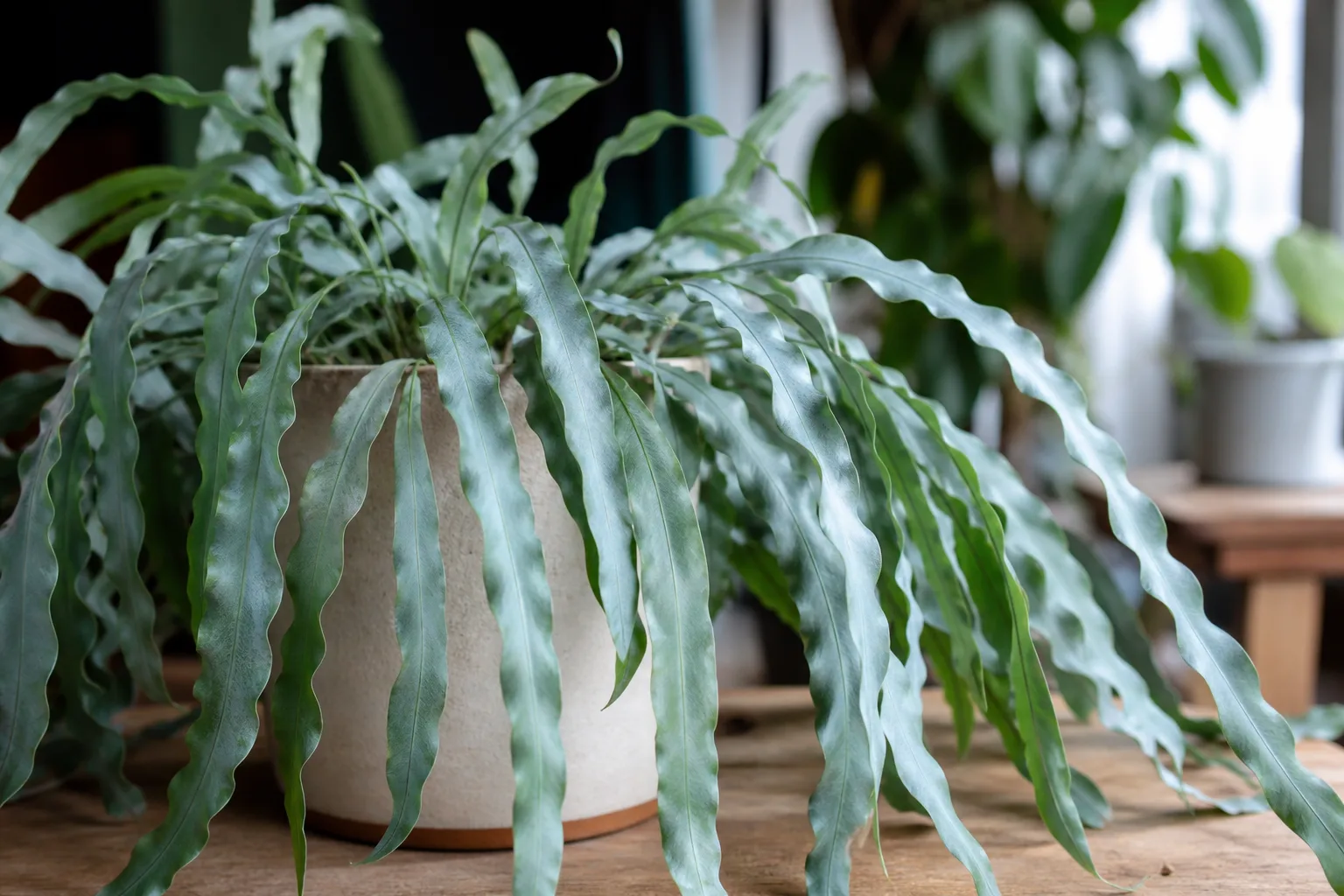
Drooping Leaves on Blue Star Fern: Causes, Checks & Fixes
This guide covers drooping leaves on Blue Star Fern. See also the general Drooping Leaves guide, watering, and light pages for this plant.
Drooping Leaves on Blue Star Fern: Causes, Checks & Fixes
Quick answer
Drooping on Blue Star Fern (Phlebodium aureum) shows up as limp, hanging fronds that lose their usual stiff, arching posture-the deeply lobed blue-green blades hang toward the pot instead of holding out from the rhizome. Unlike generic houseplant advice, this epiphytic fern droops for reasons tied to creeping rhizome health, moist-not-soggy mix logic, and humidity at the frond surface, not just “needs water.”
First step: lift the pot and insert a finger or skewer into the top 2.5–3 cm (1 inch) of mix near the pot edge, then gently press exposed golden rhizomes at the soil surface. A light pot with dry mix and firm rhizomes points to underwatering. A heavy pot with damp mix and soft rhizomes points to overwatering or rot-do not add more water. Normal dry-down with firm rhizomes but limp fronds near a heating vent often means low humidity instead. See our watering guide for the check-based rhythm this diagnosis builds on.
What drooping fronds look like on Blue Star Fern
On a healthy Blue Star Fern, fronds emerge from fuzzy golden rhizomes and hold a firm, slightly arching posture with a distinct blue-green to gray-green cast. Drooping changes that silhouette:
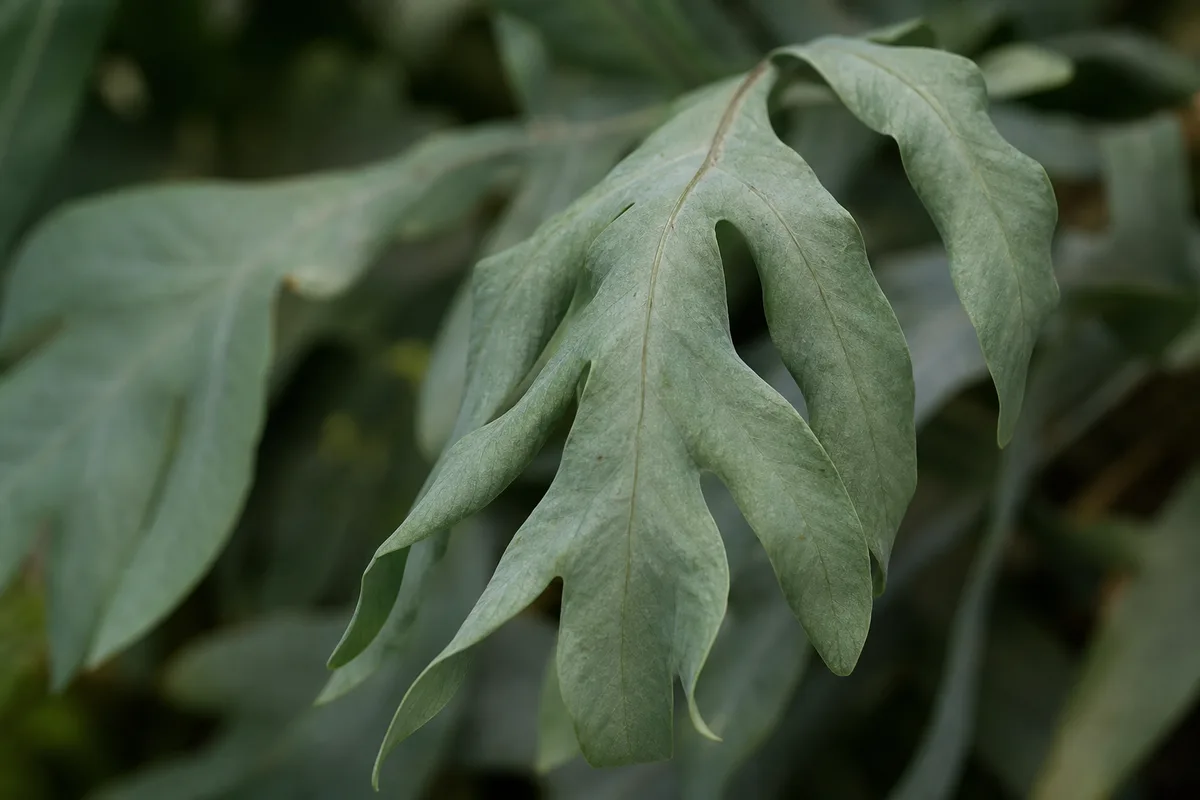
Drooping Leaves symptoms on Blue Star Fern - compare with healthy tissue on the same plant.
- Underwatering droop: Fronds hang limply along the pot rim, feel papery or thin, and may lose the bluish tone-turning dull gray-green. Mix is dry an inch down; the pot feels noticeably light. Rhizomes stay firm but may look slightly shrunken at the surface.
- Overwatering droop: Fronds go limp and dull while the pot stays heavy for many days. Lower fronds may yellow. Surface rhizomes feel soft or mushy; mix smells earthy or sour. This is the classic “wet soil, thirsty-looking plant” paradox-roots and rhizomes fail in saturated mix.
- Low-humidity droop: Fronds lose turgor near crisping edges, especially on older blades, while soil moisture is normal and rhizomes remain firm. Symptoms cluster near vents, bright winter windows, or dry AC airflow.
- Low-light droop: Long, pale fronds with wide gaps between lobes sag under their own weight. The plant leans toward the brightest side; new growth is smaller and weaker.
- Cold or draft droop: Sudden limpness after a window left open, AC blast, or outdoor night below about 10°C (50°F). Fronds may darken or show edge damage within days.
- Post-repot limpness: Whole plant droops for one to two weeks after division or Blue Star Fern repotting guide while fine roots re-establish-rhizomes should still feel firm, not mushy.
Normal brief limpness: Fronds sometimes relax for a few hours right after a deep watering as tissue rehydrates. If they firm up by the next day, no treatment is needed.
This page focuses on chronic or worsening droop-fronds that stay limp across multiple days or spread to new growth. For acute collapse with rapid softening, also read wilting on Blue Star Fern-we distinguish the two below.
Why Blue Star Fern fronds droop
Blue Star Fern is a rhizomatous epiphyte whose fronds depend on fine roots attached to creeping surface rhizomes. When water uptake, turgor pressure, or structural support fails anywhere in that chain, fronds hang. NC State Extension notes that curling often signals low humidity and underwatering, while browning points to humidity needs-drooping sits in the same environmental stress family.
Underwatering and dry epiphytic mix
When the top inch of bark mix dries completely and stays dry, roots cannot supply enough water to maintain frond turgor. Blue Star Fern tolerates brief drought better than maidenhair or Boston ferns, but repeated full dry-downs leave fronds limp and edges crispy. Shrunken mix pulling away from the pot edge is a telltale sign-water runs down the sides without rewetting the root ball.
Overwatering and rhizome rot
Epiphytic rhizomes need air at the surface. Soggy mix, buried rhizomes, or saucers full of stale water rot the fuzzy golden stems. Damaged rhizomes and roots cannot transport water, so fronds droop in wet soil-the most dangerous misread on this plant. NC State Extension lists crown rot and root rot among primary problems when cultural conditions stay too wet.
Low humidity and false water stress
Dry indoor air below 40% relative humidity accelerates transpiration through large, thin fronds. The pot may feel correctly moist while blades lose rigidity-growers often respond with more water, worsening rot risk. The Old Farmer’s Almanac notes Phlebodium prefers 60–80% humidity but handles average homes better than many ferns; edge browning and limpness still appear when air is very dry.
Low light and weak frond support
Insufficient light produces elongated, pale fronds with weak petioles that sag under their own weight. NC State Extension recommends partial shade to dappled sunlight-too dim indoors mimics deep shade and softens growth structure over weeks, not hours.
Cold drafts and temperature shock
Warm-room species suffer when temperatures drop sharply. Outdoor nights below 10°C (50°F) or cold window glass in winter can stall root function and limp fronds within a day. The Old Farmer’s Almanac recommends keeping plants away from drafty windows and heating units; ideal range is roughly 16–24°C (60–75°F).
Transplant shock
Repotting or rhizome division disturbs fine roots. Temporary droop for one to three weeks is common while the plant re-anchors-provided rhizomes stay firm and you avoid soggy fresh mix in an oversized pot.
Drooping vs. wilting vs. yellowing on Blue Star Fern
| Symptom | What you see | Soil / rhizome clues | Likely primary cause |
|---|---|---|---|
| Drooping | Limp hanging fronds, often still green | Varies-check moisture and rhizome firmness first | Underwatering, humidity, light, or early rot |
| Wilting | Rapid collapse, soft tissue, dramatic limpness | Often wet mix with mushy rhizomes, or very dry | Acute rot, severe drought, or heat shock |
| Yellowing | Chlorosis spreading on lower or many fronds | Wet heavy pot OR very dry; rhizomes may be soft | Overwatering, root failure, or low light |
Drooping is the early-to-mid stress signal-fronds lose posture before widespread yellowing or mushy collapse. Wilting is the urgent escalation when turgor failure is severe or fast. Yellowing often follows sustained root-zone problems. One plant can show all three; work the confirmation steps below in order rather than treating the most visible leaf color alone.
How to confirm the cause (6-step inspection)
Work through these checks before changing light, humidity, or watering:
- Pot weight - Lift from the bottom. Light and dry-ready versus heavy and still saturated after days without watering separates drought from waterlogging faster than looking at fronds alone.
- Top-inch moisture probe - Push a finger or skewer 2.5–3 cm (1 inch) into mix near the pot edge, avoiding the rhizome crown. Dry and crumbly means underwatering is likely. Cool, damp, or clinging mix means do not water yet.
- Rhizome firmness - Gently press golden rhizomes at the soil surface. Firm and fuzzy is healthy. Soft, dark, or squishy tissue signals rot-see our root rot guide.
- Frond color and texture - Dull gray-green papery blades fit drought. Limp dull fronds on wet mix fit rot. Crispy margins with firm rhizomes and normal soil dry-down fit low humidity.
- Humidity and placement - Hold a hygrometer at frond height. Below 40% beside a vent or radiator supports dry-air droop even when soil is correct.
- Recent care timeline - Repot, move, division, or skipped watering in the last two weeks? Transplant limpness and one missed drink explain timing better than disease.
If wet soil pairs with drooping fronds and soft rhizomes, treat as overwatering immediately-see our overwatering guide. If bone-dry mix pairs with limp fronds, treat as underwatering-see our underwatering guide.
First fix for Blue Star Fern
Lift the pot, probe the top inch of mix, and press surface rhizomes-then act on what those three checks show, not on how limp the fronds look.
This single diagnostic pass prevents the two most common mistakes: watering an already wet rotting fern because fronds “look thirsty,” or withholding water from a dry root ball because the surface bark looks slightly lighter. Do not fertilize, repot, or mist until you know which branch below applies.
Step-by-step recovery by confirmed cause
After the first fix identifies the pattern:
If dry mix + light pot + firm rhizomes (underwatering):
- Water thoroughly until excess drains from holes; empty the saucer within 30 minutes.
- If mix is shrunken and water channels away, use a 15–20 minute soak-and-drain per our watering guide.
- Resume check-based watering when the top inch dries-do not keep soil constantly wet as “compensation.”
If wet mix + heavy pot + soft rhizomes (overwatering / rot):
- Stop watering immediately; remove standing saucer water.
- Move to medium indirect light with good airflow.
- If rhizomes are mushy or smell sour, unpot, trim rotten tissue, and repot into fresh airy mix with rhizomes on the surface-details in root rot recovery.
If normal moisture + firm rhizomes + dry air (humidity):
- Move away from vents and radiators.
- Run a humidifier or pebble tray targeting 40–60% RH at frond height.
- Do not increase watering-see low humidity fixes.
If pale elongated fronds + dim location (low light):
- Move gradually to medium bright indirect light per our light guide.
- Reduce watering frequency to match slower dry-down in the new spot.
If droop after repot (transplant shock):
- Keep rhizomes on the surface in appropriately sized pot; one settling water only.
- Bright indirect light, stable 16–24°C (60–75°F), no fertilizer until new fronds appear.
Make one correction at a time and wait seven to ten days before stacking repot, prune, and humidity changes.
Recovery timeline
| Severity | Expected improvement | Success signal |
|---|---|---|
| Mild underwatering | Fronds firm within 6–24 hours after thorough watering | Pot weight normalizes; new pinnae unfurl cleanly |
| Low-humidity droop | 1–3 weeks after sustained 40–60%+ RH | New fronds hold posture; edges stop crisping |
| Low light | 3–6 weeks after brighter placement | New growth shorter, bluer, more rigid |
| Overwatering without rot | 1–2 weeks after drying cycle begins | No new yellowing; rhizomes stay firm |
| Rhizome rot (trimmed) | 3–8 weeks | First firm new frond from healthy rhizome tissue |
Old limp frond tissue may never fully straighten. Judge progress by new frond growth from firm rhizome tissue, not by older blades regaining their original arch.
What not to do
Do not water when the top inch is still damp and the pot feels heavy-drooping fronds on wet mix mean uptake failure, not thirst. Do not mist heavily instead of fixing root-zone moisture or ambient humidity; wet fronds in stagnant air invite fungal spotting and do not rehydrate rhizomes.
Do not bury creeping rhizomes deeper at repot to ” stabilize” a drooping plant-that accelerates rot. Do not fertilize stressed ferns hoping to stiffen limp fronds. Do not repot on day one unless you confirm mushy rhizomes or completely failed mix-correct watering or humidity first.
Do not assume drooping and wilting need identical treatment; wilting with crown softening is more urgent. Do not trim every limp frond immediately-wait to see which tissue recovers after the confirmed fix.
How to prevent drooping fronds on Blue Star Fern
Prevention follows the same epiphytic logic as daily care on our overview:
- Check before every drink - Top inch dry, then water deeply and drain fully.
- Keep rhizomes on the surface - Never bury golden creeping stems in wet mix.
- Target 40–60% humidity - Higher during heated winter months; use a hygrometer at frond height.
- Medium to bright indirect light - Avoid dark corners that produce weak sagging fronds.
- Stable warmth - Keep away from sub-10°C (50°F) drafts and AC blasts.
- Wide shallow pots with drainage - Match pot size to rhizome spread, not frond height alone.
- Weekly scout - Firm rhizomes, firm new frond tips, and consistent pot weight catch drift early.
Blue Star Fern care cross-check
| Variable | Healthy target | Drooping risk when wrong |
|---|---|---|
| Watering | Top 2.5–3 cm dry before soak | Too dry = limp papery fronds; too wet = limp fronds on heavy pot |
| Humidity | 40–60% at frond height | Below 40% = turgor loss with moist soil |
| Light | Medium bright indirect | Too dim = weak sagging growth |
| Temperature | 16–24°C (60–75°F) | Below 10°C (50°F) = shock droop |
| Rhizomes | Firm, golden, on surface | Buried or mushy = rot-driven droop |
| Pot | Drainage holes; not oversized | Soggy center = oxygen starvation |
When to worry
Escalate immediately if rhizomes turn mushy and dark, soil smells sour, droop spreads to all new fronds within 48 hours, or soft crown tissue appears-these point to advanced rot, not reversible limpness. Unpot and inspect before the last healthy rhizome segment fails.
Lower urgency fits gradual droop with firm rhizomes after one missed watering or a dry winter week-rehydration or humidity fixes usually work. Post-watering limpness that resolves overnight is normal.
Related Blue Star Fern problems
- Underwatering - dry mix, light pot, papery fronds
- Overwatering - heavy wet pot, yellowing, fungus gnats
- Root rot - mushy rhizomes, sour smell, collapse on wet mix
- Low humidity - crispy edges with firm rhizomes
- Wilting - acute collapse vs. chronic droop
- Yellow leaves - chlorosis after sustained stress
- Brown tips - margin damage overlapping humidity and water quality
Conclusion
Drooping fronds on Blue Star Fern are a diagnostic signal, not a single disease. Lift the pot, probe the top inch of mix, and press surface rhizomes before you water, mist, or repot. Underwatering, overwatering with rhizome damage, dry air, low light, cold, and transplant shock all limp fronds-but each needs a different first fix. Use new upright frond growth from healthy golden rhizomes as your recovery benchmark, and cross-check daily care against our watering and humidity guides so droop does not return next season.
When to use this page vs other Blue Star Fern guides
- Blue Star Fern watering guide - Use for routine moisture checks before assuming drooping leaves is the main issue.
- Blue Star Fern problems hub - Browse all 16 common issues on this species.
- Underwatering on Blue Star Fern - Different entry point when symptoms overlap with drooping leaves.
- Overwatering on Blue Star Fern - Different entry point when symptoms overlap with drooping leaves.
- Root Rot on Blue Star Fern - Different entry point when symptoms overlap with drooping leaves.