Yellow Leaves on Blue Star Fern: Causes, Checks & Fixes
Quick answer
Yellow fronds on Blue Star Fern usually trace to overwatering, underwatering, low light, low humidity, or normal oldest-frond aging-and the fixes differ. First step: press into the top inch of mix, feel surface rhizomes for firmness, and note whether yellowing is limited to one old frond or spreading across the plant.
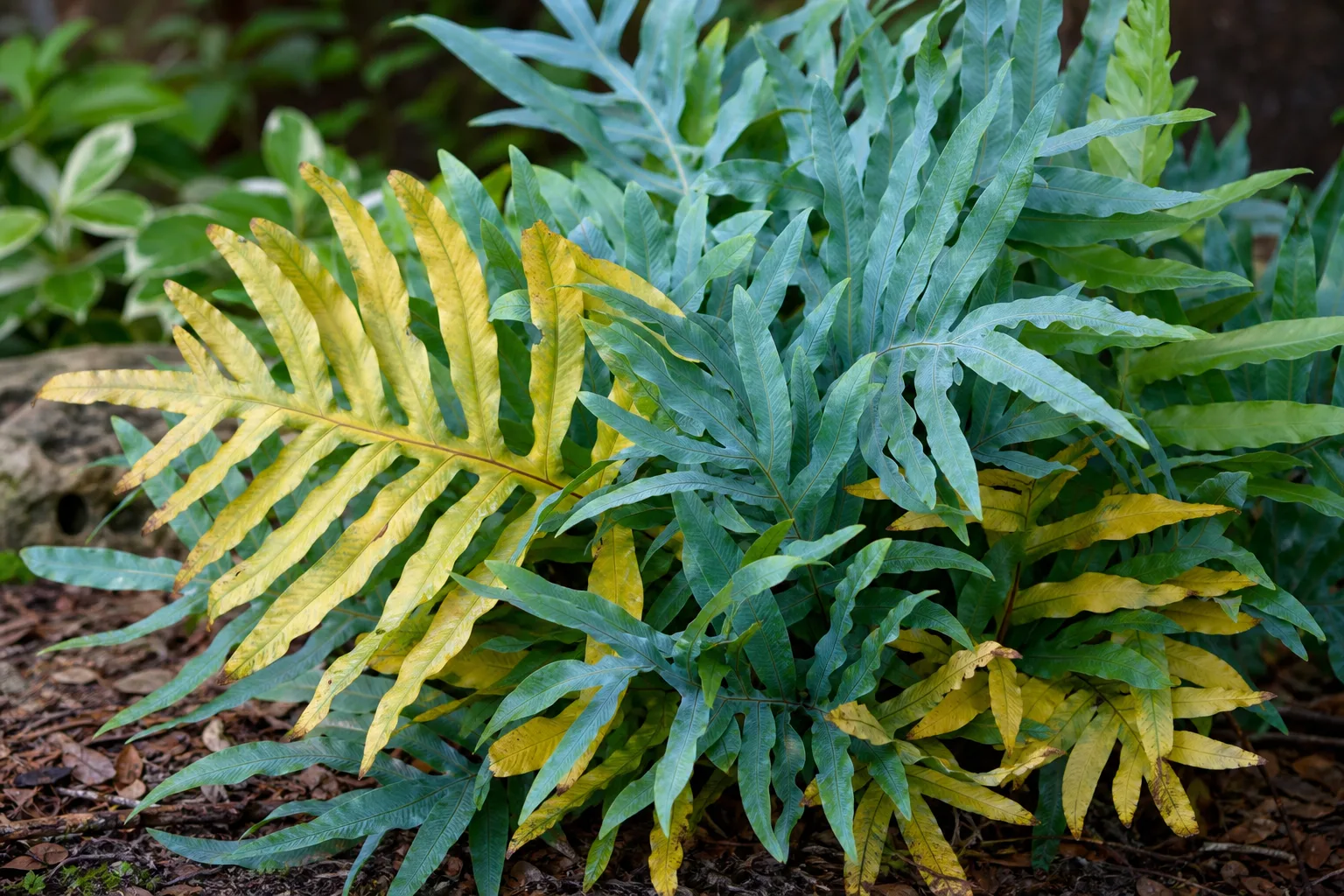
Yellow Leaves on Blue Star Fern: Causes, Checks & Fixes
This guide covers yellow leaves on Blue Star Fern. See also the general Yellow Leaves guide, watering, and light pages for this plant.
Yellow Leaves on Blue Star Fern: Causes, Checks & Fixes
Quick answer
Yellow fronds on Blue Star Fern (Phlebodium aureum) are a warning sign-not a single diagnosis. On this rhizomatous epiphytic fern, chlorosis can mean chronic wet bark around surface rhizomes, repeated dry-down, dim light fading the blue-green blades, dry winter air, cold drafts, or simply the oldest frond finishing its life cycle. Because golden creeping rhizomes sit on or above the mix and new fronds emerge from their tips, yellowing often starts at the base of older fronds while the plant still looks partly healthy-or spreads quickly when rot undermines the whole root zone.
First step: press your finger into the top inch (2.5 cm) of mix near the pot edge, feel whether surface rhizomes are firm or mushy, and count how many fronds are affected. One fading lower frond on firm rhizomes with green new growth is often normal aging. Multiple yellow fronds plus a heavy wet pot needs a watering pause and rhizome inspection-not fertilizer. For baseline rhythm and the humidity-vs-soil confusion, start with our Blue Star Fern watering guide.
What yellow fronds look like on Blue Star Fern
On Phlebodium, yellowing shows up on lobed bluish-green fronds, not separate leaf blades. The pattern and texture narrow the cause before you treat.
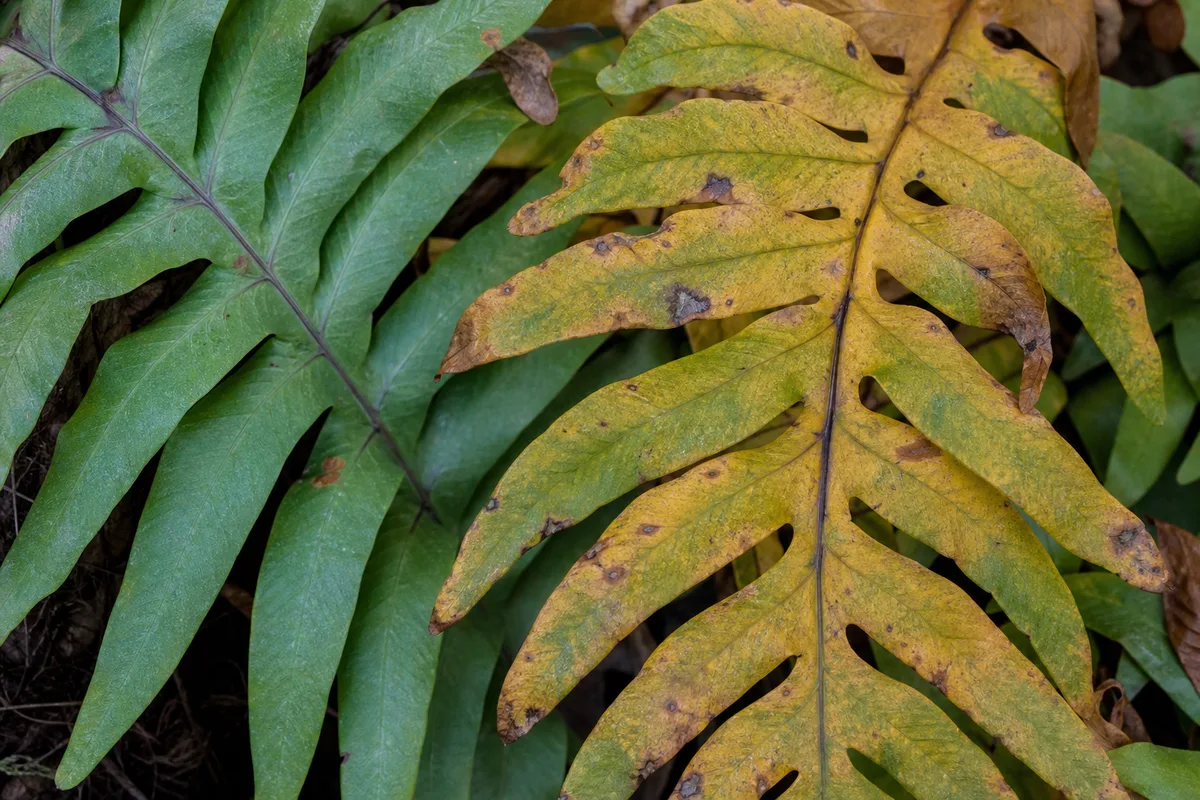
Yellow Leaves symptoms on Blue Star Fern - compare with healthy tissue on the same plant.
Typical yellow-frond signs include:
- Uniform yellow from the frond base upward on one or two oldest fronds while newer blades stay blue-green-often normal senescence
- Dull, pale yellow-green across several fronds in a dim corner, sometimes with long weak petioles-low light stress overlapping with not enough light
- Yellowing with limp, wilted texture while mix stays dark and wet, paired with soft surface rhizomes-overwatering or rhizome rot
- Crispy yellow-brown edges progressing to whole-frond chlorosis when soil has gone bone dry and the pot feels light-underwatering after drought
- Gradual fade to gray-yellow on multiple fronds with firm rhizomes, normal soil dry-down, and humidity below 40%-low humidity transpiration stress; see low humidity
- Sudden pale yellowing after a cold window night or AC blast-temperature shock below comfortable room range
- Stippled yellow patches with gritty undersides in dry heat-spider mites, not a watering problem alone
What yellow fronds do not look like: isolated crispy brown margins only with firm rhizomes and normal dry-down (that is brown tips, not whole-frond yellowing). Sudden collapse with black mushy rhizomes and sour soil is advanced rot-move to the root rot guide after inspection.
Why Blue Star Fern gets yellow fronds
In the wild, blue star fern clings to bark and palm crowns in humid tropical forests. Indoors, six stressors account for most yellowing on established plants.
Overwatering and rhizome rot
NC State Extension lists crown rot and root rot among potential diseases and recommends a moist but not soggy substrate with good drainage. Texas A&M AgriLife Extension notes that root decay from overwatering can cause yellowed foliage and eventual plant loss. When bark stays waterlogged, fine roots and surface rhizomes lose oxygen; the plant cannot move nutrients, and chlorophyll breaks down in stressed foliage. Limp yellow fronds in a heavy wet pot are the classic pattern-see our overwatering guide for early intervention.
Underwatering on an epiphytic fern
Phlebodium tolerates drying out between waterings better than maidenhair or Boston ferns, but repeated full dry-down still yellows and wilts fronds. When the root ball shrinks from the pot sides, fronds go limp and fade from gray-green to yellow-brown. Chunky bark can look dry on top while staying moist deeper-always probe depth, not surface color alone.
Low light and pale leggy fronds
Blue star fern wants bright indirect light-dappled or partial shade in extension terms-not a dark hallway. Dim placement produces pale yellow-green fronds, weak elongation, and slow new growth. The plant survives but loses the characteristic blue cast. Yellowing from low light is usually gradual across multiple fronds, not one isolated lower blade.
Low humidity and false water stress
NC State Extension links frond browning to insufficient humidity and notes that curling is a common symptom of low humidity and underwatering. Dry heated air pulls water through thin pinnae faster than roots replace it. Soil can feel appropriately damp while fronds still yellow and crisp at edges-a trap that pushes growers to overwater. Our low-humidity guide covers hygrometer targets of 40–60% at frond height.
Cold drafts and temperature shock
Tropical Phlebodium prefers stable room temperatures. Sudden exposure to cold window glass, winter drafts, or AC blasts can chlorose fronds within days. Damage often appears on the side facing the cold source first. This overlaps with humidity stress in winter but resolves when placement warms-not when you add water.
Natural oldest-frond senescence
Evergreen does not mean every frond lasts forever. As new fronds unfurl from creeping rhizome tips, the oldest frond at the base yellows, fades, and drops. One frond over several months on an otherwise vigorous plant with firm golden rhizomes is normal-not a care failure.
Pests, salts, and leaf-shine damage
Spider mites cause stippled yellow patches in warm dry conditions. Salt buildup from hard tap water or heavy fertilizer can yellow margins slowly. Leaf-shine sprays damage fern fronds and cause patchy chlorosis-never use them on Phlebodium.
Lookalike symptoms to rule out
| Pattern | Likely cause | Key differentiator on Blue Star Fern |
|---|---|---|
| One oldest frond yellowing from base; firm rhizomes; green new growth | Normal senescence | Months-long timeline; no wet-soil smell |
| Multiple limp yellow fronds; heavy wet pot; soft rhizomes | Overwatering / rhizome rot | Wilt despite wet mix; see overwatering |
| Limp yellow-brown fronds; light pot; dry mix throughout | Underwatering | Recovers within 24–48 h after thorough watering |
| Pale yellow-green on all fronds; weak petioles; dim location | Low light | Blue cast lost; see not enough light |
| Yellowing with crispy edges; firm rhizomes; humidity below 40% | Low humidity | Soil moisture normal; see low humidity |
| Sudden chlorosis on cold-facing fronds after draft | Temperature shock | Follows exposure event; rhizomes stay firm |
| Stippling + fine webbing on undersides | Spider mites | Dry air is a risk factor; not fixed by watering alone |
| Slow symmetric yellow margins; white crust on mix | Salt / fertilizer burn | Follows tap water or heavy feeding history |
If humidity reads above 45%, soil dries on a normal rhythm, and yellowing still spreads, inspect rhizomes and light before assuming one cause.
How to confirm the cause
Work through these checks in order. Change one variable at a time so you can read the plant’s response over the next two weeks.
- Frond count and age - Is only one lower frond affected over months, or are multiple fronds yellowing within days? Single old frond on firm rhizomes suggests senescence; rapid spread suggests stress.
- Soil moisture at depth - Probe the top inch (2.5 cm) near the pot edge, avoiding the rhizome crown. Bone-dry mix with limp fronds points to underwatering. Cool, clinging wet bark with yellow limp fronds points to overwatering.
- Pot weight - A heavy pot days after watering with yellow wilt fits rot risk. A light pot with yellow crispy fronds fits drought.
- Rhizome firmness - Golden surface rhizomes should feel firm and fuzzy. Soft, black, or sour-smelling tissue with wet mix needs root rot investigation-not more water or fertilizer.
- Humidity at frond height - Below 30–40% for 24 hours strongly supports dry-air stress when soil moisture is normal. Target 40–60% maintenance per our low-humidity guide.
- Light and placement - Note distance from windows, direct sun exposure, and recent moves. Pale weak fronds in shade fit low light; one-sided yellow after a cold night fits draft damage.
- Pest scan - Check frond undersides for stippling, webbing, or grit. Mites thrive in warm dry indoor air and yellow fronds without wet soil.
First fix for Blue Star Fern
Your first action depends on what the checks confirm-not a bundled stack of changes on day one.
If soil is wet and rhizomes feel soft or the pot is heavy
Stop all watering, empty standing saucer water, and let the top inch of mix dry while you inspect surface rhizomes. Do not fertilize. If tissue is mushy beyond a small section, follow our root rot guide after trimming dead rhizome and root material. Firm rhizomes with only soggy bark can often recover with a watering pause and drainage correction per our overwatering page.
If soil is bone dry and the pot is light
Water thoroughly until excess runs from drainage holes, then empty the saucer within 30 minutes. Water around the pot edges, not directly onto surface rhizomes. Follow the top-inch dry rule in our watering guide. Fronds often perk within 24 to 48 hours; fully yellow tissue will not regreen.
If soil moisture is normal but humidity reads below 40%
Move the pot away from heating vents and run a cool-mist humidifier until frond-height readings hold 40–60%. Do not increase watering to fix dry air-that keeps rhizomes wet while fronds still chlorose.
If fronds are pale and weak in a dim spot
Move to bright indirect light without hot afternoon sun on blades. East-facing or set-back north windows work well. See our light guide for placement. Do not blast with direct sun to “fix” yellowing-that scorches Phlebodium fronds.
If only one old frond is yellowing and rhizomes are firm
Remove the spent frond at the rhizome base and maintain current care. No repot, fertilizer, or watering overhaul is needed when new growth stays blue-green.
Step-by-step recovery by confirmed cause
Overwatering / early rhizome stress: Pause watering until the top inch dries. Confirm drainage holes are open and saucers empty after every drink. Resume soak-and-dry rhythm from the watering guide. Trim fully yellow fronds at the rhizome base only for cosmetics.
Underwatering: Thorough watering once, then establish a probe-based schedule. If bark shrinks from pot sides, consider a brief soak in the sink until the top inch is moist, then drain fully.
Low humidity: Humidifier plus vent clearance. Expect cleaner new frond color within two to four weeks; old yellow tissue stays spent.
Low light: Relocate to brighter indirect light. New fronds should show restored blue-green tone within three to six weeks as light improves.
Salt buildup: Flush mix with plain rainwater or distilled water until runoff clears. Hold fertilizer four to six weeks. See our fertilizer guide for light feeding rates after recovery.
Spider mites: Isolate, rinse frond undersides, and treat per our spider mites guide. Raising humidity helps prevention but does not replace pest control when webbing is present.
Recovery case: wet pot, yellow lower fronds, firm core rhizomes
A grower reported three lower fronds turning dull yellow over ten days while the pot stayed heavy. Surface rhizomes felt firm except one soft 2 cm section at the crown edge. They stopped watering for eight days until the top inch dried, trimmed the mushy rhizome section with sterile shears, and repotted into fresh bark mix with rhizomes on the surface-not buried. Saucer water was emptied after every future watering. First new blue-green frond emerged from a rhizome tip at week three; old yellow blades were removed at the base. Total timeline: six weeks to stable new growth. This matches the principle of judging recovery by new fronds from rhizome tips, not old chlorotic tissue.
Recovery timeline
Mild underwatering often shows perking fronds within 24 to 48 hours after a thorough drink, though yellow blades remain spent. Overwatering recovery after a dry-down pause may take two to three weeks before new frond tips appear if rhizomes stayed mostly firm.
Humidity or light corrections typically show cleaner new growth within two to four weeks-Phlebodium’s moderate growth rate means visible recovery is slower than on fast tradescantia but faster than on delicate maidenhair ferns. Advanced rhizome rot with extensive mushy tissue can take six to eight weeks after trim and repot, or may not recover if the growing tips were destroyed.
Old yellow fronds do not regreen. Success means new fronds with restored blue-green color and firm golden rhizomes.
What not to do
Do not fertilize a yellowing fern to “green it up.” Salt buildup from overfeeding yellows foliage; stressed roots absorb nutrients poorly.
Do not increase watering when fronds yellow in dry winter air while soil already dries on a normal rhythm-soggy mix around surface rhizomes rots faster than dry air chloroses fronds.
Do not bury creeping rhizomes during Blue Star Fern repotting guide while troubleshooting. Surface rhizomes need air; entombing them worsens rot-driven yellowing.
Do not use leaf-shine products on fern fronds-they cause patchy chlorosis and damage the glaucous blue cast.
Do not stack repotting, heavy pruning, and pesticide on the same day as a watering or humidity fix. Stressed Phlebodium needs boring stability.
Do not assume underwatering is impossible on epiphytic ferns. Bark can dry completely while growers focus on rot prevention.
How to prevent yellow fronds next time
- Probe the top inch before every watering decision; frond color alone misleads on this species
- Keep golden rhizomes on the soil surface with good air circulation-never pack wet soil over them
- Monitor humidity at frond height through heating season-target 40–60%
- Provide bright indirect light without hot afternoon sun-see our light guide
- Empty saucers within 30 minutes of watering; stale saucer water keeps rhizomes anaerobic
- Water near pot edges, not onto rhizome crowns, per good epiphyte practice
- Use rainwater or distilled water if tap is hard; flush mix monthly if you fertilize
- Remove spent fronds promptly at the rhizome base to reduce pest hiding spots
- Watch new frond color each winter-it is the earliest barometer for humidity and watering mistakes
When to worry
Yellowing on one old frond with firm rhizomes and green new growth is low severity-cosmetic senescence, not an emergency.
Escalate care when:
- Multiple fronds yellow within a week while soil stays wet-inspect for rot immediately
- Rhizomes turn soft, black, or sour-smelling-see root rot
- New fronds collapse before unfurling-combined drought, rot, or pest stress
- Spider mites spread despite environmental fixes-see spider mites
- Blue-green color fails to return on new growth after four weeks of corrected light and humidity
If only older fronds yellow and new rhizome tips produce clean blades after one care correction, the plant is stabilizing.
Blue Star Fern care cross-check
| Factor | Healthy range for Phlebodium | Yellow-frond warning sign |
|---|---|---|
| Soil moisture | Top inch dries slightly between drinks; moist not soggy | Clinging wet bark OR bone-dry shrunken ball |
| Humidity | 40–60% at frond height; higher during recovery | Below 30–40% with firm rhizomes and chlorosis |
| Light | Bright indirect; dappled or partial shade | Pale yellow-green weak fronds in dim corners |
| Temperature | Stable room temps; avoid cold glass contact | Sudden chlorosis after draft or AC blast |
| Rhizomes | Firm, fuzzy, golden-brown on surface | Soft, black, or sour-smelling tissue |
| New growth | Blue-green fronds from rhizome tips | Stalled, smaller, or collapsing unfurling |
Conclusion
Yellow fronds on Blue Star Fern announce themselves through dull chlorosis, limp texture, or gradual base fading on older blades-but the fix depends on whether wet rhizomes, dry soil, dim light, dry air, cold, pests, or normal aging is driving the pattern. Check soil moisture and rhizome firmness before you change watering or add fertilizer; make one correction at a time; and judge recovery by new fronds from rhizome tips, not old yellow tissue. For wet-soil deep-dives see overwatering; for dry-air detail see low humidity; for species hub see Blue Star Fern overview.
When to use this page vs other Blue Star Fern guides
- Blue Star Fern watering guide - Use for routine moisture checks before assuming yellow leaves is the main issue.
- Blue Star Fern problems hub - Browse all 16 common issues on this species.
- Overwatering on Blue Star Fern - Different entry point when symptoms overlap with yellow leaves.
- Underwatering on Blue Star Fern - Different entry point when symptoms overlap with yellow leaves.
- Not Enough Light on Blue Star Fern - Different entry point when symptoms overlap with yellow leaves.