How to Propagate Blue Star Fern: Rhizome & Spores
How to Propagate Blue Star Fern: Rhizome & Spores
How to Propagate Blue Star Fern: Rhizome & Spores
How Blue Star Fern Reproduces in Nature
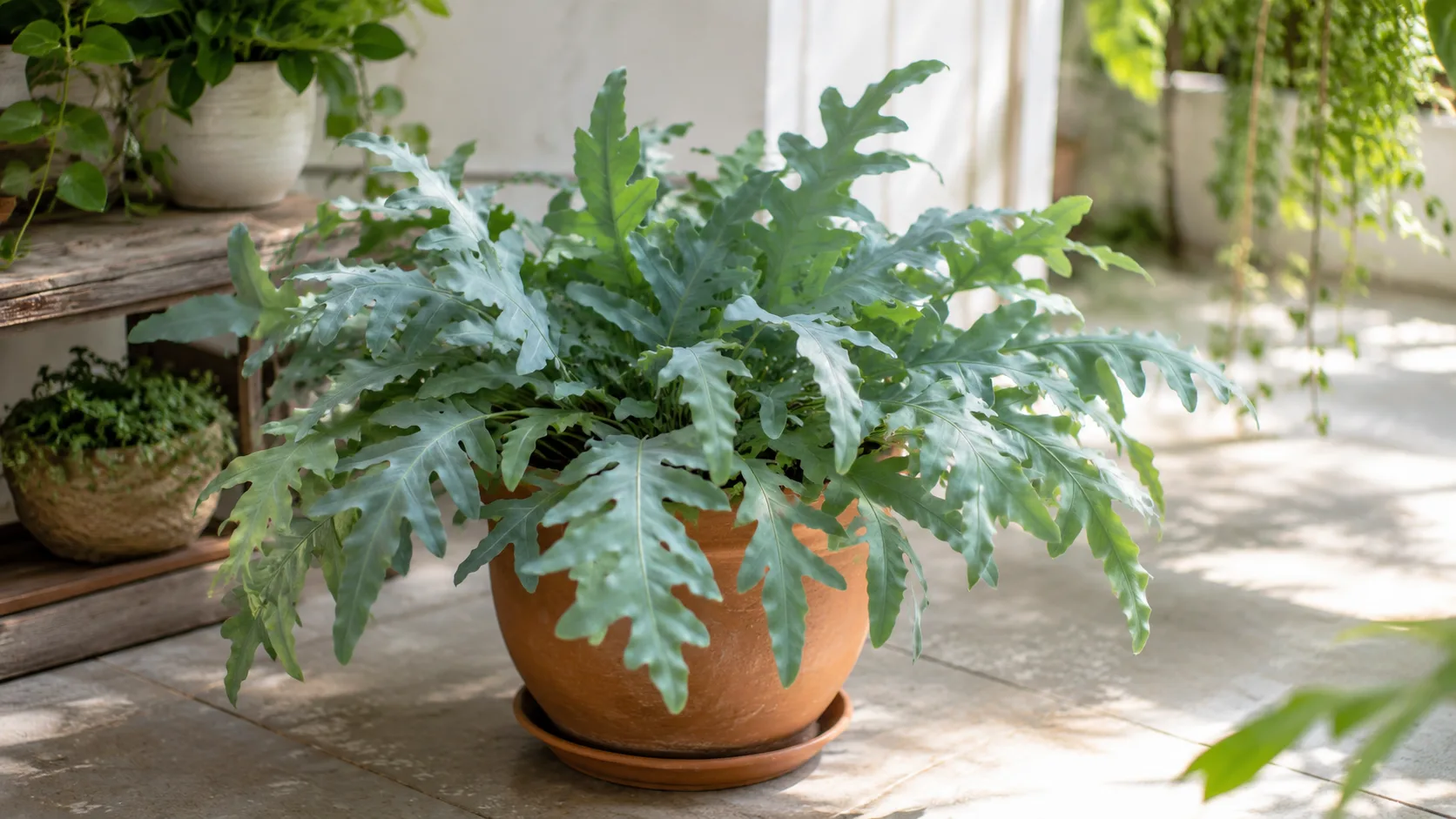
Blue Star Fern (Phlebodium aureum) belongs to the Polypodiaceae family and grows as an epiphyte in the tropical forests of the Americas - from southeastern Georgia and Florida through the Caribbean and down the Atlantic coast of South America. In the wild it clings to tree trunks and palm crowns with creeping, golden-brown rhizomes, absorbing moisture and nutrients from rainfall, humid air, and organic debris that collects around its surface roots. NC State Extension lists mature outdoor dimensions of 2–4 feet tall and 3–6 feet wide, though indoor specimens typically stay closer to 30–60 cm.
Unlike flowering houseplants, blue star fern does not produce seeds. Ferns reproduce through spores - microscopic particles released from structures called sori on the undersides of mature fronds. Plants of the World Online lists Phlebodium aureum as a widely cultivated species with several recognized varieties, confirming its long history as both a wild epiphyte and a houseplant subject.
In nature, ripe spores drift onto moist, shaded surfaces - bark crevices, mossy branches, or rich forest litter - where they germinate into a tiny, heart-shaped prothallus (the gametophyte stage). That prothallus is not a miniature fern; it is a separate life stage that produces eggs and sperm under wet conditions. When fertilization succeeds, a new sporophyte - the familiar fronded plant you keep on a shelf - emerges from the prothallus and eventually develops the creeping rhizome that defines the species. The full cycle takes many months, which is why spore propagation at home is a long project rather than a weekend task.
Rhizome division is the shortcut humans use when a mature plant has developed enough creeping stem tissue to split into independent sections, each with growth nodes, roots, and fronds. You are not creating new tissue from scratch; you are separating an existing piece that already has the machinery to grow. For blue star fern, division is faster and more reliable than spores when the plant structure allows it. The catch is that young nursery pots often have a single compact rhizome with limited division points. Understanding that biological reality before you pick up shears saves you from cutting a plant that cannot yet be split.
Rhizome Division vs Spore Propagation: Which Method to Choose
The easiest way to propagate blue star fern at home is rhizome division, but only when your plant has enough creeping rhizome length, growth nodes, and attached roots to create viable sections. In that scenario, division can produce visible new fronds in 4 to 8 weeks under warm, humid, bright-indirect conditions - a timeline most home growers find manageable. Success depends on plant structure and correct surface planting, not on enthusiasm alone.
Spore propagation is the natural method that works even when you cannot divide a plant, and it lets you observe the complete fern life cycle from its most fundamental stage. It is also slow, finicky, and measured in months to a year or more before you have a plant that resembles a nursery specimen. Spore sowing demands sterile technique, steady warmth and humidity, and patience through the prothallus stage. For most readers, spores are a rewarding botanical project rather than the practical path to a second pot on the windowsill.
Use this decision framework: if your blue star fern has rhizomes creeping over the pot edge or clearly separable sections with fronds and roots, divide. If you have a single compact plant you cannot split but it shows ripe brown sori on mature fronds, and you enjoy long-term projects, sow spores. If you have a small store-bought plant with no creeping rhizome and no interest in a multi-month spore tray, buying a second plant is a legitimate strategy - propagation is not a moral obligation.
| Method | Difficulty | Time to New Fronds | Success Rate | Best For |
|---|---|---|---|---|
| Rhizome division | Easy | 4 to 8 weeks | High | All growers; primary recommended method per NC State Extension |
| Spore propagation | Advanced | 8 to 12+ months | Variable | Enthusiasts; educational projects |
When to Propagate Blue Star Fern
Spring through early summer is the optimal window for both rhizome division and spore sowing. During this period the rhizome is actively extending, new fronds are unfurling, and the combination of longer days, rising temperatures, and naturally higher humidity provides the best conditions for divided sections to establish roots and for spores to germinate. NC State Extension lists division as the recommended propagation strategy for Blue Star Fern overview.
Late summer can still work if your plant is actively growing, but recovery slows as days shorten. Autumn and winter are poor choices for division: growth minimal, cold temperatures inhibit rooting, and excess moisture in a cool room increases rot risk on freshly cut rhizome tissue. Spore collection can happen whenever mature fronds show ripe brown sori, but sowing still benefits from the warm-season window when prothalli develop faster.
Before you propagate, confirm the parent plant is healthy. Do not divide or collect spores from a specimen recovering from root rot on Blue Star Fern, active mealybug infestation, severe dehydration, or recent Blue Star Fern repotting guide shock. Propagation is a backup plan for creating new plants, not a rescue operation for a failing one. The clearest signal that your fern is ready to divide is rhizomes creeping over the edge of the pot - the plant has run out of horizontal room and is actively seeking new growing space.
What You Need Before You Start
Gather clean tools and appropriate media before you unpot anything. Blunt scissors crush rhizome tissue and increase infection risk at cut surfaces; use a sharp knife or pruning shears sterilized with 70% isopropyl alcohol before every cut. Rhizome tissue is particularly susceptible to fungal infection where it has been sliced, so treat tool hygiene as non-negotiable rather than optional.
For divisions, prepare a well-draining epiphytic mix - not standard dense potting soil. Blue star fern roots expect airy, bark-based conditions. A practical home recipe combines potting mix, perlite, and orchid bark in roughly equal parts, or use a commercial orchid bark blend amended with a small amount of peat for moisture retention. LeafyPixels care data recommends well-draining mix with about 20% orchid bark, wide shallow pots for spreading rhizomes, and pH 6.0–7.0. Choose small terracotta or plastic pots with drainage holes sized only slightly larger than each division; oversized pots hold wet mix around unused space and invite rot.
Optional but useful items include a clear humidity dome or plastic bag for the first two to three weeks after division, sphagnum moss for packing around mounted sections, driftwood or cork bark if you want to try the mounting method experienced growers favor for long-term epiphytic culture, and powdered activated charcoal to dust cut rhizome ends and reduce infection risk.
For spore propagation, add sterile peat moss and fine perlite, a clean propagation tray with a clear lid, paper bags or white paper for spore collection, and ideally a pressure cooker or microwave for sterilizing sowing medium. Spore work rewards cleanliness more than any other fern propagation method.
Propagating by Rhizome Division
Rhizome division is the most reliable propagation method for blue star fern and the one that produces results most quickly. It works by separating the plant into sections, each containing rhizome, at least one growth node, and ideally some established roots, then replanting each section as an independent plant with the rhizome positioned correctly on the medium surface.
Reading Your Plant’s Rhizome Structure
The rhizome is the fuzzy, creeping, golden-brown stem that runs horizontally across and above the surface of the growing medium. It is often described as looking like a hairy caterpillar or a rabbit’s foot - and the Latin name aureum means gold, referring to this distinctive coloration. New fronds emerge from the rhizome at growth nodes - small bumps or protrusions along its length - and fine pale roots develop downward from it to anchor the plant and absorb moisture.
The rhizome is not a root. It is a modified stem that stores nutrients and produces both aerial fronds and anchoring roots. This distinction matters because a rhizome section with no node cannot produce a new plant, and because the growing orientation of the rhizome determines how you plant it after division. Healthy rhizomes are plump and firm; shrunken, blackened, or mushy sections indicate poor health and should not be used for propagation.
The single most important planting rule for blue star fern: the rhizome should sit on the surface of the growing medium or with only the very base touching it - never buried. Burying the rhizome is the most common cause of rot in newly propagated plants and is consistently described incorrectly in generic care guides that treat this epiphyte like a terrestrial houseplant. In nature, Phlebodium aureum grows attached to bark with its rhizome exposed to air; underground planting contradicts millions of years of adaptation (Flora of North America).
Step-by-Step Rhizome Division Method
Step 1: Unpot and inspect. Remove the fern from its container and lay it on a clean work surface. Gently tease away old mix from the rhizome so you can see where stems branch, where fronds attach, and where roots emerge. Identify natural separation points - sections where the rhizome has developed enough length, nodes, and roots to survive independently.
Step 2: Plan your cuts. Each division needs at minimum one growth node, a few healthy fronds, and a cluster of pale feeder roots. Larger divisions establish significantly faster than tiny ones because they carry more stored nutrients in the rhizome. Resist the instinct to create as many new plants as possible from a single parent; two generous sections beat four starved ones.
Step 3: Cut with sterile tools. Use your sterilized knife or shears to cut through rhizome tissue between sections. Avoid tearing, which damages more cells than a clean slice. If roots are tangled between sections, cut through the minimum necessary rather than ripping them apart. Dust cut surfaces lightly with activated charcoal if you have it.
Step 4: Pot each division. Fill a small pot with your bark-based mix. Lay the rhizome horizontally on the surface, pressing it gently so the base contacts the medium without burial. Use bobby pins, U-shaped wire, or a thin layer of sphagnum moss over the rhizome to maintain contact without smothering it. Fronds should point upward; roots should reach into the mix below.
Step 5: Water and cover. Water thoroughly until excess drains from the bottom, then empty any saucer. Place a clear humidity dome or loosely tied plastic bag over the pot for the first two to three weeks to maintain 60–80% humidity around the division. Keep the setup in Blue Star Fern light guide at 18–24°C (65–75°F).
Step 6: Monitor without disturbing. New frond emergence or visible rhizome extension within 4 to 8 weeks indicates success. Do not unpot to check roots; every disturbance resets the timeline.
Post-Division Aftercare
Freshly divided blue star ferns need steadier conditions than established plants. Keep the medium lightly moist but never waterlogged - check the top 3–4 cm and water when it approaches dryness, using room-temperature water. Avoid fertilizer until you see firm new growth; the rhizome stores enough energy to support initial root development without feeding.
Maintain 40–60% humidity after removing the humidity dome. A bathroom with good indirect light, a pebble tray, or a nearby humidifier all work; constant misting on frond surfaces is a poor substitute and can invite fungal spotting on tender new tissue. Protect divisions from cold drafts and direct sun, which desiccates rhizomes adapted to filtered canopy light.
The parent plant also needs gentle care after division. Return it to its original location, water normally, and expect a brief pause in new frond production while it adjusts to reduced rhizome mass. Both parent and divisions should recover within the same growing season if cuts were clean and rhizomes were not buried.
Propagating from Spores
Spore propagation lets you grow blue star fern from the plant’s own genetics without dividing the parent - useful when you have a particularly beautiful mature specimen and want a true copy. It is also the method commercial growers use at scale in controlled greenhouses. At home, treat it as a long-term project with realistic expectations.
Understanding Sori and Fern Spore Life Cycle
Mature blue star fern fronds develop orange-brown oval dots arranged in two neat rows on the underside of each frond lobe. These are sori - clusters of spore-producing structures - and they are a sign of a healthy, well-established plant. They are repeatedly mistaken for scale insects or other pests by new owners, who then apply pesticides unnecessarily. Sori are flat, regular, and appear in consistent rows; pests are irregular, raised, and often accompanied by sticky residue or webbing. Flora of North America describes sori in one line on each side of costae on mature fronds.
Spores are not seeds. They are single-celled particles that germinate into a prothallus - a tiny, heart-shaped gametophyte that lives on the soil surface for weeks to months. The prothallus produces both male and female reproductive structures; when water allows sperm to reach eggs, fertilization occurs and a new sporophyte (the fronded plant) emerges. Only after this two-stage life cycle do you have something recognizable as a fern.
Collecting Ripe Spores
Wait until sori have darkened to brown or rust and feel dry to the touch - typically on older, fully mature fronds. Immature green or pale sori contain unripe spores that will not germinate reliably. Cut a fertile frond and place it spore-side down on clean white paper or inside a paper bag in a dry, still room for 24 to 72 hours. Ripe spores fall as fine cinnamon-brown dust. Funnel the dust into a clean envelope and sow within a few days; viability drops over time.
Collect from your healthiest plant, not from a specimen under stress. One fertile frond yields more than enough spores for a single tray; over-collecting does not improve results.
Preparing a Sterile Sowing Medium
Fern spores compete poorly with mold, algae, and bacteria in non-sterile conditions. Mix peat moss and fine perlite in roughly equal proportions, moisten until evenly damp but not dripping, and sterilize by microwaving in a covered container for several minutes or pressure-cooking at 15 psi for 20 minutes. Let the medium cool completely before sowing.
Fill a clean propagation tray with the sterilized mix to a depth of 2–3 cm. Smooth the surface but do not compact it. Work with clean hands or gloves; a kitchen counter wiped with alcohol is adequate for home sowing, though dedicated propagators use a still-air box for repeated attempts.
Sowing, Germinating, and Raising Prothalli
Surface sow only. Sprinkle spores as thinly as possible across the moist medium - a light dusting, not a heavy layer. Do not cover spores with mix; they require light to germinate. Seal the tray with a clear lid or plastic wrap to maintain near-saturation humidity, and place it in bright indirect light at 21–24°C (70–75°F).
The first sign of success is a thin green film on the medium surface in roughly 3 to 8 weeks, though 8 to 16 weeks is common under cooler or dimmer conditions. This film is prothallus tissue, not moss or algae - though algae can also appear, which is why thin sowing and sterility matter. Prothalli need brief periods of surface moisture for fertilization; the sealed tray provides this naturally through condensation.
From Prothalli to Young Ferns
Tiny sporophytes with true fronds emerge from fertilized prothalli weeks to months after the green film appears. They look like miniature ferns on a mossy carpet - exciting when they arrive, easy to damage with impatience. Once sporophytes reach 2–3 cm tall and have several fronds, prick them out gently into small pots of sterile peat-perlite mix or your standard bark-based fern blend, still keeping rhizomes at the surface as they develop.
Grow young ferns in small pots, repotting only when roots circle the container. They will look disproportionately small for a long time. That is normal. A spore-grown blue star fern may take a year or more to reach a size comparable to a nursery specimen, but you will have started from the plant’s own genetics.
First-Month Care for New Plants
Whether your new plant came from rhizome division or spore pricking-out, the first month follows the same principles: bright indirect light, steady moisture, adequate humidity, no fertilizer, and surface-level rhizome protection. New ferns lack the root mass to recover from drought or from sitting in stagnant water, so the margin for error is narrower than for an established specimen.
Water when the top 3–4 cm of mix feels dry, using room-temperature water. Avoid cold tap water shocks in winter. Maintain 40–60% humidity with a dome, pebble tray, or humidifier if your home air is dry. Do not mist fronds directly as a humidity substitute on freshly propagated plants - surface moisture on young tissue invites fungal spotting.
Temperature should stay between 16–24°C (60–75°F). Cold drafts from windows or air-conditioning vents can stall root growth on divisions and stop prothallus development on spore trays entirely. If a division’s fronds wilt severely and the pot feels very light, water once and wait; if the pot feels heavy and the rhizome is soft, you likely have rot rather than dryness.
The best sign of success is new frond emergence - a fiddlehead unfurling on a division, or increasing frond count on spore-grown seedlings. Resist unpotting to check roots. Every disturbance resets the timeline by days or weeks.
What Does Not Work for Blue Star Fern
Can you propagate blue star fern from a leaf cutting? No. A detached frond has no dormant buds along its length and no ability to regenerate a rhizome from leaf tissue alone. The frond may stay green for weeks in water or soil, which creates the illusion of success, but it will not produce a new plant. Fern fronds are not like African violet leaves or succulent pads with regenerative capacity distributed through the tissue.
Can you propagate blue star fern in water? Not as a reliable method. Divisions need substrate and airflow at the roots; sitting in water promotes anaerobic rot on roots adapted to airy epiphytic conditions. Spores require a moist solid surface for the prothallus stage, not standing water. Water propagation videos for pothos and philodendrons do not transfer to epiphytic ferns.
Can you propagate from a rhizome section with no growth node? No. Without a node, the cutting has no meristematic tissue capable of producing new fronds. It may develop a few roots and then stall indefinitely, or rot outright.
Buying a second plant remains a legitimate strategy. If you have a young compact specimen with no creeping rhizome and no interest in an eight-month spore project, propagation is optional - not a test of your gardening worth.
Common Propagation Mistakes
The most damaging mistake on divisions is burying the rhizome. Epiphytic blue star fern rhizomes need air contact at the surface. Buried rhizomes rot within days in a wet mix, and the division collapses before you understand what went wrong. Lay rhizomes horizontally on the medium and pin them lightly if needed.
Creating divisions that are too small is the second most common error. A section with one frond and an inch of rhizome can survive, but it takes months longer than a generous division with multiple fronds and a longer rhizome segment. Patience in planning beats greed in cutting.
On spore trays, over-sowing produces a dense mat that rots before sporophytes develop. Less is more - a light dusting across the tray surface. Non-sterile medium invites mold that outcompetes prothalli; if your tray turns fuzzy within a week, discard and restart with sterilized mix rather than fighting contamination for months.
Mistaking sori for scale insects leads to unnecessary pesticide application that damages a healthy fertile frond and eliminates your spore source. Learn the difference before treating.
Impatiens watering kills both methods. Checking twice daily and adding water because you are anxious keeps the mix saturated and airless. Fern roots need oxygen as much as moisture; a rhythm of approaching dry, then thorough watering, beats constant dampness.
Propagating during stress - right after repotting, during active pest infestation, or in a cold dim winter room - stacks the odds against you. Stabilize the parent first.
Wrong frond selection for spores - harvesting immature leaves without ripe sori - yields empty trays. Wait for the brown powder test on paper.
Troubleshooting Failed Propagations
Division with wilting fronds but firm rhizome: Usually transplant shock. Maintain humidity, reduce light slightly, and wait two weeks. Do not fertilize. Confirm the rhizome is not buried.
Division with soft, mushy rhizome: Rhizome rot, often from burial or overwatering on Blue Star Fern. Remove from pot, cut away all brown tissue to firm golden rhizome, dust cuts with cinnamon or charcoal if desired, repot in fresh airy mix with the rhizome on the surface, and water sparingly. Success depends on how much healthy tissue remains.
Division with no new growth after 10 weeks in spring: Check rhizome positioning, light level, and moisture. A division in too much shade or with a buried rhizome can stall without obvious rot. Adjust surface placement and increase indirect light before declaring failure.
Spore tray with no green after 16 weeks: Possible causes include non-viable spores, medium too dry or too wet, temperature too cold, or insufficient light. One retry with fresh spores and verified ripe sori is reasonable before concluding the setup failed.
Spore tray with green moss but no fern fronds after months: Prothalli may be present but unfertilized, or algae may dominate. Improve air exchange, ensure brief periods of surface moisture for fertilization, and consider brighter indirect light.
Mold on spore medium: Discard the tray. Fighting mold on a months-long project rarely succeeds. Sterilize equipment and restart.
New plant stunted after pricking out: Often normal; seedlings are slow. If fronds blacken at the base, check for rhizome burial and reduce watering.
Conclusion
Blue star fern propagation comes down to two honest paths. Rhizome division is faster and more dependable when your plant has enough creeping stem tissue with growth nodes and roots attached - a situation common on mature specimens whose rhizomes spill over the pot rim. Spore propagation is the natural method that works even on a plant you cannot split, but it demands sterile technique, steady warmth and humidity, and a timeline measured in months rather than weeks.
Choose your method based on what your plant actually offers, not on what is easiest on social media. Keep rhizomes on the surface, not buried; propagate in spring when growth is active; and judge success by new frond emergence rather than by how often you unpot to check roots. Whether you divide a creeping golden rhizome or sow a dusting of spores on sterile peat and perlite, the same principle holds: Phlebodium aureum rewards patience, clean conditions, and respect for how an epiphytic fern actually grows.
When to use this page vs other Blue Star Fern guides
- Blue Star Fern overview - Start here for whole-plant context before deep-diving this topic.
- Blue Star Fern problems hub - Jump to symptom-specific fix guides when this care topic does not resolve the issue.
Related Blue Star Fern guides
- Blue Star Fern overview
- Blue Star Fern watering
- Blue Star Fern light
- Blue Star Fern soil
- Blue Star Fern fertilizer
- Blue Star Fern repotting
- Blue Star Fern problems
Related tool
Try the Propagation Success Calculator with blue-star-fern pre-selected to estimate needs for your setup.