Blue Star Fern Light: Best Window & Warning Signs
Blue Star Fern Light: Best Window & Warning Signs
Blue Star Fern Light: Best Window & Warning Signs
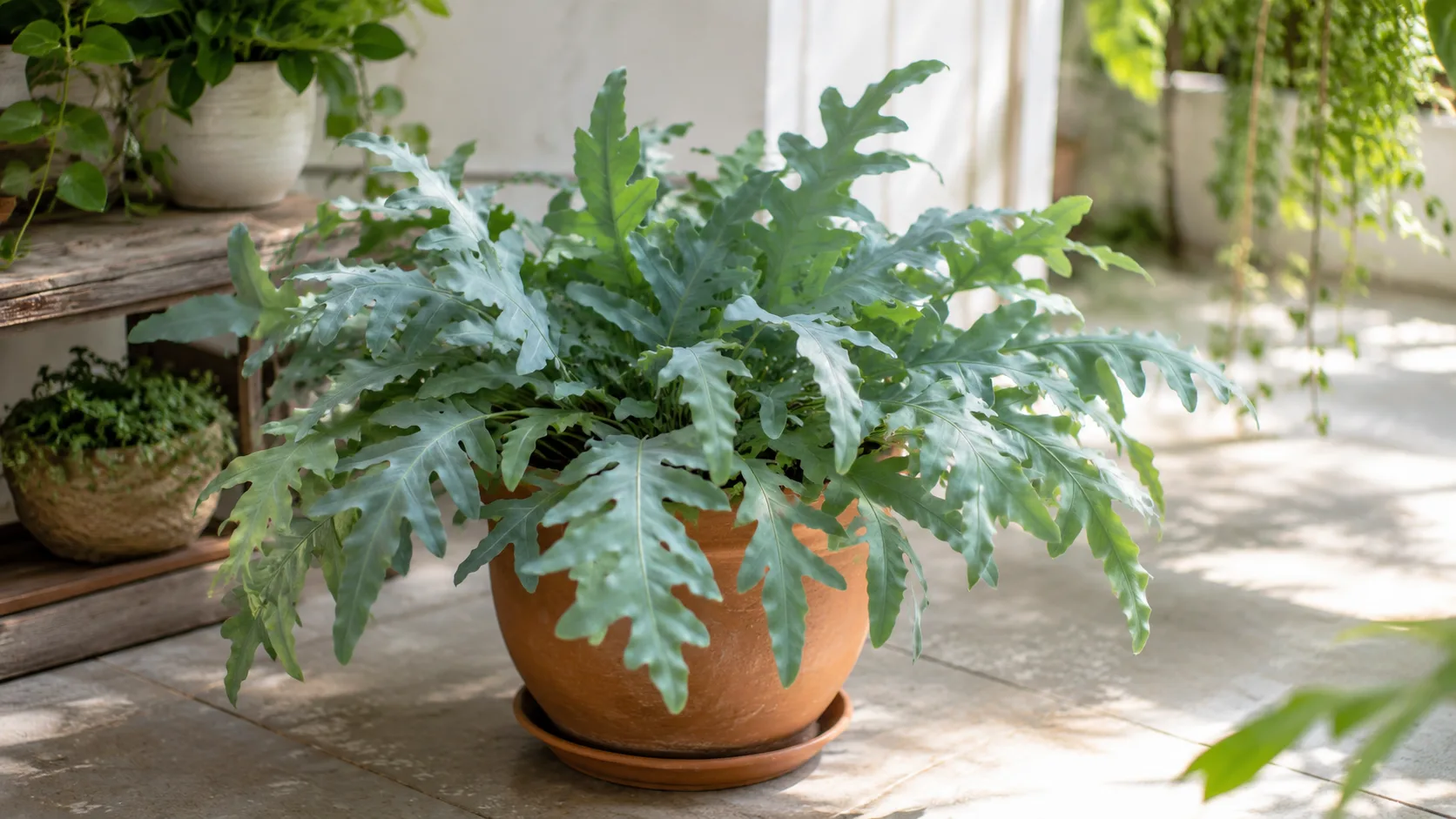
A Blue Star Fern can look like the easiest fern in the shop - soft blue-green fronds, golden fuzzy rhizomes creeping over the pot rim, no drama for weeks. Then light gets wrong. The signature glaucous color fades to plain green, new fronds arrive smaller and farther apart, or sun-facing segments bleach and crisp overnight after a careless move to a south windowsill. Phlebodium aureum is not a maidenhair fern and not a pothos. It is an epiphytic polypody that lives in filtered canopy light in the wild, and it will eventually tell you - through frond color, spacing, and growth speed - whether your window choice actually works.
This guide covers the full indoor light picture for Blue Star Fern: how much brightness it needs, which window works best, how much direct sun is safe, what too much and too little light look like on the plant, when to add a grow light, and how to move the pot without scorching tissue that spent months adapting to a softer spot.
The Short Answer: How Much Light Blue Star Fern Needs
Blue Star Fern grows best in medium to bright indirect light - strong ambient light at the plant itself without harsh direct sun on the fronds for more than a brief morning window. The NC State Extension Gardener Plant Toolbox lists Phlebodium aureum under partial shade (direct sunlight only part of the day, two to six hours) and dappled sunlight (shade through upper canopy all day). In indoor terms, that usually means an east-facing window, a bright north window in a well-lit room, or a south- or west-facing window filtered by distance, a sheer curtain, or several feet of setback so afternoon rays never hit the fronds directly.
The Spruce recommends medium-to-bright indirect light and notes that while the plant can survive lower light, foliage becomes sparser and less lush, and prolonged intense direct sunlight can burn the delicate leaves. A dark interior hallway with no window in sight is a survival placement, not a thriving one. Judge success by firm new fronds with good blue-green color and steady rhizome growth, not by how decorative the pot looks on a bookshelf six feet from glass.
Why Blue Star Fern Wants More Light Than Classic Shade Ferns
Light is not a background detail for Blue Star Fern. It drives frond size, the intensity of the plant’s blue-green glaucous coating, rhizome vigor, and how fast the pot dries between waterings. A Phlebodium in appropriate light will use water at a predictable pace, push broad new segments on arching fronds, and maintain the color that makes the species worth the shelf space. A plant in dim light will drink slowly, stay wet longer, produce smaller paler fronds on elongated petioles, and often look acceptable for months while the root zone quietly weakens.
That matters because Blue Star Fern is frequently grouped with generic “low-light ferns” at the garden center. Maidenhair, rabbit’s foot, and many classic indoor ferns tolerate deeper shade than Phlebodium aureum wants. Its fronds evolved for filtered canopy brightness, not forest floor darkness. Get the light wrong and you get washed-out color, sparse crowns, root stress from slow metabolism paired with heavy watering, or crisp bleached patches after an unfiltered afternoon sunbeam.
What Epiphytic Canopy Life Means for Your Window
In its native range across the tropical and subtropical Americas - from Florida hammocks through the Caribbean to South America - Phlebodium aureum grows as an epiphyte, most often among the old leaf bases of cabbage palm (Sabal palmetto), on tree trunks, logs, and humus piles in swamps and hammocks, according to Flora of North America and the Florida Native Plant Society. It does not root in deep shade on the forest floor. It roots where bright sky light filters through canopy and palm fronds, with humidity, air movement, and quick drainage around the rhizome.
That habitat maps to the brightest soft-light spot you can offer indoors, not the dim corner that suits a true shade fern. You are not trying to recreate a dark bathroom with a frosted window unless that bathroom actually receives meaningful daylight for several hours. You are trying to give the plant steady filtered brightness at the frond surface - then supplementing in winter or in rooms where architecture blocks the sky. An east windowsill, or a south window with a sheer curtain and the pot set back one to three feet, is the closest indoor analogue most homes can provide.
What Bright Indirect Light and Medium Light Mean Indoors
“Bright indirect light” indoors means the plant sits in a well-lit zone where sunbeams do not strike the fronds directly for extended periods, especially during the hot afternoon. “Medium indirect light” is one step dimmer - still clearly daylit at the plant, but without the strong sky wash you get within a foot of an east window at mid-morning. Window glass already reduces intensity compared with outdoor dappled shade; a spot that feels “bright enough” to your adapted eyes may still be medium at the frond surface.
For Blue Star Fern, the better question is not “indirect or direct?” in the abstract. It is: Does usable light actually reach the fronds for most of the day, and does any direct beam stay gentle enough to avoid scorch? Intensity drops sharply with distance. A plant on a sofa across the room from an east window is getting low to medium indirect light at best, regardless of how sunny the window looks. Blue Star Fern needs the light on the fronds, not near the fronds.
You do not need a light meter to succeed, but if you own one, readings around 10,000 to 20,000 lux at the frond surface usually correlate with healthy color and steady new growth. Below roughly 2,000 to 3,000 lux for most of the day, expect survival mode - slower growth, weaker color, and higher risk of soggy soil if watering stays on a bright-window schedule.
The Hand-Shadow Test for Fern Placement
Your eyes adapt to indoor dimness faster than you notice. A simple test: hold your hand between the plant and the window around 10 a.m. to noon. A soft, faint shadow with blurred edges usually means bright indirect light - often ideal for Blue Star Fern. A sharp, dark shadow means direct sun is hitting the plant; acceptable only for gentle east morning light, risky for south or west afternoon exposure unless filtered. Almost no shadow means the spot is too dim for long-term health unless you add a grow light.
Repeat the test in late afternoon if the window faces west or south. A spot that passes at noon may still deliver a scorching beam at 3 p.m. Blue Star Fern fronds do not recover from bleached tissue the way some tough foliage plants do; prevention beats relocation after damage.
Best Window Placement for Blue Star Fern Indoors
The best window for Blue Star Fern is the one that delivers steady medium-to-bright indirect light for most of the day without harsh direct sun on the fronds. Distance matters as much as direction. Place the pot within one to three feet of the glass in most rooms, not on a distant shelf where only ambient room brightness reaches the plant. Rotate the pot a quarter turn every week or two if growth leans toward the glass, so the crown stays balanced. Dust fronds lightly with a damp cloth monthly; clean glaucous surfaces absorb more usable light than dusty matte ones.
If the pot rim or rhizome feels hot to the touch at midday, pull the plant back slightly or add a sheer curtain during peak hours while keeping bright exposure for the rest of the day. Avoid placing the fern directly against drafty winter glass or hot air vents; dry moving air stresses fronds even when light is technically correct.
East Windows: The Default Sweet Spot
An east-facing window in the Northern Hemisphere is the default recommendation for Blue Star Fern. It delivers gentle morning direct sun followed by bright indirect light for the rest of the day - the closest indoor match to canopy-filtered morning brightness. Most plants sit on the sill or within one foot of east glass without burning, though watch new nursery purchases that arrived from low-light shipping conditions; they may need a few days of filtered east light before full sill placement.
East exposure also avoids the intense heat load that south and west windows carry in summer. If your Blue Star Fern looks full-colored and pushes new fronds steadily on an east sill, you rarely need to complicate the setup further.
North, South, and West: When Each Works
A north-facing window can work when the room is otherwise bright - large glass area, light-colored walls, no exterior obstructions. North light is consistent and gentle, which suits Phlebodium well, but it is weaker in winter. If new fronds shrink or the blue tone fades by February, move the pot closer to the glass or add a grow light rather than waiting for spring.
A south-facing window delivers the strongest indoor light path. Blue Star Fern can live happily several feet back from south glass or directly on the sill behind a sheer curtain that filters midday rays. Unfiltered south sun at midsummer often bleaches fronds within days. Treat south windows as bright indirect placements with mandatory filtering or setback, not as direct-sun spots.
A west-facing window provides warm afternoon light that builds heat as well as intensity. Place Blue Star Fern two to four feet back from west glass, or use a curtain during the hottest two to three afternoon hours. West windows are useful in short winter days when the afternoon boost helps maintain color and growth, but they require the most seasonal adjustment in summer.
| Window direction | Typical light profile | Suitability for Blue Star Fern |
|---|---|---|
| East | Gentle morning direct sun, then bright indirect | Best default for color and steady growth |
| North | Consistent soft indirect, weaker in winter | Good in bright rooms; supplement in winter if growth slows |
| South | Strong direct sun most of the day | Excellent with curtain or setback; risky unfiltered on sill |
| West | Warm afternoon direct sun, intense in summer | Good with distance or filtering; watch summer peak hours |
Can Blue Star Fern Take Direct Sun?
Blue Star Fern should not receive prolonged harsh direct sun indoors, especially hot afternoon exposure on south or west windows. The Spruce and NC State Extension both warn that intense direct light can burn delicate fronds. That does not mean the plant wants a dark closet. It means the direct sun it tolerates - if any - should be brief, cool, and gradual: early morning east light on acclimated plants, or dappled sun through a sheer curtain where no single hot beam sits on one frond for hours.
The distinction that saves most plants is duration and acclimation, not treating all direct sun as equal. A frond that tolerates thirty to sixty minutes of gentle east morning sun may scorch in thirty minutes of unfiltered west afternoon sun in July. Never move a plant from a dim interior spot or low-light nursery bench directly into unfiltered south or west sun at midsummer. Increase exposure gradually over seven to fourteen days, and filter first rather than assuming toughness because the tag said “fern.”
Warning Signs Your Blue Star Fern Is Getting Too Much Light
Too much light - or more accurately, too much light too fast - shows up on Blue Star Fern as tissue damage rather than slow stretching. The most common signs include bleached or silvery patches on sun-facing frond segments; brown, crispy edges or tips that feel dry and papery; fronds curling or wilting during the brightest hours even when soil is moist; sudden widespread tan discoloration after a move to a sunnier spot; and new segments opening smaller, thinner, and paler under extreme heat stress. You may also see rhizome tips drying and shrinking when root-zone heat on a dark windowsill combines with intense exposure.
These symptoms are easy to confuse with underwatering on Blue Star Fern, but timing and location tell the story. Sun stress usually follows a placement change, a curtain removed for summer, or a seasonal shift when June sun strengthens. Damage is often one-sided, concentrated on frond surfaces facing the glass. Underwatering stress builds more gradually, often affects multiple fronds evenly, and pairs with a light, dry pot rather than moist soil with crisp sun-facing tissue only.
How to Recover a Sun-Stressed Blue Star Fern
Move the plant immediately to a spot with bright light but no harsh direct beam on damaged tissue - one to two feet back from the window, behind a sheer curtain, or to an east exposure temporarily. Do not compensate by overwatering on Blue Star Fern; stressed fronds do not recover faster in wet soil, and soggy rhizomes add a second problem in a dimmer recovery spot. Leave partially damaged fronds in place unless they are fully brown and brittle; the plant may still photosynthesize with them while pushing new growth from the rhizome.
Give the plant two to four weeks in stable, slightly softer light before judging recovery. Old bleached or crispy tissue will not regain its blue-green color. Your success metric is new fronds: broader segments, good glaucous tone, and firm petioles emerging from the crown. Once new growth looks healthy, acclimate back toward your target bright window using the schedule below - slowly this time. If fronds continue crisping with no healthy new growth and soil stays wet, reassess for rhizome rot, but keep the plant out of harsh direct sun while you troubleshoot.
Warning Signs Your Blue Star Fern Is Not Getting Enough Light
Insufficient light is the slower, quieter failure mode - and the more common one indoors. Blue Star Fern can survive in dim conditions longer than it can survive scorch, which is why so many plants linger on bookshelves looking “fine” while gradually losing the color that sold you on the species. Warning signs include loss of blue-green glaucous tone, with fronds shifting to flat medium green; longer petioles with wider spacing between segments, often leaning toward the nearest window; smaller new fronds compared with older growth; slow or absent new growth for months, especially in spring and summer; thin, weak fronds that feel floppy rather than arching firmly; and an overall sparse crown as older fronds die without replacement.
Low light also changes how the plant uses water. A dim plant transpires less, so soil stays wet longer. That wetness stresses rhizomes, and yellowing or brown-tipped fronds from root-zone stress can look identical to humidity problems - except the plant will also show no bleaching on a sun-facing side, sit far from any window, and fail the hand-shadow test at midday. If your Blue Star Fern is declining in a dim corner with soil that never dries, fix light first, then adjust watering to match the slower metabolism.
Leggy etiolation means the plant is stretching because brightness is below what it needs for compact growth. Recovery requires more usable light, not just rotating the pot in the same dim room. Move to the brightest filtered window, add a grow light, or both - then increase brightness gradually so you fix low light without triggering sunburn on tissue adapted to shade.
Low-Light Limits: Survival vs. Thriving
Blue Star Fern can tolerate lower light for a period, which is why it survives in offices and dim apartments longer than expected. Tolerance is not the same as a good target. NC State Extension lists deep shade (less than two hours to no direct sunlight) among conditions the species can experience in nature, but wild epiphytes in deep shade still receive sky brightness and air movement that a dark interior shelf lacks. Indoors, deep shade usually means slow growth, washed-out color, sparse fronds, and elevated rot risk when watering stays on autopilot.
The practical split: survival light keeps the plant alive with minimal new growth; thrive light produces the blue-green arching fronds and creeping golden rhizomes you bought the plant for. If you only have low light, reduce watering frequency, avoid heavy feeding, and plan on a grow light rather than expecting lush display growth. A bathroom with a small frosted window often fails the thrive threshold unless you see a clear hand shadow at the plant at midday; humidity helps frond edges but does not replace photons.
How Light Changes Watering and Growth Speed
Every light change changes how fast your Blue Star Fern drinks. A plant in bright east-window light transpires actively and may need water when the top 3 to 4 cm of mix is dry every five to seven days in a warm room during the growing season, always confirming with a finger or skewer rather than a fixed calendar. The same plant moved to a dim corner might need water every ten to fourteen days or longer because it is photosynthesizing and losing moisture more slowly. Water on soil dryness and plant metabolism, not on a schedule that worked last month in a different spot.
Bright light also supports faster rhizome spread and larger new fronds during active growth. Feeding lightly in spring and summer can help when light is strong, but fertilizer cannot replace missing light - a dim plant fed heavily will not develop full color or compact growth. Light, water, and feeding move together. Changing light without adjusting water is the most common reason an otherwise healthy Blue Star Fern develops brown tips, yellowing segments, or rhizome softness after a move.
Growth speed follows the same logic. In bright spring and summer light, Phlebodium can push noticeable new fronds every few weeks on a mature plant. In low winter light, growth slows sharply - and that is normal. Do not water heavily or feed aggressively to “wake up” a winter plant in a dim spot; give it the best light you can, let the mix dry slightly longer between drinks, and wait for longer days to do the rest.
Grow Lights for Blue Star Fern: Setup, Hours, and Distance
When natural light is insufficient - north rooms with small windows, interior offices, short winter days, or apartments blocked by neighboring buildings - a full-spectrum LED grow light is the most reliable fix. Blue Star Fern needs more intensity than a decorative warm-white desk lamp provides, but far less output than high-light succulents or bird of paradise. Aim for a fixture rated for houseplants or full-cycle vegetative growth, not a bare bulb meant for ambient room lighting.
Start with 10 to 12 hours of light daily on a timer. Place the fixture 12 to 18 inches (30 to 45 cm) above the top of the tallest frond for a standard household LED grow panel or bar light. Closer placement increases intensity but also heat; if fronds near the bulb look pale, tight, or slightly crisp at the tips, raise the fixture a few inches. Farther placement reduces intensity - if petioles stretch toward the bulb and new segments stay small, lower the fixture slightly or extend daily duration by an hour rather than cramming the plant against the heat source.
Choose a full-spectrum LED in the 4000K to 6500K range and run it on a timer. Combine artificial light with the brightest natural window you have when possible. A working setup produces new fronds matching older growth in color and size within four to six weeks.
Seasonal Light Shifts and Window Adjustments
Window light is not static. Winter lowers intensity and shortens duration even on south glass; Blue Star Fern may need to move closer to the window or run a grow light longer each day to prevent pale, sparse winter fronds. Summer strengthens sun angle and heat; a placement that was perfect in January may scorch in July, especially on west and south exposures. Pull the pot back, add a sheer curtain, or shift to an east window for the hottest months if you see bleaching.
Overcast weeks also matter. A plant that dries every five days in sunny March may stay wet longer during a rainy stretch even in the same window because cloud cover slowed transpiration. Seasonal adjustment means reading the plant and the pot, not moving the fern on a fixed calendar.
How to Move a Blue Star Fern Without Shock or Scorch
Blue Star Fern reacts to sudden light changes - especially moves from dim interiors or shaded nursery benches into unfiltered south or west windows. You may see frond curl, edge burn, or stalled new growth within days even when the new spot is technically correct long term. The fix is gradual acclimation: increase brightness in small steps over seven to fourteen days so existing fronds adjust before exposure peaks.
When moving to brighter light, start by placing the plant in the new room but farther from the window than your final position, or filter the window with a sheer curtain. After four to five days with no bleaching or curl, move it closer or remove one layer of filtering. When moving to dimmer light, reverse the process over a week so the plant is not shocked by the double hit of lower light and changed watering needs. Make one change at a time. Do not simultaneously repot, fertilize, and move to a new window. Wait at least two weeks after a light move before adjusting watering frequency or rhizome division.
A Simple 7–14 Day Acclimation Schedule
For a plant moving from moderate indoor light to a brighter east window or filtered south exposure, use this schedule. Slow down if you see bleaching - hold the current step for extra days rather than pushing through damage.
Days 1–4: Place the plant in the new room at double your intended final distance from the window, or behind a sheer curtain. Water when the top 3 to 4 cm of mix is dry, as usual. Watch for bleaching, curl, or sudden tan patches.
Days 5–9: Move halfway to the final position, or remove one curtain layer. Rotate the pot a quarter turn every few days if light is strongly directional.
Days 10–14: Move to the final placement. Keep monitoring new frond color for three more weeks before treating the move as complete. If fronds bleach during acclimation, hold at the current step for several extra days rather than advancing. Firm new fronds with good blue-green tone are the green light to continue.
Conclusion
Blue Star Fern light needs come down to one practical target: medium to bright indirect light at the fronds themselves, with harsh direct sun filtered or avoided. An east window on or near the sill, a filtered south or west window set back one to three feet, supplemental grow lights in winter or dim rooms, and seasonal curtain adjustments give Phlebodium aureum the best shot at the blue-green arching fronds and golden rhizomes that make the species distinctive. Dark interior shelves and small frosted bathroom windows are survival placements unless you add artificial light.
Read the plant, not the room. Firm new fronds with strong glaucous color mean the placement works. Bleaching, one-sided crisp edges, and sudden tan patches after a move mean too much light too fast. Long weak petioles, flat green color, and months without new growth mean too little. Change exposure gradually, adjust watering when light changes, and judge success by new fronds from the rhizome - not by whether old damaged tissue greens up again, because it usually will not. Get the window right and the rest of Blue Star Fern care - watering, humidity, and potting mix - becomes simpler; get it wrong and no amount of misting or fertilizer will bring back the blue.
When to use this page vs other Blue Star Fern guides
- Blue Star Fern overview - Start here for whole-plant context before deep-diving this topic.
- Blue Star Fern problems hub - Jump to symptom-specific fix guides when this care topic does not resolve the issue.
- Not Enough Light on Blue Star Fern - Escalate here when light adjustments are not enough.
- Leggy Growth on Blue Star Fern - Escalate here when light adjustments are not enough.
Related Blue Star Fern guides
- Blue Star Fern overview
- Blue Star Fern watering
- Blue Star Fern soil
- Blue Star Fern propagation
- Blue Star Fern fertilizer
- Blue Star Fern repotting
- Not Enough Light on Blue Star Fern
- Leggy Growth on Blue Star Fern
- Blue Star Fern problems
Related tool
Try the Plant Problem Diagnosis Tool with blue-star-fern pre-selected to estimate needs for your setup.