Underwatering on Blue Star Fern: Causes, Checks & Fixes
Quick answer
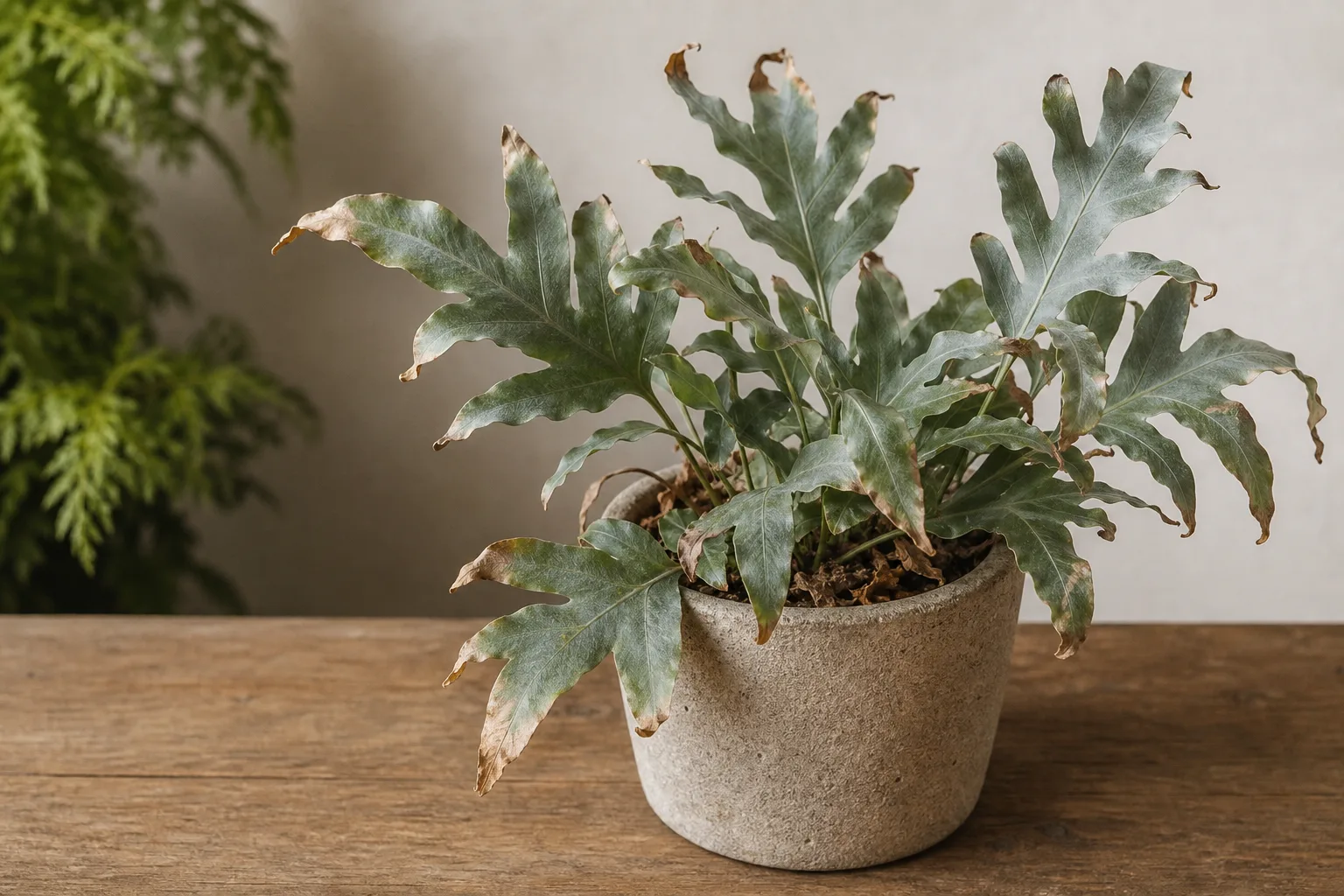
Underwatering on Blue Star Fern (Phlebodium aureum) shows as dull gray-green fronds, crisp edges, and a light pot with dry bark mix-often after treating this epiphyte like a drought-tolerant succulent. First step: probe the top inch of mix; if dry and the pot is light, soak thoroughly and drain.
Underwatering on Blue Star Fern: Causes, Checks & Fixes
This guide covers underwatering on Blue Star Fern. See also the general Underwatering guide, watering, and light pages for this plant.
Underwatering on Blue Star Fern: Causes, Checks & Fixes
Quick answer
Underwatering on Blue Star Fern (Phlebodium aureum) is chronic dry root zone in a plant evolved as a rhizomatous epiphyte on tree bark-not the same as skipping one watering on a succulent. This fern wants the mix consistently moist but never waterlogged; when bark and rhizomes dry too long, bluish-green fronds turn dull gray, edges crisp, and the pot feels light for days.
First step: probe the top inch of mix near the pot edge (avoid crushing surface rhizomes). If dry and crumbly and the pot is light, soak thoroughly until water runs from drainage holes, then empty the saucer. One deep drink fixes true underwatering faster than misting leaves.
For baseline care and seasonal rhythm, see the Blue Star Fern overview and watering guide. If tips brown while mix stays damp, check low humidity instead.
Underwatering vs. low humidity: quick decision table
Both stresses can curl fronds and crisp edges on Phlebodium-NC State Extension lists curling as a symptom of low humidity and underwatering. Soil moisture and pot weight separate them before you change anything.
| Check | Underwatering | Low humidity |
|---|---|---|
| Top inch of mix | Dry, crumbly | Moist on your normal schedule |
| Pot weight | Noticeably light | Normal |
| Frond color | Whole frond dull gray-green, bluish sheen gone | Blue-green fades; fronds otherwise firm |
| Edge damage | Crisp edges plus slight wilt | Crisp tips; fronds not limp |
| Rhizome surface | May shrink or feel brittle if drought is advanced | Firm golden runners; surface may dry while mix below stays damp |
| Placement clue | Missed waterings, hydrophobic mix | Near heating vent, radiator, or dry winter window |
| First fix | Soak thoroughly and drain | Raise humidity to 40–60%; do not overwater |
If the table points to dry air, read the low-humidity guide. If it points to drought, follow the soak protocol below.
Underwatering vs. other lookalikes
| Pattern | Pot weight | Top inch mix | Frond look | What it usually means |
|---|---|---|---|---|
| Underwatering | Light | Dry, crumbly | Dull gray-green, slight wilt, crisp edges | Root zone too dry |
| Low humidity | Normal | Moist on schedule | Tips brown, fronds otherwise firm | Air too dry |
| Overwatering | Heavy | Wet, sour smell | Yellowing, mushy rhizome | Too wet-not drought |
| Salt burn | Normal | Dry on schedule | Tip burn on older fronds | Fluoride/minerals-see brown-tips guide |
Compare with overwatering (heavy wet pot), brown tips from salts or air, and wilting on either extreme.
What underwatering looks like on Blue Star Fern
Early signs
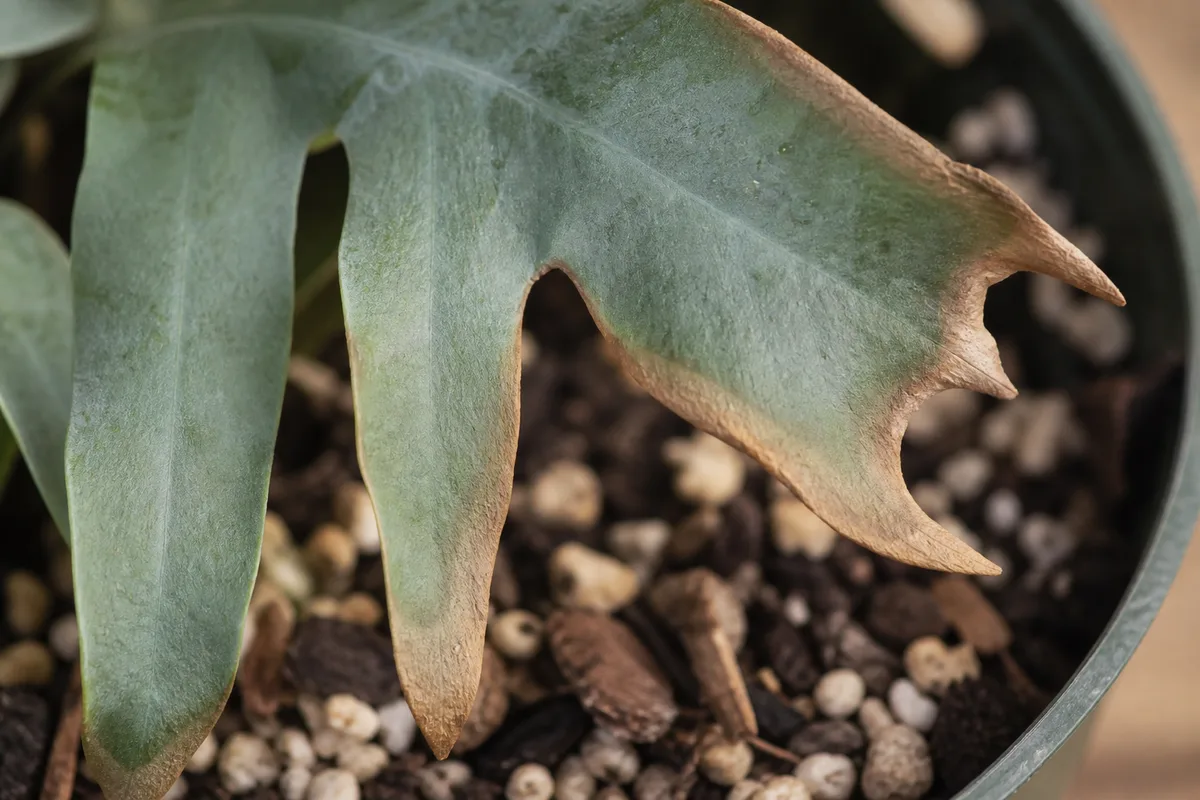
Underwatering symptoms on Blue Star Fern - compare with healthy tissue on the same plant.
- Dull, gray-green fronds losing the characteristic bluish sheen that healthy Phlebodium shows
- Slight frond droop-not the dramatic collapse of severe dehydration yet
- Dry light pot that has not been watered in longer than your usual interval
- Crisp edges on older fronds, especially in warm dry rooms
- Slowed new frond emergence from rhizome tips at the soil surface
Advanced signs
- Widespread frond wilting and shriveling across the canopy
- Rhizome shrinkage or brittle golden-brown runners on the surface
- Mix pulled away from pot sides-hydrophobic dry peat or bark that repels water
- Whole fronds turning brown from base upward if drought persists for weeks
The bluish-sheen loss is one of the earliest reliable cues on this species. Generic “fern looks sad” advice misses that Phlebodium fronds shift from blue-green to flat gray-green when the root zone dries-not only when humidity drops.
Why Blue Star Fern gets underwatered
Treated like a succulent. Growers see “fern” and either overwater-or swing to the opposite error after one rot scare and let epiphytic mix go bone dry for weeks. Phlebodium prefers a moist but not soggy substrate in partial shade; it tolerates drying out between waterings via rhizome storage but not chronic drought.
Hydrophobic mix. Peat-heavy or aged bark that repels water lets the surface look briefly damp while the root zone stays dry-especially if you only mist fronds or add a splash without soaking through.
Buried rhizomes. Surface creeping rhizomes should sit on or just above mix; buried deeply they dry slower on top but starve below. See repotting guidance.
Winter neglect. Lower evaporation in cool rooms tempts owners to stop checking-but heating dries air and surface mix faster than expected. A plant that needed water every five days in summer may still need checks every seven to ten days in winter if the room runs heat.
Hanging baskets in dry heat. Warm drafts pull moisture from wide shallow pots quickly. The golden rhizomes that make this fern attractive also expose more tissue to dry airflow than a buried root ball would.
Post-overwatering fear. After rescuing a plant from rot, many growers undercorrect and skip deep soaks entirely. Epiphytic ferns need oxygen at the roots-but they still need periodic full saturation of the bark mix.
How to confirm the cause
- Top-inch test - Dry crumbly material at 2.5 cm (1 inch) depth plus light pot confirms drought.
- Skewer test - Insert a bamboo skewer halfway down; it should read dry before soaking, not only the surface.
- Rhizome feel - Firm plump golden runners mean drought is early; shriveled brittle runners mean advanced.
- Humidity cross-check - If mix is moist but tips crisp, suspect low humidity not underwatering. Use the decision table above.
- Rewet test - After soak, fronds should regain turgor within hours if roots were dry-not days later. No perk after 48 hours suggests rhizome damage beyond simple drought.
First fix for Blue Star Fern
Soak the pot thoroughly until water runs from drainage holes, then empty the saucer completely.
Water at the pot edge to avoid flooding rhizome crowns. If mix repels water (beads off surface), bottom-water for 20–30 minutes, then lift and drain. Repeat once if the pot still feels light.
Do not bury dry rhizomes deeper “to hold moisture”-that causes rot. Do not mist as a substitute for root-zone water; misting leaves does not rehydrate a dry bark mix.
After soak, resume top-inch dry checks from the watering guide-typically every 5–7 days in active growth, longer in winter.
Step-by-step recovery
- Initial soak - Full saturation with complete drainage. Lift the pot to confirm it feels heavy before returning it to its spot.
- Hydrophobic fix if needed - Bottom-water or poke shallow holes in crusted surface to rewet. A few drops of wetting agent in soak water can help aged peat, but drainage still matters.
- Trim dead tissue - Remove fully brown crispy fronds at rhizome base with clean scissors. Do not pull runners.
- Humidity support - 40–60% room humidity helps fronds while roots recover-not constant misting on crowns, which can encourage rot.
- Adjust schedule - Set a calendar reminder to check moisture, not to pour blindly on a fixed day.
- Watch new fronds - Clean silvery emergence from rhizome tips means hydration restored.
Recovery timeline
Frond turgor often improves within 24–48 hours after a proper soak if drought was moderate. Crisped edges are permanent; trimmed tissue does not re-green. New fronds in two to four weeks confirm stable recovery. Severely shriveled rhizomes may take longer-or fail if drought exceeded rhizome reserves.
Judge success by new growth at rhizome tips, not by old fronds regaining their blue sheen overnight.
What not to do
- Do not mist instead of watering the root zone.
- Do not leave the pot in standing water overnight after rescue soak.
- Do not repot into dense water-retentive soil without bark amendment.
- Do not confuse tip burn on moist mix with drought-check humidity first.
- Do not fertilize a drought-stressed fern until new fronds emerge and watering is back on track.
Blue Star Fern is non-toxic to cats and dogs-normal rescue care poses no pet toxicity concern.
How to prevent underwatering next time
Check the top inch before every scheduled watering. Use bark-amended mix that rewets easily. Keep surface rhizomes exposed, not buried in dry peat. Increase check frequency in warm dry rooms and hanging baskets. Link routine to the watering guide seasonal table and the overview for humidity and light context.
When to worry
Escalate when rhizomes are shriveled and brittle, multiple fronds brown from the base, or the plant fails to perk after two thorough soaks separated by 48 hours-roots may have desiccated beyond recovery. Unpot, inspect for dead roots, trim brown tissue, and repot into fresh moist (not soggy) bark mix. If no new fronds appear within four to six weeks after corrected watering, the rhizome may not have enough reserves left.
When to use this page vs other Blue Star Fern guides
- Blue Star Fern watering guide - Use for routine moisture checks before assuming underwatering is the main issue.
- Blue Star Fern problems hub - Browse all 16 common issues on this species.
- Wilting on Blue Star Fern - Different entry point when symptoms overlap with underwatering.
- Brown Tips on Blue Star Fern - Different entry point when symptoms overlap with underwatering.
- Yellow Leaves on Blue Star Fern - Different entry point when symptoms overlap with underwatering.