Brown Tips on Blue Star Fern: Causes, Checks & Fixes
Quick answer
Brown tips on Blue Star Fern usually trace to low humidity, tap-water salts, or underwatering-and the fixes differ. First step: check soil moisture at the top inch and measure humidity at frond height before you add water or switch to filtered water.
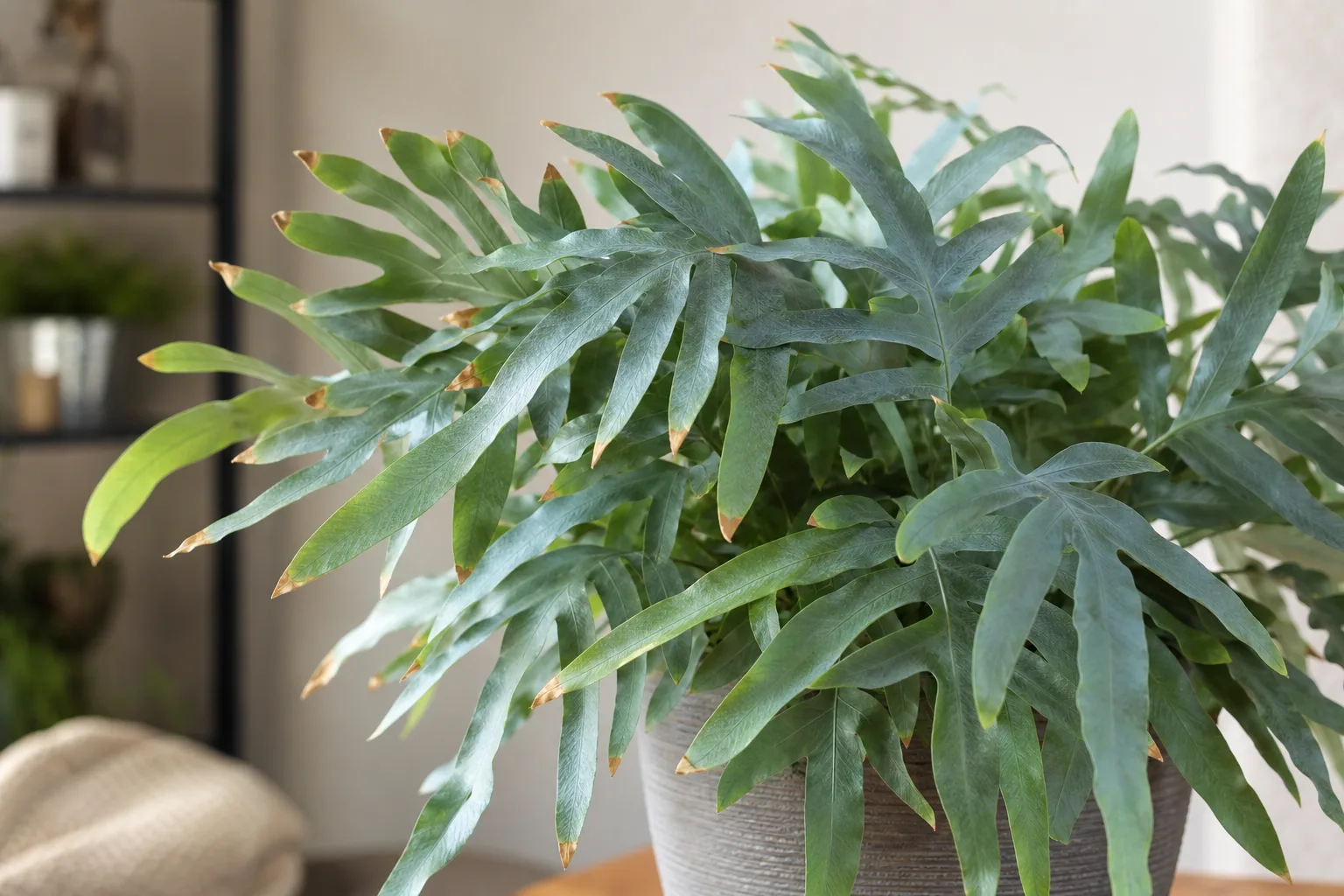
Brown Tips on Blue Star Fern: Causes, Checks & Fixes
This guide covers brown tips on Blue Star Fern. See also the general Brown Tips guide, watering, and light pages for this plant.
Brown Tips on Blue Star Fern: Causes, Checks & Fixes
Quick answer
Brown tips on Blue Star Fern (Phlebodium aureum) are one of the most common complaints on this otherwise forgiving epiphytic fern-and one of the most misdiagnosed. Crispy tan or brown margins on lobed frond edges can mean dry winter air, underwatering, salt or mineral buildup from tap water and fertilizer, or direct sun scorch on the bluish-green blades. Because Phlebodium grows from creeping golden rhizomes on the soil surface and transpires heavily through thin pinnae, growers often add water when they need a humidifier, or raise humidity when the root zone has gone too dry.
First step: press your finger into the top inch (2.5 cm) of mix near the pot edge and read humidity at frond height with a hygrometer before you change anything. If soil is bone dry and fronds are limp, see our underwatering guide. If soil dries on a normal rhythm but humidity reads below 40%, dry air-not drought-is your main trigger. For baseline watering rhythm and the humidity-vs-soil confusion, start with our Blue Star Fern watering guide.
What brown tips look like on Blue Star Fern
On Phlebodium, tip damage is localized to frond margins and pinnae edges, not a sudden whole-plant collapse. The pattern helps you narrow the cause before you treat.
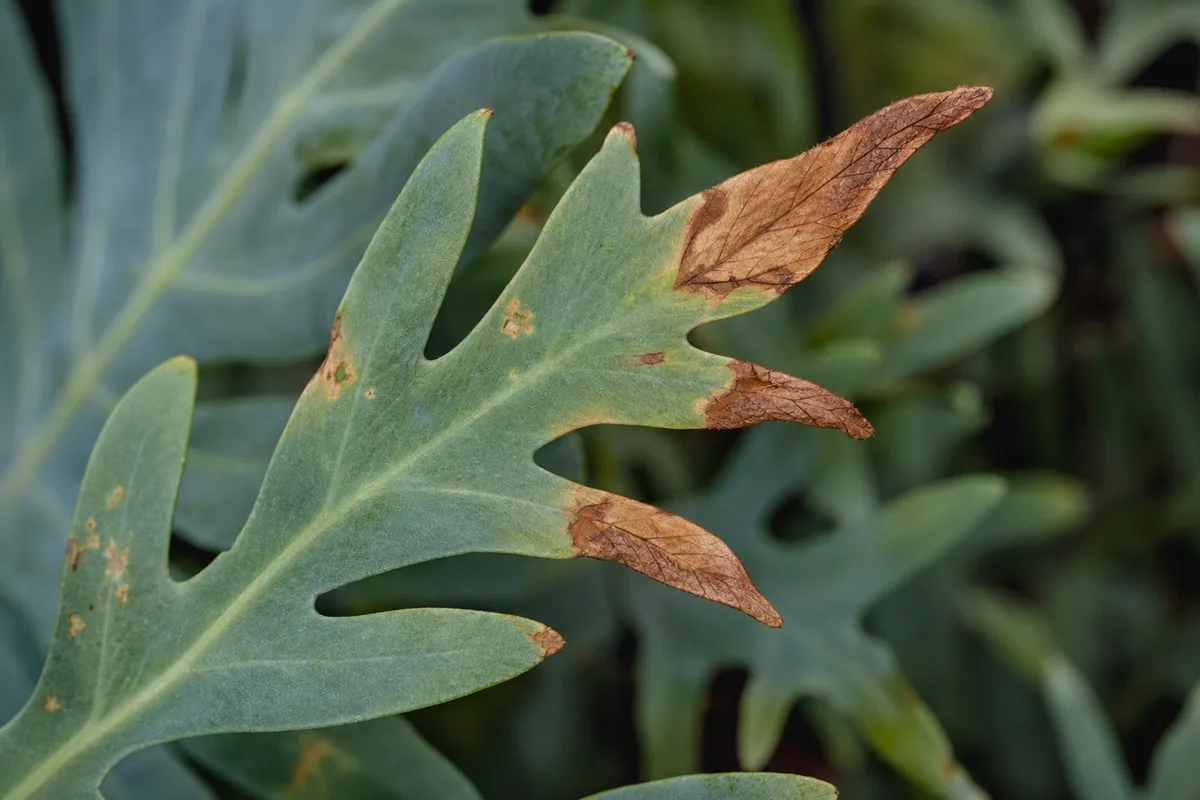
Brown Tips symptoms on Blue Star Fern - compare with healthy tissue on the same plant.
Typical brown-tip signs include:
- Crispy tan or brown edges along the undulate margins of lobed fronds, often starting at the outermost pinnae tips
- Pinnae curl or fold inward on affected fronds while golden rhizomes at the soil surface stay firm
- Gradual spread from oldest fronds outward, or clustering on the side facing a heating vent, radiator, or sunny winter window
- Faded blue-green to gray-green color on stressed blades alongside edge burn
- Slow browning over weeks when salts accumulate from hard tap water or heavy fertilizer-often with pale crust on the mix surface
- Bleached, papery patches on fronds that received direct afternoon sun after a recent move closer to glass
What brown tips do not look like: mushy black rhizomes with sour-smelling wet soil (rhizome rot), sudden whole-frond yellowing from the base (overwatering on Blue Star Fern stress), or stippling with fine webbing on undersides (spider mites in dry heat). Those patterns need different fixes.
Blue Star Fern’s thin, deeply lobed fronds lose water faster than thick succulent leaves. Because the plant is an epiphyte with surface rhizomes, both frond edges and exposed rhizome tissue react to dry air independently of root-zone moisture-which is why soil can feel appropriately damp while tips still crisp.
Why Blue Star Fern gets brown tips
In the wild, Phlebodium aureum clings to tree bark and palm crowns in humid tropical forests across the Americas. Indoors, four stressors account for most tip burn on established plants.
Low humidity and dry micro-climates
NC State Extension states that browning of fronds usually indicates the plant needs higher humidity, while curling is a common symptom of low humidity and underwatering. Central heating can hold room air below 30% for months, and forced-air vents create even drier pockets within arm’s reach of the pot. Winter window seats combine glass-adjacent dry air with stronger light-both stress thin frond margins.
This is the cause growers miss most often because the soil moisture check looks normal. Our low-humidity guide covers placement, hygrometer targets, and humidifier use in detail.
Underwatering and drought stress
Phlebodium tolerates drying out between waterings better than maidenhair or Boston ferns, but repeated full dry-down still browns edges and stalls new frond unfurling. When the entire root ball shrinks away from the pot sides and fronds go limp and dull-not just crispy at the margins-underwatering is contributing. Chunky bark mix can look dry on top while staying moist deeper in the pot, so always check depth, not surface color alone.
Tap-water minerals, salts, and fertilizer burn
Ferns prefer soft, slightly acidic water in loose organic mix with acid pH. Hard tap water leaves mineral deposits; repeated fertilizing without periodic flushing accumulates salts at the root zone. Tips brown slowly and symmetrically along margins rather than in a vent-clustered pattern. Over-fertilizing a stressed fern worsens tip burn-hold fertilizer until new growth stabilizes after you fix the environment.
Direct sun scorch
Blue star fern wants bright indirect light, not hot direct rays on fronds. A sudden move to a south- or west-facing sill can bleach and crisp exposed pinnae on one side of the plant within days. Scorch looks papery and localized to the sun-facing blade, not evenly distributed edge burn on every frond.
Lookalike symptoms to rule out
| Pattern | Likely cause | Key differentiator on Blue Star Fern |
|---|---|---|
| Crispy margins, firm rhizomes, normal soil dry-down | Low humidity | Damage near vents or winter windows; edges before whole frond |
| Limp fronds, dry soil throughout, light pot | Underwatering | Whole-frond droop; recovers after thorough watering |
| Brown tips with white crust on mix surface | Salt or mineral burn | Slow development; follows tap water or heavy feeding |
| Bleached papery patches on window-facing fronds | Direct sun scorch | One-sided damage after light increase |
| Yellow stippling + fine webbing on undersides | Spider mites | Gritty texture; dry air is a risk factor |
| Soft black rhizomes, sour soil, collapsing new growth | Overwatering / rhizome rot | Opposite of firm-rhizome dry-air pattern |
If humidity reads above 45%, soil dries evenly, and newest fronds still burn, revisit water quality and light intensity before assuming dry air alone.
How to confirm the cause
Work through these checks in order. Make one care correction at a time so you can read the plant’s response over the next two weeks.
- Soil moisture at depth - Insert a finger or skewer into the top inch (2.5 cm) near the pot edge, avoiding the rhizome crown. Bone-dry mix with limp fronds suggests underwatering. Cool, damp mix with crispy edges only fits humidity or water-quality stress.
- Pot weight - Lift the container. A light pot plus dry top inch confirms drought. A heavy pot with brown tips despite wet mix points away from underwatering-check humidity and salts instead.
- Hygrometer reading - Place a small hygrometer at frond height for 24 hours. Below 30–40% strongly supports low humidity as a driver when soil moisture is normal. See our low-humidity guide for targets of 40–60% maintenance and 60%+ during recovery.
- Placement audit - Note vents, radiators, fireplaces, and draft paths within arm’s reach. Edge burn clustered on the heat-facing side implicates dry air even when the rest of the room feels fine.
- Water and fertilizer history - Hard tap water, skipped flushing, or recent full-strength feeding before tips appeared suggests salt or mineral burn. Switch to rainwater or distilled water for a month and observe new growth only.
- Light check - Did the plant move closer to glass or receive new direct sun? One-sided bleached damage fits scorch; diffuse edge burn on multiple fronds does not.
- Rhizome firmness - Golden rhizomes should feel firm and fuzzy, not shriveled, black, or sour. Mushy rhizomes with wet soil need root rot investigation-not more humidity or water.
First fix for Blue Star Fern
Your first action depends on what the checks above confirm-not a bundled stack of changes on day one.
If soil is dry and the pot is light
Water thoroughly until excess runs from drainage holes, then empty the saucer within 30 minutes. Use room-temperature water around the pot edges, not directly onto surface rhizomes. Follow the top-inch dry rule in our watering guide. Do not fertilize until a new frond begins with clean margins.
If soil moisture is normal but humidity reads below 40%
Move the pot at least one metre from heating vents, radiators, and AC returns, then run a cool-mist humidifier until frond-height readings hold 40–60%. Do not increase watering to compensate for dry air-that keeps rhizomes wet while fronds still crisp and invites rot on this epiphytic fern.
If humidity and watering are correct but tips keep browning slowly
Switch to rainwater, distilled water, or filtered water and flush the mix with plain water until runoff runs clear. Hold fertilizer for four to six weeks. Trim fully brown frond sections at the rhizome base only for cosmetics-trimmed tissue will not regreen.
If one-sided bleached damage appeared after a light move
Move the plant back to bright indirect light without direct sun on fronds. East-facing or set-back north windows work well. Hot afternoon sun plus dry air scorches Phlebodium faster than either stress alone.
Recovery timeline
Mild humidity or placement fixes can slow new margin burn within three to seven days if vents were the main trigger. Underwatering recovery often shows perking fronds within 24 to 48 hours after a thorough drink, though old brown edges remain.
Humidifier use or water-quality changes typically show cleaner new growth within two to four weeks-Blue Star Fern’s moderate growth rate means visible recovery is slower than on fast tradescantia but faster than on delicate maidenhair ferns. Old crispy margins stay brown permanently. Judge success by new fronds emerging from rhizome tips, not by damaged pinnae regreening.
Salt-flush recovery can take four to six weeks because margins burn gradually as minerals accumulated. If four weeks pass with stable 50%+ humidity, appropriate watering, and good water quality but new fronds still emerge burnt, revisit light and pest inspection before assuming one cause was wrong.
What not to do
Do not increase watering when tips brown in dry winter air while soil already dries on a normal rhythm-soggy mix around surface rhizomes is a faster killer than crisp edges on firm golden stems.
Do not fertilize a stressed fern to “green up” burnt tips. Salt buildup from overfeeding causes tip burn; adding more fertilizer worsens it.
Do not rely on once-daily misting as your humidity strategy. Misting does not effectively raise humidity levels; pebble trays and humidifiers work better for ferns that need a humidity boost. Moisture evaporates in minutes and can leave mineral spots on blue-green fronds.
Do not bury rhizomes in wet moss while troubleshooting. Surface rhizomes need air; entombing them causes rot faster than dry air causes crisp edges.
Do not stack Blue Star Fern repotting guide, heavy pruning, and pesticide on the same day as a humidity or watering fix. Stressed Phlebodium needs boring stability, not a bundle of interventions.
Do not expect old fronds to heal. Waiting for crispy margins to regreen delays the real signal: clean new growth from rhizome tips.
How to prevent brown tips next time
- Monitor humidity at frond height from first heating cycle through late winter-target 40–60% maintenance, 60%+ during recovery
- Check soil at the top inch before every watering decision; frond appearance alone misleads on this species
- Use rainwater or distilled water if your tap is hard or heavily treated; flush the mix monthly if you fertilize regularly
- Keep the pot off radiator ledges and away from ceiling and floor registers year-round
- Provide bright indirect light without hot afternoon sun on fronds-see our light guide
- Fertilize lightly during active growth only-half-strength monthly at most per our fertilizer guide
- Watch new frond margins each winter-they are the earliest barometer for humidity and water-quality problems on Phlebodium
- Leave golden rhizomes on the soil surface with good air circulation; do not pack wet soil over them
When to worry
Brown tips alone are a low-to-moderate severity, mostly cosmetic issue on established Blue Star Fern with firm rhizomes and normal soil dry-down. You do not need emergency repotting for dry margins on an otherwise stable plant.
Escalate care when:
- Rhizomes turn soft, black, or sour-smelling while soil stays wet-tip fixes will not fix rot; see root rot
- New fronds collapse before unfurling, suggesting combined drought, rot, or pest stress
- Spider mites spread across multiple fronds despite humidity improvements-see spider mites
- Whole-frond yellowing spreads from the base with wet soil-overlaps with yellow leaves and root stress
- Blue-green color fades entirely on new growth in a bright room-that may signal insufficient light overlapping with dry air
If only older fronds show margins and new growth is clean after environmental fixes, the plant is stable. Trim or tolerate the cosmetic damage.
Conclusion
Brown tips on Blue Star Fern announce themselves through crispy frond margins, pinnae curl, and faded blue-green color-but the fix depends on whether dry air, dry soil, tap-water salts, or sun scorch is driving the pattern. Check soil moisture and humidity before you change watering or water source; make one correction at a time; and judge recovery by new fronds, not old brown tissue. For overlapping dry-air detail, see low humidity on Blue Star Fern; for watering rhythm and the humidity-vs-soil confusion, see watering; for the species hub, see Blue Star Fern overview.
When to use this page vs other Blue Star Fern guides
- Blue Star Fern watering guide - Use for routine moisture checks before assuming brown tips is the main issue.
- Blue Star Fern problems hub - Browse all 16 common issues on this species.
- Low Humidity on Blue Star Fern - Different entry point when symptoms overlap with brown tips.
- Underwatering on Blue Star Fern - Different entry point when symptoms overlap with brown tips.
- Overwatering on Blue Star Fern - Different entry point when symptoms overlap with brown tips.