Root Rot on Blue Star Fern: Causes, Checks & Fixes
Quick answer
Root rot on Blue Star Fern starts when bark or mix stays soggy too long and creeping rhizomes lose air. Stop watering immediately, unpot to inspect golden rhizomes and fine roots, trim mushy tissue, and repot in fresh well-draining bark mix-never bury surface rhizomes deeper to stabilize the plant.
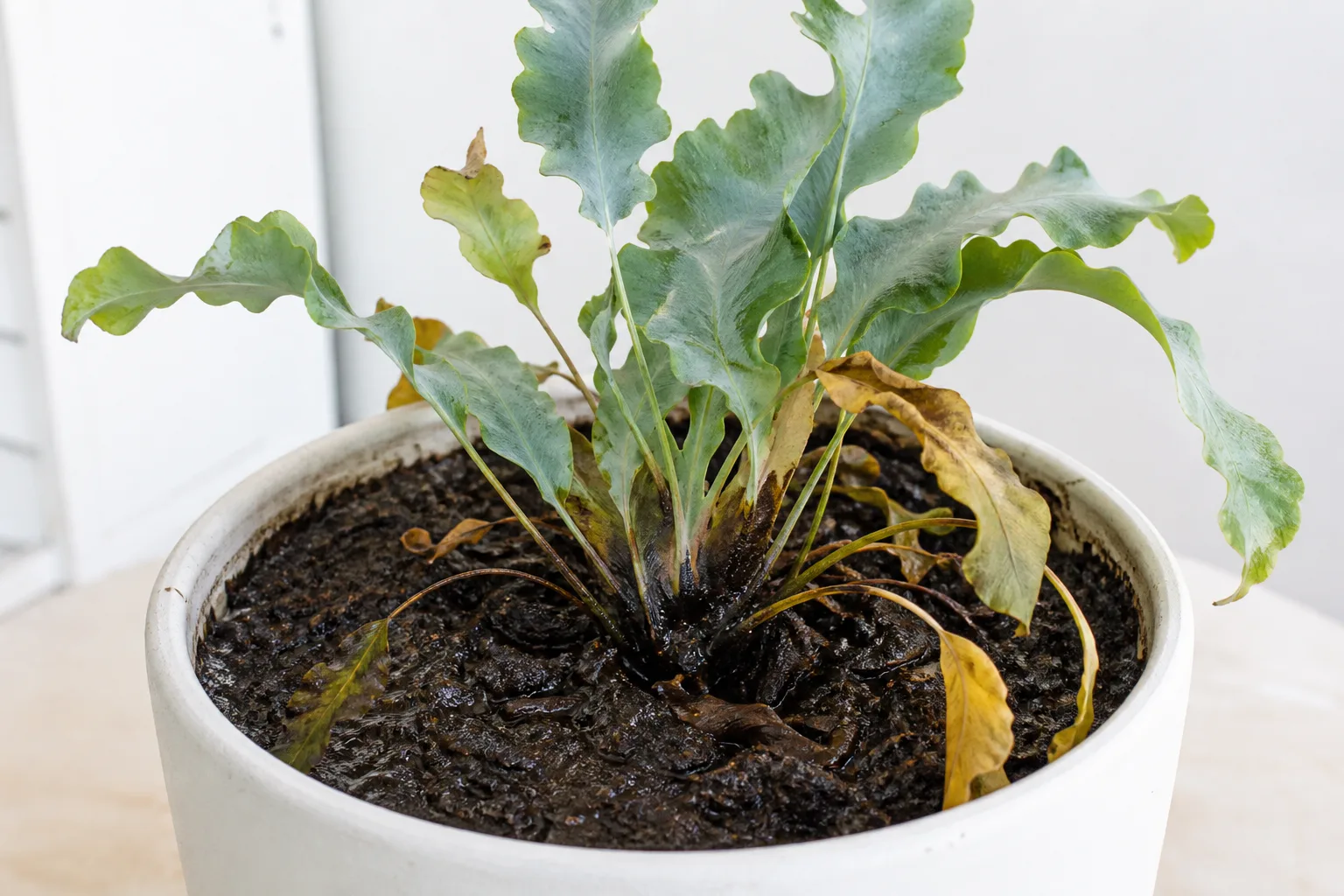
Root Rot on Blue Star Fern: Causes, Checks & Fixes
This guide covers root rot on Blue Star Fern. See also the general Root Rot guide, watering, and light pages for this plant.
Root Rot on Blue Star Fern: Causes, Checks & Fixes
Quick answer
Root rot on Blue Star Fern (Phlebodium aureum) is rhizome and root decay in soggy, airless bark mix-not a mysterious fern disease. This epiphytic fern spreads via creeping golden rhizomes that need air at the soil surface. When mix stays waterlogged for days, rhizomes suffocate, fine roots turn mushy, and bluish-green fronds yellow or wilt despite a heavy wet pot.
First step: stop all watering, empty standing saucer water, and unpot the plant to inspect rhizomes and roots. Trim every soft brown or black section with clean scissors, repot firm tissue into fresh bark-amended mix, and hold fertilizer until new fronds emerge.
For routine moisture rhythm, see the Blue Star Fern watering guide. If symptoms are mild wet bark without mushy rhizomes, start with the overwatering guide before full rescue surgery.
Root rot vs. lookalikes
| Pattern | Pot weight | Rhizome feel | Frond look | What it usually means |
|---|---|---|---|---|
| Root rot | Heavy, stays wet | Soft, mushy, sour smell | Yellowing, limp, dull bluish-green | Saturated mix, decaying rhizomes |
| Overwatering (early) | Heavy | Firm rhizomes, wet bark | Slight dulling, no mush yet | Too wet-fix before rot |
| Underwatering | Light | Firm, may shrink | Crisp edges, gray-green wilt | Dry root zone-see underwatering |
| Low humidity | Normal on schedule | Firm | Tip brown, fronds otherwise firm | Dry air-see low humidity |
| Wilt paradox | Heavy + wet OR light + dry | Varies | Collapse without clear cause | See wilting cross-check |
What root rot looks like on Blue Star Fern
Root rot on this fern masquerades as drought stress. Fronds wilt, yellow, or turn dull gray-green-yet the pot feels heavy and bark stays damp. That mismatch is the signature clue: damaged roots and rhizomes cannot move water upward even while mix is wet.
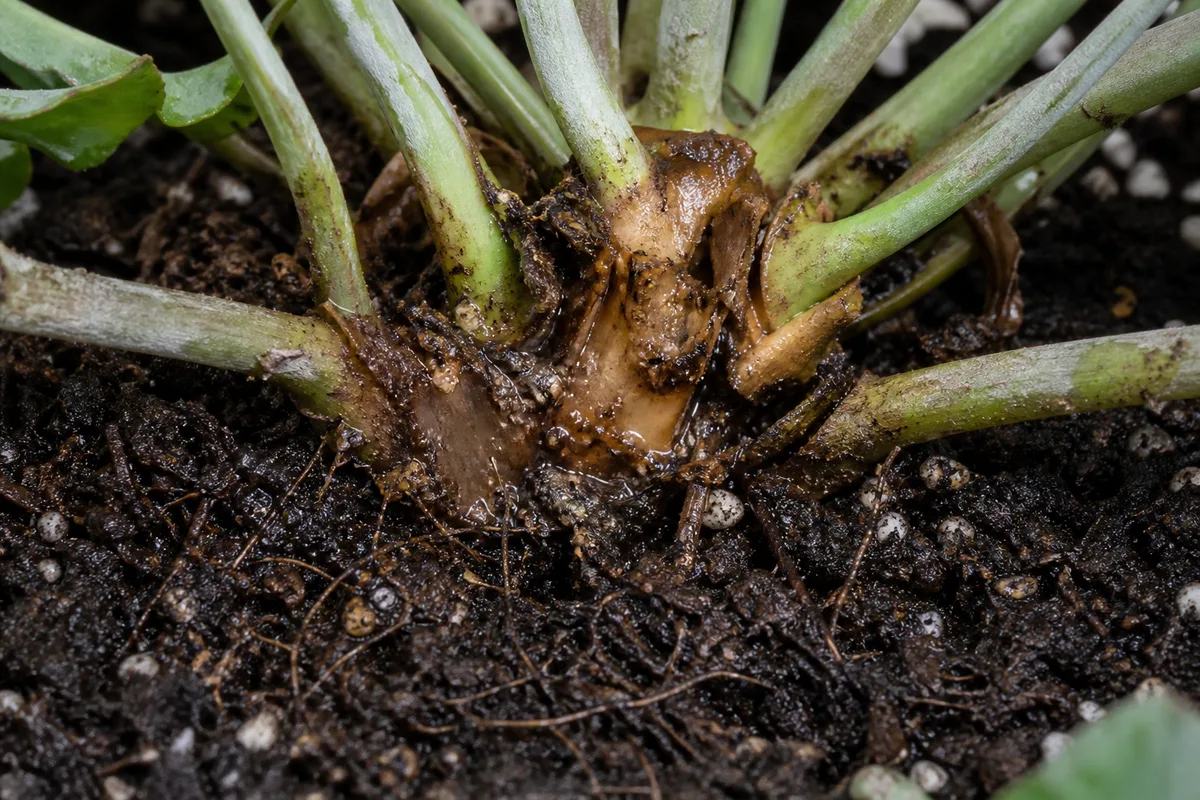
Root Rot symptoms on Blue Star Fern - compare with healthy tissue on the same plant.
Above-ground signs
- Yellowing or dulling fronds, often starting on older lower segments while mix stays dark
- Limp bluish-green fronds that do not perk after the mix dries slightly
- Sour or earthy smell from drainage holes or when you lift the pot
- Stalled new frond emergence from rhizome tips
- Fungus gnats hovering when bark never dries between waterings
- White mold or algae on the bark surface
Below-ground signs
- Soft, blackened, or squishy rhizome sections at the soil line-healthy rhizomes are firm and fuzzy with golden-brown scales
- Brown, slimy, or translucent fine roots that break apart when rinsed
- Rhizomes buried too deep in dense wet peat, suffocating surface tissue first
Advanced cases show multiple mushy rhizome segments, mass frond collapse, and mix that smells strongly rotten on unpotting.
Why Blue Star Fern gets root rot
Epiphytic rhizomes in a “fern” pot
Blue Star Fern is not a compact rosette fern. It is a rhizomatous epiphyte that creeps along bark and rock in humid tropical forests, absorbing moisture through fine roots while rhizomes breathe at the surface. Indoors, growers often treat it like a moisture-loving terrestrial fern-watering on autopilot, burying golden rhizomes during repotting, or using dense peat-heavy mix that holds stale water for days.
NC State Extension describes Phlebodium aureum as needing a moist but not soggy substrate with good air circulation in partial shade. Evenly moist is not constantly wet. When pore spaces in bark fill with water, roots lose oxygen and decay-then opportunistic fungi colonize dying tissue.
Common triggers
- Watering on a calendar without checking whether the top inch of bark has dried
- Cachepots or saucers holding runoff overnight, keeping the lower root zone anaerobic
- Heavy garden soil or pure peat without orchid bark and perlite-see soil guidance
- Overpotting after purchase, leaving a large volume of wet mix the rhizomes cannot use
- Low light plus frequent watering-slow transpiration in dim corners keeps pots wet while the plant uses little water
- Pouring water into the rhizome crown instead of around the pot edge
- Winter overwatering when growth slows and bark stays damp for weeks in cool rooms
Blue Star Fern tolerates drying out between waterings better than maidenhair or Boston fern-which makes chronic sogginess harder to notice until rhizome rot is advanced.
How to confirm the cause
Do not repot blindly on every limp frond. Confirm root rot in this order:
- Pot weight and smell - Has the pot stayed heavy and cool for many days without the top inch drying? Does the drain area smell sour?
- Wilting vs. moisture - Limp dull fronds with wet heavy bark strongly suggest root dysfunction, not thirst.
- Rhizome probe - Gently press surface golden rhizomes. Firm fuzzy tissue points away from advanced rot; squishy black sections confirm it.
- Unpot and rinse - Knock the plant out gently. Shake or rinse wet mix away so rhizomes and roots are visible.
- Root comparison - Healthy tissue is firm and pale to golden-brown. Rotten tissue is dark, soft, slimy, and may fall apart when touched.
- Cross-check lookalikes - Light pot with dry bark and crisp edges means underwatering, not rot.
First fix for Blue Star Fern
Stop watering, unpot, trim all mushy rhizome and root tissue, and repot firm sections into fresh well-draining bark mix.
This is rescue surgery-not a dry-down pause. Once rhizomes are soft and roots are slimy, letting the old soggy mix dry in place rarely saves the plant. You need to remove anaerobic substrate and dead tissue so remaining firm rhizomes can regrow in aerated mix.
Do not fertilize, do not bury rhizomes deeper to stabilize a wobbly plant, and do not mist fronds as a substitute for fixing saturated bark.
Step-by-step recovery
- Stop all watering and empty saucers or cachepots completely.
- Unpot carefully - Support the frond mass and slide the root ball out. Rinse away wet old mix under lukewarm running water.
- Inspect rhizomes first - Trace each creeping golden runner. Mark soft black or squishy sections for removal.
- Trim dead tissue - Cut mushy rhizomes and roots with clean sharp scissors or pruners. Sterilize blades between cuts on severely rotted plants.
- Air-dry cut surfaces - Let trimmed rhizomes sit on a paper towel for one to two hours so cuts callus slightly.
- Choose pot size - Use a wide, shallow pot with drainage holes sized to the remaining firm root mass, often one size smaller than before severe rot.
- Repot in fresh mix - Fill with bark-amended well-draining mix (roughly 20% orchid bark plus perlite in quality potting mix). Place rhizomes on the surface, not buried.
- Water lightly once to settle mix, then let the top inch dry before the next drink.
- Place in medium to bright indirect light with 40–60% humidity-pebble tray or humidifier, not heavy misting on crowns.
- Hold fertilizer until new fronds unfurl from firm rhizome tips-typically two to four weeks in stable conditions.
Rhizome division salvage
If one section of rhizome is fully mushy but another segment remains firm with attached healthy fronds, divide at the boundary between firm and rotten tissue. Pot each firm section separately. Discard all mushy material. This is often the only path when rot has consumed half the crown but a healthy runner remains-similar to salvaging firm rhizome divisions on other ferns after partial decay.
Remove the most damaged fronds at the rhizome base if more than half the root mass was trimmed, so remaining roots can support what is left.
Recovery timeline
Mild cases with mostly firm rhizomes after trimming may stabilize within one to two watering cycles once repotted in aerated mix. New silvery fronds emerging from rhizome tips in two to four weeks confirm recovery.
Judge success by firm new growth from rhizome tips, not by old yellow fronds re-greening-damaged frond tissue rarely returns to full blue-green color.
Severe rot where all rhizome sections are mushy with no firm tissue is usually fatal. If only a small firm division remains after salvage trimming, recovery may take six to eight weeks and the plant may stay sparse until rhizomes spread again.
Causes to rule out
- Overwatering without decay yet - Heavy wet pot but firm rhizomes; fix with dry-down and drainage correction.
- Underwatering - Light pot, dry bark throughout, crisp edges, firm roots when checked.
- Low humidity - Tip browning on moist mix with firm rhizomes.
- Transplant shock - Temporary wilt after repotting; roots intact and firm when inspected.
- Salt or fluoride burn - Tip browning on older fronds with otherwise firm roots; see brown tips.
What not to do
- Do not keep watering because fronds look wilted when bark is already wet-rotting roots cannot absorb more water.
- Do not repot into dense garden soil or a pot without drainage holes.
- Do not bury golden rhizomes deeper during repot to stop a wobbly plant from tipping.
- Do not mist heavily instead of fixing saturated mix-misting does not aerate roots and can encourage leaf spotting.
- Do not fertilize stressed roots immediately after trim-and-repot.
- Do not leave the pot in standing saucer water during recovery.
Blue Star Fern is non-toxic to cats and dogs-normal rescue care poses no pet toxicity concern, though stale saucer water should still be emptied promptly.
How to prevent root rot next time
Prevention on Phlebodium means moist bark with oxygen, not swampy mix or bone-dry neglect.
- Check the top inch of bark before every watering-water deeply when dry, drain fully, empty saucers.
- Use bark-amended well-draining mix in a wide shallow pot-details in the soil guide.
- Keep rhizomes on the surface during repotting; see repotting guidance.
- Match watering to season-extend intervals in winter when growth slows; see the watering guide seasonal table.
- Improve light and airflow in dim wet corners so the plant uses moisture predictably.
- Watch for fungus gnats as an early wet-soil warning before rhizomes turn mushy.
Blue Star Fern care cross-check
| Factor | Rot risk when wrong | Correct target |
|---|---|---|
| Mix | Dense peat, no bark | Bark-amended, drains in seconds |
| Rhizome placement | Buried deep in pot | Surface creep, golden scales visible |
| Watering | Calendar autopilot | Top inch dry test |
| Pot | No holes, cachepot traps water | Drainage holes, saucer emptied |
| Humidity | Misting instead of soil checks | 40–60% room humidity |
| Season | Same frequency in winter | Longer dry-down in cool dim months |
When to worry
Escalate immediately when multiple rhizome sections feel soft, fronds collapse rapidly despite wet bark, or unpotting reveals mostly brown slimy roots with no firm tissue. Division salvage is still worth trying if any firm rhizome segment with roots remains.
Lower urgency applies when one small soft rhizome tip appears on an otherwise firm plant-you may catch rot early with trim-and-repot before the whole crown fails.
Related Blue Star Fern guides
- Blue Star Fern overview - species hub and baseline care
- Watering - moisture rhythm and overwatered rescue FAQ
- Overwatering - early wet-soil intervention before rot
- Underwatering - dry pot lookalike
- Wilting - wilt-with-wet-soil paradox
- Fungus gnats - wet bark warning sign
- Soil - bark mix prevention
- Repotting - rhizome surface placement