Overwatering on Blue Star Fern: Causes, Checks & Fixes
Quick answer
Overwatering on Blue Star Fern means bark or mix stays soggy too long and creeping rhizomes lose air. First step: stop all watering, empty standing saucer water, and let the top inch of mix dry while you check rhizome firmness at the soil surface.
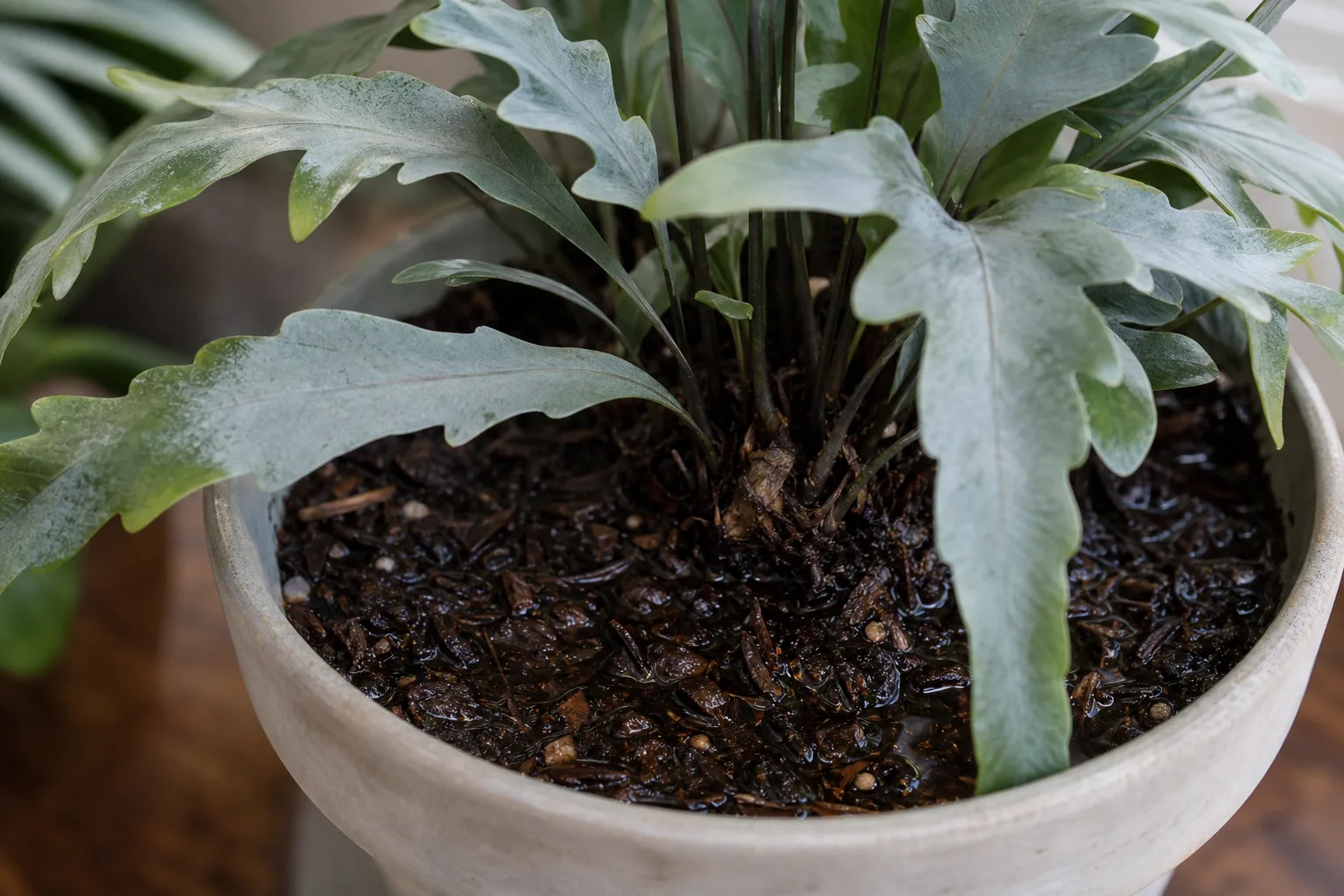
Overwatering on Blue Star Fern: Causes, Checks & Fixes
This guide covers overwatering on Blue Star Fern. See also the general Overwatering guide, watering, and light pages for this plant.
Overwatering on Blue Star Fern: Causes, Checks & Fixes
Quick answer
Overwatering on Blue Star Fern (Phlebodium aureum) is not one extra drink - it is bark or mix that stays soggy too long, standing water in saucers or cachepots, or rhizomes buried and suffocated in dense wet soil. This epiphytic fern grows from creeping golden rhizomes that need air at the surface as much as moisture in the root zone. Many growers assume all ferns want constant wetness; on Phlebodium, chronic sogginess rots rhizomes faster than one dry spell damages fronds.
First step: stop all watering, empty any standing saucer water, and let the top inch of mix dry while you check whether surface rhizomes feel firm or mushy. Do not add more water because bluish-green fronds look limp while the pot is already heavy - that pattern means damaged roots cannot move water upward even while soil stays wet.
For baseline watering technique and seasonal rhythm, see the Blue Star Fern watering guide. If soft rhizomes or slimy roots appear during inspection, move to the root rot guide - this page covers early wet-soil intervention before decay is confirmed.
What overwatering looks like on Blue Star Fern
The classic pattern pairs limp, dull bluish-green fronds with a heavy wet pot. Because fine roots attach to surface rhizomes, damage often shows at the golden-brown rhizome scales before every frond yellows.
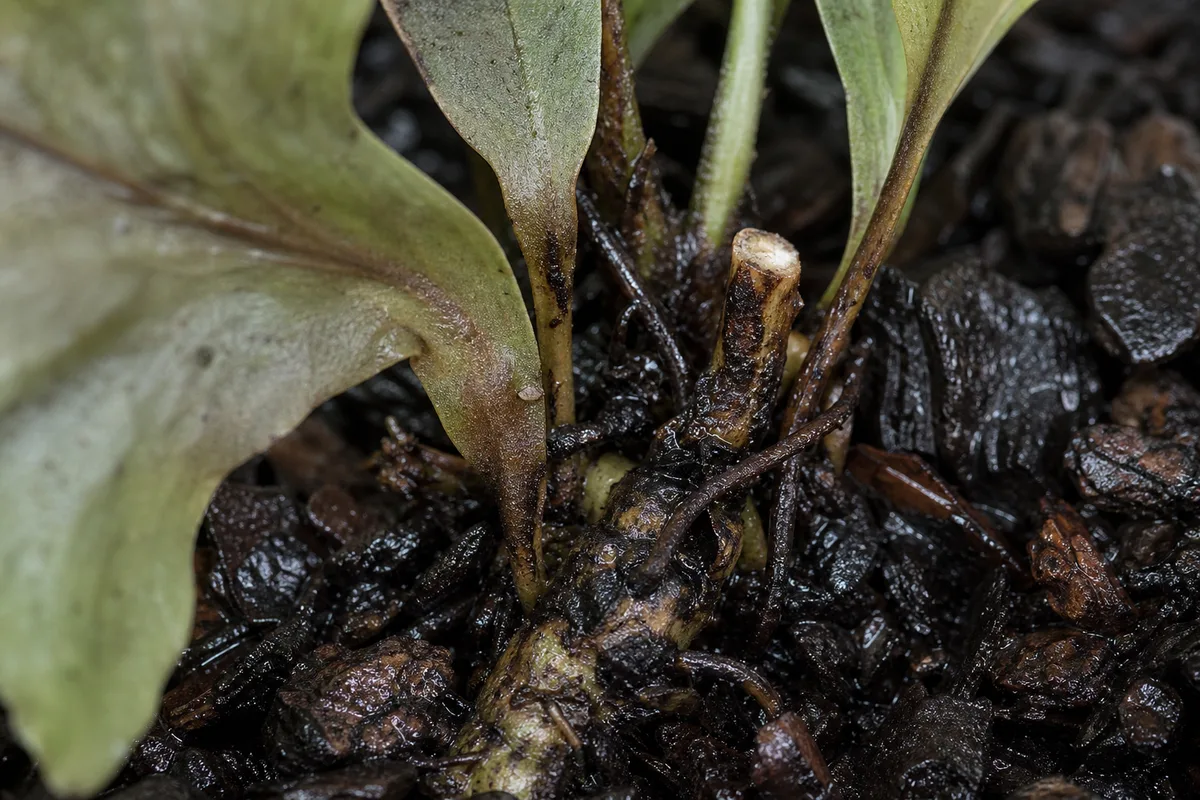
Overwatering symptoms on Blue Star Fern - compare with healthy tissue on the same plant.
Common signs include:
- Yellowing or dulling fronds starting lower on the plant while mix stays dark and wet
- Soft, mushy rhizomes at or just below the soil surface - healthy tissue is firm and fuzzy; rot feels squishy and may smell earthy or sour
- Pot stays heavy and cool several days after the last watering, with bark that clings to a finger probe
- Wilting or limp fronds despite wet soil on Blue Star Fern - damaged roots fail to transport water, so the plant looks thirsty in a saturated pot
- Fungus gnats hovering near the surface when mix never dries
- White mold or algae on the bark surface
- New fronds stall, emerge smaller, or stop unfurling from rhizome tips
What it does not look like: Crispy brown edges with a light pot and dry mix throughout usually means underwatering or low humidity - not overwatering. One yellow lower frond on an otherwise firm plant with normal dry-down can be normal senescence.
Why Blue Star Fern gets overwatered
Blue Star Fern is sold as a moisture-loving fern, which is only half the story. NC State Extension notes Phlebodium aureum prefers evenly moist conditions in partial shade with high humidity - but evenly moist is not waterlogged. Growers who water on a calendar without checking bark dryness, or who bury creeping rhizomes during Blue Star Fern repotting guide, create the soggy conditions this epiphyte rejects.
The “ferns need constant water” misconception
In the wild, blue star fern clings to bark and rock where rain runs through quickly. Rhizomes crawl along the surface rather than sitting deep in anaerobic soil. The plant tolerates brief drought better than Boston or maidenhair fern - which makes chronic sogginess harder to spot until rhizome rot stacks up. One missed watering is usually recoverable. One week in stale wet bark is not.
Rhizome burial and crown flooding
The fuzzy golden rhizomes should sit on top of the mix or only barely nestle into it. Texas A&M AgriLife Extension advises watering near the pot edge, away from rhizomes, because repeated soaking on surface rhizomes pushes them toward rot. Pouring water directly onto the rhizome crown pools moisture where decay starts fastest.
Setup mistakes that keep pots wet
- Calendar watering without checking the top inch - a summer weekly schedule can swamp roots in a cool January room
- Decorative cachepots hiding standing water after bottom-watering or soaking
- Oversized pots where a modest rhizome mass sits in a large wet bark zone that never dries
- Heavy peat-heavy mix without orchid bark or perlite that holds water like a sponge
- Blocked or missing drainage holes
- Low light slowing evaporation while watering continues on schedule
- Misting instead of watering when fronds look dry - humidity on leaves does not fix a waterlogged root zone
Because limp fronds trigger a reflex to pour more water, owners often worsen saturation exactly when the plant needs the opposite.
Lookalike symptoms to rule out
| What you see | Likely cause | Where to read next |
|---|---|---|
| Limp dull fronds, heavy wet pot, soft rhizomes | Overwatering / early rhizome stress | This page |
| Light pot, dry bark, papery frond edges | Underwatering | Underwatering |
| Firm rhizomes, appropriate moisture, brown crisp edges only | Low humidity | Low humidity |
| One yellow lower frond, firm rhizomes, normal dry-down | Normal old-frond senescence | Remove frond; adjust checks |
| Wet mix plus mushy rhizomes, sour smell, slimy roots | Advancing root or rhizome rot | Root rot |
| Wet bark plus tiny flying insects near surface | Fungus gnats from wet mix | Fungus gnats |
| Yellowing with wet soil and surface mold fuzz | Overwatering overlap | Mold on soil |
| Yellowing spreading with appropriate moisture | Symptom overlap - check rhizomes | Yellow leaves |
Limp foliage with wet heavy soil is overwatering until proven otherwise. Limp foliage with a light dry pot and firm golden rhizomes usually is not.
How to confirm overwatering
Work through these checks in order before changing anything else:
- Pot weight - Lift the container. Heavy and cool days after watering supports overwatering. A noticeably light pot may mean drought instead.
- Moisture at the top inch - Press a finger about one inch deep near the pot edge, avoiding the rhizome crown. Cool, clinging bark means wait. A wooden skewer withdrawn with moist particles confirms wetness lower down.
- Rhizome feel - Gently touch surface rhizomes. Firm golden-brown scales fit healthy tissue. Soft, squishy, or blackened sections point to rot.
- Frond pattern - Yellowing or dulling on lower fronds with wet mix fits overwatering. Even yellowing with dry bark may mean underwatering, low light, or age.
- Smell and drainage - Sour odor at the drainage hole suggests anaerobic mix. Confirm holes are open and no cachepot is holding runoff.
- Light and season - Dim winter rooms dry pots slowly. Have you watered on a summer calendar anyway?
If the pot is light, the top inch is dry, and fronds are papery at the edges but rhizomes are firm, underwatering may explain wilt better - rehydrate thoroughly once after confirming dryness, then resume your dry-down rhythm.
First fix for Blue Star Fern
Stop all watering until the top inch of mix dries and the pot feels noticeably lighter.
That single pause lets oxygen return to fine roots and surface rhizomes before you assess drainage, light, or watering technique. Empty standing saucer or cachepot water immediately. Texas A&M AgriLife Extension warns that soggy soil and dehydrated soil both damage this fern - right now the risk is too much water, not too little.
Do not fertilize, mist heavily onto rhizomes, or repot on day one unless inspection shows mushy tissue or blocked drainage holes. Stacking fixes while rhizomes are still oxygen-starved often slows recovery.
Branch by severity
Wet cycle only (firm rhizomes, no sour smell): Pause watering, improve airflow in Blue Star Fern light guide, empty saucers, and resume only when the top inch dries. One thorough edge-watering or soak-and-dry session after proper dry-down is not the same as overwatering - overwatering is frequency and poor drainage.
Surface rhizomes soft but some firm tissue remains: Stop watering, expose any buried rhizomes to air, trim only clearly mushy sections with clean scissors, and let the mix dry fully before the next light drink. If decline continues after one dry cycle, inspect roots.
Mushy rhizomes throughout, sour mix, or slimy roots on inspection: Stop here and follow the root rot guide - dry-down alone is no longer sufficient.
Step-by-step recovery
Once you have stopped watering, work in this order:
- Empty standing water - Remove the nursery pot from any cachepot, dump saucers, and confirm drainage holes are open.
- Expose surface rhizomes - If repotting buried them, gently brush mix away so golden scales sit on top with airflow.
- Improve airflow and light within fern limits - Move to the brightest indirect spot available - never direct hot sun on stressed fronds. Gentle airflow helps bark dry evenly. More usable light speeds dry-down but must not scorch bluish blades.
- Let the mix dry on a predictable cycle - Wait until the top inch feels dry and the pot is lighter before the next thorough watering. In a cool dim room that may take two to three weeks in winter.
- Water thoroughly once when dry - For bark-heavy mix, use the soak-and-dry method: submerge the pot 15 to 20 minutes, drain fully, then return to saucer. For standard mix, water slowly around the pot edge until excess runs from the hole. Apply water to the soil, not directly onto rhizomes.
- Inspect roots if decline continues - If fronds keep yellowing after one full dry cycle, unpot and look for firm pale roots versus brown mushy tissue. Trim decay only if you find rot - otherwise hold off on repotting.
- Remove spent lower fronds - Yellow fronds will not re-green. Snip them at the rhizome base once tissue is stable to redirect energy to new growth.
- Hold fertilizer - Skip feed until new fronds look healthy for two weeks. Stressed roots do not need feeding pressure while re-establishing.
If fungus gnats appeared with the wet soil, let the surface stay dry longer between drinks - that alone often breaks their breeding cycle without insecticides.
Recovery timeline
Stabilization often takes one to two weeks once the mix dries and stays on a predictable cycle - rhizomes should firm up and yellowing should slow.
New fronds unfurling from rhizome tips are the best sign of success. Expect them in three to eight weeks during warm active growth, sometimes longer if recovery started in a cool winter room. Old limp fronds may not fully perk even when roots recover - judge success by fresh blue-green growth, not by old damaged blades.
Worsening signs: rhizomes soften further after dry-down, sour smell intensifies, or fungus gnats persist with constantly damp surface mix - those point toward advancing rot and need immediate unpotting per the root rot guide.
What not to do
Do not water more because fronds look wilted while soil is already wet - that converts overwatering into rot. Avoid pouring onto rhizomes or the crown even when the plant looks thirsty. Do not feed a waterlogged fern hoping to perk it up.
Skip repotting into a much larger pot “to help drying” - extra wet bark volume slows dry-down. Do not leave the plant in a full saucer after bottom-watering or soaking. Do not mist heavily onto fronds as a substitute for fixing soil moisture - see our watering guide for humidity fixes.
Do not bury creeping rhizomes deeper during repot hoping to stabilize the plant. Do not swing from flood to drought by keeping mix bone dry for weeks after rescue - Phlebodium wants steady moisture after a proper dry-down, not perpetual sogginess or desert cycles.
How to prevent overwatering next time
Match watering to how fast your pot dries in your light. For many indoor blue star ferns, that means checking the top inch of bark or mix every few days - often roughly every 5 to 7 days in spring and summer and every 7 to 14 days in winter, but the calendar is only a reminder to check.
Always water around the pot edge, away from surface rhizomes, until water runs from the drainage hole. Empty saucers or lift out of cachepots within 15 to 30 minutes. Use loose well-draining mix with orchid bark and perlite - see the watering guide for mix ratios and soak-and-dry technique.
Choose a wide, shallow pot that matches spreading rhizome habit rather than a deep tower that holds wet bark at the bottom. Combine finger, skewer, and pot-weight checks until the rhythm feels obvious. NC State Extension describes moist, well-drained substrate as the target - moist after a proper drink, not saturated for days.
Blue star fern is non-toxic to cats and dogs per ASPCA guidance, but pets knocking over saucers of stale water still creates rot risk at the root zone - empty trays promptly.
When to worry - escalate to root rot
Escalate immediately if rhizomes dent under light pressure, the mix smells strongly sour, or a quick root check shows brown mushy tissue. Those signs mean overwatering has progressed toward decay - pause watering here is not enough.
If rhizomes stay firm, roots are pale when you inspect, and yellowing slows after one proper dry cycle, you are on track. One yellow lower frond on a firm plant can wait for a watering tweak.
Severe rhizome collapse - fully mushy golden tissue with no firm sections and no new frond buds - is often not reversible. Prevention through edge watering and exposed rhizomes is far more effective than repair.
Related Blue Star Fern problems
- Watering guide - baseline technique, seasonal rhythm, and moisture checks
- Root rot - when wet soil has become confirmed decay
- Underwatering - limp fronds with dry light pots
- Fungus gnats - secondary sign of persistently wet mix
- Yellow leaves - symptom overlap and base-frond patterns
- Low humidity - crispy edges with appropriate soil moisture
- Blue Star Fern overview - hub for all care topics
Conclusion
Overwatering on Blue Star Fern is an epiphyte drainage problem disguised as a moisture-loving fern habit. Confirm it with wet heavy mix versus firm golden rhizomes, stop water until the top inch dries, expose buried rhizomes if needed, and resume only with edge watering or controlled soak-and-dry on your pot’s schedule - not the calendar. The plant wants evenly moist airy bark, not a permanently wet pot or flooded rhizome crown.
Get those habits right and early wet-soil stress usually resolves before rot sets in. When rhizomes soften or roots turn mushy, switch to the root rot guide without delay.
When to use this page vs other Blue Star Fern guides
- Blue Star Fern watering guide - Use for routine moisture checks before assuming overwatering is the main issue.
- Blue Star Fern problems hub - Browse all 16 common issues on this species.
- Root Rot on Blue Star Fern - Different entry point when symptoms overlap with overwatering.
- Yellow Leaves on Blue Star Fern - Different entry point when symptoms overlap with overwatering.
- Wilting on Blue Star Fern - Different entry point when symptoms overlap with overwatering.