Mold on Soil on Blue Star Fern: Causes, Checks & Fixes
Quick answer
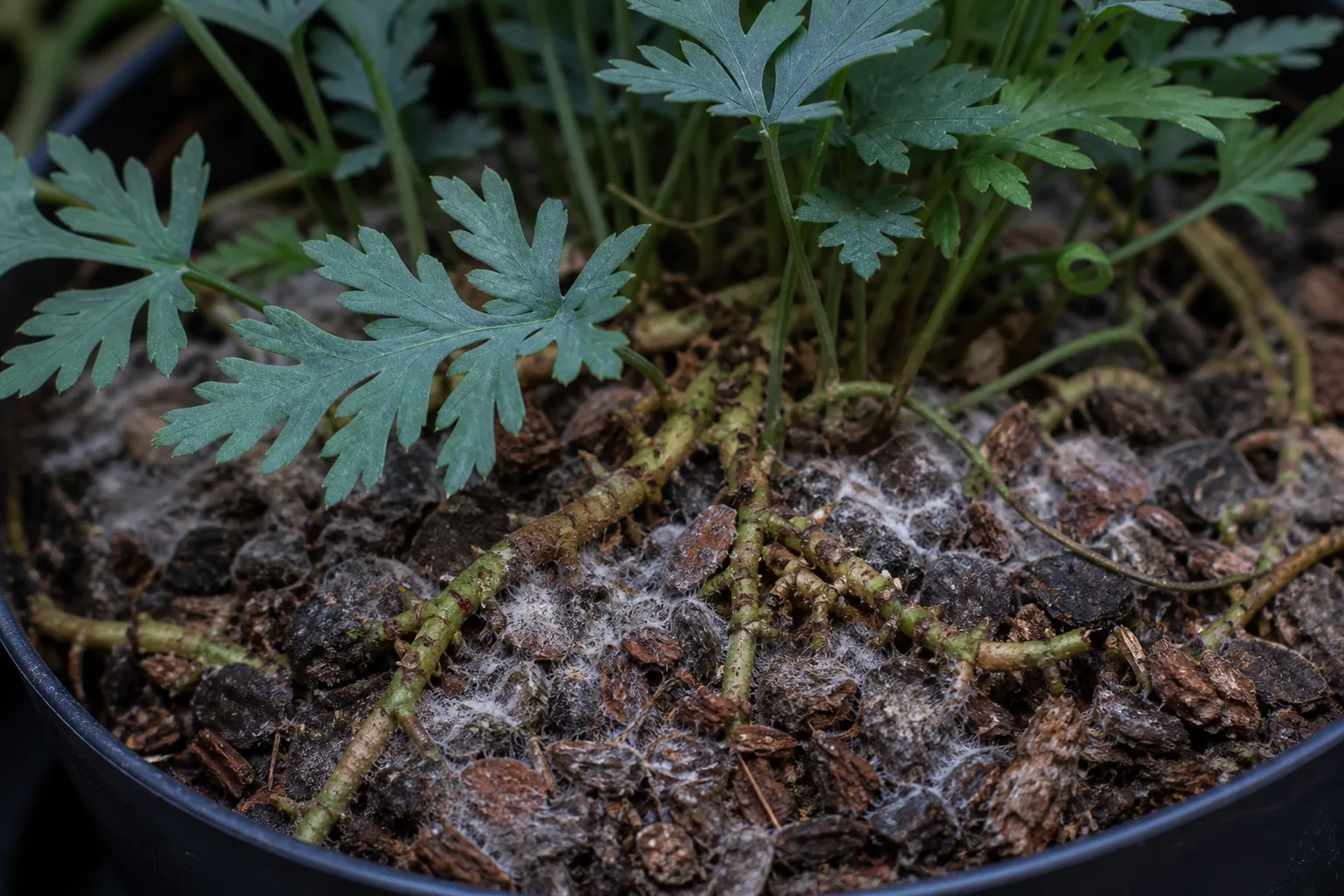
White or gray mold on Blue Star Fern soil is usually harmless saprophytic fungus on a damp surface layer-not disease on the blue-green fronds. First step: scrape the top 1–2 cm carefully around golden rhizomes, then let the top inch of mix dry before watering again.
Mold on Soil on Blue Star Fern: Causes, Checks & Fixes
This guide covers mold on soil on Blue Star Fern. See also the general Mold on Soil guide, watering, and light pages for this plant.
Mold on Soil on Blue Star Fern: Causes, Checks & Fixes
Quick answer
White or gray fuzz on the soil surface of a Blue Star Fern (Phlebodium aureum) pot is almost always saprophytic mold-a fungus breaking down organic matter in the mix, not a disease attacking the lobed blue-green fronds above. This epiphytic fern grows from golden creeping rhizomes on the soil surface; those rhizomes can look healthy while the top layer stays damp enough for mold spores to bloom.
First step: scrape off the top 1–2 cm of moldy soil carefully, avoiding damage to surface rhizomes, and stop watering until the top inch of mix feels dry. Do not reach for fungicide on day one; fix moisture and airflow first.
Mold on soil vs. overwatering on Blue Star Fern
| Pattern | What you see on the soil | Fronds & rhizomes | What it usually means |
|---|---|---|---|
| Surface mold | White or gray fuzz on top; surface wet for days | Firm golden rhizomes; fronds normal | Harmless saprophyte-moisture alarm |
| Early overwatering | Wet surface; possible mold | Frond yellowing from base; rhizomes still mostly firm | Chronic wet mix stressing roots-see overwatering |
| Rhizome rot | Sour smell; dark wet mix | Black mushy rhizomes; fronds collapse | Advanced failure-unpot and salvage firm sections |
NC State Extension notes that Phlebodium tolerates drying between waterings better than many ferns-but surface rhizomes still rot if mix stays saturated for weeks. Surface mold often appears before fronds show stress.
Why Blue Star Fern soil grows mold
Phlebodium aureum is an epiphytic fern that clings to bark in humid forests. Indoors it wants loose organic mix with good drainage and Blue Star Fern light guide. Mold appears when the top layer never dries-common when growers treat it like a moisture-loving maidenhair fern and water on a calendar.
Overwatering on a schedule. Watering before the top inch dries keeps peat and bark fines wet at the surface. Winter slow growth in heated dry rooms still does not justify daily watering if the mix has not dried.
Peaty, slow-draining mix. Standard potting soil without enough bark and perlite holds water at the surface. NC State recommends loose organic mix with acid pH for Blue Star Fern overview-dense peat blends encourage surface mold.
Buried or trapped surface rhizomes. Golden rhizomes should sit on or just above the mix. When buried in wet peat, they decay and feed saprophytic fungi on the surface.
Low light slowing dry-down. Dim corners reduce evaporation from the pot. Trailing fronds shading the rim can keep the top inch damp even when lower mix is merely moist.
Organic debris. Fallen frond segments and moss top-dressing trap moisture and give mold a food source.
What mold on soil looks like on Blue Star Fern
- White, gray, or yellow-tan fuzzy patches on soil, sometimes on pot walls
- Dark wet surface several days after watering
- Faint musty smell when you lift fronds to inspect rhizomes
- Fungus gnats on Blue Star Fern rising when you water-they thrive in damp soil
- Firm golden rhizomes and healthy blue-green fronds in early cases
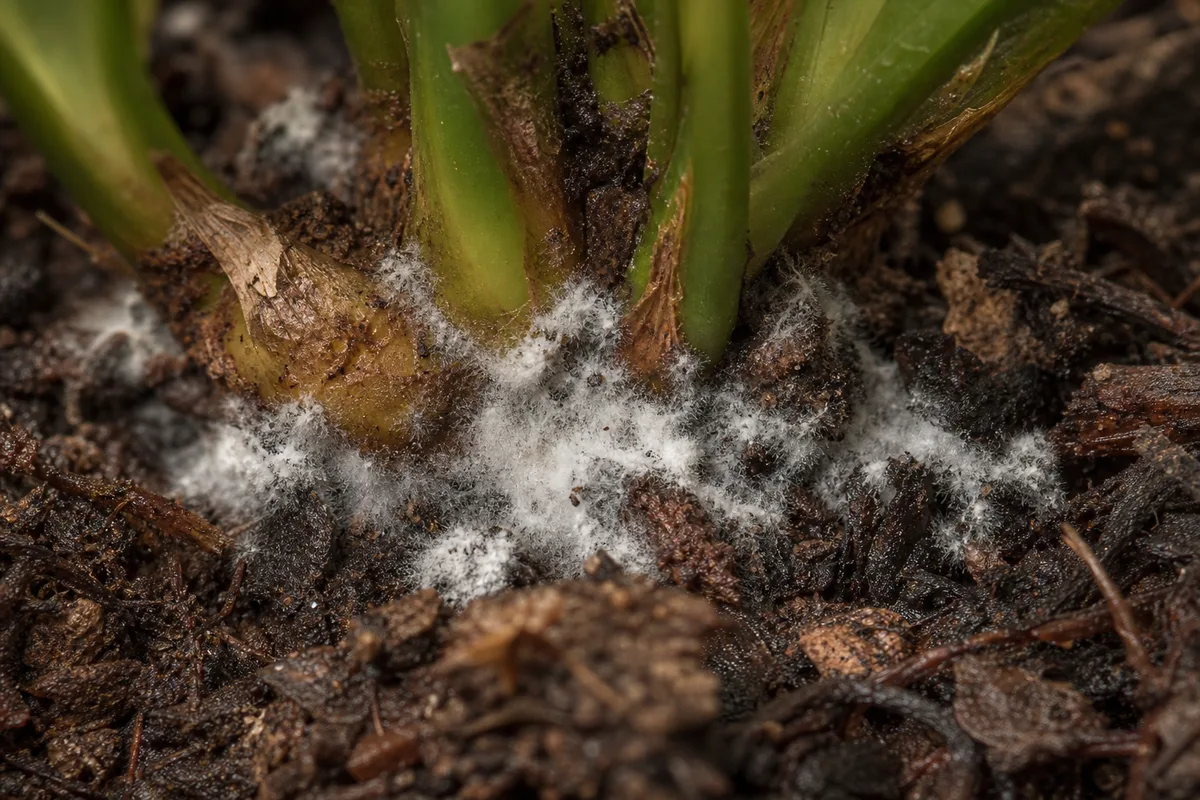
Mold on Soil symptoms on Blue Star Fern - compare with healthy tissue on the same plant.
Fuzzy growth on frond blades is not this problem-look for pests, scorch, or humidity stress on our brown tips guide instead.
How to confirm the cause
- Rhizome firmness - Golden surface rhizomes should feel firm. Black mushy tissue means rot, not cosmetic mold.
- Top-inch moisture - Wet finger test days after watering confirms slow dry-down.
- Frond base color - Yellowing fronds emerging from rotting rhizomes point to overwatering, not surface fuzz alone.
- Drainage - Open holes, no standing saucer water.
- Mix structure - Chunky bark visible or dense wet peat? Structure affects surface drying.
- Pest check - Gnats confirm wet surface habitat.
The first fix to try
Scrape the top 1–2 cm of moldy soil without damaging surface rhizomes, then wait until the top inch of mix is dry before watering again. Replace scraped material with a thin layer of dry chunky bark mix if desired. Improve airflow around the pot.
Step-by-step recovery
- Scrape carefully - Remove fuzzy soil and frond debris; expose firm rhizomes to air.
- Dry cycle - Pause watering until the top inch is dry. This may take longer in winter.
- Water correctly - Thorough soak when dry, then discard saucer water. Never leave rhizomes sitting in standing water.
- Top-dress - Add loose bark or perlite to the surface to speed drying.
- Adjust light - Bright indirect light helps the pot dry evenly without scorching fronds.
- Repot if mix fails - Sour smell, week-long wetness, or recurring mold despite dry cycles means repot into fresh epiphytic mix with bark and perlite.
Recovery timeline
| Stage | What to expect |
|---|---|
| 24–48 hours | Clean scraped surface; hold water |
| 3–7 days | Top inch dry; mold should not return |
| 1–2 weeks | Stable rhythm; new fronds may unfurl from firm rhizome tips |
| Ongoing | Recurring mold means watering or mix still too wet |
Lookalike symptoms
| Pattern | What you see | Likely cause |
|---|---|---|
| Surface mold only | Fuzz on soil, firm rhizomes | Wet top layer |
| Rhizome rot | Black soft rhizomes, sour smell | Chronic saturation |
| Brown frond tips | Crispy margins, firm rhizomes | Low humidity or salts-see brown tips guide |
| Green algae | Slimy green film | Chronic surface wetness |
Mistakes to avoid
- Treating Blue Star Fern like a moisture-loving fern - It needs dry cycles between drinks.
- Burying golden rhizomes in wet peat - Surface rhizomes need air.
- Fungicide before drying - Surface mold is usually harmless on healthy roots.
- Misting soil surface - Adds moisture where mold thrives.
- Ignoring mushy rhizomes - Cosmetic scraping cannot fix rot.
When to worry
Escalate when rhizomes turn black and soft, fronds yellow from the base on wet mix, or mold returns within days despite dry cycles. Salvage firm rhizome sections into fresh mix rather than waiting for the whole plant to collapse.
How to prevent mold on soil next time
Water when the top inch of chunky epiphytic mix dries. Keep golden rhizomes on the surface. Empty saucers. Provide bright indirect light. Remove frond debris promptly. Overwatering encourages fungal growth on soil surfaces-dry feet prevent mold before fronds stress.
When to use this page vs other Blue Star Fern guides
- Blue Star Fern watering guide - Use for routine moisture checks before assuming mold on soil is the main issue.
- Blue Star Fern problems hub - Browse all 16 common issues on this species.
- Fungus Gnats on Blue Star Fern - Different entry point when symptoms overlap with mold on soil.
- Overwatering on Blue Star Fern - Different entry point when symptoms overlap with mold on soil.
- Root Rot on Blue Star Fern - Different entry point when symptoms overlap with mold on soil.