Spider Mites on Blue Star Fern: Causes, Checks & Fixes
Quick answer
Spider mites on Blue Star Fern cause fine stippling on lobed fronds and silk webbing at frond bases near creeping rhizomes-especially in hot dry rooms. First step: isolate the pot and rinse frond undersides with lukewarm water while keeping surface rhizomes dry before applying any spray.
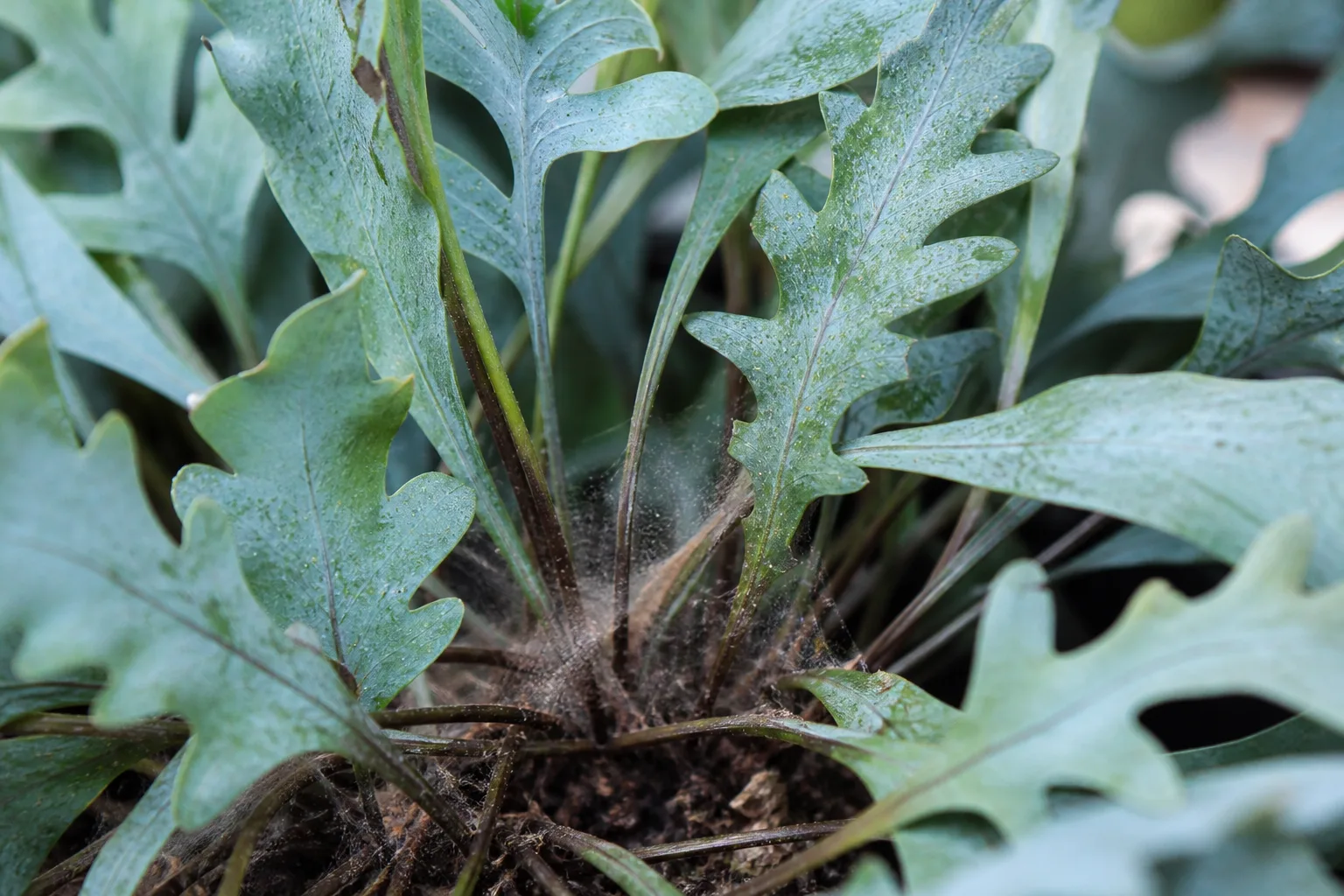
Spider Mites on Blue Star Fern: Causes, Checks & Fixes
This guide covers spider mites on Blue Star Fern. See also the general Spider Mites guide, watering, and light pages for this plant.
Spider Mites on Blue Star Fern: Causes, Checks & Fixes
Quick answer
Spider mites on Blue Star Fern (Phlebodium aureum) show up as fine yellow or white stippling across lobed blue-green fronds, dull bronzing, and delicate silk webbing at frond bases where lobes overlap and meet creeping golden rhizomes. They are not insects but tiny sap-feeding arachnids that thrive in warm, dry indoor air-the same winter conditions that already stress this epiphytic fern near heating vents and bright glass.
First step: isolate the pot the same day you spot stippling or webbing. Move it away from other houseplants before you rinse or spray anything. Then rinse frond undersides thoroughly with lukewarm water while keeping exposed surface rhizomes from sitting in pooled water. Do not reach for miticides or oils until you have confirmed moving specks or webbing and finished at least one rhizome-safe rinse.
For baseline humidity and rhizome placement during recovery, see the Blue Star Fern overview and low humidity guide. If rinse runoff keeps golden rhizomes constantly wet and they turn soft, switch to the root rot guide-soggy rhizomes from treatment mistakes are a separate emergency.
What spider mites look like on Blue Star Fern
Early mite damage is easy to miss on Phlebodium because overlapping lobed fronds and surface rhizomes hide colonies longer than on flat-leaved houseplants. Check these patterns together:
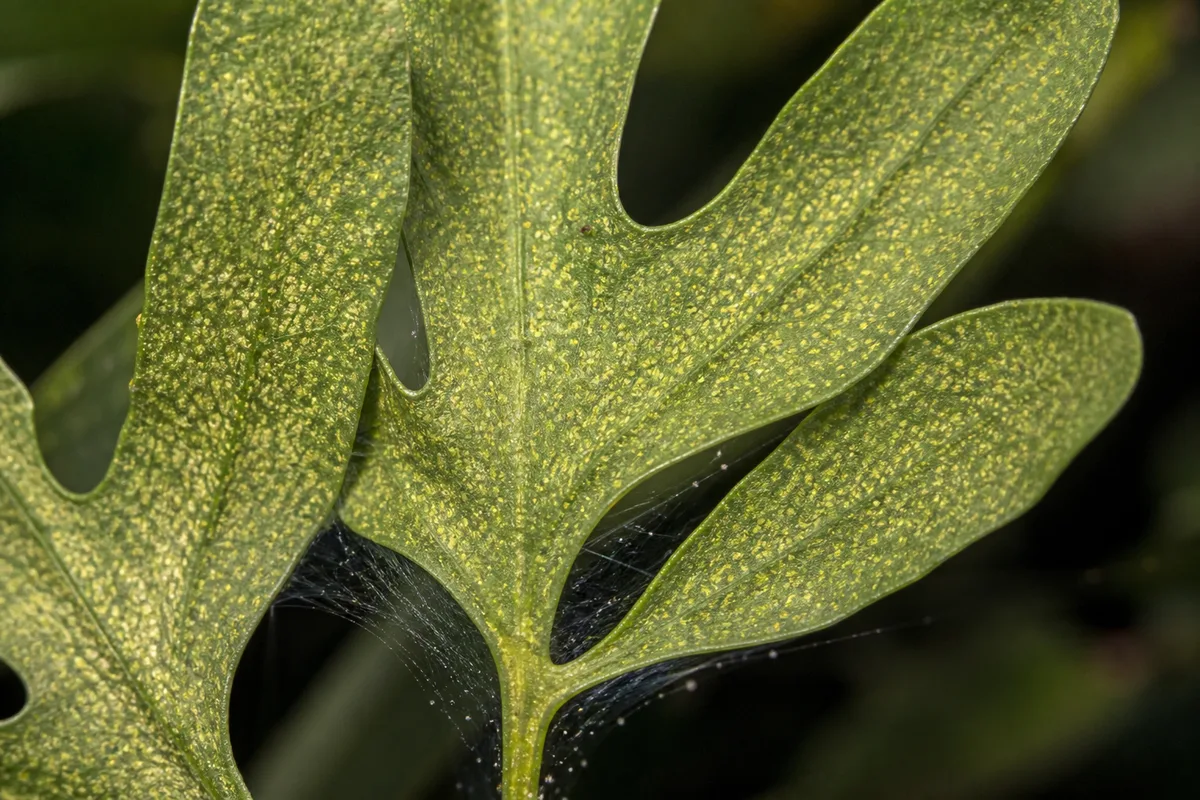
Spider Mites symptoms on Blue Star Fern - compare with healthy tissue on the same plant.
- Fine yellow or white pinprick stippling scattered across lobed frond surfaces-the result of mites puncturing individual leaf cells
- Dull, dusty, or bronzed fronds that lose their healthy blue-green sheen before obvious webbing appears
- Fine silk threads at frond bases, between overlapping pinnae lobes, or where fronds emerge from golden rhizomes
- Tiny moving specks on frond undersides near the midrib; a 10× hand lens makes identification much easier
- Slow or distorted new frond unfurling when feeding pressure is heavy on rhizome tips
- Crisp, bronzed older fronds that drop after heavy feeding, while rhizomes may still feel firm
Do not mistake normal golden fuzzy rhizomes for pest webbing. NC State Extension describes Phlebodium aureum as spreading by creeping rhizomes densely covered in golden scales-that fuzzy golden tissue is healthy anatomy. Mite silk is thread-like and often bridges between frond lobes, not uniform golden fuzz along a creeping stem.
Because blue star fern grows moderately from rhizome tips, even moderate stippling can make a pot look sick for months after the mites are gone.
Why Blue Star Fern gets spider mites
Spider mites are a common houseplant pest, but they become a blue star fern problem when care conditions overlap with mite-friendly microclimates-especially dry winter air that also triggers low humidity browning on the same plant.
Dry winter air near bright windows. Phlebodium tolerates average indoor humidity better than maidenhair or Boston ferns, yet the Old Farmer’s Almanac notes it still prefers 60–80% relative humidity and lists spider mites among pests to watch for. Many pots sit on sunny winter sills where heating runs-exactly the warm, low-humidity environment spider mites prefer. Mites reproduce faster as temperatures rise and humidity drops.
Epiphytic structure hides colonies. Blue star fern grows as a rhizomatous epiphyte with creeping golden rhizomes on the soil surface. Spreading lobed fronds create dozens of sheltered crevices at frond bases and rhizome forks where mites feed and lay eggs out of casual overhead view. Shallow wide pots and hanging baskets make undersides harder to inspect during quick watering passes.
Relative drought tolerance does not mean mite-proof. The Almanac notes blue star fern handles brief dry spells better than many ferns-but chronically dry soil plus dry air still weakens fronds. Drought-stressed plants often show mite injury first in collections where other plants still look fine.
Collection spread. Mites crawl short distances and ride on air currents. An outbreak on a nearby croton, orchid, or ficus can reach a shelf-grouped blue star fern within days.
Lookalike symptoms to rule out
| What you see | Likely cause | How to tell apart |
|---|---|---|
| Crispy brown margins, pinnae curl, no stippling dots | Low humidity | Edge-first browning; no webbing; tap test shows no moving specks |
| Evenly scattered pinprick dots plus fine silk | Spider mites | Webbing at frond bases; moving specks on white paper |
| White cottony tufts at frond bases, sticky honeydew | Mealybugs | Fluffy wax clusters smear pink; no uniform stippling pattern |
| Silver streaks or black specks on frond faces | Thrips | No fine silk webbing; scrape test differs from mite tap |
| Tip-only browning on older fronds, firm rhizomes | Brown tips from salts or fluoride | No stippling across blade surface; no webbing |
| Mushy black rhizomes, sour wet soil | Root rot | Rot smell and soft tissue-not a foliar pest pattern |
The stippling versus dry-air browning question is the one Blue Star Fern owners search most during heating season. Low humidity damages margins and tips first in a gradual pattern. Mites create scattered dots across the frond face and often leave silk at frond bases where lobes overlap.
How to confirm the cause
Work through these checks before spraying anything:
- Stippling pattern - Mite feeding creates evenly scattered pinprick dots across lobed fronds. Edges-only browning without dots usually points to low humidity or salt stress, not mites.
- Webbing test - Pull a frond lobe toward a window. Fine silk strands between lobes or at the frond base strongly suggest spider mites. Mealybugs leave cottony white clumps, not thread-like webbing.
- Tap test - Hold white paper under a frond and tap sharply. Mites fall as pale moving specks. Scale stays fixed; mealybugs appear as waxy blobs.
- Underside inspection - Check frond undersides along the midrib and at rhizome junctions with a hand lens. Twospotted spider mite is a frequent indoor species-straw-colored with two dark spots as adults.
- Rhizome cross-check - Firm golden rhizomes on moist but not soggy mix fit pest stress. Mushy rhizomes with sour soil point to rot-see watering guidance before treating for mites.
- Room scan - Inspect other plants on the same shelf, especially those above heating vents. Matching stippling on a neighbor confirms an active infestation, not a one-off frond blemish.
- Humidity reading - Measure at frond height. Below 40% in a warm room supports mite pressure even when soil moisture is correct.
If you see stippling and webbing with moving specks on undersides, you have spider mites-not a watering mystery that fertilizer will fix.
First fix for Blue Star Fern
Move the pot to an isolated spot and rinse every frond underside with a firm stream of lukewarm water, targeting lobes and bases while keeping surface rhizomes from sitting in pooled water.
Tilt the pot so water runs through the mix and out the drainage holes rather than bathing golden rhizomes for minutes. Wrap exposed rhizomes in a dry towel if you shower the plant in a sink. Let fronds dry in bright indirect light the same day-good airflow matters on epiphytic ferns with surface rhizomes.
This single step dislodges live mites, eggs, and webbing without introducing chemicals. Hold off on insecticidal soap until after the first rinse and a confirmed mite ID.
Do not soak the pot repeatedly in one day trying to “drown” mites-that risks crown and rhizome rot, the primary failure mode on this species. Do not mist fuzzy rhizomes heavily as a mite treatment; misting does not replace rinsing and can keep surface rhizomes wet too long.
Step-by-step recovery
After the initial rhizome-safe rinse:
- Repeat water rinses every three to five days for at least two weeks. Mite eggs hatch on cycles; one rinse rarely clears colonies hidden in frond-base crevices.
- Raise humidity toward 40–60% (60% or higher during active recovery) without keeping rhizomes soggy. A humidifier nearby addresses the dry-air root cause better than crown misting-spider mites reproduce more slowly when humidity rises, but misting alone will not eliminate an active infestation. See the low humidity guide for humidifier versus pebble-tray guidance.
- Apply insecticidal soap if rinsing fails after one week of repeats. Cover frond undersides and bases thoroughly; avoid flooding golden rhizomes. Test one frond first and wait 48 hours-fern foliage can react to sprays. Repeat treatments at label intervals until webbing stops appearing, typically every five to seven days for at least three cycles.
- Move the pot out of hot dry microclimates while treating-away from radiator tops, forced-air vents, and south-facing glass that superheats in winter.
- Inspect quarantined neighbors weekly with a hand lens. Treat any plant showing stippling before returning the blue star fern to a shared shelf.
- Trim only fully dead fronds after mites are gone-not living stippled tissue you hope will recover. Cut at the rhizome base once blades are fully brown and crisp.
Avoid neem or horticultural oil on the first treatment pass unless a label explicitly allows ferns and you have tested a single frond. Oils can interact with frond surfaces and sun exposure in ways that flat houseplant leaves tolerate more easily.
Recovery timeline
Expect visible mite reduction within three to five days if rinses are thorough and repeated. A full soap course, when needed, may take two to three weeks with label-interval applications.
Stippled frond tissue does not green up again-that damage is permanent on each affected blade. Recovery shows up as:
- No new webbing for two or more weeks
- Clean, unstippled new fronds emerging from rhizome tips
- Fronds that stop bronzing further
Because Phlebodium aureum grows moderately, replacing a heavily marked plant can take several months. Patience matters more here than on fast-growing tropical foliage plants.
Mistakes to avoid
- Stopping after one rinse when webbing was already visible-eggs survive and hatch within days.
- Spraying only frond tops while leaving undersides and frond-base crevices untreated, where mites feed and lay eggs.
- Pooling rinse water around surface rhizomes overnight-that triggers rot while you chase a foliar pest.
- Assuming insecticides labeled for insects will kill mites-mites need miticides, soaps, or oils labeled for mite control.
- Applying oil sprays in direct sun on fronds without a spot test-burn risk is real on fern foliage.
- Heavy crown misting as mite treatment-temporary moisture on fuzzy rhizomes does not replace ambient humidity or thorough rinsing.
- Returning the pot to a shared shelf before adjacent plants are cleared.
- Fertilizing during active infestation hoping to push new growth-soft new tissue attracts mites and stresses an already weakened plant.
Blue Star Fern care cross-check
While treating mites, keep baseline care steady:
- Light - Medium to bright indirect light per the light guide. Avoid baking a recovering plant in hot afternoon glass.
- Water - Water when the top of the mix dries per the watering guide; do not chronically drought-stress the plant while fighting dry-air mites.
- Humidity - Target 40–60% at frond height for maintenance, 60% or higher during recovery. The Almanac recommends humidifier or pebble tray over misting for sustained humidity on this fern.
- Rhizomes - Keep golden rhizomes on the soil surface, not buried or constantly soaked from treatment runoff.
- Airflow - Good circulation prevents stagnant moisture on fronds and rhizomes after rinses.
How to prevent spider mites on Blue Star Fern
- Run a humidifier or keep pots out of forced-air blast zones when heating season starts-aim for 40–60% RH at frond height.
- Rinse frond undersides lightly every few weeks in dry winter months-dust removal and mite discouragement in one step, with rhizomes kept dry.
- Quarantine new nursery pots for two weeks before placing them beside established ferns.
- Inspect frond bases and rhizome forks monthly with a hand lens during winter-where overlapping lobes hide colonies.
- Scout the collection when moving plants indoors in autumn; outdoor summer exposure can pick up mites that explode once inside dry heat.
- Cross-check brown tips and low humidity symptoms early-dry stressed fronds attract mites faster.
Healthy, evenly watered blue star ferns in moderate humidity are less attractive hosts, though no indoor plant is mite-proof.
When to worry
Escalate or consider discarding the pot if:
- Webbing covers most fronds and repeated rinses plus labeled soap cycles fail after three weeks
- New fronds emerge stunted, twisted, or fail to unfurl from rhizome tips
- Mites spread to multiple pots despite isolation
- Golden rhizomes turn mushy or smell sour after over-wetting during treatment-switch to root rot recovery before continuing pest sprays
For persistent infestations after three full treatment cycles, contact your local cooperative extension office for site-specific pest management advice.
Blue star fern is listed as non-toxic to cats and dogs by the ASPCA, which helps when choosing where to isolate a treated pot-but still keep pets away from wet sprays until foliage dries and follow product label directions for indoor use.
For a valuable specimen, persistence with isolation, rinses, and cautious soap often works. For a heavily infested plant on a crowded shelf, discarding one pot in a sealed bag can protect the rest of the collection-a hard but sometimes practical choice.
Related Blue Star Fern problems
- Blue Star Fern overview - species hub, humidity targets, rhizome placement
- Low humidity - primary lookalike for dry-air browning
- Brown tips - margin damage without stippling
- Watering - moisture rhythm during recovery
- Mealybugs - white fuzz at frond bases differential
- Root rot - rhizome damage from over-wetting during treatment
- Fungus gnats - separate pest on chronically wet mix
Conclusion
Spider mites on Blue Star Fern are a dry-air, slow-detection problem on lobed fronds and rhizome crevices-not a mystery disease in the potting mix. Confirm with stippling plus webbing and a tap test, then isolate and rinse frond undersides before you spray-keeping golden rhizomes out of pooled water. Repeat rinses, raise humidity toward 40–60%, and use cautious soap treatments only when physical removal is not enough. Damaged fronds will not revert; watch for clean new growth from rhizome tips instead. Cross-check dry-air stress with our low humidity and brown tips guides so mites do not return next winter.
When to use this page vs other Blue Star Fern guides
- Blue Star Fern watering guide - Use for routine moisture checks before assuming spider mites is the main issue.
- Blue Star Fern problems hub - Browse all 16 common issues on this species.
- Low Humidity on Blue Star Fern - Different entry point when symptoms overlap with spider mites.
- Slow Growth on Blue Star Fern - Different entry point when symptoms overlap with spider mites.