Small Flowers on Anthurium: Causes, Checks & Fixes
Quick answer
Small flowers on Anthurium usually mean undersized spathes from marginal light, high-nitrogen feeding, or a young or recently stressed plant-not a separate disease. First step: measure light at the leaf canopy and move the pot to bright indirect light or add a grow light before changing fertilizer.
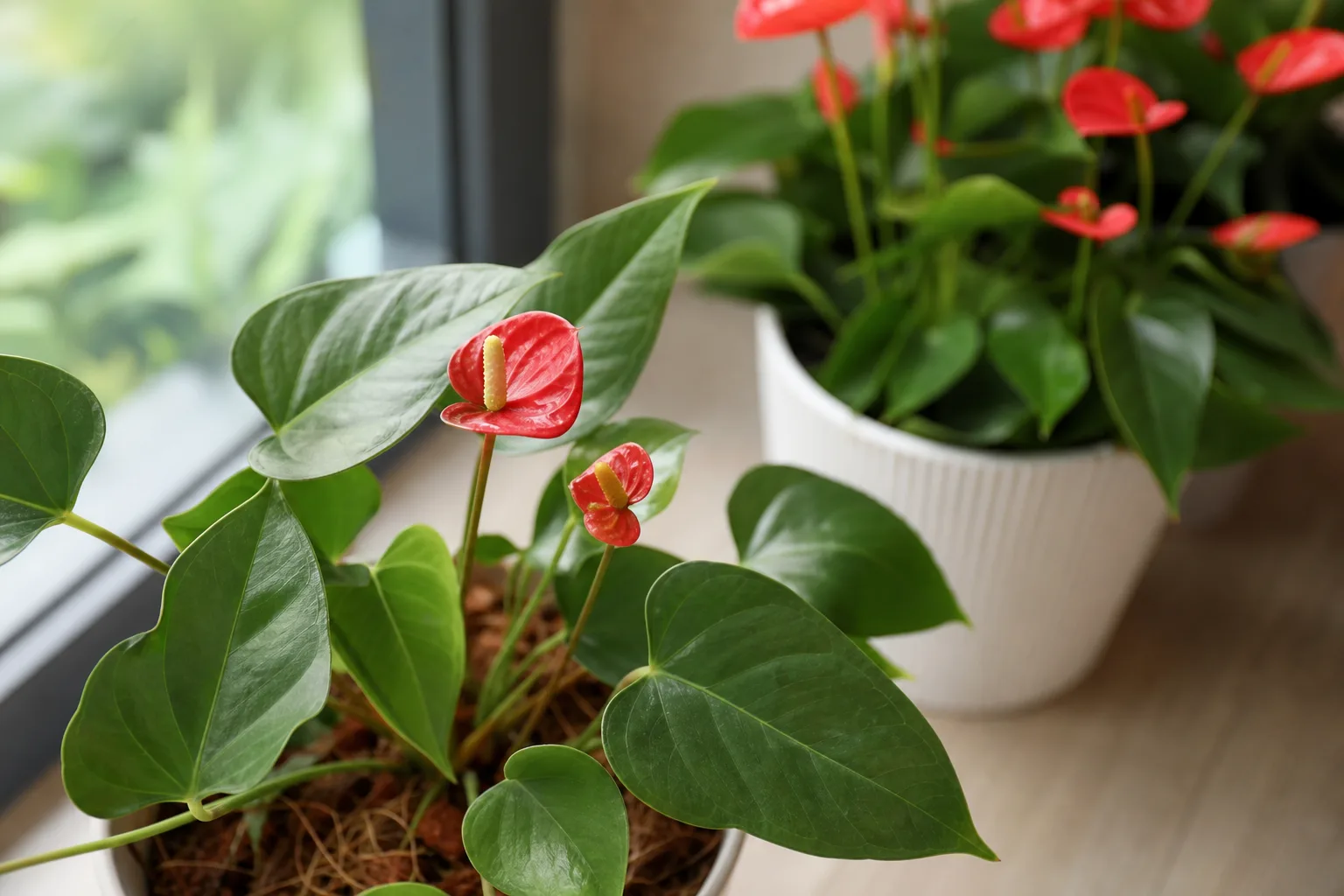
Small Flowers on Anthurium: Causes, Checks & Fixes
This guide covers small flowers on Anthurium. See also the general Small Flowers guide, watering, and light pages for this plant.
Small Flowers on Anthurium: Causes, Checks & Fixes
Quick answer
When people say small flowers on Anthurium, they usually mean the spathe-the waxy, heart-shaped modified leaf around the central spadix-is noticeably smaller than earlier blooms on the same plant or than the 3 to 6 inch range typical of a mature Anthurium andraeanum flamingo flower.
First step: check light intensity at the leaf canopy, not just whether the plant “gets some sun.” Marginal brightness is the most common reason Anthurium still blooms but produces undersized spathes on long, weak stems. Move the pot one to two feet closer to your brightest filtered window, or add a full-spectrum grow light on a 10 to 12 hour timer, before you repot, flush salts, or stack bloom booster.
What counts as a “small” Anthurium flower
Anthurium does not produce petals in the usual sense. Each “flower” is an inflorescence: a fleshy spadix (the finger-like spike with tiny true flowers) wrapped by a colorful spathe. On healthy florist hybrids, the spathe is often 3 to 6 inches long, flat, glossy, and held upright or slightly angled above the foliage.
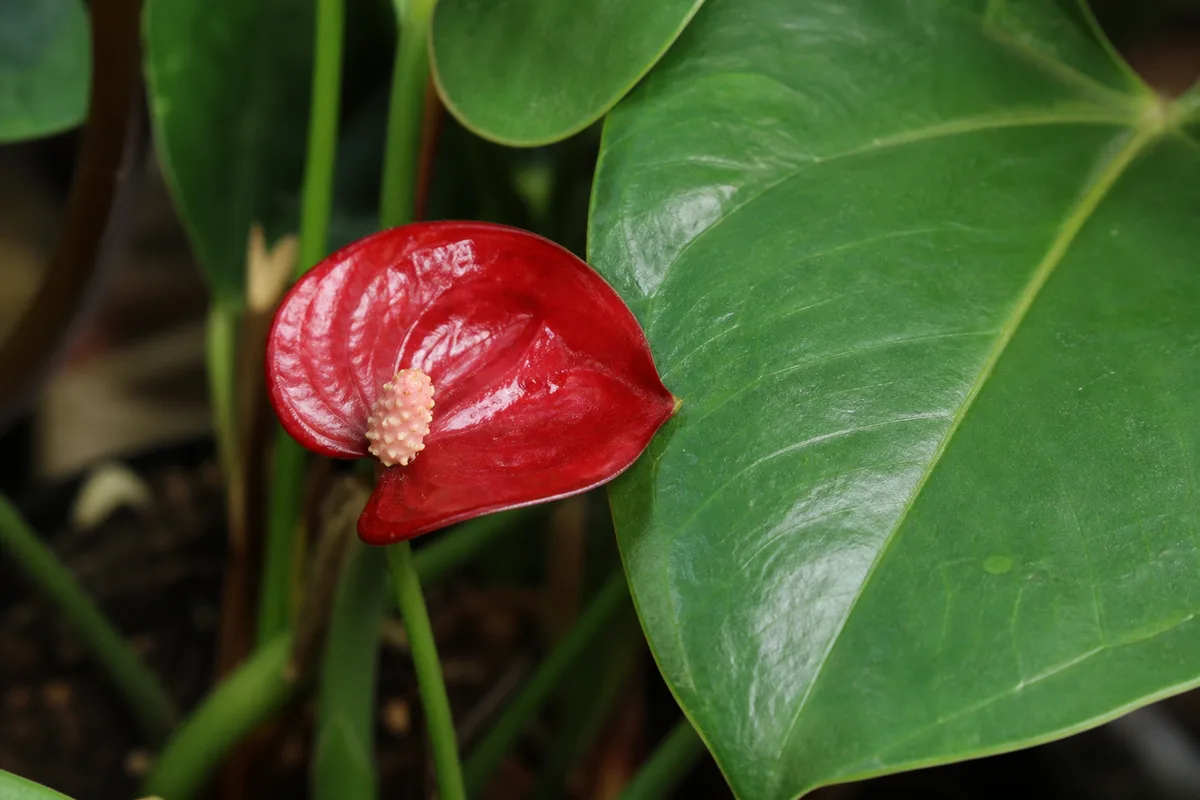
Small Flowers symptoms on Anthurium - compare with healthy tissue on the same plant.
Small-flower symptoms on Anthurium look like:
- Spathes clearly shorter or narrower than previous cycles on the same plant-often under 2 to 3 inches when the plant once produced full-size blooms
- Pale or thin spathe color alongside reduced size-not the uniform fade of an aging bloom (see faded flowers)
- Long, weak peduncles (flower stalks) with a modest spathe at the tip-common when light is barely above survival level
- Blooms present, but underwhelming while leaves stay dark green and glossy-a key clue that light intensity, not total failure to flower, is the issue
- First blooms on a young plant that are proportionally small but otherwise healthy-often normal for the first one or two cycles
Mini cultivars and compact selections such as ‘Baron’ are bred smaller by design. Compare against your plant’s own history and label, not a generic large red spathe photo online.
What will not change: An open spathe does not grow larger after it unfurls. Recovery is judged on the next inflorescence, not the one already on the plant.
Why Anthurium produces undersized spathes
Insufficient light intensity-not just “some light”
The Missouri Botanical Garden states plainly that in too much shade, Anthurium may not bloom-and when light sits between survival and bloom-grade intensity, many indoor plants do flower, but poorly. UF/IFAS interiorscape guidelines put useful production light at roughly 1,000 to 2,500 foot-candles, with about 1,500 to 2,000 foot-candles as the steady target for quality blooming.
North windows in winter, interior rooms far from glass, and spots that feel “bright to you” but fail the midday shadow test often land well below that range. The plant compensates with dark green leaves and smaller, paler spathes on elongated stalks rather than stopping growth entirely. That pattern separates small blooms from no flowers-where buds fail entirely.
See the anthurium light guide for window placement, grow-light distance, and foot-candle targets in full.
High nitrogen or imbalanced fertilizer
Anthurium allocates energy based on what you feed and how much light it receives. UF/IFAS recommends a 3-1-2 N-P-K ratio during vegetative growth, then a shift toward 1-2-2 when the plant is mature and ready to flower-not continuous heavy nitrogen.
Indoor growers who use standard houseplant food at full strength, lawn-adjacent “green growth” formulas, or nitrogen-heavy feeds often get lush foliage and undersized inflorescences. Excess soluble salts above roughly 2 to 3 dS/m can also suppress roots and stall bloom quality even when light is borderline adequate. The anthurium fertilizer guide covers dilution, seasonal pauses, and when a brief phosphorus-forward feed is appropriate.
Immature plant, recent repot, or environmental stress
A young Anthurium with only a few mature leaves may produce modest first spathes even under good care. North Carolina Extension notes the plant reaches roughly 1 to 1.5 feet tall at maturity; bloom scale generally improves as the crown fills in.
Recent Anthurium repotting guide, root disturbance, cold drafts, or a move from greenhouse to dim retail shelf redirects energy to roots and leaves. The next one or two inflorescences after that stress are often smaller or delayed even though the plant is alive and upright. Cold below about 55°F can damage tissue and delay flowering when warmth returns.
Chronic underwatering on Anthurium or soggy roots are less common direct causes of small spathe size alone, but they weaken the plant enough that new blooms stay small until the root zone stabilizes.
How to confirm the cause
Work through these checks in order:
- Light at the canopy - At midday, hold your hand 12 inches above the leaves. A soft but readable shadow suggests bright indirect light; barely any shadow means bloom scale will suffer. A phone lux app reading converted to foot-candles (divide lux by ~10.8) helps confirm whether you are near the 1,500 to 2,000 fc bloom band cited by UF/IFAS.
- Compare bloom history - Did spathes shrink after a room change, winter, or new furniture blocking the window? That timeline strongly implicates light intensity.
- Leaf and stem pattern - Long petioles, smaller new leaves, and dark green color with modest spathes fit low light. Large healthy leaves with tiny blooms despite bright placement points more to feed imbalance or immaturity.
- Fertilizer audit - Note product NPK, dilution, and frequency. High nitrogen at or above label strength, or feeding through winter in a dim spot, fits vegetative push over inflorescence scale.
- Plant age and pot history - First blooms on a new purchase, or the first cycle after spring repot, may be small without any ongoing problem.
- Stress timeline - Repot, draft, heat blast, or shipping within the last four to eight weeks? Expect a smaller or skipped cycle before normal scale returns.
- Cultivar check - Compact or mini types stay smaller by genetics; do not chase 5 inch spathes on a dwarf selection.
Lookalike symptoms: small spathes vs. related problems
| What you see | Most likely issue | Quick differentiator |
|---|---|---|
| Small spathes, plant still blooming, dark green leaves | Marginal light intensity | Move closer to window; new spathes enlarge in 6–12 weeks |
| No buds for months, leggy stems | Insufficient light (failure to initiate) | See no flowers |
| Full-size spathe turning washed-out or green | Age, excess light, or natural fade | Color change more than size; see faded flowers |
| Buds form then abort before opening | Draft, dry air, watering swing, recent move | Buds drop-not small open spathes; see bud drop |
| Very small first bloom on new plant | Juvenile plant | Size improves over next 2–3 cycles if light and feed are correct |
| Small blooms after repot | Transplant stress | Roots re-establish first; delay fertilizer until new leaf |
First fix for Anthurium
Increase light to bloom-grade intensity before you change fertilizer, repot, or add bloom booster.
Move the pot to within one to two feet of an east-facing window, or three to five feet back from a south or west window with a sheer curtain-positions that typically deliver the bright, indirect light Anthurium prefers. If natural light cannot reach roughly 1,500 foot-candles at the leaves for 8 to 10 hours daily, hang a 20 to 40 watt full-spectrum LED 12 to 18 inches above the canopy on a timer.
Make one placement or light change, then wait for the next spathe to form. Existing open blooms will not enlarge. Rotating the pot a quarter turn weekly keeps new inflorescences balanced if light comes from one direction.
Only after light is adequate-and roots are healthy in chunky, well-drained mix-should you review fertilizer toward a urea-free 3-1-2 baseline or a brief 1-2-2 at quarter strength during active growth, as outlined in the fertilizer guide.
Step-by-step recovery
After improving light:
- Acclimate gradually - Step brighter over one to two weeks if the plant came from a dim shop or interior room. Sudden jumps into harsh direct sun bleach spathes.
- Hold watering steady - Water when the top inch of mix feels dry; do not drought-stress or flood to “force” bigger blooms.
- Pause repotting - Let the current cycle finish before disturbing roots unless rot is confirmed.
- Review feed only on schedule - If you have been feeding heavy nitrogen, flush accumulated salts with plain water once, then resume weak balanced feed after one to two weeks of stable new growth.
- Maintain humidity - 60 to 80% RH supports spathe quality; dry vent air can brown margins without shrinking size, but chronic stress limits the next cycle.
- Remove spent spathes - Cut faded inflorescences at the base of the stalk so the plant redirects energy to the next bud-not because pruning enlarges the current bloom.
Recovery timeline
Existing spathes do not grow after opening. Expect 6 to 12 weeks from a meaningful light upgrade to a noticeably larger new spathe on a mature plant-roughly one full bloom cycle. Young plants may need two or three cycles before spathes reach typical adult scale.
Signs you are on track: firmer, shorter peduncles, wider spathe blade, richer color, and new leaves with shorter petioles in brighter light. Signs the problem persists or worsens: continued tiny blooms after a full cycle in verified bright light, yellowing leaves with wet soil (root issue), or no new buds at all (shift diagnosis toward no flowers).
What not to do
Do not apply full-strength bloom booster or high-phosphorus products to a stressed, recently repotted, or root-compromised plant before fixing light and checking roots-that raises salt load without addressing the limiting factor.
Do not repot and fertilize the same week hoping to “wake up” small blooms; semi-epiphytic roots need time to re-anchor, and the next inflorescence often shrinks further.
Do not judge success by old spathe size-only compare each new inflorescence after care changes.
Do not assume more fertilizer equals bigger flowers; UF/IFAS ties quality to balanced ratios and monitored soluble salts, not maximum dose.
Avoid blasting direct midday sun onto foliage to fix small blooms-bleached spathes and scorched leaves trade one problem for another. Filter light or use morning exposure instead.
How to prevent small spathes next time
- Hold bloom-grade light year-round - Supplement with a grow light in winter when day length and window intensity drop; see anthurium light.
- Feed lightly and consistently - Quarter-strength complete fertilizer during active growth; brief 1-2-2 only when the plant is mature, well-lit, and ready to bloom.
- Repot in spring on a calm schedule - Every two to three years in fresh chunky aroid mix, not during visible bud development.
- Avoid nitrogen-heavy “green” products as the sole feed if spathe scale matters more than leaf size.
- Flush salts monthly during heavy feeding seasons so root uptake stays efficient.
- Know your cultivar - Mini and compact hybrids stay smaller by design; set expectations accordingly.
Anthurium care cross-check
Small spathes sit at the intersection of light, nutrition, and plant maturity. Blooming at all proves the plant is alive; blooming well requires intensity near 1,500 to 2,000 foot-candles, appropriate NPK, and a stable root zone in well-drained, moist mix.
If spathes are small and leaves are pale or bleached, you may have too much direct sun-not too little. If spathes are small and buds never form, pivot to no flowers. If size is fine but color washes out, see faded flowers.
The anthurium overview ties together humidity, watering, and bloom expectations for the whole plant.
When to worry
Escalate if small blooms accompany mushy roots, sour soil, crown softening, or rapid leaf yellowing-those patterns suggest rot or systemic stress, not light alone. Persistent tiny spathes after two full cycles in verified bright light with balanced feeding may indicate a chronically root-bound or nutrient-locked plant worth inspecting at repot time.
A modest first spathe on a new juvenile plant is low urgency if leaves are firm and light is adequate. A sudden size drop after pesticide burn, heat shock, or cold exposure needs environmental stabilization before bloom-booster experiments.
Conclusion
Small Anthurium flowers almost always mean undersized spathes from light that is bright enough to bloom but not bright enough to bloom well, with high nitrogen, youth, or recent repot stress as frequent co-conspirators. Measure light at the canopy, move or supplement to the 1,500 to 2,000 foot-candle band, then fine-tune feeding on the next cycle. Old spathes will not enlarge-track the size of each new inflorescence and cross-link light, fertilizer, and sibling symptom guides so you do not treat a size problem like a watering mystery.
Related guides:
- Anthurium light needs - foot-candles, windows, grow lights
- Anthurium fertilizer guide - 3-1-2 vs 1-2-2, dilution, salt flush
- No flowers on Anthurium - when buds fail entirely
- Faded flowers on Anthurium - color fade vs. size reduction
- Bud drop on Anthurium - buds abort before opening
When to use this page vs other Anthurium guides
- Anthurium watering guide - Use for routine moisture checks before assuming small flowers is the main issue.
- Anthurium problems hub - Browse all 20 common issues on this species.