Faded Flowers on Anthurium: Causes, Checks & Fixes
Quick answer
On Anthurium, a spathe that slowly turns green then brown after 6–8 weeks is normal aging-not a crisis. Washed-out or pale new blooms usually mean too little bright indirect light. First step: confirm spathe age, then move the pot to a brighter filtered window before changing fertilizer or watering.
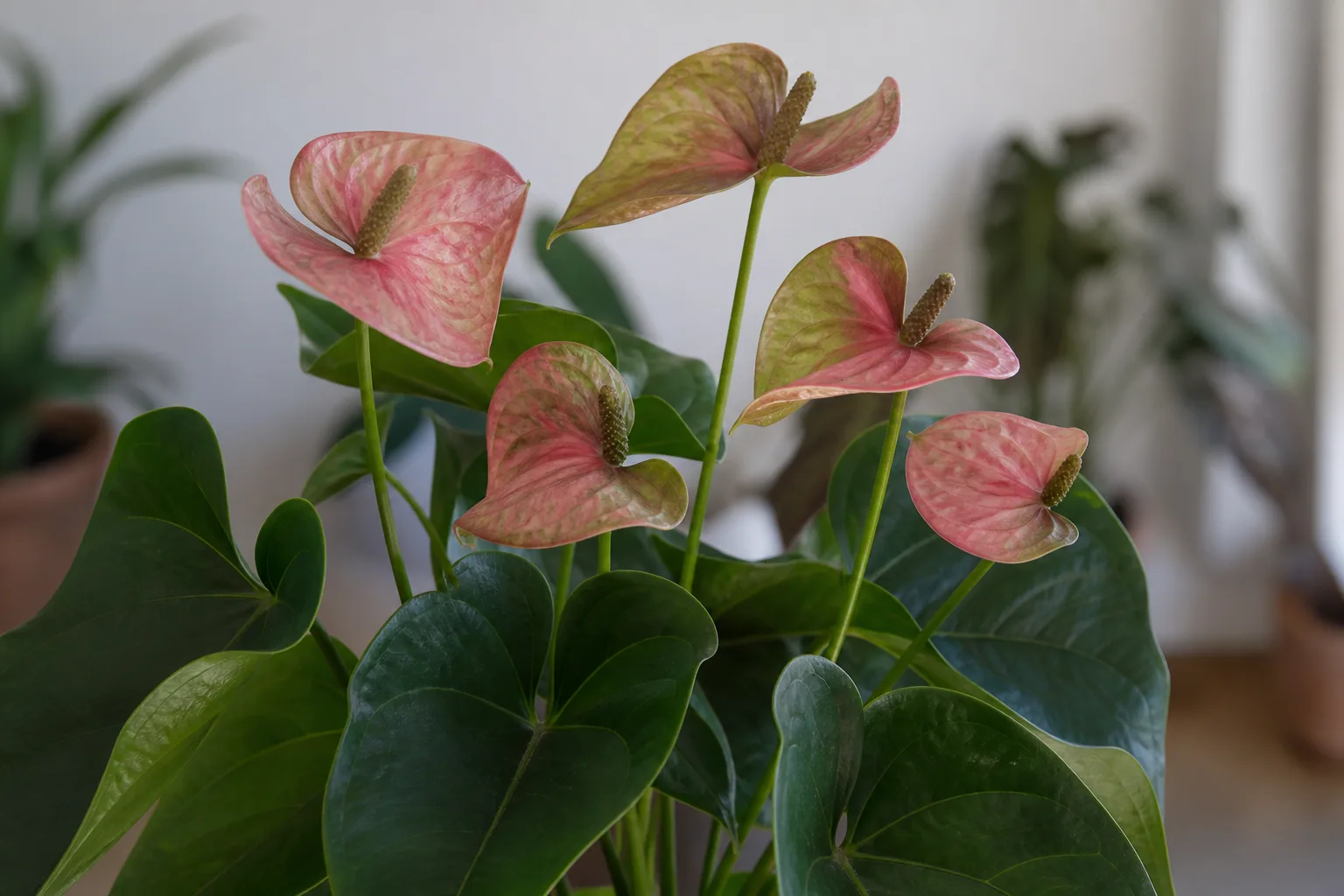
Faded Flowers on Anthurium: Causes, Checks & Fixes
This guide covers faded flowers on Anthurium. See also the general Faded Flowers guide, watering, and light pages for this plant.
Faded Flowers on Anthurium: Causes, Checks & Fixes
Quick answer
When an Anthurium spathe loses color, the first question is age, not panic. A waxy red, pink, or white bract that has looked good for roughly six to eight weeks and is now turning green, then brown, is following a normal spathe lifecycle-the plant is reabsorbing nutrients from a modified leaf it no longer needs for display.
Premature fade is different. A newly opened spathe that looks pale, lime-green, or washed-out from day one, or an older bract that loses color within the first few weeks, usually signals too little bright indirect light, direct sun scorch, low humidity, or the wrong fertilizer ratio-not simple aging.
First step: note when the spathe opened and where the pot sits. If the bract is older than six weeks and greening evenly, watch and wait. If new blooms are pale or a young spathe bleaches quickly, move the plant to brighter filtered light today-within a few feet of an east window or behind a sheer on south-before Anthurium repotting guide, heavy feeding, or extra watering.
Spathe vs. spadix: what you’re seeing fade
The colorful “flower” on Anthurium andraeanum (flamingo flower) is a spathe-a modified leaf called a bract-not a true petal. The actual flowers are tiny and packed along the central spadix, the pale finger-like spike. Because the spathe is leaf tissue with a waxy cuticle, it can photosynthesize and store energy even as pigment fades.
That biology explains two behaviors owners find confusing:
- Greening on an old spathe often means chlorophyll is returning as the plant pulls nutrients back into stems and roots-a productive phase, not failure.
- Cutting a green spathe early removes tissue the plant is still using, which can delay the next bloom cycle.
For full spathe anatomy and bloom timing, see the Anthurium care overview spathe section.
Normal aging vs. a real problem
Expected color timeline (6–8 weeks)
Under good indoor conditions, a single Anthurium spathe typically stays showy for about six weeks, with UF/IFAS interiorscape guidelines citing long-lasting inflorescences and NC State Extension noting flowers can last up to four weeks in cultivation-with many home plants holding color six to eight weeks before the shift begins.
The usual progression:
- Peak color - glossy red, pink, white, or orange (cultivar-dependent)
- Green phase - uniform greening as pigments fade and chlorophyll returns
- Brown, papery senescence - dry texture; safe to remove at the stalk base
A healthy plant may produce four to six bloom cycles per year when light, humidity, and feeding align. One greening spathe while others look fine is normal turnover, not a care emergency.
When green or brown spathe is fine to leave or cut
Leave green spathes on the plant unless they block light to new growth or crowd the crown. The RHS recommends removing faded flower-like spathes once they are spent; “spent” means brown and papery, not merely green.
Cut at the base of the stalk with clean scissors when:
- The spathe is fully brown and dry
- The spadix has shriveled
- Soft rot or pest damage appears on the bract (rare on healthy plants)
Do not cut because a six-week-old spathe turned green-that is the plant finishing its cycle.
What premature fade looks like on Anthurium
Washed-out new blooms (low light)
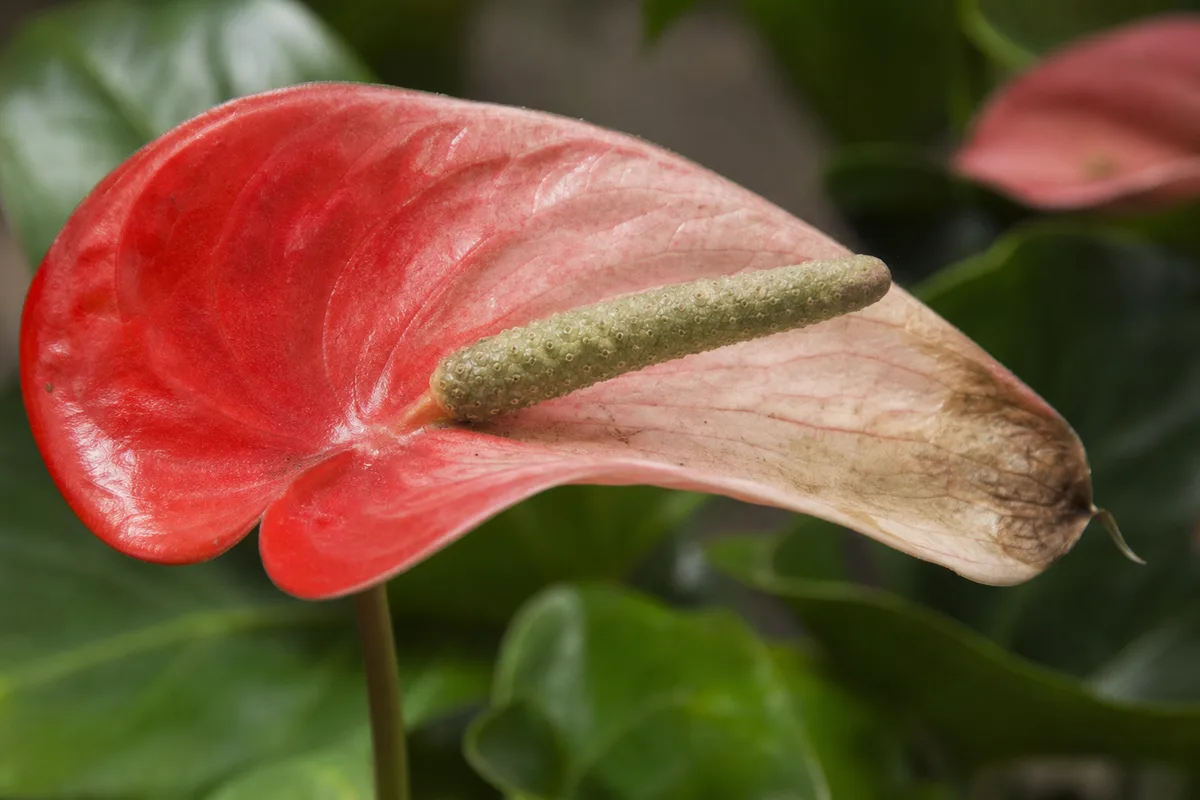
Faded Flowers symptoms on Anthurium - compare with healthy tissue on the same plant.
The clearest abnormal pattern: a brand-new spathe opens pale pink, washed-out red, lime-green, or dull white instead of the cultivar’s usual intensity. Older leaves may look dark green and healthy while color fails on the bract-because Anthurium can survive in shade but bloom poorly when light is below bloom thresholds.
Other low-light clues:
- Long gaps between bloom cycles
- Smaller spathes on weak stems
- Plant leaning toward the brightest window
See not enough light on Anthurium for stretch and placement detail, and no flowers if spathes stop appearing entirely.
Scorched or bleached patches (too much sun)
Direct sun hits spathe tissue harder than many leaves because the bract is exposed and pigmented. Afternoon sun through unfiltered glass can bleach a red spathe to orange or white within days. Leaves may show pale yellow or tan patches on the sun-facing side.
Commercial growers note that light above roughly 2,500 foot-candles can fade flower and leaf color-the same range where indoor south windows can scorch if the pot sits on the sill.
Early browning with humidity or water stress
Crisp brown edges on a young spathe often track dry air or inconsistent watering, not normal aging. Anthurium prefers 60 to 80% relative humidity; heated winter rooms can push spathes papery and brown prematurely while soil rhythm is unchanged.
Chronic wet soil in a dim corner is a lookalike: the plant barely drinks, roots suffocate, and the whole plant dulls-including bracts. Do not increase watering when the issue is light or drainage.
Nutrient wash-out (less common)
An all-nitrogen fertilizer year-round keeps Anthurium leafy but can produce weak color on new inflorescences. Excess phosphorus bloom boosters without adequate light rarely fix pale bracts and may cause leaf-tip burn. Fix light first; then use a controlled 1-2-2 bloom switch if the plant is mature and otherwise healthy.
How to confirm the cause
Work through these checks in order:
- Spathe age - When did this bract open? Greening after six or more weeks fits aging. Pale color at opening does not.
- Light intensity and direction - Is the pot within a few feet of an east or filtered south/west window? Run the shadow test: a soft, fuzzy shadow at midday suggests bright indirect light; almost no shadow means too dim for strong color; a sharp dark shadow on the spathe means move back or filter.
- Foot-candle sanity check - Bloom production targets roughly 1,500 to 2,000 foot-candles of indirect light per UF/IFAS interiorscape data. Phone lux apps are approximate but useful for comparing windows.
- Sun exposure audit - Do direct beams hit the spathe between late morning and afternoon? Bleaching on the window-facing side confirms excess sun.
- Humidity and airflow - Is the plant near a heating vent or AC blast? Measure RH if brown crisping appears on bracts or leaf edges.
- Fertilizer history - High-nitrogen feed only? Recent bloom booster on a dry plant? Review the anthurium fertilizer guide before adding more product.
- Compare new vs. old blooms - One greening old spathe plus vivid new buds means normal turnover. All new buds pale means environment, not senescence.
- Cultivar check - Green cultivars such as ‘Midori’ are meant to be green; confirm your plant’s expected bract color via the nursery tag or NC State cultivar list.
If spathes are small as well as pale, also read small flowers on Anthurium-light and nutrition overlap, but pot size and maturity differ.
First fixes for faded Anthurium spathes
If new spathes are pale or a young bract washed out within weeks: move the pot to the brightest safe indirect location in your home.
Practical placement:
- East window, one to two feet from glass, is the most reliable bloom color zone.
- South or west window with a sheer curtain or the pot set three to five feet back from hot glass.
- North window alone rarely sustains strong bract color without a grow light on a 10–12 hour timer.
Acclimate gradually over one to two weeks if the plant lived in deep shade-sudden jumps into harsh direct sun can bleach tissue you are trying to save.
Secondary fixes only after light is addressed:
- Switch to a phosphorus-forward feed (1-2-2 or 4-15-12 at quarter strength) for two to three applications during active growth if light is already adequate and the plant has six or more mature leaves.
- Raise humidity toward 60%+ if bracts go papery brown at the edges in dry air.
- Remove only fully spent spathes-brown and dry-to redirect energy; leave green bracts in place.
Hold repotting, heavy pruning, and extra watering until you have tested brighter placement for two weeks.
Recovery timeline
Normal greening spathe: No recovery needed. Expect the bract to finish brown over one to three weeks, then cut at the stalk base. The next inflorescence often follows within four to ten weeks on a mature plant in good light.
Low-light pale blooms: After a light increase, new spathes usually show better color on the next bloom cycle, not the spathe already open. Allow six to ten weeks to judge; the current pale bract will not re-darken.
Sun-bleached spathes: Move to filtered light immediately. Existing bleached tissue does not regain pigment. New blooms should color normally within one to two cycles if exposure stays indirect.
Humidity-related crisping: With RH at 60% or higher, new bracts should open cleanly within two to four weeks; damaged edges on old spathes remain cosmetic.
Worsening signs: Multiple spathes aborting, spadix rotting, soft crown tissue, or sudden wilt with wet soil-inspect roots and drainage; those patterns point to rot or overwatering, not bract aging alone.
Lookalike symptoms and causes to rule out
- Normal senescence - Even greening after six-plus weeks on one stalk while the plant otherwise looks vigorous; wait to cut
- Low light - Pale new spathes, dark green leaves, long petioles; fix placement first
- Too much sun - Bleached patches on window-facing bracts and leaves; filter light
- No flowers - No spathes at all for months; overlapping but distinct from fade on existing bracts
- Small flowers - Reduced spathe size plus dull color; check light and pot size
- Bud drop - Buds fail before opening; often draft, repot, or water stress-not the same as fading open bracts
- Low humidity - Papery brown margins on bracts and leaf tips in dry winter air
- Green cultivar - ‘Midori’ and similar selections are supposed to stay green
What not to do
Do not overwater because a green spathe looks “sick”-normal aging does not require more moisture. Do not remove green spathes hoping to force rebloom; you interrupt nutrient recovery. Do not apply full-strength bloom booster to a pale plant in a dim corner-light triggers color, not phosphorus alone.
Avoid moving the plant daily or repotting during an active bloom unless roots are clearly failing. Do not mistake a green aging spathe for a nutrient deficiency and stack fertilizer, Epsom salt, and repotting on the same weekend.
How to prevent faded blooms next cycle
- Light: Maintain bright indirect placement year-round; supplement in winter. Target the 1,500 to 2,000 foot-candle bloom range from the anthurium light guide.
- Humidity: Keep 60 to 80% RH where possible; dry air shortens bract life and browns edges.
- Water: Water when the top 1–2 inches of chunky mix dry-steady rhythm, never soggy roots in a dim spot.
- Feed: Use 3-1-2 through summer; a short 1-2-2 or bloom-booster phase in fall on mature plants supports the next cycle-details in the fertilizer guide.
- Rotation: Turn the pot a quarter weekly so new spathes color evenly.
- Pruning timing: Cut spent stalks only when brown and papery; leave green bracts to finish their job.
Conclusion
Faded flowers on Anthurium are often misread. A spathe turning green then brown after six to eight weeks is the plant completing a remarkable long-lasting bloom-not a cry for emergency care. Pale or washed-out new spathes are the real warning: your flamingo flower needs more bright indirect light, sometimes higher humidity, and occasionally a phosphorus-forward feed-not a repot and not extra water.
Confirm spathe age first, move to better filtered light before any other intervention, and cut old bracts only when they are fully spent. Get that sequence right and the next cycle should return the waxy color that makes Anthurium overview worth the window space.
When to use this page vs other Anthurium guides
- Anthurium watering guide - Use for routine moisture checks before assuming faded flowers is the main issue.
- Anthurium problems hub - Browse all 20 common issues on this species.