Bud Drop on Anthurium: Causes, Checks & Fixes
Quick answer
Premature bud drop on Anthurium usually follows cold drafts, sudden temperature swings, dry air, ethylene exposure, or watering shock while a spathe bud is developing-not normal aging of an open flower. First step: move the pot off winter windowsills and away from AC or heating vents, then scan for recent repots, fruit bowls, or wet roots before you change fertilizer.
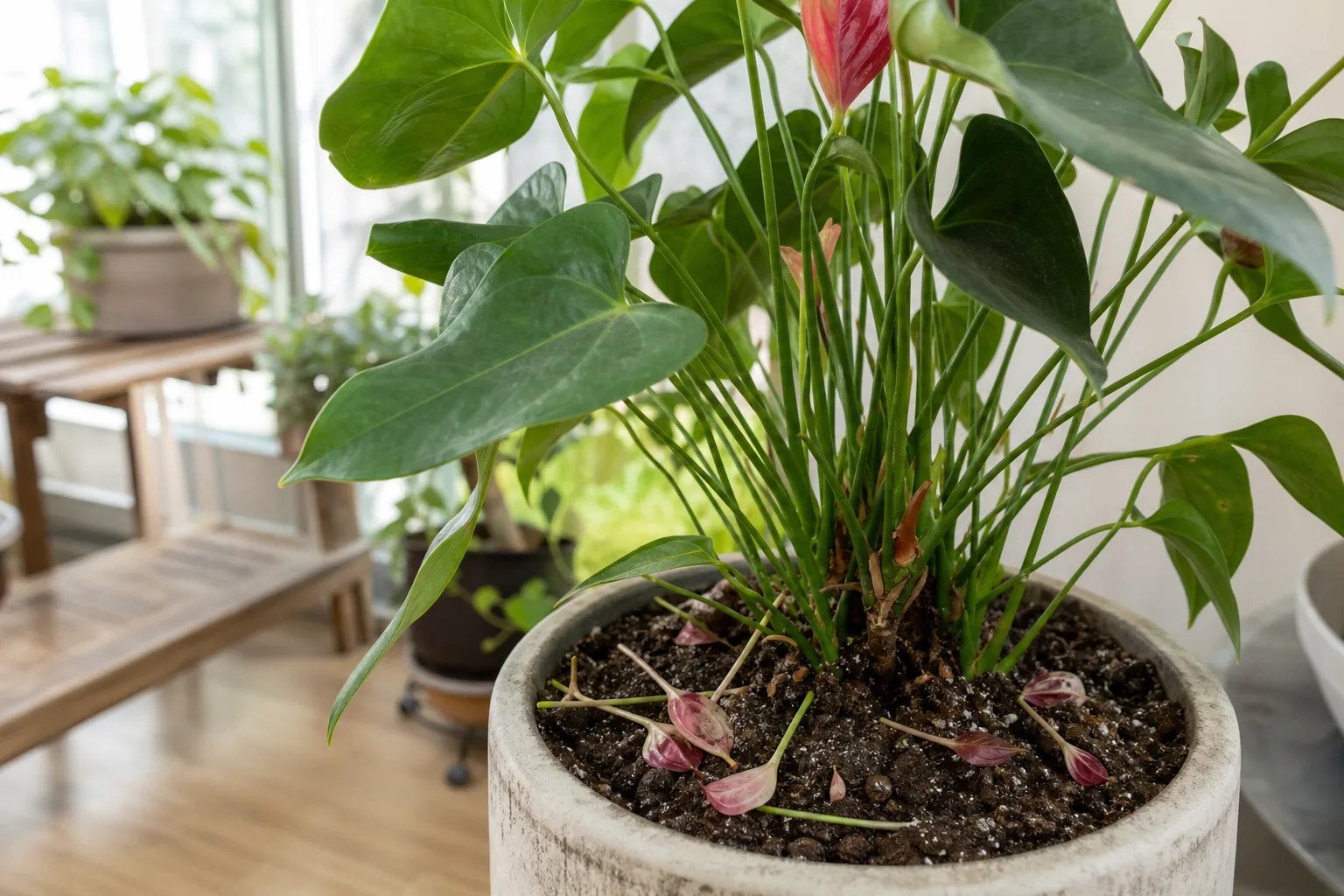
Bud Drop on Anthurium: Causes, Checks & Fixes
This guide covers bud drop on Anthurium. See also the general Bud Drop guide, watering, and light pages for this plant.
Bud Drop on Anthurium: Causes, Checks & Fixes
Quick answer
Bud drop on Anthurium (Anthurium andraeanum, flamingo flower) means a developing spathe bud-the waxy heart-shaped bract surrounding a tiny spadix-wilts, yellows, or falls off its pedicel before it reaches full color. That is different from an open spathe fading after weeks of display, which is normal senescence on a long-blooming tropical perennial. For general bud-blast mechanics, see our bud drop symptom hub.
First step: stabilize temperature and airflow. Move the pot off winter windowsills, exterior doors, and heating or AC vents, then note whether a recent repot, car ride in cold weather, or fruit bowl on the same counter coincided with the blast. Anthurium does not tolerate cold drafts or sudden temperature changes and aborts buds under environmental shock while roots or humidity are off-check placement before you fertilize or repot.
What bud drop looks like on Anthurium - vs. normal flower aging
On a healthy flamingo flower, new flower stalks (peduncles) push up from the crown with a tight, glossy spathe bud at the tip. Bud blast shows up on that immature stage-not on a spathe that has already been open for weeks.
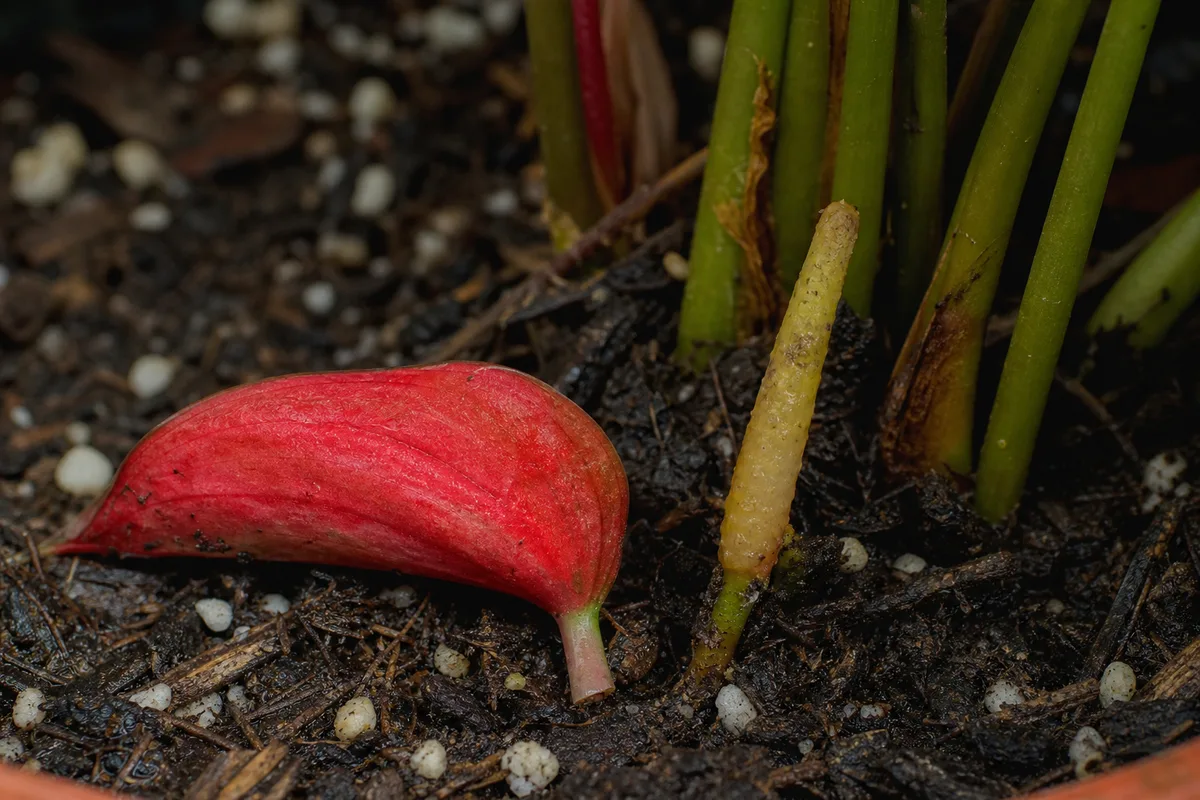
Bud Drop symptoms on Anthurium - compare with healthy tissue on the same plant.
Premature bud drop (blast):
- A small spathe bud wilts, puckers, or turns yellow-green while still closed or barely coloring
- The bud drops with a short pedicel attached, sometimes leaving a dry stub on the peduncle
- Several buds abort at once after a move, repot, cold ride home from the nursery, or vent exposure
- Peduncles may stay green while buds fail-energy was diverted away from bloom completion
- Leaf yellowing or wilting may appear alongside bud loss when roots are rotting or the plant was underwatered during bud set
Normal flower aging (not bud drop):
- An already-open spathe holds waxy color for weeks-individual spathes can last up to about four weeks before fading to green or brown at the edges
- The spadix shrivels and browns while the spathe still hangs on; that is end-of-cycle senescence, not blast
- One spathe at a time finishes while others on the same plant remain firm-typical on continuously blooming plants
- No sudden mass drop of tight unopened buds after a stable care week
If you are unsure, compare timing: blast follows a shock event within days; aging follows six or more weeks of display on the same inflorescence. See faded flowers when open spathes lose color early; see no flowers when buds never form at all.
Why Anthurium drops flower buds
Anthurium initiates flower buds months before they open. Stress during that window-or right as the spathe is swelling-makes the plant shed buds to conserve energy, especially on semi-epiphytic roots that demand warm, humid, airy conditions.
Drafts, temperature swings, and winter windowsills
The most common indoor trigger is localized cold, not the thermostat reading in the middle of the room. Anthurium prefers 65 to 80°F (18 to 27°C) and does not tolerate cold drafts or sudden temperature changes. A pot pressed against single-pane glass in February can sit in root-zone air near 55°F while the room reads 68°F. Summer AC vents and winter heating registers create the same whiplash-hot dry blasts alternating with cold downdrafts.
UF/IFAS interior guidelines recommend maintaining 70 to 85°F for potted Anthurium indoors and avoiding drafts and excessive heat or cold from appliances. Shipping research on the same crop notes visible damage below 55°F-a useful warning for cold cars and porch deliveries with buds present.
Watering stress and root health during bud set
Both extremes abort buds. Overwatering suffocates semi-epiphytic roots, causing wilting leaves and bud loss while soil stays wet-the same pattern as root rot. The Missouri Botanical Garden warns that compost kept too wet causes root rot, and stressed roots cannot support developing inflorescences.
Underwatering during bud swell dries the peduncle first; buds may yellow and drop while older leaves still look acceptable briefly. Wet/dry swings are worse than either steady state-common after vacations or inconsistent winter watering. If buds drop with yellow lower leaves and sour-smelling mix, inspect roots before the next watering; see overwatering and root rot.
Low humidity and ethylene exposure
Anthurium wants 60 to 80% relative humidity. When winter rooms sit near 30–45% RH, developing spathe tissue desiccates and buds abort-often alongside crisp leaf margins. See low humidity on Anthurium for full RH fixes.
Ethylene is a gaseous plant hormone that triggers flower senescence and abscission on sensitive crops. Home sources include ripening climacteric fruit (bananas, apples, avocados), malfunctioning gas furnaces, vehicle exhaust in attached garages, and cigarette smoke. Sudden flower drop near faulty heaters is a documented ethylene injury pattern in greenhouse floriculture. A fruit bowl on the kitchen counter beside a blooming Anthurium is a classic, avoidable blast trigger.
Light, repotting, and relocation shock
Direct sun on a swelling spathe bud scorches the waxy bract; buds brown and drop while leaves show bleached patches. Too little light rarely blasts buds that already formed-it more often prevents bud initiation (no flowers)-but a sudden move from dim shade to harsh sun can abort visible buds.
Repotting, division, or room changes during bud set shock roots when the plant needs stability. NC State recommends repotting every two to three years in spring when root-bound-not mid-bloom. Pests on peduncles (aphids, thrips) distort and weaken buds; honeydew on a red spathe often means aphids on Anthurium on the stalk base-treat pests before environmental tweaks alone.
How to confirm the cause
Work through this numbered checklist before stacking fixes:
- Draft and temperature scan - Hold your hand near the pot at night. Cold air from glass, exterior doors, or floor registers? Anthurium wants steady warmth; the RHS recommends avoiding cold draughts year-round.
- Recent shock timeline - Repot, car ride below 60°F, furnace service, new AC install, or move to a brighter window in the last two weeks? Timeline match strongly suggests blast, not aging.
- Ethylene sources - Ripening fruit, gas stove left on low, smoker in the room, or garage door open beside the plant? Eliminate these before blaming fertilizer.
- Soil moisture and roots - Top inch dry vs. soggy? Lift the pot-light and dry fits underwatering; heavy and wet with wilting fits rot. Slide the plant out if mix smells sour.
- Humidity at foliage height - Hygrometer beside leaves below 50% RH with papery bud edges points to low humidity.
- Light on the bud - Midday sun directly on the spathe bud? Move to bright indirect light per UF/IFAS interior light guidance.
- Pest check on peduncles - Inspect spathe bases and crown with a hand lens for aphids, thrips, or honeydew.
Symptom lookalike table
| What you see | Likely cause | Key differentiator |
|---|---|---|
| Tight spathe buds wilt and drop after a move or cold night | Draft or temperature shock | Sudden loss of unopened buds; placement near glass or vents |
| Open red spathe turns green-brown after 4+ weeks | Normal flower aging | Bud had fully opened long before decline |
| No buds for months; dark green leaves | Insufficient light or nutrition | Never reached bud stage-see no flowers |
| Open spathe dulls early but stays attached | Low humidity or salt stress | Often with crisp leaf edges-see faded flowers |
| Distorted bud with sticky residue or insects | Aphids or thrips on peduncle | Pests visible on stalk or crown |
| All buds drop with wet soil and wilting leaves | Overwatering / root rot | Roots brown and mushy when inspected |
First fix for Anthurium bud drop
Move the plant to a stable, draft-free spot with bright indirect light and hold all other care changes for one week.
Relocate at least two to three feet from cold window glass, exterior doors, heating vents, and AC returns. Aim for 65 to 80°F at the pot with no night dips below about 60°F. Remove ripening fruit from the same room and keep the plant out of kitchen ethylene plumes.
After placement is stable:
- Water only when the top 1–2 inches of chunky mix feel dry, then soak until drainage runs clear-never leave the pot in standing water (NC State watering guidance).
- Raise humidity toward 60%+ if a hygrometer reads low-humidifier or bright bathroom beats misting alone when buds are present.
- Do not repot, divide, or heavy-prune until new peduncles appear unless roots are actively rotting.
Make one secondary change per week after that-fix watering rhythm or humidity or pest treatment, not all three the same day.
What not to do
Do not repot or fertilize a bud-blasting Anthurium hoping to “boost” it-stress often worsens blast unless roots are rotting and require emergency repot.
Do not overwater when buds drop; check roots first. Flooding dry mix after blast is as harmful as letting a wet plant sit.
Do not move the pot daily or rotate aggressively while new buds form-stability matters once placement is corrected.
Do not place the plant in direct midday sun to “save” a fading bud; scorch accelerates loss.
Do not ignore ethylene-a fruit bowl two feet away can abort buds despite perfect watering.
Do not stack pesticide, repot, and fertilizer on the same day; you will not know which change helped or hurt.
Recovery timeline
Days 1–7: After draft removal and ethylene clearance, active bud loss usually stops even if fallen buds cannot return. Existing open spathes may continue normally.
Weeks 2–4: Watch the crown for new peduncles. No new buds yet is normal if the plant was heavily shocked-leaves should firm up without spreading yellowing.
Weeks 4–8: Healthy plants often push new spathe buds once light, humidity, and watering stay steady. UF/IFAS research notes continuous flowering under stable interior light and care when core variables align.
Months 2–3: If no buds appear after environment is stable, cross-check light hours and phosphorus-forward feeding in fall per the anthurium overview bloom section-not blast alone.
Worsening signs: All foliage yellowing, crown softening, mushy roots, or repeated blast every week despite stable placement-inspect for root rot and pest overlap before replacing the plant.
Dropped buds do not reattach. Success means new clean buds, not reviving fallen tissue.
How to prevent bud drop next time
- Hold placement steady during bud set - Pick a bright indirect spot away from vents and glass; move only when necessary.
- Monitor winter windowsills - Keep pots one to two feet back from cold glass or use insulated glazing; root-zone cold kills buds before air temperature alarms trigger.
- Keep ripening fruit away from blooming plants; ventilate rooms with gas heat annually.
- Maintain 60–80% RH near foliage in heated homes-see low humidity prevention.
- Water on the top-inch-dry rule with fast-draining aroid mix; never let the pot sit in saucer water (Missouri Botanical Garden).
- Repot in spring on a two- to three-year cycle when root-bound-not while peduncles carry visible buds (NC State).
- Quarantine new purchases and inspect peduncles weekly during bloom season for aphids.
- Use bright indirect light without midday sun on buds-the RHS recommends filtered light and warns against cold draughts.
Conclusion
Bud drop on Anthurium is almost always environmental shock-drafts, ethylene, humidity crashes, watering swings, or repot timing-not a mystery disease. Separate blast of tight buds from aging of open spathes, stabilize temperature and placement first, then adjust watering and humidity one step at a time. A single lost bloom cycle is recoverable when new peduncles return within a month or two of steady care.
Related Anthurium guides
- Anthurium care overview - temperature, humidity, and bloom cycles in depth
- No flowers on Anthurium - when buds never form
- Faded flowers on Anthurium - open spathes losing color early
- Low humidity on Anthurium - dry air and papery buds
- Aphids on Anthurium - pests on peduncles and spathe bases