Tradescantia Nanouk Care: Light, Water & Tips
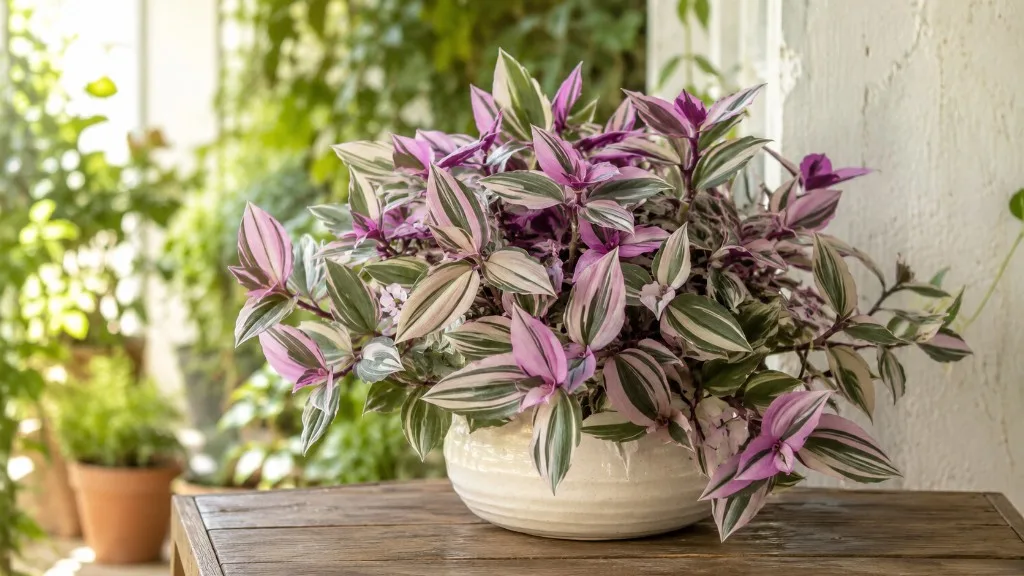
Tradescantia albiflora 'Nanouk'
Tradescantia Nanouk needs bright indirect light to maintain its pink and white variegation. Water when the top inch of soil dries.
Tradescantia Nanouk Care: Light, Water & Tips
Start with wateringThe most common care mistake for Tradescantia NanoukWatering guide →Tradescantia Nanouk care essentials
Light
bright indirect light, some direct morning sun
Water
Water when the top inch of soil dries; do not let sit in water.
Soil
Well-draining potting mix with perlite.
Humidity
Average to moderate humidity (40–60%)
Temperature
15°C to 27°C (60–80°F)
Fertilizer
Feed lightly during active growth. Use monthly during spring and summer..
About Tradescantia Nanouk
Tradescantia Nanouk has a upright growth habit.
| Detail | Information |
|---|---|
| Growth habit | Upright |
| Scientific name | Tradescantia albiflora 'Nanouk' |
Tradescantia Nanouk Care: Light, Water & Tips
What Is Tradescantia Nanouk?
Tradescantia Nanouk - often sold as Fantasy Venice - is a patented trailing houseplant grown for chunky leaves striped in pink, lilac, green, and white. It belongs to the genus Tradescantia in the Commelinaceae family, the same group that includes inch plants and other fast-rooting trailers. Unlike the thin, vine-like Tradescantia zebrina, Nanouk was bred for a denser, more upright habit when young and thicker foliage that reads clearly from across a room. Mature plants typically reach 12 to 18 inches (30 to 45 cm) tall before stems begin to arch and trail, and they spread 18 to 24 inches (45 to 60 cm) in a hanging basket or on a shelf edge.
Nanouk is one of the most photographed houseplants of the last decade for a simple reason: the color is loud in the best way. Stripes shift with light - stronger pink and cream in bright conditions, more green when the plant is under-lit - which makes it feel alive rather than static. It also roots from stem nodes almost casually, so a single pot can become several, and a tired specimen can be refreshed without starting over. The trade-offs are real: variegated leaves need more light than all-green plants, the sap can irritate skin, and the ASPCA lists related Tradescantia species as toxic to cats and dogs. If you want a colorful trailer and you have curious pets, placement matters as much as watering.
If you are deciding whether Nanouk fits your home, the honest summary is this: Nanouk rewards Tradescantia Nanouk light guide, a well-draining mix, and occasional pinching - and it punishes dim corners, soggy soil, and neglect of any one of those basics. It is easier than a finicky calathea and more demanding about light than a pothos. The payoff is one of the most vivid foliage displays you can grow indoors, plus propagation so straightforward that most beginners succeed on the first try.
Botanical Background and Breed History
Nanouk is not a wild species collected from a rainforest floor. It is a cultivar - a selected breeding line - developed through a planned program in Sappemeer, The Netherlands. According to U.S. Plant Patent PP29,711, the plant arose from a cross-pollination in 2012 between two unnamed seedling selections, was discovered and selected by Wander Durk Tuinier, and is associated with Dümmen Group B.V. The patent describes a compact, upright-to-spreading habit, strong leaves, and light purple, green, and greyed-green coloration with good interiorscape performance.
Retail tags usually print Tradescantia albiflora ‘Nanouk’ because that is the botanical designation on the patent. Taxonomy in Tradescantia moves faster than nursery labels: T. albiflora is widely treated as a synonym of Tradescantia fluminensis, while taxonomic revision places Nanouk more precisely as Tradescantia cerinthoides ‘Nanouk’. For practical care, the important point is simpler: Nanouk behaves like a succulent-stemmed Tradescantia with thick leaves and node-rooting stems, not like a delicate fern or a desert cactus. Commelinaceae plants in this group share a few baseline rules - drainage matters, nodes root easily, and most failures start with too much water in too little light.
The genus Tradescantia is native to the Americas - related species such as T. fluminensis range from southeastern Brazil to northern Argentina - where many species grow as creeping or trailing herbaceous perennials with somewhat succulent stems. Nanouk inherits that resilience: it tolerates occasional missed waterings better than it tolerates weeks in a dark hallway, and it can regenerate from a short cutting when an older stem goes bare at the base. Treating Nanouk as a generic “low-light houseplant” because it looks soft is the most common category error new owners make.
Why Nanouk’s Variegation Needs More Light Than All-Green Houseplants
Variegation is not just decoration - it is less chlorophyll per leaf area. The pink, lilac, and white zones photosynthesize less efficiently than the green zones, which means Nanouk needs stronger light to produce the same amount of energy as an all-green tradescantia sitting beside it. In bright, indirect light, the plant keeps crisp stripes and compact internodes. In low light, it does what variegated plants almost always do: it prioritizes survival over show, pushing out greener leaves on longer stems.
That reversion is reversible in early stages. Move a fading Nanouk closer to a bright window - or supplement with a grow light - and new growth often regains pink and cream tones within a few weeks. Old leaves that already turned solid green will not change back; judge success by the newest leaves at the stem tips, not the oldest foliage near the base. This is why light is the first variable to fix when someone asks why Nanouk “lost its color,” and why watering or fertilizer changes rarely help if the plant is simply not receiving enough photons.
Nanouk also reads light through stem behavior. Short internodes and stiff, upright new growth mean the plant is probably happy. Long gaps between leaves, soft floppy stems, and smaller new foliage mean it wants more light. A plant can look long and full while the base quietly weakens - especially in a hanging basket where trailing length hides sparse interior growth. Rotate the pot weekly and inspect the crown, not just the cascade over the pot rim.
Best Growing Conditions for Tradescantia Nanouk
Nanouk performs best when your room approximates the bright, stable conditions of a well-run greenhouse bench: strong ambient light, freely draining soil, and temperatures that do not swing wildly. The four variables that decide almost every outcome are light, water, soil, and temperature. Align those and feeding, Tradescantia Nanouk repotting guide, pinching, and propagation become routine. Misalign one - especially light or drainage - and the plant declines in ways that look mysterious until you map symptoms back to the environment.
Light Requirements
Tradescantia Nanouk needs bright indirect light for most of the day - roughly six to eight hours of strong, filtered daylight - to maintain its pink, lilac, green, and white striping. Related inch plants prefer bright, indirect sun and need afternoon protection in full sun to prevent leaf scorch; variegated cultivars including ‘Nanouk’ typically fade toward greener foliage when light is insufficient, and rarely flower indoors. An east-facing window is often ideal: gentle direct morning sun, then bright indirect exposure the rest of the day. West- and south-facing windows work well too if you filter harsh midday and afternoon rays with a sheer curtain or place the plant a few feet back from the glass.
Nanouk can tolerate some direct sun when acclimated, and a touch of morning light often intensifies pink tones. The leaves are softer than zebrina’s, though, and hot afternoon sun can bleach or scorch them - especially on plants grown in lower light at the nursery. Acclimate gradually over one to two weeks when moving from a dim shop shelf to a bright sill. Leaves formed in shade burn faster than leaves formed in brighter conditions.
The fastest diagnostic for incorrect light is new growth. Compact nodes, firm stems, and stripes that match the plant’s label photo mean you are probably in the right zone. Leggy stems, pale green new leaves, and fading pink mean more light. Bleached patches, brown crisp areas on sun-facing leaves, or midday curling mean soften the exposure or move the plant back from the glass. If natural light is weak in winter, a full-spectrum grow light on a 10–12 hour timer, positioned 12–18 inches above the canopy, prevents the stretched, color-dulled look common on northern windowsills between November and February.
Temperature and Humidity
Nanouk prefers stable indoor temperatures between 65 and 80°F (18 and 27°C) during active growth. The breeding patent describes commercial production at day temperatures of 20–25°C and night temperatures of 18–20°C, which maps cleanly to typical heated homes. The plant tolerates normal room heat but struggles with cold drafts - avoid placing it directly under an air-conditioning vent, on a winter window ledge that drops below 55°F (13°C) at night, or above a radiator that desiccates foliage.
Nanouk is not frost-hardy and is grown as an indoor houseplant or warm-season outdoor container plant in most climates. If you summer it outdoors, harden it off gradually and bring it back inside before nights fall below 50°F (10°C). Sudden cold shock often shows up as limp stems and leaf drop before obvious pest or rot issues appear.
Humidity is helpful but secondary compared with light and water. Nanouk handles average home humidity in the 40–50% range reasonably well. Very dry air - below about 30% - can stress leaves and encourage spider mites, especially in winter when heating runs constantly. Grouping plants, using a pebble tray with the pot elevated above the water line, or running a small humidifier near the plant all help more than misting, which raises humidity briefly and can leave wet foliage that invites fungal spotting if air circulation is poor.
Soil and Drainage
Use a well-draining potting mix amended with perlite or coarse material. Nanouk has shallow, fibrous roots that prefer moisture in the root zone without staying waterlogged for days. A workable home blend is roughly two parts quality houseplant mix and one part perlite; add a handful of orchid bark or coarse sand if your mix compacts quickly in a small pot. The principle matters more than a branded recipe: when you water, water should move through the profile and exit the drainage hole within seconds, not pool on the surface.
Always plant in a container with a drainage hole. Decorative cachepots are fine only if you empty runoff after every watering. Nanouk’s stems are somewhat succulent and store a little water, which is why the plant survives brief dry spells better than constant sog - but that same trait makes root rot from overwatering the most common serious failure indoors.
Target a slightly acidic to neutral pH typical of peat-free or peat-based indoor mixes - roughly 6.0–7.0. Hobbyists rarely need to meter pH for Nanouk; the bigger practical issue is compaction and salt buildup from hard tap water and over-fertilizing, which show up as crust on the soil surface and brown leaf tips. Refresh the mix when you repot every one to two years rather than chasing pH adjustments.
How to Water Tradescantia Nanouk
The general rule for Nanouk is water when the top 1 to 2 inches (2.5 to 5 cm) of mix feels dry, then water thoroughly until a small amount runs from the drainage hole. Nanouk likes consistent moisture during active growth but fails quickly in waterlogged soil. Shallow roots dry the upper profile faster than deep-rooted plants, so small pots in bright windows may need water every five to seven days in summer, while the same plant in cooler, dimmer winter conditions may go ten to fourteen days between drinks. Your calendar should remind you to check, not tell you to pour.
Water at the base of the plant rather than overhead when you can. Wet leaves are not catastrophic, but they mark easily and can develop spotting if they stay wet in low airflow. A watering can with a narrow spout helps deliver water to the soil without soaking the striped foliage that makes Nanouk worth displaying.
Use your finger, a wooden skewer, or pot weight to assess moisture. A light pot with dry surface soil means it is time to water. A heavy pot with damp soil below the surface means wait - even if the top looks dry. Because Nanouk trails, lifting hanging baskets by the hanger hook gives a reliable weight cue once you learn the feel of a properly watered versus thirsty plant.
Tradescantia Nanouk watering guide During Active Growth
During active growth - usually spring through early fall when light is strong and temperatures are warm - Nanouk uses water predictably. The pot dries on a steady rhythm and new leaves open regularly. Water thoroughly when the top inch or two is dry, not on a fixed weekday schedule. In bright, warm conditions, check small pots every few days; a 4-inch nursery pot on a sunny sill can dry faster than a 6-inch basket in filtered light.
After watering, empty the saucer or outer pot so roots are not standing in stale water. Nanouk’s drought tolerance means a slightly dry spell is less damaging than one soggy week that suffocates roots. If the plant looks limp but the soil is wet, suspect overwatering or poor drainage before you add more water.
Seasonal Adjustments
In cooler, dimmer months, Nanouk slows even without a true dormancy. Growth thins, pink tones may mute slightly, and the pot dries more slowly. Stretch the interval between waterings, verify moisture deeper in the profile, and pause fertilizer until new growth resumes visibly in spring. Resume your normal rhythm only when the plant is clearly pushing fresh leaves and the pot weight drops on a predictable schedule again.
Winter also changes evaporation at the window. A plant that sat safely on a summer sill may receive cold radiation from glass at night; if leaves look dull and stems soften despite careful watering, move the pot inward a foot or two rather than increasing water.
Common Watering Mistakes
The single most common cause of problems with Nanouk is watering on a schedule instead of on the plant’s actual state. Other frequent mistakes include watering a little every day instead of deeply when needed, leaving the pot sitting in runoff, and watering limp leaves by reflex without checking whether the soil is already wet - a classic overwatering trap with succulents and semi-succulent trailers.
Brown leaf tips often point to underwatering, low humidity, salt buildup, or fluoride/chlorine in tap water, while soft, mushy stems at the base usually mean too much moisture or compacted mix. When symptoms conflict, check moisture first, then light, then roots at repot time if problems persist for more than a few weeks.
How to Feed Tradescantia Nanouk
Nanouk does not need heavy feeding. A modest, balanced fertilizer applied during active growth is enough to support steady new leaves and stronger color. Use a water-soluble houseplant fertilizer at one-quarter to one-half of the label rate, applied to already-moist soil every three to four weeks from spring through early fall. If your potting mix contains a starter fertilizer charge, hold supplemental feeding for the first month after repotting.
Strong doses, weekly feeding, and fertilizer applied to dry or stressed plants are how people burn roots and accumulate salt on the soil surface. Nanouk responds to excess fertilizer with crisp brown leaf margins and sometimes distorted new growth. If you see salt crust, flush the pot with plain water until runoff runs clear, then resume feeding at half strength or less.
Pause feeding during winter slowdown, after a major repot, while the plant recovers from pest damage, and any time new growth has stalled for reasons you have not yet fixed - usually light or water. Feeding a plant that cannot use nutrients adds salt without benefit.
Repotting and Root Health
Repot Nanouk roughly every one to two years, or whenever the pot dries much faster than it used to, roots circle the drainage holes, or water runs straight through without soaking in. The best time is early spring as growth resumes, so the plant has a full bright season to fill the new root zone.
Go up only one pot size at a time - typically 1 to 2 inches (2.5 to 5 cm) wider in diameter. Nanouk’s shallow roots do not need a deep bucket; a pot that is too large holds too much wet mix relative to the root mass, which is the most common cause of rot after repotting. Use fresh, well-draining mix, firm it lightly around the root ball, and water lightly for the first week while minor root abrasions heal.
Nanouk tolerates repotting well compared with fussy plants, but handle stems gently because bruised leaves show marks for weeks. Wear gloves if your skin reacts to sap (more on that below).
Signs It Is Time to Repot
The clearest signs are physical: roots emerging from drainage holes, water racing through dry mix, a top-heavy plant wobbling in a too-small pot, or mix that has compacted into a brick and no longer absorbs water evenly. If the soil smells sour or you see persistent fungus gnats despite corrected watering, refresh the mix even if the calendar says repotting can wait.
Because Nanouk regenerates easily from cuttings, some growers refresh display pots by rooting new stems rather than repotting a leggy old specimen. That is a valid strategy when the base is bare but the tips are still healthy - propagate the good growth, retire the tired base, and keep the same decorative pot with a fuller young plant.
Propagation Methods for Tradescantia Nanouk
Nanouk is one of the easiest houseplants to propagate. Stem cuttings root from nodes within one to two weeks in water or moist soil, which makes it practical to fill out sparse pots, share plants with friends, or rescue color from a leggy parent. The patent restricts commercial propagation of Nanouk without a license, but home gardeners routinely root cuttings for personal use - the same way you might divide a pothos.
Start with a healthy, well-watered parent and clean, sharp scissors or pruners. Cut a 4- to 6-inch (10 to 15 cm) segment just below a leaf node - the swollen joint where leaves attach and roots emerge. Remove the lower leaves so one or two nodes sit bare for rooting, leaving a few leaves at the tip for photosynthesis. If sap gets on your skin, rinse promptly; some people develop mild irritation from Tradescantia sap.
Water propagation: Place the cutting in a small clear jar of room-temperature water so at least one node is submerged but no leaves touch the liquid. Set the jar in bright, indirect light, refresh water when it clouds, and top off as it evaporates. Roots typically appear within 7 to 14 days. Pot into moist mix when roots are 1 to 3 inches (2.5 to 7.5 cm) long, burying the nodes and keeping the mix lightly moist - not wet - while the plant establishes.
Soil propagation: Insert the bare node into moist, well-draining mix, pin the stem if it lifts, and place the pot in bright, indirect light. Keep the mix lightly moist until you feel resistance when you tug gently on the stem - usually two to three weeks. Some growers prefer soil rooting because roots transition to pot life without the shock of water-to-soil transfer; others prefer water because visible root progress is reassuring. Both work.
For a full, bushy pot, root three to five cuttings together rather than a single lone stem. Pinch the tips after rooting to branch the new plant. Spring and summer propagation succeeds fastest; winter cuttings root too, but slowly unless you supplement light and warmth.
Common Tradescantia Nanouk Problems
Most Nanouk problems are environmental, not mysterious. They show up as specific leaf and stem symptoms that map to light, water, or pests. The hardest part is usually patience: color fade and rot both take weeks to develop and weeks to resolve after you fix the cause.
Faded Color, Yellow Leaves, and Pests
Fading pink and increasing green almost always mean insufficient light or a sudden move to a dimmer spot. Increase brightness, acclimate if you jump to stronger exposure, and evaluate new leaves only. Old green leaves will not re-variegate.
Yellow leaves can mean overwatering, underwatering, low light, nutrient imbalance, natural aging of lower leaves, or pests. Check moisture first, then light intensity at the crown, then inspect leaf undersides and stem joints for spider mites, mealybugs, and scale. Lower leaves yellowing one at a time on an otherwise healthy plant are often normal senescence - snip them if they look unsightly.
Brown leaf tips usually point to dry soil, low humidity, salt or fertilizer buildup, or harsh tap water. Flush the pot periodically with plain water and review whether your feeding rate exceeds what a small container needs.
Leggy, bare bases with healthy tips mean the plant has been stretching toward light or has not been pinched to branch. Fix light first, then cut long stems back to a node, root the trimmings, and plant them back in the same pot for a fuller silhouette.
Spider mites thrive in dry, dusty conditions and show up as stippling on leaves and fine webbing at nodes. Rinse stems, increase humidity modestly, and treat with insecticidal soap if populations persist. Mealybugs hide in leaf axils as white cottony patches; remove with a swab dipped in diluted isopropyl alcohol and monitor weekly. Fungus gnats indicate surface soil staying wet too long - correct watering before chasing flies.
Is Tradescantia Nanouk Safe for Pets?
Tradescantia Nanouk is not safe for pets that chew plants. The ASPCA lists inch plant (Tradescantia fluminensis) as toxic to dogs and cats, with dermatitis noted as a clinical sign. NC State Extension notes that related Tradescantias are mildly toxic if ingested and can cause mouth and stomach irritation, vomiting, and skin redness, and that sap and contact can irritate skin and mucous membranes.
Nanouk is usually described as mildly to moderately toxic rather than life-threatening in small quantities, but “mild” still means real discomfort for your pet and a stressful evening for you. There is no safe threshold for animals that treat houseplants as salad. Hang baskets high, use wall-mounted shelves out of jump range, or keep Nanouk in rooms pets do not access. If you want a similar trailing look without toxicity risk, choose a confirmed pet-safe alternative such as a spider plant (Chlorophytum comosum) or Boston fern (Nephrolepis exaltata) - verifying any substitute on the ASPCA list before you buy.
For humans, Nanouk sap can cause mild skin irritation in sensitive people, especially after pruning. Wear gloves if you react to plant latex or sap, wash hands and tools after cutting, and avoid touching your face while propagating. This is routine caution, not alarm - but it is why you should not let toddlers treat Nanouk as a chew toy either.
If you suspect your pet ingested Nanouk, contact your veterinarian or the ASPCA Animal Poison Control Center at (888) 426-4435 (fee may apply) with the plant name, approximate amount, and symptoms. Do not wait for severe signs to appear before you ask for guidance.
Conclusion
The most useful thing to know about Tradescantia Nanouk is that it is a bright-light, fast-renewing trailer bred for bold pink-green-white foliage - not a set-and-forget low-light vine. Give it six to eight hours of bright indirect light, a well-draining mix, and water when the top inch or two is dry, and it stays compact, colorful, and easy to propagate from stem cuttings. Let light slip, keep the soil soggy, or ignore a leggy base, and the same plant looks tired faster than its reputation suggests.
Keep pets and sap-sensitive skin in mind when you choose a display spot. Nanouk earns its place when you want maximum color from a small basket and you are willing to pinch, propagate, and adjust light seasonally. Fix light first when pink fades, fix drainage first when stems go soft, and use cuttings when the base goes bare - those three habits cover most of what Nanouk needs indoors.
When to use this page vs other Tradescantia Nanouk guides
- Tradescantia Nanouk overview - Canonical hub for this species - care topics and problems branch from here.
- Tradescantia Nanouk problems - Symptom-first path when you already know something is wrong.
Related Tradescantia Nanouk guides
How to care for Tradescantia Nanouk?
How much light does Tradescantia Nanouk need?
bright indirect light, some direct morning sun
- bright indirect light, some direct morning sun - bright indirect light, some direct morning sun.
When should you water Tradescantia Nanouk?
Water when the top inch of soil dries; do not let sit in water.
- Check top 2 inches - Water when the top inch of soil dries; do not let sit in water.
- Drain excess water - Water when the top inch of soil dries; do not let sit in water.
What soil works best for Tradescantia Nanouk?
Well-draining potting mix with perlite.
- Well-draining mix - Well-draining potting mix with perlite.
Grower notes for Tradescantia Nanouk
What makes Nanouk different
Tradescantia Nanouk is grown for chunky pastel foliage and a denser habit than many trailing Tradescantias. The leaves mark easily when water sits in the crown, so overhead watering can make a good plant look tired fast. Bright light keeps the pink and cream tones stronger, but hot direct sun can bleach the soft leaves. Treat it as a fast-renewing plant that looks best with regular pruning and fresh cuttings.
Nanouk pruning note
Pinch Nanouk before it gets long and bare. Fresh tips root quickly, and restarting the plant from cuttings is often better than trying to keep old stems attractive forever. Keep the crown dry when possible and water the mix rather than the foliage. If the plant loses color, move it brighter; if leaves turn crispy and pale, soften the light.
Nanouk buying note
Choose a Nanouk with compact growth and clean crown tissue. Avoid plants with browned leaf bases, black spots around the stems, or wet foliage trapped in a plastic sleeve. Long vines are not necessarily better because older Tradescantia stems can go bare near the pot. A short dense plant gives you more usable cuttings and a cleaner start.
What matters most with Tradescantia Nanouk
Tradescantia Nanouk is easiest to grow when you judge the whole plant: new growth, root-zone moisture, light exposure, and how quickly the pot dries after watering. In practice, the care checkpoint is simple: bright indirect light, some direct morning sun. Pair that with well-draining potting mix with perlite, and avoid changing water, pot size, and placement all at once.
Best placement in a real home
Tradescantia Nanouk belongs where bright indirect light, some direct morning sun is realistic for most of the day, not only where the pot looks good. Water when the top inch of soil dries; do not let sit in water. If the pot stays wet longer than expected, move the plant into better light or reassess the mix before watering again. Humidity target: Average to moderate humidity (40–60%).. Temperature comfort zone: 15°C to 27°C (60–80°F).
Before you buy this plant
Choose Tradescantia Nanouk with firm new growth, clean leaf undersides, and soil that does not smell sour or feel compacted. Be cautious if you see leggy-growth, sticky residue, collapsed crowns, or a pot that is wet in poor light. Cosmetic old-leaf damage is less worrying than weak roots or active pests.
First month after bringing it home
Do not repot Tradescantia Nanouk on day one unless the mix is failing or pests are obvious. Quarantine it, learn how fast the pot dries, and keep care boring while it adjusts. Watch especially for leggy-growth and brown-tips. If problems appear, correct the condition first rather than stacking fertilizer, repotting, and pruning together.
Is it pet safe?
Tradescantia Nanouk is toxic to cats and dogs.
Mildly toxic; may cause skin irritation and gastrointestinal upset in pets.
Watering Tradescantia Nanouk
Water when the top inch of soil dries; do not let sit in water.
Soil & potting for Tradescantia Nanouk
Well-draining potting mix with perlite.
Humidity & temperature for Tradescantia Nanouk
Tradescantia Nanouk prefers average to moderate humidity (40–60%), though normal home humidity is usually fine. Keep temperatures around 15°C to 27°C (60–80°F).
| Detail | Information |
|---|---|
| Humidity | Average to moderate humidity (40–60%) - normal home humidity is fine. |
| Ideal temperature | 15°C to 27°C (60–80°F) |
Fertilizer & pruning for Tradescantia Nanouk
Use feed lightly during active growth. Use monthly during spring and summer.. for Tradescantia Nanouk.
| Detail | Information |
|---|---|
| Fertilizer type | Feed lightly during active growth. Use monthly during spring and summer.. |
Common problems on Tradescantia Nanouk
Brown Tips
LowLikely cause: Low humidity or over-fertilizing.
Quick fix: Increase ambient humidity and reduce fertilizer.
Full fix guide →Leggy Growth
MediumLikely cause: Insufficient light.
Quick fix: Move to brighter indirect light.
Full fix guide →Aphids
MediumLikely cause: Aphids on Tradescantia Nanouk cluster on soft new tips and stem nodes, leaving sticky honeydew that often shows first on pale pink and white variegation. First step: isolate the plant and rinse every
Quick fix: See plant-specific guide for step-by-step fixes.
Full fix guide →Drooping Leaves
MediumLikely cause: Drooping leaves on Tradescantia Nanouk are turgor loss-limp pink-and-cream stems hanging along trailing vines. Lift the pot first: a dry, lightweight container needs a thorough soak; a wet, heavy pot
Quick fix: See plant-specific guide for step-by-step fixes.
Full fix guide →Fungus Gnats
MediumLikely cause: Fungus gnats on Tradescantia Nanouk mean the potting mix stays wet too long-adults hover near the soil and larvae breed in the damp top layer. First step: stop watering until the top inch of mix is dr
Quick fix: See plant-specific guide for step-by-step fixes.
Full fix guide →Low Humidity
MediumLikely cause: Low humidity on Tradescantia Nanouk shows as crispy pink or white leaf margins while stems stay firm and soil dries normally. First step: move the pot away from heating vents and measure humidity at l
Quick fix: See plant-specific guide for step-by-step fixes.
Full fix guide →Mealybugs
MediumLikely cause: Mealybugs on Tradescantia Nanouk hide as white cottony clusters in leaf axils and stem joints on thick pink-lilac variegated foliage, leaving sticky honeydew. First step: isolate the plant and dab eve
Quick fix: See plant-specific guide for step-by-step fixes.
Full fix guide →Mold on Soil
MediumLikely cause: White or gray fuzzy mold on Tradescantia Nanouk soil is usually harmless saprophytic fungus feeding on organic potting mix-not a leaf infection. First step: scrape off the surface mold, discard that s
Quick fix: See plant-specific guide for step-by-step fixes.
Full fix guide →Not Enough Light
MediumLikely cause: Insufficient light on Tradescantia Nanouk shows as pink and cream stripes washing toward green, long gaps between leaf pairs, and stems leaning toward the brightest window. First step: move the plant
Quick fix: See plant-specific guide for step-by-step fixes.
Full fix guide →Overwatering
MediumLikely cause: Overwatering on Tradescantia Nanouk shows as yellow lower leaves, a heavy wet pot, and limp colorful stems while the mix stays damp. First step: stop watering, lift the pot to confirm weight, and prob
Quick fix: See plant-specific guide for step-by-step fixes.
Full fix guide →Root Rot
MediumLikely cause: Root rot on Tradescantia Nanouk means roots and stem nodes have decayed in waterlogged mix-yellow lower leaves on wet soil and limp colorful stems are classic signs. First step: stop watering, unpot,
Quick fix: See plant-specific guide for step-by-step fixes.
Full fix guide →Slow Growth
MediumLikely cause: Slow Tradescantia Nanouk growth usually means light, temperature, or root space is below what this fast-growing variegated trailer needs-not a fertilizer shortage. First step: move the plant to bright
Quick fix: See plant-specific guide for step-by-step fixes.
Full fix guide →Spider Mites
MediumLikely cause: Spider mites on Tradescantia Nanouk show as tiny yellow-green stipples on pink, lilac, and white leaf zones plus fine webbing at stem nodes. First step: isolate the plant and rinse every leaf undersid
Quick fix: See plant-specific guide for step-by-step fixes.
Full fix guide →Underwatering
MediumLikely cause: Underwatering on Tradescantia Nanouk shows as limp stems on a dry, lightweight pot-often with soil pull-away from the pot wall. First step: water thoroughly until drainage runs free, then resume when
Quick fix: See plant-specific guide for step-by-step fixes.
Full fix guide →Wilting
MediumLikely cause: Wilting Tradescantia Nanouk means stems and thick pink-and-cream leaves lost turgor-usually from dry soil or failed roots, not a mystery disease. First step: lift the pot and feel the top inch of mix.
Quick fix: See plant-specific guide for step-by-step fixes.
Full fix guide →Yellow Leaves
MediumLikely cause: Yellow leaves on Tradescantia Nanouk usually trace to overwatering, underwatering, low-light variegation fade, or normal lower-leaf aging on trailing stems-not a fertilizer shortage. First step: check
Quick fix: See plant-specific guide for step-by-step fixes.
Full fix guide →