Tradescantia Nanouk Watering: Schedule and Signs
Tradescantia Nanouk Watering: Schedule and Signs
Tradescantia Nanouk Watering: Schedule and Signs
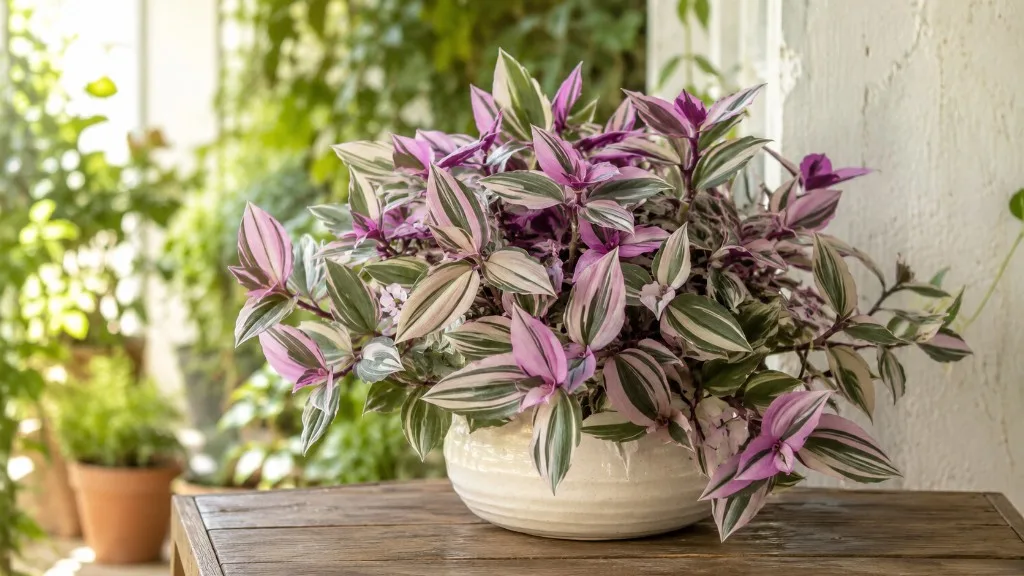
Tradescantia Nanouk watering is less about memorizing a weekly schedule and more about reading what the pot is doing right now. Tradescantia albiflora ‘Nanouk’ - the chunky, pink-and-cream cultivar sold as Fantasy Venice - grows fast when light and warmth are good, and it wilts noticeably when the mix dries down. That visible thirst makes underwatering easy to spot. Overwatering is the harder problem: roots can decay in wet soil long before the colorful leaves tell the full story, and by then the stem base may already be soft.
The practical rule most experienced growers land on is simple. Water when the top inch of soil feels dry, then soak the mix until water runs from the drainage holes and discard every drop in the saucer. During spring and summer active growth, aim for consistently moist root zone - meaning the plant never sits bone-dry for days - without keeping the pot soggy. In fall and winter, stretch the interval because shorter days slow growth and the same volume of mix holds moisture longer.
This guide explains how to check soil, water cleanly, adjust by season, tell underwatering from root rot, and fix the watering mistakes that turn a vibrant Nanouk into a collapsed crown.
If symptoms persist, see the Brown Tips on Tradescantia Nanouk guide.
Why Nanouk’s Water Needs Sit in the Middle Ground
Nanouk is not a fern and not a succulent. It does not want permanently wet peat or weeks of drought. The leaves are thicker and more rigid than classic trailing Tradescantias like T. zebrina, which changes how the plant shows stress. Underwatered Nanouk often wilts within hours of the root zone drying, with leaves losing turgor and feeling limp along the stems. Give it a thorough drink and many plants perk back up the same day - a useful clue that you waited slightly too long, not that the plant is dying.
Overwatered Nanouk is a different story. Saturated soil displaces oxygen around the roots. Without oxygen, roots cannot function normally, nutrient uptake stalls, and water-mold pathogens such as Pythium and Phytophthora can invade weakened tissue in anaerobic conditions (Wisconsin Horticulture Extension). The leaves may yellow, stems soften at the base, and the plant can wilt even though the soil is wet - because damaged roots cannot move water into the shoots. Missouri Botanical Garden lists overwatering among the most common houseplant problems, with symptoms including yellowing lower leaves, soft rotting stems, and a plant that looks wilted despite moist soil (Missouri Botanical Garden - Indoor Plants).
That split - wilting on dry soil versus wilting on wet soil - is the most important diagnostic line in Nanouk care. Learn it once and you stop guessing.
The Top-Inch-Dry Rule Explained
The standard trigger for tradescantia nanouk watering is this: when the top inch (roughly 2.5 cm) of potting mix feels dry to the touch, it is time to water. Not when the surface looks pale. Not because seven days passed on the calendar. When your finger, a bamboo skewer, or a chopstick detects dryness at that depth, the plant is ready for a full drink.
In a bright, warm room during active growth, that dry-down often happens every five to eight days. In cooler, dimmer winter conditions, the same pot may need water only every ten to fourteen days, sometimes longer. Check moisture at the top of the soil before watering rather than following a fixed schedule, because calendar watering is a common path to root rot.
The top inch is a trigger zone, not a command to desiccate the entire root ball. Below that dry layer, the mix should still hold moderate moisture during the growing season. You are allowing controlled drying at the surface while the deeper root zone stays available to the plant - the balance Nanouk prefers.
How to Test Soil Moisture Correctly
Use more than one signal. Relying on surface color alone fails because peat-based mixes can look dry on top while staying damp an inch down, especially in a root-filled pot.
Finger test: Insert your index finger to the first knuckle. Dry, dusty, or lightweight soil at that depth means water. Cool, clingy, or dark soil means wait.
Skewer or chopstick probe: Push a dry wooden skewer straight down, leave it thirty seconds, pull it out. Clinging particles and a darkened tip indicate moisture below. A clean, dry stick supports watering.
Pot weight: Lift the container after a fresh watering when you know it is fully saturated, then lift it again before each check. A noticeably light pot with a dry top inch confirms the plant has used a meaningful amount of water. This method is especially reliable for hanging baskets you cannot easily finger-test.
Moisture meters: Can help beginners but often read inaccurately in chunky perlite mixes. Treat them as a secondary hint, not a verdict.
Run the same check at the same depth every time. Within a few weeks you will learn how quickly your specific pot dries in your specific room - which is the only schedule that matters.
Why Calendars Fail but Checklists Work
A “water every Sunday” habit ignores the variables that change drying speed: pot diameter, mix porosity, root mass, air conditioning, radiator heat, window proximity, and seasonal day length. A Nanouk freshly repotted into a larger pot dries more slowly until roots explore the new volume. The same plant under a grow light in July may need water twice as often as in November.
Replace the calendar with a three-point pre-water checklist:
- Top inch dry?
- Pot feels lighter than when freshly watered?
- No soft stems, sour smell, or yellow lower leaves suggesting existing overwatering?
If the first two are yes and the third is no, water thoroughly. If the top is dry but the pot still feels heavy and cool, the center may be wet - wait two days and recheck. If stems are soft at the base, skip the checklist and inspect roots instead of adding more water.
Consistently Moist During the Growing Season
Search any Nanouk care page and you will see two phrases that sound contradictory: “let the top inch dry” and “keep soil moist during active growth.” Both can be true when you define moist correctly.
During spring and summer, Nanouk pushes new leaves, branches at the crown after pinching, and may root fresh cuttings back into the same pot. That metabolism uses water steadily. The goal is a steady dry-down cycle: surface dries, you water deeply, excess drains, roots breathe, the plant drinks, the surface dries again. You are not maintaining mud. You are preventing long droughts that repeatedly crash turgor and damage fine root hairs.
Nanouk recovers from a single dry spell better than from chronic sogginess, but repeated underwatering still weakens the plant. Leaves crisp at the edges, growth slows, and the lower stems can go bare as the plant sheds stressed tissue. In active season, err slightly on the side of not letting the whole root ball go dust-dry - while still refusing to water a wet pot just because the calendar says so.
Spring and Summer Watering Rhythm
From roughly March through September in temperate climates - or whenever your plant is visibly producing new pastel leaves - expect the shortest intervals between waterings. Strong indirect light, warm rooms between 65–85°F (18–29°C), and good airflow pull moisture from leaves and mix faster.
A practical rhythm for a 4–6 inch (10–15 cm) pot in bright indoor light:
- Check every three to four days
- Water about every five to eight days when the top inch dries
- After pinching or propagating, monitor closely; new cuttings and fresh wounds prefer stable moisture without saturation
Outdoor Nanouk in USDA zones 9–11 or summer patio culture may dry daily in heat. Move the pot to shade during heat waves if leaves bleach, but do not compensate for sun stress by overwatering cool wet soil - that compounds root problems.
If you are fertilizing lightly during this window, always apply to moist mix, never to dust-dry roots. Water first, feed second, or use a diluted solution only when the plant is already on its normal watering day.
What “Consistently Moist” Does Not Mean
Consistently moist does not mean constantly wet. It does not mean the saucer always holds standing water. It does not mean misting the leaves twice a day (misting does not hydrate roots and can encourage fungal spotting in Nanouk’s tight leaf axils).
It means the root zone rarely experiences severe desiccation while the surface is allowed to dry between sessions. Think of a sponge that is damp throughout but not dripping - after you squeeze it and it stops releasing streams, that is the post-drainage state you want a few inches down.
If your mix stays visibly wet on the surface for more than forty-eight hours after watering, the problem is usually soil too dense, a pot without drainage, or a decorative outer pot trapping runoff - not that you need to water more often.
How to Water Tradescantia Nanouk Properly
Good technique matters as much as timing. Nanouk’s leaves are arranged so water can pool in the crown, especially on compact plants with overlapping new growth. Wet crowns in stagnant air invite stem rot and ugly spotting on the variegated foliage that makes this cultivar worth growing.
Thorough Watering and Drainage
Follow this sequence every time:
-
Use room-temperature water. Cold water shocks warm roots; heavily chlorinated tap water is usually fine but let it sit overnight if your municipality treats aggressively.
-
Water the soil surface evenly, circling the pot, until water flows freely from drainage holes. A light splash on dry mix often channels through cracks without saturating the center - slow pours work better than a single dump.
-
Wait thirty seconds and water once more if the first pass ran through too quickly on very dry peat. You want the whole column wetted.
-
Empty the saucer or cachepot completely. Never let the pot sit in a reservoir. Roots do not “drink from the bottom” safely for hours; they suffocate.
-
Blot trapped water from leaf axils with a tissue if you splashed the crown. Better yet, aim the stream at the soil and use a narrow spout.
The pot must have drainage holes. Containers should have holes so water drains through the profile - no holes, no reliable watering strategy - only hope.
Bottom Watering vs Top Watering
Bottom watering - setting the pot in a tray of water for twenty to thirty minutes so the mix wicks moisture upward - is a legitimate option for Nanouk growers who struggle with crown splash. It encourages even uptake and reduces fungus on leaves. The trade-off: salts and minerals can accumulate in the top layer over months if you never water from above. Flush top-down thoroughly every fourth or fifth watering to leach buildup.
Top watering is faster and mimics rain, which helps flush salts. Use a narrow-spout watering can and low pressure.
Neither method fixes overwatering frequency. If you bottom water on a wet schedule, roots still rot.
Signs Your Nanouk Is Underwatered
Underwatering announces itself on the leaves before the roots are destroyed. Common signs include:
- Wilting and limp stems that recover within hours of a thorough drink
- Dry, lightweight pot with the top inch (or more) dusty and pulled away from the pot wall
- Crispy brown leaf edges or tips, especially on older leaves farthest from the crown
- Curling or folding leaves that feel thinner and less plump than usual
- Slowed new growth and smaller emerging leaves during what should be active season
A single missed watering is rarely fatal. Nanouk is a fast-renewing plant; pinch healthy tips, root them, and you have a backup. Repeated drought is different. Fine root hairs die, the plant sheds lower leaves, and when water finally returns the damaged root system may not absorb efficiently - leading growers to water more, which then risks rot on compromised tissue.
If wilting clears up after watering, adjust your check frequency slightly earlier. If wilting persists after a thorough soak, suspect root damage from past overwatering instead of simple thirst.
Signs of Overwatering and Root Rot
Overwatering is the more dangerous error because damage starts underground. Watch for:
- Yellowing lower leaves that do not match normal aging
- Soft, mushy, or translucent stem bases near the soil line
- Wilting despite wet, heavy soil - the classic root-dysfunction sign
- Sour or musty smell from the pot
- White fungus gnats hovering constantly (often linked to perpetually damp surface)
- Black or brown mushy roots when you inspect (healthy roots are firm and white to cream)
Missouri Botanical Garden notes that overwatered houseplants may grow slowly, drop lower leaves, and show soft rotting stems even while looking wilted (Missouri Botanical Garden - Indoor Plants). Nanouk’s showy foliage can stay pink while the base fails - do not wait for pretty leaves to tell you the whole story.
Root rot develops when roots sit in oxygen-poor, waterlogged mix long enough for tissue to decay and pathogens to exploit weakened cells. It is not instant; it is the result of repeated watering before the prior session fully dried, dense soil that never breathes, or cachepots holding runoff for days.
How to Inspect Roots and Recover
If you see soft stems or yellowing on wet soil, act within days - not weeks.
-
Stop watering immediately. More water never fixes rot.
-
Slide the plant from the pot and brush away loose mix. Healthy roots are white, firm, and elastic. Rotting roots are brown, black, or gray and dissolve when pinched.
-
Trim all mushy roots with clean scissors or pruning shears sterilized with rubbing alcohol. Cut back to firm tissue even if that removes a large portion.
-
Inspect the crown. If stem tissue at the base is soft and brown, cut above the damage. Save healthy tips for propagation if the main plant is too far gone.
-
Repot into fresh, airy mix - standard indoor potting soil amended with 20–30% perlite or similar drainage material. Use a clean pot with drainage holes sized to the remaining root mass, not oversized.
-
Water once lightly to settle mix, then let the plant rest. Wait five to seven days before the next modest watering, then resume the top-inch-dry rule only when new growth or firm roots confirm recovery.
-
Place in Tradescantia Nanouk light guide, not dark shade and not hot direct sun while stressed.
Severe cases may not save the mother plant. Nanouk cuttings root quickly in water or moist mix - propagation is your insurance policy when rot reaches the crown.
Seasonal Watering Adjustments
Nanouk does not go fully dormant like a deciduous outdoor tree, but growth rate and water use drop sharply in short-day months.
Fall transition (September–October): As daylight shrinks, extend the interval between checks. The top inch may still dry on a similar timeline, but the pot center stays wet longer. If you keep summer frequency into October, you are the reason the mix never breathes.
Winter (November–February): Many indoor Nanouks need water only every ten to fourteen days, sometimes less in cool rooms above 60°F (15°C). Heated dry air can pull moisture from leaves faster, but reduced photosynthesis means roots uptake slows - the net effect is usually longer dry-down, not shorter. A warm room is not automatically a thirsty room.
Late winter into spring: When new pink-tipped leaves appear regularly, gradually return to the shorter active-season rhythm. Do not jump from biweekly winter sips to daily splashes in one week.
| Season | Growth level | Typical check frequency | Water when |
|---|---|---|---|
| Spring–summer | Active | Every 3–4 days | Top inch dry; every 5–8 days often |
| Fall | Slowing | Every 4–5 days | Top inch dry; often 7–10 days |
| Winter | Low | Every 5–7 days | Top inch dry; often 10–14+ days |
Treat the table as orientation, not law. Your finger and pot weight override it.
Pot, Soil, and Environment Factors
Watering and potting are inseparable. The same watering hand succeeds or fails depending on container and mix.
Pot size: A Nanouk recently moved into a much larger pot stays wet longer because roots occupy a small fraction of the new volume. Water less aggressively until roots fill out - usually one to two months.
Pot material: Unglazed terracotta breathes and dries faster than plastic. Glazed ceramic behaves more like plastic. Adjust checks accordingly.
Soil texture: Dense, peat-heavy bagged soil without amendment holds water and compacts over time. Nanouk prefers well-draining, aerated mix with perlite or bark. Water perches in compacted centers even when the top looks dry.
Light: Bright indirect light with some morning sun increases transpiration and legitimate water need. Low light reduces need - and increases rot risk if watering stays on summer autopilot.
Humidity: Average indoor humidity (40–50%) is fine. High humidity slightly slows evaporation; arid heated air speeds surface drying without increasing root uptake proportionally - check the pot, not the hygrometer alone.
Airflow: Stagnant corners stay damp on leaf surfaces and soil. Gentle air movement helps crowns dry after watering.
Common Tradescantia Nanouk Watering Mistakes
Watering on a calendar without checking soil. The most common cause of winter root rot.
Tiny daily sips instead of thorough soaks. The top stays damp while the bottom stays dry; roots at depth never get a full drink, then the grower adds more sips and the surface rots.
Leaving runoff in the cachepot. Decorative pots without drainage are display holders only. Lift the nursery pot out, water at the sink, drain fully, then return.
Watering when the plant is already stressed from rot. Wilting plus wet soil means investigate roots, not add water.
Using ice cubes or cold water repeatedly. Slow trickle methods do not teach you the pot’s real dry-down rhythm.
Tradescantia Nanouk repotting guide into oversized containers “so I water less often.” Wet idle soil is worse than a slightly root-bound pot.
Misting as a substitute for watering. Leaves may look refreshed briefly; roots still need a proper cycle.
Ignoring seasonal slowdown. Same July habits in January kill more Nanouks than underwatering.
Watering Nanouk in Hanging Baskets and Mixed Planters
Hanging baskets dry faster than floor pots - more airflow around the container, sometimes more light, and often smaller soil volume relative to trailing top growth. Check every two to three days in summer. Weight is your best friend: learn the lifted feel after watering.
In mixed planters sharing soil with thirstier or slower companions, Nanouk usually sits in the middle. It may need targeted watering at its root zone rather than flooding the whole arrangement on one schedule. If a neighbor plant is a succulent, do not let Nanouk suffer extended drought just because the succulent prefers it.
Self-watering planters can work only if the reservoir design truly allows dry cycles. Many keep mix too wet for Tradescantia. Monitor the top inch anyway.
Quick Reference: When to Water vs When to Wait
| Observation | Likely meaning | Action |
|---|---|---|
| Top inch dry, pot light, firm stems | Ready to water | Soak until drain; empty saucer |
| Top dry but pot heavy and cool | Wet center | Wait 2–3 days; probe deeper |
| Wilting, dry soil, limp leaves | Underwatered | Water thoroughly; recheck in 4–6 hours |
| Wilting, wet soil, yellow lower leaves | Overwatering / root issue | Stop water; inspect roots |
| Soft stem base, sour smell | Advanced rot | Trim, repot, propagate backups |
| Winter, slow growth, top inch dry | Normal slower cycle | Water, then extend interval |
| Just repotted into larger pot | Slower dry-down | Check weight, not calendar |
When two signals conflict, trust stem firmness and root-zone moisture over leaf appearance alone. Nanouk is expressive enough to coach you - if you listen before the crown goes soft.
Conclusion
Tradescantia Nanouk watering rewards observation over routine. Water when the top inch of soil dries, soak the mix until it drains, and never let the pot sit in standing water. During spring and summer, keep a steady moist cycle at the roots without letting the pot turn soggy. Expect quick wilting when dry - that is Nanouk asking for a drink, not a death sentence. Fear root rot from overwatering more than a missed day; wet soil with soft stems is the emergency, not crisp tips on an otherwise firm plant.
Build a habit: finger or skewer to the first knuckle, lift the pot, read the stems, then decide. Adjust for season, pot size, and light. Fix dense soil and drainage problems before chasing the perfect day count. Get that rhythm right and Nanouk repays you with dense pink-and-green growth that is easy to pinch, propagate, and share - which is exactly why this cultivar earned a spot on so many bright windowsills in the first place.
When to use this page vs other Tradescantia Nanouk guides
- Tradescantia Nanouk overview - Start here for whole-plant context before deep-diving this topic.
- Tradescantia Nanouk problems hub - Jump to symptom-specific fix guides when this care topic does not resolve the issue.