Leggy Growth on Tradescantia Nanouk: Causes, Checks & Fixes
Quick answer
Leggy Tradescantia Nanouk shows long bare stem sections with washed-out pink and cream on the shaded side-usually low light plus skipped pinching. First step: move to brighter indirect light with some morning sun, then pinch stem tips above nodes weekly.
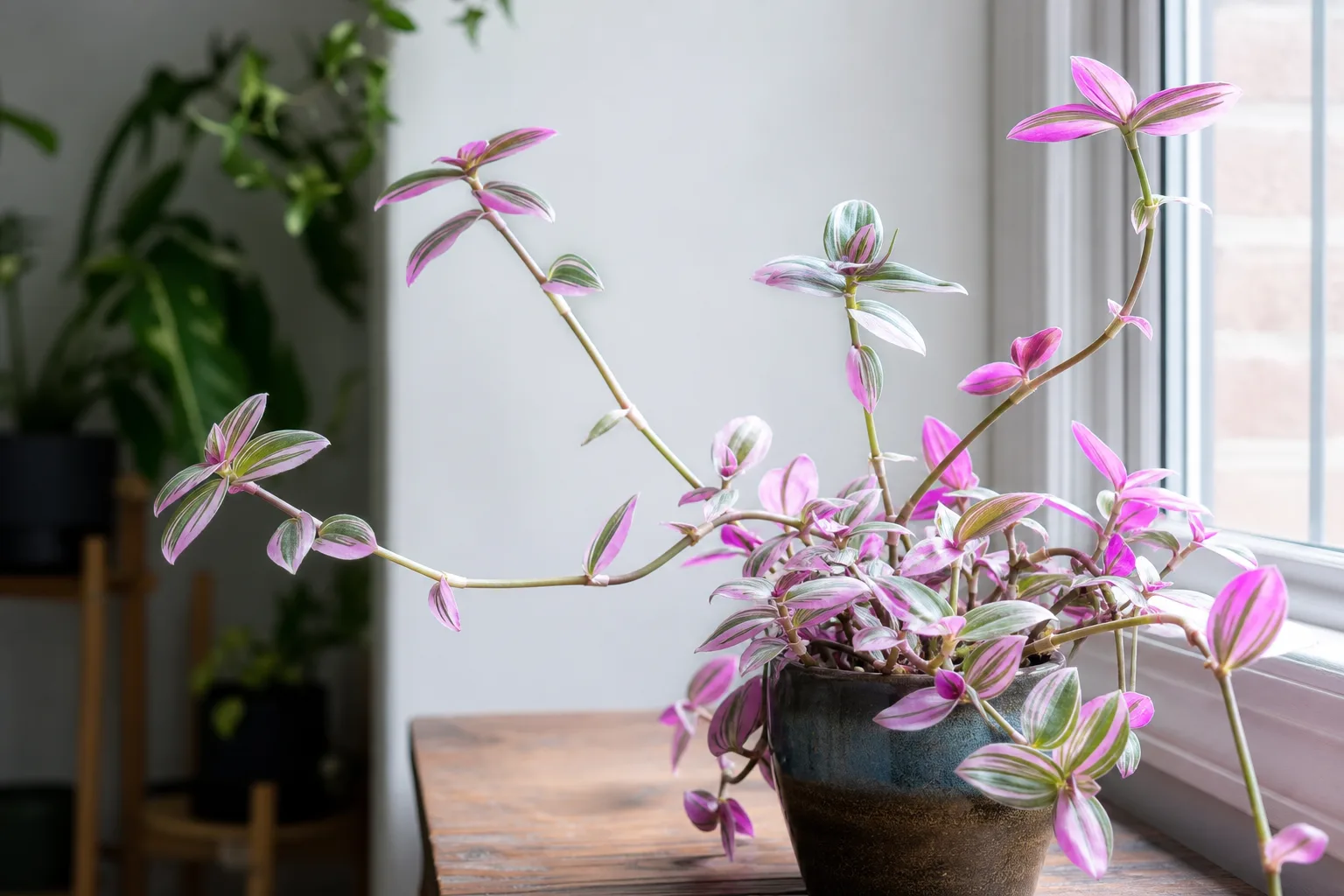
Leggy Growth on Tradescantia Nanouk: Causes, Checks & Fixes
This guide covers leggy growth on Tradescantia Nanouk. See also the general Leggy Growth guide, watering, and light pages for this plant.
Leggy Growth on Tradescantia Nanouk: Causes, Checks & Fixes
Quick answer
Leggy growth on Tradescantia Nanouk (Tradescantia albiflora ‘Nanouk’) is etiolation plus neglected shaping-long bare stem sections as the plant reaches for photons, with pastel pink, green, and cream stripes fading on the shaded side of the pot. Nanouk is a patented variegated spiderwort bred for compact color; without enough light and regular pinching, it becomes a thin vine with leaves clustered at the tips.
First step: move the pot to brighter indirect light with some direct morning sun, then pinch every active stem tip just above a leaf node. That breaks apical dominance and redirects energy to side buds. Do not fertilize or repot on day one.
What leggy growth looks like on Tradescantia Nanouk
Nanouk should read as a dense mound of thick, succulent stems carrying bold pink and cream stripes. Leggy form changes that silhouette:
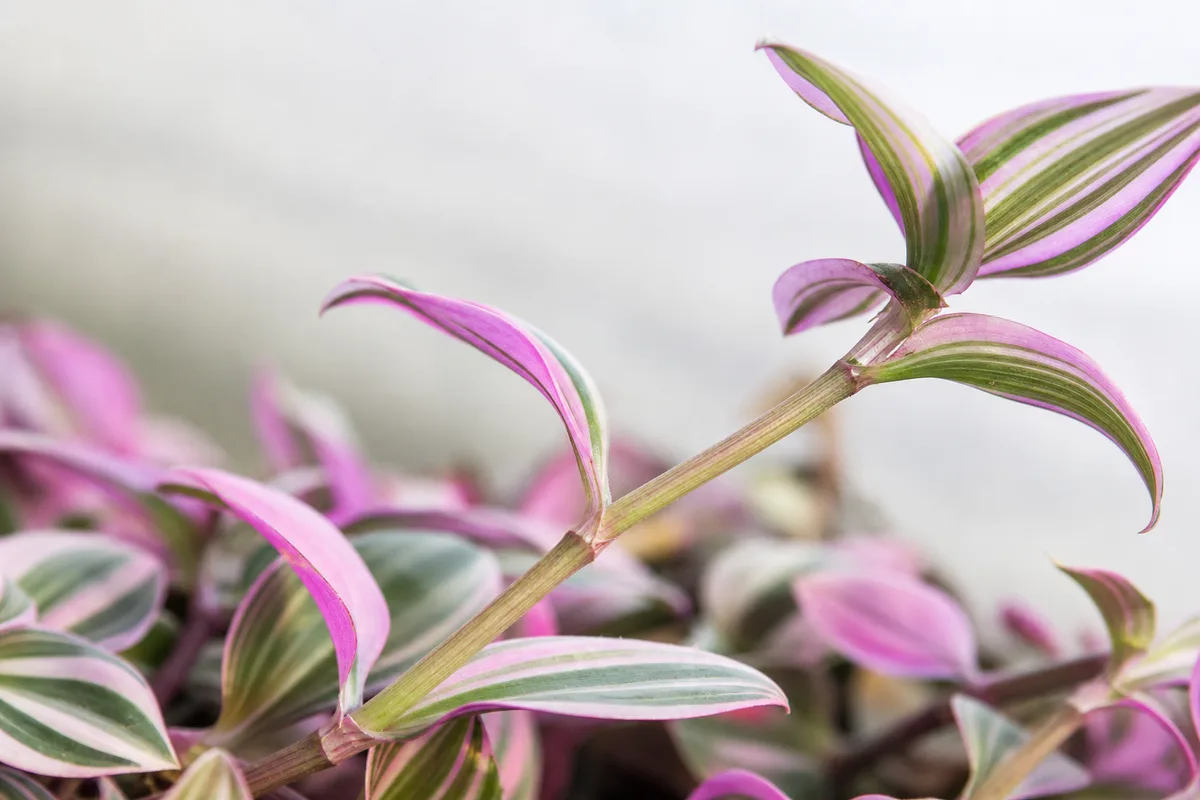
Leggy Growth symptoms on Tradescantia Nanouk - compare with healthy tissue on the same plant.
- Long bare internodes-gaps of 3–5 cm or more between leaf pairs on new growth
- Color concentrated at stem tips while lower sections stay green and leafless
- Faded or grayed variegation on the side away from the window
- Stems leaning hard toward the brightest light source
- Thin, weak new leaves compared with the chunky foliage on a compact nursery pot
- Top-heavy trailing habit in hanging baskets with almost no foliage on the lower half
Compare with not enough light on Tradescantia Nanouk if washed-out color across the whole plant and wet soil in deep shade dominate. This page focuses on stretch morphology and pinching workflow once you know light is at least borderline adequate.
Why Tradescantia Nanouk gets leggy
Insufficient light for variegated tissue
Variegated Tradescantia needs stronger light than solid green forms to hold pink and cream pigment. The RHS Tradescantia growing guide recommends bright light with some direct sun for best color. Nanouk’s pale sectors carry less chlorophyll, so the plant stretches toward brighter zones when intensity drops. Missouri Botanical Garden lists Tradescantia as needing bright indirect light for indoor culture.
Skipped pinching and apical dominance
Tradescantia naturally pushes one strong tip unless you intervene. Without regular pinching, a fast-growing Nanouk puts all energy into one or two upright shoots-especially in warm bright conditions where it has energy to grow but no reason to branch. Pinching stem tips redirects growth to lateral buds at nodes below the cut.
Hanging-basket shade on the lower half
Trailing Nanouk in baskets often shades its own lower stems. The top gets adequate light while the underside etiolates and drops leaves, leaving a bare-skirted silhouette even when the window is reasonably bright.
Overwatering in low light
Leggy Nanouk in dim corners transpire slowly. Soil that stayed appropriately dry in a bright window may remain wet too long in shade, yellowing lower leaves while the crown still pushes pale stretch growth. Fix light and dry-down together.
Seasonal light drop
Winter shortens daylight. A Nanouk that looked compact in summer can etiolate after months at the same interior shelf. University of Maryland Extension notes indoor plants become spindly as they stretch for more light.
How to confirm the cause
Work through these checks in order:
- Internode length - Measure gaps between consecutive leaves on the newest shoot. Etiolation shows noticeably longer spacing than compact nursery growth.
- Pinch history - Have you cut tips in the last two weeks? No pinching plus fast growth almost always produces leggy form even in decent light.
- Color pattern - Is variegation faded only on the shaded side? That confirms uneven light plus stretch. Uniform paleness across the pot points more to chronic low light-see not enough light.
- Direction of lean - Strong lean toward one window means active phototropism. Rotate and watch new growth within two weeks.
- Soil moisture - Wet mix days after watering in a dim spot suggests slow uptake from low light, not just stretch.
- Pest check - Spider mites cause stippling and webbing, not long internodes with directional lean. Inspect undersides before blaming culture alone.
The first fix to try
Move to brighter indirect light with gentle morning sun-east window or filtered south-and pinch every active stem tip just above a node. Use clean scissors or fingers. One targeted correction: better light plus pinching. Do not stack Tradescantia Nanouk repotting guide, fertilizer, and pesticide on the same day.
Step-by-step recovery
- Relocate and acclimate - Move to brighter light over three to five days if coming from deep shade. Nanouk sunburns less than many houseplants but abrupt jumps can crisp pale leaf margins.
- Pinch all active tips - Cut 0.5–1 cm above a node on each long shoot. Save healthy cuttings for propagation if you want backup plants.
- Rotate weekly - Even exposure prevents one-sided stretch and restores variegation on all faces.
- Refresh bare lower stems - If the lower half is leafless, cut back the longest bare sections to a node with a healthy leaf. New shoots emerge from nodes in warm bright conditions within one to two weeks.
- Adjust watering - Water when the top inch of soil dries; never let the pot sit in standing water. Brighter light means faster dry-down-overwatering in dim conditions compounds stretch stress.
- Propagate if needed - Severely bare baskets recover faster when you root fresh tip cuttings and plant several starts together for a full pot.
Recovery timeline
| Stage | What to expect |
|---|---|
| Week 1 | Pinch sites may look bare briefly; no fertilizer yet |
| Week 2–3 | Side shoots often emerge from nodes below cuts in warm bright light |
| Week 4–6 | New growth should show tighter spacing and stronger pink/cream striping |
| Month 2+ | Old stretched internodes remain unless pruned back-judge by new tissue |
Lookalike symptoms
| Pattern | What you see | Likely cause |
|---|---|---|
| Etiolation + no pinching | Long internodes, tip-heavy color, window lean | Low light and/or skipped shaping |
| Chronic low light | Whole plant pale, wet soil, stalled growth | Placement problem-see not-enough-light guide |
| Root stress | Yellow lower leaves, soft base, sour smell on wet mix | Overwatering-see overwatering |
| Spider mites | Stippling, webbing, dusty undersides | Pest-rinse and treat |
| Normal trailing age | Long stems but steady variegation and normal leaf size | Accept or prune for shape |
Mistakes to avoid
- Pinching without improving light - Side shoots in deep shade stay thin and pale.
- Fertilizing a stressed Nanouk first - Fix light and moisture before feeding.
- Keeping a bare basket for months - Restart from tip cuttings rather than waiting for leafless stems to refoliate.
- Overwatering because leaves look limp - Check soil first; wet roots in dim light worsen yellowing.
- Expecting old internodes to shorten - Only new growth compacts.
When to worry
Legginess alone is a shape problem. Escalate when stems soften at the base, multiple leaves yellow on chronically wet soil, or pests coat new growth. Those patterns need root or pest work-not pinching alone.
How to prevent leggy growth next time
Match bright indirect light with some morning sun to a pinching routine every two weeks during active growth. Rotate hanging baskets weekly so no side stays shaded. Refresh pots with rooted tip cuttings before bare stems dominate. Inspect weekly during routine watering so stretch stays small.
When to use this page vs other Tradescantia Nanouk guides
- Tradescantia Nanouk watering guide - Use for routine moisture checks before assuming leggy growth is the main issue.
- Tradescantia Nanouk problems hub - Browse all 2 common issues on this species.